
Birds Class Aves Characteristics Well adapted to marine
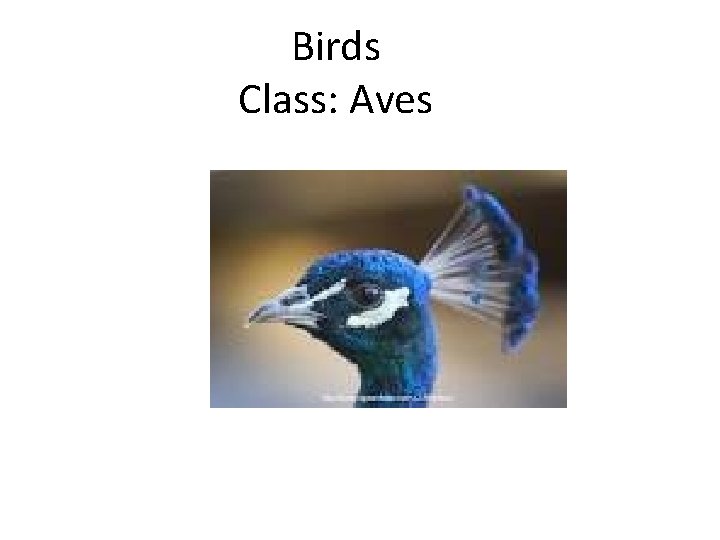
Birds Class: Aves
Characteristics • Well adapted to marine, freshwater, & terrestrial habitats • Bodies adapted for flight • Endothermic - body temperature controlled by metabolism (40 to 41 degrees Celsius body temperature) )
Evolution • Evolved from reptiles • Few fossils due to lack of preservation of feathers or thin, hollow bones
Characteristics of Birds • Body covered with feathers made of protein called keratin • Thin, hollow bones • Some bones fused for extra strength • Forelimbs modified into wings for flight • Two hind limbs with claws to support upright body • Scales on legs
• Toothless, horny beak • Additional air sacs with lungs for more oxygen
• Amniote egg with calcium carbonate shell • Oviparity with both parents often caring for eggs • Eggs usually incubated within a nest
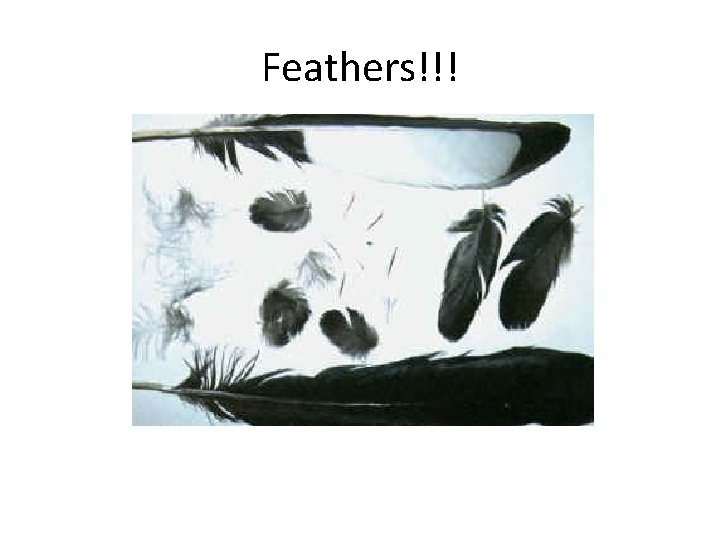
Feathers!!!

Feathers: • Modified scales • Function to provide lift for flight & help conserve body heat • Five kinds of feathers ----- down, contour, flight, filoplume, & bristles
Down feathers: 1. Soft & fluffy 2. Cover the body of nestlings 3. Provide an undercoat insulating adult birds
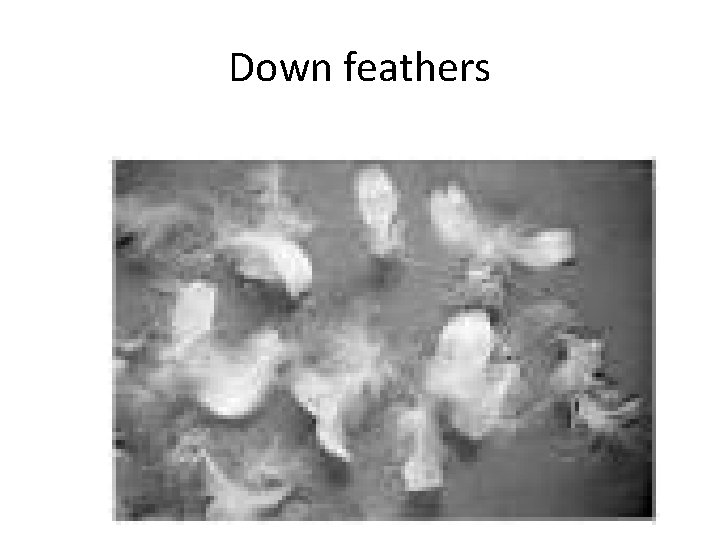
Down feathers

Contour Feathers: 1. Give streamline shape to body 2. Provide coloration to adult birds 3. Give additional insulation to body
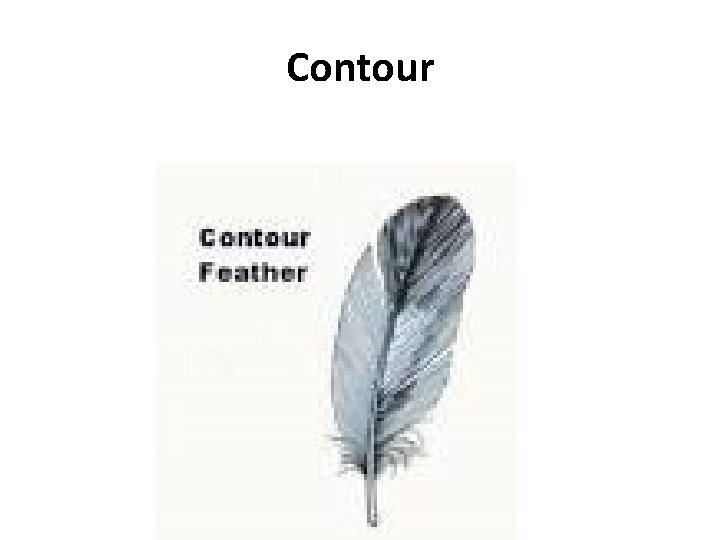
Contour
Flight Feathers: 1. Specialized contour feathers 2. Found on wings & tail
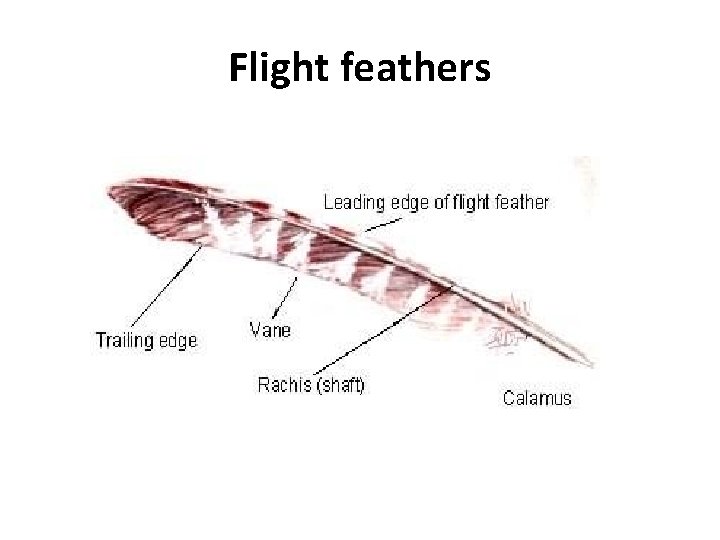
Flight feathers

Filoplumes: • 1. Called pin feathers 2. Hair like feathers under contour feathers on body

Filoplumes
Parts of a feather • Develop from tiny pits in the skin called follicles • Shaft emerges from the follicle • Two vanes develop on either side of shaft • Barbs branch off of each vane & have projections called barbules • Barbules have microscopic hooks to hold barbules together
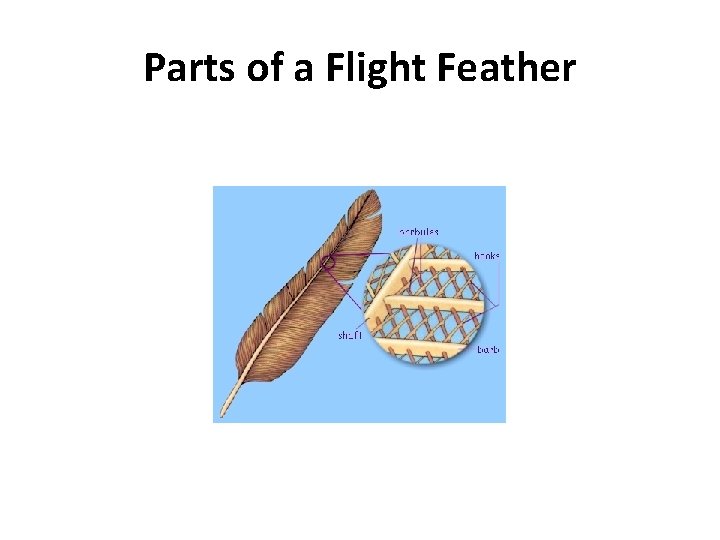
Parts of a Flight Feather
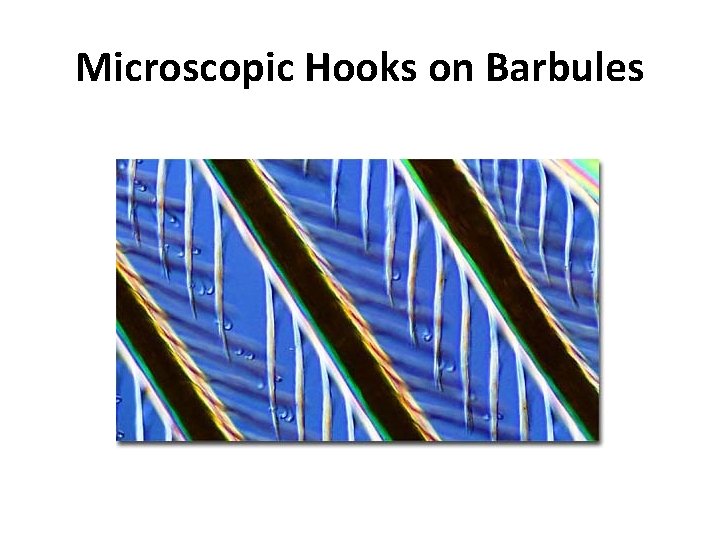
Microscopic Hooks on Barbules
Feathers • Birds preen their feathers to clean them & coat them with oil • Preen glands - oil glands located at the base of the tail • Birds shed or molt feathers periodically: 1. Molting usually in late summer between breeding & migration 2. Flight feathers replaced 3. Some birds molt before courtship
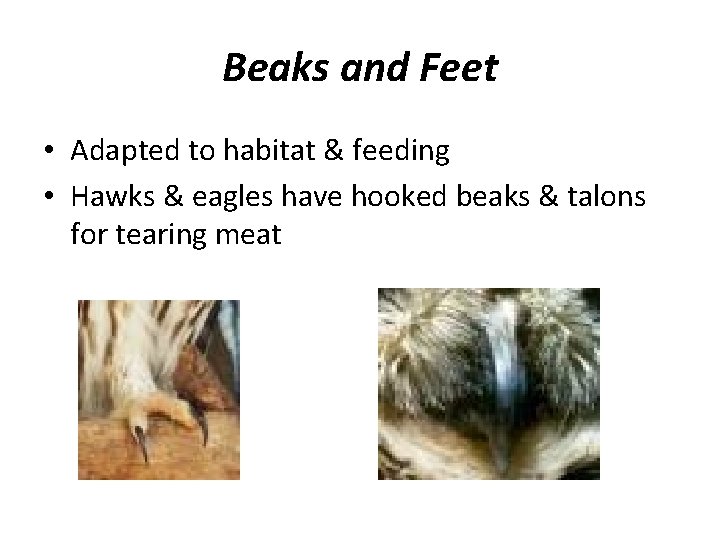
Beaks and Feet • Adapted to habitat & feeding • Hawks & eagles have hooked beaks & talons for tearing meat
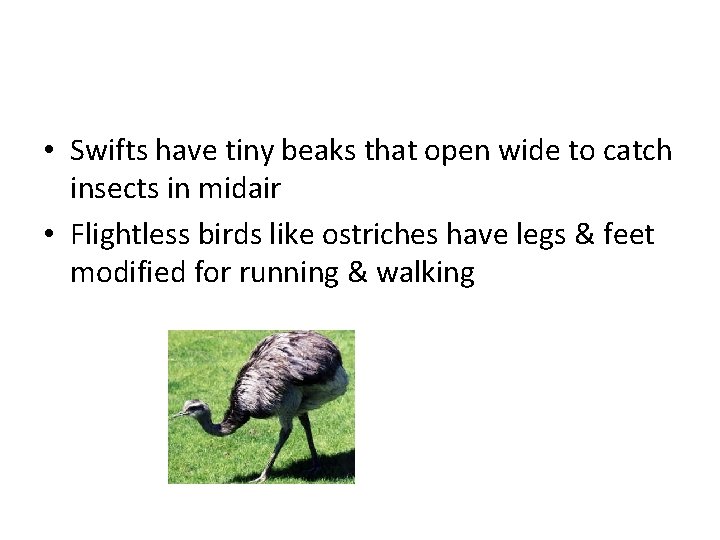
• Swifts have tiny beaks that open wide to catch insects in midair • Flightless birds like ostriches have legs & feet modified for running & walking
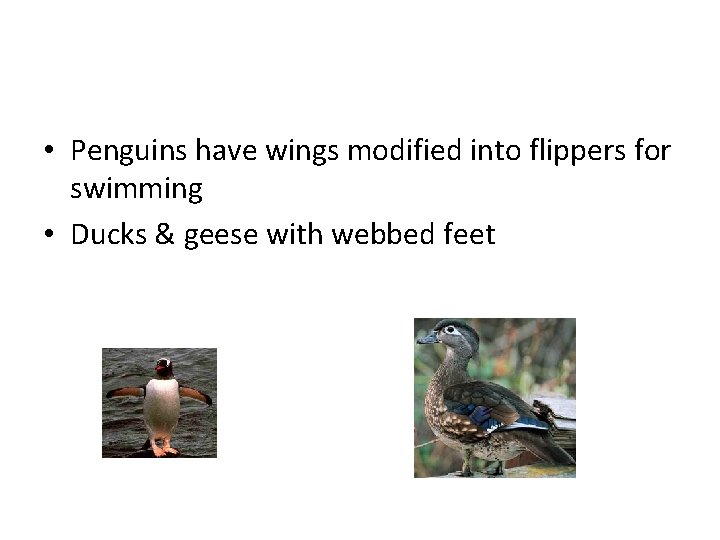
• Penguins have wings modified into flippers for swimming • Ducks & geese with webbed feet
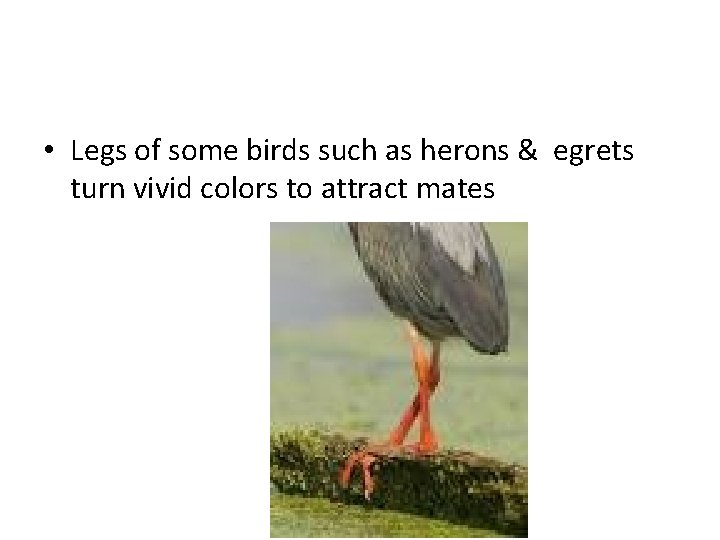
• Legs of some birds such as herons & egrets turn vivid colors to attract mates
Muscles • Flight muscles called pectorals & are attached to wing & keeled sternum • When large pectorals contract, wings move down • When large pectorals relax & small pectorals contract, wings move upward
Body Temperature • Metabolism generates body heat (endothermic) • Enables birds to survive in warm & cold environments • Rapid breathing & increased air sacs in lungs bring in more oxygen
• Ingest large amounts of food for energy • Fluff out feathers to trap air for insulation • Aquatic birds have thin layer of fat for insulation
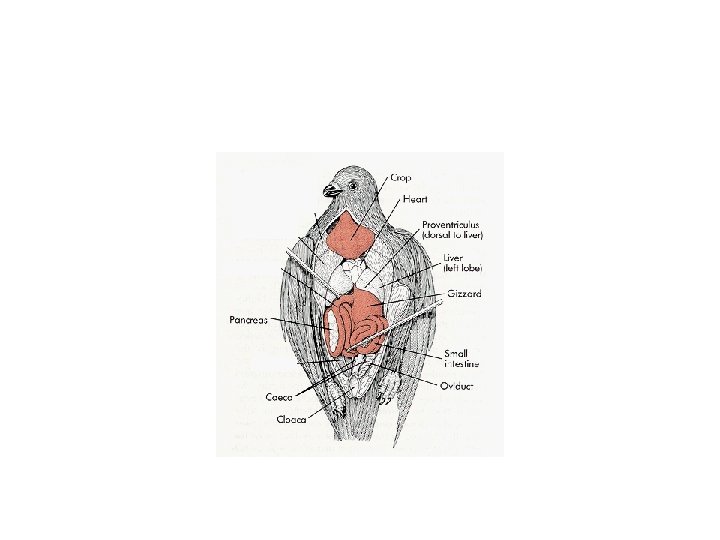
Digestive System Fast & efficient digestion No chewing Crop for temporary food storage Two part stomach --- proventriculus & gizzard Proventriculus is 1 st chamber where digestive juices added • Gizzard is 2 nd part for crushing food • • •
• Pyloric sphincter valve at lower end of gizzard controls food movement into intestines • Duodenum - beginning of small intestine where bile (digests fats) & pancreatic juice are added & digested food is absorbed
Respiration • Fly at high altitudes where there is less oxygen so need efficient respiratory system • High metabolic rate requires large amount of oxygen • Nine air sacs associated with lungs increase oxygen level & decrease density
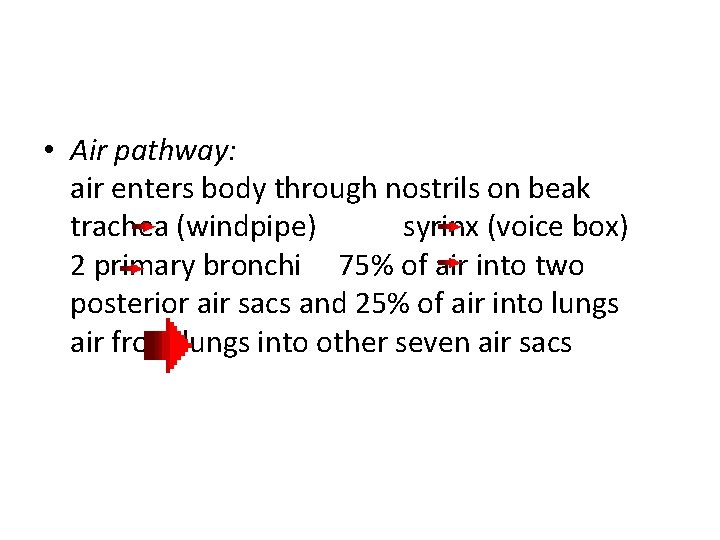
• Air pathway: air enters body through nostrils on beak trachea (windpipe) syrinx (voice box) 2 primary bronchi 75% of air into two posterior air sacs and 25% of air into lungs air from lungs into other seven air sacs
Circulatory system • Four chambered heart • Right side of heart pumps deoxygenated blood from body cells to lungs • Left side of heart receives oxygenated blood from lungs & pumps it to the body cells • Single aortic arch • Rapid heartbeat (hummingbird 600 X/minute & chickadee 1000 X/minute) • Less active birds such as ostrich have slower heart rates (70 X/minute)
Nervous System • Large brains relative to size of bird • Cerebellum coordinates movement • Cerebrum controls navigation, mating, nest building, & care of young • Optic lobes receive & interpret visual stimuli • Have color vision for locating food

Reproductive System: • Testes in males produces sperm that travels by the vas deferens to cloaca • Females have single ovary that makes eggs • Eggs are fertilized in the oviducts • In mating, male presses cloaca to female to transfer sperm (internal fertilization)
amniote egg • 1. Embryo suspended in fluid called albumen (white of egg) 2. Chalaza - rope like strands suspending embryo in albumen 3. Chorion is membrane inside of shell 4. Yolk is stored food surrounded by yolk sac
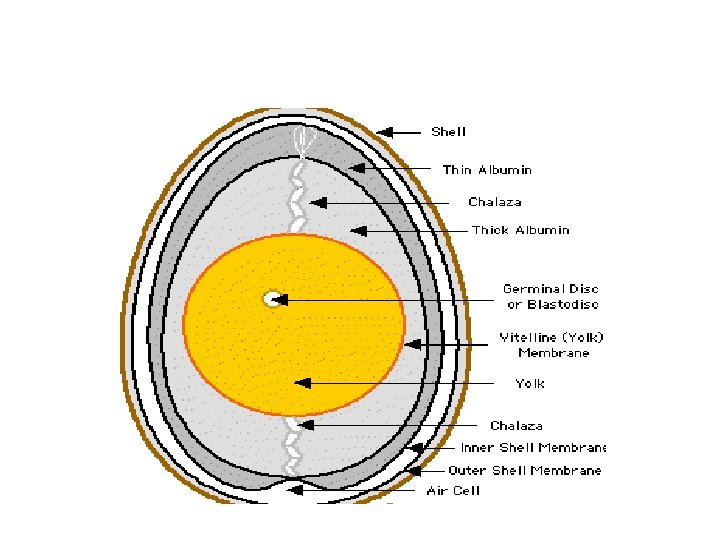
• Eggs incubated by one or both parents • Brood patch - thickened, featherless patch of skin on abdomen of bird used to warm eggs
• Yolk sac has blood vessels to carry food to embryo • Wastes from embryo collect in membrane called allantois • Chorion membrane lines the shell & allows gas exchange
Young birds may be precocial or altricial Precocial young: Altricial young: • 1. Have longer • 1. Lay fewer eggs incubations 2. Hatch quickly 2. More eggs laid 3. Hatchlings are blind, 3. Active as soon as naked, & helpless hatch 4. Depend on parents 4. Nestlings can swim, for warmth & food for walk, & feed themselves several weeks 5. Need some parental 5. Includes songbirds, care woodpeckers, hawks, 6. Includes ducks, pigeons, doves, raptors geese, & swans
Behavior: • Longer parental care allows more complex learning (courtship, nesting, migration, etc. ) • Territoriality allows males to establish & defend breeding areas
Courtship • behaviors used by males to attract mates: 1. Brightly colored feathers 2. Flight displays 3. Songs
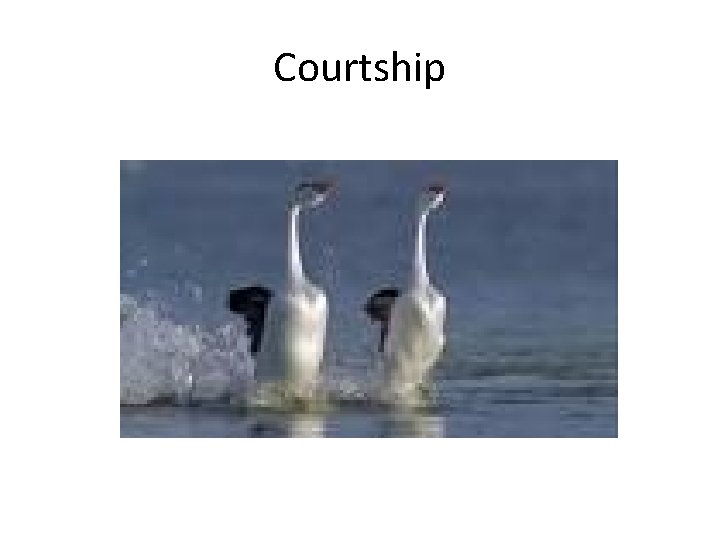
Courtship
• Nest building holds eggs, conceals & shelters young birds, may help attract mates • Nests are built in sheltered, well-hidden spots in trees, on the ground, etc. & are made of twigs, mud, grass, feathers. . .
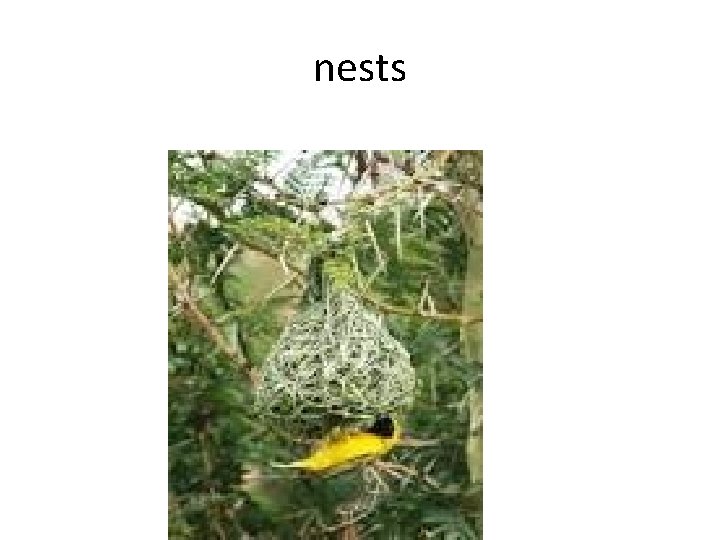
nests
Migration • triggered by dropping temperatures & dwindling food supplies • Birds use migration clues including: 1. Position of sun & stars 2. Topographical landmarks 3. Magnetic clues 4. Air pressure changes 5. Low frequency sounds
- Slides: 46