
Birds and Mammals Pages 406 413 and 420
Birds and Mammals Pages 406 -413 and 420 -428
The Birds! Pgs. 406 -413

Body Characteristics • Body Symmetry: Bilateral • Cell Organization: cells to tissues, to organ systems • Reproduction: Sexual • Body Development: Internal fertilization where females lay eggs that contain embryos. When the embryo is fully developed it hatches.

Just the facts… • ENDOTHERMIC VERTEBRATE • Has feathers • Four-chambered heart • Lays eggs

How Do Birds Move? • Have adaptations for flight – Many of their bones are hollow – Wings – Large chest muscles – Feathers • CONTOUR FEATHERS: to help balance and steer • DOWN FEATHERS: to keep warm
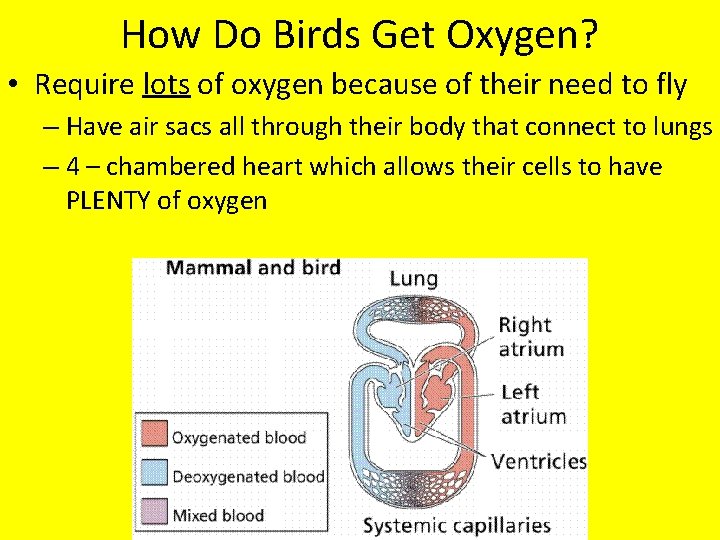
How Do Birds Get Oxygen? • Require lots of oxygen because of their need to fly – Have air sacs all through their body that connect to lungs – 4 – chambered heart which allows their cells to have PLENTY of oxygen
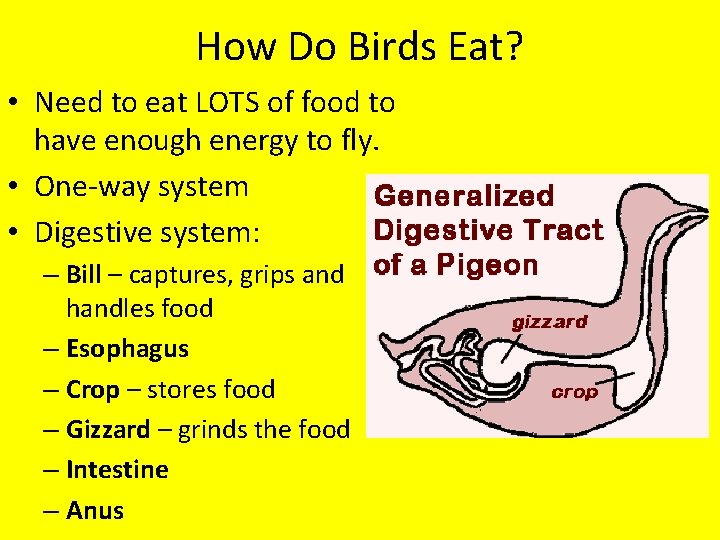
How Do Birds Eat? • Need to eat LOTS of food to have enough energy to fly. • One-way system • Digestive system: – Bill – captures, grips and handles food – Esophagus – Crop – stores food – Gizzard – grinds the food – Intestine – Anus

How Do Birds Reproduce • Internal fertilization • Lay hard-shelled eggs • Incubate (keep warm) the eggs because the embryo will only develop at a temperature close to the bird’s body temperature. • Depending on the species, Birds like ducks and chickens can run chicks may take 12 -80 around right after hatching. Other chicks like robins and blue jays are featherless, days to hatch blind, and nearly too weak to eat food.
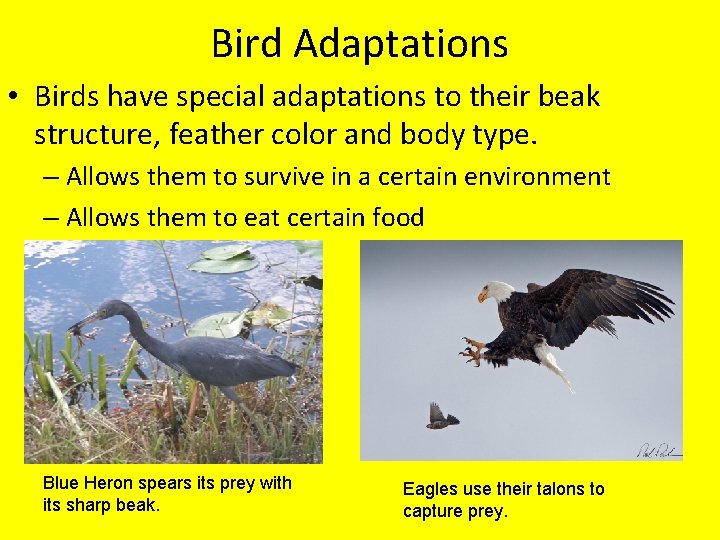
Bird Adaptations • Birds have special adaptations to their beak structure, feather color and body type. – Allows them to survive in a certain environment – Allows them to eat certain food Blue Heron spears its prey with its sharp beak. Eagles use their talons to capture prey.
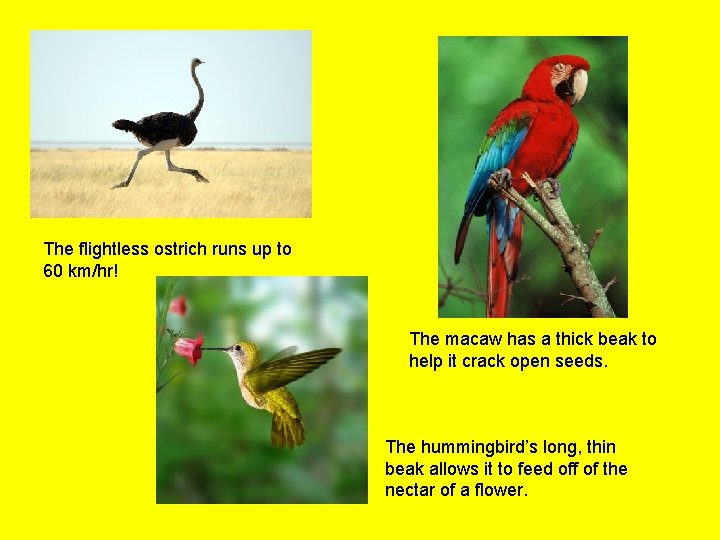
The flightless ostrich runs up to 60 km/hr! The macaw has a thick beak to help it crack open seeds. The hummingbird’s long, thin beak allows it to feed off of the nectar of a flower.
Birds: A Review
Mammals pgs 420 -428

Body Characteristics • Body Symmetry: Bilateral • Body Organization: Cells to tissues to organ systems • Reproduction: Sexual • Body Development: Zygote to embryo to fetus

Just the Facts… • • • ENDOTHERMIC VERTEBRATES Four Chambered Heart Skin covered with fur or hair Give birth to live young Young mammals are fed by milk produced by the mother
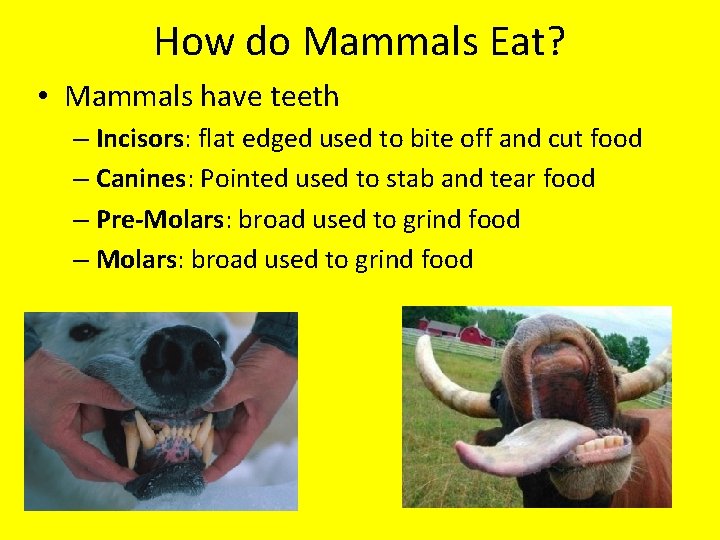
How do Mammals Eat? • Mammals have teeth – Incisors: flat edged used to bite off and cut food – Canines: Pointed used to stab and tear food – Pre-Molars: broad used to grind food – Molars: broad used to grind food
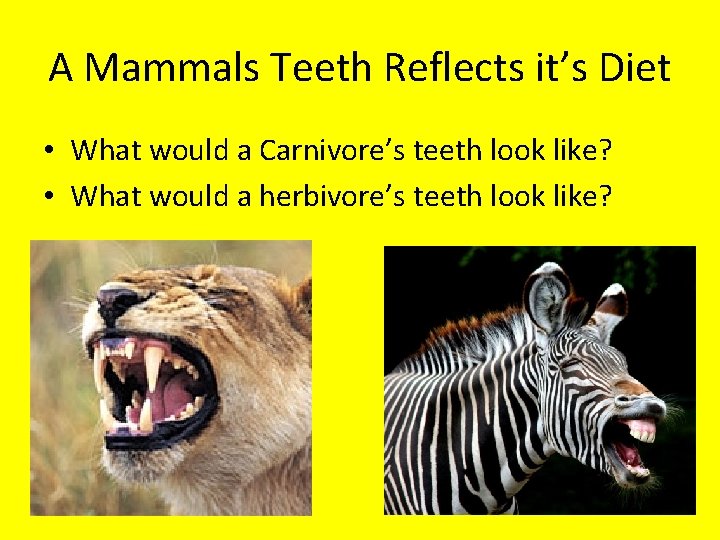
A Mammals Teeth Reflects it’s Diet • What would a Carnivore’s teeth look like? • What would a herbivore’s teeth look like?

How do mammals get Oxygen? • Mammals have lungs – Provides a large surface area where the oxygen moves into the blood • Four chambered heart – Double loop circulatory system
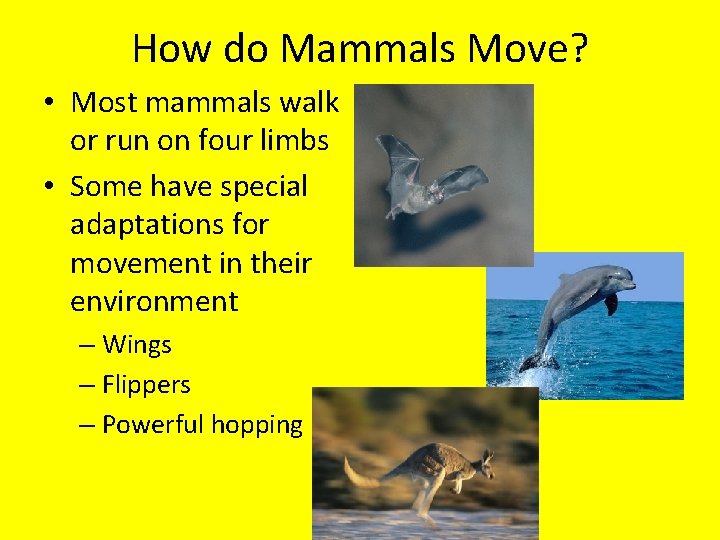
How do Mammals Move? • Most mammals walk or run on four limbs • Some have special adaptations for movement in their environment – Wings – Flippers – Powerful hopping legs
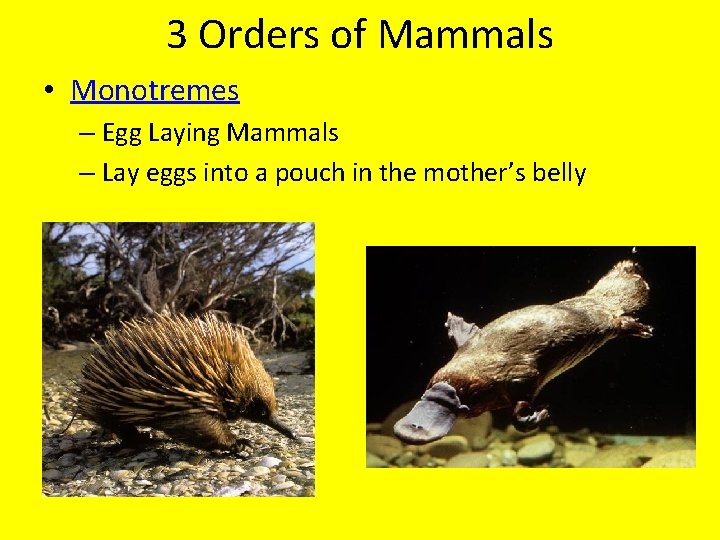
3 Orders of Mammals • Monotremes – Egg Laying Mammals – Lay eggs into a pouch in the mother’s belly
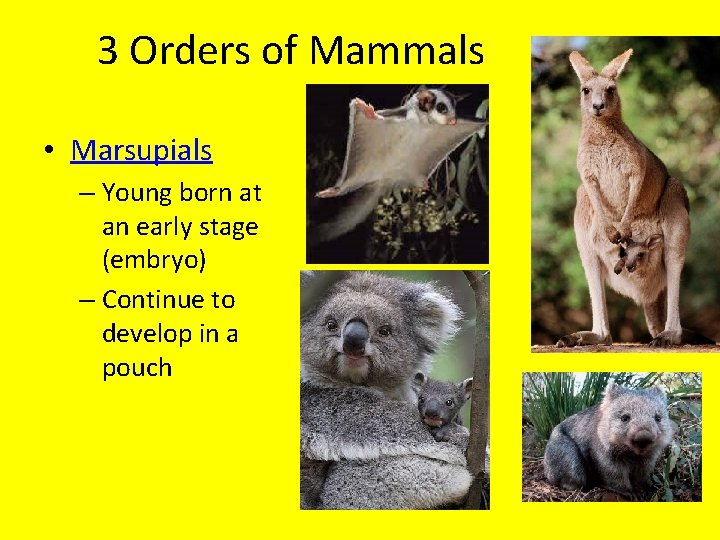
3 Orders of Mammals • Marsupials – Young born at an early stage (embryo) – Continue to develop in a pouch
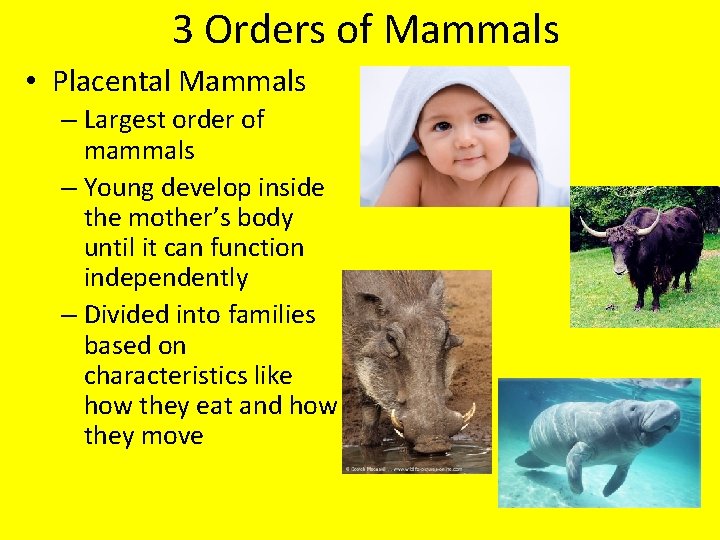
3 Orders of Mammals • Placental Mammals – Largest order of mammals – Young develop inside the mother’s body until it can function independently – Divided into families based on characteristics like how they eat and how they move

Mammal Families • Carnivores – Large canine teeth – Clawed toes
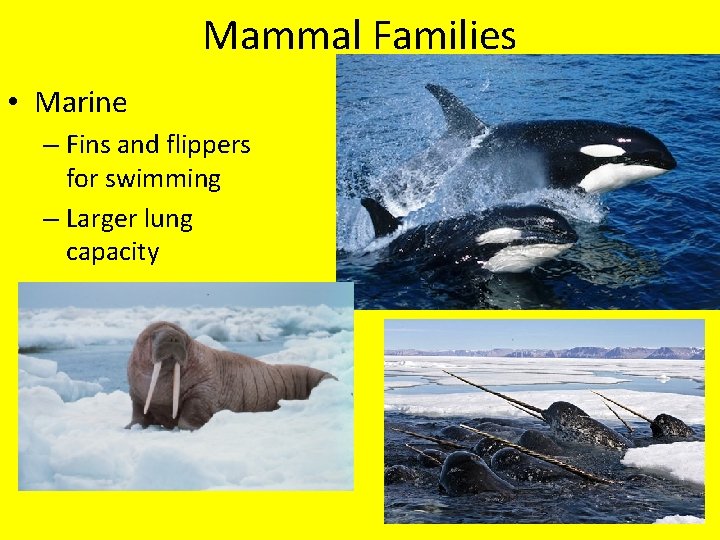
Mammal Families • Marine – Fins and flippers for swimming – Larger lung capacity
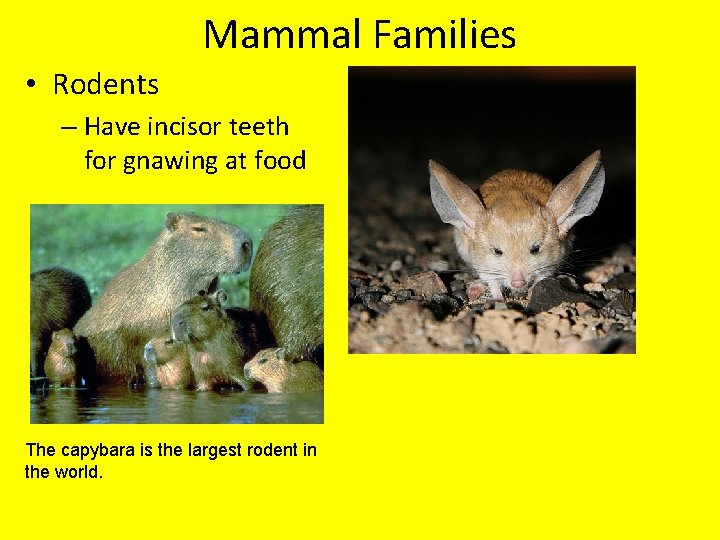
Mammal Families • Rodents – Have incisor teeth for gnawing at food The capybara is the largest rodent in the world.
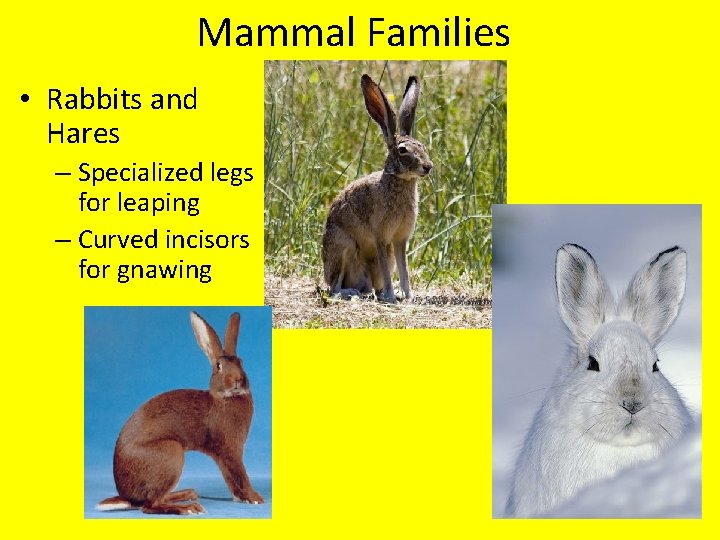
Mammal Families • Rabbits and Hares – Specialized legs for leaping – Curved incisors for gnawing
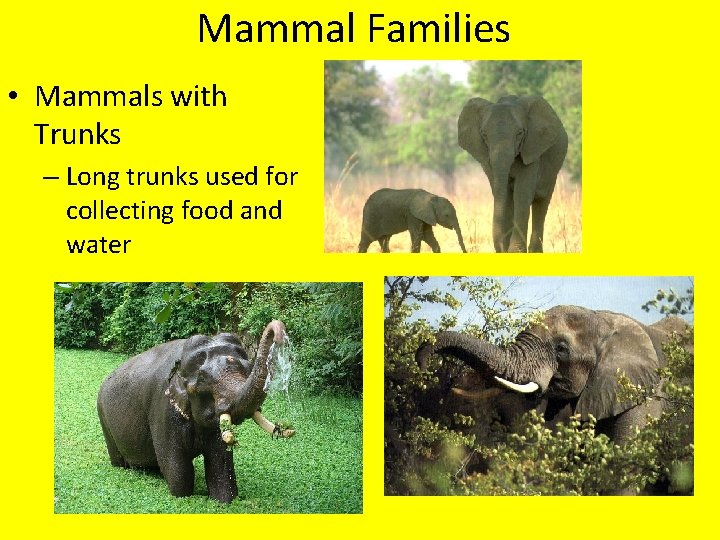
Mammal Families • Mammals with Trunks – Long trunks used for collecting food and water

Mammal Families • Insect Eaters – Extremely sharp teeth – Sensitive noses for sniffing out insects
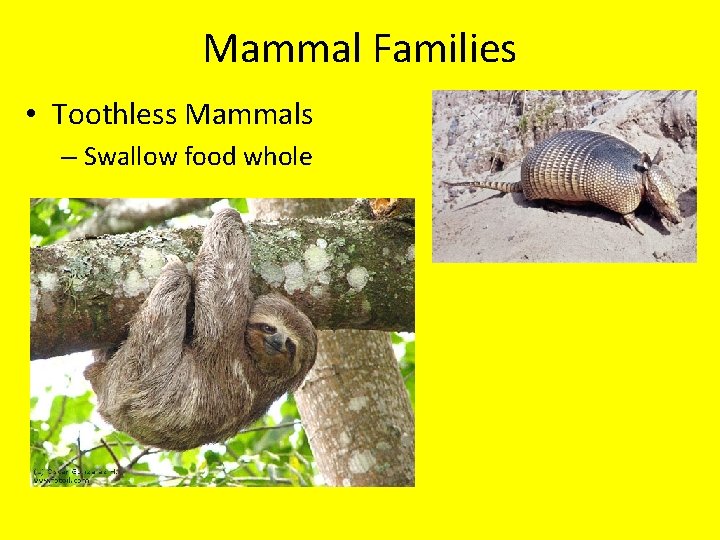
Mammal Families • Toothless Mammals – Swallow food whole
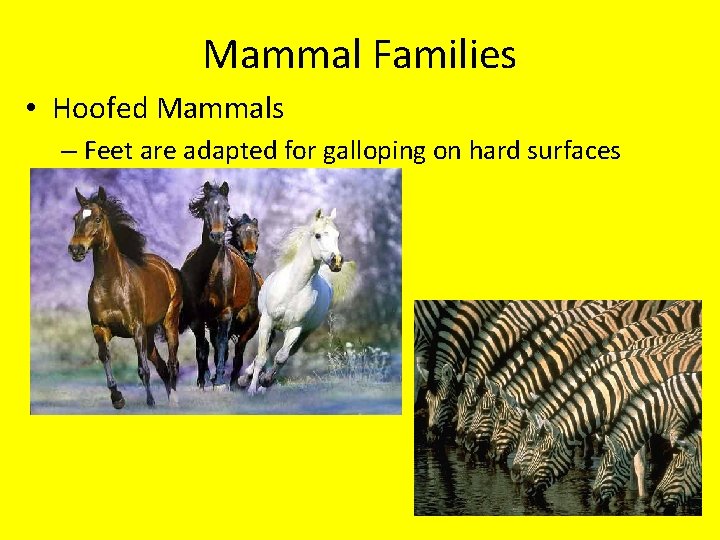
Mammal Families • Hoofed Mammals – Feet are adapted for galloping on hard surfaces
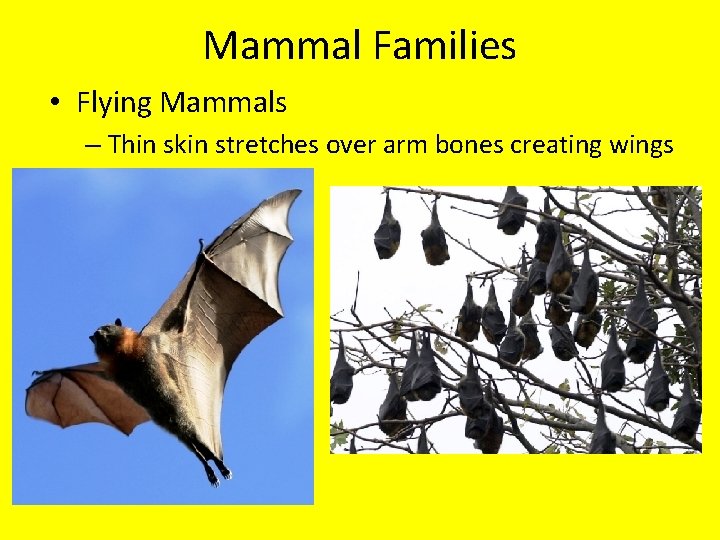
Mammal Families • Flying Mammals – Thin skin stretches over arm bones creating wings
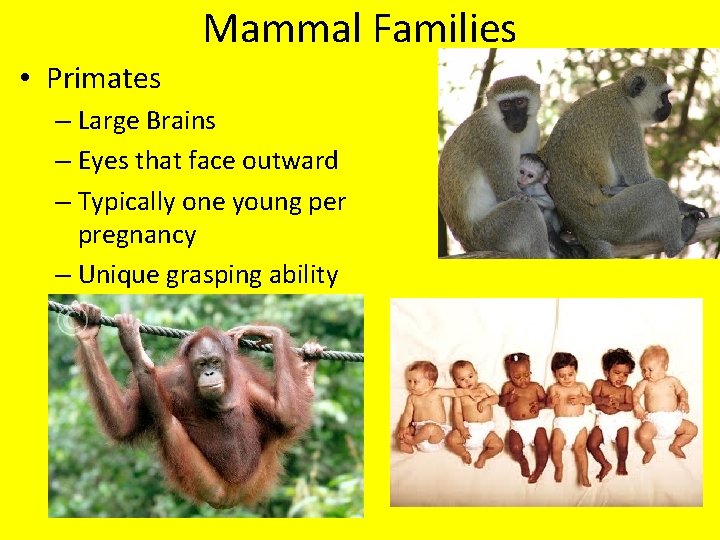
Mammal Families • Primates – Large Brains – Eyes that face outward – Typically one young per pregnancy – Unique grasping ability

Mammals: A Review
- Slides: 32