
Bird respiration Respiratory structures of birds differ from

Bird respiration • Respiratory structures of birds differ from mammals • Birds distinguished by presence of several large thinwalled air sacs • And air spaces
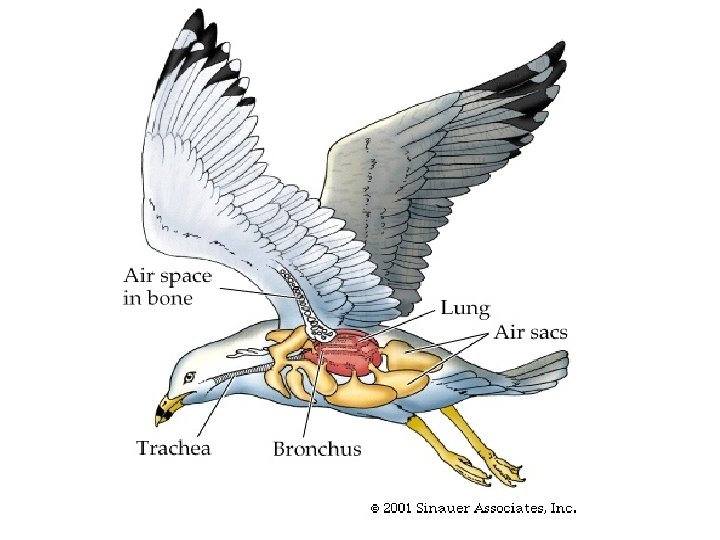
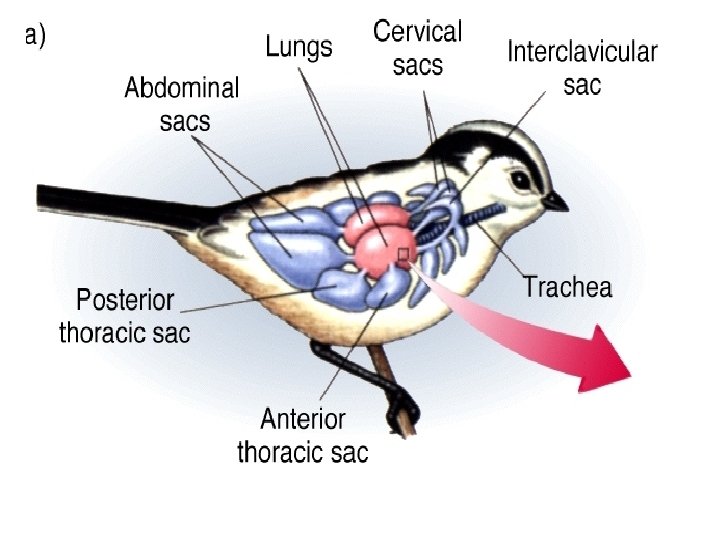
• This intricate system may be an adaptation for flight – What about Bats!!! More typical mammalian lungs, and some bat species can migrate long distances.
- What about oxygen consumption : Similar to mammals at rest And during flight similar to bats In both an increasing about 8 -10
• • • So what is the rule if air sac and air spaces Lighter !!!! Air sacs hasn’t any effect on: weight : two test nor gas exchange : co 2 test May its correct ( by very limited effect) with air spaces.
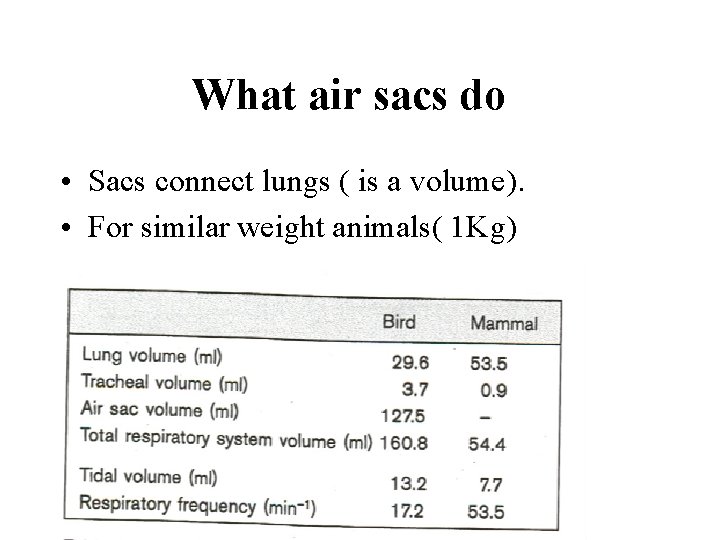
What air sacs do • Sacs connect lungs ( is a volume). • For similar weight animals( 1 Kg)
• For a given size, birds have smaller lungs, but greater respiratory surfaces than mammals • Birds have greater tidal volumes than mammals, but lower respiratory frequency
• 1 - So air sacs increases the tidal volume ( total respiratory system volume ) It’s the first function what else !!!!!!
Lung structure • Is a bird like mammals !!!! • mammals tracheae end by alveoli • Birds tracheae end by what ? the finest branches of bronchial system (parabronchi) permit rapid air exchange
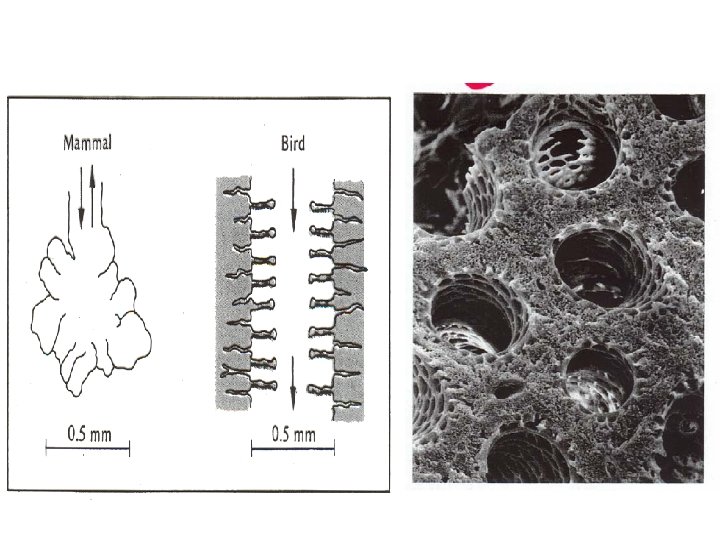
• Mammals move air in and out through alveoli lung. • Birds unidirectional through lungs • But in and out through respiratory system ( as all) • Who do this rule ( in and out ) • 2 - Air sacs act as bellows. Is the second function
Diagram of the lungs • Two gropes of air sacs • - caudal / posterior : large abdominal • - cranial / anterior : several smaller • Tracheae divided into two bronchi Each for lung and terminate in large abdominal sacs

Stages: • (1) Inspiration: Air flows directly to caudal sacs • (2) Exhalation: Air from caudal sacs flows into the lung instead of out the main bronchus • (3) Inspiration: Air from lung flows to cranial sacs • (4) Exhalation: Air from the cranial sacs flows to outside
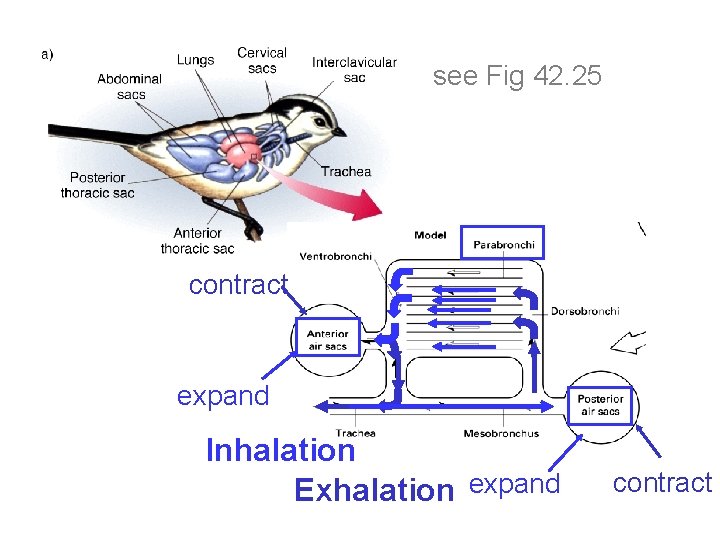
see Fig 42. 25 contract expand Inhalation Exhalation expand contract
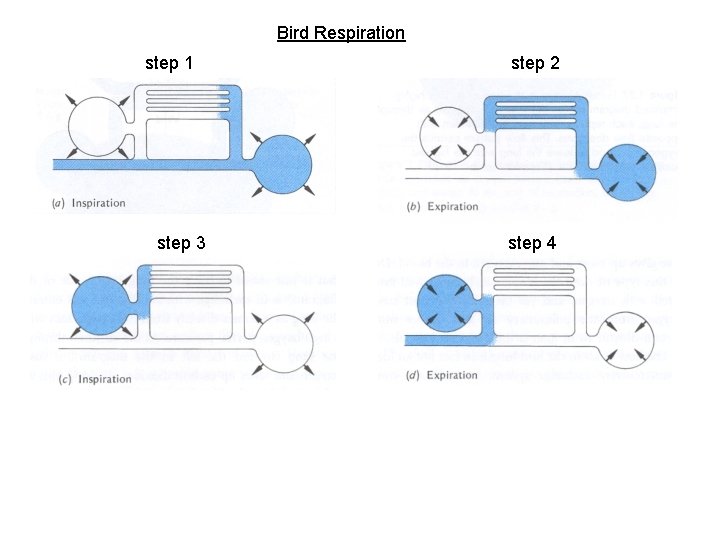
Bird Respiration step 1 step 3 step 2 step 4
Bird Ventilation • No diaphragm – Ventilate lungs using bellows action of air sacs • site of gas exchange: parabronchus – open tube with unidirectional flow and cross current blood flow • unidirectional air flow throw lung – cross current exchange
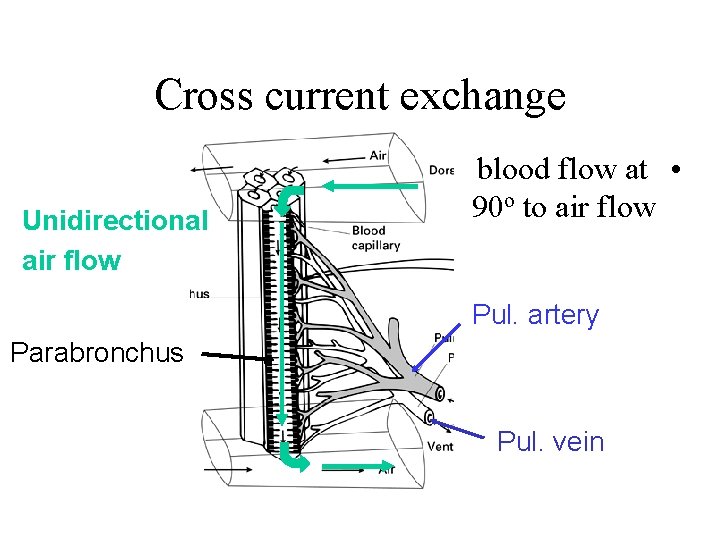
Cross current exchange Unidirectional air flow blood flow at • 90 o to air flow Pul. artery Parabronchus Pul. vein
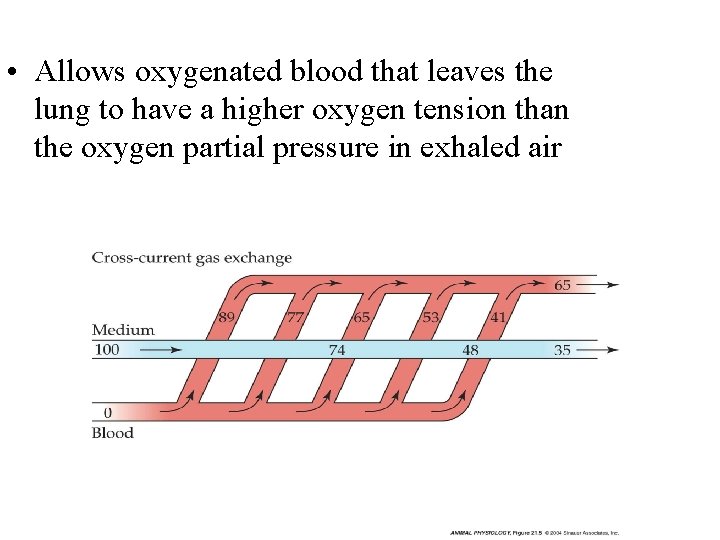
• Allows oxygenated blood that leaves the lung to have a higher oxygen tension than the oxygen partial pressure in exhaled air
• Blood about to leave lung (low oxygen content) is in exchange with air that has just entered the lung (high oxygen content) • As air flows through lung, it loses oxygen and takes up carbon dioxide • Thus, the blood rapidly becomes saturated with oxygen
• Birds are better-suited for extracting oxygen from the pulmonary air (and deliver carbon dioxide) than mammals.
• Mice and sparrows ( 360 mm. hg) 6100 m • Compare • Mountain climbers
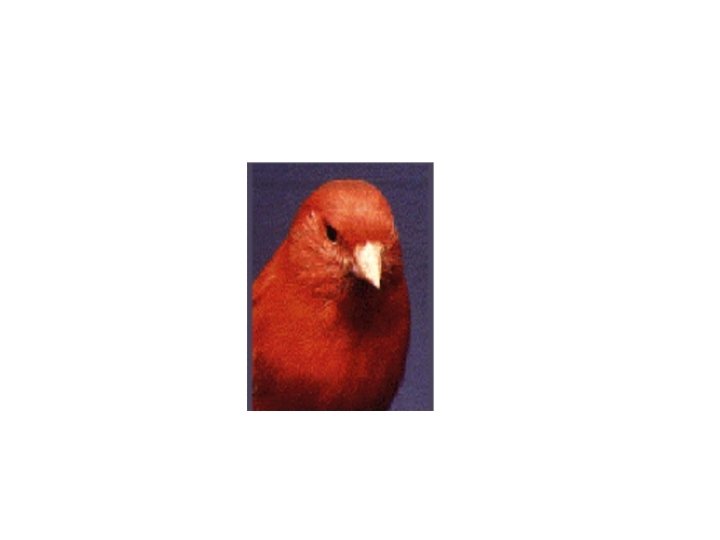
• Canary song How does the canary sing continuously without taking a breath? • The canary song is always produced during expiratory air flow in the trachea • The song consists of single notes that are repeated at high rates, with each note lasting between 11 to 280 ms • Between the notes are brief silent intervals, lasting from 20 to 235 ms, during which inspiration takes place
- Slides: 25