
Bird Adaptations Zoology Bird Adaptations 1 Types of
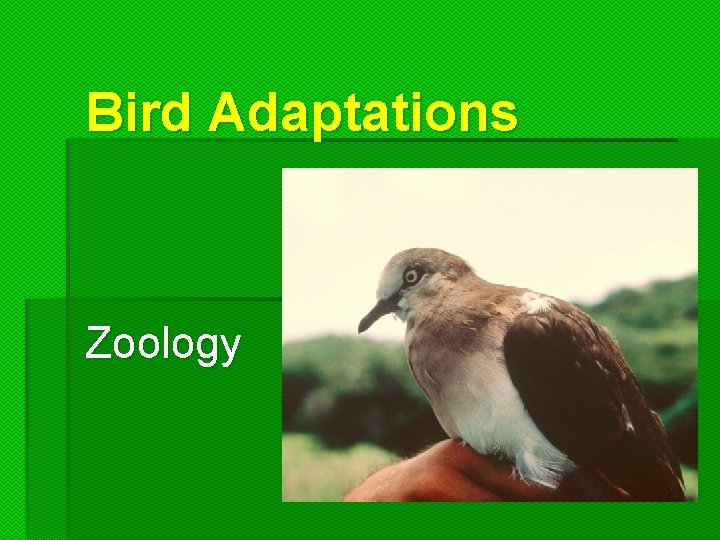
Bird Adaptations Zoology
Bird Adaptations 1. Types of feathers 2. Forelimb Modified into Wing 3. Modifications for Flight 4. Specialized Feet 5. Specialized Bills
Review § What is one thing birds have that no other animal has? § _______ § § § What are modified bird forelimbs called? _______ Name 3 uses for bird hindlimbs. § __________________ ___ § What do birds have in place of jaws and teeth and why? _______________________
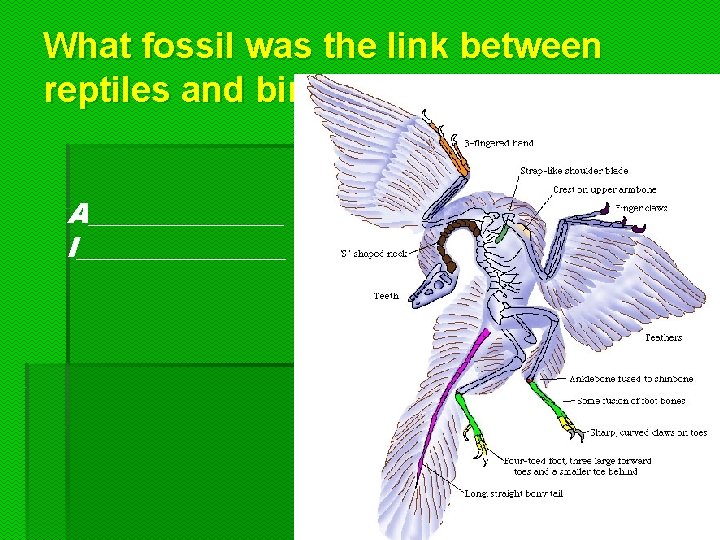
What fossil was the link between reptiles and birds? A_______ l________
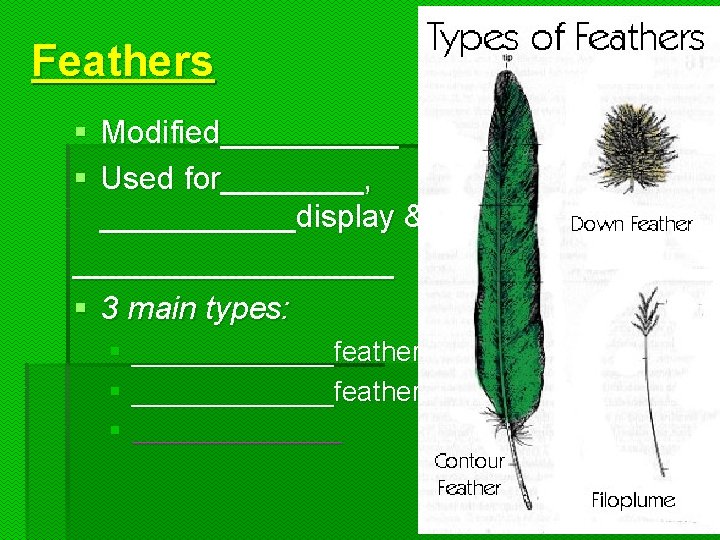
Feathers § Modified_____ § Used for____, ______display & _________ § 3 main types: § _____________feathers § ________
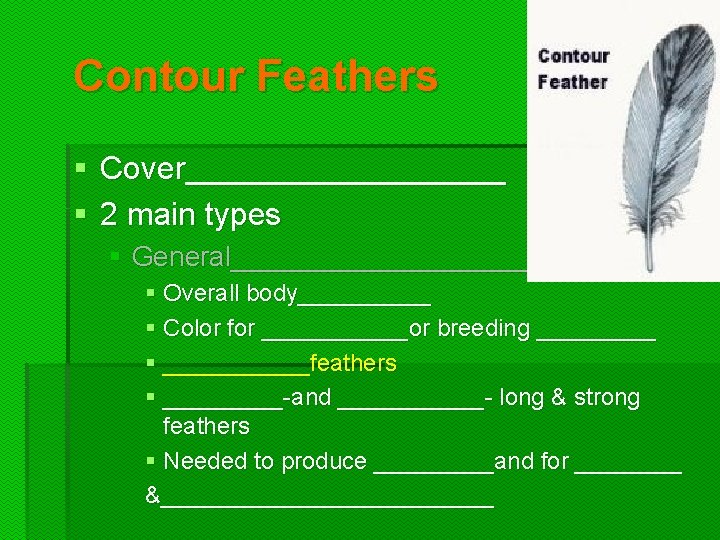
Contour Feathers § Cover_________ § 2 main types § General___________ § Overall body_____ § Color for ______or breeding _____ § ______feathers § _____-and ______- long & strong feathers § Needed to produce _____and for ____ &_____________
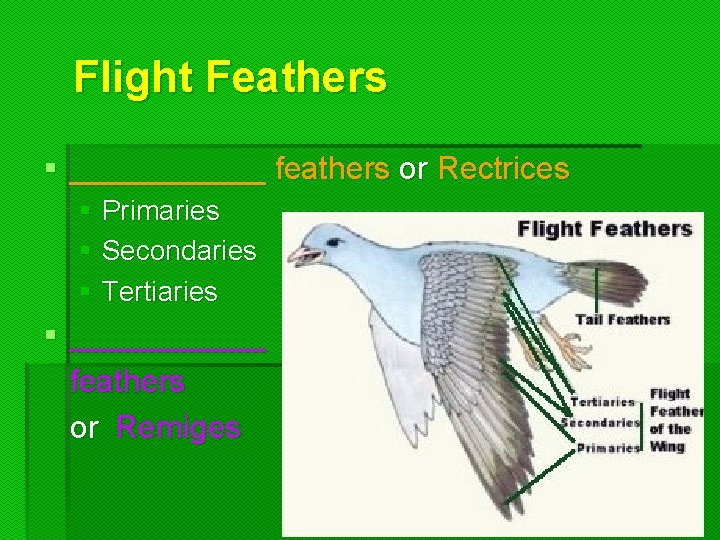
Flight Feathers § ______ feathers or Rectrices § Primaries § Secondaries § Tertiaries § ______ feathers or Remiges

Retrices (plural) Retrix (singular)

Remiges (plural)
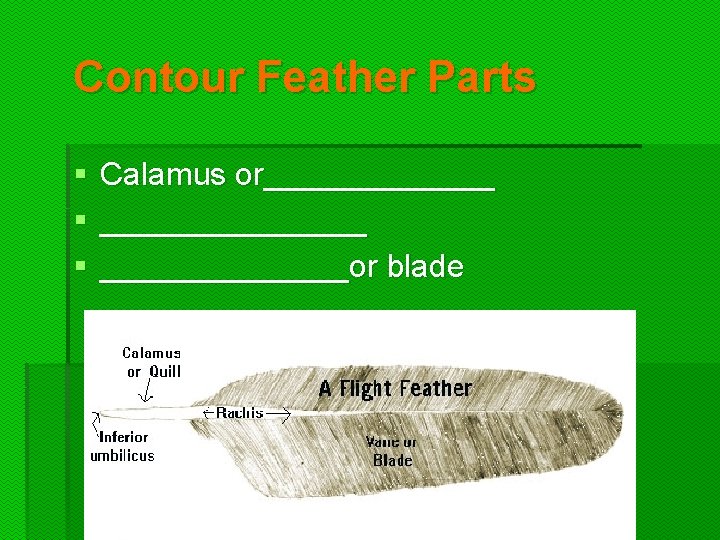
Contour Feather Parts § § § Calamus or_____________or blade
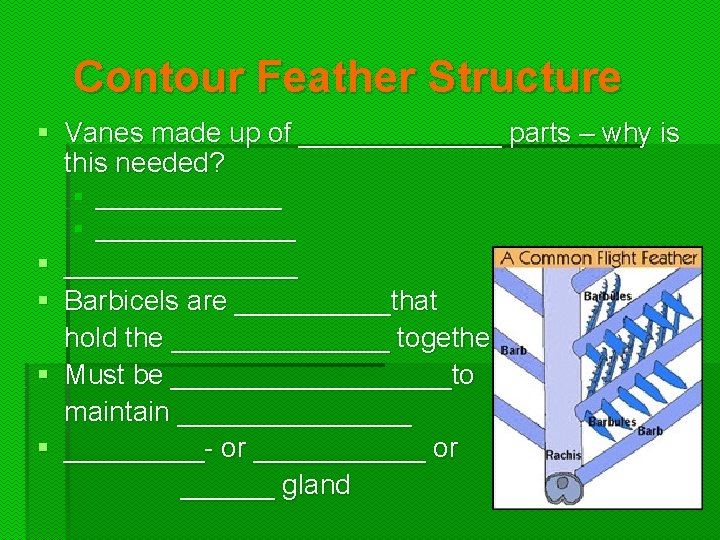
Contour Feather Structure § Vanes made up of _______ parts – why is this needed? § _______________ § Barbicels are _____that hold the _______ together § Must be _________to maintain ________ § _____- or ______ gland
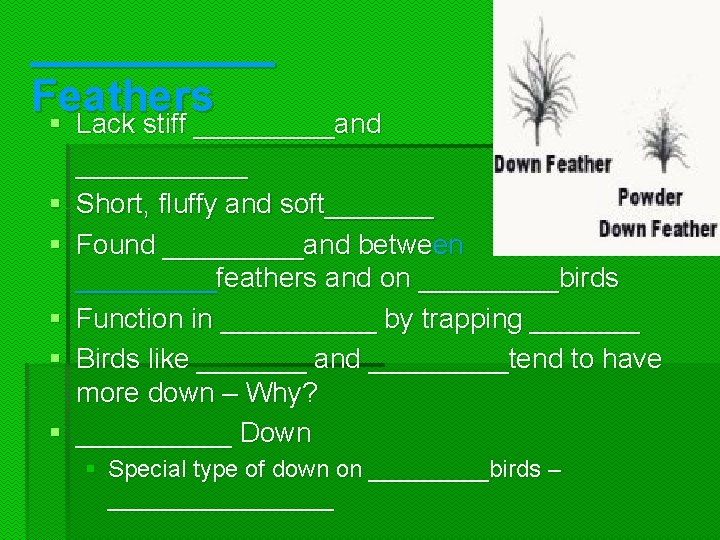
_____ Feathers § Lack stiff _____and § § § ______ Short, fluffy and soft_______ Found _____and between _____feathers and on _____birds Function in _____ by trapping _______ Birds like _______ and _____tend to have more down – Why? _____ Down § Special type of down on _____birds – _________

Filoplumes § Probably _____ feathers – still debated § Other types § Semiplumes § Bristles
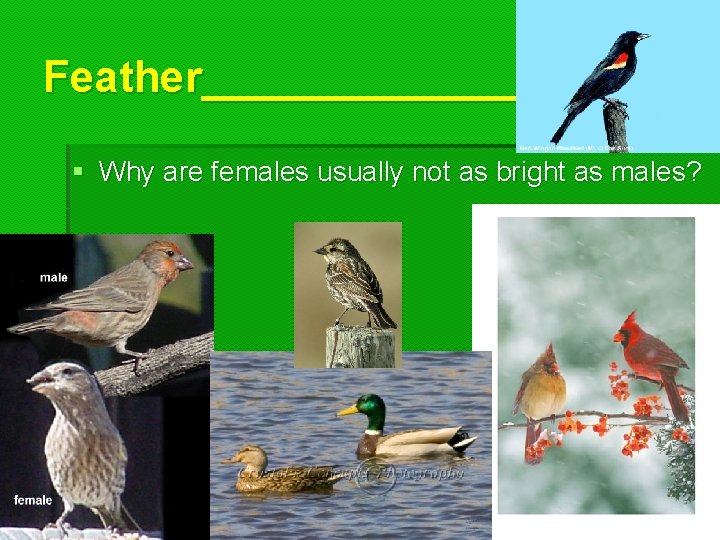
Feather_______ § Why are females usually not as bright as males?
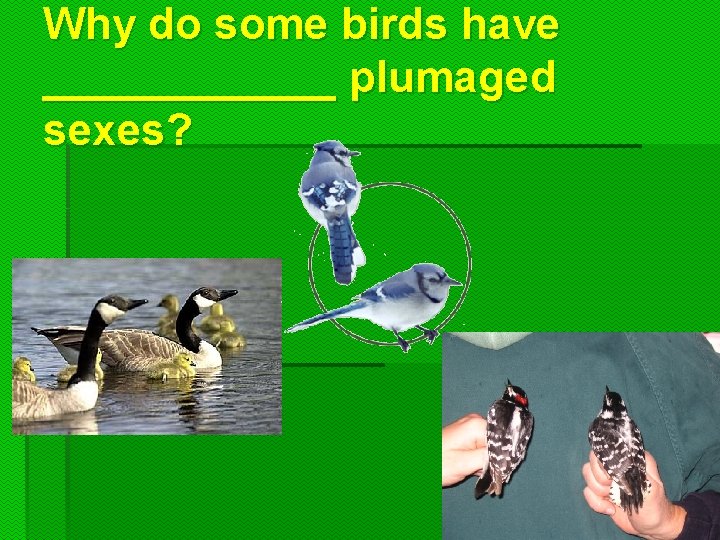
Why do some birds have ______ plumaged sexes?
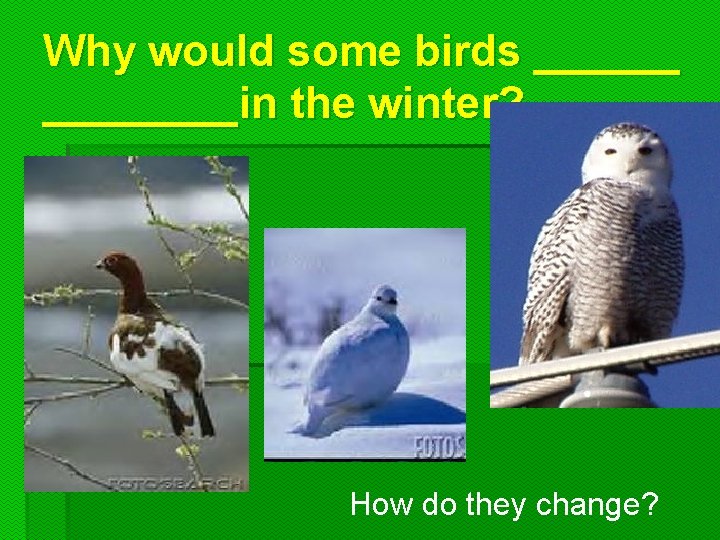
Why would some birds ________in the winter? How do they change?
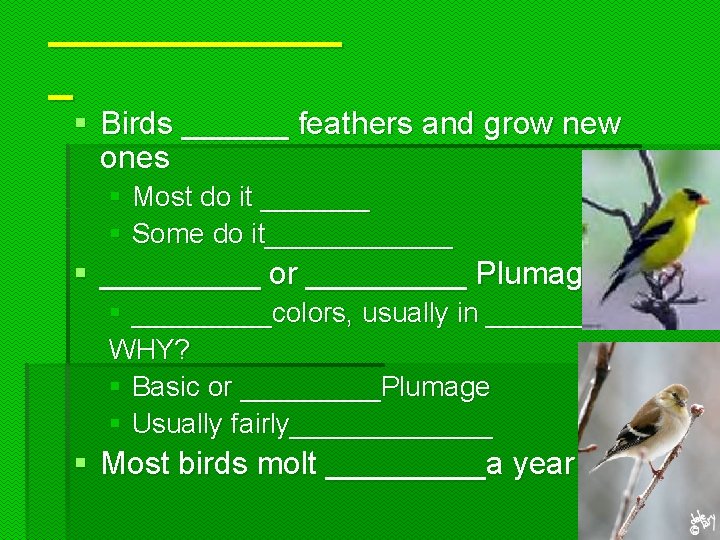
______ _ § Birds ______ feathers and grow new ones § Most do it _______ § Some do it______ § _____ or _____ Plumage § _____colors, usually in _____ WHY? § Basic or _____Plumage § Usually fairly_______ § Most birds molt _____a year
4 Ways Birds are Adapted for Flight 1. ___________________ 2. _______reduction § Bones are nearly ______(pneumatic ) § ____, no ________etc. 3. Large _______muscles that move the _____ 4. _________ _
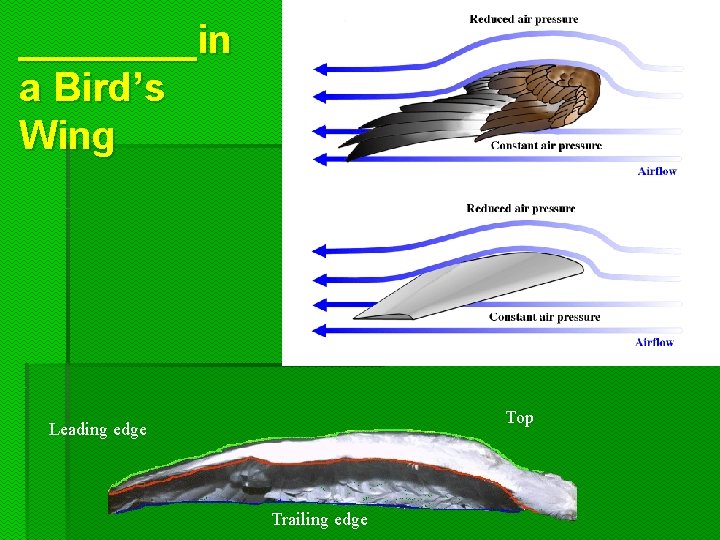
____in a Bird’s Wing Top Leading edge Trailing edge
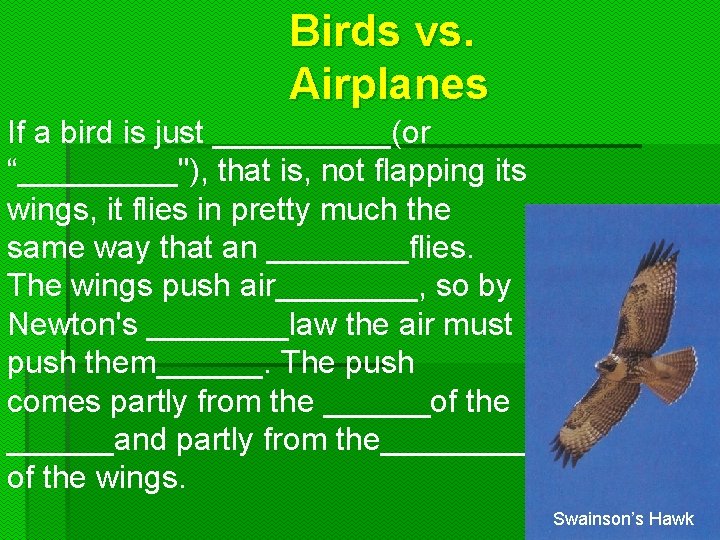
Birds vs. Airplanes If a bird is just _____(or “_____"), that is, not flapping its wings, it flies in pretty much the same way that an ____flies. The wings push air____, so by Newton's ____law the air must push them______. The push comes partly from the ______of the ______and partly from the_____ of the wings. Swainson’s Hawk
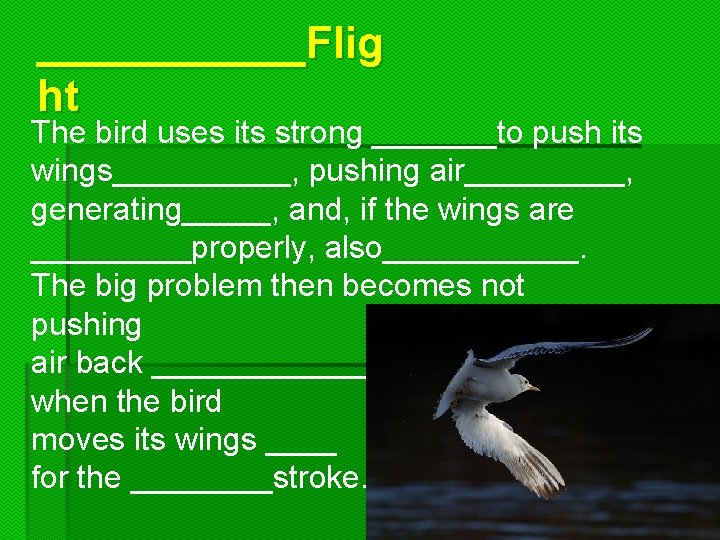
______Flig ht The bird uses its strong _______to push its wings_____, pushing air_____, generating_____, and, if the wings are _____properly, also______. The big problem then becomes not pushing air back ______ when the bird moves its wings ____ for the ____stroke.
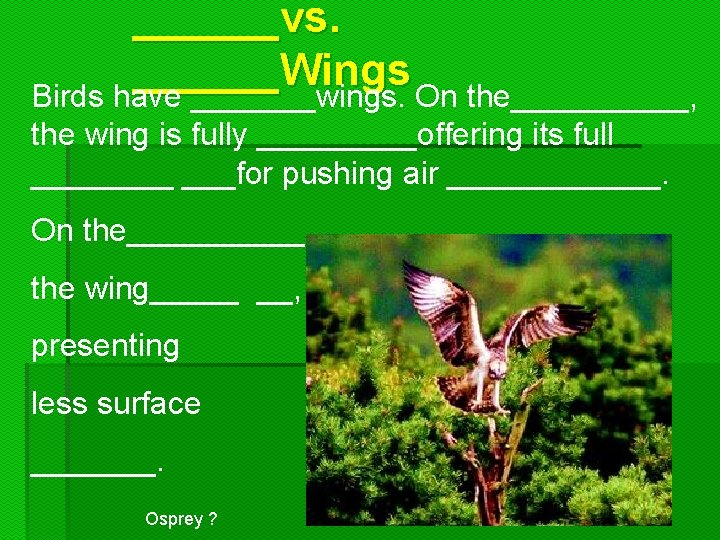
______vs. ______Wings Birds have _______wings. On the_____, the wing is fully _____offering its full ____ ___for pushing air ______. On the_____, the wing_____ __, presenting less surface _______. Osprey ?
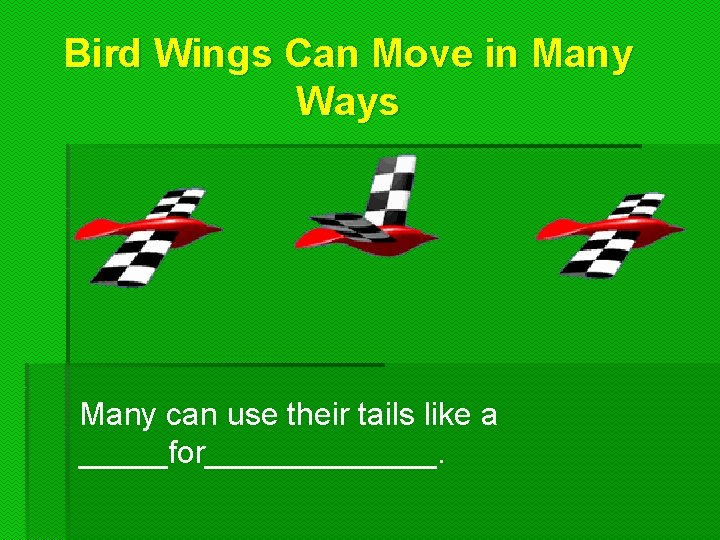
Bird Wings Can Move in Many Ways Many can use their tails like a _____for_______.
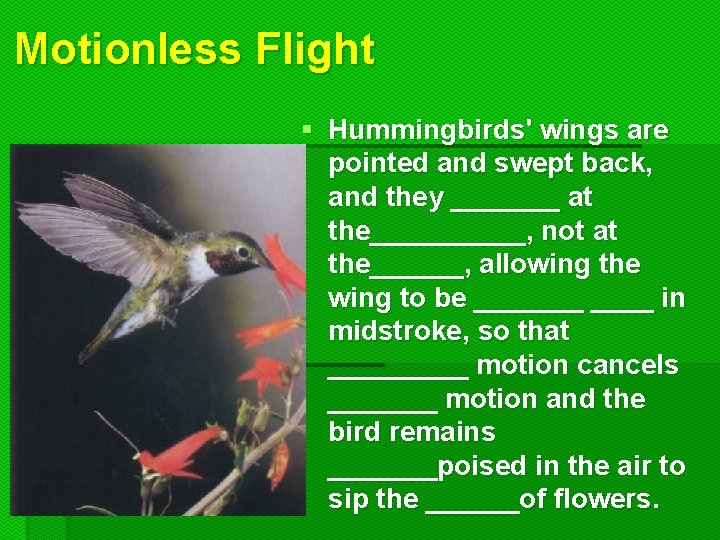
Motionless Flight § Hummingbirds' wings are pointed and swept back, and they _______ at the_____, not at the______, allowing the wing to be _______ in midstroke, so that _____ motion cancels _______ motion and the bird remains _______poised in the air to sip the ______of flowers.
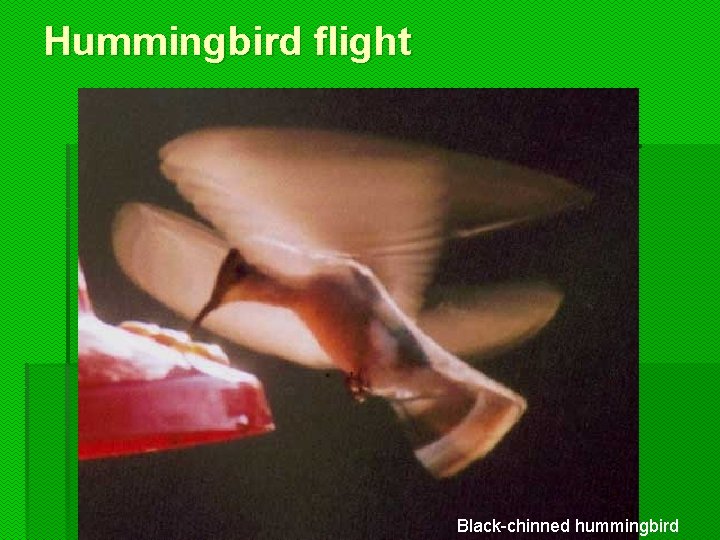
Hummingbird flight Black-chinned hummingbird
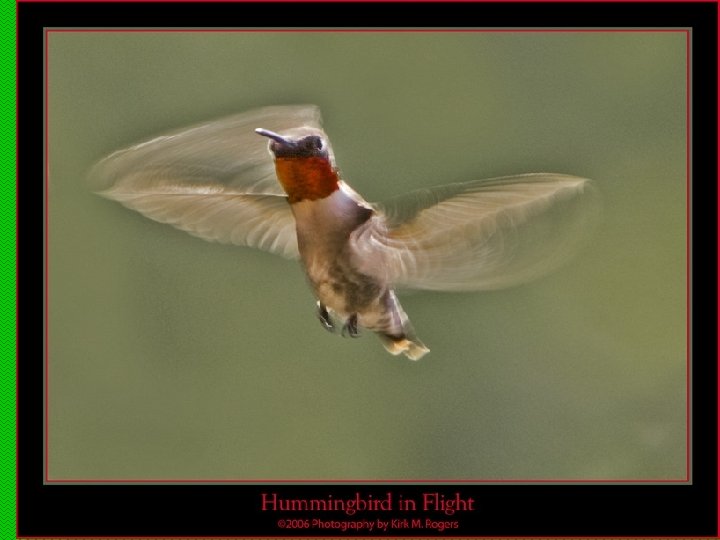
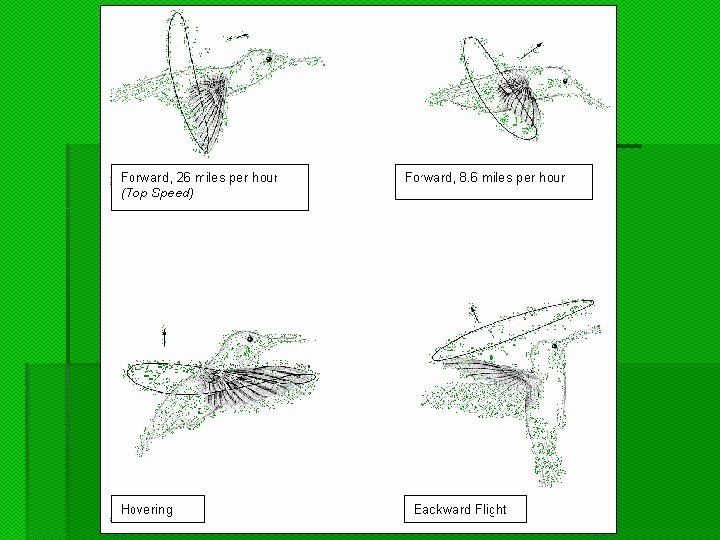
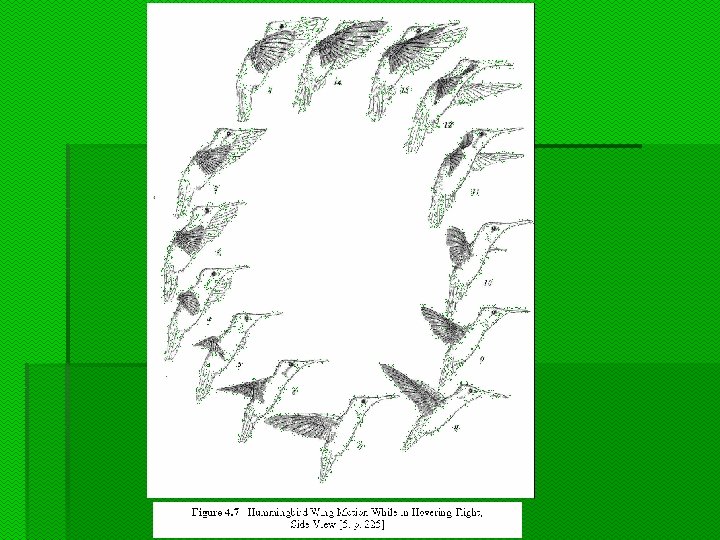

Hummingbird Facts ♂ broad-tailed § How many times does a hummingbird's wings beat per SECOND? § _______ times per second! § How many heartbeats per minute? § Their hearts beat at over ____
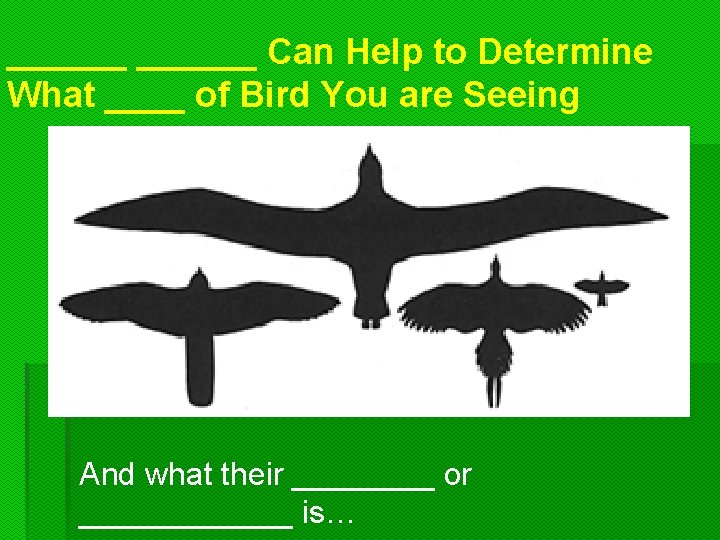
______ Can Help to Determine What ____ of Bird You are Seeing And what their ____ or ______ is…
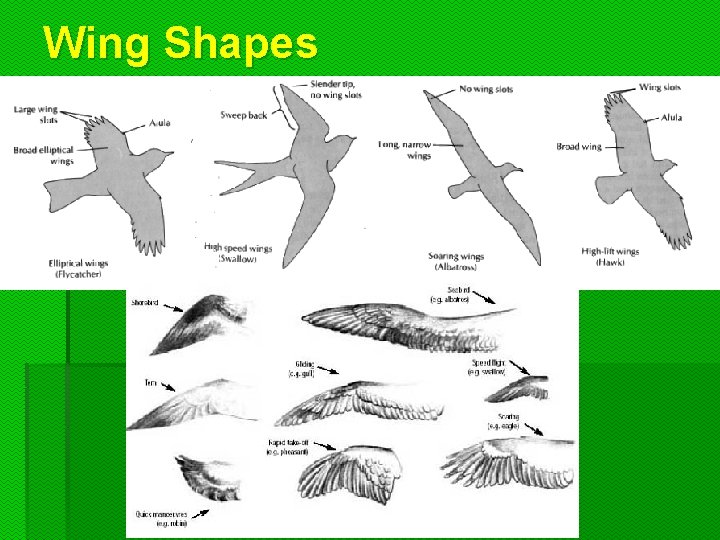
Wing Shapes
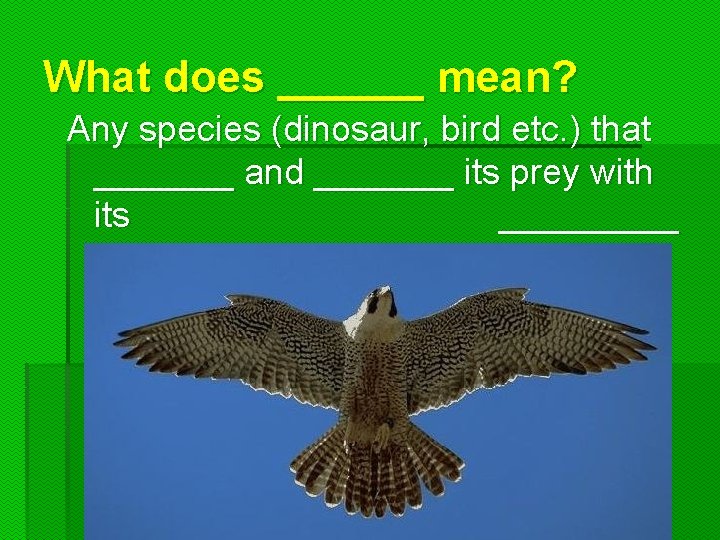
What does ______ mean? Any species (dinosaur, bird etc. ) that _______ and _______ its prey with its _____
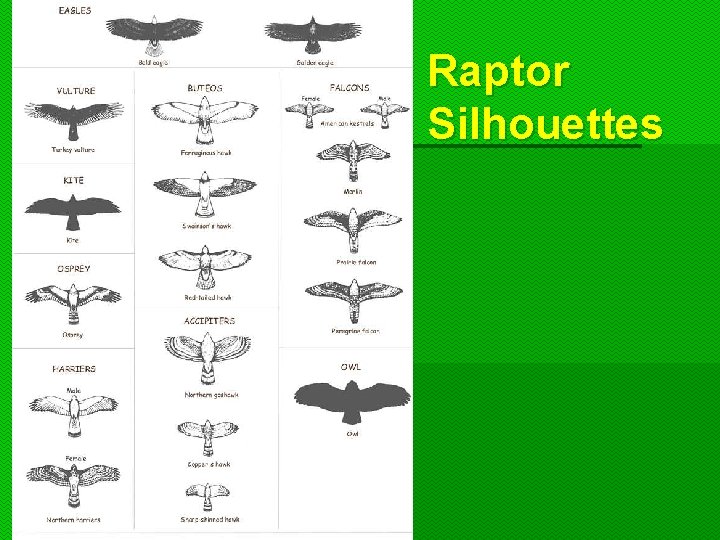
Raptor Silhouettes
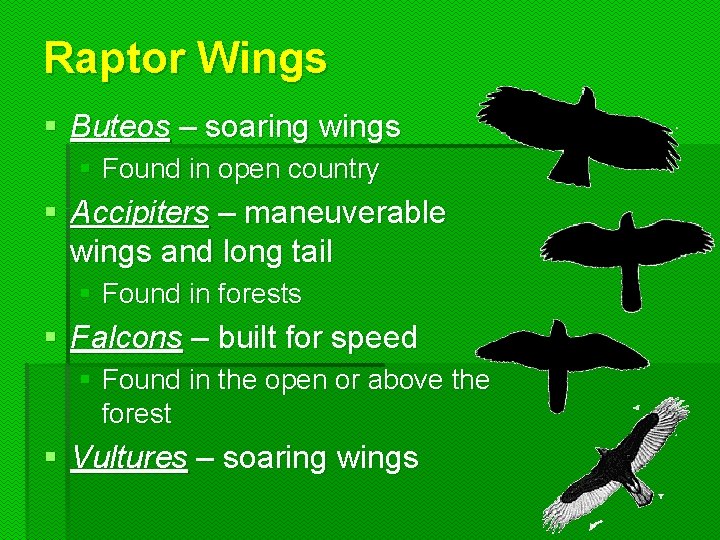
Raptor Wings § Buteos – soaring wings § Found in open country § Accipiters – maneuverable wings and long tail § Found in forests § Falcons – built for speed § Found in the open or above the forest § Vultures – soaring wings
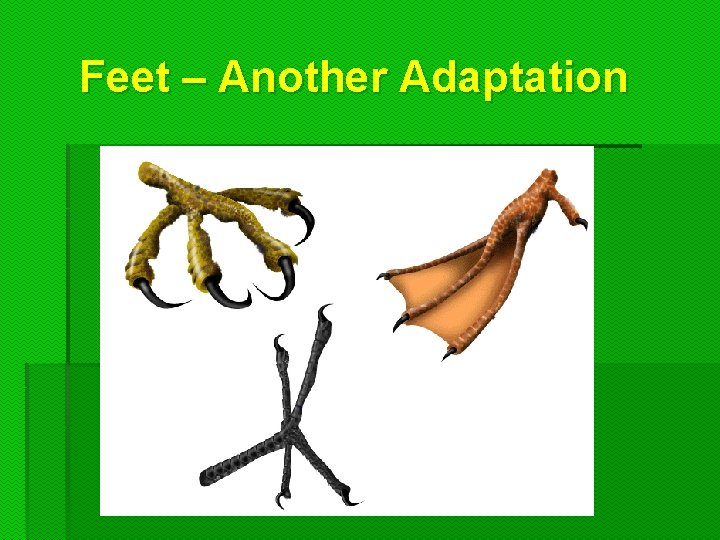
Feet – Another Adaptation
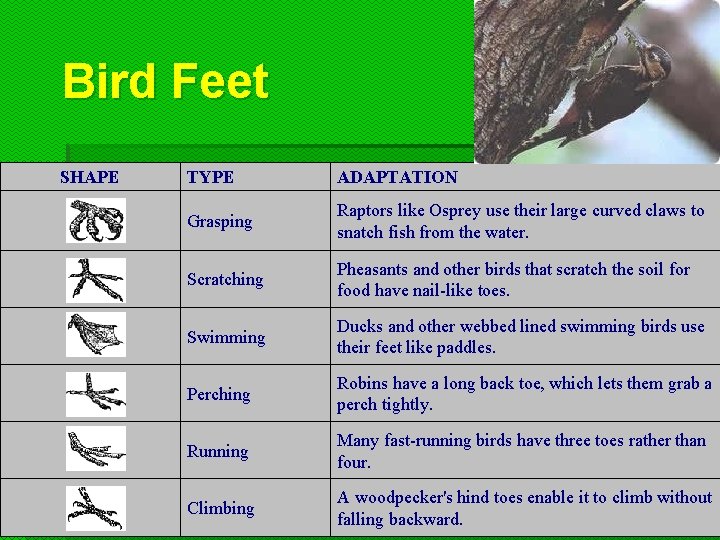
Bird Feet SHAPE TYPE ADAPTATION Grasping Raptors like Osprey use their large curved claws to snatch fish from the water. Scratching Pheasants and other birds that scratch the soil for food have nail-like toes. Swimming Ducks and other webbed lined swimming birds use their feet like paddles. Perching Robins have a long back toe, which lets them grab a perch tightly. Running Many fast-running birds have three toes rather than four. Climbing A woodpecker's hind toes enable it to climb without falling backward.
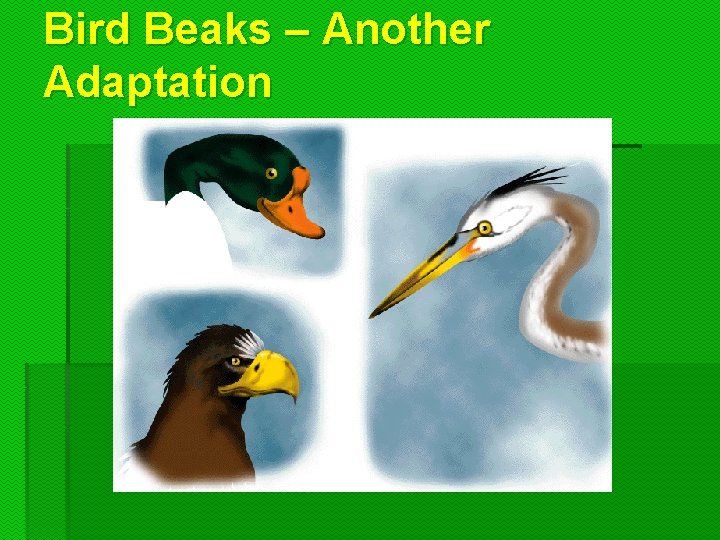
Bird Beaks – Another Adaptation
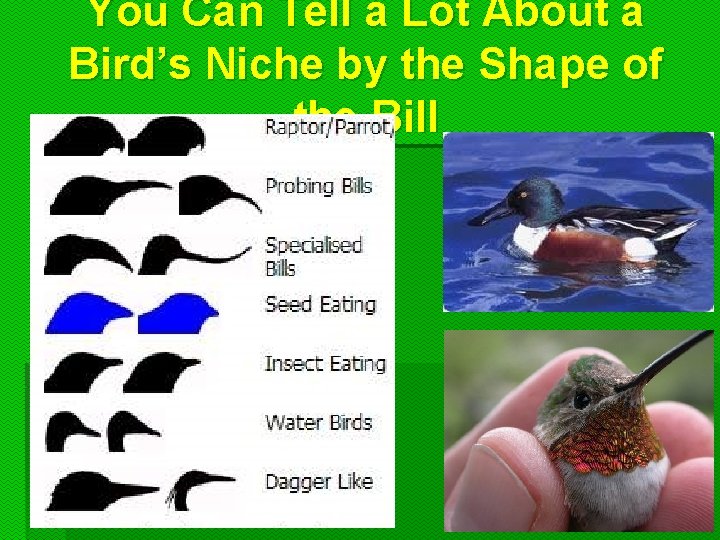
You Can Tell a Lot About a Bird’s Niche by the Shape of the Bill
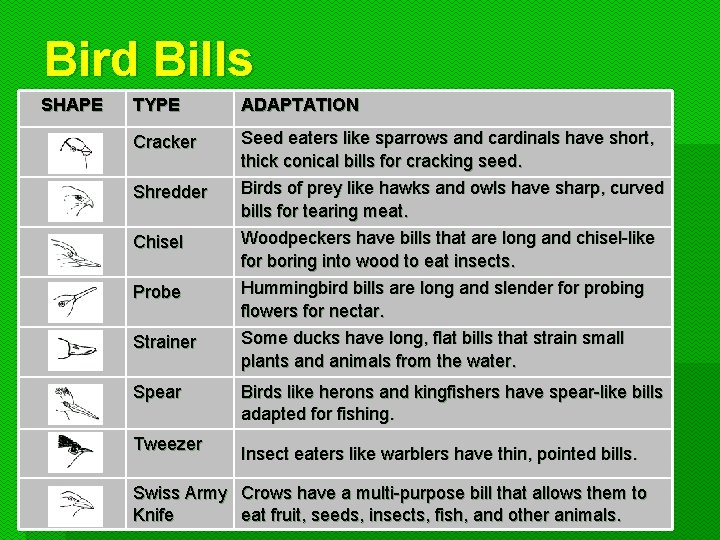
Bird Bills SHAPE TYPE ADAPTATION Cracker Seed eaters like sparrows and cardinals have short, thick conical bills for cracking seed. Birds of prey like hawks and owls have sharp, curved bills for tearing meat. Woodpeckers have bills that are long and chisel-like for boring into wood to eat insects. Hummingbird bills are long and slender for probing flowers for nectar. Some ducks have long, flat bills that strain small plants and animals from the water. Shredder Chisel Probe Strainer Spear Tweezer Birds like herons and kingfishers have spear-like bills adapted for fishing. Insect eaters like warblers have thin, pointed bills. Swiss Army Crows have a multi-purpose bill that allows them to Knife eat fruit, seeds, insects, fish, and other animals.
Bird Adaptations § § § Types of _____ Forelimb Modified into _______ Modifications for_______ Specialized_______
- Slides: 40