
Bird Adaptations 1 Beaks Probing hummingbird Drilling woodpecker
Bird Adaptations 1

Beaks • • • Probing – hummingbird Drilling – woodpecker Cracking – macaw, finch Spearing – great blue heron Tearing – hawk Filtering - duck 2

Probing beak • The hummingbird’s beak allow it to sip nectar from flowers. Some birds have probing beaks that allow them to find food in sand or mud. 3

Drilling beak • Also referred to as a chisel-type beak, a woodpecker can locate and extract insects below the surface of a tree’s bark. 4

Cracking beak • Many birds that eat seeds must be able to crack open the hull that surrounds the seed. Birds such as finches and sparrows do this. 5
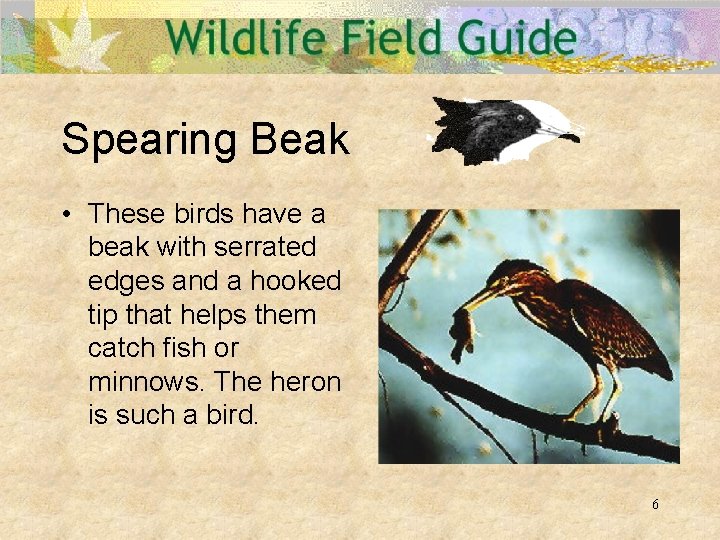
Spearing Beak • These birds have a beak with serrated edges and a hooked tip that helps them catch fish or minnows. The heron is such a bird. 6
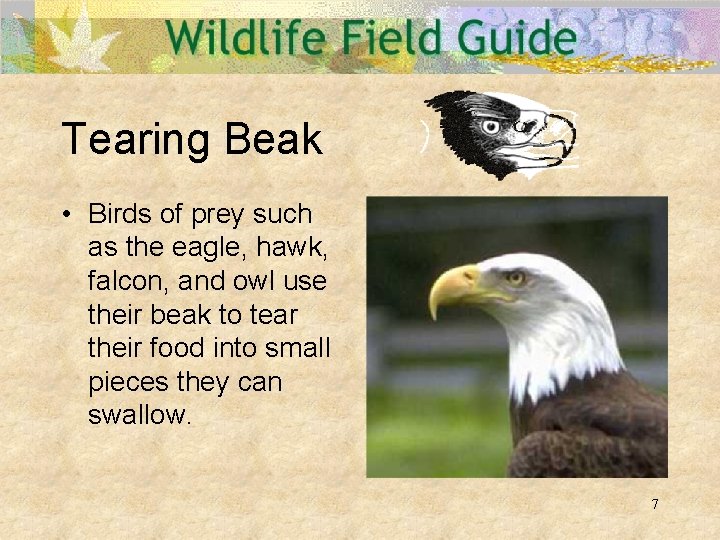
Tearing Beak • Birds of prey such as the eagle, hawk, falcon, and owl use their beak to tear their food into small pieces they can swallow. 7
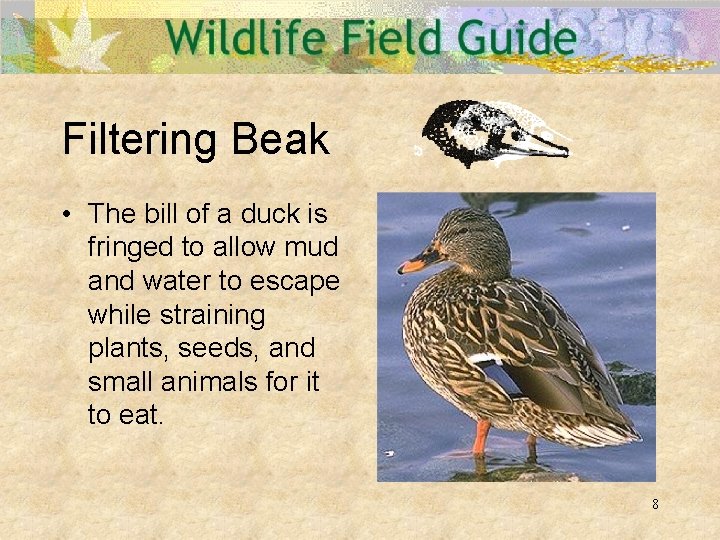
Filtering Beak • The bill of a duck is fringed to allow mud and water to escape while straining plants, seeds, and small animals for it to eat. 8

Beaks 1 st Trial 2 nd Trail 3 rd Trial 4 th Trial 5 th Trial Average #1 #2 #3 9
Activities • http: //askeric. org/Virtual/Lessons/Science/Biol ogical/BIO 0116. html - Animal Adaptations: Focus on Bird Beaks • http: //www. tenet. edu/teks/science/stacks/instr uct/vistas/5 th_grade. html - Eaks! Beaks! • http: //projects. edtech. sandi. net/pershing/birds/ designabird. htm - Design a Bird 10
- Slides: 10