
BIPARTITE GRAPHS AND ITS APPLICATIONS PRESENTED BY SARIKA
BIPARTITE GRAPHS AND ITS APPLICATIONS PRESENTED BY SARIKA PAMMI
OUTLINE : • • • INTRODUCTION BIPARTITE GRAPH PROBLEMS IN BIPARTITE GRAPH PROBLEM DEFINITION EXAMPLE TO SOLVE APPLICATIONS
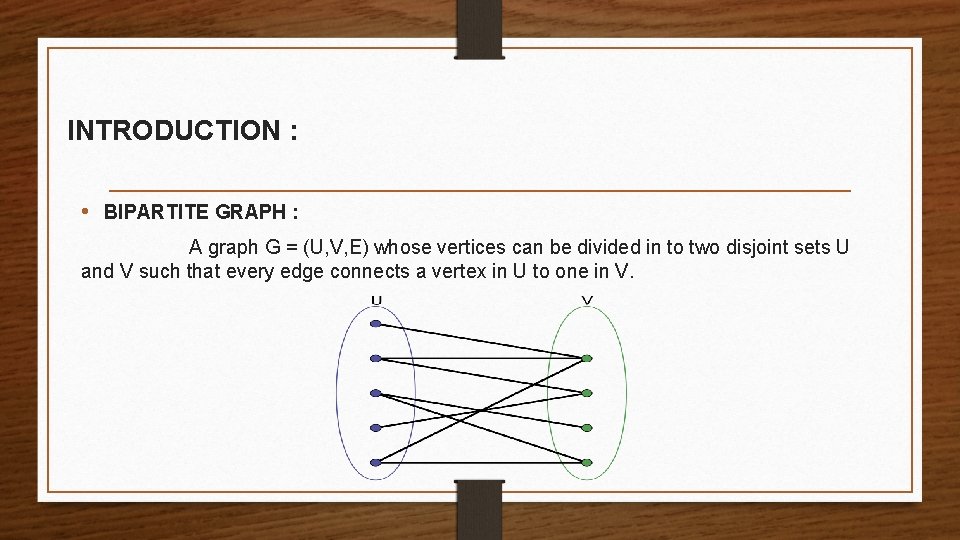
INTRODUCTION : • BIPARTITE GRAPH : A graph G = (U, V, E) whose vertices can be divided in to two disjoint sets U and V such that every edge connects a vertex in U to one in V.
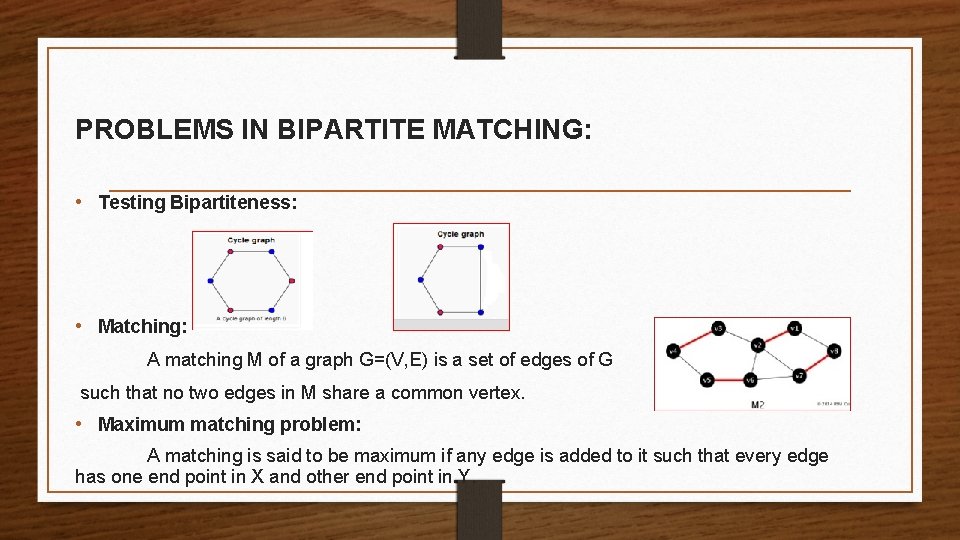
PROBLEMS IN BIPARTITE MATCHING: • Testing Bipartiteness: • Matching: A matching M of a graph G=(V, E) is a set of edges of G such that no two edges in M share a common vertex. • Maximum matching problem: A matching is said to be maximum if any edge is added to it such that every edge has one end point in X and other end point in Y.
PROBLEM DEFINITION : • To find maximum flow in a flow network from a single source s to a single sink t. • Example : • Finding the maximum number of trucks we can send out a location according to road map with different road capacities.
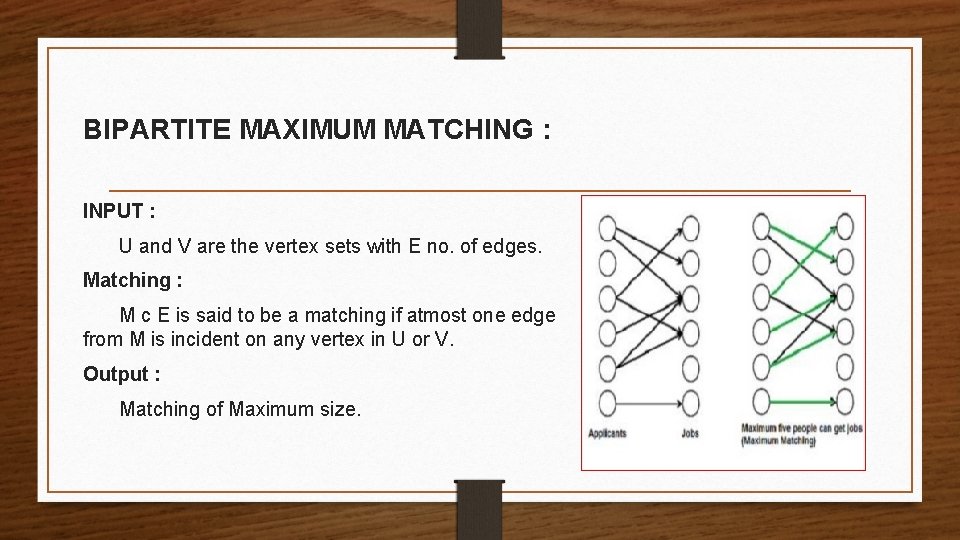
BIPARTITE MAXIMUM MATCHING : INPUT : U and V are the vertex sets with E no. of edges. Matching : M c E is said to be a matching if atmost one edge from M is incident on any vertex in U or V. Output : Matching of Maximum size.
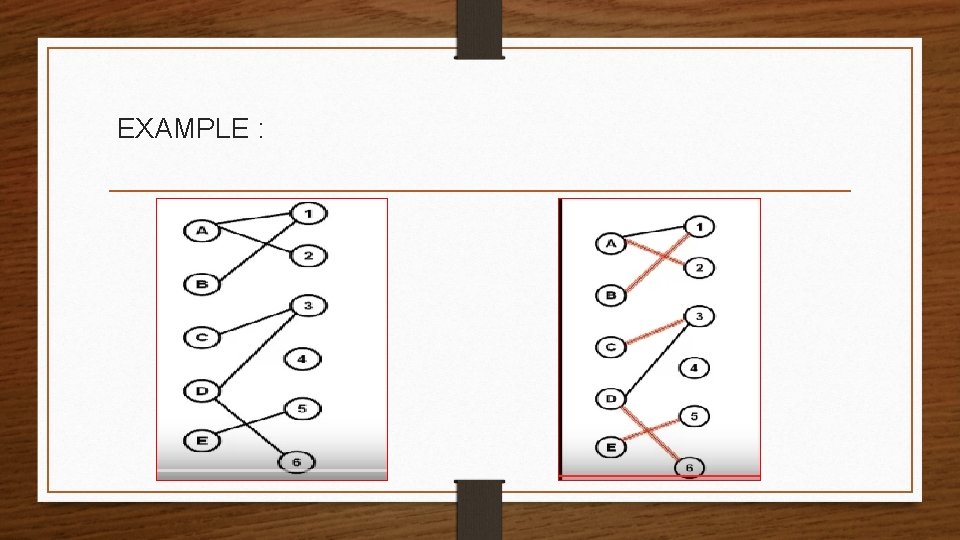
EXAMPLE :
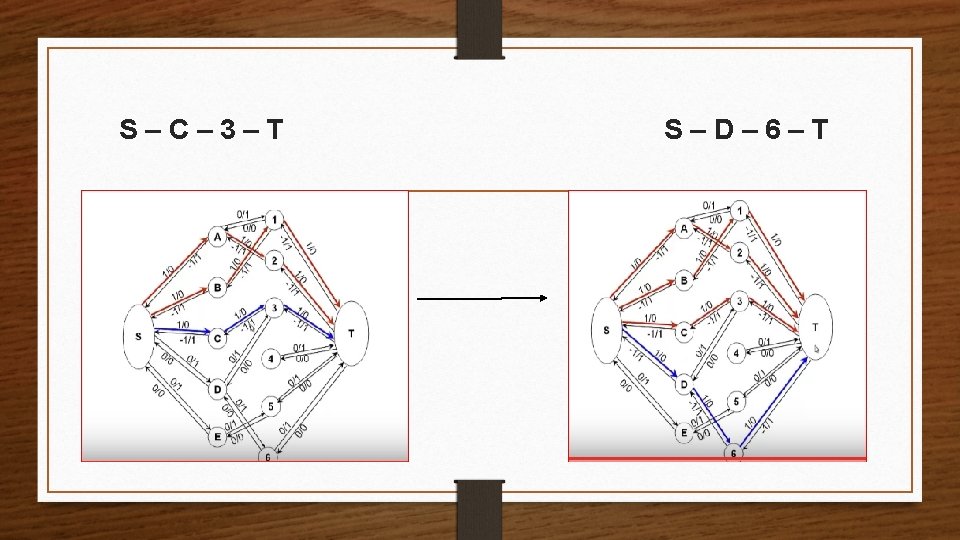
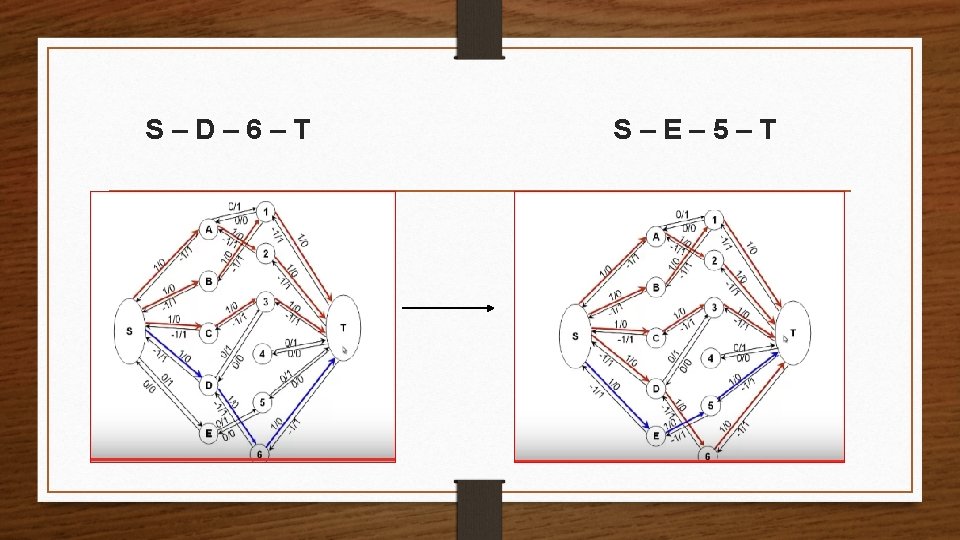
GRAPHS USED : • Flow nework (G): • Simple Directed graph • 1 source s 1 sink t • Non negative capacity edge • Residual graph (Gf): • only edges from G can still have flow • Added edges : reverse edges to decrease flow • Augmenting paths (p): • path from s to t in GF • Residual capacity = smallest capacity of edges of p
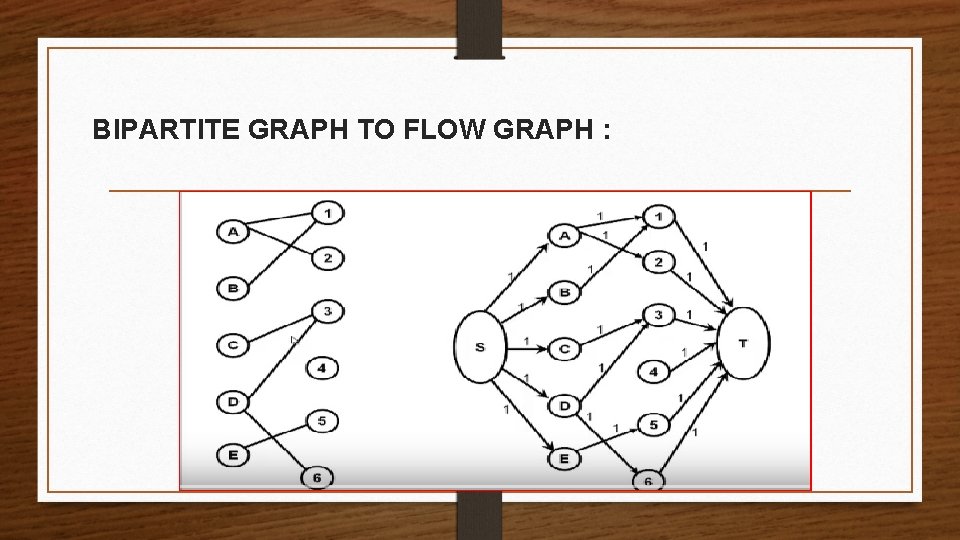
BIPARTITE GRAPH TO FLOW GRAPH :
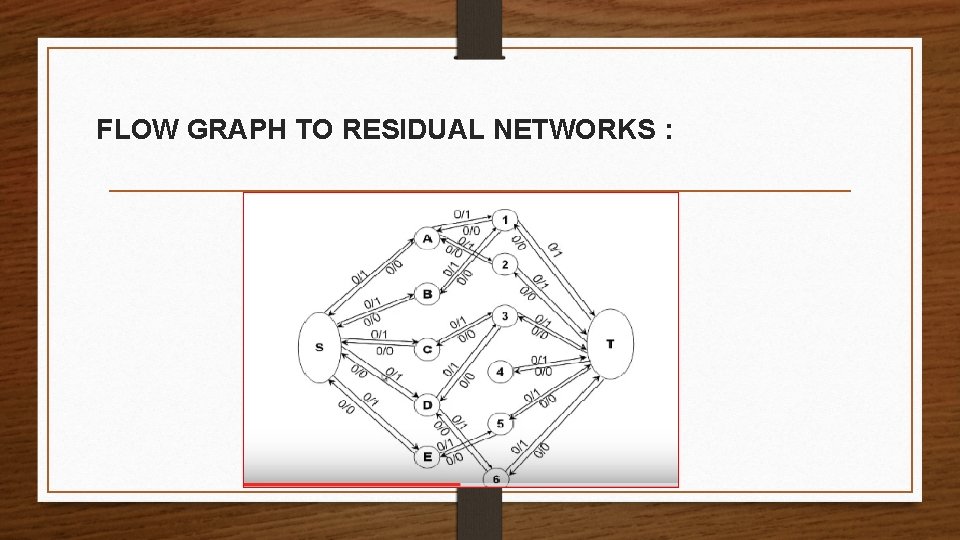
FLOW GRAPH TO RESIDUAL NETWORKS :
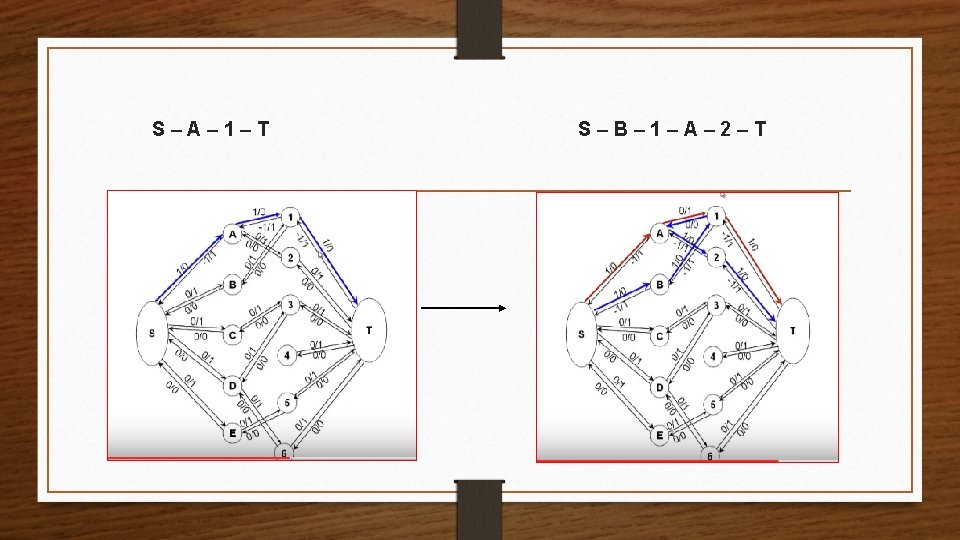
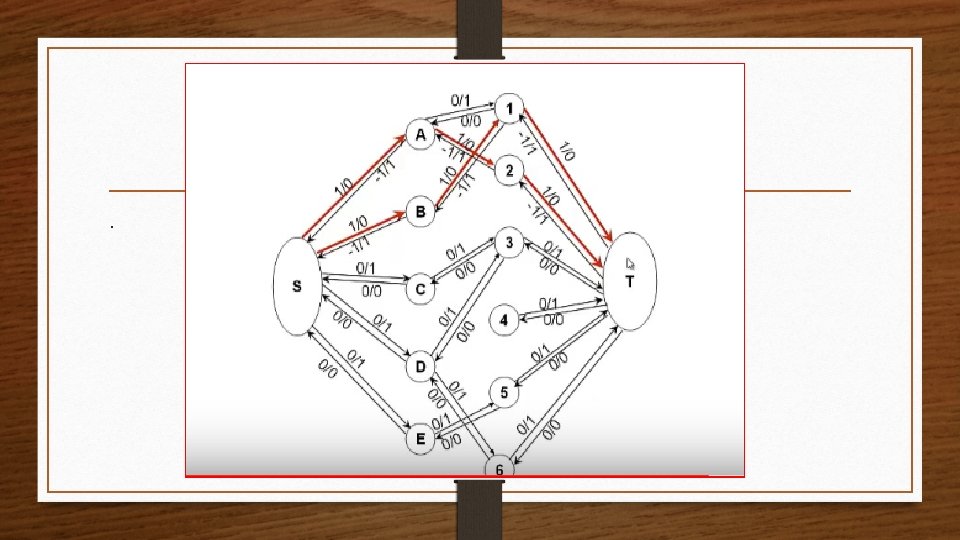
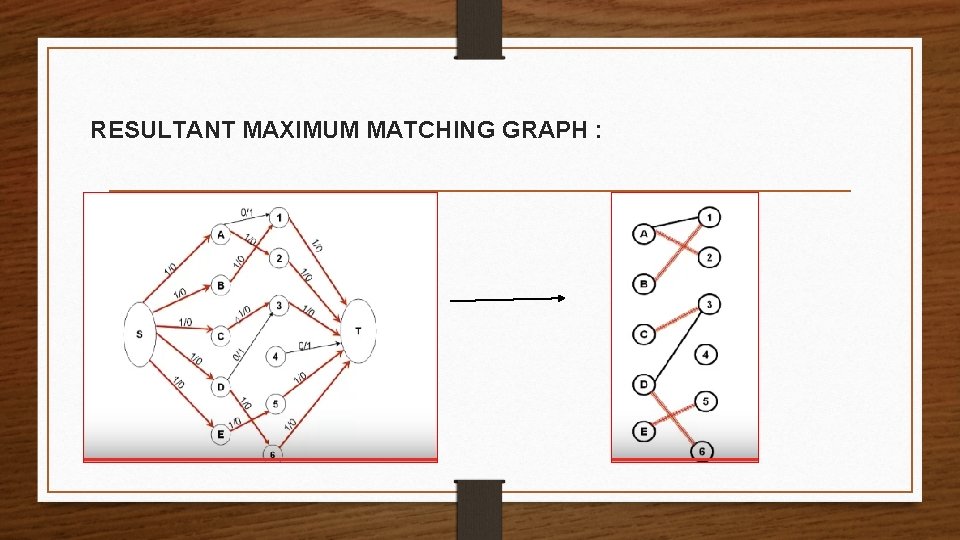
RESULTANT MAXIMUM MATCHING GRAPH : .
APPLICATIONS : • Scheduling problems such as assigning M jobs to a machine with N time slots with constraints such as certain jobs can be performed only during some particular time slots. What may be the maximum number of jobs that can be performed in a day. • In real world : scheduling the Advertisements. • Scheduling the trains on the tracks.
. CONCLUSION
. ANY QUERRIES ? ? ?
- Slides: 18