
Bioturbation The mixing of bulk sediments or sedimentary
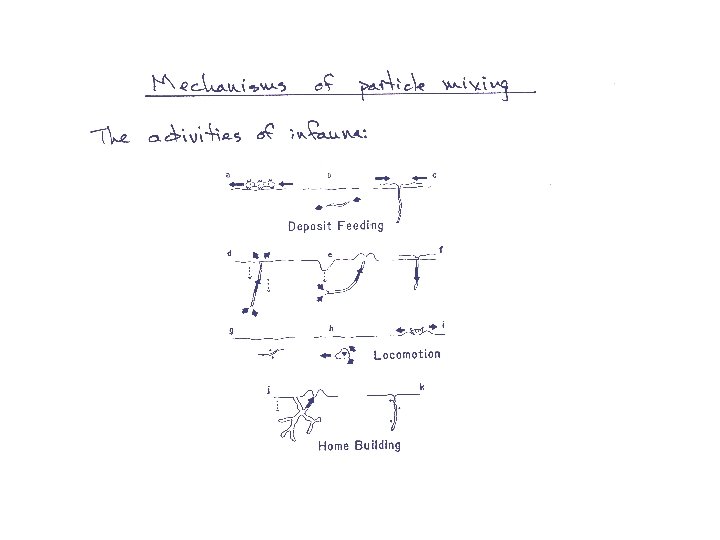
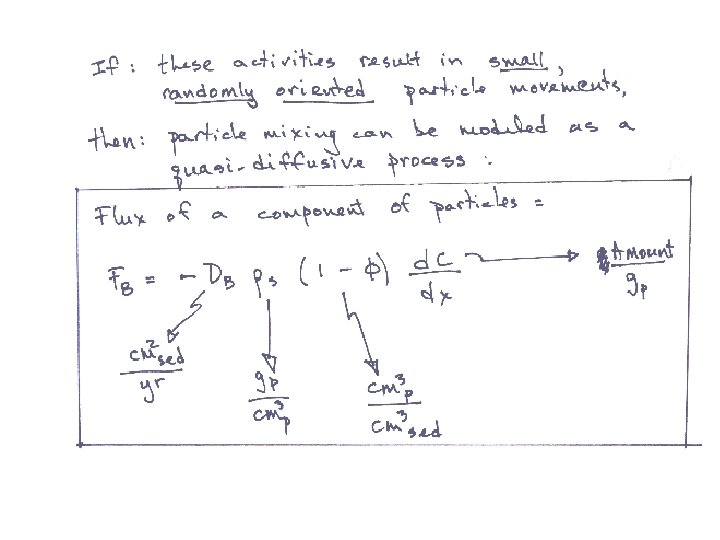
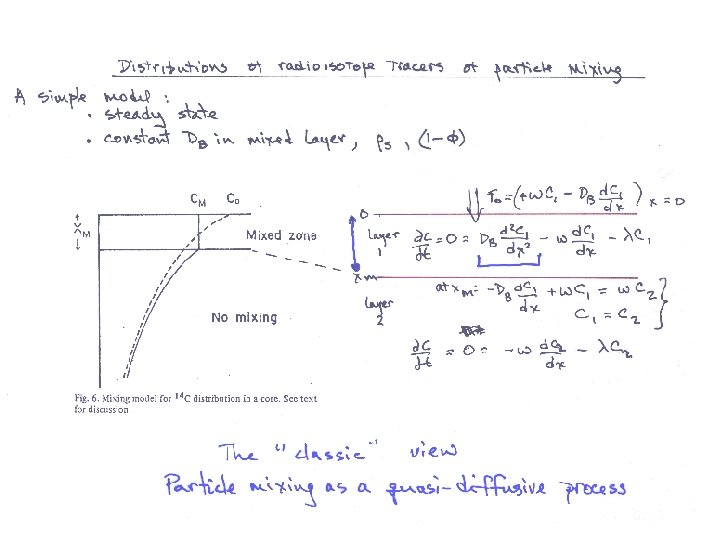
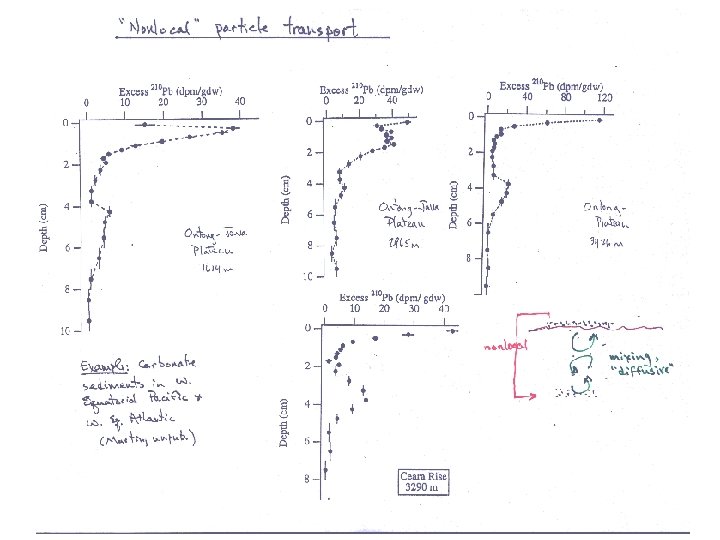
Bioturbation The mixing of bulk sediments or sedimentary particles by animals living in the sediments 1) Why worry about it? 2) The “classical” view: sediment mixing as a 1. quasi-diffusive process 3) Complications to quasi-diffusive mixing 4) “Non-diffusive” mixing and why it matters
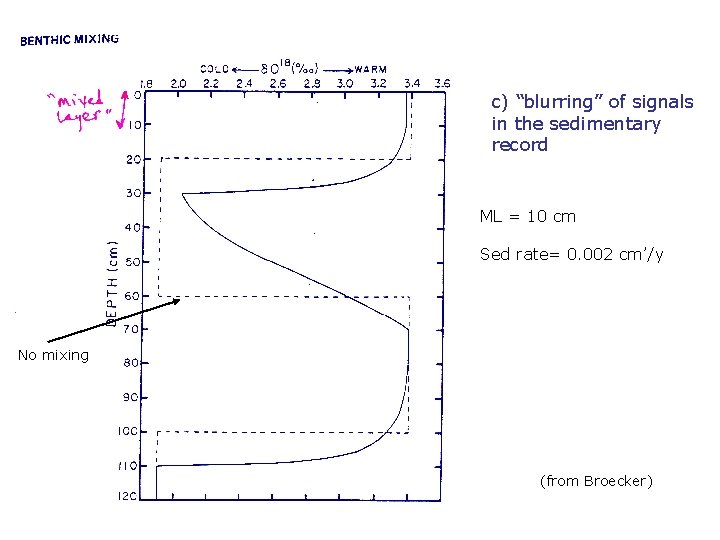
c) “blurring” of signals in the sedimentary record ML = 10 cm Sed rate= 0. 002 cm’/y No mixing (from Broecker)
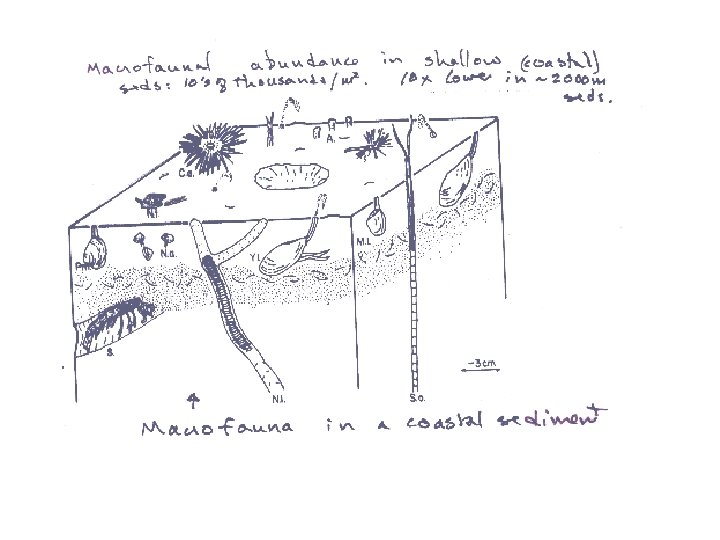
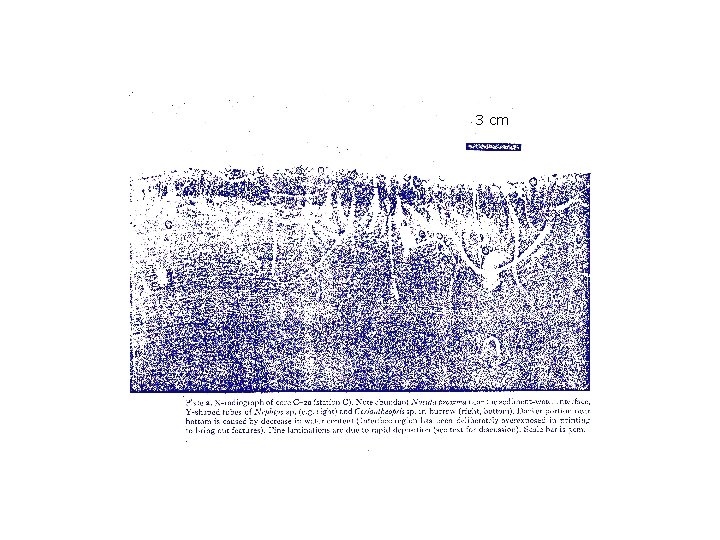
3 cm
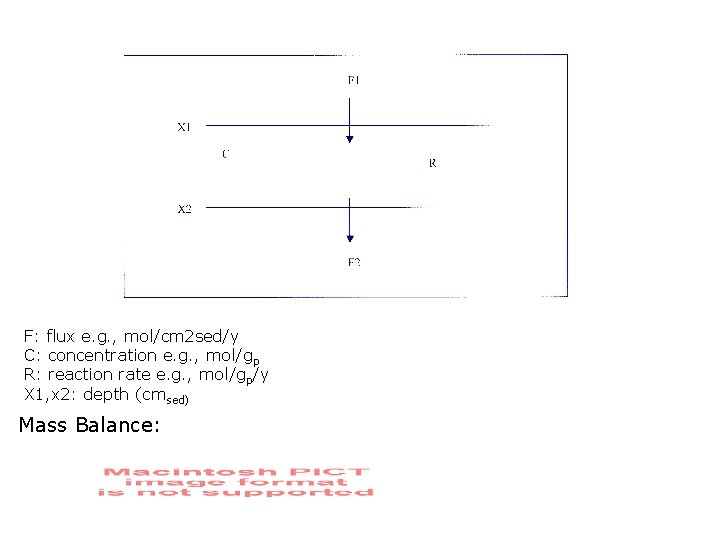
F: flux e. g. , mol/cm 2 sed/y C: concentration e. g. , mol/gp R: reaction rate e. g. , mol/gp/y X 1, x 2: depth (cmsed) Mass Balance:
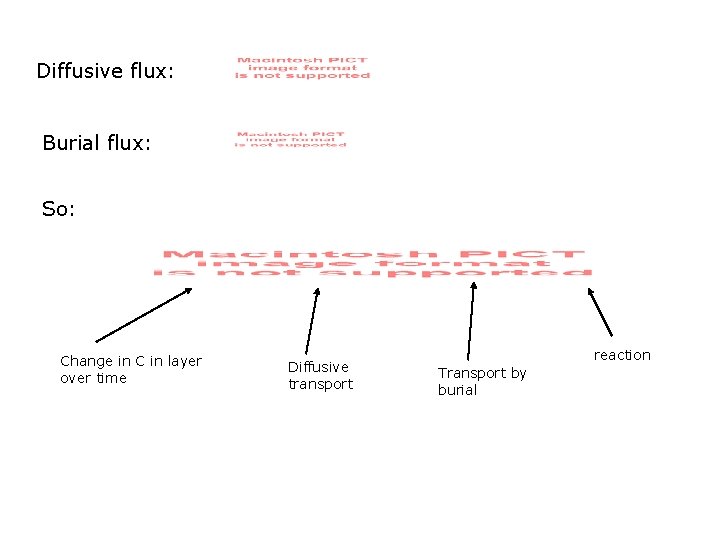
Diffusive flux: Burial flux: So: Change in C in layer over time Diffusive transport reaction Transport by burial
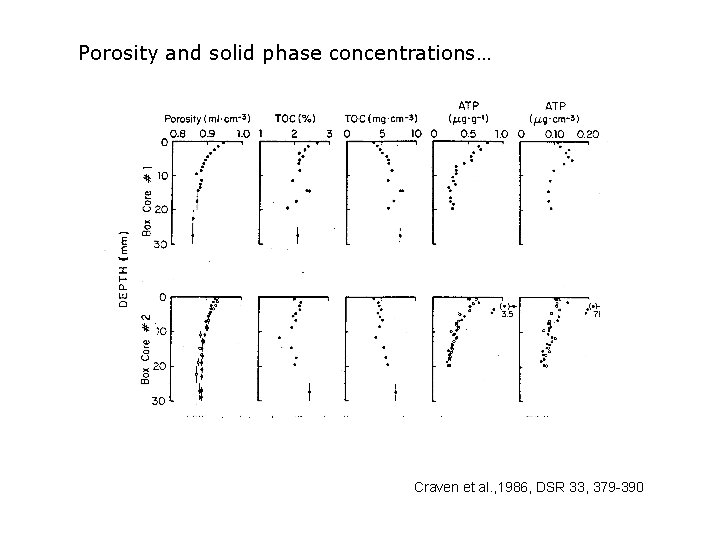
Porosity and solid phase concentrations… Craven et al. , 1986, DSR 33, 379 -390
Case 1: Only burial; steady state; , , w constant; R = - C Case 2 : only quasi-diffusive mixing ; steady state; , , w constant; R = - C
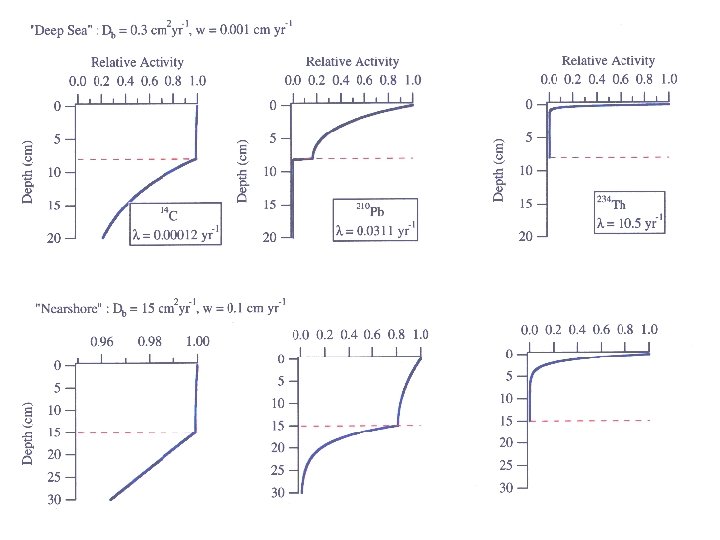
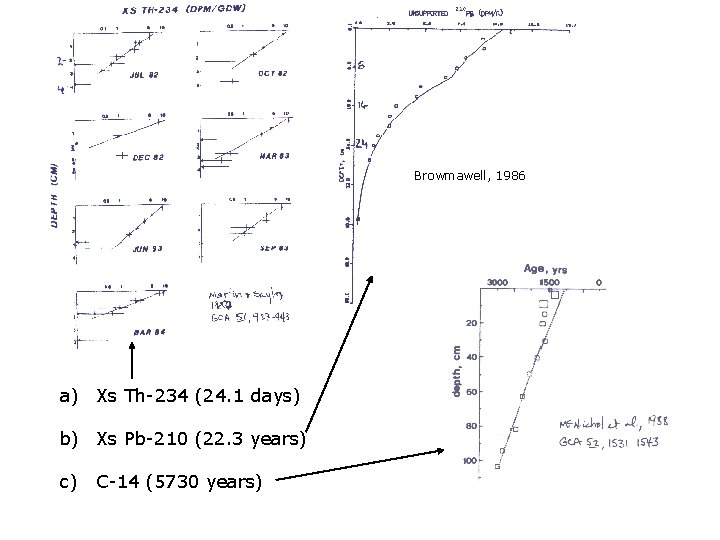
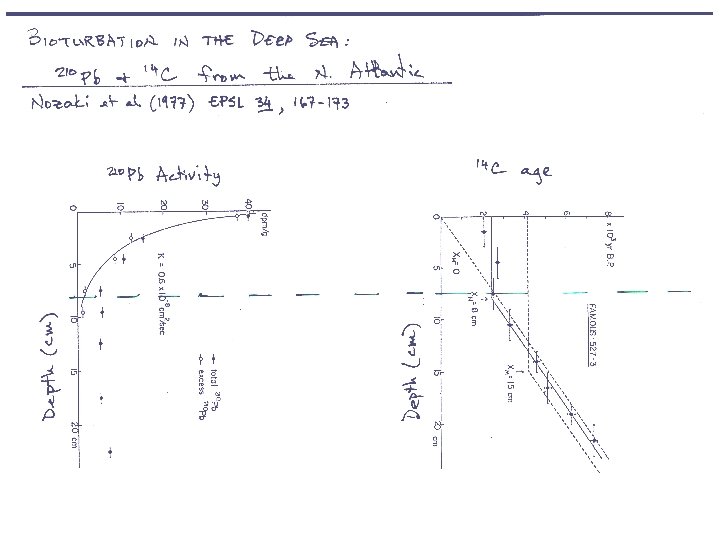
Browmawell, 1986 a) Xs Th-234 (24. 1 days) b) Xs Pb-210 (22. 3 years) c) C-14 (5730 years)
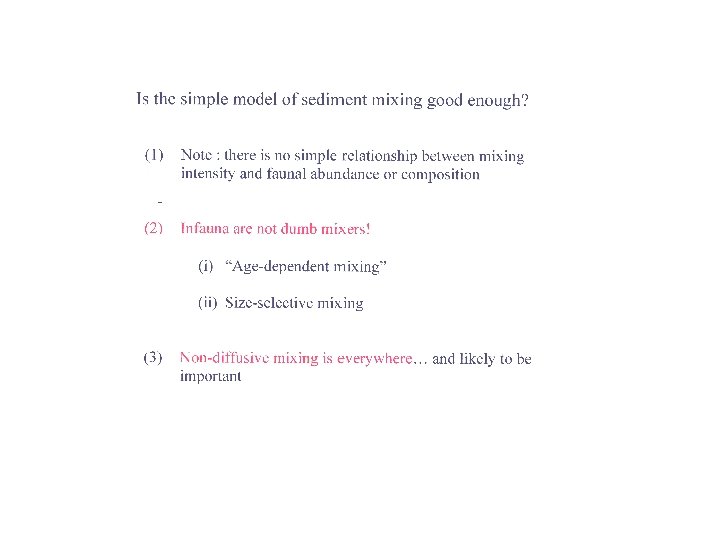
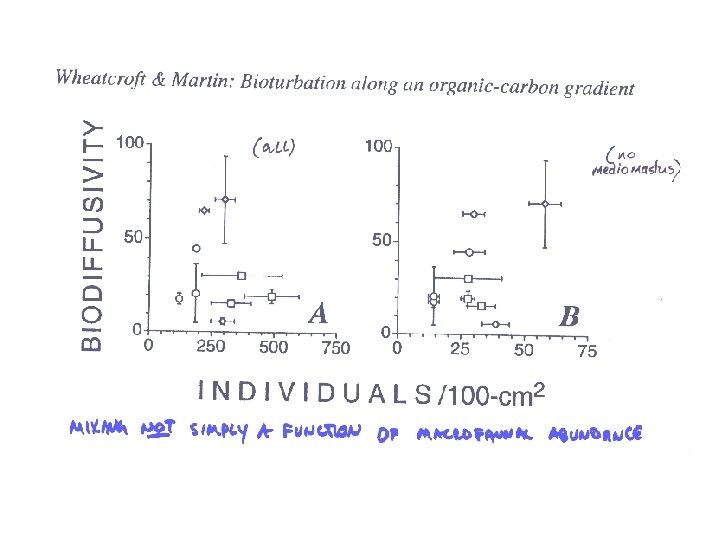
“Age-dependent mixing”… compare rates from 2 tracers

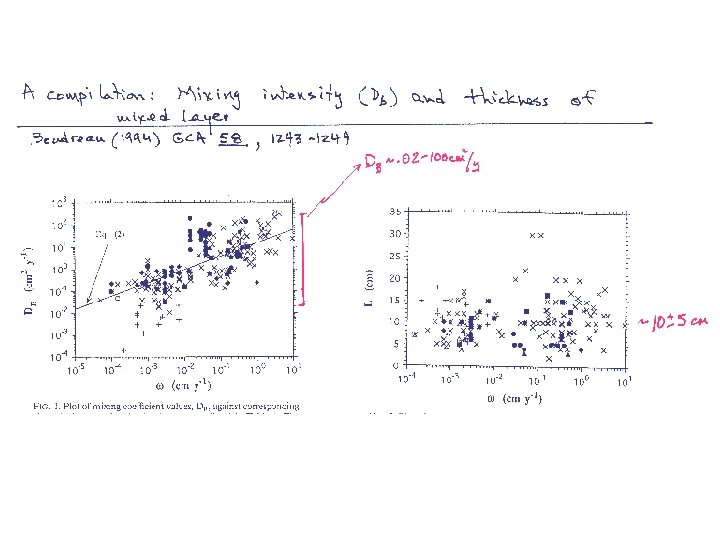
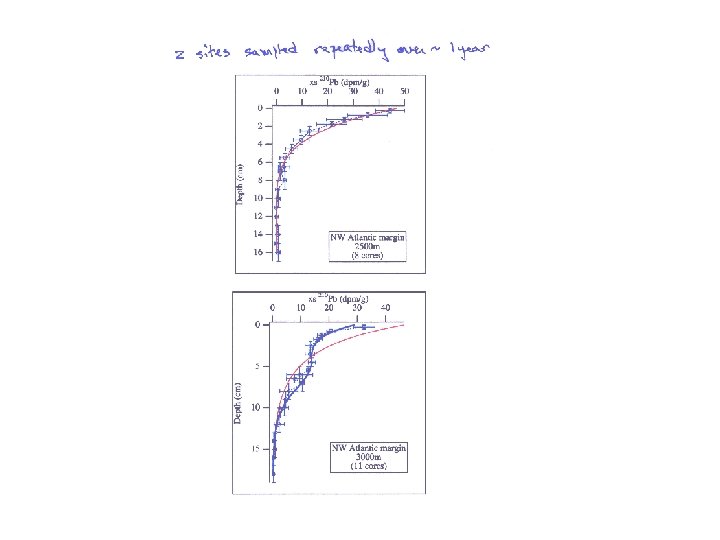
Mixing on the NW Atlantic continental margin
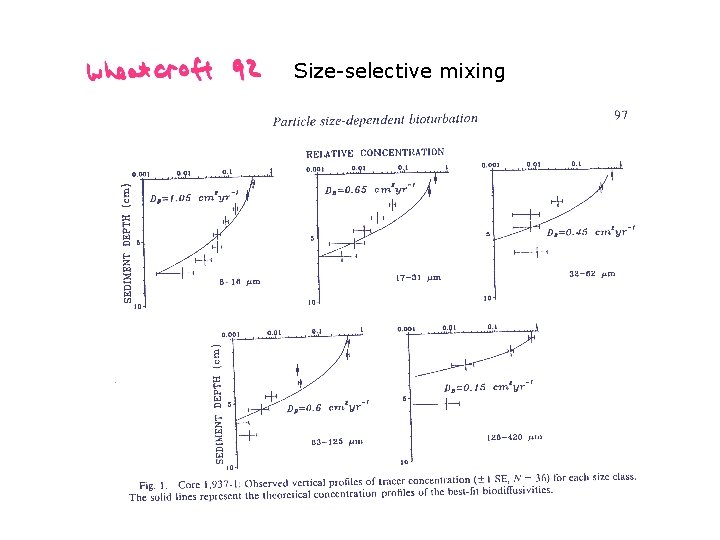
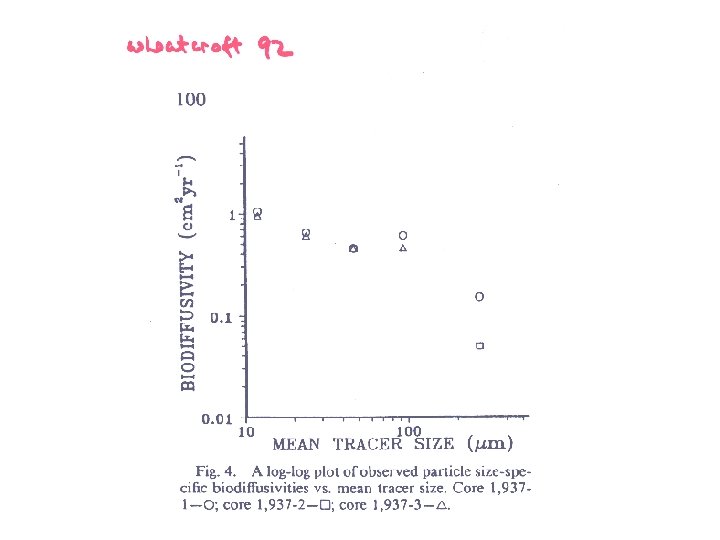
Size-selective mixing
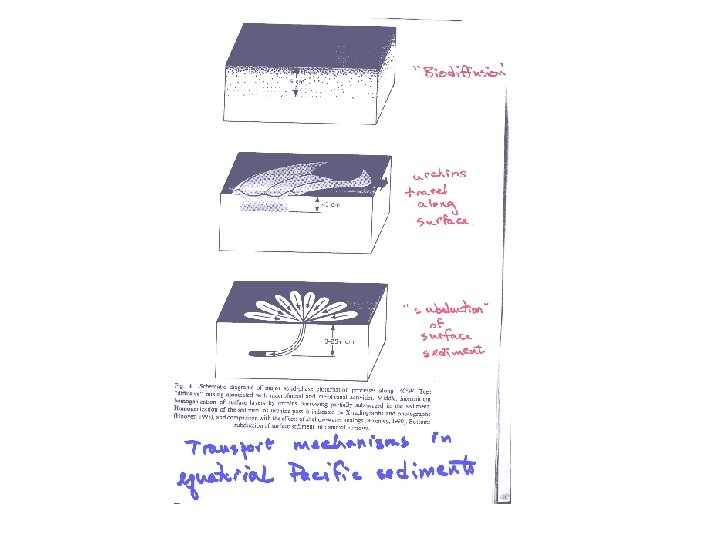
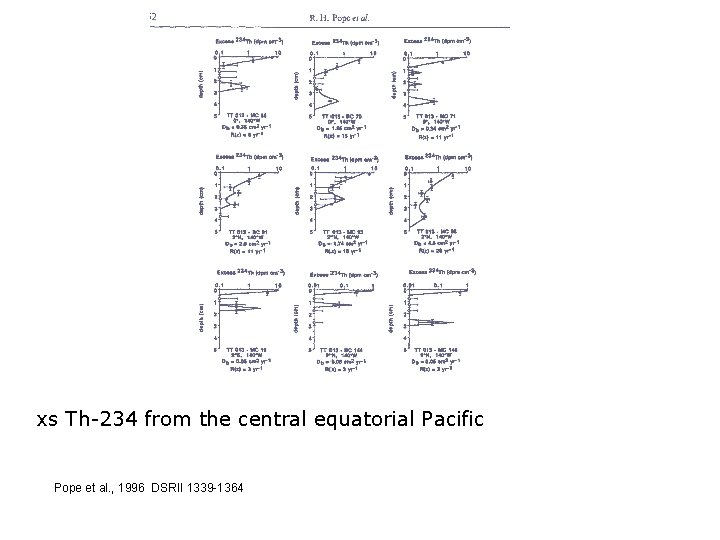
xs Th-234 from the central equatorial Pacific Pope et al. , 1996 DSRII 1339 -1364
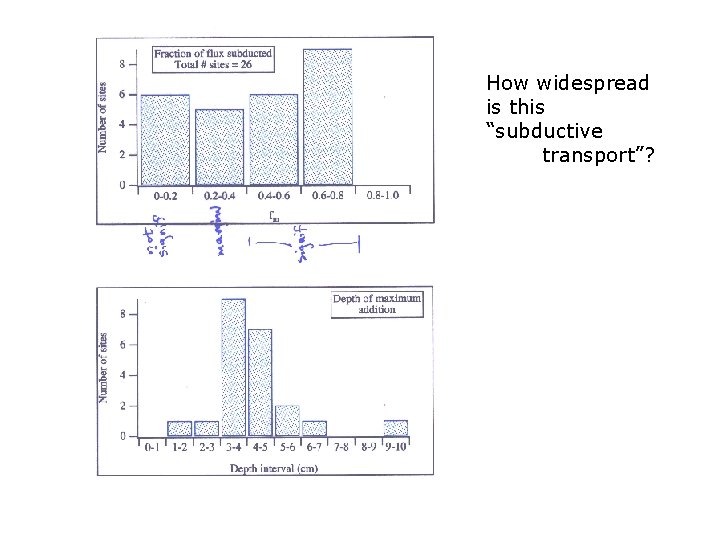
How widespread is this “subductive transport”?
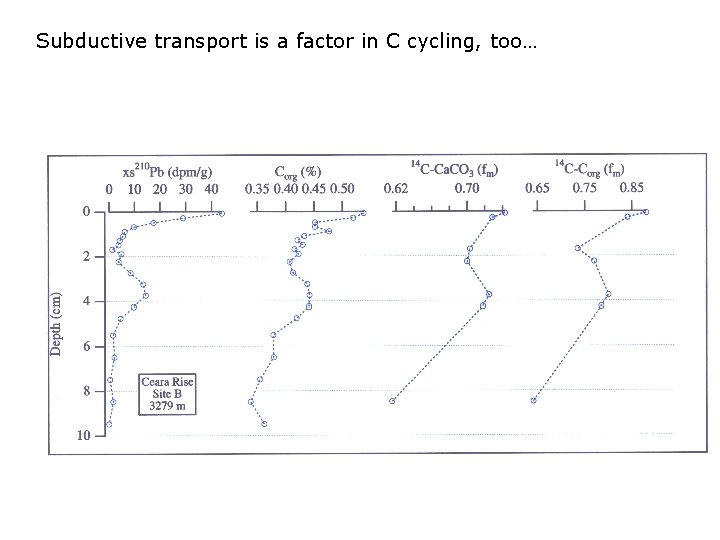
Subductive transport is a factor in C cycling, too…
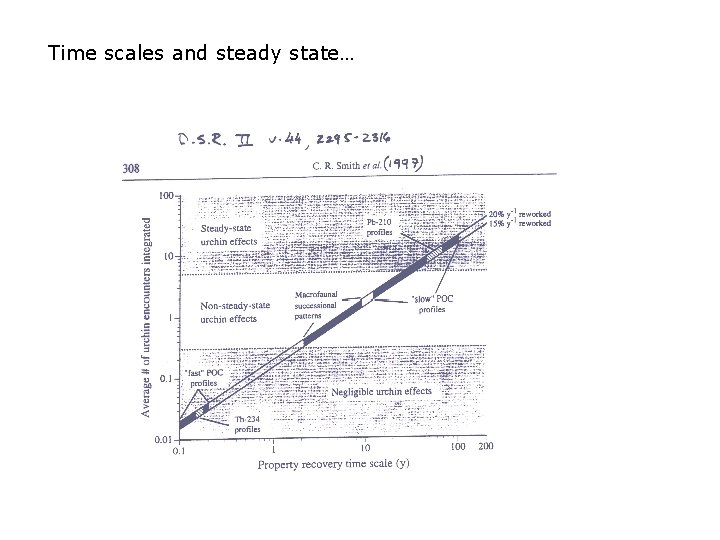
Time scales and steady state…
- Slides: 31