
Bioterrorism Agents Plague Lesson 1 Introduction and Overview
Bioterrorism Agents: Plague Lesson 1 Introduction and Overview
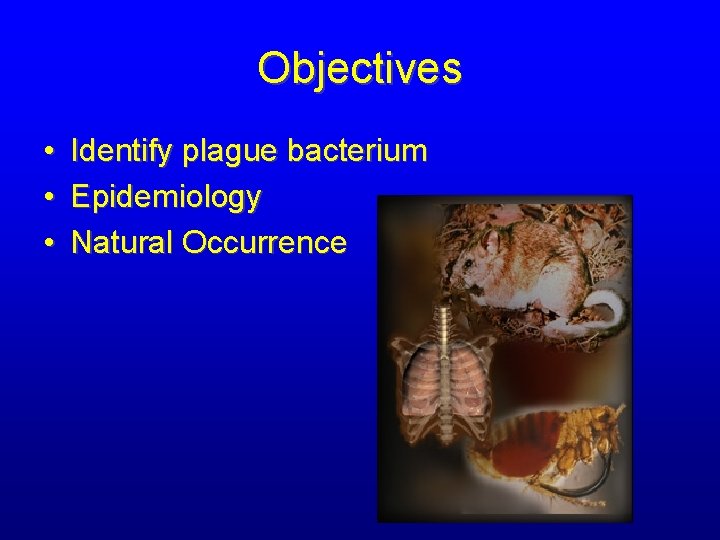
Objectives • • • Identify plague bacterium Epidemiology Natural Occurrence
Bio-Terror Threat • Plague can cause large numbers of cases • Could create panic • Considered for use since 14 th century
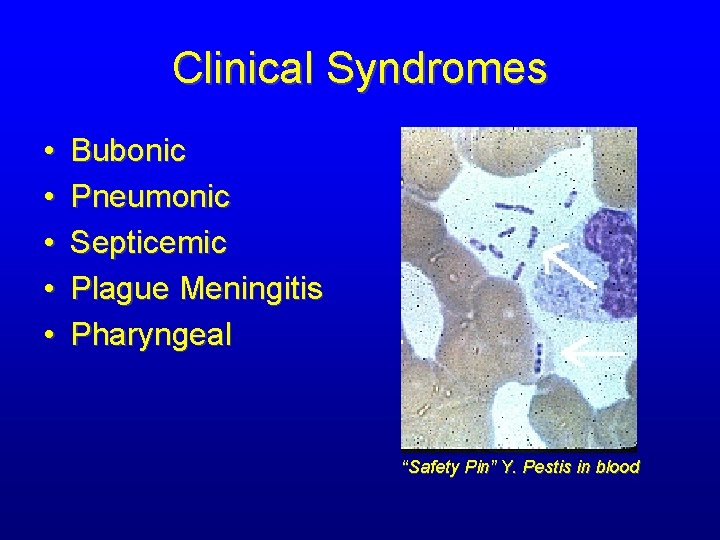
Clinical Syndromes • • • Bubonic Pneumonic Septicemic Plague Meningitis Pharyngeal “Safety Pin” Y. Pestis in blood
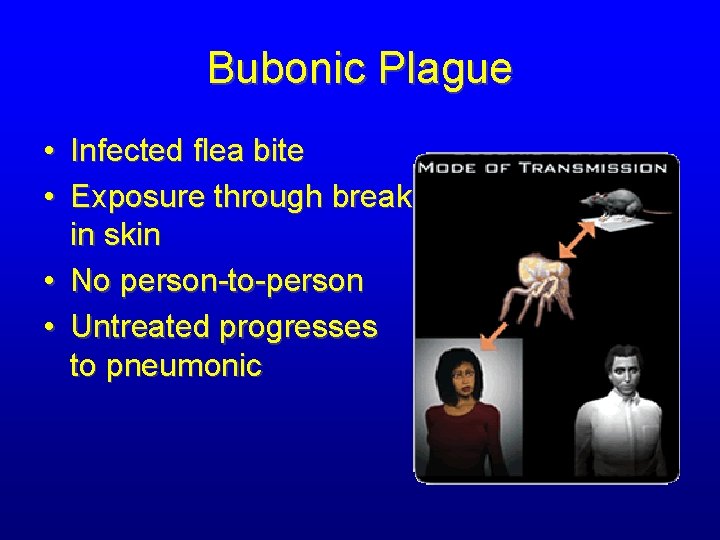
Bubonic Plague • Infected flea bite • Exposure through break in skin • No person-to-person • Untreated progresses to pneumonic
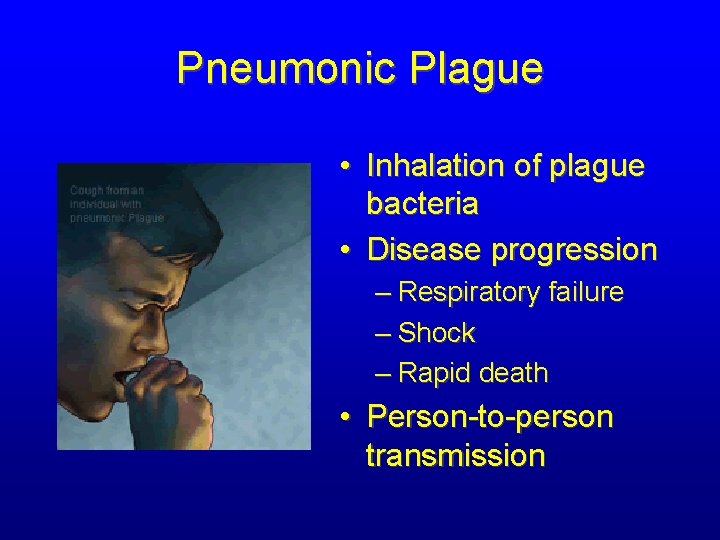
Pneumonic Plague • Inhalation of plague bacteria • Disease progression – Respiratory failure – Shock – Rapid death • Person-to-person transmission
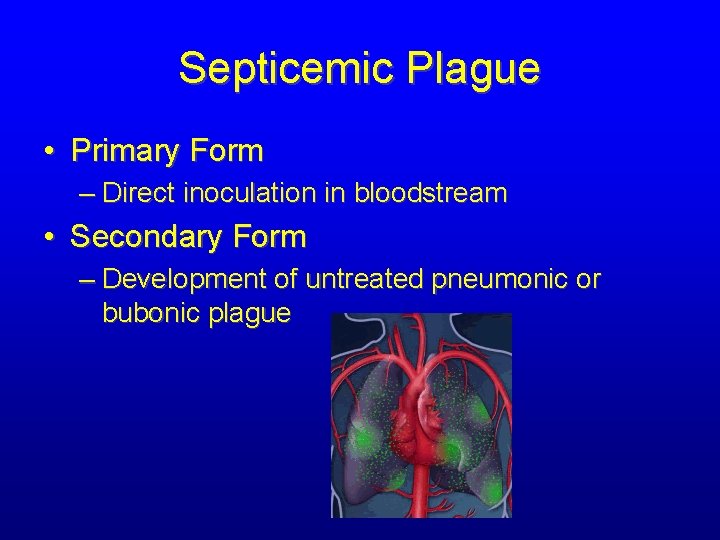
Septicemic Plague • Primary Form – Direct inoculation in bloodstream • Secondary Form – Development of untreated pneumonic or bubonic plague
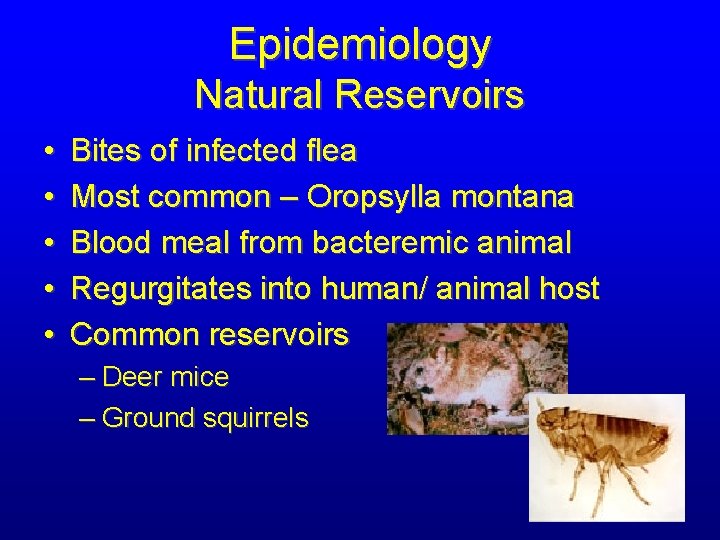
Epidemiology Natural Reservoirs • • • Bites of infected flea Most common – Oropsylla montana Blood meal from bacteremic animal Regurgitates into human/ animal host Common reservoirs – Deer mice – Ground squirrels
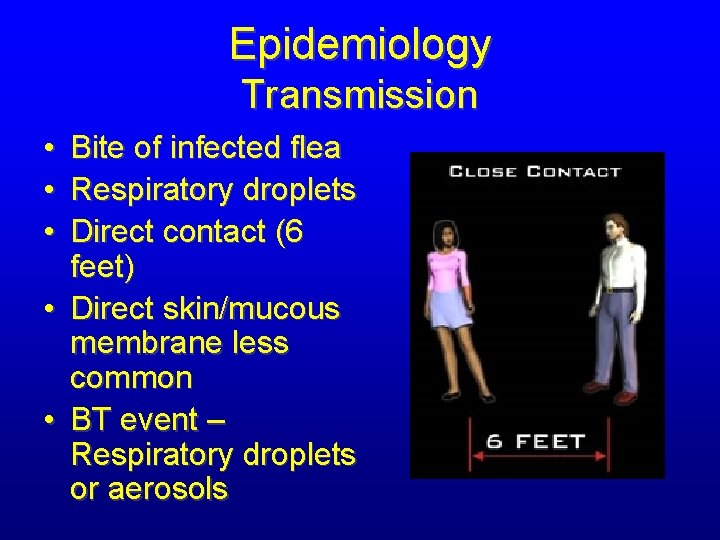
Epidemiology Transmission • • • Bite of infected flea Respiratory droplets Direct contact (6 feet) • Direct skin/mucous membrane less common • BT event – Respiratory droplets or aerosols
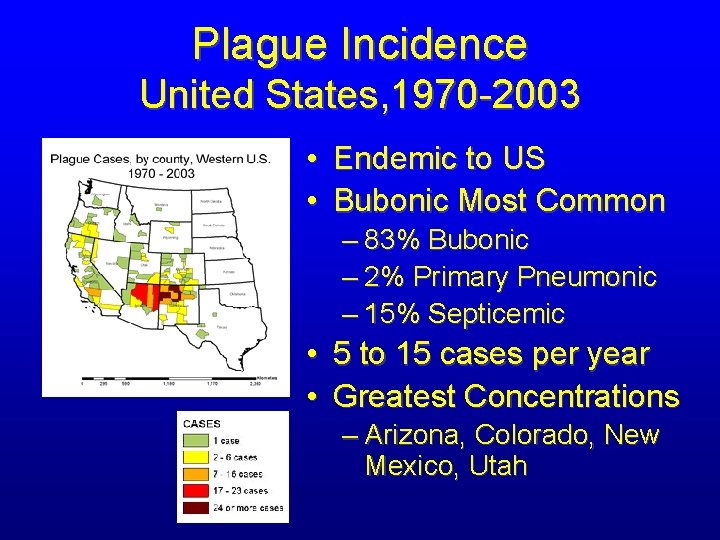
Plague Incidence United States, 1970 -2003 • Endemic to US • Bubonic Most Common – 83% Bubonic – 2% Primary Pneumonic – 15% Septicemic • 5 to 15 cases per year • Greatest Concentrations – Arizona, Colorado, New Mexico, Utah
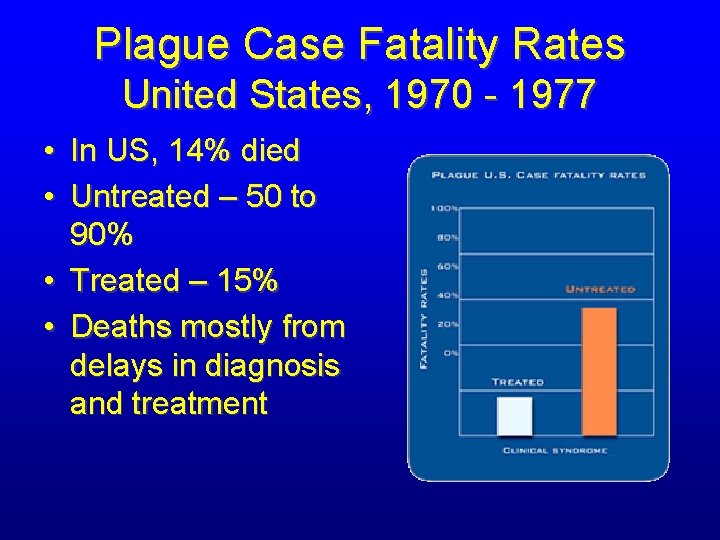
Plague Case Fatality Rates United States, 1970 - 1977 • In US, 14% died • Untreated – 50 to 90% • Treated – 15% • Deaths mostly from delays in diagnosis and treatment
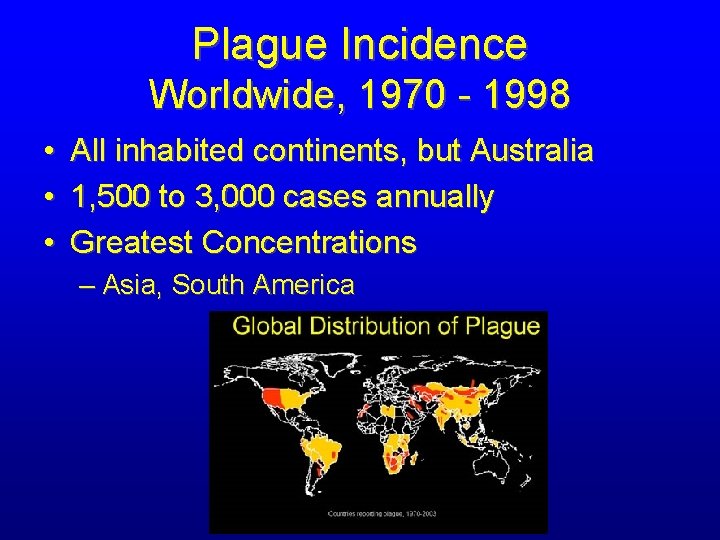
Plague Incidence Worldwide, 1970 - 1998 • • • All inhabited continents, but Australia 1, 500 to 3, 000 cases annually Greatest Concentrations – Asia, South America
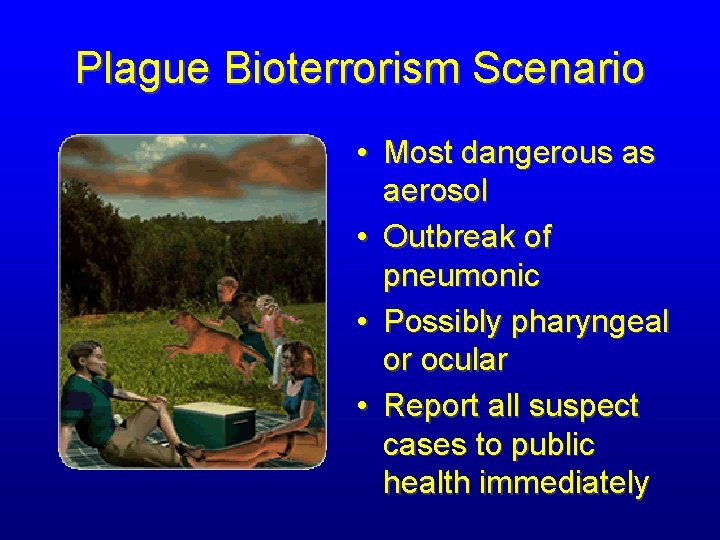
Plague Bioterrorism Scenario • Most dangerous as aerosol • Outbreak of pneumonic • Possibly pharyngeal or ocular • Report all suspect cases to public health immediately
Review Questions – Plague Lesson 1 Overview
Plague Review Questions Lesson 1, Question 1 • • • Santa Fe, New Mexico hospital Treating suspect plague case Hearing of more cases in area When do you start to worry about bioterrorism?
Plague Review Questions Lesson 1, Question 1 A. B. C. D. When do you start worrying about bioterrorism? Unrelated clusters Unusual rise in cases Both of the above None of the above
Plague Review Questions Lesson 1, Question 1 When do you start worrying about bioterrorism? Answer - C. Both of the above • Unrelated clusters • Unusual rise in cases
Plague Review Questions Lesson 1, Question 2 • • • Abnormally large, tender lymph node Right arm Lab specimen for preliminary testing What organism causes plague?
Plague Review Questions Lesson 1, Question 2 • • What organism causes plague? B. anthracis C. botulinum C. burnetii Y. pestis
Plague Review Questions Lesson 1, Question 2 What organism causes plague? D. Y. pestis
Plague Review Questions Lesson 1, Question 3 • • • New Hampshire hospital Labs – Unable to rule out plague Recent US travel Where in the US would you expect the patient to get plague?
Plague Review Questions Lesson 1, Question 3 A. B. C. D. Where in the US would you expect the patient to get plague? Western US, Southwest Eastern US, Southeast Northern US, Northeast Southern US, Southwest
Plague Review Questions Lesson 1, Question 3 Where in the US would you expect the patient to get plague? A. Western US, Southwest
- Slides: 23