
Biotechnology Use of living organisms and growth curve
Biotechnology Use of living organisms and growth curve

The discovery of Penicillin Starter - video
Learning Outcomes • State that biotechnology is the industrial use of living organisms (or parts of living organisms) to produce food, drugs or other products. • Explain why micro organisms are often used in biotechnological processes.
Biotechnology is. . • Industrial • Living organisms/parts of • Food, drugs, products Use the words to define the term Biotechnology • Now remember some examples of Biotechnology from GCSE/own knowledge • Yeast, bacteria, enzymes

Biotechnology • The industrial use of living organisms or parts of living organisms to produce food, drugs and other products. • Yeast to make bread and wine • Bacteria added to milk to make yoghurt • Enzymes: Rennet – make cheese; Lactase - to produce lactose free produce, various for textiles, detergents
Using Micro organisms • Features of micro organisms that make them suitable for large-scale industrial processes • • • Rapid life cycles Reproduce asexually Very specific and simple requirements for growth Can be grown on waste materials from industry Does not raise ethical questions Bacteria have a single copy of each gene Simple control of gene expressions Wide range of metabolic pathways Some evolved to survive at high temperatures • Add a reason as to why each of these are considered to be useful features in Biotechnological processes. Use p 159
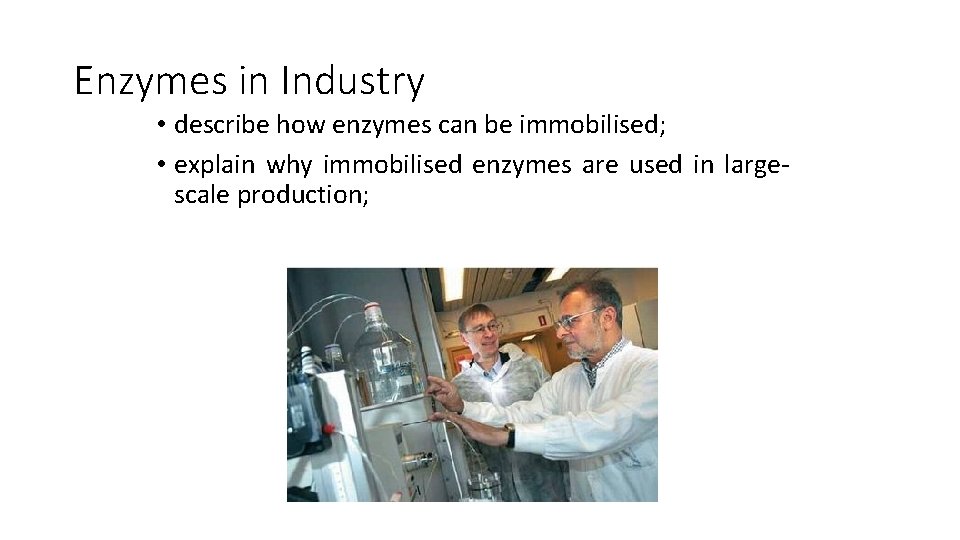
Enzymes in Industry • describe how enzymes can be immobilised; • explain why immobilised enzymes are used in largescale production;
Large-Scale production • Microorganisms are cultured in large containers called fermenters • The growing conditions within the fermenter are manipulated and controlled • Precise growing conditions • • Temperature Type and time of the addition of the nutrient Oxygen concentration p. H
Learning Outcomes • Describe, with the aid of diagrams, and explain the standard growth curve of a microorganism in a closed culture.

Standard Growth curve
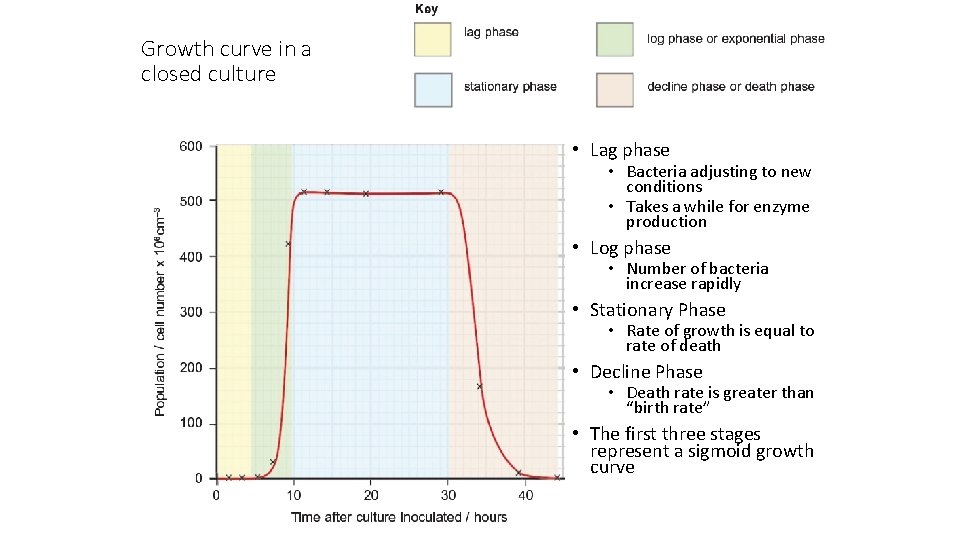
Growth curve in a closed culture • Lag phase • Bacteria adjusting to new conditions • Takes a while for enzyme production • Log phase • Number of bacteria increase rapidly • Stationary Phase • Rate of growth is equal to rate of death • Decline Phase • Death rate is greater than “birth rate” • The first three stages represent a sigmoid growth curve
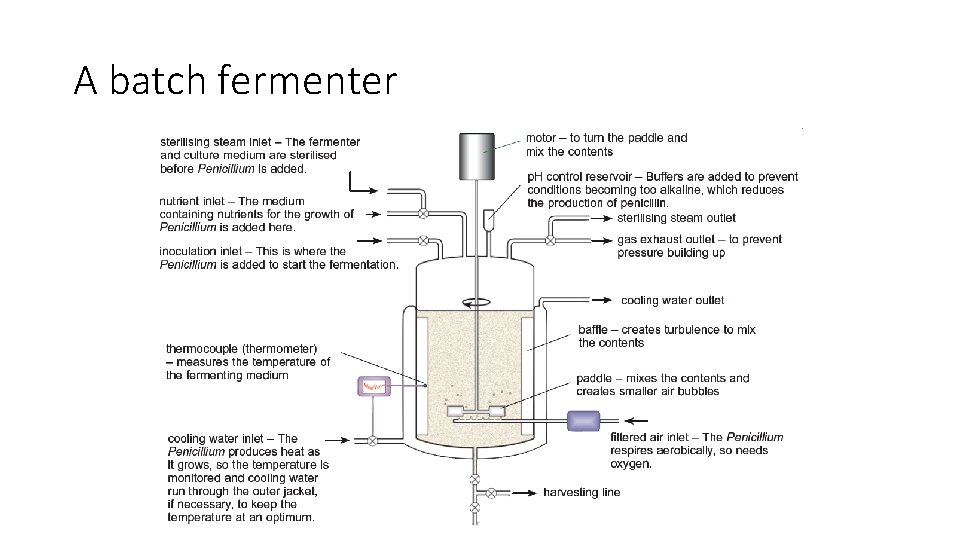
A batch fermenter

Large scale production • Three examples are • The production of penicillin • The production of protease enzymes • The production of mycoprotein
Biotechnology uses microorganisms and enzymes to make useful products. • Candidates should be able to: • (a) state that biotechnology is the industrial use of living organisms (or parts of living organisms) to produce food, drugs or other products (HSW 6 a); • (b) explain why microorganisms are often used in biotechnological processes; • (c) describe, with the aid of diagrams, and explain the standard growth curve of a microorganism in a closed culture; • (d) describe how enzymes can be immobilised; • (e) explain why immobilised enzymes are used in large-scale production; • (f) compare and contrast the processes of continuous culture and batch culture;
Read and complete worksheet • Applications of enzymes

Exam Question Practice • 157, 170 (Unit 5 Questions)
- Slides: 16