
Biotechnology Techniques Recombinant DNA DNA made by connecting
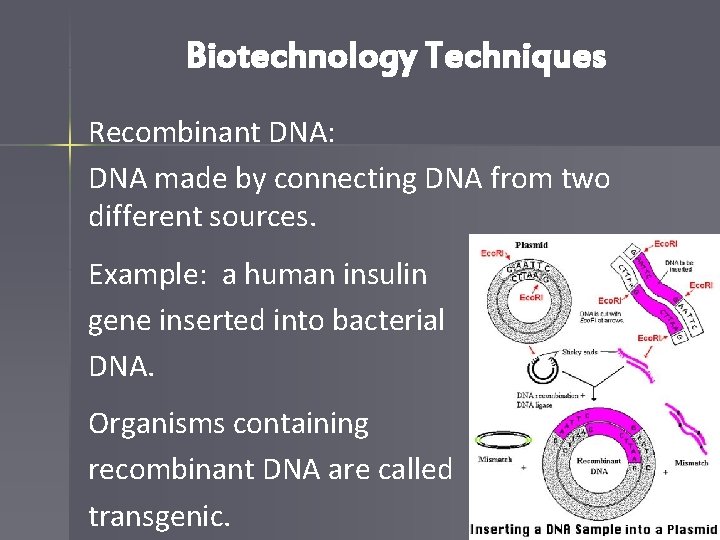
Biotechnology Techniques Recombinant DNA: DNA made by connecting DNA from two different sources. Example: a human insulin gene inserted into bacterial DNA. Organisms containing recombinant DNA are called transgenic.
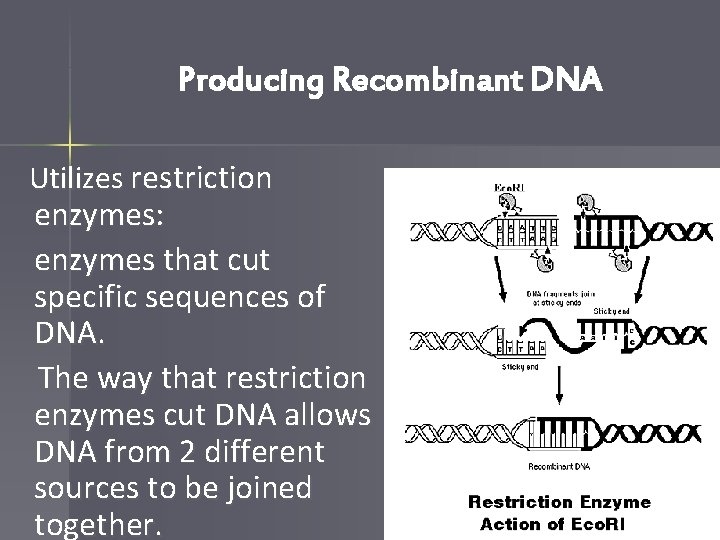
Producing Recombinant DNA Utilizes restriction enzymes: enzymes that cut specific sequences of DNA. The way that restriction enzymes cut DNA allows DNA from 2 different sources to be joined together.

Sticky Ends Many restriction enzymes cut sequence in a way that produces single-stranded “sticky ends”. Any two DNA strands cut with the SAME restriction enzyme can bind together due to complementary pairing of sticky ends.

Restriction Enzyme Video: click once on image to start https: //www. youtube. com/watch? v=pi. GOuud 3 f 40

Complementary sticky ends allow the DNA from 2 different sources to join together.
Recombinant DNA video https: //www. youtube. com/watch? v=Tpm. Nfv 1 j. Ku. A
Pair Share Discuss with your table partner: n The definition of recombinant DNA n How scientist are able to join two pieces of DNA from different sources together n Some uses of recombinant DNA technology
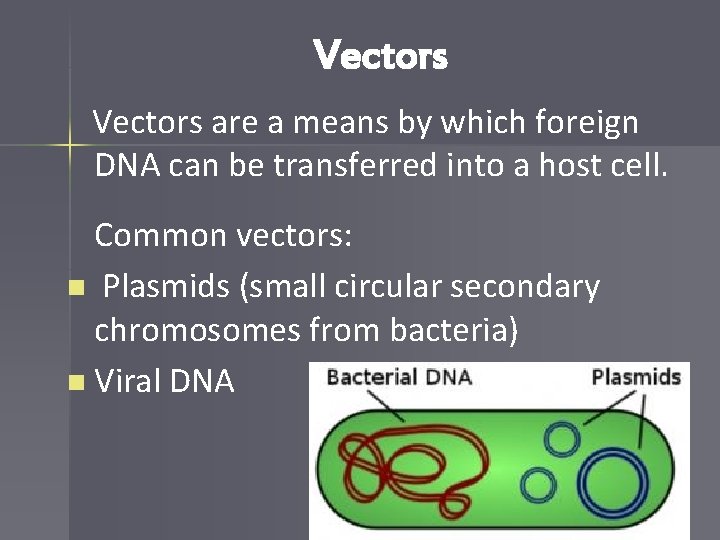
Vectors are a means by which foreign DNA can be transferred into a host cell. Common vectors: n Plasmids (small circular secondary chromosomes from bacteria) n Viral DNA
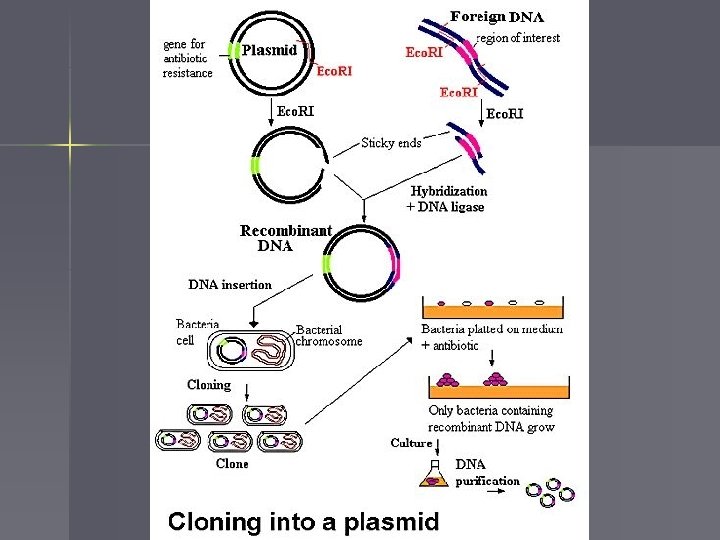
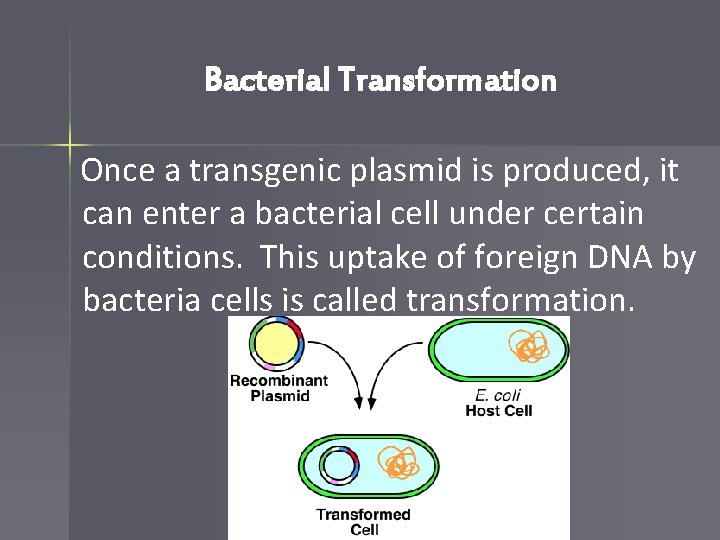
Bacterial Transformation Once a transgenic plasmid is produced, it can enter a bacterial cell under certain conditions. This uptake of foreign DNA by bacteria cells is called transformation.

Plasmid Video: Click once on image to start video https: //www. youtube. com/watch? v=GNMJBMt. KKWU
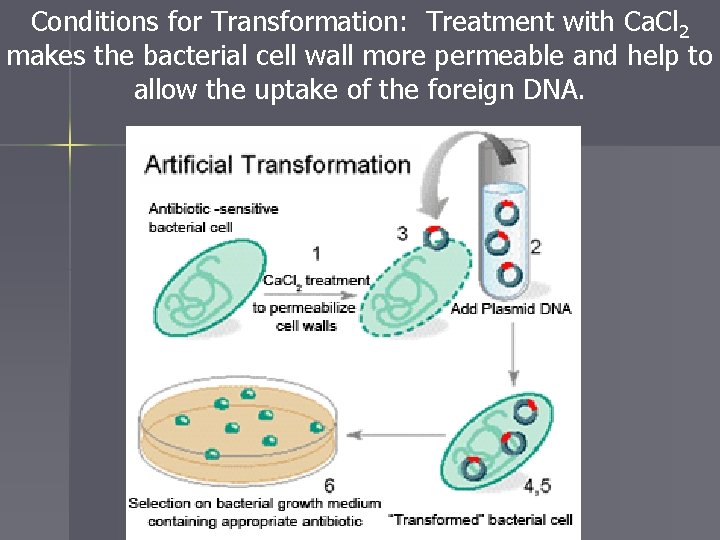
Conditions for Transformation: Treatment with Ca. Cl 2 makes the bacterial cell wall more permeable and help to allow the uptake of the foreign DNA.
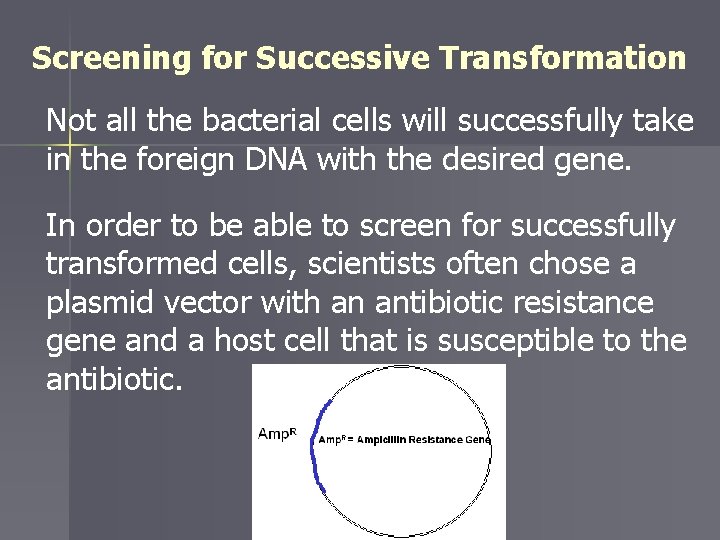
Screening for Successive Transformation Not all the bacterial cells will successfully take in the foreign DNA with the desired gene. In order to be able to screen for successfully transformed cells, scientists often chose a plasmid vector with an antibiotic resistance gene and a host cell that is susceptible to the antibiotic.
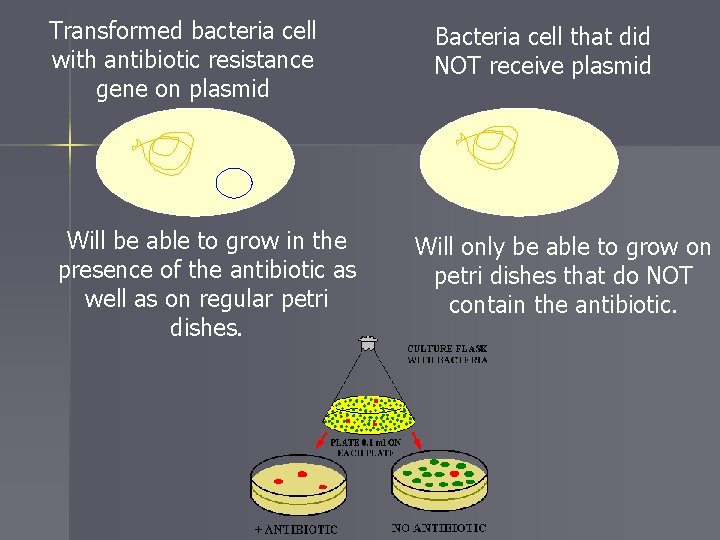
Transformed bacteria cell with antibiotic resistance gene on plasmid Will be able to grow in the presence of the antibiotic as well as on regular petri dishes. Bacteria cell that did NOT receive plasmid Will only be able to grow on petri dishes that do NOT contain the antibiotic.
Pair Share Discuss with your table partner: The definition of transformation (for bacteria) n Screening of bacteria for successful transformation n
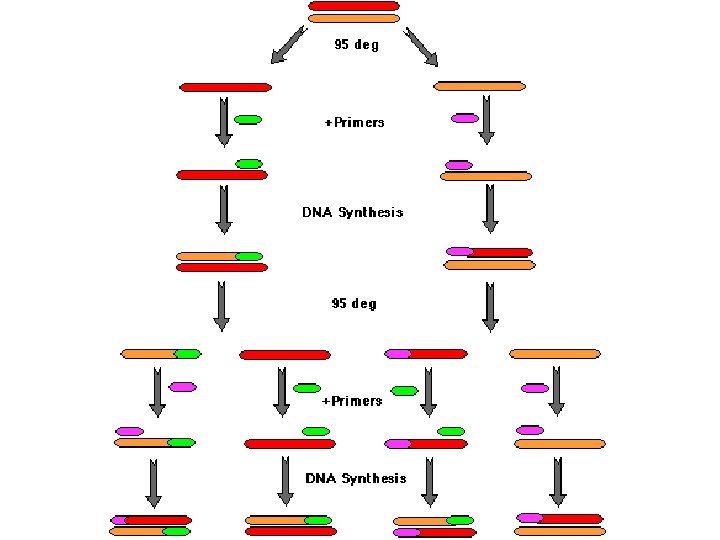
PCR: Polymerase Chain Reaction Magnifies minute quantities of DNA so that they can be analyzed. Process: n DNA heated to separate strands (breaks weaker hydrogen bonds between nitrogen base pairs). n Single strands incubated with DNA polymerase and free nucleotides to replicate. n Process repeated multiple times.
Pair Share Review with your table partner the process of polymerase chain reaction (PCR) What is the purpose of PCR n What is the basic process n How does the structure of DNA relate to how this process works (Hydrogen bonds, base pairs) n
- Slides: 18