
Biotechnology Single Cell Protein SCP Dr Zaryab Khalid

Biotechnology: Single Cell Protein (SCP) Dr. Zaryab Khalid
SINGLE CELL PROTEIN Single-cell protein (SCP) typically refers to sources of mixed protein extracted from pure or mixed cultures of algae, yeasts, fungi or bacteria (grown on agricultural wastes) used as a substitute for proteinrich foods, in human and animal feeds.
Need of SCP Most of the developing countries of the world are facing a major problem of malnutrition. • • Due to rapid growth in the population, deficiency of protein and nutrients are seen in human food animal feed. Predictions of future protein shortages have urged research on non-agricultural methods of protein production. • • As a result, certain types of high protein products suitable for feeding to livestock and fish are now produced on an industrial scale.
Need of SCP Single cell proteins have application in animal nutrition as: fattening calves, poultry, pigs and fish breeding. In food it is used as : aroma carriers, vitamin carrier, emulsifying aids and to improve the nutritive value of baked products, in soups, in ready-to-serve-meals, in diet recipes and in the technical field in paper processing, leather processing and as foam stabilizers.
Why Microbial System The development of microbial systems for use in food industry involves Firstly, growth of microorganism is very much faster than of animals. Secondly, a broader range of materials may be considered as suitable substrates depending on the microorganism chosen.
Modes Of SCP Production Cultivation of Single Cell Protein There are two types of fermentation processes which are used for production of single cell protein namely • Submerged fermentation • Semisolid state fermentation
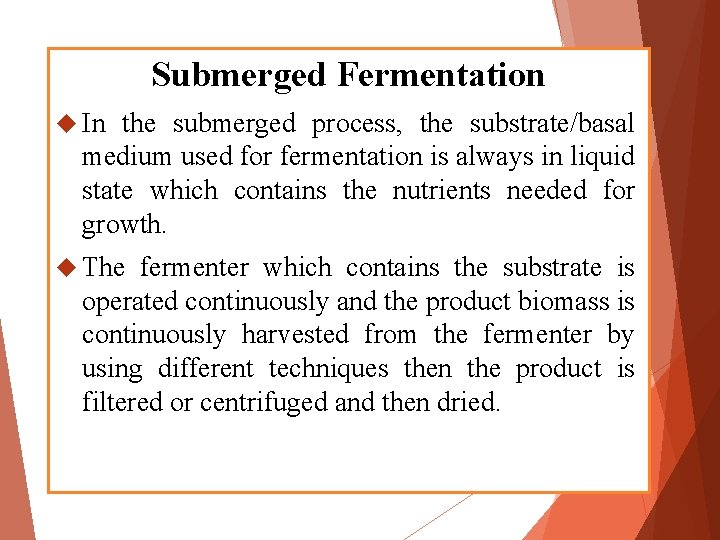
Submerged Fermentation In the submerged process, the substrate/basal medium used for fermentation is always in liquid state which contains the nutrients needed for growth. The fermenter which contains the substrate is operated continuously and the product biomass is continuously harvested from the fermenter by using different techniques then the product is filtered or centrifuged and then dried.
Semisolid Fermentation In semisolid fermentation, the preparation of the substrate is not confirmed; it is also mostly used in solid state e. g. cassava waste. Submerged culture fermentations require more capital investment and have high operating cost. The cultivation involves many operations which include stirring and mixing of a multiphase system, transport of oxygen from the gas bubbles through the liquid phase to the microorganisms and the process of heat transfer from liquid phase to the surroundings
SCP Derived from High Energy REsources Materials As with high commercial value energy sources or derivatives of such chemicals e. g. , gas oil, methane, methanol, and n-alkanes have found wide commercial interest.
Microbes The microbes involved are mostly bacteria and yeast, and several processes are now in operation. Most oil companies have been or are still involved in this field. The wisdom of using such high-energy potential compounds for food production has been questioned by many scientists.
Methane and Methanol Methane as a SCP source has been extensively researched but is now considered to present too many technicaldifficulties to warrant exploitation. In contrast, Methanol offers great economic SCP interest. A large-scale fermentation plant for producing the methanolutilising bacterium Methylophilus methylotrophus was constructed by ICI, UK.
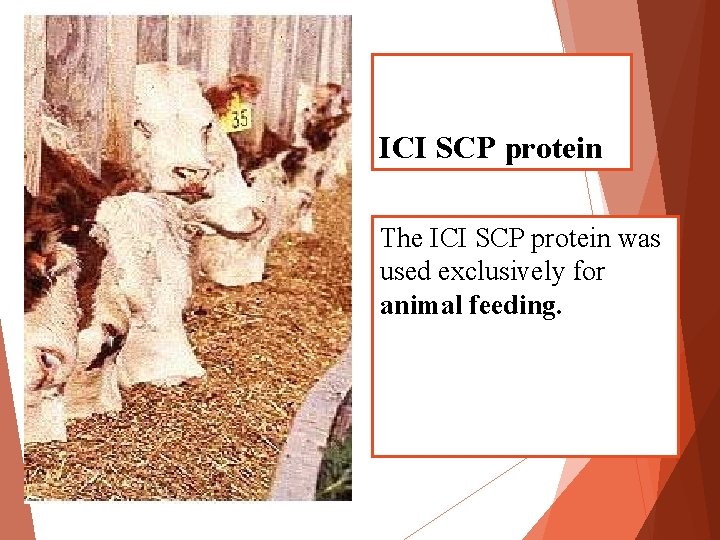
ICI SCP protein The ICI SCP protein was used exclusively for animal feeding.
Methanol as a carbon source for SCP has many inherent advantages over nparaffins, methane gas and even carbohydrates composition is independent of seasonal fluctuations. There are no possible sources of toxicity in methanol; methanol dissolves easily in the aqueous phase in all concentrations.
Western world The ICI Protein plant was the only process of its kind in the Western world but could not operate economically at present due to methanol prices and has ceased production. Methanol represents approximately 50% of the costs of the product.
COST OF SCP In the USA In the Middle East The cost of SCP derived from methanol is two- to five- folds the cost of fishmeal. The low cost of methanol and higher costs of fishmeal coupled with a need to produce more animal products could make SCP an attractive proposition.
Human Consumption. Ethanol is a particular suitable source if the SCP is intended for human consumption. The use of n-alkanes as substrate for SCP has been extensively studied many countries and represents a very complex biotechnological process.
Suspected health hazards Carcinogens Alcohol- based SCP However, most of these processes have now ceased operation because of suspected health hazards resulting from the presence of carcinogens in the SCP. The massive technology developed in this field in Japan and other Eastern countries has been turned over to the study of alcohol- based SCP and SCP form organic wastes.
• In the foreseeable future the comparative status of ethanol SCP will depend on local factors: • over-capacity in ethylene crackers, • agricultural carbohydrates surpluses and • political decisions about regional economic independence and • foreign trade balances. Future of SCP Local Factors
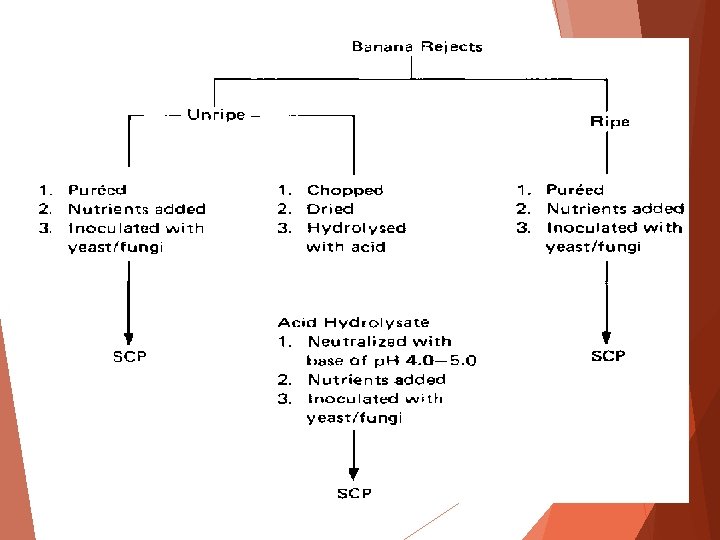
Production of Single Cell Protein from Saccharomyces cerevisiae by utilizing Fruit Wastes Saccharomyces cerevisiae was grown on various fruit wastes such as banana skin, mango waste, sweet orange peel, and apple waste for the production of single cell protein.
The protein from microbes is • cheap, • easy to obtain in crude form, • nutritive • can be made available as a food • feed additive to increase its nutritional value. • A comparative study of fruit wastes revealed that banana skin generates highest amount of protein,
PRODUCTION OF SINGLE CELL PROTEIN FROM PINEAPPLE WASTE USING YEAST • The worldwide food protein deficiency is becoming alarming day by day and with the fast growing population of world, pressure is exerted on the feed industry to produce enough animal feed to meet the region’s nutritional requirements. • Single-Cell Protein (SCP) represents microbial cells (primary) grown in mass culture and harvested for use as protein sources in foods or animal feeds. • pineapple waste was used as sole carbon source in five concentrations for preparation of fermentation media on which two strains of yeasts, Saccharomyces cerevisiae and Candida tropicalis were grown.
• The increased concentration of pineapple hydrolysate enhanced the biomass yield and the protein formation within the yeast cells. • Lower carbon utilization by the two yeast strains occurred in the waste containing media, as compared to control, increasing the economic value of the waste obtained after 7 -day fermentation. • The present finding helps in SCP production from cheap, inexpensive agro waste material
UTILIZATION OF FRUIT WASTES IN PRODUCING SINGLE CELL PROTEIN • cucumber and orange peels were evaluated for the production of cell protein using Saccharomyces cerevisiae by submerged fermentation • It was found that wastes were highly susceptible to hydrolysis. A comparative study of fruit wastes revealed that cucumber peel generates higher amount of protein followed by that of orange with 53. 4% and 30. 5% crude protein respectively per 100 gm of substrate used. •
• Percentage of protein in single cell protein was much lower (17. 47%) when Saccharomyces cerevisiae was grown on supplemented fruit hydrolysate medium that contained inorganic nitrogen sources but devoid of glucose. • Addition of glucose to the supplemented fruit hydrolysate medium enhanced the protein content (60. 31%) within the yeast cell. • Thus, the single cell protein production by yeast depends on the growth substrates or media composition.
SCP from Lignocellulose Mushrooms The lignocellulosic wastes, mainly from agriculture, constitute the most abundant substrate for SCP which is also renewable. The world annual production of straw for example reaches 600 million tons every year. In Greece, the straw from wheat and rye, the two most important cereals, is an estimated 1. 5 million tons per year. For the utilisation of lignocellulose, a pre-treatment is usually necessary. Many pre-treatment methods have been reported which vary from alkali or acid treatment, steam explotion or even x-ray radiation.
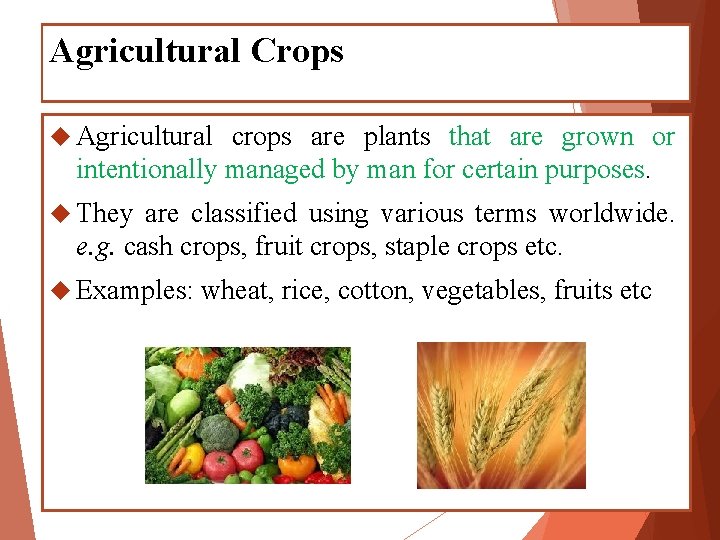
Agricultural Crops Agricultural crops are plants that are grown or intentionally managed by man for certain purposes. They are classified using various terms worldwide. e. g. cash crops, fruit crops, staple crops etc. Examples: wheat, rice, cotton, vegetables, fruits etc
Agricultural Wastes Agricultural activities and food industry generate considerable quantities of wastes which are rich in organic matter and could constitute new materials for value added products. Agricultural wastes are useful substrate for production of microbial protein, but must meet the following criteria; it should be non toxic, abundant, totally regenerable, non-exotic, cheap and able to support rapid growth and multiplication of the organisms resulting in high quality biomass.
A large quantity of solid waste is generated from fruit processing industries. The orange peels hold a range of carbohydrate polymers; makes it idyllic as a source of renewable energy through anaerobic digestion Apple pomace, including peels and seeds constitute 25– 35% of the quantity of the processed apples. Similarly, potatoes are one of the most important staple crops for human consumption. Potato peels are good sources of quality plant carbohydrate. The usage of such wastes as a sole carbon and nitrogen source for the production of SCP by microorganisms could be simply attributed to their presence in nature on large scale and their cheap cost.
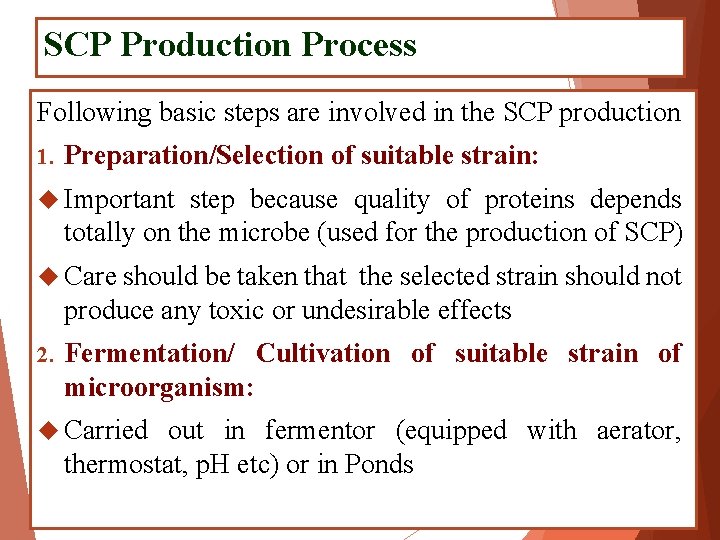
SCP Production Process Following basic steps are involved in the SCP production 1. Preparation/Selection of suitable strain: Important step because quality of proteins depends totally on the microbe (used for the production of SCP) Care should be taken that the selected strain should not produce any toxic or undesirable effects 2. Fermentation/ Cultivation of suitable strain of microorganism: Carried out in fermentor (equipped with aerator, thermostat, p. H etc) or in Ponds
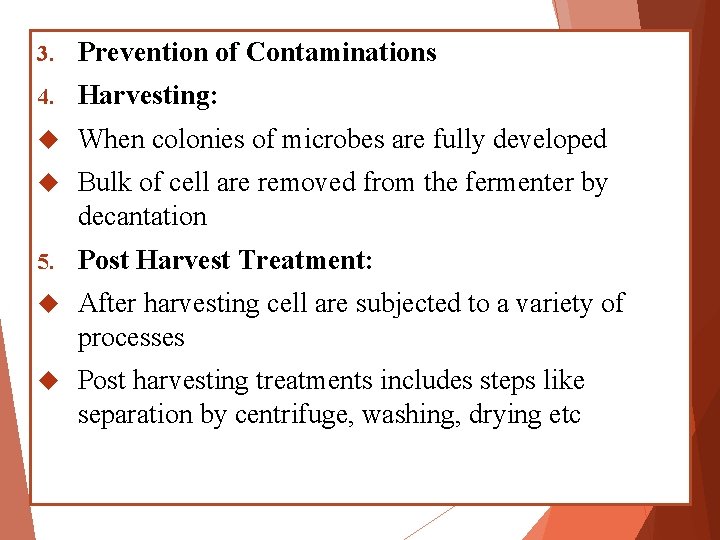
3. Prevention of Contaminations 4. Harvesting: When colonies of microbes are fully developed Bulk of cell are removed from the fermenter by decantation 5. Post Harvest Treatment: After harvesting cell are subjected to a variety of processes Post harvesting treatments includes steps like separation by centrifuge, washing, drying etc
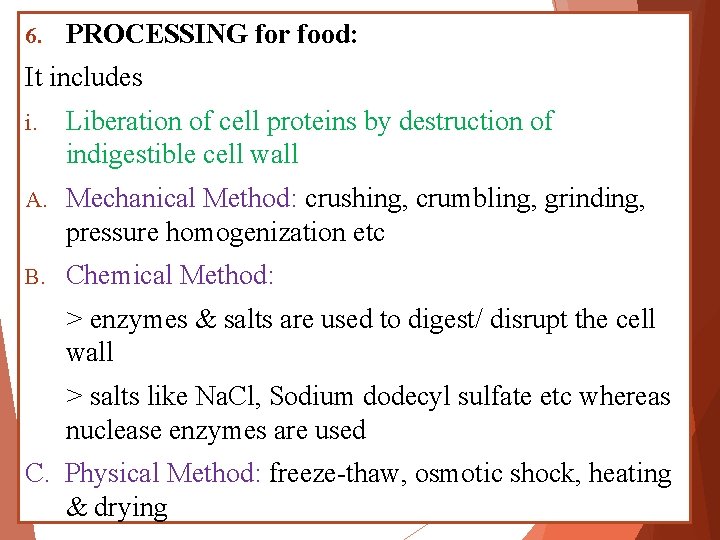
6. PROCESSING for food: It includes i. Liberation of cell proteins by destruction of indigestible cell wall A. Mechanical Method: crushing, crumbling, grinding, pressure homogenization etc B. Chemical Method: > enzymes & salts are used to digest/ disrupt the cell wall > salts like Na. Cl, Sodium dodecyl sulfate etc whereas nuclease enzymes are used C. Physical Method: freeze-thaw, osmotic shock, heating & drying
ii. REDUCTION of nucleic acid content: Chemical & enzymatic treatments are preferred Chemical used are acidified alcohol, salts, acids & alkalies. Use of such chemicals lead to formation of lyginoalanine which cause hypersensitivity skin reactions
Aeration is an important operation in the cultivation Heat is generated during cultivation and it is removed by using a cooling device. The microbial biomass can be harvested by various methods. Single cell organisms like yeast and bacteria are recovered by centrifugation While It filamentous fungi are recovered by filtration. is important to recover as much water as possible prior to final drying done under clean and hygienic conditions.
Production of SCP from WOOD Cellulose from natural sources & waste wood is an attractive starting material for SCP production because of its abundance. The association of cellulose with lignin in wood makes it intractable to microbial degradation. Thermal & chemical pretreatment, used in combination with enzymatic hydrolysis, is usually required.
SCP from Carbohydrates Whole milk whey or deproteinised whey is a carbohydrates source, which creates disposal problem Most organisms do not grow on the lactose as a carbon source Strains of yeast Kluyveromyces marxianus readily grow on lactose
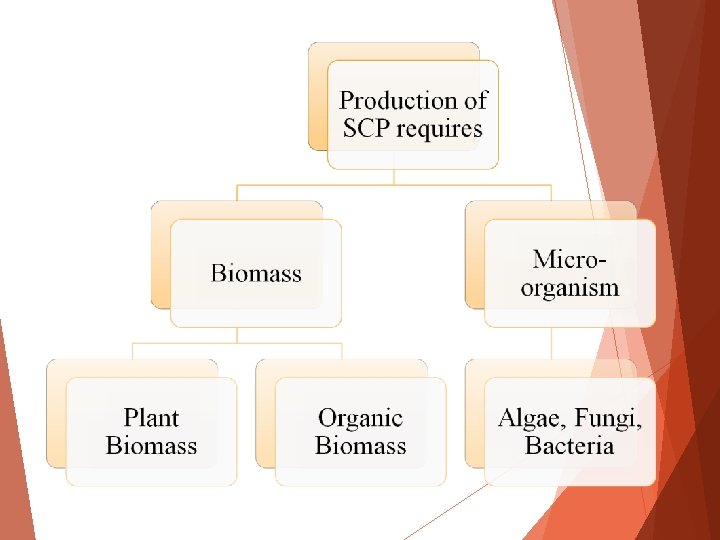
Single Cell Protein From Algae, Fungi And Bacteria Raw Materials v. Production of SCP requires micro-organisms that serve as the protein source and the substrate that is biomass on which they grow. v. There is a variety of the sources that can be used for the production of SCP. v. The biomass used can be plant biomass or organic biomass. v. The micro-organisms used belong to the group of Algae, Fungi and Bacteria.
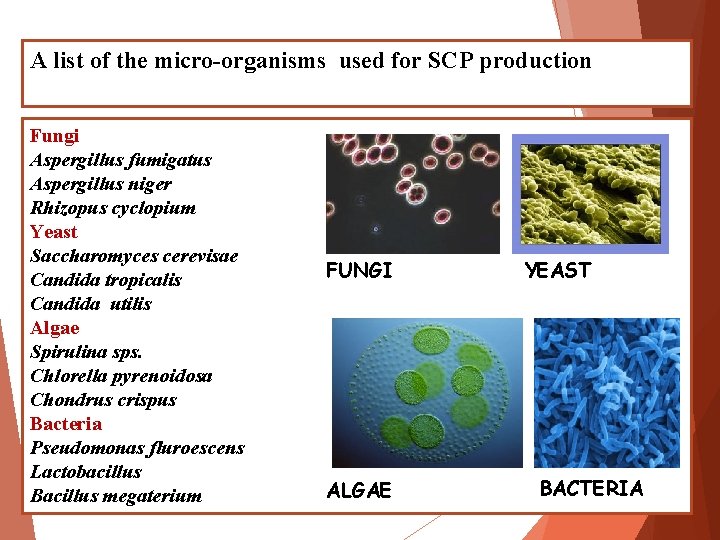
A list of the micro-organisms used for SCP production Fungi Aspergillus fumigatus Aspergillus niger Rhizopus cyclopium Yeast Saccharomyces cerevisae Candida tropicalis Candida utilis Algae Spirulina sps. Chlorella pyrenoidosa Chondrus crispus Bacteria Pseudomonas fluroescens Lactobacillus Bacillus megaterium FUNGI ALGAE YEAST BACTERIA
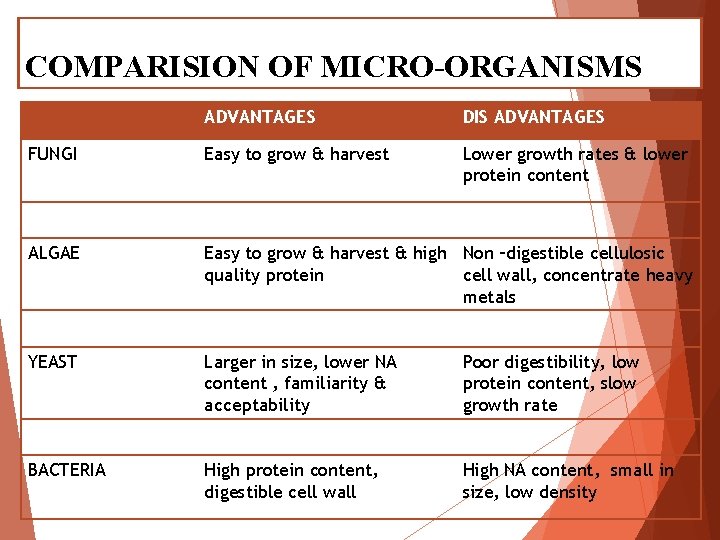
COMPARISION OF MICRO-ORGANISMS ADVANTAGES DIS ADVANTAGES FUNGI Easy to grow & harvest Lower growth rates & lower protein content ALGAE Easy to grow & harvest & high Non –digestible cellulosic quality protein cell wall, concentrate heavy metals YEAST Larger in size, lower NA content , familiarity & acceptability Poor digestibility, low protein content, slow growth rate BACTERIA High protein content, digestible cell wall High NA content, small in size, low density
Biomass also plays a very important role in the production of SCP. Selection of biomass depends on the microorganisms used for the production. e. g. , Algae are cultivated on sewage whereas Yeast are cultured on agro-industrial wastes.
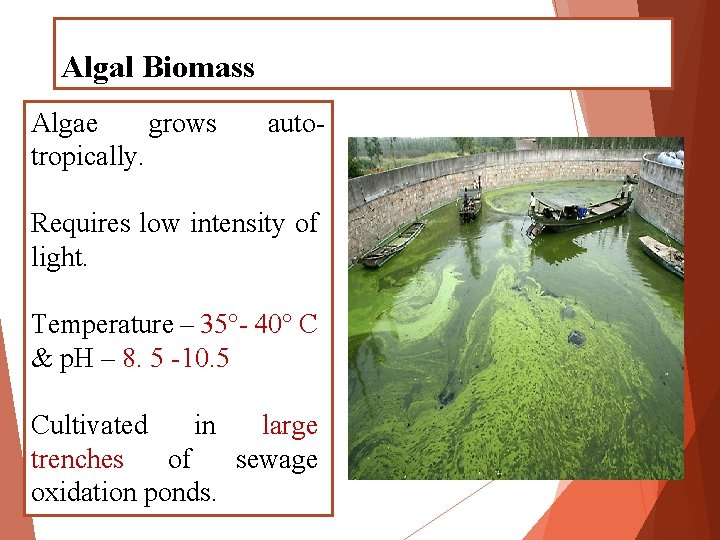
Algal Biomass Algae grows tropically. auto- Requires low intensity of light. Temperature – 35°- 40° C & p. H – 8. 5 -10. 5 Cultivated in large trenches of sewage oxidation ponds.
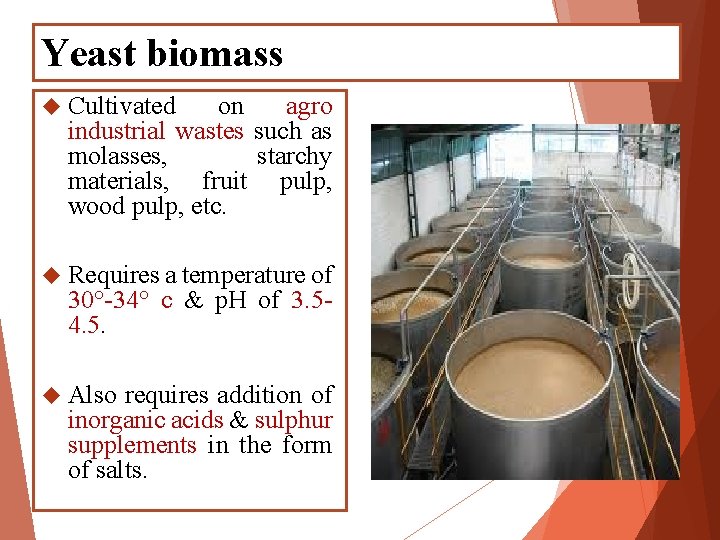
Yeast biomass Cultivated on agro industrial wastes such as molasses, starchy materials, fruit pulp, wood pulp, etc. Requires a temperature of 30°-34° c & p. H of 3. 54. 5. Also requires addition of inorganic acids & sulphur supplements in the form of salts.
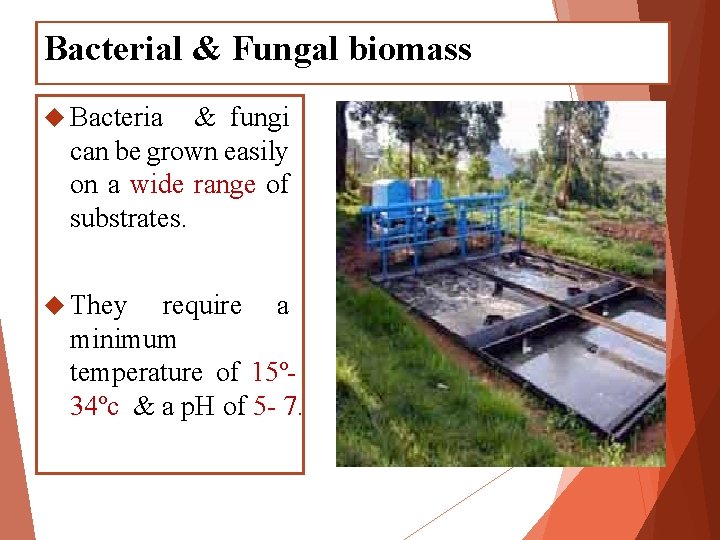
Bacterial & Fungal biomass Bacteria & fungi can be grown easily on a wide range of substrates. They require a minimum temperature of 15º 34ºc & a p. H of 5 - 7.
FACTORS AFFECTING BIOMASS PRODUCTION Illumination time Temperature p. H Suitable strains Agitation Sterile conditions
Advantages of using Microorganisms 1. Microorganisms grow at very fast rate under optimal conditions. 2. Quality and quantity is better than higher plants and animals. 3. Wide range of raw materials can be used. 4. Culture and fermentation conditions are simple. 5. MO can be genetically manipulated.
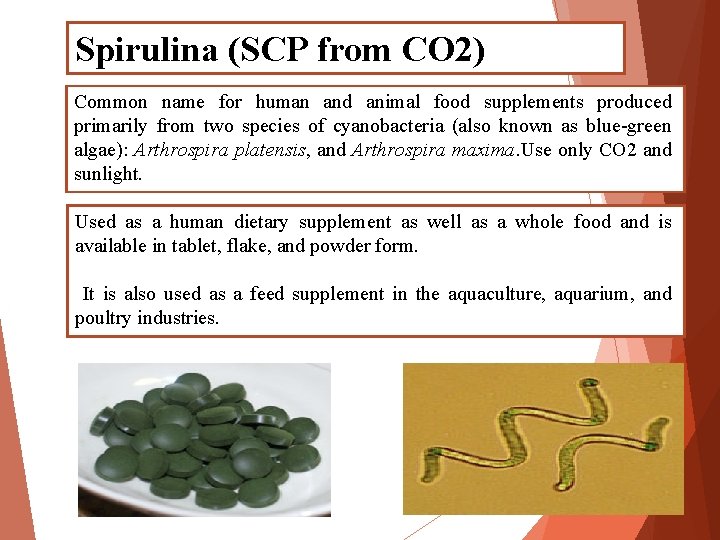
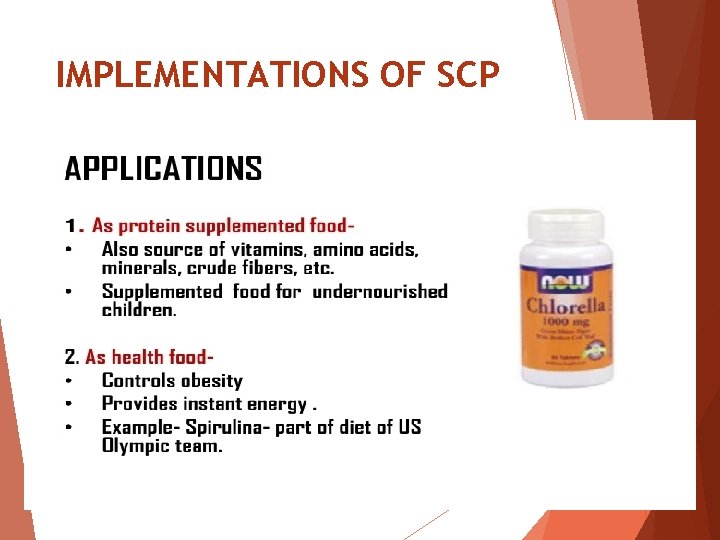
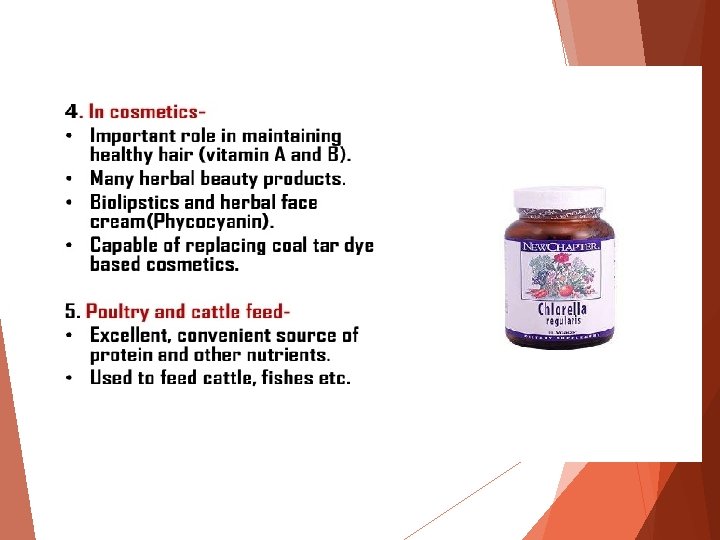
Spirulina (SCP from CO 2) Common name for human and animal food supplements produced primarily from two species of cyanobacteria (also known as blue-green algae): Arthrospira platensis, and Arthrospira maxima. Use only CO 2 and sunlight. Used as a human dietary supplement as well as a whole food and is available in tablet, flake, and powder form. It is also used as a feed supplement in the aquaculture, aquarium, and poultry industries.
Bacterial protein is similar to fish protein, yeast's protein resembles soya and the fungi protein is somewhat lower than the yeast's. Of course, microbiological proteins are deficient in the sulphur amino acids cysteine and methionine and require supplementation, while they exhibit better levels of lysine.
IMPLEMENTATIONS OF SCP

- Slides: 52