
Biotechnology Part 1 DNA Cloning Restriction Enzymes and
Biotechnology: Part 1 DNA Cloning, Restriction Enzymes and Plasmids DNA Technology and Genomics
Biotechnology n DNA technology has launched a revolution in the area of biotechnology n Manipulation of organisms or their genetic components to make useful products n Example: gene cloning n Usually uses bacterial plasmids
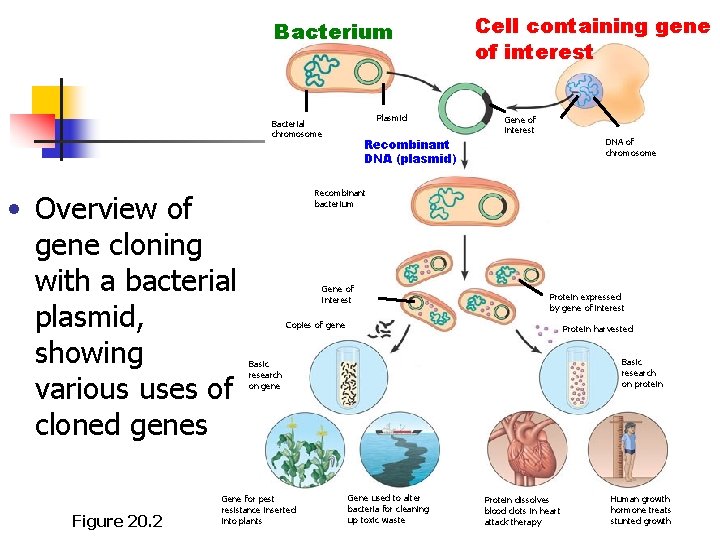
Bacterium Plasmid Bacterial chromosome • Overview of gene cloning with a bacterial plasmid, showing various uses of cloned genes Figure 20. 2 Cell containing gene of interest Gene of interest Recombinant DNA (plasmid) DNA of chromosome Recombinant bacterium 3 Gene of interest Protein expressed by gene of interest Copies of gene Protein harvested Basic research on protein Basic research on gene Gene for pest resistance inserted into plants Gene used to alter bacteria for cleaning up toxic waste Protein dissolves blood clots in heart attack therapy Human growth hormone treats stunted growth
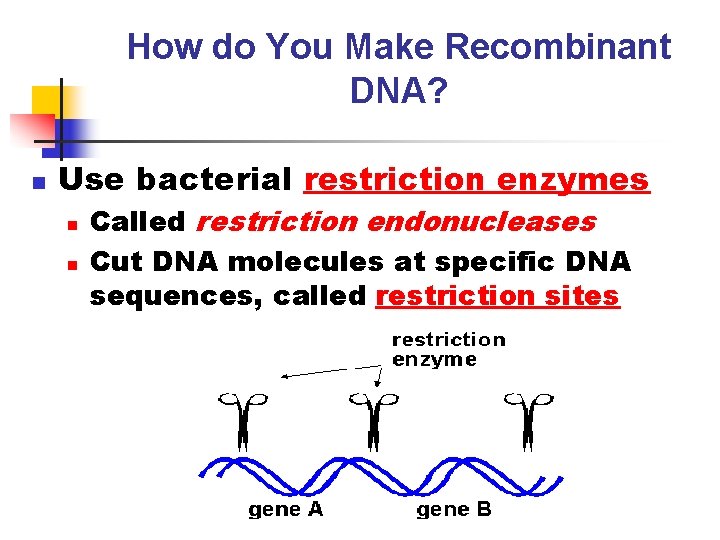
How do You Make Recombinant DNA? n Use bacterial restriction enzymes n n Called restriction endonucleases Cut DNA molecules at specific DNA sequences, called restriction sites

Restriction enzymes n Where are restriction enzymes found? n n In bacterial cells help fight viruses/foreign DNA What is a restriction site? n Area on DNA that restriction enzyme recognizes n n Every time this DNA sequence occurs in bacterium’s own DNA, methyl groups (-CH 3) are added prevents restriction enzyme from working. When foreign DNA (ex: phage) enters bacterium, bacterium’s restriction enzyme cut phage’s DNA into pieces. NOT all bacteria have restriction enzymes, many do!
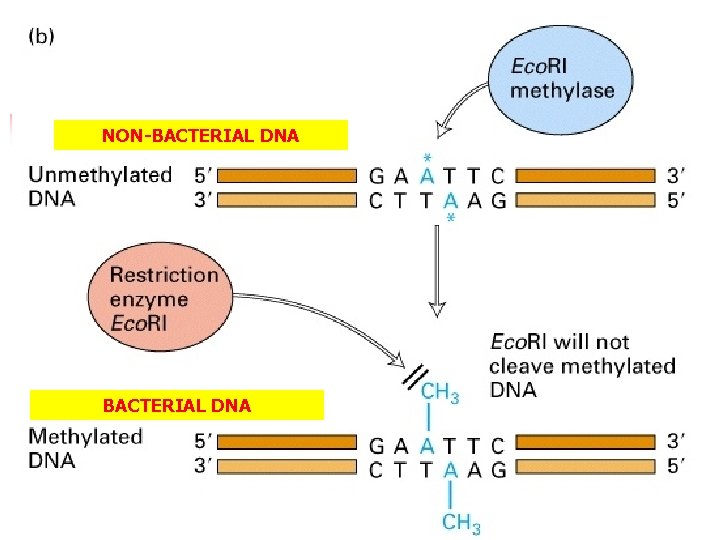
NON-BACTERIAL DNA
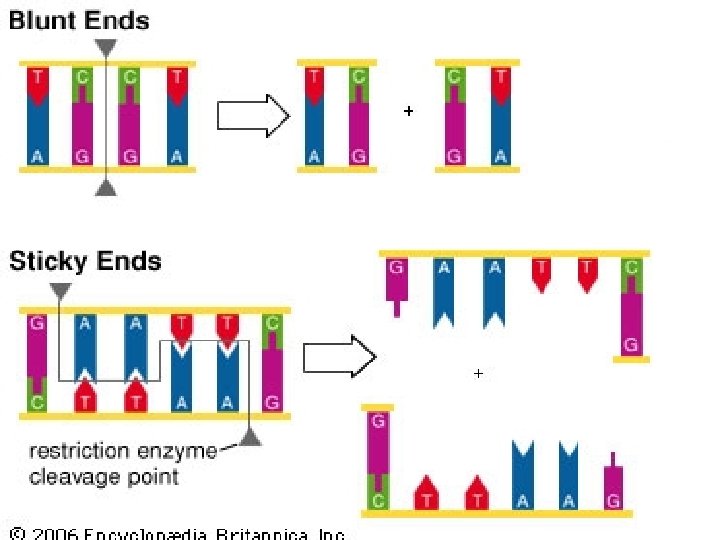
Restriction Sites n Many different kinds of restriction enzymes with different names n n n Eco. RI, Bam. HI, Hind. III, Hae. III, etc. Restriction site is like a palindrome n A palindrome is a word or phrase which reads the same in both directions. These enzymes make “blunt” and “sticky” ends. n What is the difference?
Restriction Enzymes usually make many cuts in a DNA molecule n Yields a set of restriction fragments n Most useful restriction enzymes cut DNA in a staggered way n n n Produce fragments with “sticky ends” Can bond with complementary “sticky ends” of ANY other DNA fragment DNA ligase (“molecular glue”) n enzyme that seals the bonds between restriction fragments
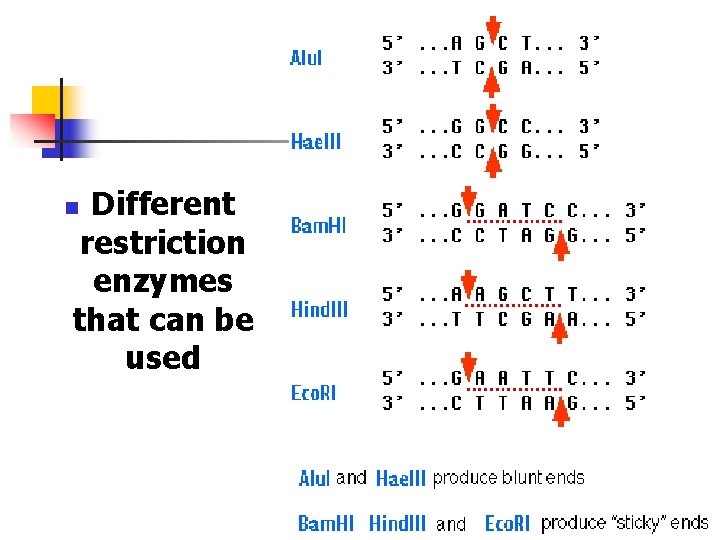
Different restriction enzymes that can be used n
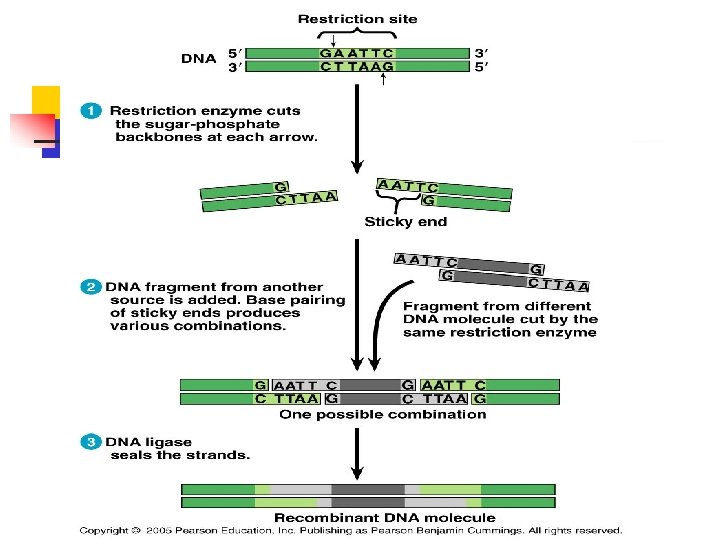
Restriction Enzymes n http: //highered. mcgrawhill. com/sites/0072437316/student_view 0/chapter 16/animations. html n ANIMATION #1
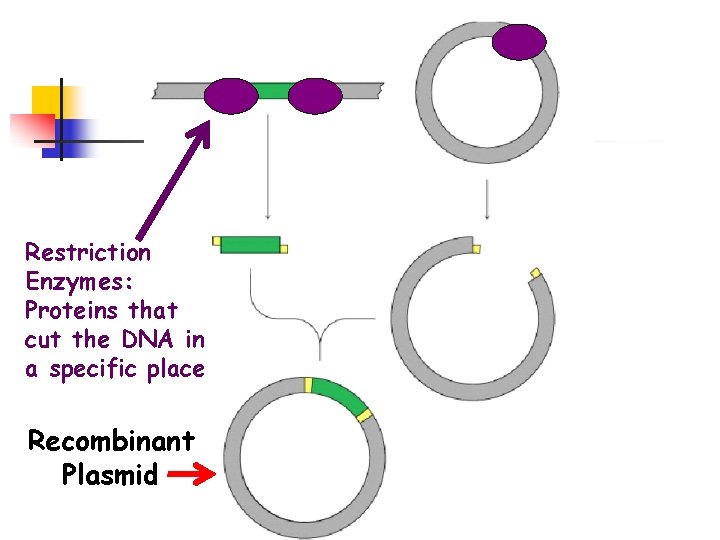
Restriction Enzymes: Proteins that cut the DNA in a specific place Recombinant Plasmid
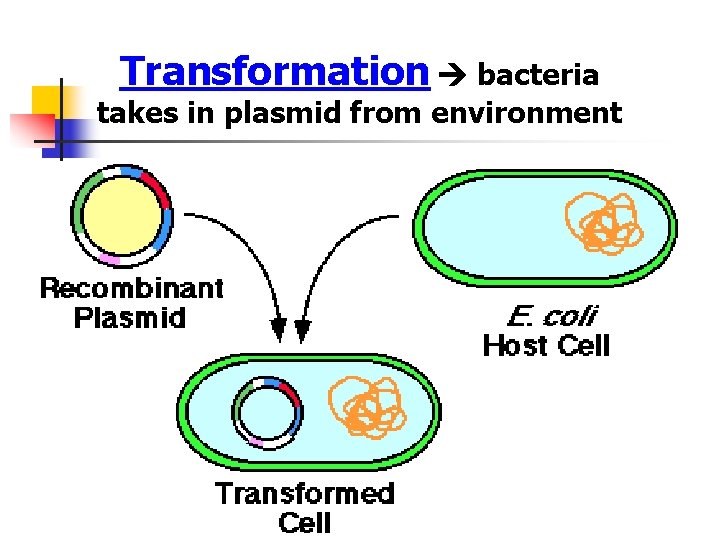
Transformation bacteria takes in plasmid from environment
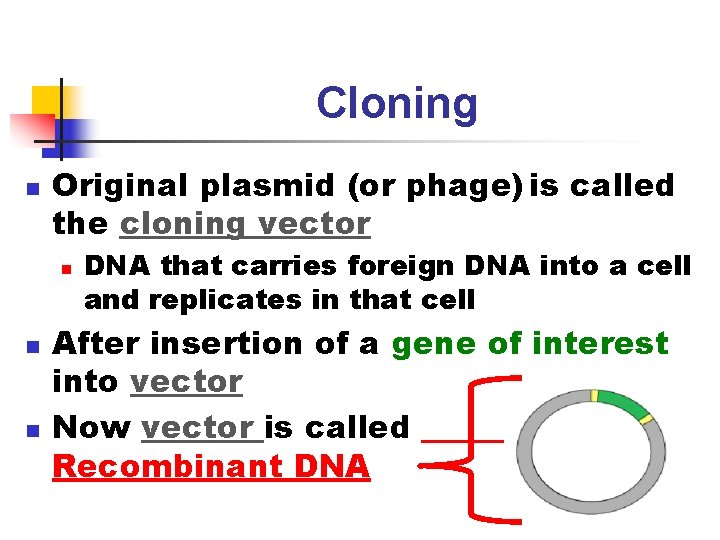
Cloning n Original plasmid (or phage) is called the cloning vector n n n DNA that carries foreign DNA into a cell and replicates in that cell After insertion of a gene of interest into vector Now vector is called Recombinant DNA
n How do you clone a gene using a plasmid?
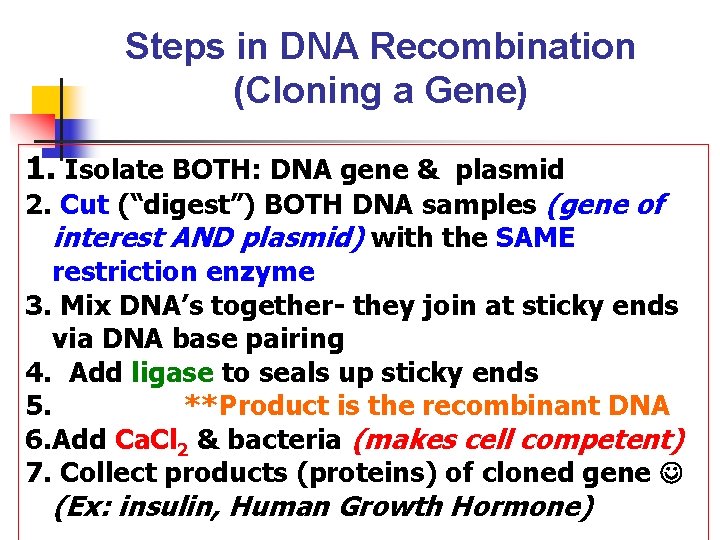
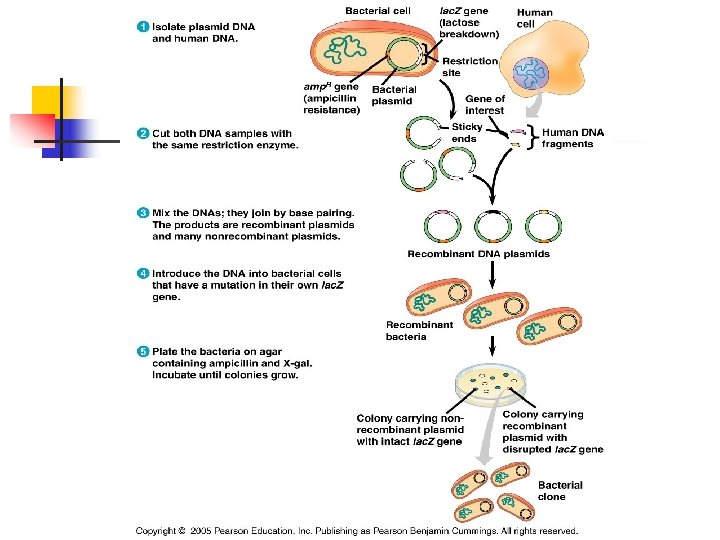
Steps in DNA Recombination (Cloning a Gene) 1. Isolate BOTH: DNA gene & plasmid 2. Cut (“digest”) BOTH DNA samples (gene of interest AND plasmid) with the SAME restriction enzyme 3. Mix DNA’s together- they join at sticky ends via DNA base pairing 4. Add ligase to seals up sticky ends 5. **Product is the recombinant DNA 6. Add Ca. Cl 2 & bacteria (makes cell competent) 7. Collect products (proteins) of cloned gene (Ex: insulin, Human Growth Hormone)
Steps in Cloning a Gene Using a Plasmid n http: //highered. mcgrawhill. com/sites/0072437316/student_view 0/chapter 16/animations. html n ANIMATION #8
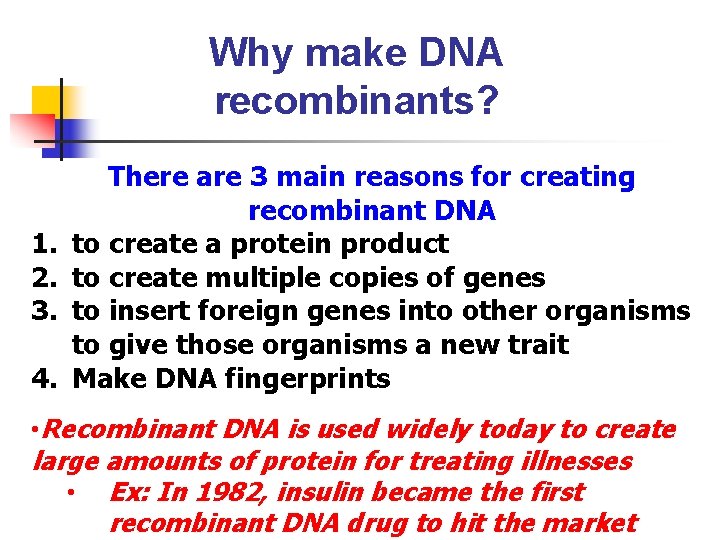
Why make DNA recombinants? 1. 2. 3. 4. There are 3 main reasons for creating recombinant DNA to create a protein product to create multiple copies of genes to insert foreign genes into other organisms to give those organisms a new trait Make DNA fingerprints • Recombinant DNA is used widely today to create large amounts of protein for treating illnesses • Ex: In 1982, insulin became the first recombinant DNA drug to hit the market
Plasmid Cloning n http: //www. sumanasinc. com/webconte nt/animations/content/plasmidcloning. ht ml
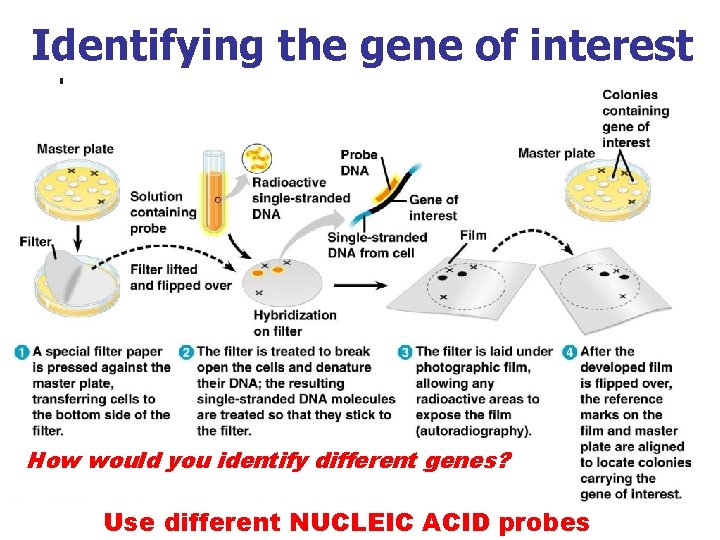
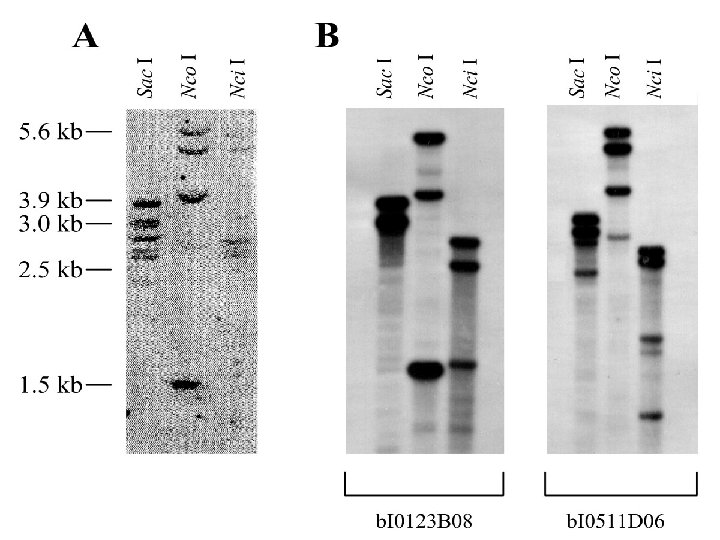
Identifying the gene of interest How would you identify different genes? Use different NUCLEIC ACID probes
2 ways we know cell carries the recombinant plasmids • Look for the specific product (protein) that the foreign DNA codes for • Is the bacteria making this protein? • If yes, the cloning worked! • Use a “nucleic acid probe” • A single stranded nucleic acid molecule used to “tag” a specific nucleotide sequence in a sample • Hydrogen bonding is used!
- Slides: 24