
Biotechnology l 4 major areas l Human Genome
Biotechnology l 4 major areas l Human Genome Project l Gene Therapy l Forensic science l Agriculture
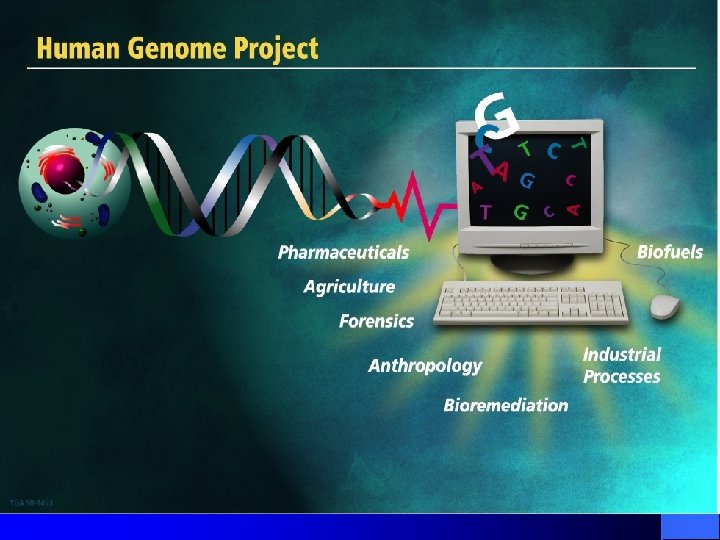
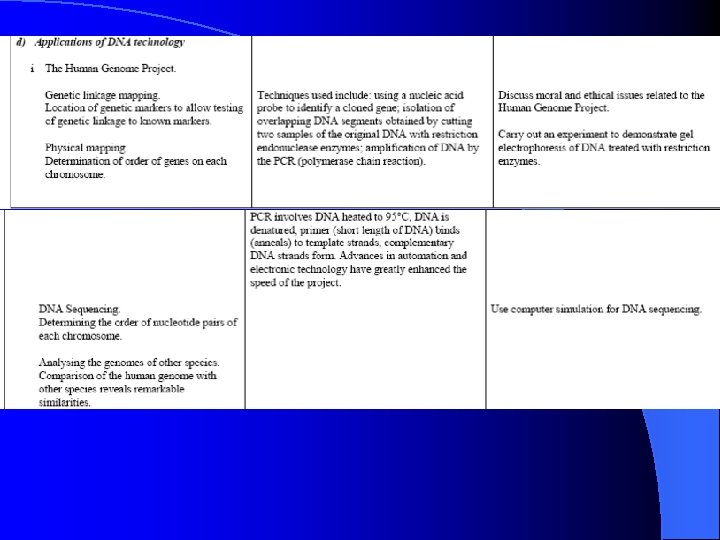
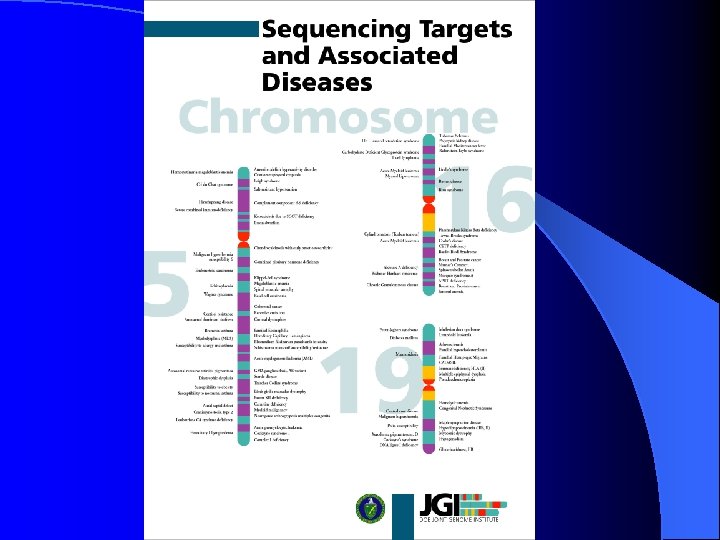
Human Genome Project l Aim – Identify sequence of bases on all 23 human chromosomes (3 billion bases) – Identify genes within those sequences (~30 000 genes) – Locate the position of the genes on the chromosomes $6 billion dollars, 1000 scientists, 50 countries, completed 2000! l Only ~3% of genome codes for protein l – Remainder is regulatory or of unknown function (junk) e. g repetitive sequence, possibly viral DNA
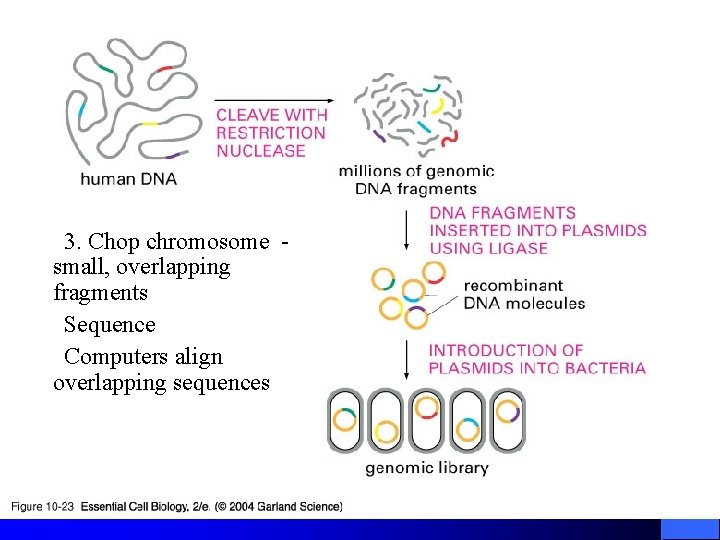
Human Genome Project – Approach Used l Concept – Produce ever more detailed maps of chromosomes – 1. Genetic linkage map (low resolution) – 3. Chop chromosome - small, overlapping l Relative order & spacing of disease linked genes (not physical map) fragments – 2. Combine with STS/EST (sequence tag site/ expressed –Sequence sequence tag) maps l Position of unique DNA sequences (physical map) –Computers align l Linkage data to disease genes overlapping sequences – Pain stakingly slow, but links to useful disease information – Alternatively SHOTGUN sequencing
Human Genome Project Methods
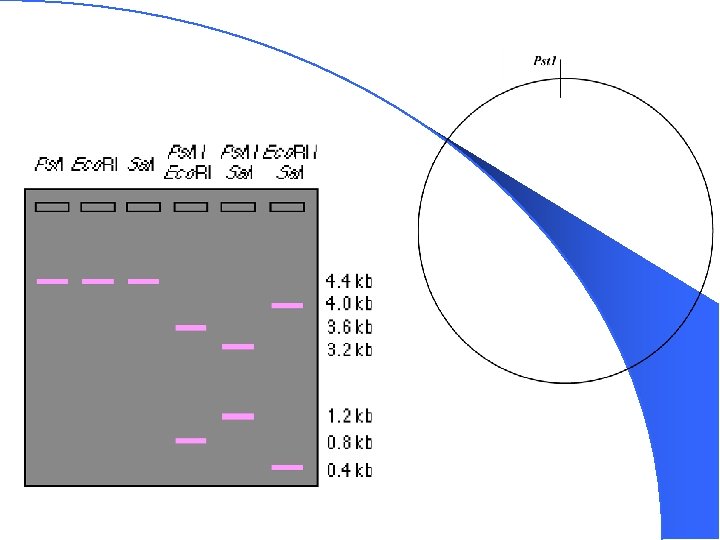
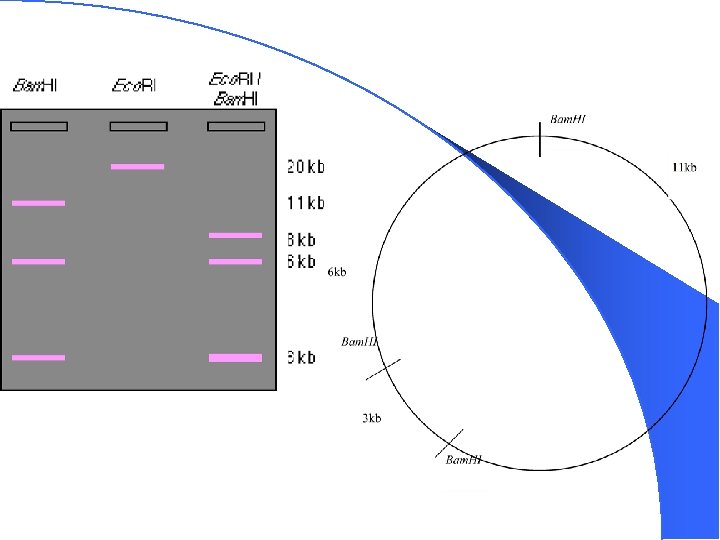
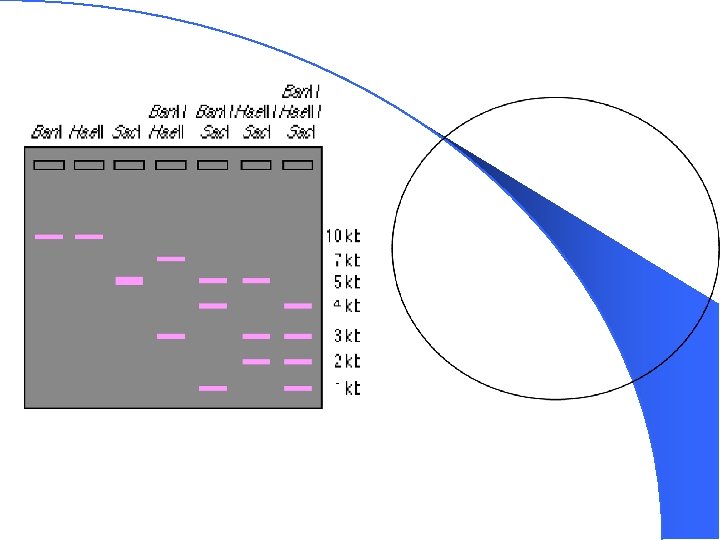
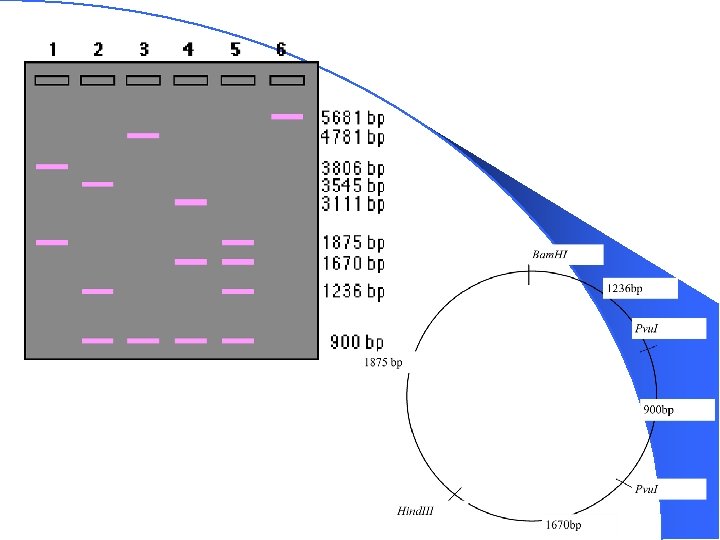
Restriction Enzymes Summary l Variety of enzymes l Isolated from bacteria l Cut DNA at specific sequences l Used to produce DNA fragments – Blunt or sticky ended l DNA Ligase (not a RE), used to LIGATE (joins DNA) fragment into a plasmid l Animation
DNA Amplification To increase the concentration of specific pieces of DNA l PCR (polymerse chain reaction) l – – Thermostable Taq DNA polymerase Nucleotides (AGCT) template DNA Primers (bind to DNA, initiate DNA replication) l l Either side of area of genome to be amplified Repeated cycles of heating and cooling – Heating – breaks apart DNA template – DNA primers anneal (hydrogen bond) as cools – DNA polymerase synthesises complementary strand l Video 2
What is electrophoresis? Separation of charged molecules. l DNA is negatively charged; attracted to the positive terminal l Small molecules easily pass through spaces in gel, so travel faster. l Larger molecules have difficulty travelling through spaces in agarose. so in DNA agarose gel electrophoresis the fragments are separated by size. l
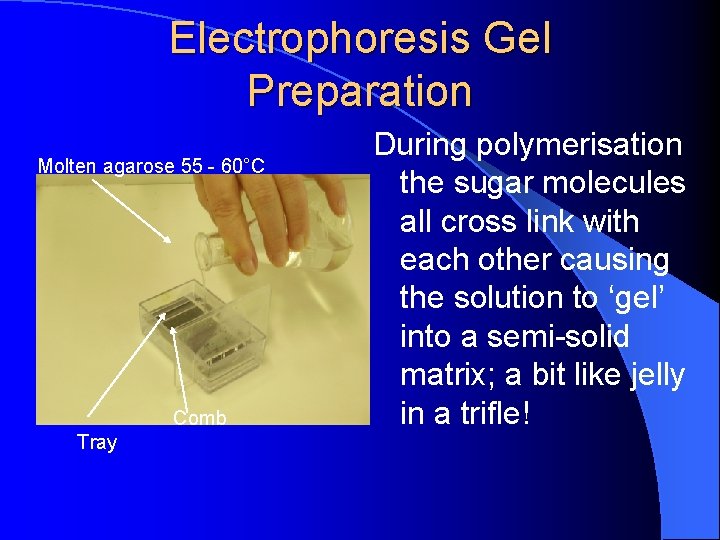
Electrophoresis Gel Preparation Molten agarose 55 - 60°C Comb Tray During polymerisation the sugar molecules all cross link with each other causing the solution to ‘gel’ into a semi-solid matrix; a bit like jelly in a trifle!

DNA SIZE MARKERS/STANDARDS -ve l Smaller largest smallest +ve fragments travel faster. l The sizes of bands are known (in base pairs).
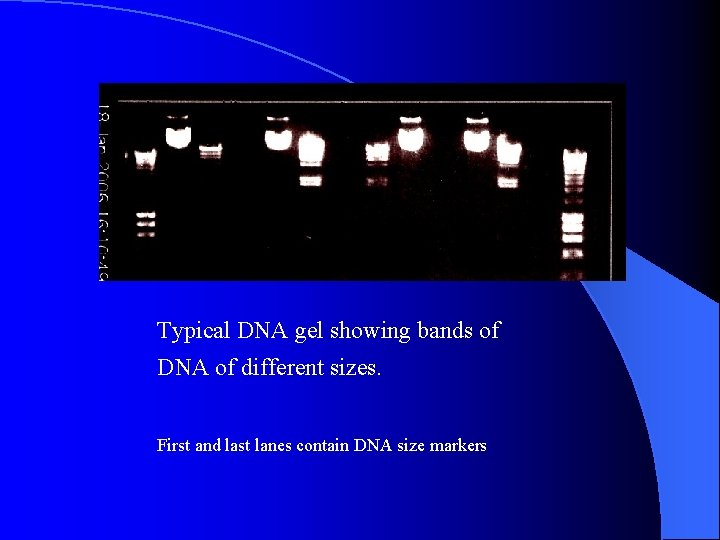
Typical DNA gel showing bands of DNA of different sizes. First and last lanes contain DNA size markers
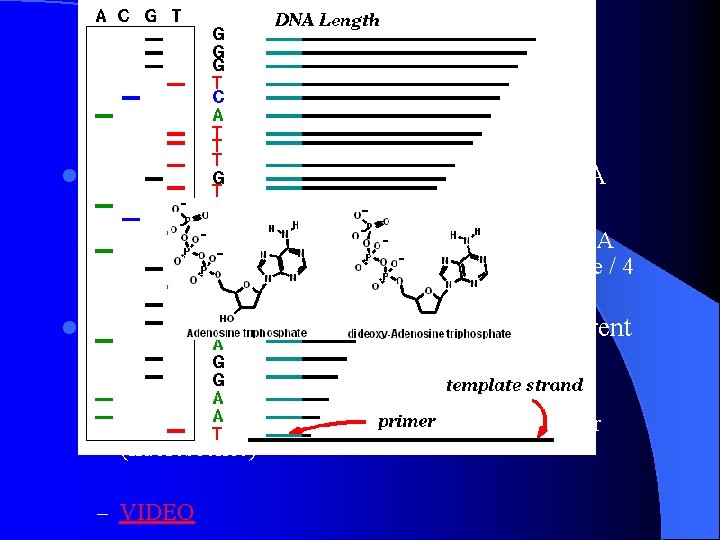
DNA sequencing l 4 tubes with DNA polymerase, template DNA – DNA nucleotides – 1 Dideoxynucleotide (e. g. dd. ATP, terminates DNA synthesis where A is located) labelled (radioactive / 4 fluorescent colours) l Produces strands of DNA terminated at different points – Fragments separated by electrophoresis – Labels visualised by autoradiography or computer (fluorescence) – VIDEO
DNA probes l Short sequences of DNA complementary to specific sequences in the genome – Labelled (radioactive/ fluorescent) – Binds to complementary sequence l Used extensively – Search for genes – Locate genes (Fi. SH – fluorescence immunohistochemistry) – DNA fingerprinting
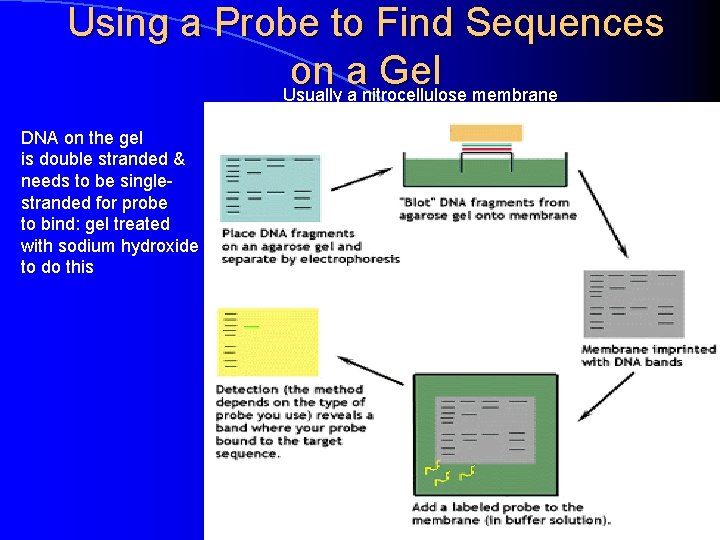
Using a Probe to Find Sequences on a Gel Usually a nitrocellulose membrane DNA on the gel is double stranded & needs to be singlestranded for probe to bind: gel treated with sodium hydroxide to do this
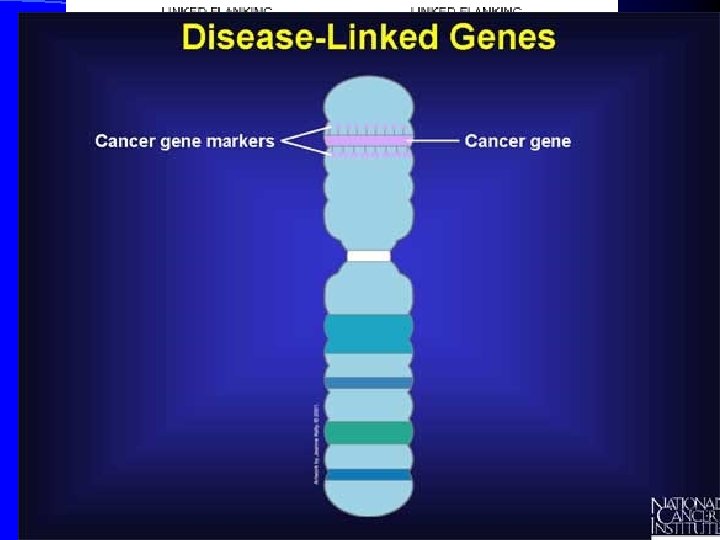
Chromosome Walking l Marker sequence identified – Target gene is some distance from marker – 2 Restriction enzymes digest DNA – Probe to find fragments containing marker DNA – Sequence 3’ ends – Probe for these sequences, repeat above – Use overlaps in digests to identify fragment order – Gradually move towards gene (Fig. 8. 3 P 157)

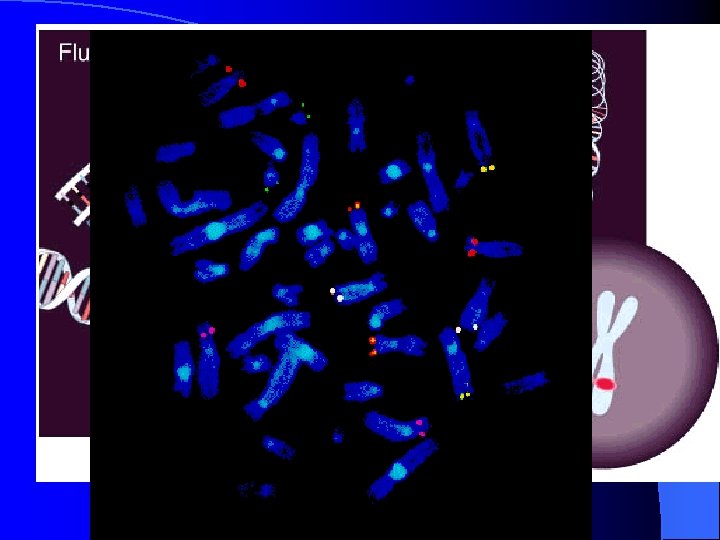
Human Genome Project Methodology - Fi. SH l Fluorescence in-situ hybridisation – Use metaphase chromosomes – Probes fluorescently labelled – Highlight chromosome on which a specific sequence or gene is located – (antibody technology used allows labelling of more than one site on the sample ) – Use of interphase chromosomes gives 50 kbp resolution
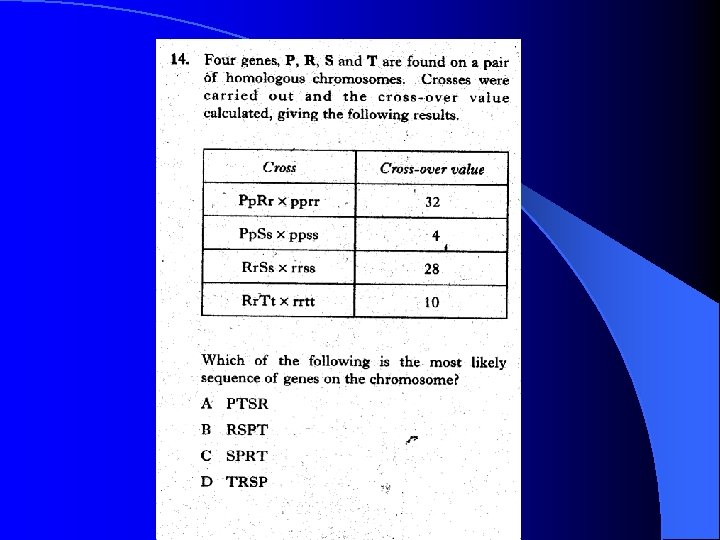
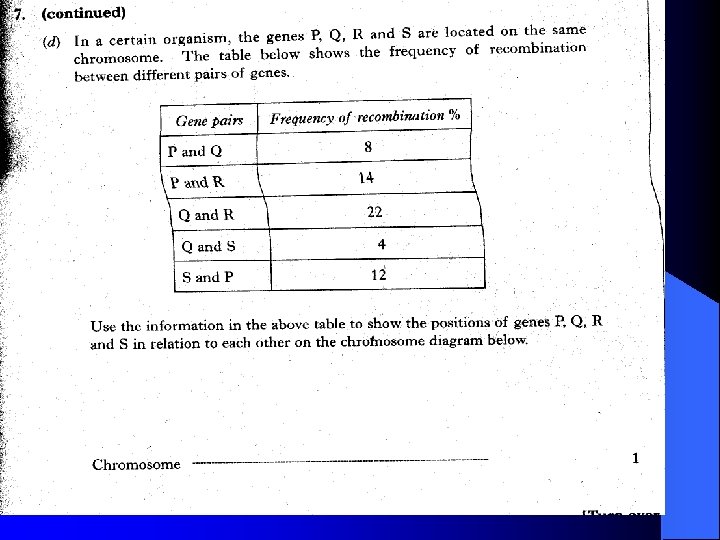
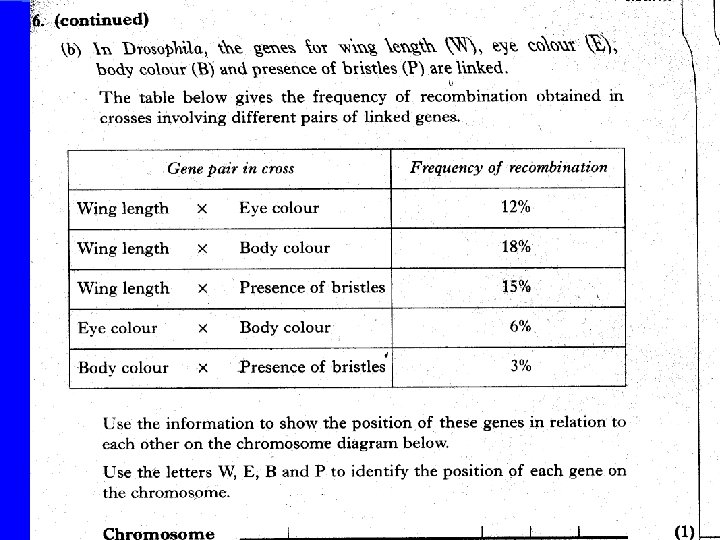
Human Genome Project Methodology - Linkage Studies – Find linkages between genes Linkage mapping from genetic studies l Recombination studies l Crossover at meiosis – frequency indicates distance between the genes l
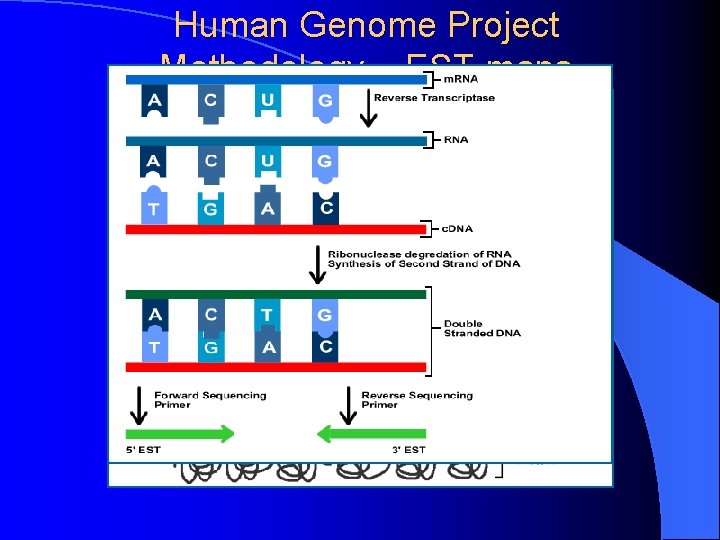
Human Genome Project Methodology – EST maps
Human Genome Project Methodology – EST maps Expressed sequence tag (EST) maps l Partial gene sequence data of a c. DNA clone, which provides a sequence from which to generate a probe. l – Extract m. RNA – Reverse transcribe it (RNA complementary DNA (c. DNA)) – Use c. DNA sequence to probe genome – Finds the location of expressed genes
Human Genome Project Methodology – STS maps l Sequence tagged site (STS) maps l STS- PCR primer based on known sequence (randomly found) – Can be used to link the genetic maps to the physical map
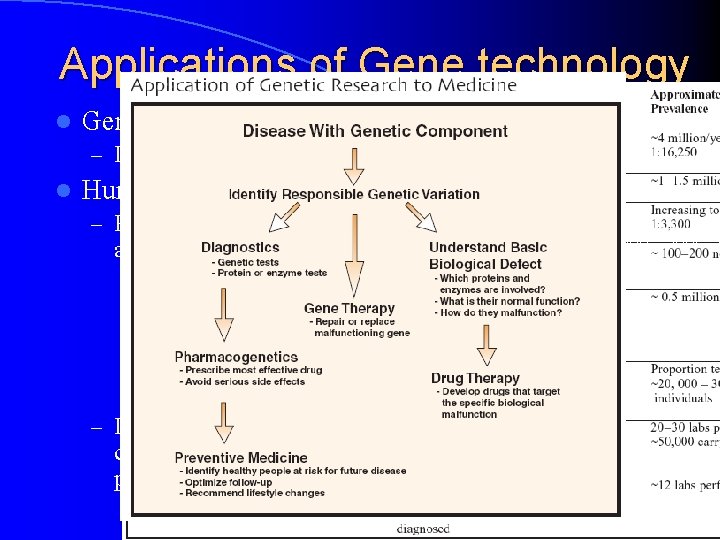
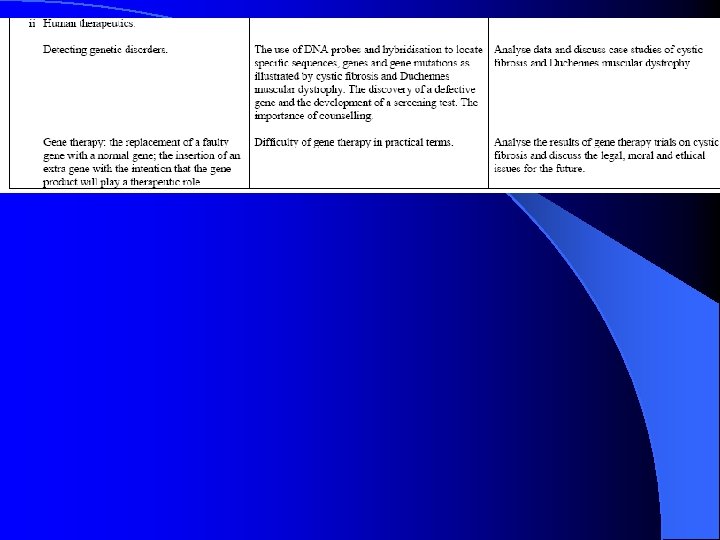
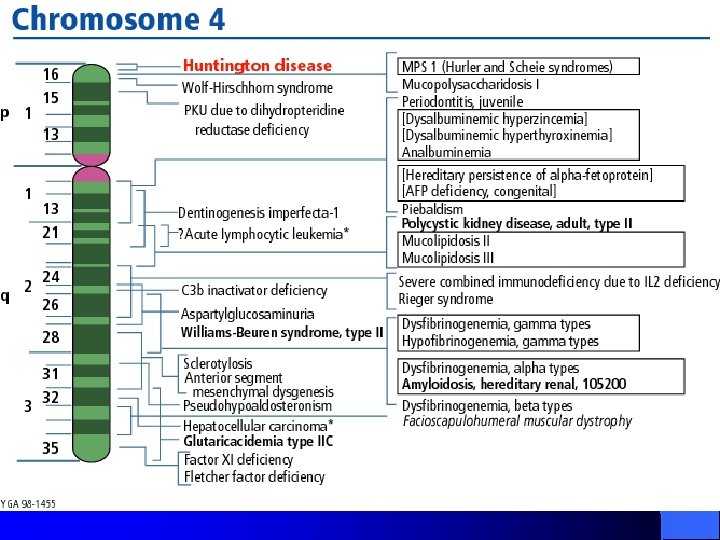
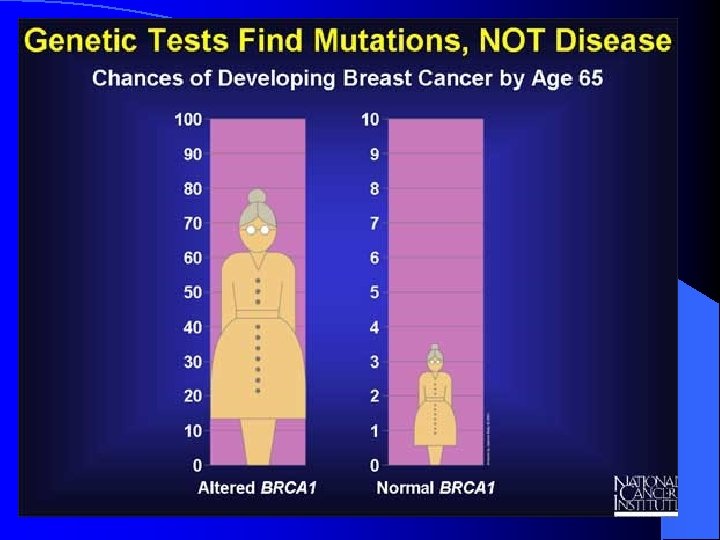
Applications of Gene technology l Genetic testing – Identify gene defects l Human therapeutics – Replace defective genes with corrected sequence in affected tissues l Useful single gene defect disorders (monogenic) – E. g cystic fibrosis – E. g. Duchenne muscular dystrophy – E. g. Huntingdon’s disease l More difficult for multiple gene defect disorders (polygenic) e. g heart disease – Introduce antisense DNA to produce m. RNA complementary to e. g cancer causing genes and so prevent their translation
Cystic Fibrosis Single gene defect l Gene encoding a chloride ion channel protein is incorrect sequence l Leads to reduction in secretion of water with mucus – sticky, thick mucus produced l Coats airways, gut l – Prone to respiratory infection, recurrent cough – Malnutrition due to poor secretion of digestive enzymes – Reduced life expectancy Genetic disorder established 1946, l Gene isolated 1989 l
Cystic Fibrosis l Possible treatment – Introduce good copy of gene into airways cells – Use aerosol technology l Delivery methods: – Aerosol – Viral vector or Liposome containing DNA – Animal trials show good reversal – Human trials less encouraging
Duchenne Muscular Dystrophy l Defect in gene for Dystrophin (muscle protein) – Onset of symptoms age 2 -6 – Falling, difficulty getting up from sitting/lying – Waddling gait – Large calf muscles (fat deposition) l X linked gene (1987)
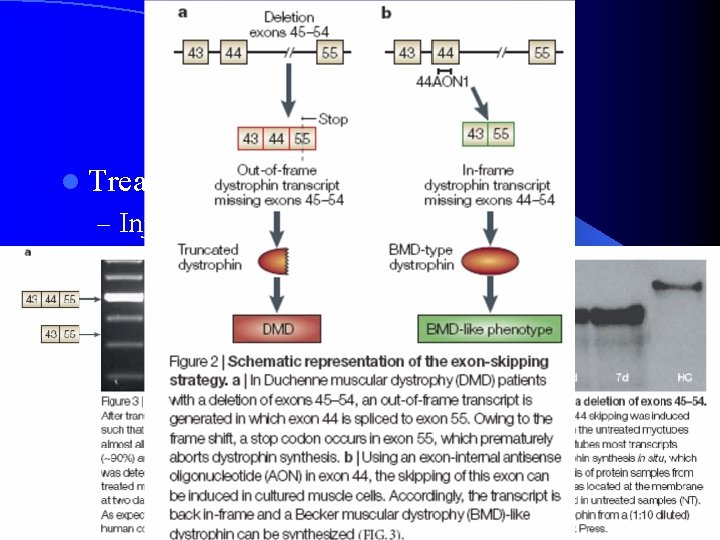
Duchenne Muscular Dystrophy l Treatment – Injection of liposomes into bloodstream l Good copy of gene introduced into muscles – Targeting/ control of tissue specific expression – Alternative antisense technology

- Slides: 42