
Biotechnology Introduction to Micropipettes and Gel Electrophoresis Standards
Biotechnology Introduction to Micropipettes and Gel Electrophoresis
Standards: § BI 4. c. Students know how mutations in the DNA § § § sequence of a gene may or may not affect the expression of the gene or the sequence of amino acids in an encoded protein. BI 5. c. Students know how genetic engineering (biotechnology) is used to produce novel biomedical and agricultural products. BI 5. a. Students know the general structures and functions of DNA, RNA, and protein. 5 e. * Students know how exogenous DNA can be inserted into bacterial cells to alter their genetic makeup and support expression of new protein products.
Objectives: SWBAT § explain the structure and function of DNA, RNA, and proteins. § predict the physical characteristics of an organism based on its genetic make up. § understand the general pathway by which ribosomes make proteins. § understand how altering an organisms genetic make-up changes the proteins the organism produces.
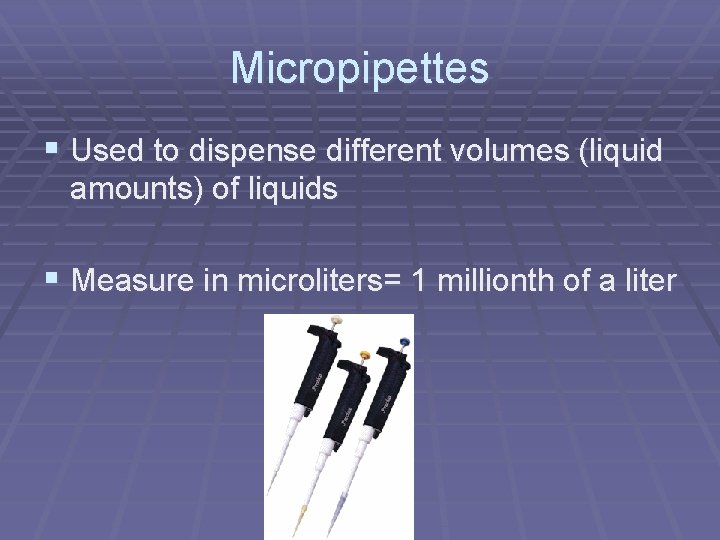
Micropipettes § Used to dispense different volumes (liquid amounts) of liquids § Measure in microliters= 1 millionth of a liter
Tips for Using the Micropipette § Turn handle clockwise=decreases volume § Turn handle counterclockwise=increases volume § Push down plunger once to draw up solution, then release § Push plunger to second position to eject solution
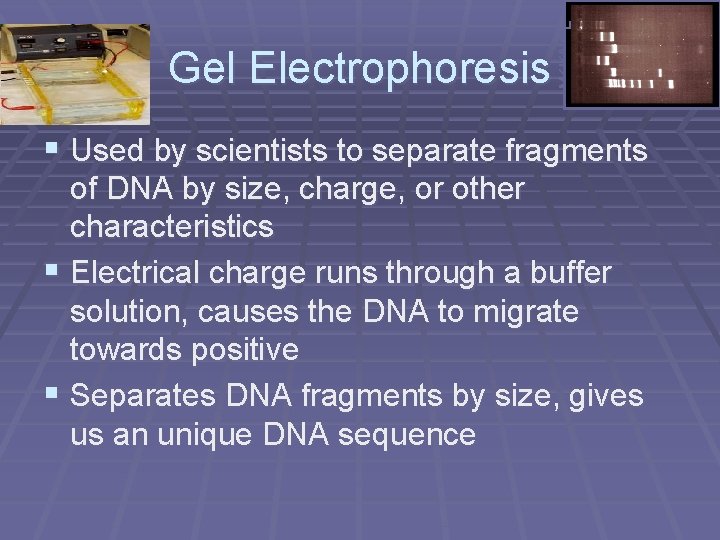
MK+K-A+A-L Gel Electrophoresis § Used by scientists to separate fragments of DNA by size, charge, or other characteristics § Electrical charge runs through a buffer solution, causes the DNA to migrate towards positive § Separates DNA fragments by size, gives us an unique DNA sequence
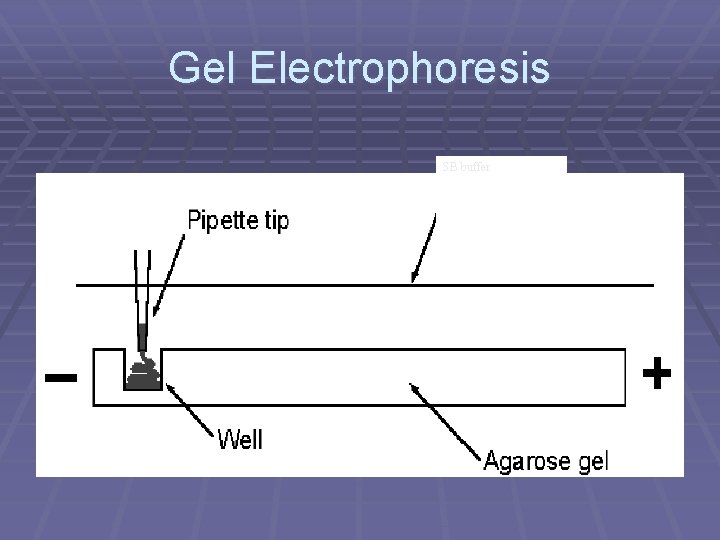
Gel Electrophoresis SB buffer
The Mad Scientist!!!
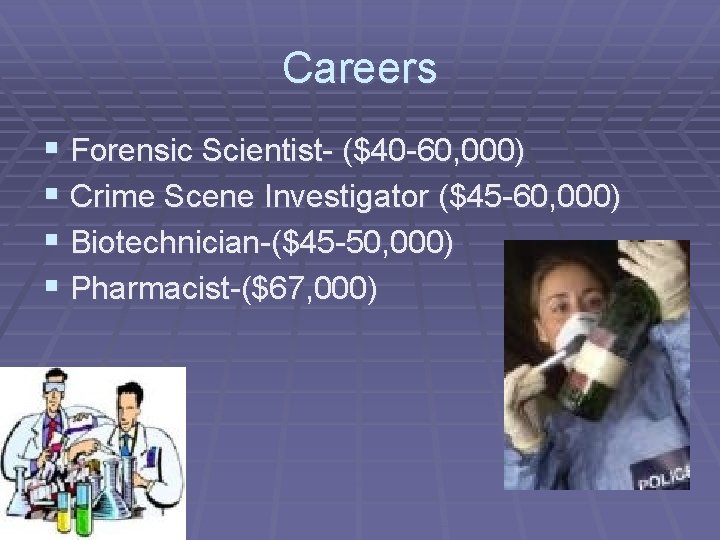
Careers § Forensic Scientist- ($40 -60, 000) § Crime Scene Investigator ($45 -60, 000) § Biotechnician-($45 -50, 000) § Pharmacist-($67, 000)
- Slides: 9