
Biotechnology Genetic Engineering Biotechnology The process of making
Biotechnology + Genetic Engineering
Biotechnology: The process of making any significant changes to organisms for practical/useful purposes
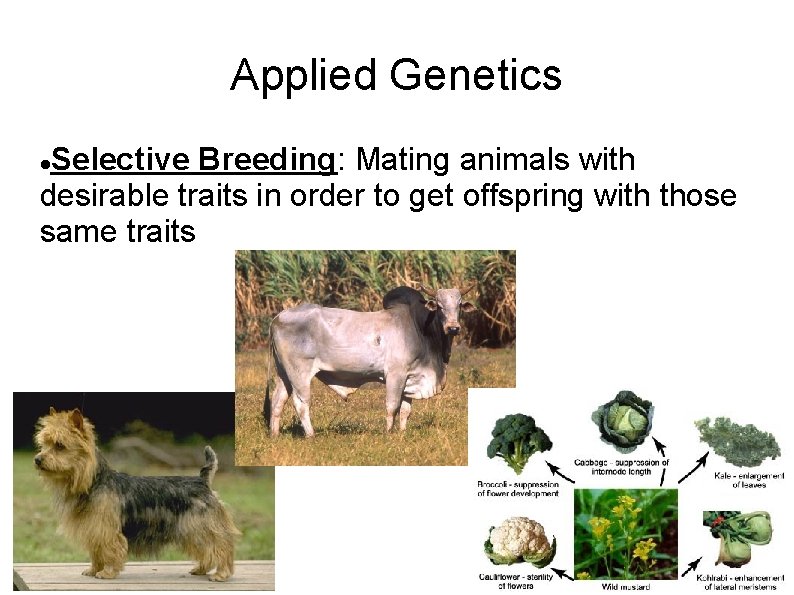
Applied Genetics Selective Breeding: Mating animals with desirable traits in order to get offspring with those same traits
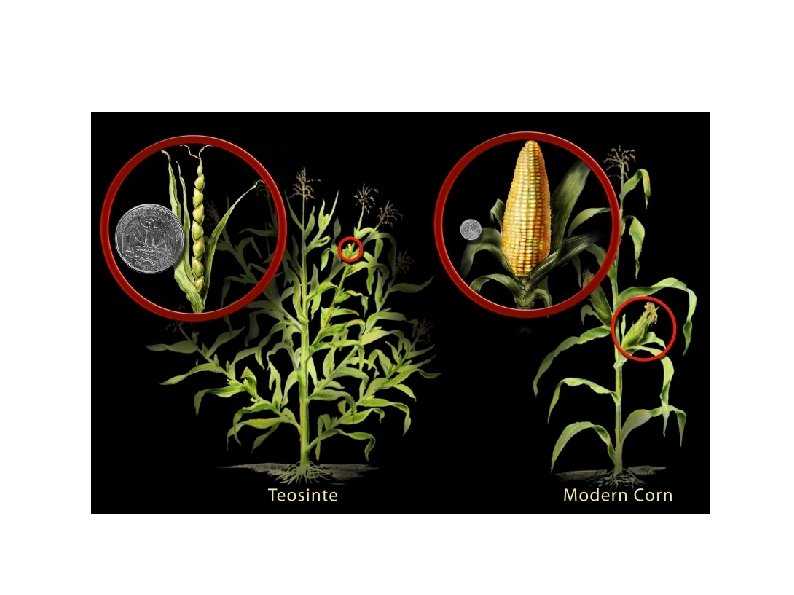
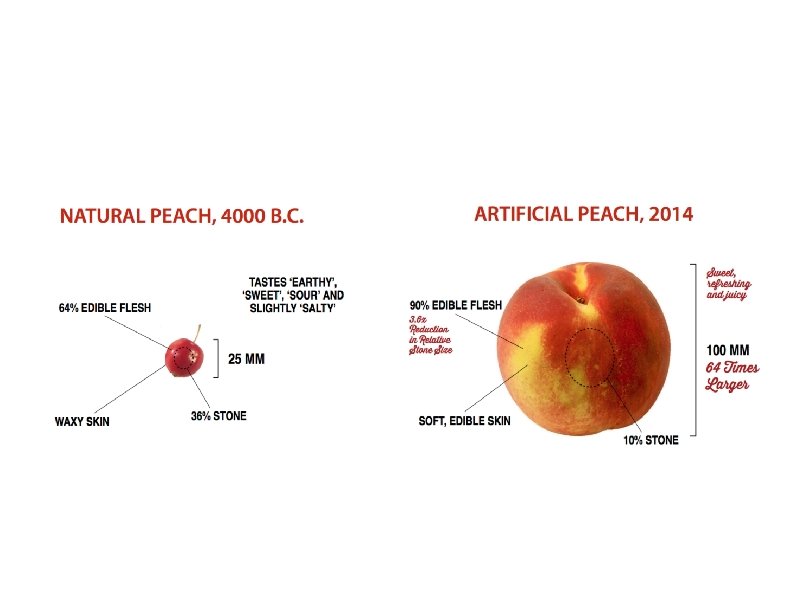

Before Selective Breeding Also known as artificial selection After Selective Breeding
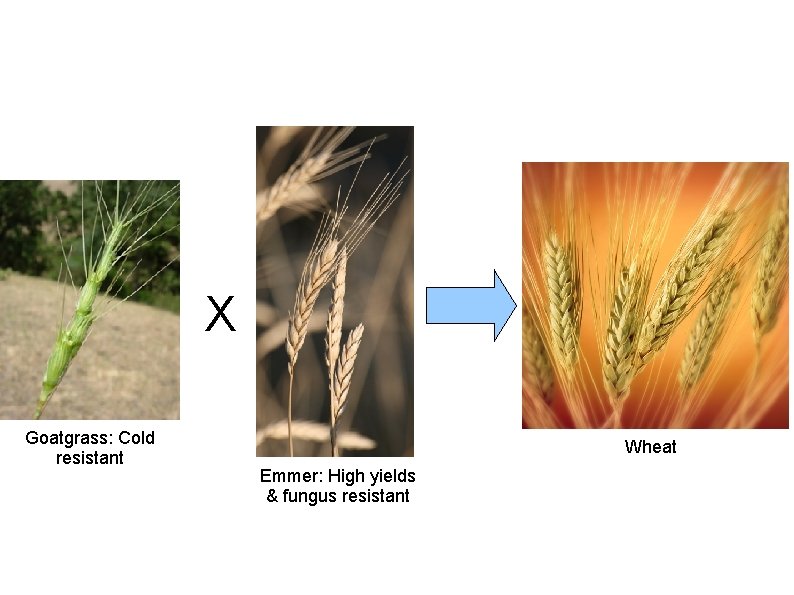
X Goatgrass: Cold resistant Wheat Emmer: High yields & fungus resistant
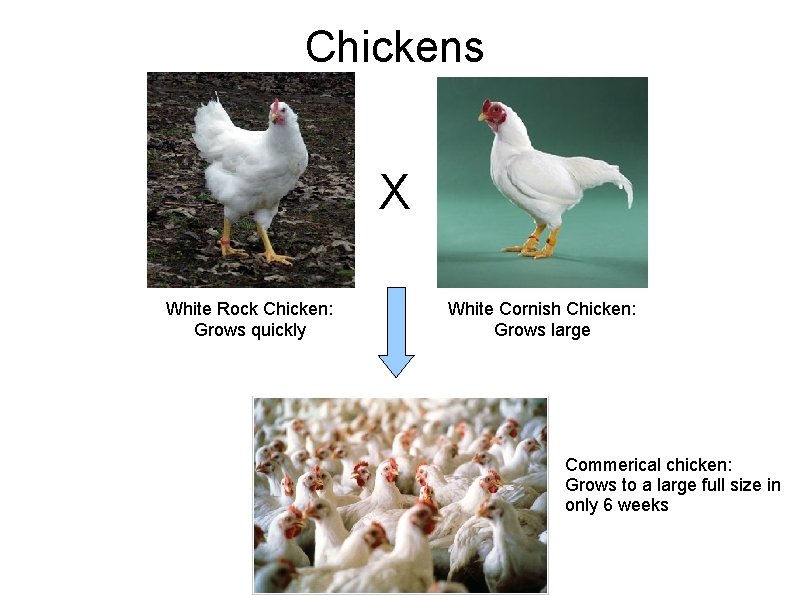
Chickens X White Rock Chicken: Grows quickly White Cornish Chicken: Grows large Commerical chicken: Grows to a large full size in only 6 weeks
Modern Technologies: GMOs
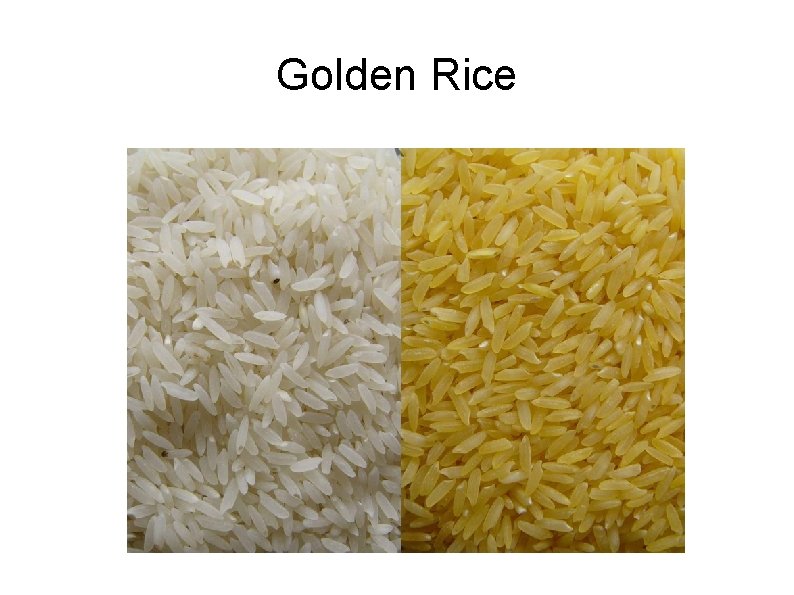
Golden Rice
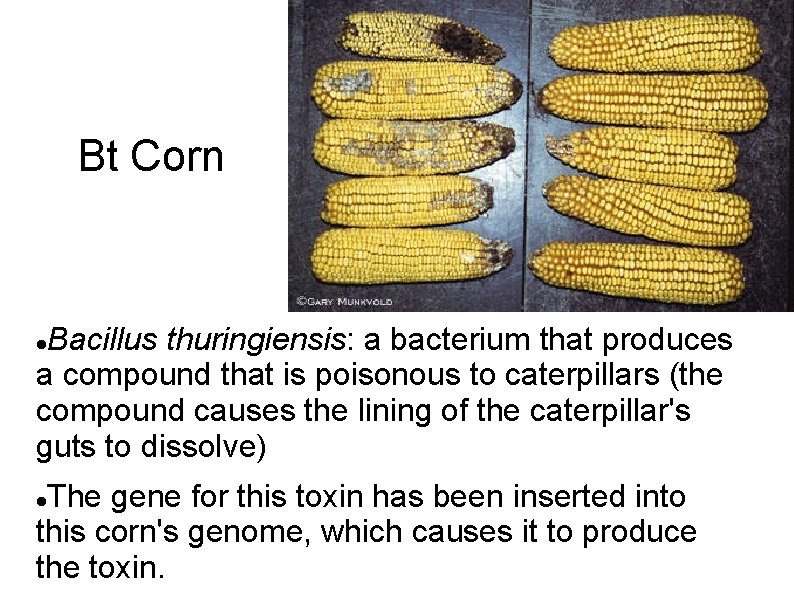
Bt Corn Bacillus thuringiensis: a bacterium that produces a compound that is poisonous to caterpillars (the compound causes the lining of the caterpillar's guts to dissolve) The gene for this toxin has been inserted into this corn's genome, which causes it to produce the toxin.
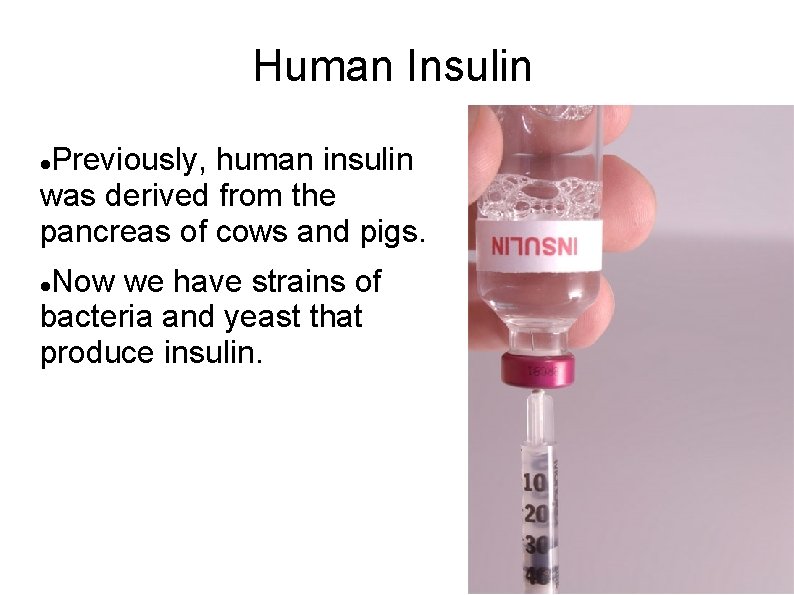
Human Insulin Previously, human insulin was derived from the pancreas of cows and pigs. Now we have strains of bacteria and yeast that produce insulin.
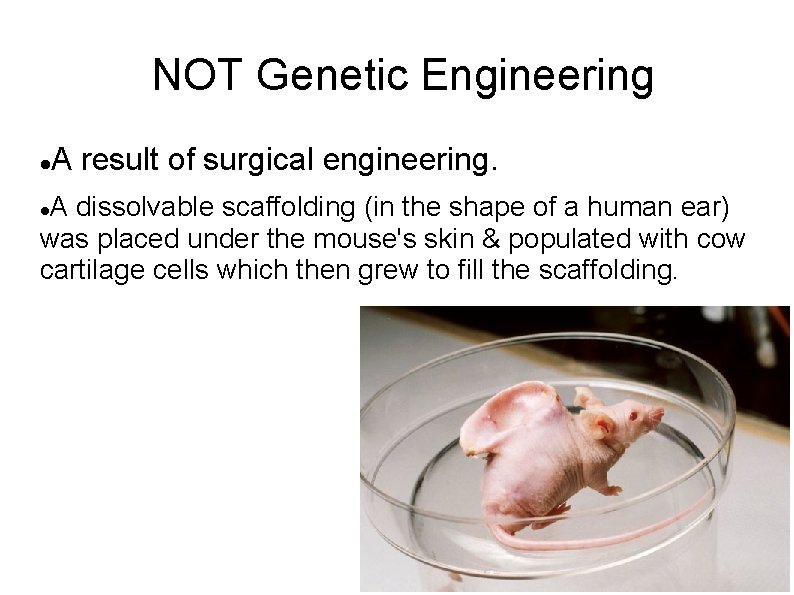
NOT Genetic Engineering A result of surgical engineering. A dissolvable scaffolding (in the shape of a human ear) was placed under the mouse's skin & populated with cow cartilage cells which then grew to fill the scaffolding.
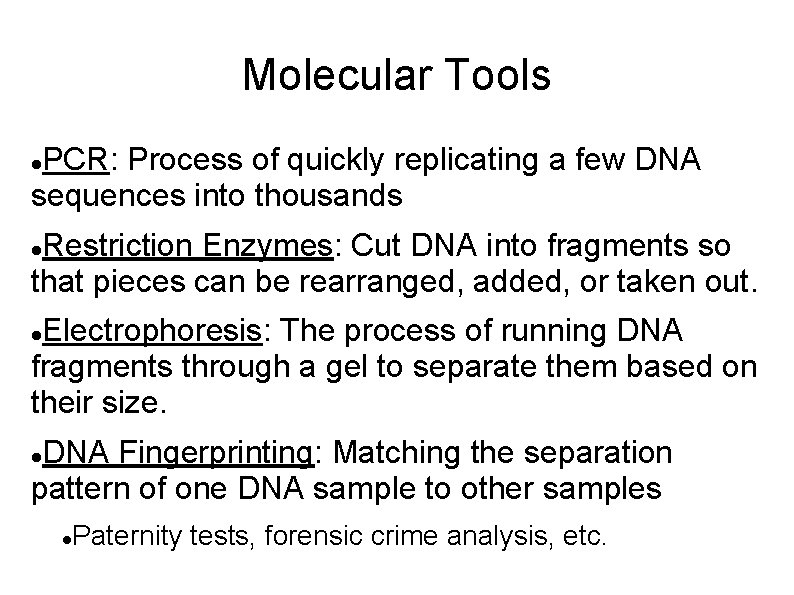
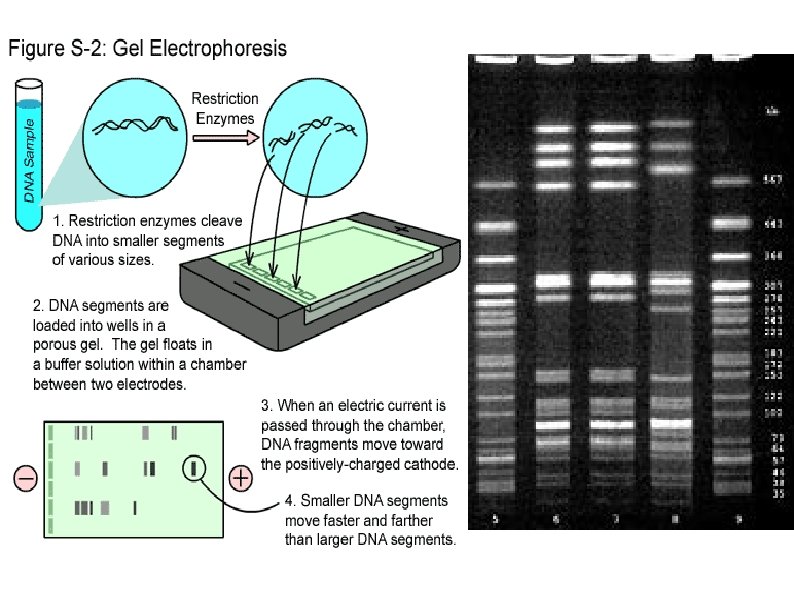
Molecular Tools PCR: Process of quickly replicating a few DNA sequences into thousands Restriction Enzymes: Cut DNA into fragments so that pieces can be rearranged, added, or taken out. Electrophoresis: The process of running DNA fragments through a gel to separate them based on their size. DNA Fingerprinting: Matching the separation pattern of one DNA sample to other samples Paternity tests, forensic crime analysis, etc.
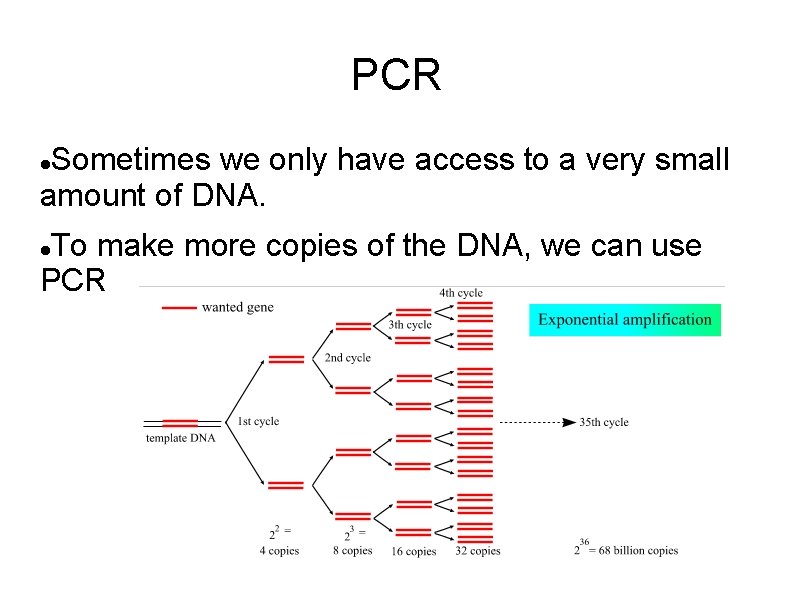
PCR Sometimes we only have access to a very small amount of DNA. To make more copies of the DNA, we can use PCR
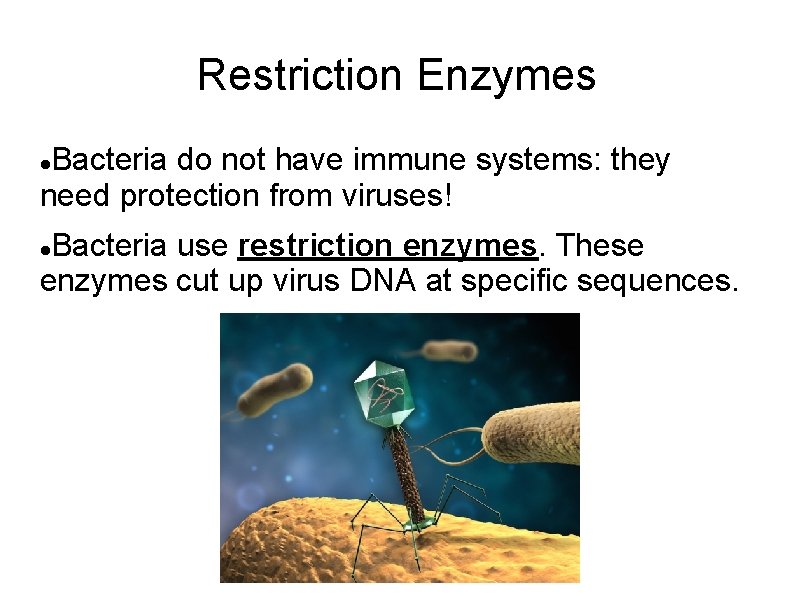
Restriction Enzymes Bacteria do not have immune systems: they need protection from viruses! Bacteria use restriction enzymes. These enzymes cut up virus DNA at specific sequences.
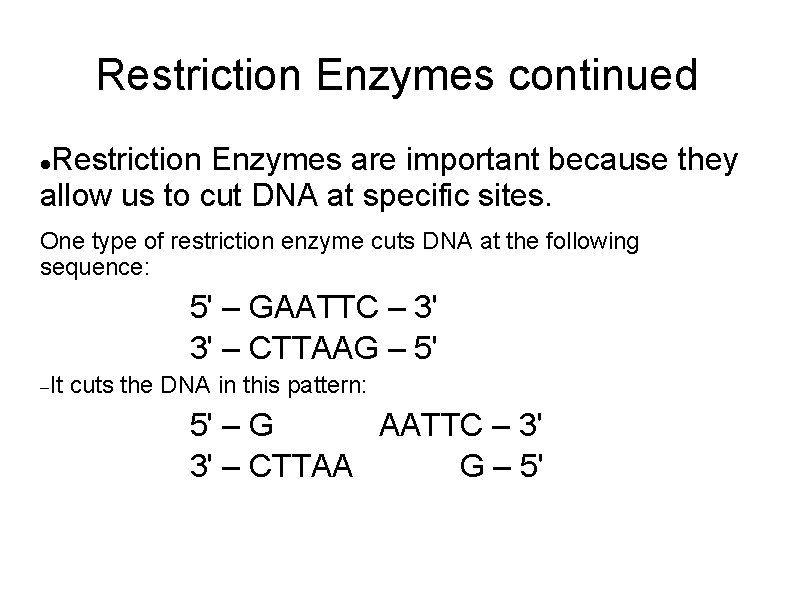
Restriction Enzymes continued Restriction Enzymes are important because they allow us to cut DNA at specific sites. One type of restriction enzyme cuts DNA at the following sequence: 5' – GAATTC – 3' 3' – CTTAAG – 5' It cuts the DNA in this pattern: 5' – G AATTC – 3' 3' – CTTAA G – 5'
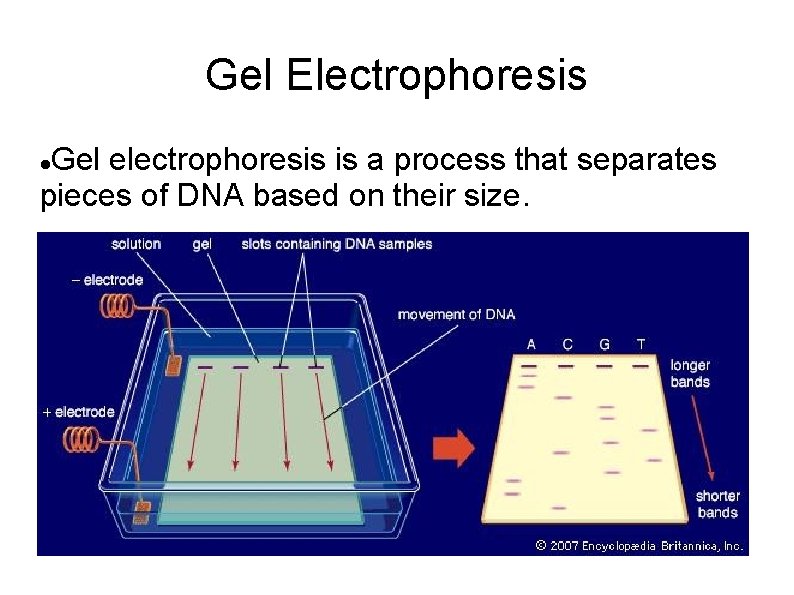
Gel Electrophoresis Gel electrophoresis is a process that separates pieces of DNA based on their size.
So what can we do with these molecular tools?
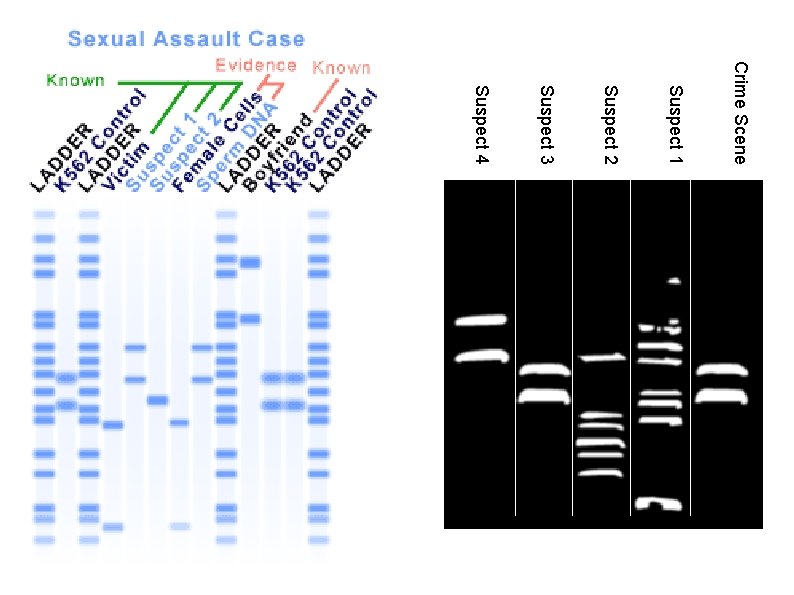
Crime Scene Suspect 1 Suspect 2 Suspect 3 Suspect 4
- Slides: 21