
Biotechnology Definition Techniques used to modify deoxyribonucleic acid
Biotechnology
Definition • Techniques used to modify deoxyribonucleic acid (DNA) or the genetic material of a microorganism, plant, or animal to achieve a desired trait. D 8. 01 --Biotechnology 2

Biotech-produced foods n Also known as: n n n Genetically engineered Bioengineered Genetically modified, although "genetically modified" can also refer to foods from plants altered through methods such as conventional breeding D 8. 01 --Biotechnology 3
General Uses n n n New products that are higher quality, safer, and/or more nutritious. Lower production and processing costs. Improve microbial processes upon which processors rely. n n Fermentation Enzymes D 8. 01 -- Uses of Biotechnology
Two Uses – Quality and Safety n Quality Food additives – natural flavors and colors n Processing aids – enzymes, emulsifiers, and starter cultures n Environment – more waste treatment options, greener manufacturing options, biodegradable plastic wrap that kills bacteria. n n Food safety rapid detection tools to detect microorganisms and the toxins they produce. n D 8. 01 -- Uses of Biotechnology
Ethical vs. Empirical
Empirical vs. Ethical n Empirical – statements of fact n n n Statements about risks and benefits are empirical claims. Statements about what something is made of or how something functions are empirical claims. Ethical – values n n “It is good to care for the environment and promote human health. ” Ethical claims set forth what is good to do and what is bad to do in general.
What are ethics? n n n Ethics is critical thinking about right and wrong action. Ethics involve the study of values, not just reliance on intuition or what our friends think. The ethical conclusion is the specific course of action that one should follow, if the empirical claims (facts) and ethical claims (values and beliefs) are accepted as true.
Ethical Concerns of Biotechnology n n n Environmental impact Health and allergens Allergens Labeling Unknown effects Gene source and religion
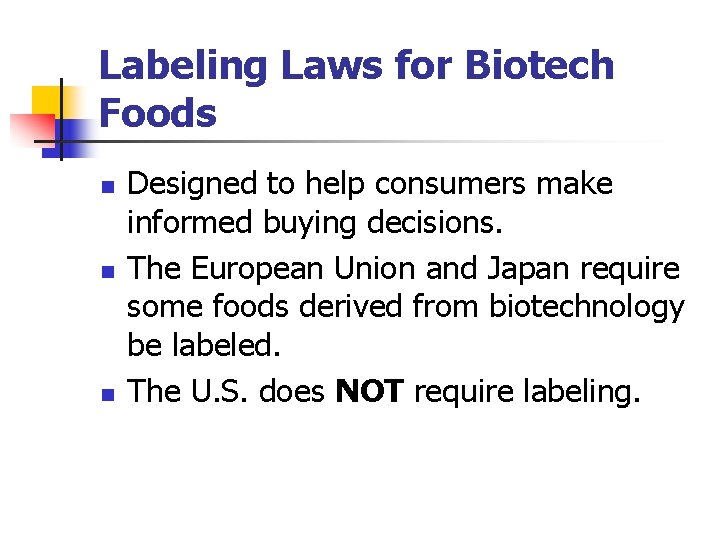
Labeling Laws for Biotech Foods n n n Designed to help consumers make informed buying decisions. The European Union and Japan require some foods derived from biotechnology be labeled. The U. S. does NOT require labeling.
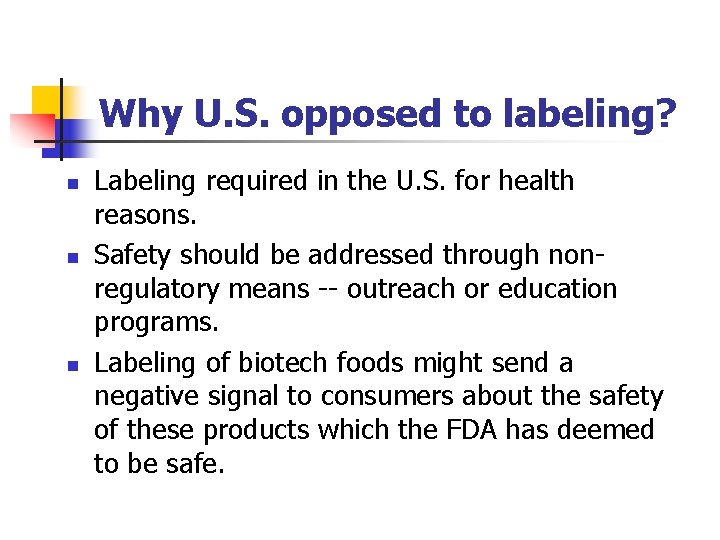
Why U. S. opposed to labeling? n n n Labeling required in the U. S. for health reasons. Safety should be addressed through nonregulatory means -- outreach or education programs. Labeling of biotech foods might send a negative signal to consumers about the safety of these products which the FDA has deemed to be safe.
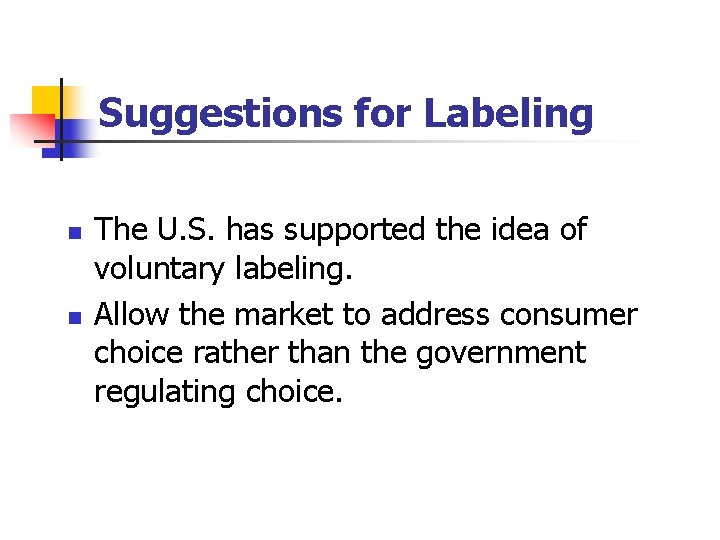
Suggestions for Labeling n n The U. S. has supported the idea of voluntary labeling. Allow the market to address consumer choice rather than the government regulating choice.
- Slides: 12