
Biotechnology Chapter 6 Central Points Recombinant DNA technology
Biotechnology Chapter 6
Central Points § Recombinant DNA technology joins DNA § Biotechnology uses recombinant DNA technology to make products § Bacteria, plants, and animals modified § Safety of transgenic organisms debated § Produce human proteins for disease treatment § Many biotechnology inventions patented
6. 1 What Is Biotechnology? § Coupling of genetic technology to biological systems § Makes human proteins § Previously, human proteins collected from many sources: animals, cadavers, and donated blood § Risk from these sources including death
In 1985, h. GH Produced § Potentially unlimited amounts of growth hormone § No possibility of contamination with diseasecausing agents § Used to treat a number of serious growth disorders
How Is h. GH Produced? § Recombinant DNA technology § Transferred gene for h. GH from a human cell DNA to a bacterial cell § Creating a transgenic organism § Transgenic bacterial cell and its descendants manufacture h. GH
6. 2 Recombinant DNA Technology: Steps (1) § DNA extracted from human cells § DNA treated with restriction enzyme, cuts the DNA at specific sites, produce “sticky end” § Bacterial plasmid cut with same enzyme § Plasmid functions as vector and carries human DNA into bacterial cells
6. 2 Recombinant DNA Technology: Steps (2) § Fragments of human DNA and plasmid mixed together and join § Plasmids enter the bacterial cells, copy themselves, carry recombinant DNA into bacteria § Bacteria express gene, synthesize the human protein, can be used for treatments, vaccines, or other purposes
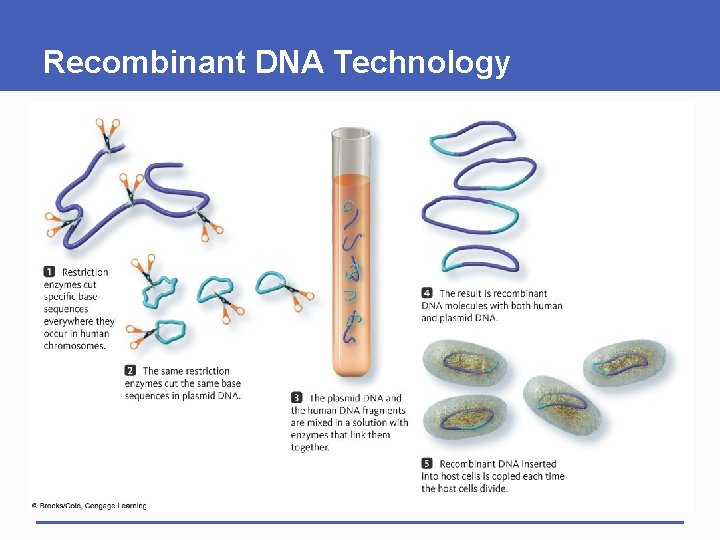
Recombinant DNA Technology
Restriction Enzymes § Restriction enzymes cut both DNA strands at a recognition site, search for specific base sequence § > 1, 000 different restriction enzymes § Each cuts at specific and different recognition sites
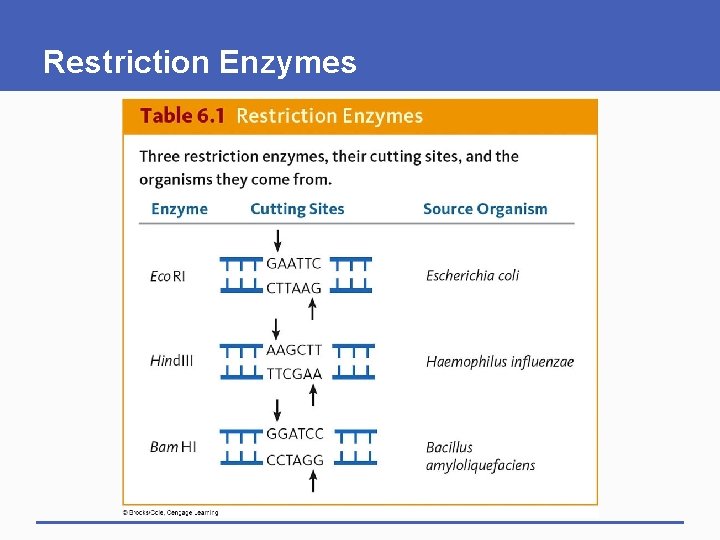
Restriction Enzymes
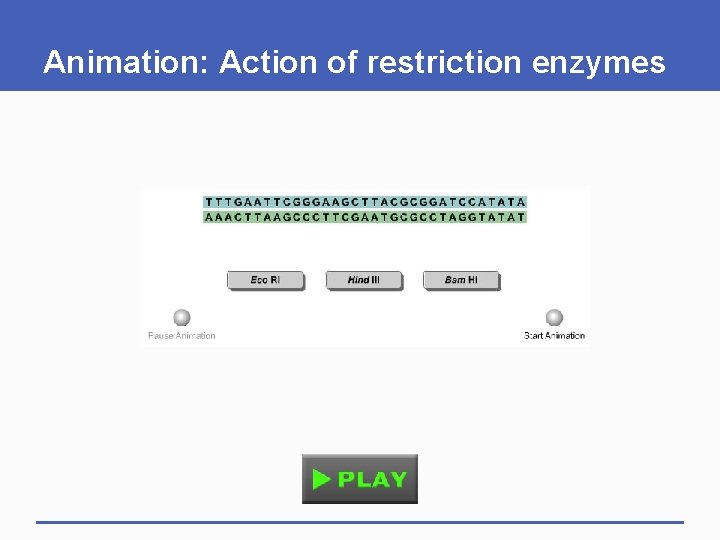
Animation: Action of restriction enzymes
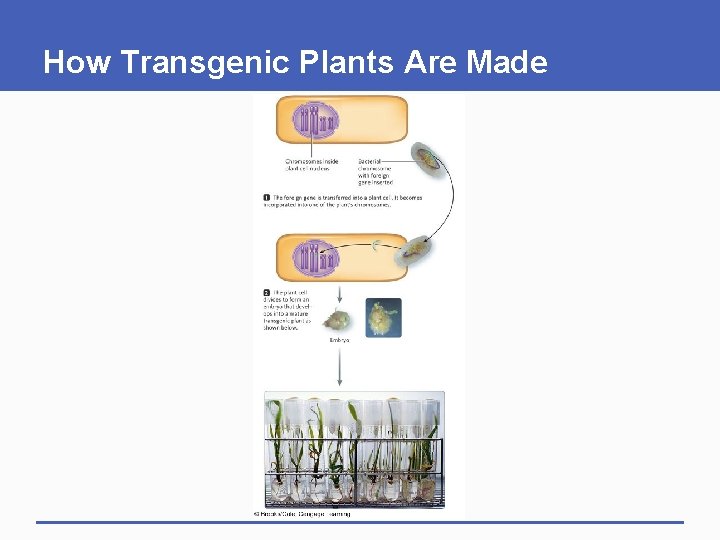
How Transgenic Plants Are Made
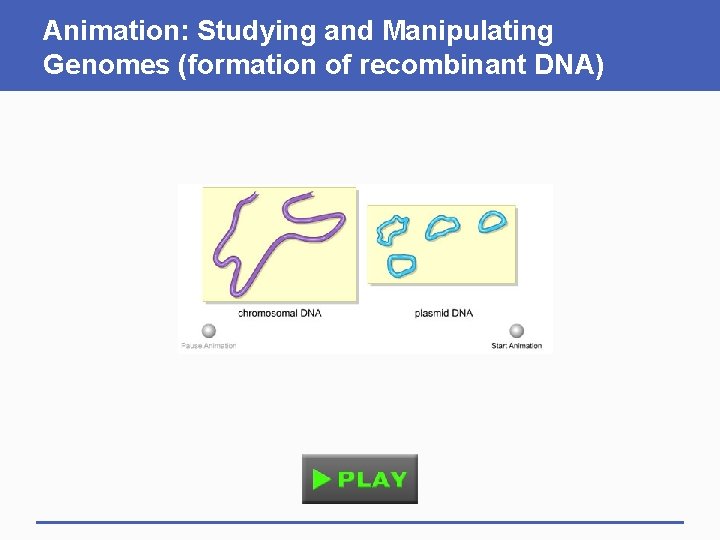
Animation: Studying and Manipulating Genomes (formation of recombinant DNA)
6. 3 Other Transgenic Plants and Animals § Production of medically important proteins § Transgenic crops or genetically modified (GM), plants with new characteristics • Resistance to herbicides, insects, or viral or fungal diseases • Increase the nutritional value of crops § Pigs for xenotransplants
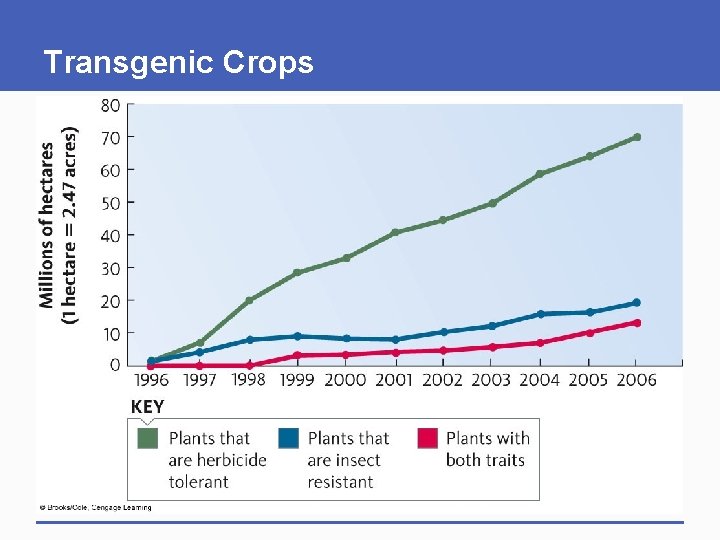
Transgenic Crops
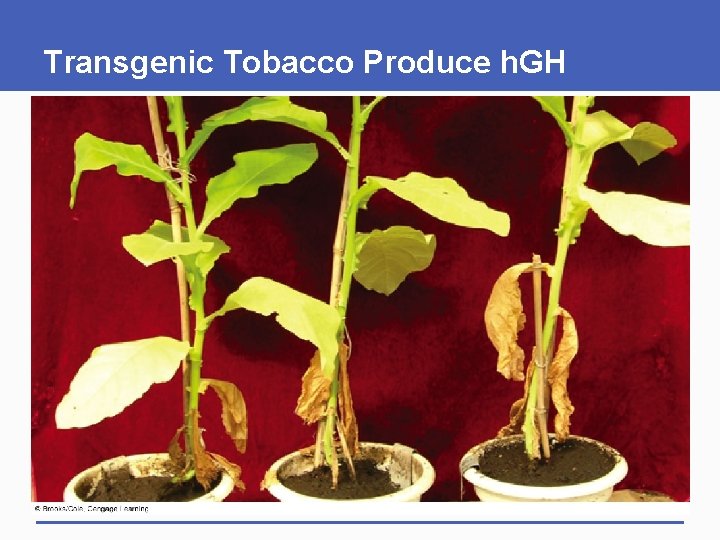
Transgenic Tobacco Produce h. GH
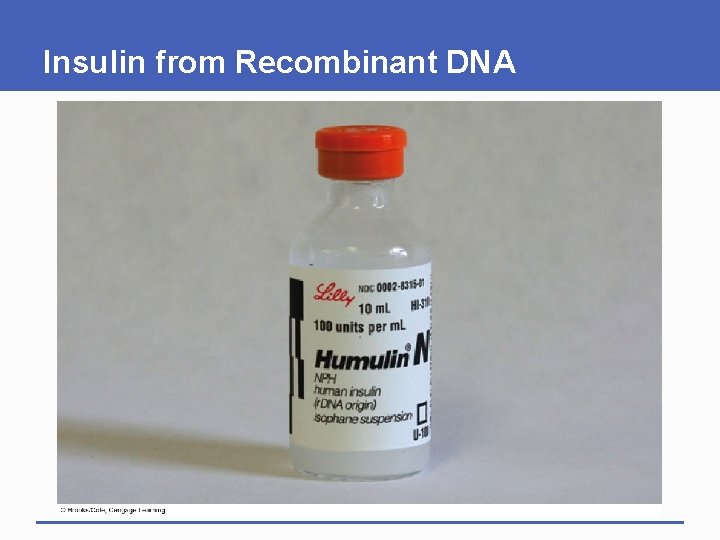
Insulin from Recombinant DNA
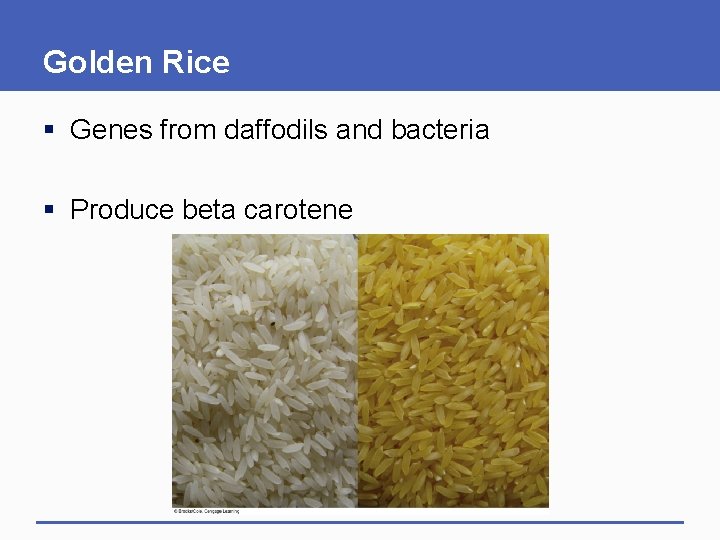
Golden Rice § Genes from daffodils and bacteria § Produce beta carotene
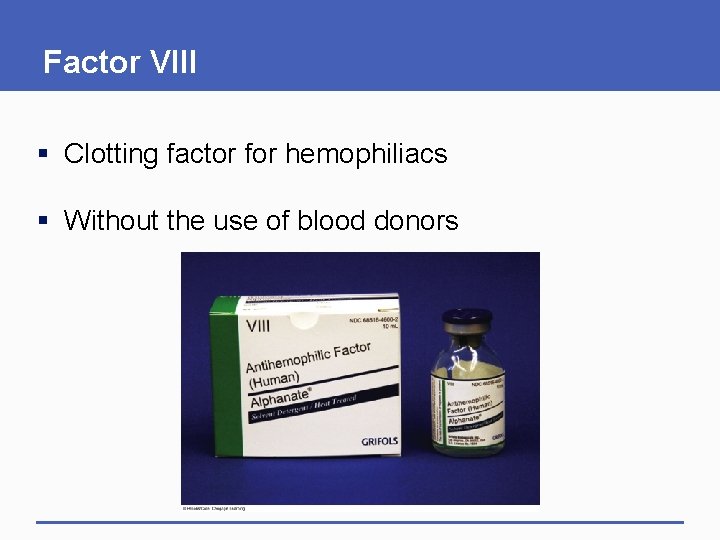
Factor VIII § Clotting factor for hemophiliacs § Without the use of blood donors
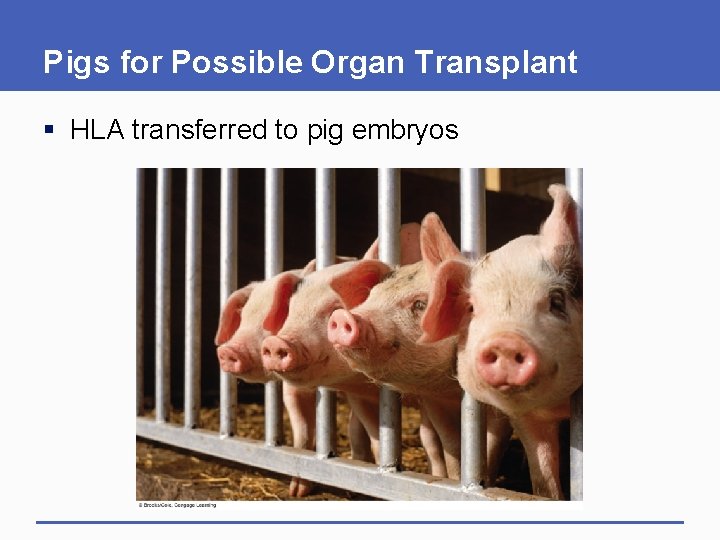
Pigs for Possible Organ Transplant § HLA transferred to pig embryos
6. 4 Are Transgenic Organisms Safe? § Important to address by research and testing • Health and environmental risks • Economic and social issues • Educate public § Potential health risks § Environmental risks, transfer of transgenes to wild plants, and reduction in biodiversity
6. 5 Studying Human Diseases § Human Genome Project, plant and animal genomes § Many shared genes in other species, including the mouse and Drosophila § Animal models of human disease study drug treatments and causes of disease § Transgenic organisms used for models
Transgenic Animal Models § Produce an animal with similar symptoms § Used to study the development and progress of a disease § Used to develop and test drugs to cure or treat animal model of the human disease • Currently used for Huntington disease (HD) § Eventually, drugs used to treat humans
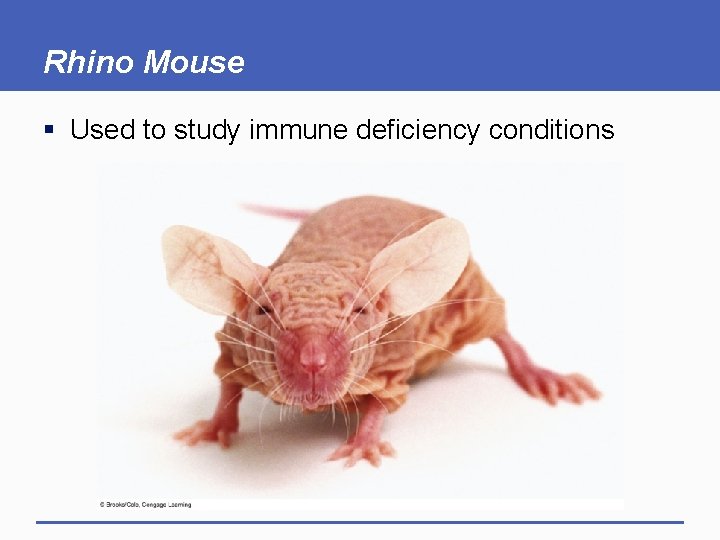
Rhino Mouse § Used to study immune deficiency conditions
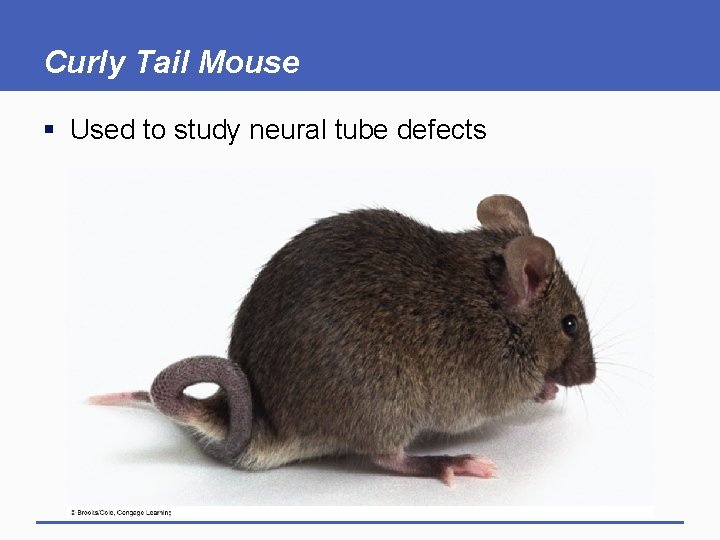
Curly Tail Mouse § Used to study neural tube defects
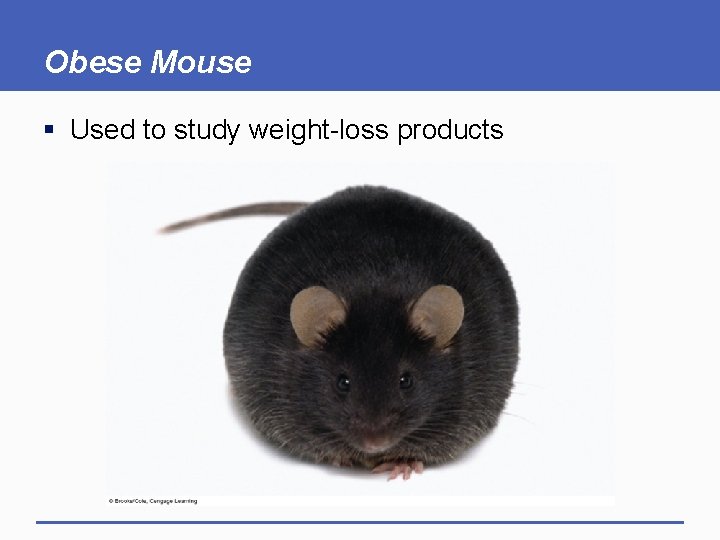
Obese Mouse § Used to study weight-loss products
6. 6 Legal and Ethical Issues in Biotechnology § Patenting organisms and genes § Diamond v. Chakrabarty • Oil-eating bacteria used four plasmids from different strains • Produce one strain of Pseudomonas § Harvard University patent on a transgenic Onco. Mouse (U. S. only)
- Slides: 27