
BIOTECHNOLOGY AND ITS APPLICATIONS Biotechnological Applications in n

BIOTECHNOLOGY AND ITS APPLICATIONS
Biotechnological Applications in n Agriculture(GMCROPS) n Medicine(THERAPEUTICS AND DIAGNOSTICS) n Transgenic Animals (GMO) n Ethical Issues(GEAC ? )
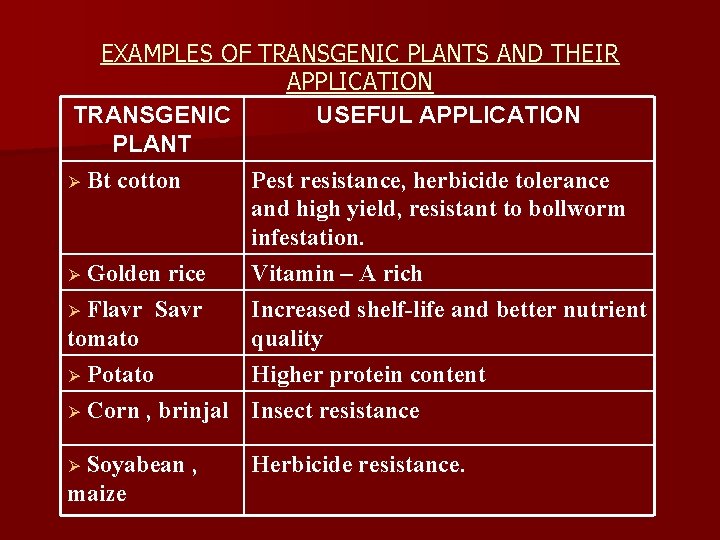
EXAMPLES OF TRANSGENIC PLANTS AND THEIR APPLICATION TRANSGENIC USEFUL APPLICATION PLANT Ø Bt cotton Pest resistance, herbicide tolerance and high yield, resistant to bollworm infestation. Ø Golden rice Vitamin – A rich Flavr Savr tomato Ø Potato Ø Ø Corn , brinjal Insect resistance Soyabean , maize Ø Increased shelf-life and better nutrient quality Higher protein content Herbicide resistance.
Three critical research areas of biotechnology are: n (i) Providing the best CATALYST in the form of improved organism usually a microbe or pure enzyme. n (ii) Creating OPTIMAL CONDITIONS through engineering for a catalyst to act, n (iii) DOWNSTREAM PROCESSING TECHNOLOGIES to purify the protein/organic compound.
APPLICATIONS IN AGRICULTURE n (i) Agro chemical based agriculture n (ii) Organic agriculture; and n (iii) Genetically engineered crop based agriculture
Genetically Modified Organisms (GMO). n Plants, bacteria, fungi and animals whose genes have been altered by manipulation are called Genetically Modified Organisms (GMO).
GM plants modidfication …benefits n n n (i) Made crops more tolerant to abiotic stresses (cold, drought, salt, heat). EG POKKALI (ii) Reduced reliance on chemical pesticides (pest resistant crops). Bt COTTON (iii) Helped to reduce post harvest losses. (FLAVR SAVR) (iv) Increased efficiency of mineral usage by plants (this prevents early exhaustion of fertility of soil). Maize , potato (v) Enhanced nutritional value of food, e. g. , (GOLDEN RICE)
PEST RESISTANT PLANTS Bt toxin is produced by a bacterium called Bacillus thuringiensis (Bt for short). n Bt toxin gene has been cloned from the bacteria and been expressed in plants to provide resistance to insects without the need for insecticides. n In effect created a bio pesticide. Examples are Bt cotton, Bt corn, rice, tomato, potato, soyabean etc. n
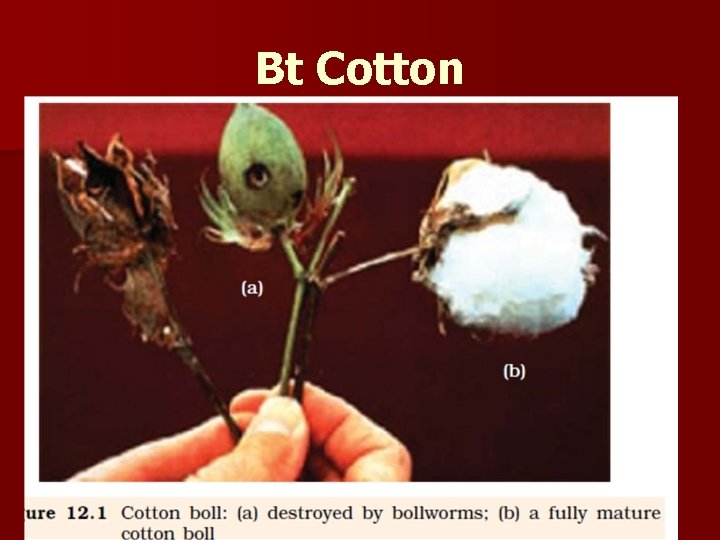
Bt Cotton
Bt Cotton Some strains of Bacillus thuringiensis produce PROTEINS that kill certain insects such as Lepidopterans (tobacco budworm, armyworm), Coleopterans (beetles) and Dipterans (flies, mosquitoes). n B. thuringiensis forms protein crystals during a particular phase of their growth. These crystals contain a toxic insecticidal protein. (Cry PROTEIN) n
Why does this toxin not kill the Bacillus? Actually, the Bt toxin protein exist as inactive PROTOXINS but once an insect ingest the INACTIVE TOXIN, it is converted into an ACTIVE FORM OF TOXIN due to the ALKALINE PH of the gut which solubilise the crystals. n The activated toxin binds to the surface of midgut epithelial cells and create pores that cause cell swelling and lysis and eventually cause death of the insect
Specific Bt toxin genes were isolated from Bacillus thuringiensis and incorporated into the several crop plants such as cotton n The choice of genes depends upon the crop and the targeted pest, as most Bt toxins are insect group specific. The toxin is coded by a gene named cry. There a number of them, for example, the proteins encoded by the genes cry. IAc and cry. IIAb control the cotton bollworms, that of cry. IAb controls corn borer n
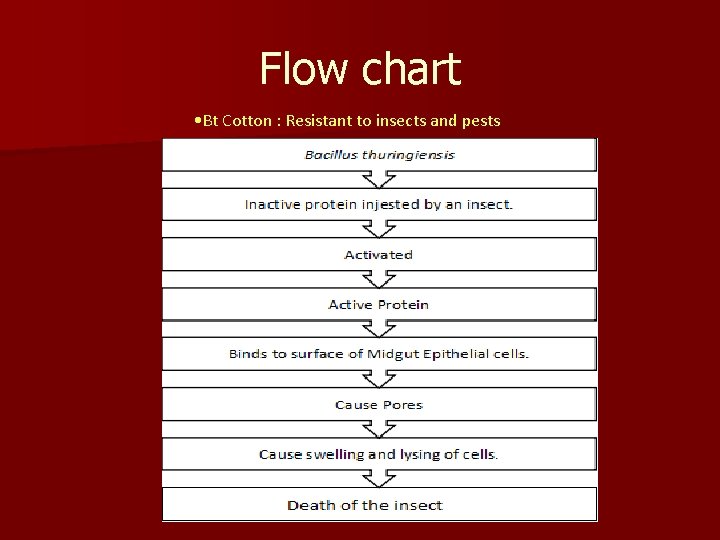
Flow chart • Bt Cotton : Resistant to insects and pests
1. What are Cry proteins? Name an organism that produce it. n 2. Bt cotton is not: a. A GM plant b. Insect resistant c. A bacterial gene expressing system d. Resistant to all pesticides n 3 Distinguish between cry and Cry in Bacillus thuringensis n 4 Name the genes for corn borer and for boll worm. n
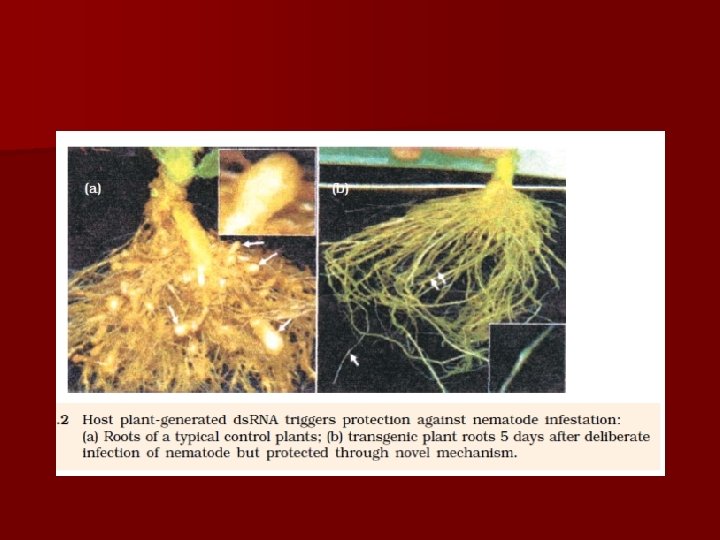
Pest Resistant Plants n n n Several nematodes parasitise a wide variety ofplants and animals including human beings. A nematode Meloidegyne incognitia infects the roots of tobacco plants and causes a great reduction in yield. A novel strategy was adopted to prevent this infestation which was based on the process of RNA interference (RNAi). RNAi takes place in all eukaryotic organisms as a method of cellular defense. This method involves silencing of a specific m. RNA due to a complementary ds. RNA molecule that binds to and prevents translation of the m. RNA (silencing). The source of this complementary RNA could be from an infection by viruses having RNA genomes or mobile genetic elements (transposons) that replicate via an RNA intermediate.
Using Agrobacterium vectors, nematode specific genes were introduced into the host plant. The introduction of DNA was such that it produced both sense and anti sense RNA in the host cells. These two RNA’s being complementary to each other formed a doublestranded (ds. RNA) that initiated RNAi and thus, silenced the SPECIFIC m. RNAOF THE NEMATODE. The consequence was that the parasite could not survive in a transgenic host expressing specific interfering RNA. The transgenic plant therefore got itself protected from the parasite. n
n A sense strand or coding strand, is the segment within double stranded DNA that runs from 5' to 3', and which is complementary to the antisense strand of DNA, which runs from 3' to 5'. The sense strand is the strand of DNA that has the same sequence as the m. RNA, which takes the antisense strand as its template during transcription, and eventually undergoes translation into a protein. The antisense strand is thus responsible for the RNA that is later translated to protein, while the sense strand possesses a nearly identical makeup to that of the m. RNA
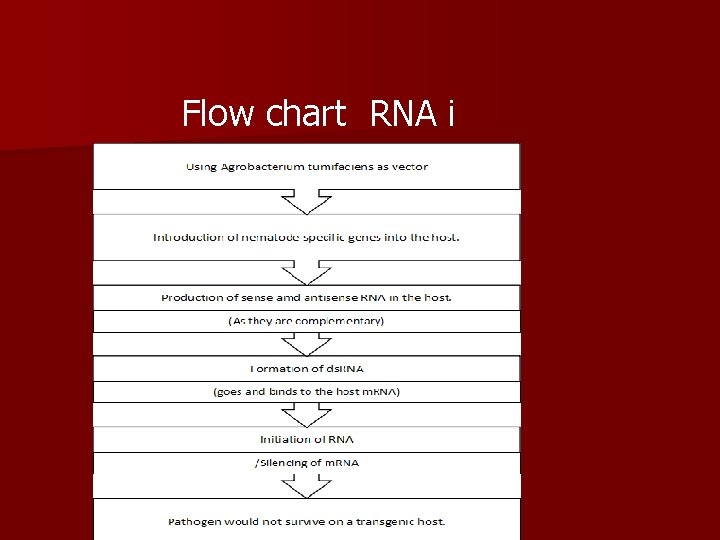
Flow chart RNA i
n Source of ds. RNA – Viral infection – Artificial injection by scientists – Mobile genetic elements (transposons)replicate via RNA intermediate
n In RNAi, genes are silenced using: a. ss DNA b. ds DNA c. ds RNA d. ss RNA
BIOTECHNOLOGICAL APPLICATION IN MEDICINE Rani Mathew
The recombinant DNA technology is used for production of therapeutic drugs which are safe and effective n It avoid unwanted immunological responses , commonly observed with similar products isolated from non human sources n About 30 recombinant therapeutics have been approved for human use in the world including India n
GENETICALLY ENGINEERED INSULIN Insulin used for diabetes was earlier extracted from PANCREAS of slaughtered cattle and pigs n Insulin from an animal source, caused some patients to develop allergy or other types of reactions to the foreign n
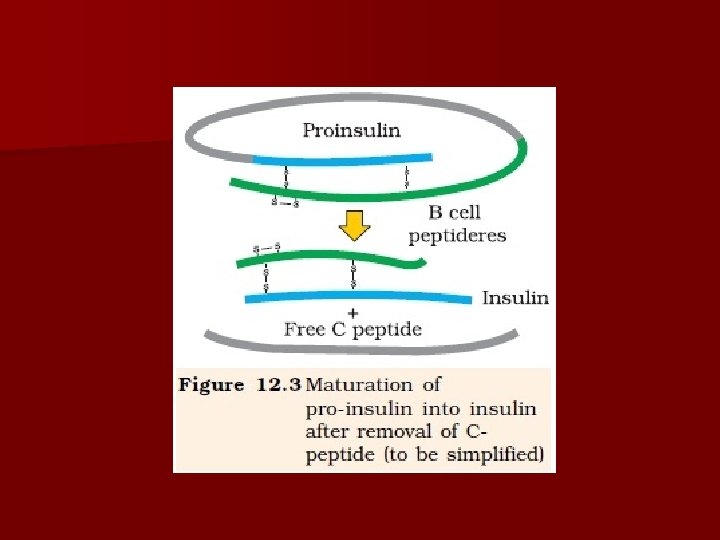
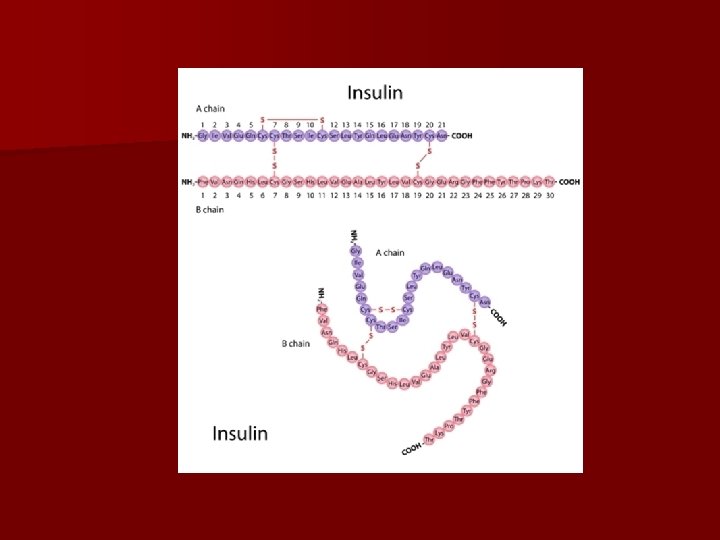
Insulin consists of two short polypeptide chains: chain A and chain B, that are linked together by disulphide bridges. In mammals including humans, insulin is synthesised as a prohormone (like a pro-enzyme, the pro-hormone also needs to be processed before it becomes a fully mature and functional hormone) which contains an extra stretch called the C peptide.
This C peptide is not present in the mature insulin and is removed during maturation into insulin. The main challenge for production of insulin using r. DNA techniques was getting insulin assembled into a mature form. In 1983, Eli Lilly an American company prepared two DNA sequences corresponding to A and B, chains of human insulin and introduced them in plasmids of E. coli to produce insulin chains. Chains A and B were produced separately, extracted and combined by creating disulphide bonds to form human insulin.
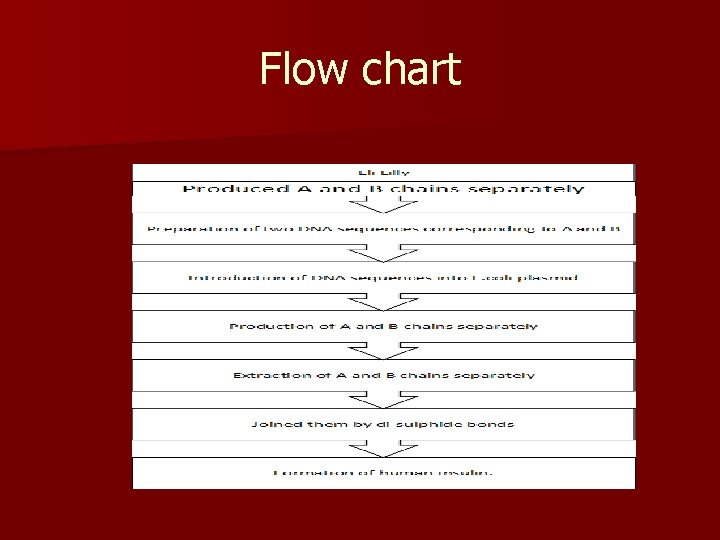
Flow chart
Gene Therapy n Gene therapy is a collection of methods that allows correction of a gene defect that has been diagnosed in a child/embryo.
n C-peptide of human insulin is: a. A part of mature insulin molecule b. Responsible formation of disulphide bridges c. Removed during maturation of proinsulin to insulin d. Responsible for its biological activity.
Gene Therapy Here genes are inserted into a person’s cells and tissues to treat a disease. n Correction of a genetic defect involves delivery of a normal gene into the individual or embryo to take over the function of and compensate for the defective gene n
The first clinical gene therapy was given in 1990 to a 4 -year old girl with adenosine deaminase (ADA) deficiency by M. Blease and W. F. Androsco of National Institute of Health n. This enzyme is crucial for the immune system to function n The disorder is caused due to the deletion of the gene for adenosine deaminase.
In some children ADA deficiency can be cured by bone marrow transplantation n it can be treated by enzyme replacement therapy, in which functional ADA is given to the patient by injection. n But the problem with both of these approaches that they are not completely curative n
. As a first step towards gene therapy, lymphocytes from the blood of the patient are grown in a culture outside the body n And a functional ADA c. DNA (using a retroviral vector) is then introduced into these lymphocytes, which are subsequently returned to the patient.
However, as these cells are not immortal, the patient requires periodic infusion of such genetically engineered lymphocytes. However, if the gene isolate from marrow cells producing ADA is introduced into cells at early embryonic stages, it could be a permanent cure. n Other diseases like cycstic fibrosis, haemophilia, cancer , Parkinson’s disease etc are also treated by gene therapy n
Molecular diagnosis Techniques used for early diagnosis are 1 Polymerase chain reaction Very low concentration of a bacteria or virus (at a time when the symptoms of the disease are not yet visible) can be detected by amplification of their nucleic acid by PCR is now routinely used to detect HIV in suspected AIDS patients. It is being used to detect mutations in genes in suspected cancer patients too. It is a powerful techqnique to identify many other genetic disorders n
Recombinant DNA technology n A single stranded DNA or RNA, tagged with a radioactive molecule is called PROBE n Probe is allowed to hybridise to its complementary DNA in a clone of cells followed by detection using autoradiography. n The clone having the mutated gene will hence not appear on the photographic film, because the probe will not have complimentarity with the mutated gene
3 Enzyme Linked Immunosorbant Assay ELISA is based on the principle of antigen-antibody interaction n. Infection by pathogen can be detected by the presence of antigens (proteins, glycoproteins, etc. ) or by detecting the antibodies synthesised against the pathogen. n
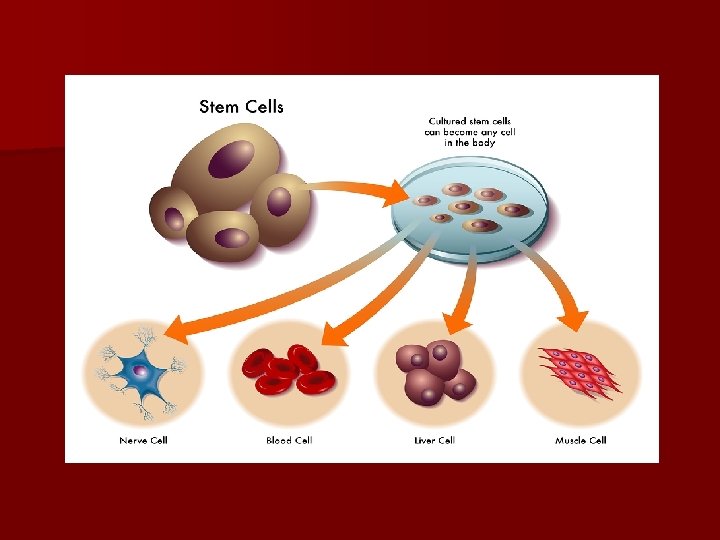
4 Stem Cell Therapy Stem-cell s are undifferentiated biological cells. These are differentiated into specialised cells and can divide to produce more stem cells n Stem cells are found in multicellular organisms n Adult stem cells are used in bone marrow transplantation n Stem cells can also be taken from umbellical cord blood just after the birth n



- Slides: 44