
Biotechnology 2007 2008 Recombinant DNA DNA produced by
Biotechnology 2007 -2008
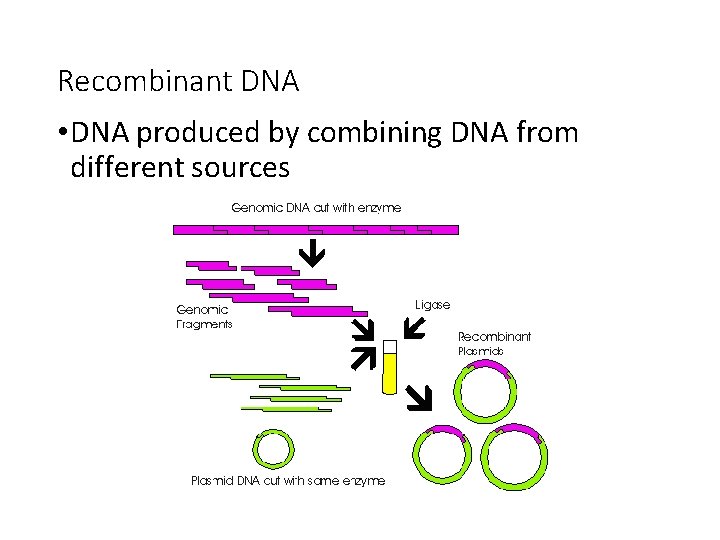
Recombinant DNA • DNA produced by combining DNA from different sources
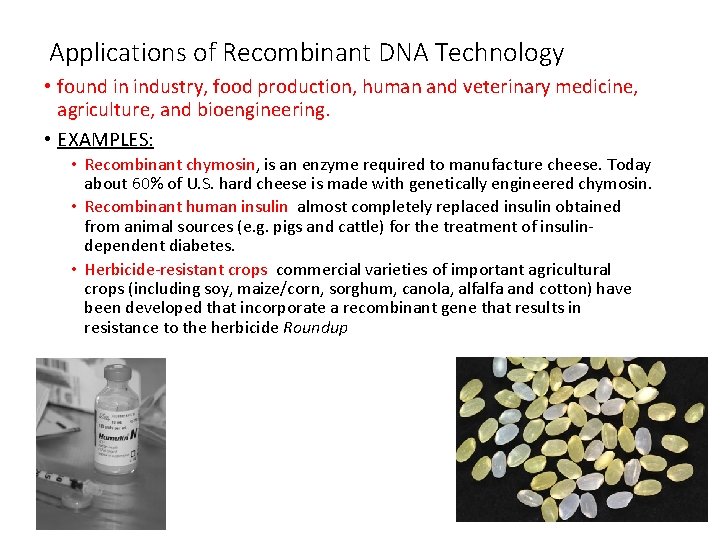
Applications of Recombinant DNA Technology • found in industry, food production, human and veterinary medicine, agriculture, and bioengineering. • EXAMPLES: • Recombinant chymosin, is an enzyme required to manufacture cheese. Today about 60% of U. S. hard cheese is made with genetically engineered chymosin. • Recombinant human insulin almost completely replaced insulin obtained from animal sources (e. g. pigs and cattle) for the treatment of insulindependent diabetes. • Herbicide-resistant crops commercial varieties of important agricultural crops (including soy, maize/corn, sorghum, canola, alfalfa and cotton) have been developed that incorporate a recombinant gene that results in resistance to the herbicide Roundup
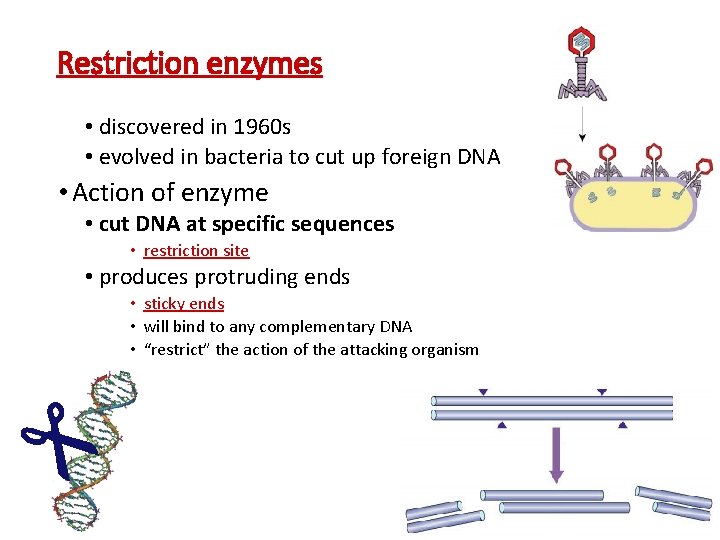
Restriction enzymes • discovered in 1960 s • evolved in bacteria to cut up foreign DNA • Action of enzyme • cut DNA at specific sequences • restriction site • produces protruding ends • sticky ends • will bind to any complementary DNA • “restrict” the action of the attacking organism
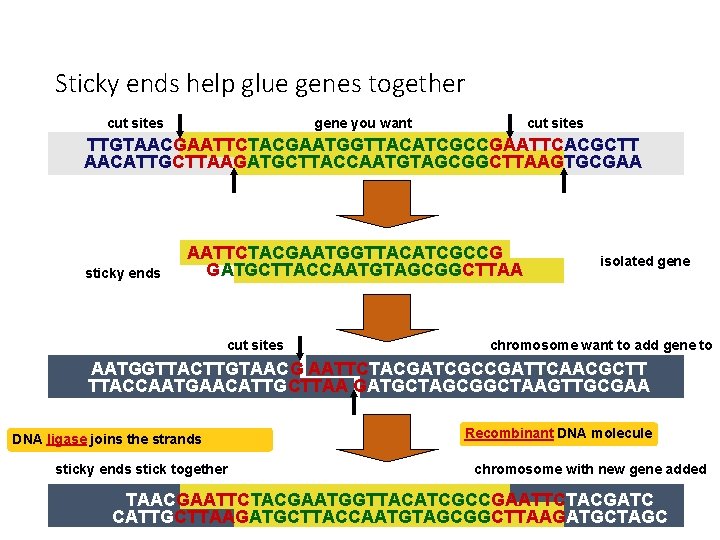
Sticky ends help glue genes together cut sites gene you want cut sites TTGTAACGAATTCTACGAATGGTTACATCGCCGAATTCACGCTT AACATTGCTTAAGATGCTTACCAATGTAGCGGCTTAAGTGCGAA sticky ends AATTCTACGAATGGTTACATCGCCG GATGCTTACCAATGTAGCGGCTTAA cut sites isolated gene chromosome want to add gene to AATGGTTACTTGTAACG AATTCTACGATCGCCGATTCAACGCTT TTACCAATGAACATTGCTTAA GATGCTAGCGGCTAAGTTGCGAA DNA ligase joins the strands sticky ends stick together Recombinant DNA molecule chromosome with new gene added TAACGAATTCTACGAATGGTTACATCGCCGAATTCTACGATC CATTGCTTAAGATGCTTACCAATGTAGCGGCTTAAGATGCTAGC
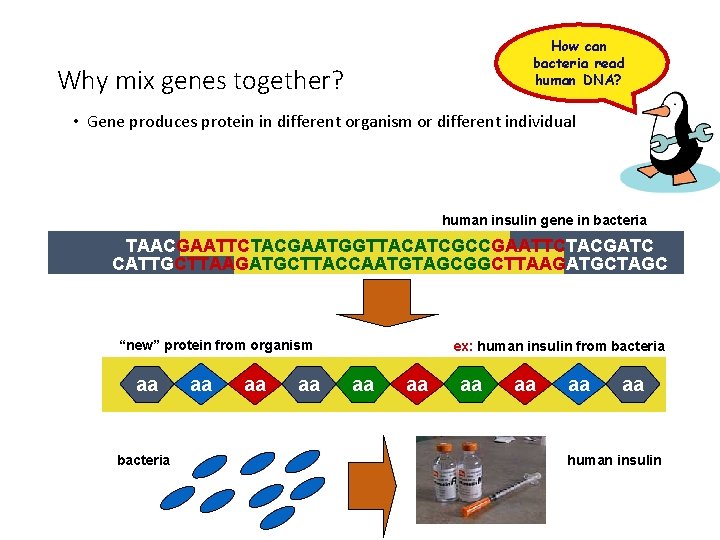
How can bacteria read human DNA? Why mix genes together? • Gene produces protein in different organism or different individual human insulin gene in bacteria TAACGAATTCTACGAATGGTTACATCGCCGAATTCTACGATC CATTGCTTAAGATGCTTACCAATGTAGCGGCTTAAGATGCTAGC “new” protein from organism aa bacteria aa aa aa ex: human insulin from bacteria aa aa aa human insulin
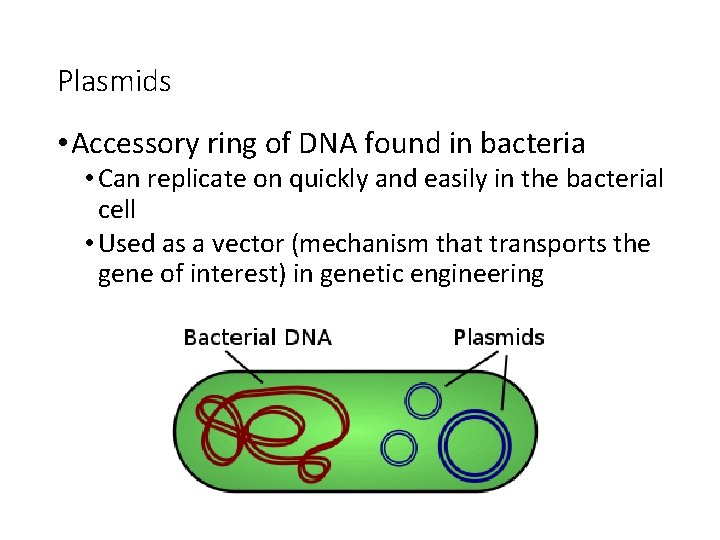
Plasmids • Accessory ring of DNA found in bacteria • Can replicate on quickly and easily in the bacterial cell • Used as a vector (mechanism that transports the gene of interest) in genetic engineering
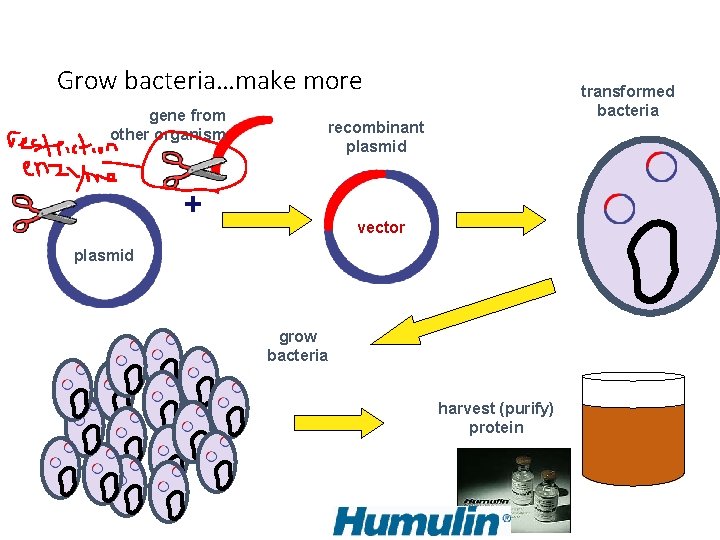
Grow bacteria…make more gene from other organism transformed bacteria recombinant plasmid + vector plasmid grow bacteria harvest (purify) protein
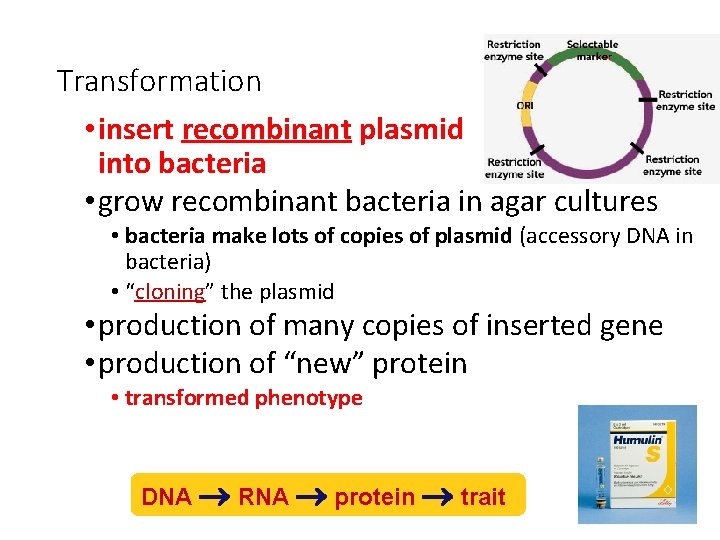
Transformation • insert recombinant plasmid into bacteria • grow recombinant bacteria in agar cultures • bacteria make lots of copies of plasmid (accessory DNA in bacteria) • “cloning” the plasmid • production of many copies of inserted gene • production of “new” protein • transformed phenotype DNA RNA protein trait
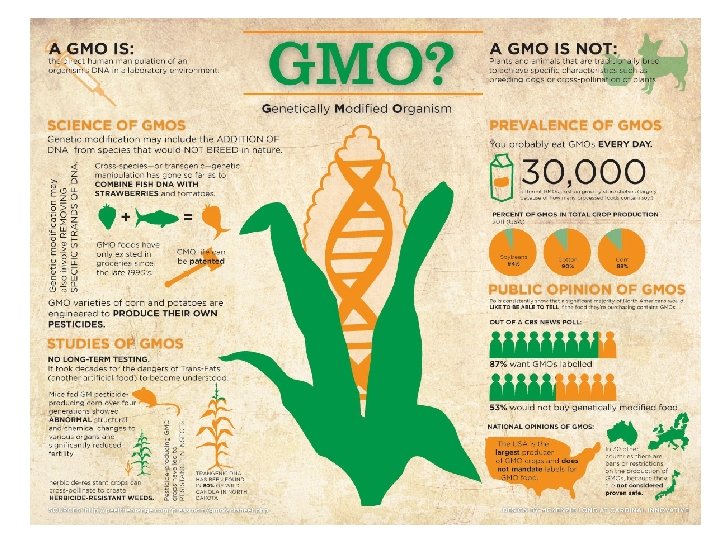
Genetically Modified Organisms (GMO) • The universal nature of the genetic code makes it possible to construct organisms that are transgenic, containing genes from other species. • GM Crops • Larger crops • Resistant to herbicides and insecticides • More nutritious foods • 92% of soy beans • 86% of cotton • 80% of corn • GM Animals • Cows – more milk production • Salmon – growth hormones = larger • Pigs – produce more lean meat
Desirable Traits • Increased yields, more nutritious, quality, etc. , • More resistant to pestilence, weeds, water and nutrient deprivations, • Ability to withstand marginal growth conditions, • and thrive in new environmental ranges, • Profit!!!!!!
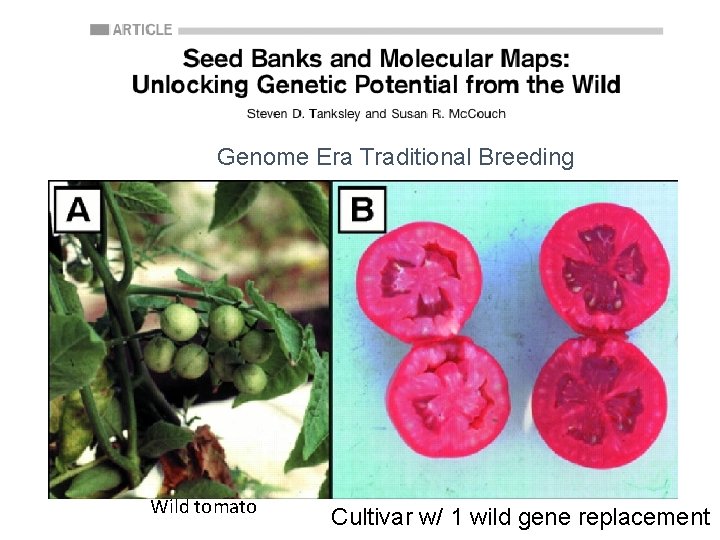
Genome Era Traditional Breeding Wild tomato Cultivar w/ 1 wild gene replacement
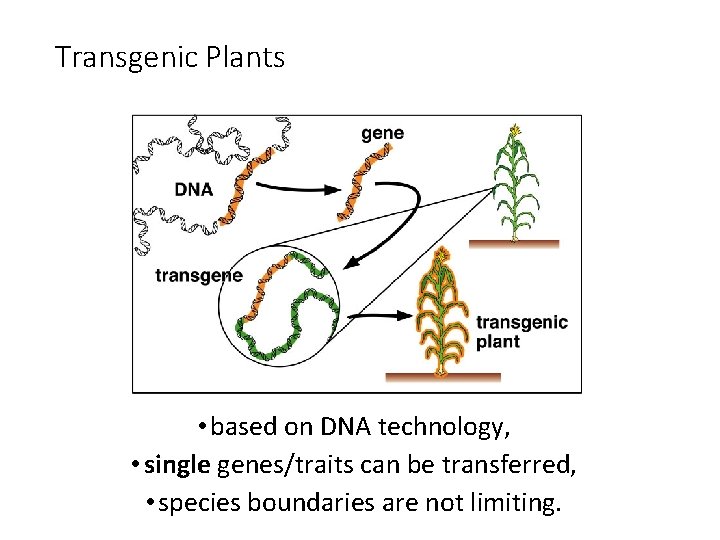
Transgenic Plants • based on DNA technology, • single genes/traits can be transferred, • species boundaries are not limiting.
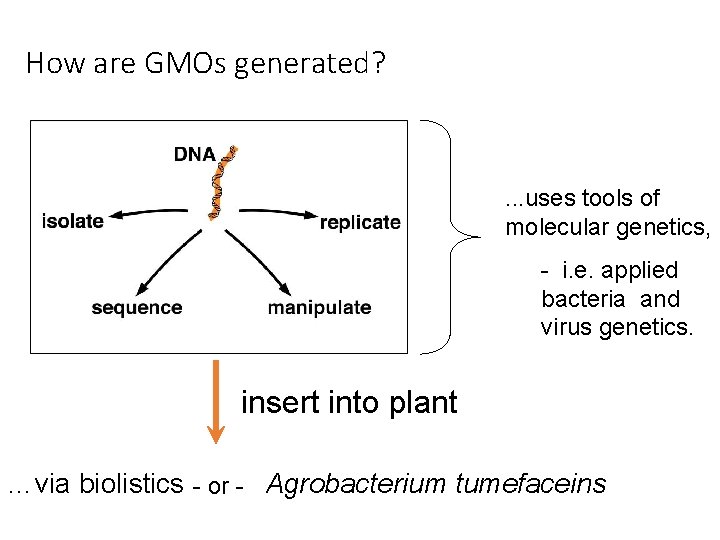
How are GMOs generated? . . . uses tools of molecular genetics, - i. e. applied bacteria and virus genetics. insert into plant …via biolistics - or - Agrobacterium tumefaceins
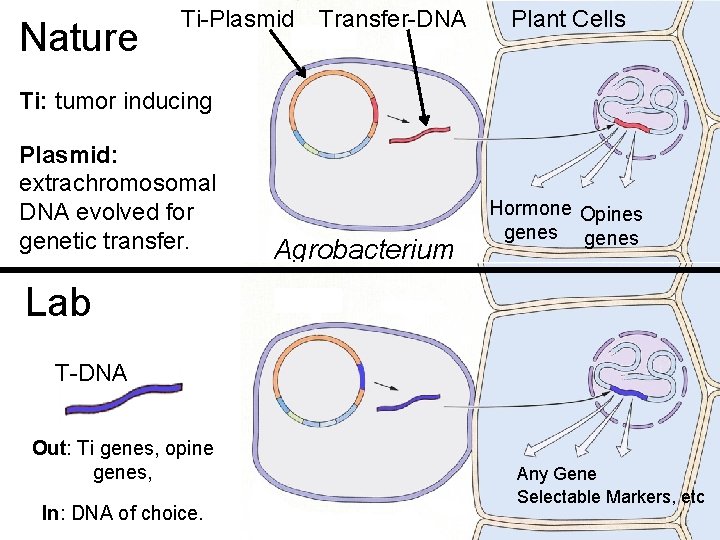
Nature Ti-Plasmid Transfer-DNA Plant Cells Ti: tumor inducing Plasmid: extrachromosomal DNA evolved for genetic transfer. Agrobacterium Hormone Opines genes Lab T-DNA Out: Ti genes, opine genes, In: DNA of choice. Any Gene Selectable Markers, etc
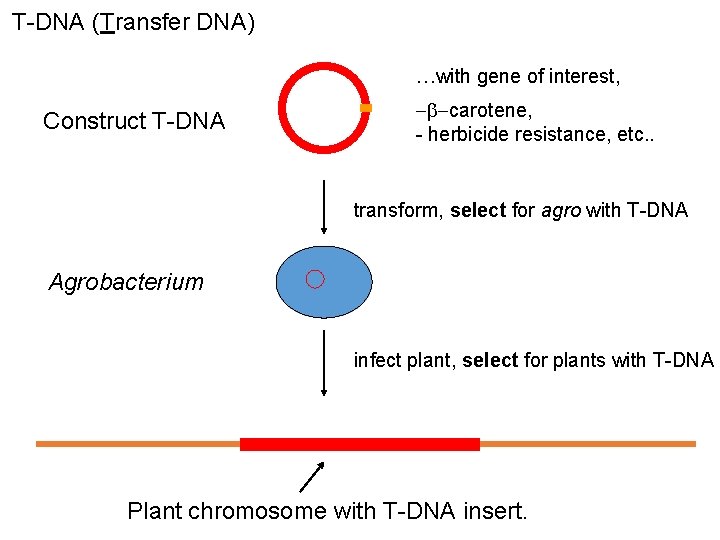
T-DNA (Transfer DNA) …with gene of interest, Construct T-DNA -b-carotene, - herbicide resistance, etc. . transform, select for agro with T-DNA Agrobacterium infect plant, select for plants with T-DNA Plant chromosome with T-DNA insert.
Many uses of restriction enzymes… • Now that we can cut DNA with restriction enzymes… • we can cut up DNA from different people… or different organisms… and compare it • Genetic Fingerprinting • • • forensics medical diagnostics paternity evolutionary relationships and more…
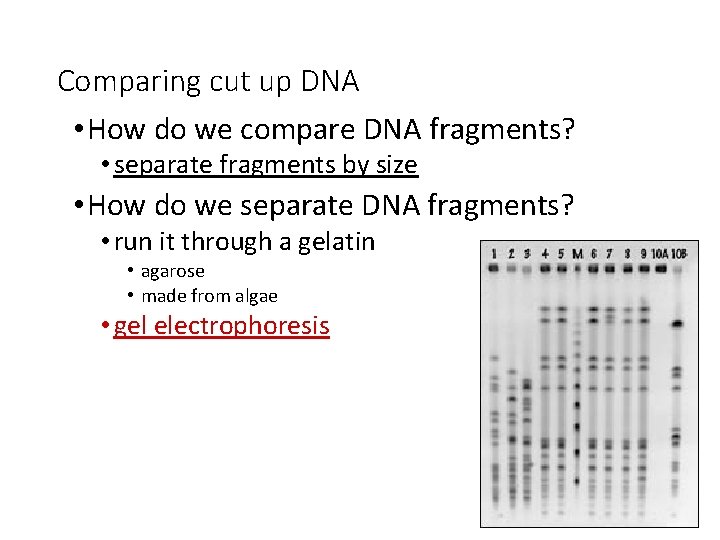
Comparing cut up DNA • How do we compare DNA fragments? • separate fragments by size • How do we separate DNA fragments? • run it through a gelatin • agarose • made from algae • gel electrophoresis
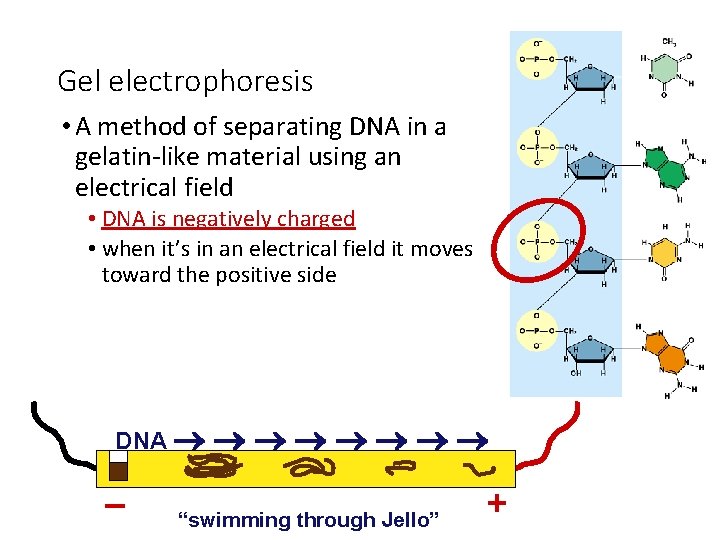
Gel electrophoresis • A method of separating DNA in a gelatin-like material using an electrical field • DNA is negatively charged • when it’s in an electrical field it moves toward the positive side DNA – “swimming through Jello” +
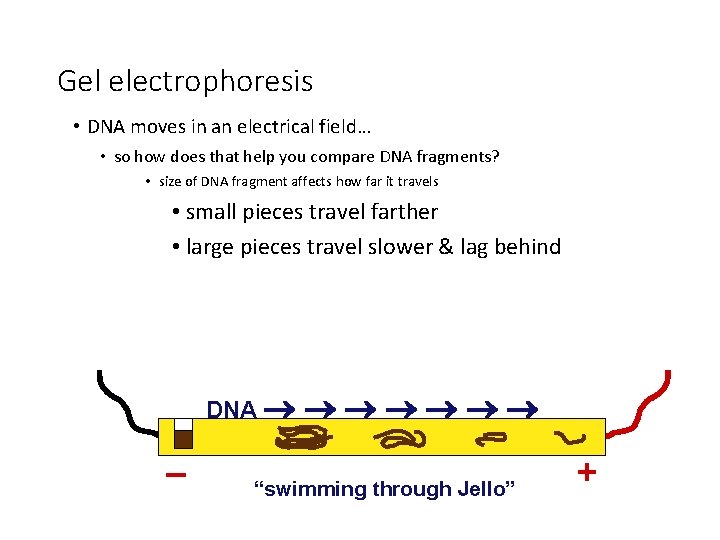
Gel electrophoresis • DNA moves in an electrical field… • so how does that help you compare DNA fragments? • size of DNA fragment affects how far it travels • small pieces travel farther • large pieces travel slower & lag behind DNA – “swimming through Jello” +
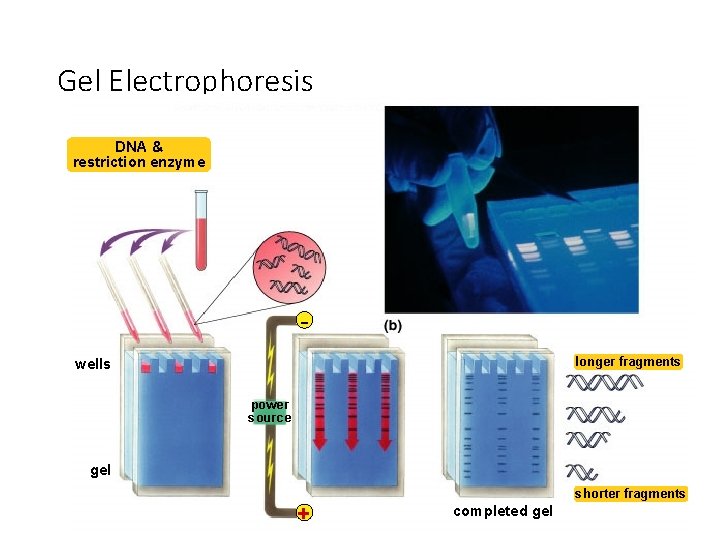
Gel Electrophoresis DNA & restriction enzyme longer fragments wells power source gel + shorter fragments completed gel
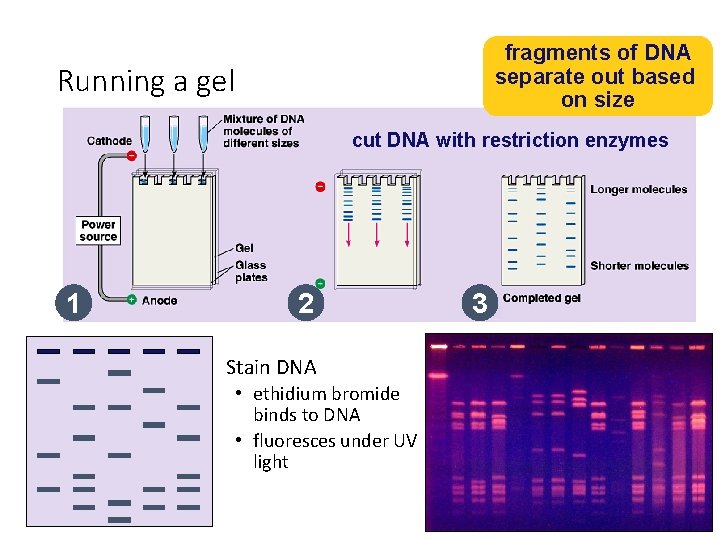
fragments of DNA separate out based on size Running a gel cut DNA with restriction enzymes 1 2 Stain DNA • ethidium bromide binds to DNA • fluoresces under UV light 3
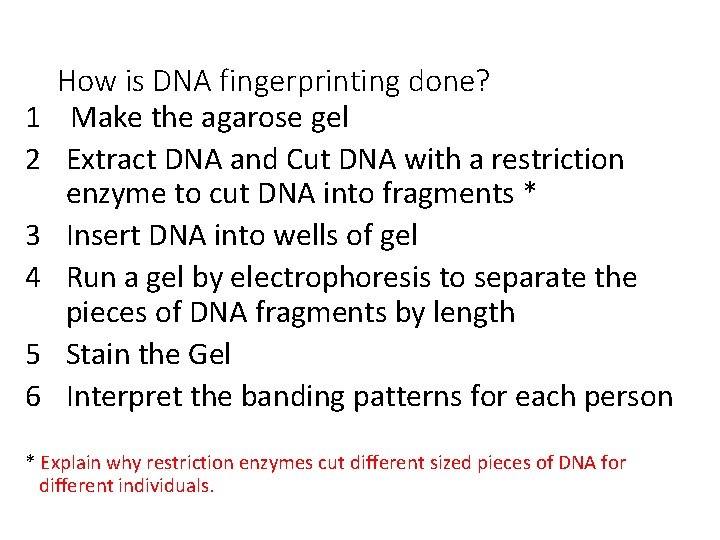
1 2 3 4 5 6 How is DNA fingerprinting done? Make the agarose gel Extract DNA and Cut DNA with a restriction enzyme to cut DNA into fragments * Insert DNA into wells of gel Run a gel by electrophoresis to separate the pieces of DNA fragments by length Stain the Gel Interpret the banding patterns for each person * Explain why restriction enzymes cut different sized pieces of DNA for different individuals.
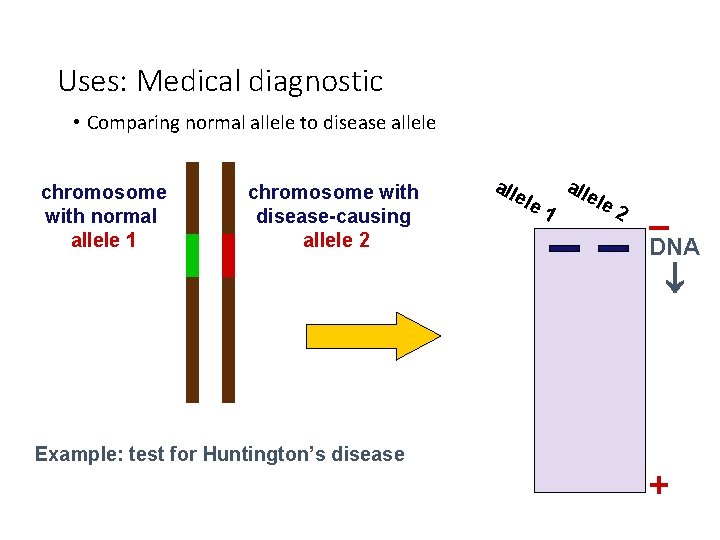
Uses: Medical diagnostic • Comparing normal allele to disease allele chromosome with normal allele 1 chromosome with disease-causing allele 2 all ele 1 all ele 2 – DNA Example: test for Huntington’s disease +
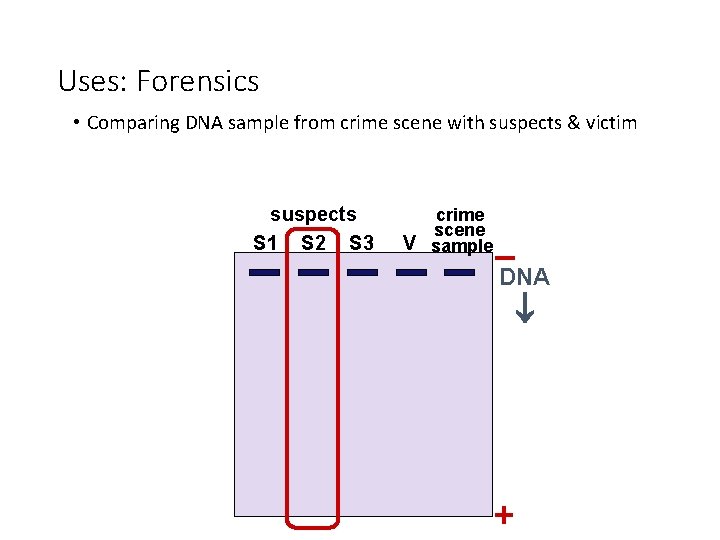
Uses: Forensics • Comparing DNA sample from crime scene with suspects & victim suspects S 1 S 2 S 3 crime scene V sample – DNA +
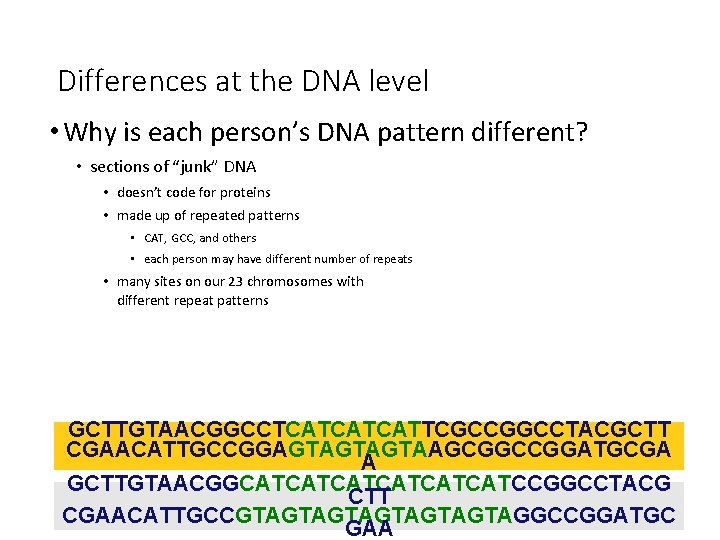
Differences at the DNA level • Why is each person’s DNA pattern different? • sections of “junk” DNA • doesn’t code for proteins • made up of repeated patterns • CAT, GCC, and others • each person may have different number of repeats • many sites on our 23 chromosomes with different repeat patterns GCTTGTAACGGCCTCATCATCATTCGCCGGCCTACGCTT CGAACATTGCCGGAGTAGTAGTAAGCGGCCGGATGCGA A GCTTGTAACGGCATCATCATCCGGCCTACG CTT CGAACATTGCCGTAGTAGTAGGCCGGATGC GAA
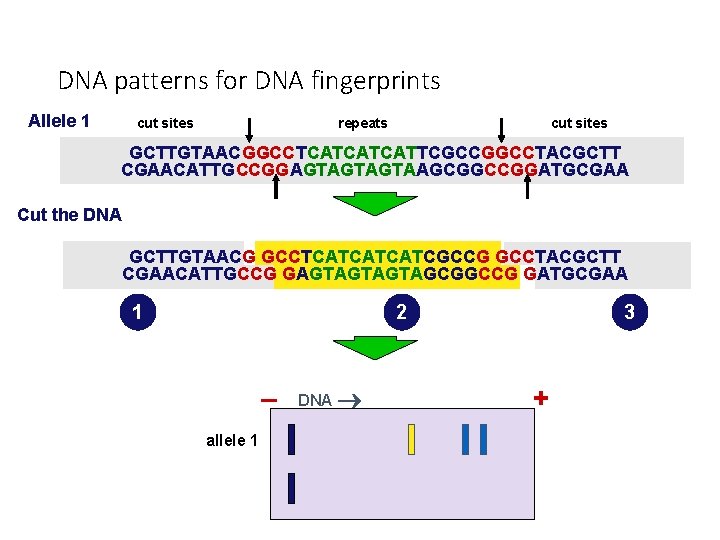
DNA patterns for DNA fingerprints Allele 1 cut sites repeats cut sites GCTTGTAACGGCCTCATCATCATTCGCCGGCCTACGCTT CGAACATTGCCGGAGTAGTAGTAAGCGGCCGGATGCGAA Cut the DNA GCTTGTAACG GCCTCATCATCATCGCCG GCCTACGCTT CGAACATTGCCG GAGTAGTAGTAGCGGCCG GATGCGAA 1 2 – allele 1 DNA 3 +
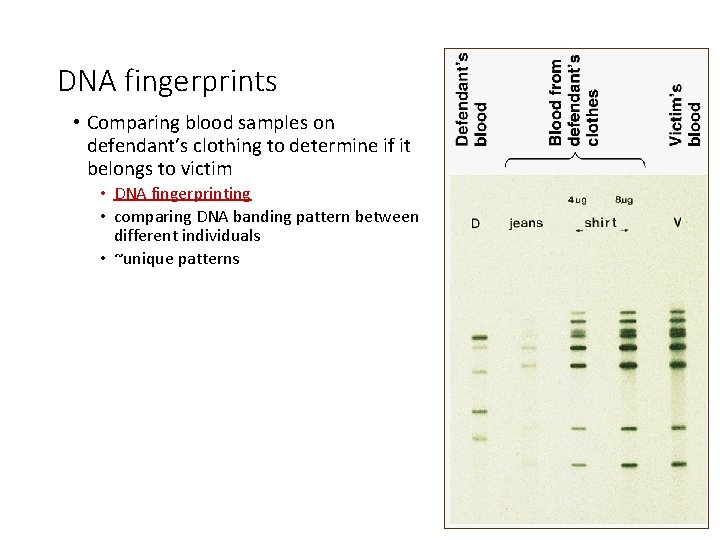
DNA fingerprints • Comparing blood samples on defendant’s clothing to determine if it belongs to victim • DNA fingerprinting • comparing DNA banding pattern between different individuals • ~unique patterns
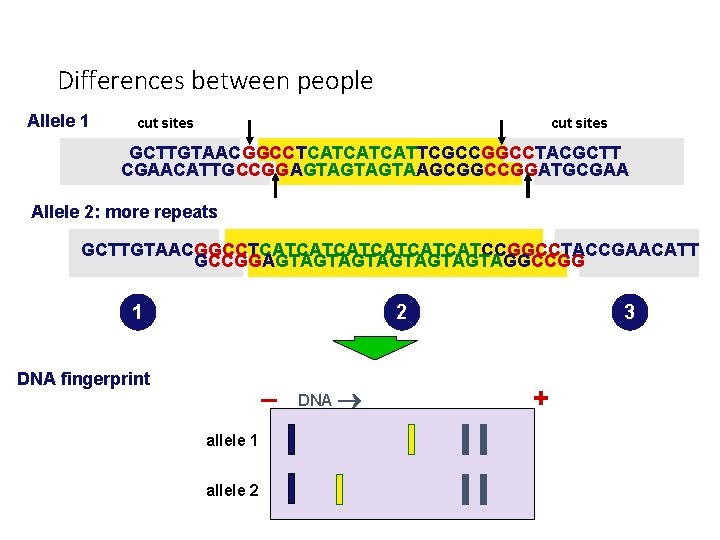
Differences between people Allele 1 cut sites GCTTGTAACGGCCTCATCATCATTCGCCGGCCTACGCTT CGAACATTGCCGGAGTAGTAGTAAGCGGCCGGATGCGAA Allele 2: more repeats GCTTGTAACGGCCTCATCATCATCCGGCCTACCGAACATT GCCGGAGTAGTAGTAGGCCGG 1 2 DNA fingerprint – allele 1 allele 2 DNA 3 +
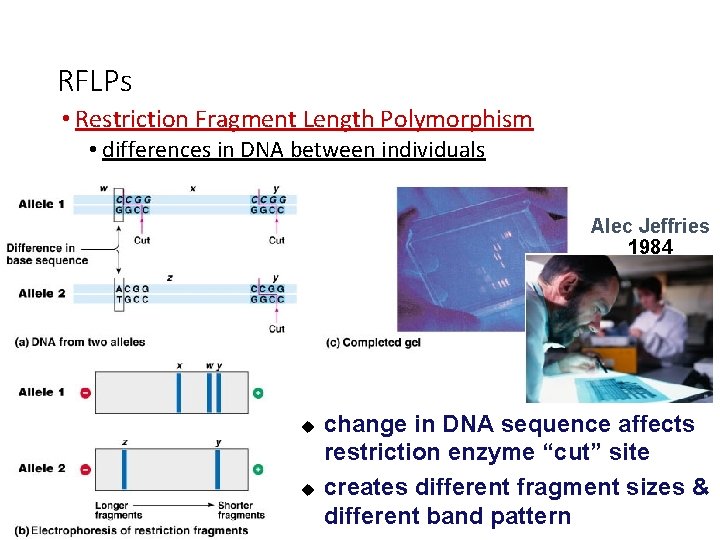
RFLPs • Restriction Fragment Length Polymorphism • differences in DNA between individuals Alec Jeffries 1984 u u change in DNA sequence affects restriction enzyme “cut” site creates different fragment sizes & different band pattern
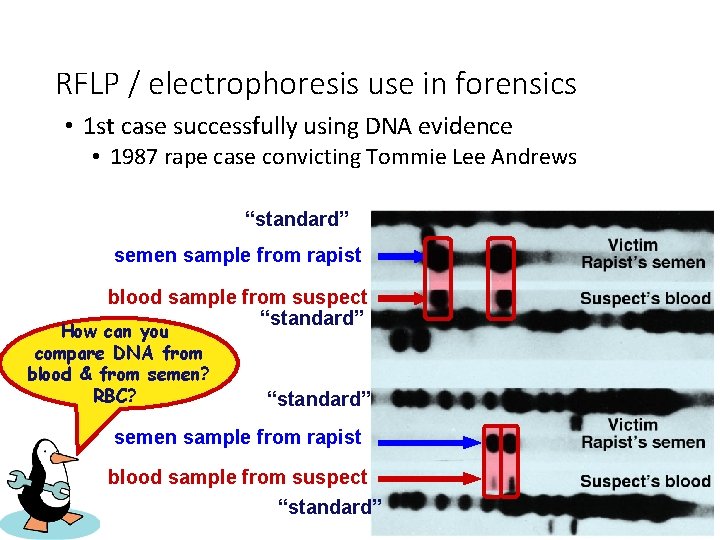
RFLP / electrophoresis use in forensics • 1 st case successfully using DNA evidence • 1987 rape case convicting Tommie Lee Andrews “standard” semen sample from rapist blood sample from suspect “standard” How can you compare DNA from blood & from semen? RBC? “standard” semen sample from rapist blood sample from suspect “standard”
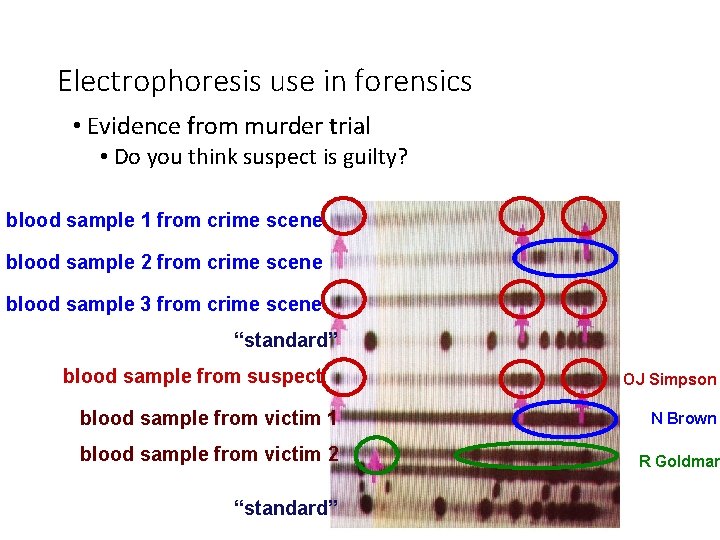
Electrophoresis use in forensics • Evidence from murder trial • Do you think suspect is guilty? blood sample 1 from crime scene blood sample 2 from crime scene blood sample 3 from crime scene “standard” blood sample from suspect OJ Simpson blood sample from victim 1 N Brown blood sample from victim 2 R Goldman “standard”
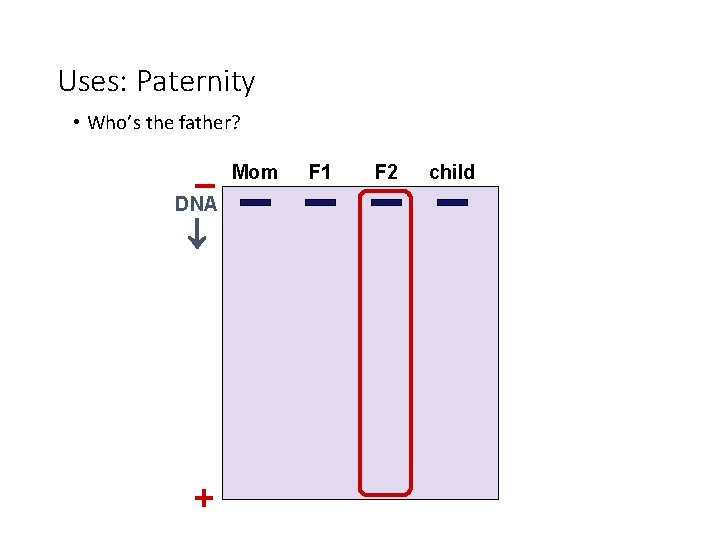
Uses: Paternity • Who’s the father? – DNA + Mom F 1 F 2 child
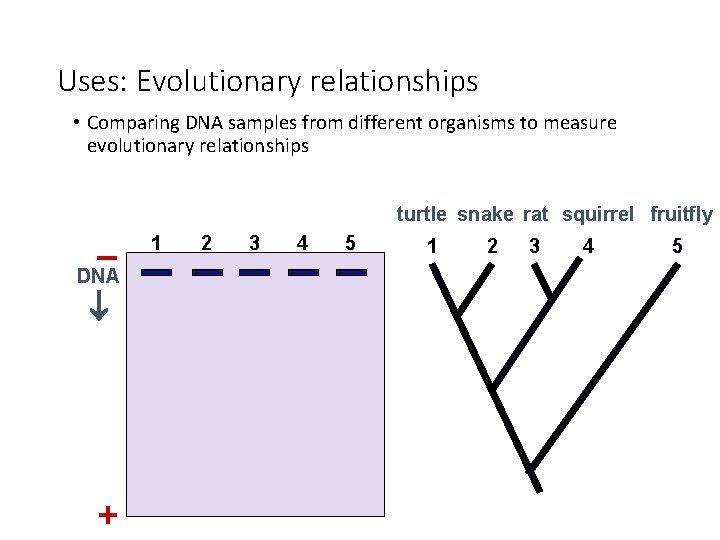
Uses: Evolutionary relationships • Comparing DNA samples from different organisms to measure evolutionary relationships turtle snake rat squirrel fruitfly – DNA + 1 2 3 4 5
1. Get out notes sheet from yesterday 2. Read DNA Goes to the Races article 3. Make an outline of the steps of gel electrophoresis on your notes sheet
- Slides: 36