
Biotechnique BIOL 410 Microscopy Microscopy An important tool
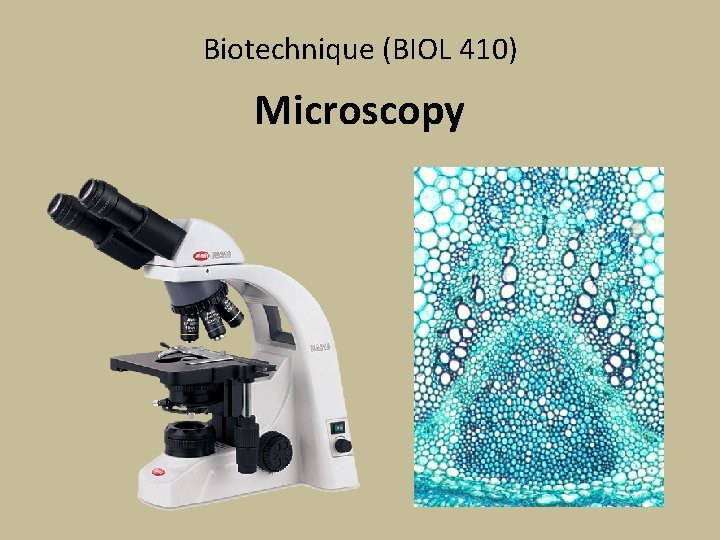
Biotechnique (BIOL 410) Microscopy
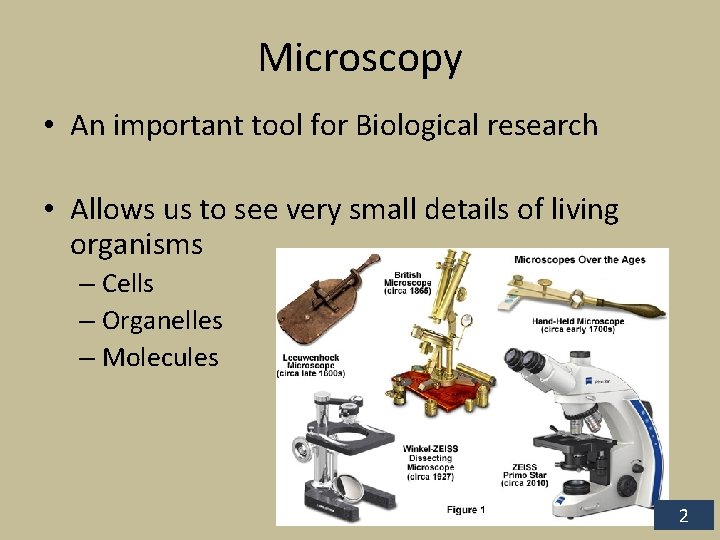
Microscopy • An important tool for Biological research • Allows us to see very small details of living organisms – Cells – Organelles – Molecules 2
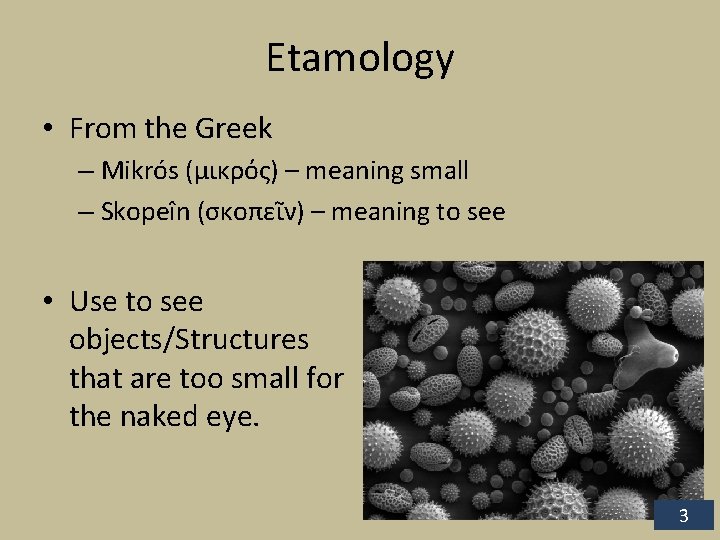
Etamology • From the Greek – Mikrós (μικρός) – meaning small – Skopeîn (σκοπεῖν) – meaning to see • Use to see objects/Structures that are too small for the naked eye. 3
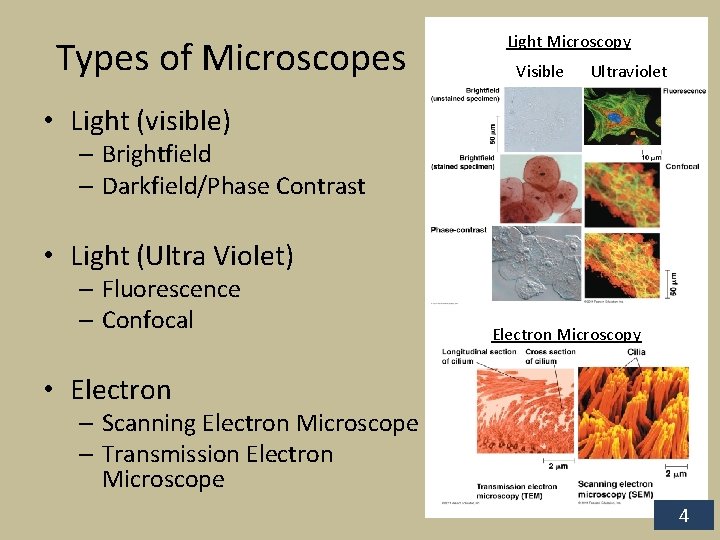
Types of Microscopes Light Microscopy Visible Ultraviolet • Light (visible) – Brightfield – Darkfield/Phase Contrast • Light (Ultra Violet) – Fluorescence – Confocal Ok. Love you Electron Microscopy • Electron – Scanning Electron Microscope – Transmission Electron Microscope 4
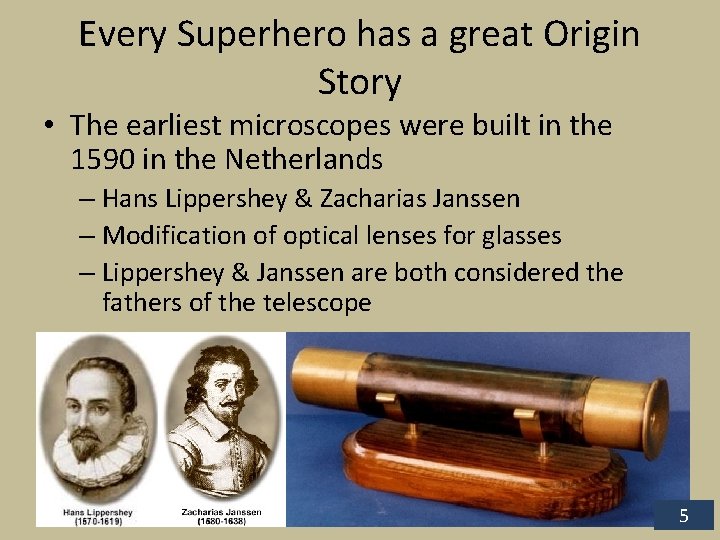
Every Superhero has a great Origin Story • The earliest microscopes were built in the 1590 in the Netherlands – Hans Lippershey & Zacharias Janssen – Modification of optical lenses for glasses – Lippershey & Janssen are both considered the fathers of the telescope 5
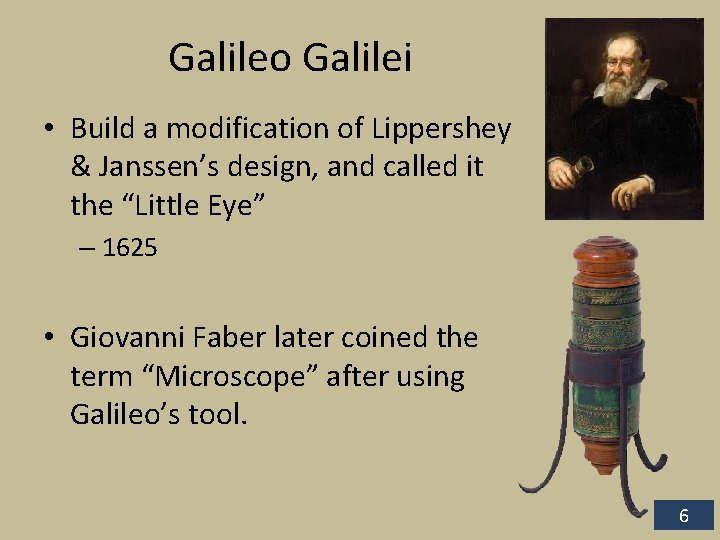
Galileo Galilei • Build a modification of Lippershey & Janssen’s design, and called it the “Little Eye” – 1625 • Giovanni Faber later coined the term “Microscope” after using Galileo’s tool. 6
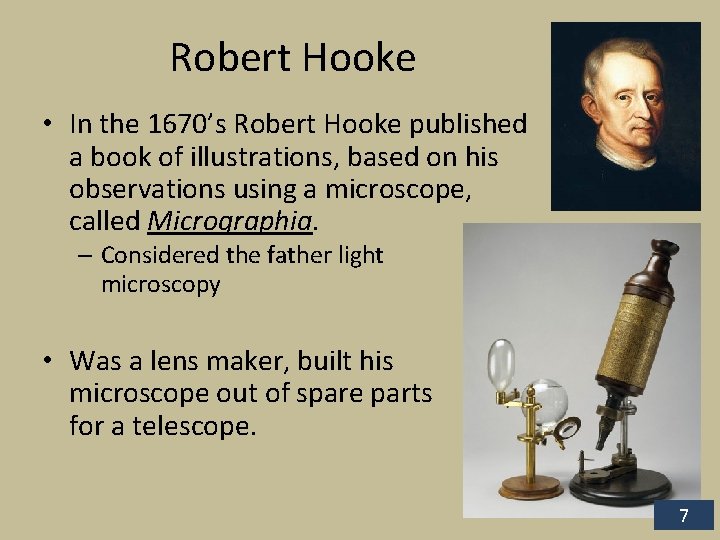
Robert Hooke • In the 1670’s Robert Hooke published a book of illustrations, based on his observations using a microscope, called Micrographia. – Considered the father light microscopy • Was a lens maker, built his microscope out of spare parts for a telescope. 7
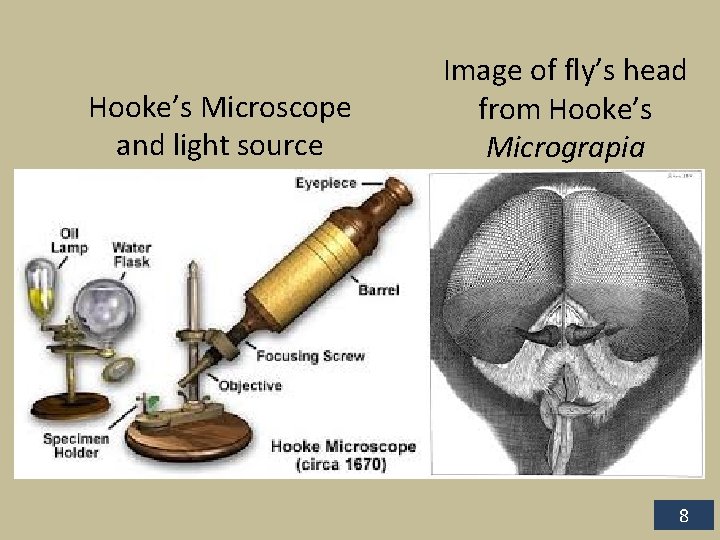
Hooke’s Microscope and light source Image of fly’s head from Hooke’s Micrograpia 8
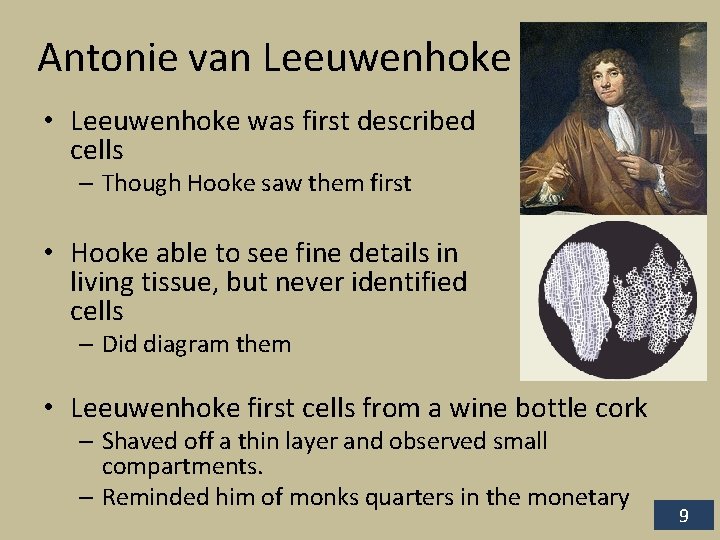
Antonie van Leeuwenhoke • Leeuwenhoke was first described cells – Though Hooke saw them first • Hooke able to see fine details in living tissue, but never identified cells – Did diagram them • Leeuwenhoke first cells from a wine bottle cork – Shaved off a thin layer and observed small compartments. – Reminded him of monks quarters in the monetary 9
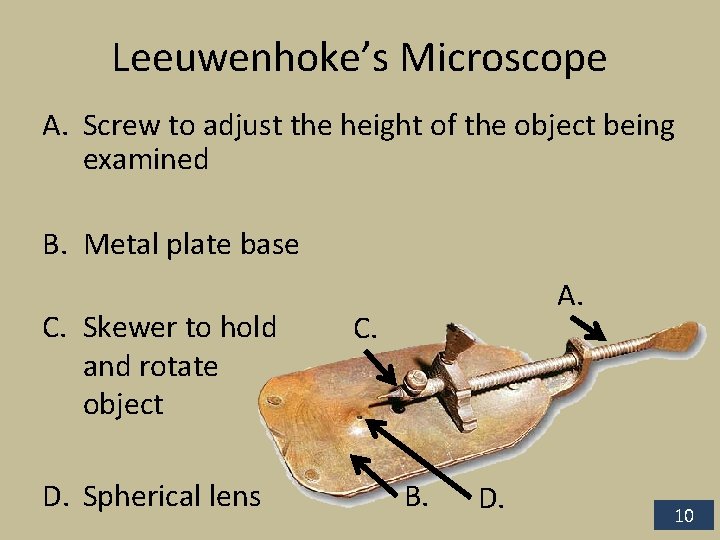
Leeuwenhoke’s Microscope A. Screw to adjust the height of the object being examined B. Metal plate base C. Skewer to hold and rotate object D. Spherical lens A. C. B. D. 10
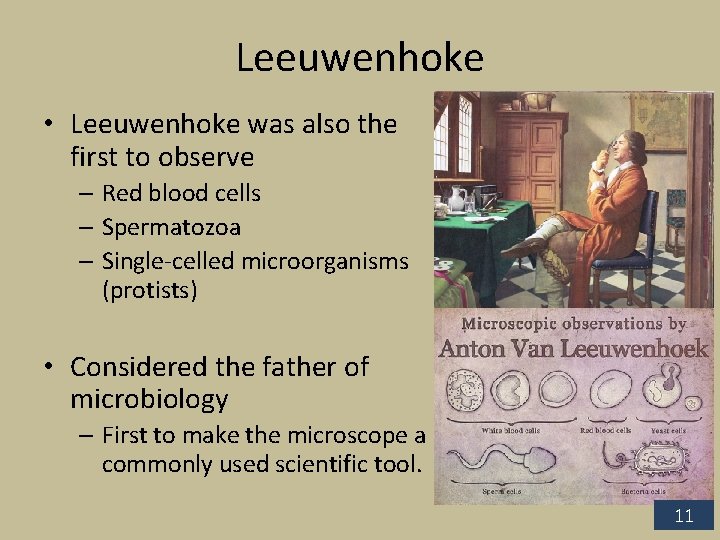
Leeuwenhoke • Leeuwenhoke was also the first to observe – Red blood cells – Spermatozoa – Single-celled microorganisms (protists) • Considered the father of microbiology – First to make the microscope a commonly used scientific tool. 11
12
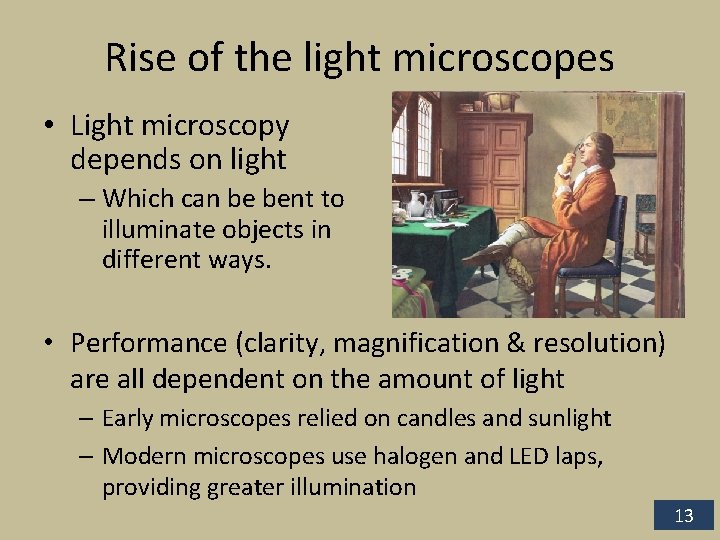
Rise of the light microscopes • Light microscopy depends on light – Which can be bent to illuminate objects in different ways. • Performance (clarity, magnification & resolution) are all dependent on the amount of light – Early microscopes relied on candles and sunlight – Modern microscopes use halogen and LED laps, providing greater illumination 13
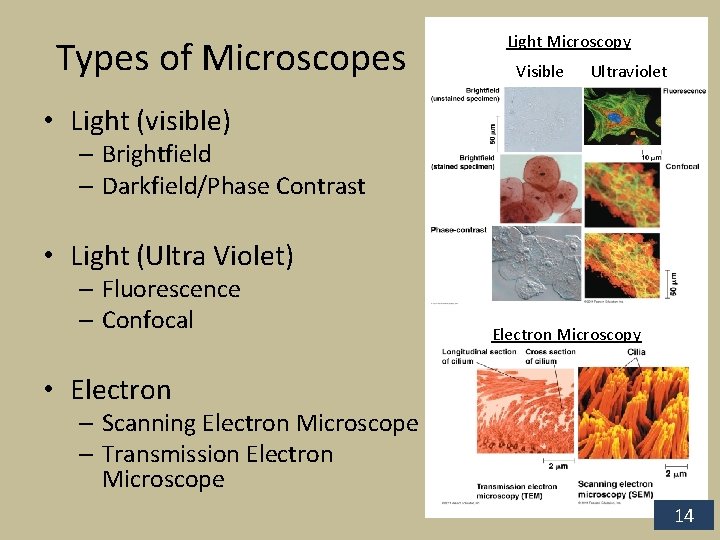
Types of Microscopes Light Microscopy Visible Ultraviolet • Light (visible) – Brightfield – Darkfield/Phase Contrast • Light (Ultra Violet) – Fluorescence – Confocal Ok. Love you Electron Microscopy • Electron – Scanning Electron Microscope – Transmission Electron Microscope 14
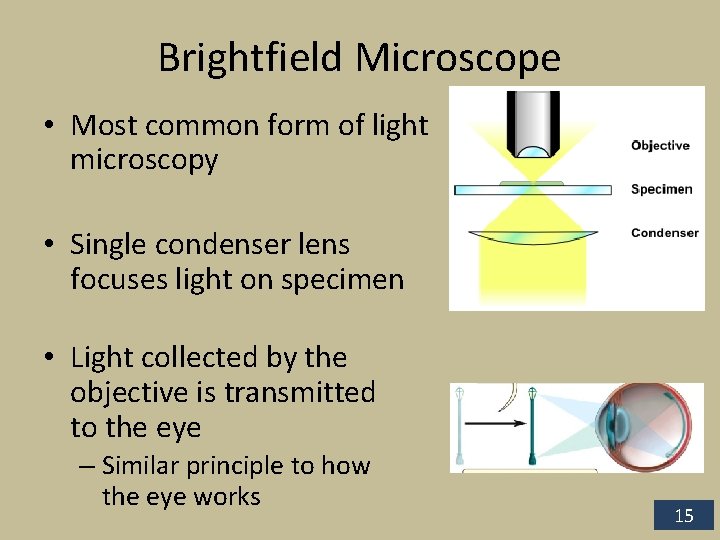
Brightfield Microscope • Most common form of light microscopy • Single condenser lens focuses light on specimen • Light collected by the objective is transmitted to the eye – Similar principle to how the eye works 15
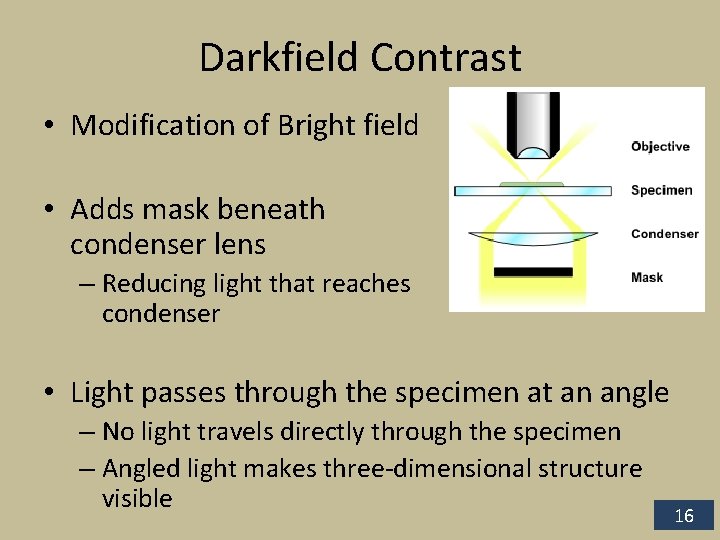
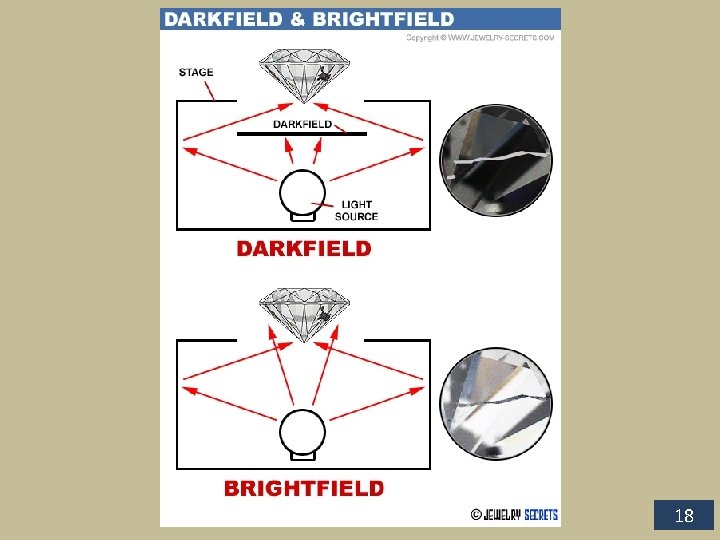
Darkfield Contrast • Modification of Bright field • Adds mask beneath condenser lens – Reducing light that reaches condenser • Light passes through the specimen at an angle – No light travels directly through the specimen – Angled light makes three-dimensional structure visible 16
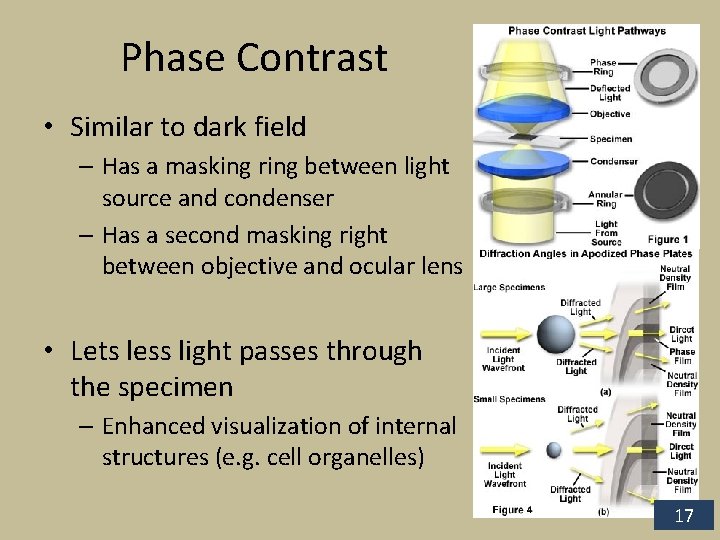
Phase Contrast • Similar to dark field – Has a masking ring between light source and condenser – Has a second masking right between objective and ocular lens • Lets less light passes through the specimen – Enhanced visualization of internal structures (e. g. cell organelles) 17
18
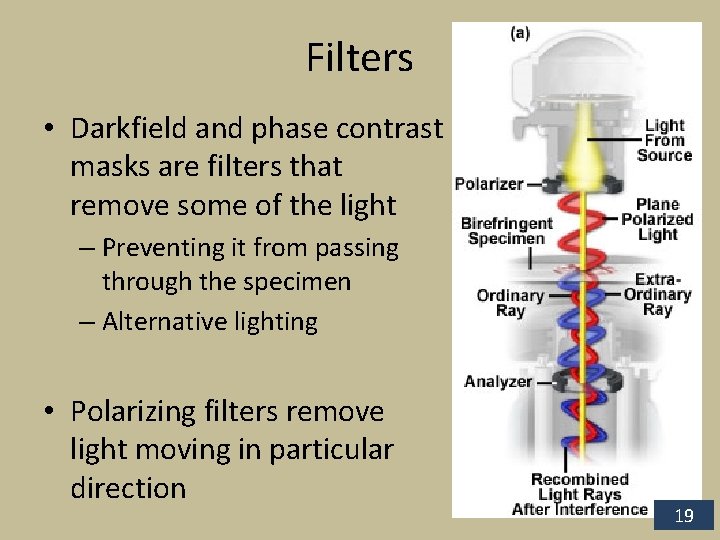
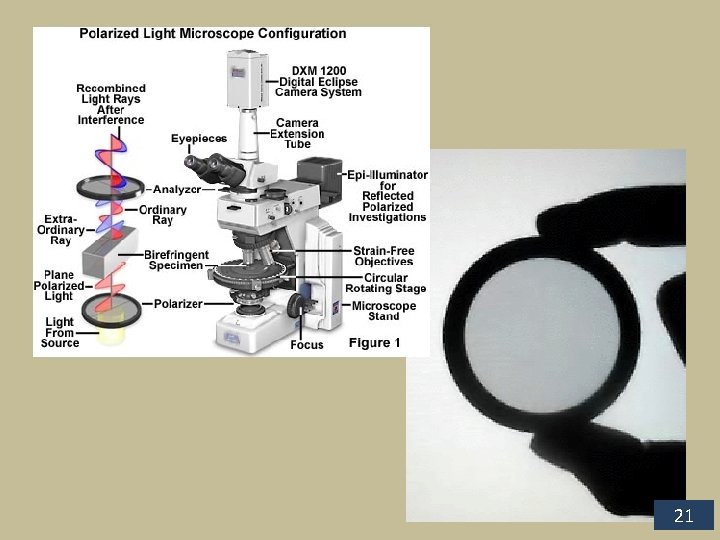
Filters • Darkfield and phase contrast masks are filters that remove some of the light – Preventing it from passing through the specimen – Alternative lighting • Polarizing filters remove light moving in particular direction 19
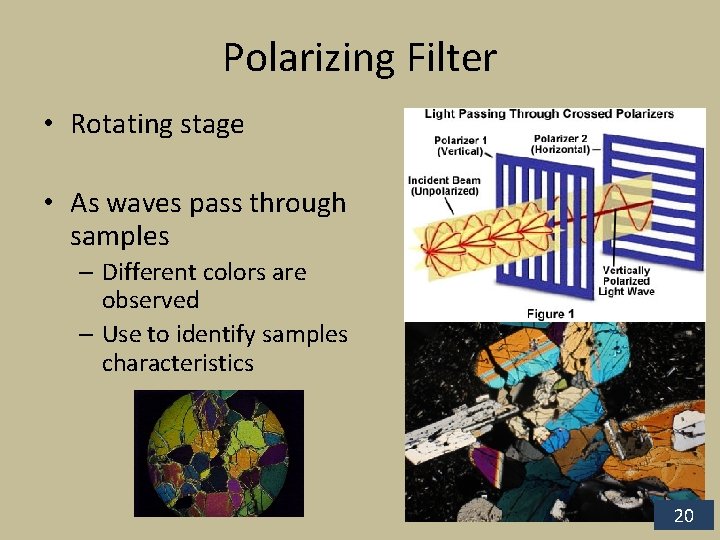
Polarizing Filter • Rotating stage • As waves pass through samples – Different colors are observed – Use to identify samples characteristics 20
21
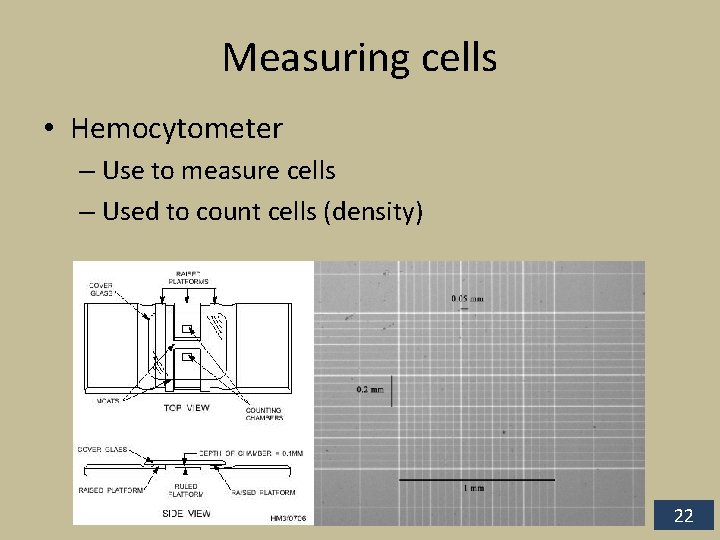
Measuring cells • Hemocytometer – Use to measure cells – Used to count cells (density) 22
Todays Lab 1. Dissecting Microscope – Examine large specimen under dissecting microscope 2. Compound Microscope – – Prepared slides Wetmounts Depression Slides Hemocytometer 3. Darkfield Next week…Fluorescence and Electron Microscopy 23
- Slides: 23