
Biotech Skills Test review Year Course What is

Biotech Skills Test review Year Course

What is Biotechnology? • Using living things and their components- such as bacteria, DNA, proteins, etc… to make products for humans.
History of Biotech • From prehistory: Bacteria to make Cheeses, Use yeast to make bread • 1890’s- Dr. Mischer discovered Nucleic acid in Hospital bandages. • 1920’s Griffith discovered that harmless live bacteria mixed with dead harmful bacteria were transformed into harmful bacteria. • 1940’s Avery, Mc. Carty, Mc. Cleod found DNA was responsible for pneumonia. • 1950’s Hershey & Chase discovered DNA infected bacteria using radioactive tracers • 1950 - Chargaff discovered Adenine and Thymine are in same percentage, and Guanine and Cytosine are in the same percentage in each species. • 1952 - Franklin and Wilkins X ray structure of DNA. Twisted ladder. • 1953 - Watson and Crick make first model of DNA.
History of Biotechnology • 1960’s Amino acid sequence discovered for Proteins, from RNA. • 1970’s Berg transformed E coli bacteria using foreign DNA. • 1973 - Cohen and Boyer transformed E coli using DNA from another organism. • 1978 - Genetech formed human growth hormone • 1980 - FDA approves Genentech’s patent for making Insulin using E coli with Insulin inserted from human DNA. • Today- Billion dollar industry for foods, medicines, plant technologies.
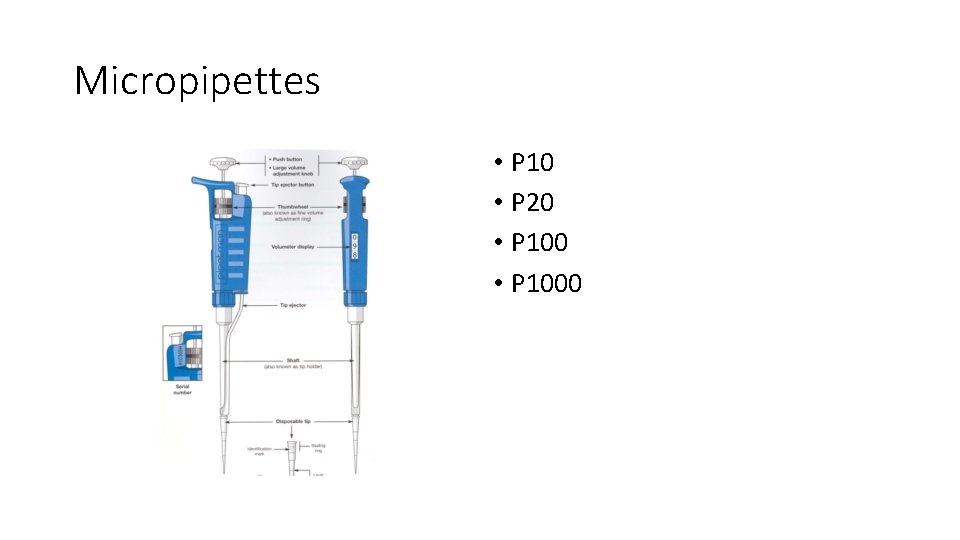
Micropipettes • P 10 • P 20 • P 1000
Metrics and the Microliter • 1 L, 1/1000 th, 1/100000 th, etc. • Kilo, Deca, 1, deci, x, milli, x, micro (6 places), nano (9 places). • 1 microliter is 1, 000 th of a Liter. • 0. 001 L is 1 m. L • 0. 000001 L is 1 µL
Mass, Volume • Grams measures mass • Liters measures volume
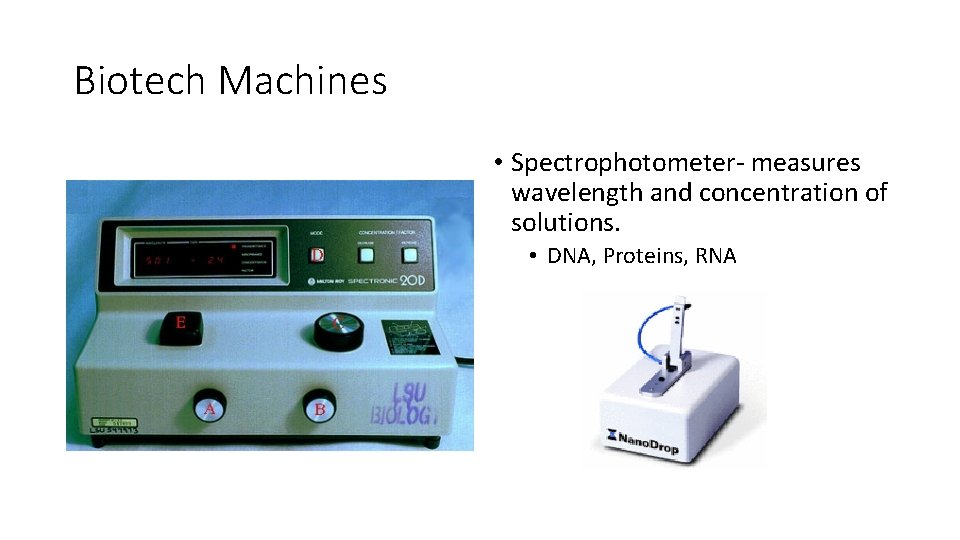
Biotech Machines • Spectrophotometer- measures wavelength and concentration of solutions. • DNA, Proteins, RNA
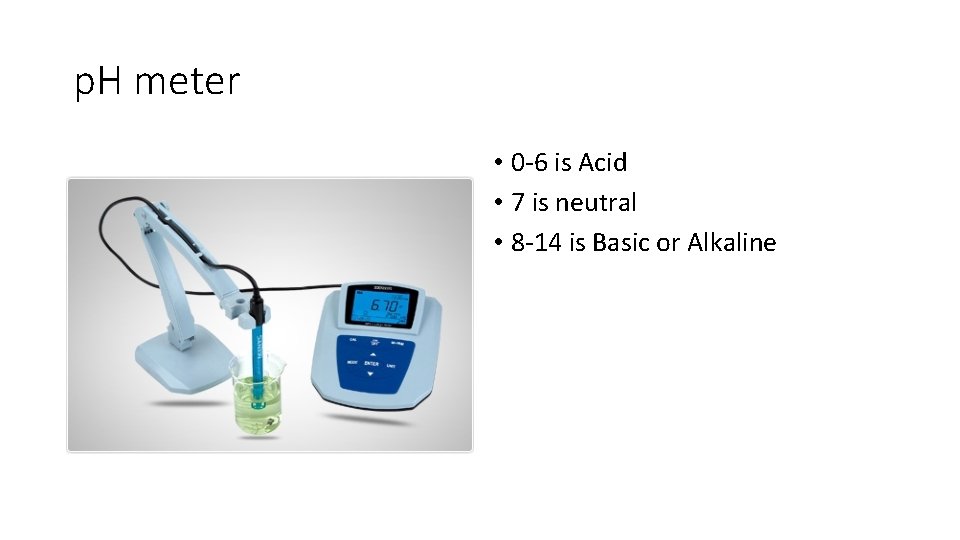
p. H meter • 0 -6 is Acid • 7 is neutral • 8 -14 is Basic or Alkaline
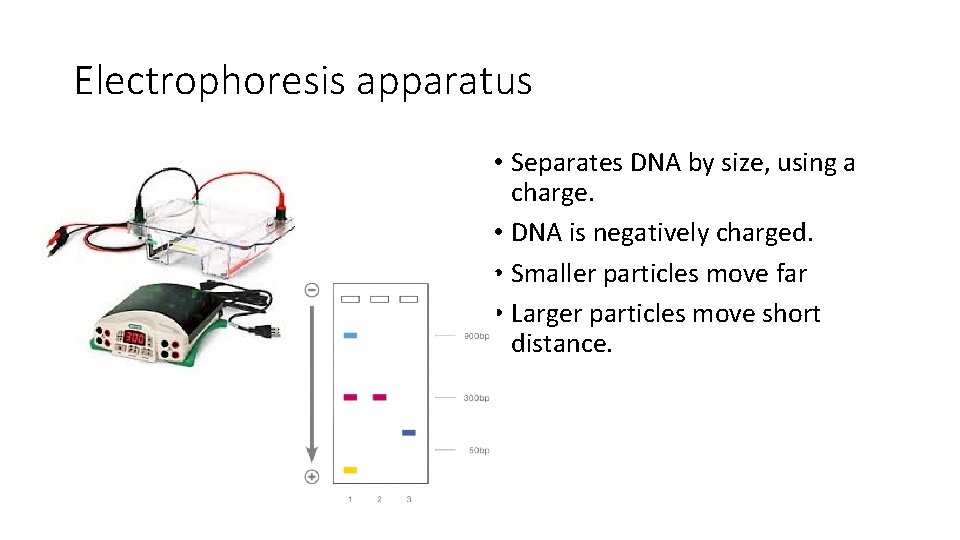
Electrophoresis apparatus • Separates DNA by size, using a charge. • DNA is negatively charged. • Smaller particles move far • Larger particles move short distance.
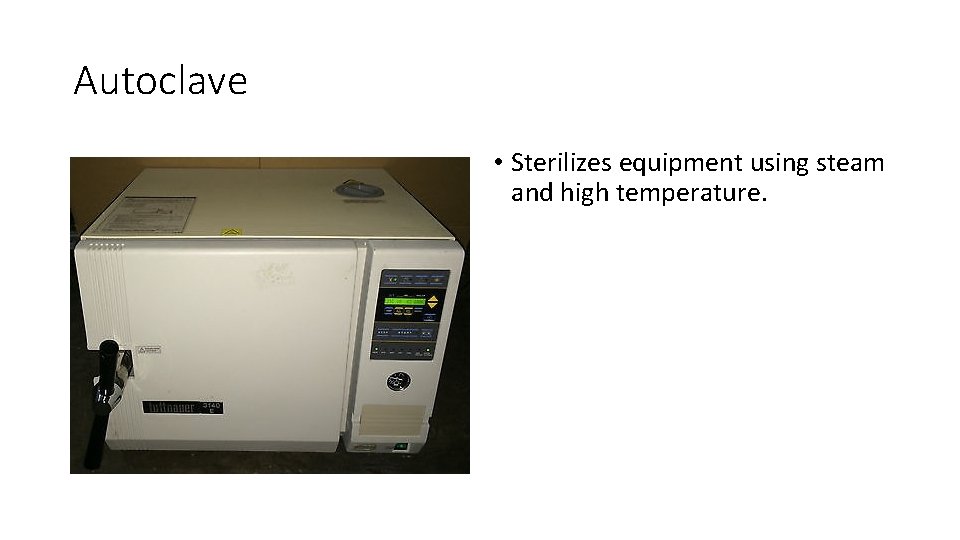
Autoclave • Sterilizes equipment using steam and high temperature.
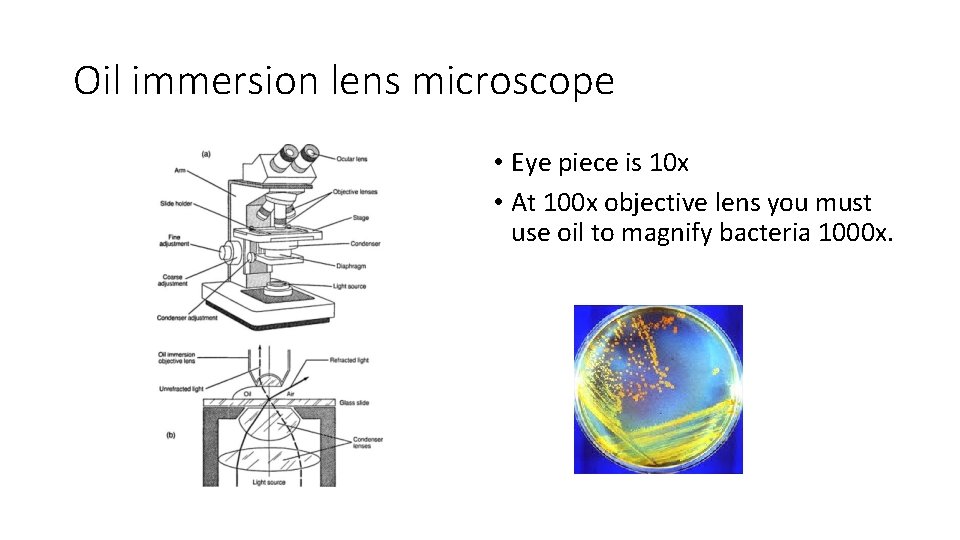
Oil immersion lens microscope • Eye piece is 10 x • At 100 x objective lens you must use oil to magnify bacteria 1000 x.
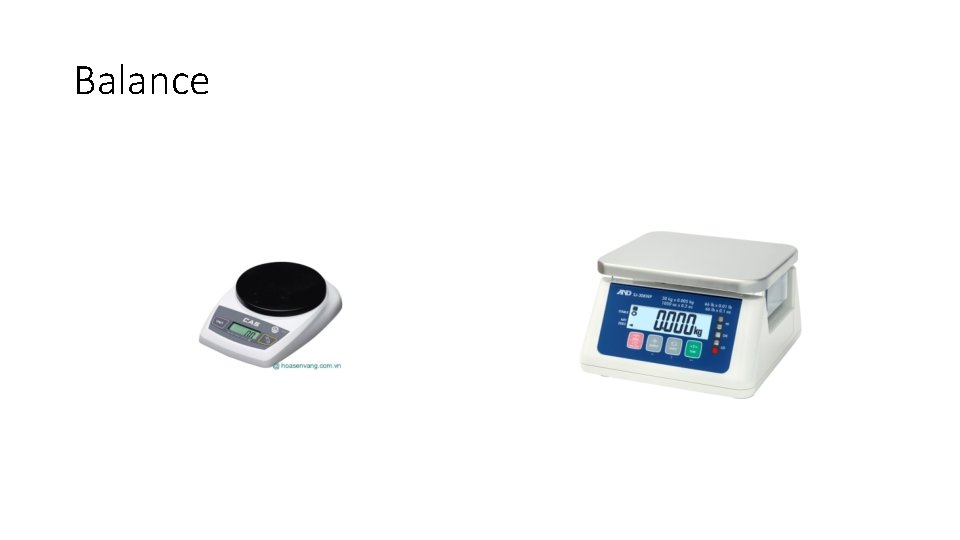
Balance
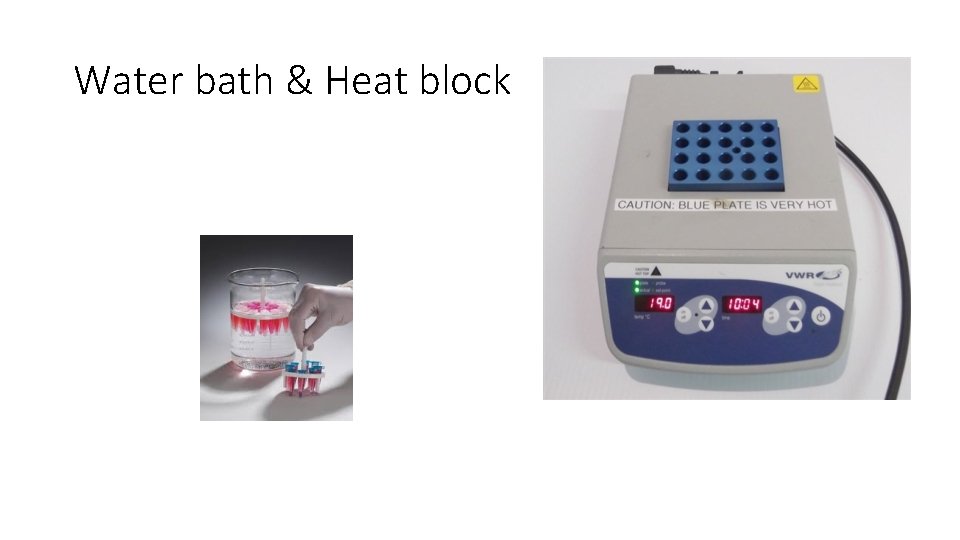
Water bath & Heat block
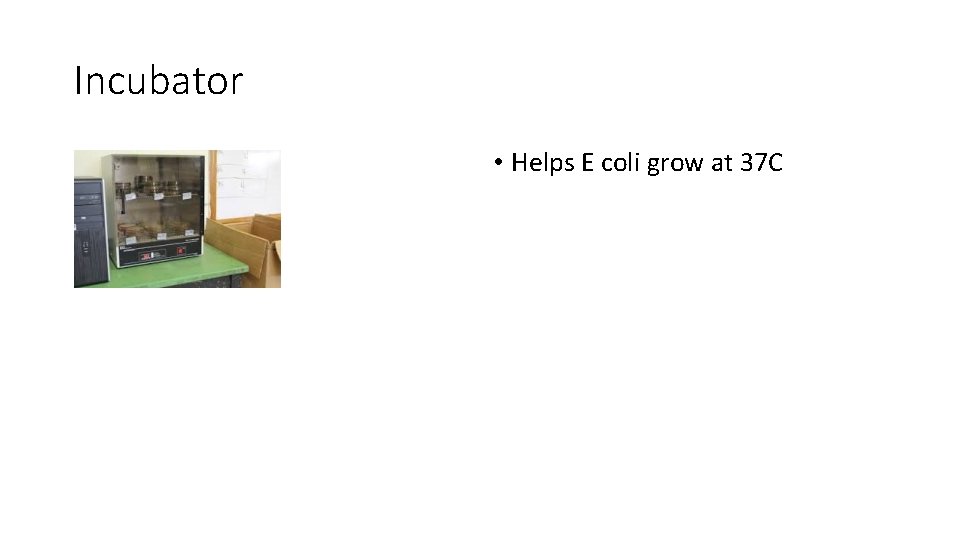
Incubator • Helps E coli grow at 37 C
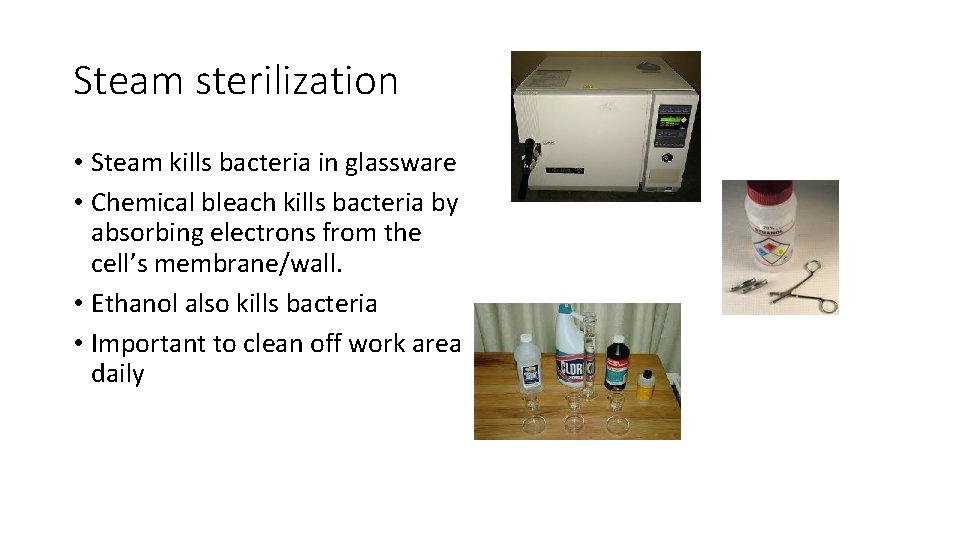
Steam sterilization • Steam kills bacteria in glassware • Chemical bleach kills bacteria by absorbing electrons from the cell’s membrane/wall. • Ethanol also kills bacteria • Important to clean off work area daily
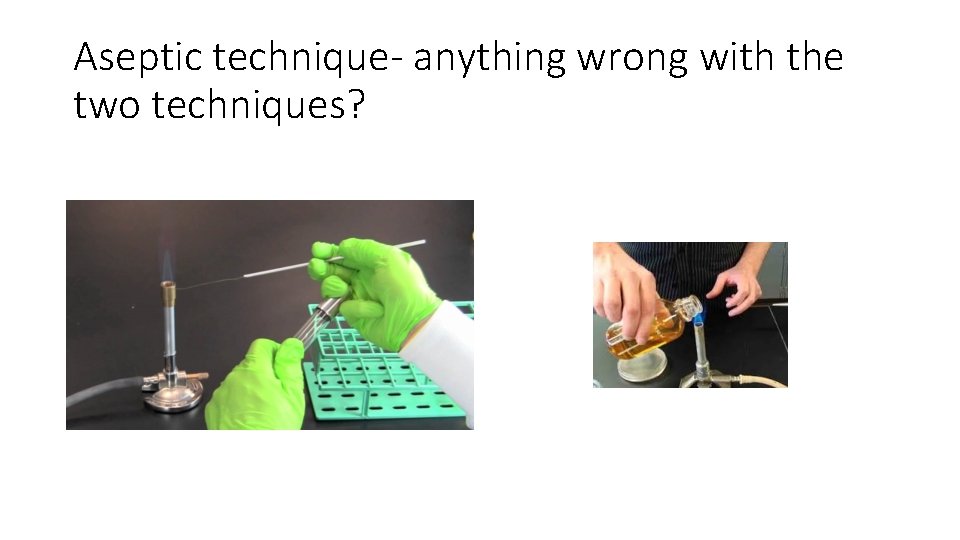
Aseptic technique- anything wrong with the two techniques?
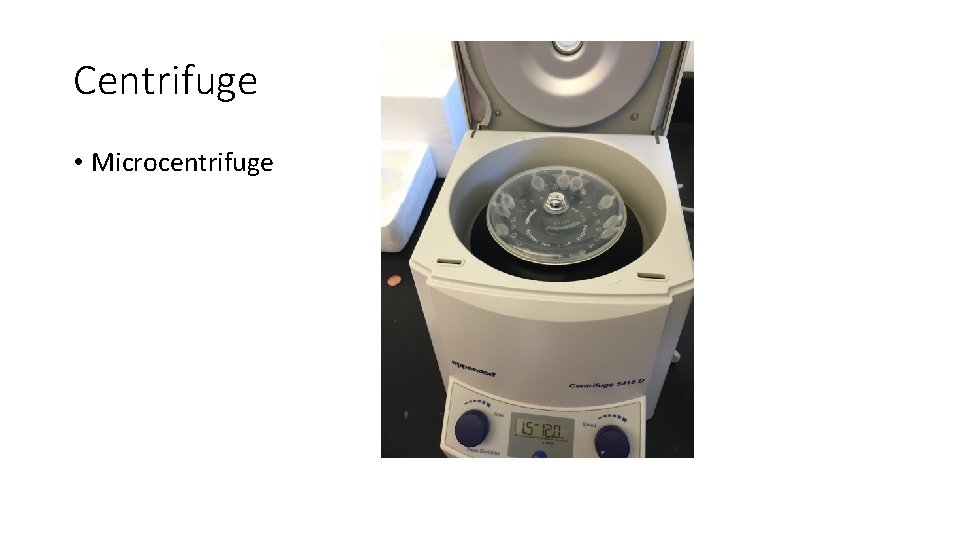
Centrifuge • Microcentrifuge
Biotech Good Documentation Practices (GDP) • Table of contents with date/page numbers • Lab title • Purpose • Materials • Protocol/procedures • Observations/results • Conclusion/discussion of experiment • Signature/Date on each page. • Mistakes single line through & initial and date • Record any procedural mistakes you made.
Atoms • H, O, N, P, C, • Each has an atomic mass based on the 6. 02 x 1023 atoms in 12 grams of Carbon. • H- 1 • O-16 • N-14 • P-32 • C-12 • Molecular weight- mass of all atoms in a molecule. • hydrogen (1) and oxygen (16) in H 2 O - 18
Bonding • Covalent- two non-metals share electrons. (H 2 O) • Ionic- a metal donates electrons to a non-metal (Na. Cl) • Hydrogen bonding- weak attraction between Hydrogen and an electronegative element on another compound such as Oxygen, Nitrogen, Phosphorus.
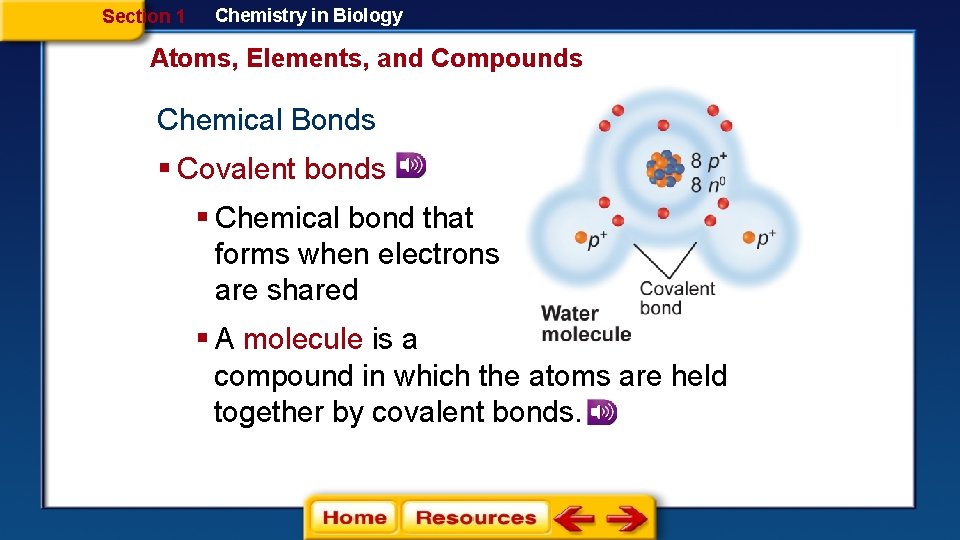
Section 1 Chemistry in Biology Atoms, Elements, and Compounds Chemical Bonds § Covalent bonds § Chemical bond that forms when electrons are shared § A molecule is a compound in which the atoms are held together by covalent bonds.
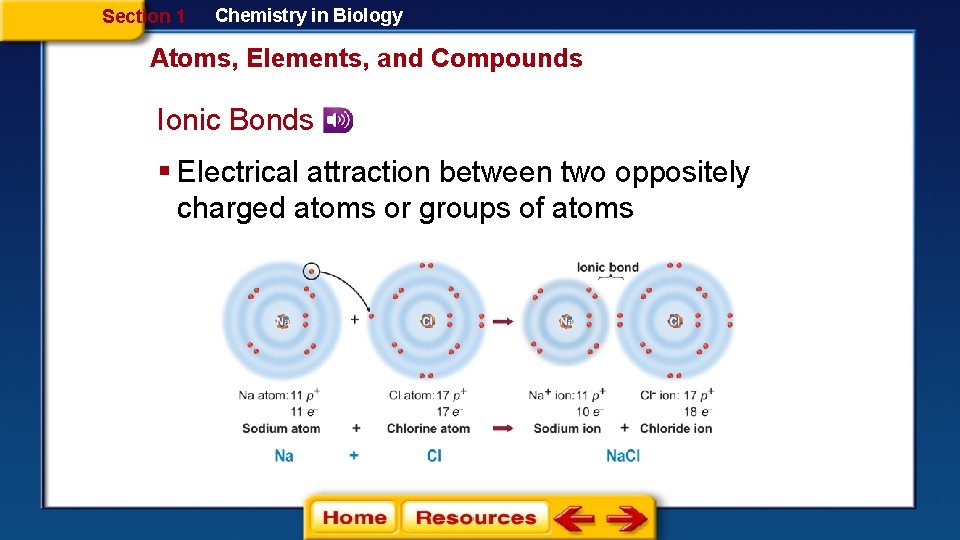
Section 1 Chemistry in Biology Atoms, Elements, and Compounds Ionic Bonds § Electrical attraction between two oppositely charged atoms or groups of atoms
Hydrogen Bond • Bond between Hydrogen and either nitrogen, fluorine, oxygen
Acids and bases • Acids have Hydrogen ions (H+) • Bases have Hydroxide ions (OH-)
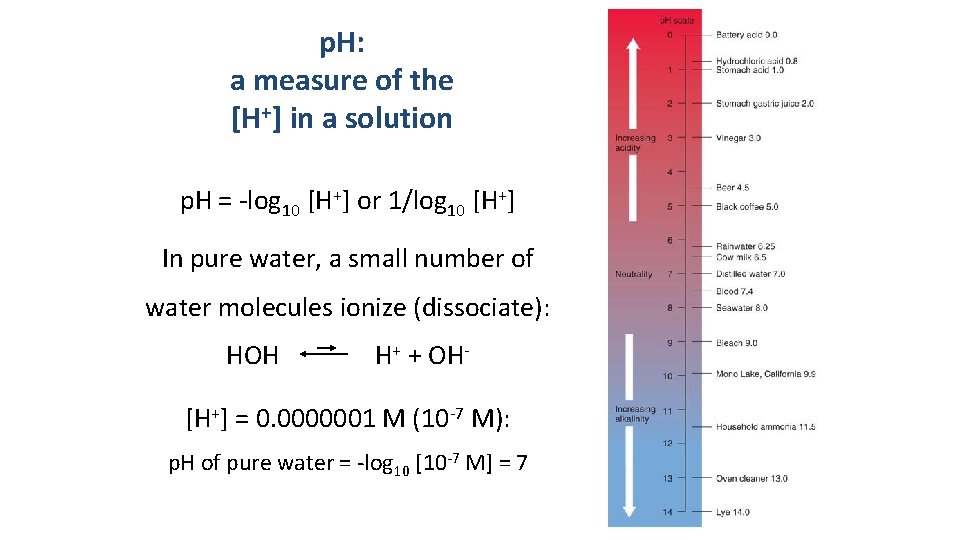
p. H: a measure of the [H+] in a solution p. H = -log 10 [H+] or 1/log 10 [H+] In pure water, a small number of water molecules ionize (dissociate): HOH H+ + OH- [H+] = 0. 0000001 M (10 -7 M): p. H of pure water = -log 10 [10 -7 M] = 7
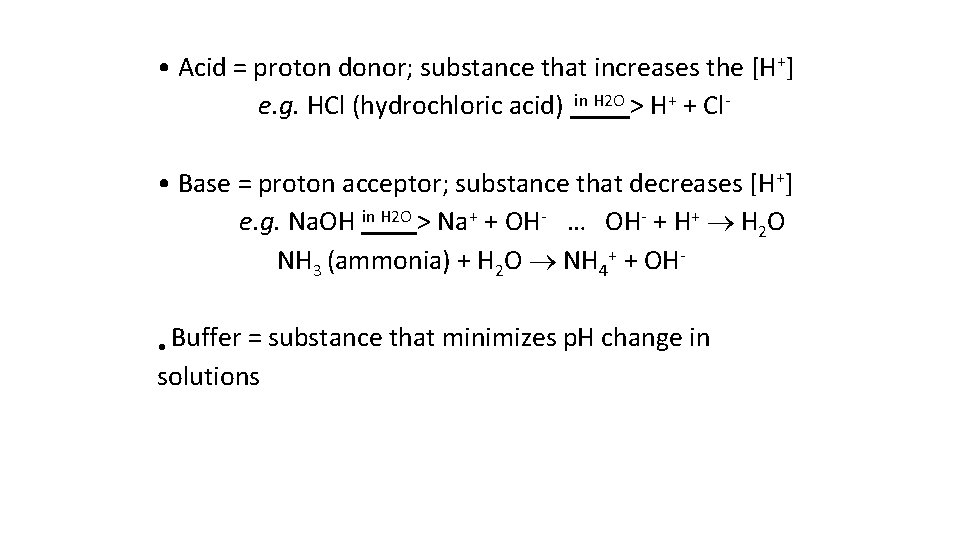
• Acid = proton donor; substance that increases the [H+] e. g. HCl (hydrochloric acid) in H 2 O > H+ + Cl • Base = proton acceptor; substance that decreases [H+] e. g. Na. OH in H 2 O > Na+ + OH- … OH- + H+ H 2 O NH 3 (ammonia) + H 2 O NH 4+ + OH • Buffer = substance that minimizes p. H change in solutions
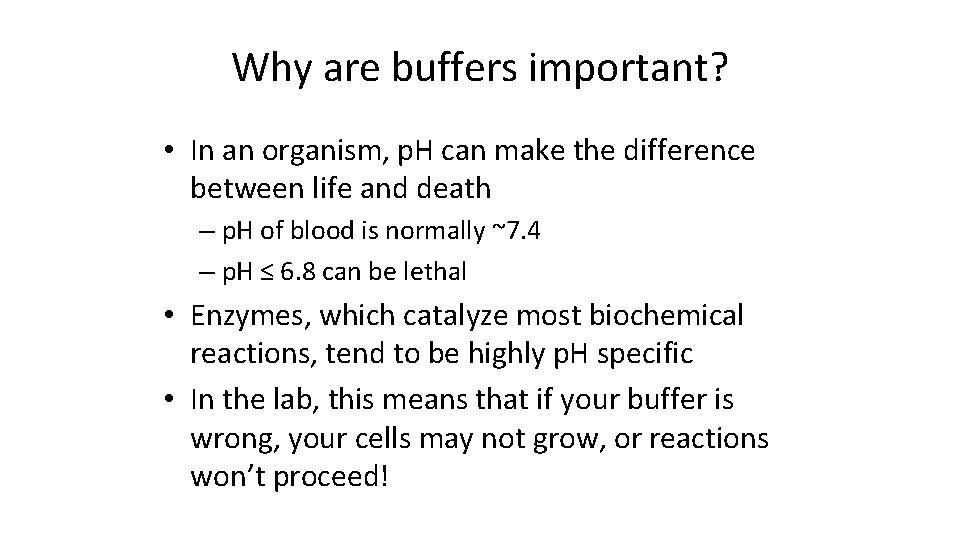
Why are buffers important? • In an organism, p. H can make the difference between life and death – p. H of blood is normally ~7. 4 – p. H ≤ 6. 8 can be lethal • Enzymes, which catalyze most biochemical reactions, tend to be highly p. H specific • In the lab, this means that if your buffer is wrong, your cells may not grow, or reactions won’t proceed!
How do buffers work? • Hydrogen ions (H+) join with bases (OH-) to neutralize too much acid or base level.
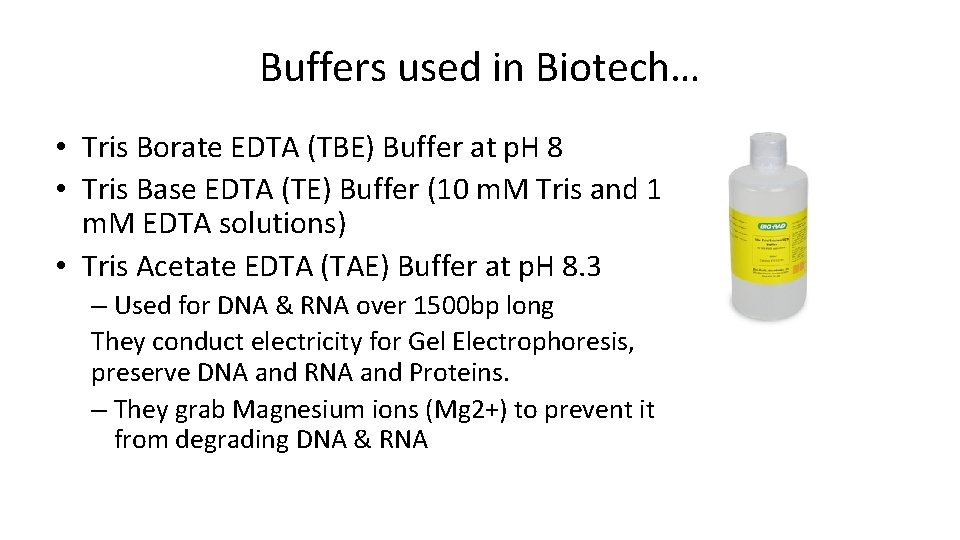
Buffers used in Biotech… • Tris Borate EDTA (TBE) Buffer at p. H 8 • Tris Base EDTA (TE) Buffer (10 m. M Tris and 1 m. M EDTA solutions) • Tris Acetate EDTA (TAE) Buffer at p. H 8. 3 – Used for DNA & RNA over 1500 bp long They conduct electricity for Gel Electrophoresis, preserve DNA and RNA and Proteins. – They grab Magnesium ions (Mg 2+) to prevent it from degrading DNA & RNA
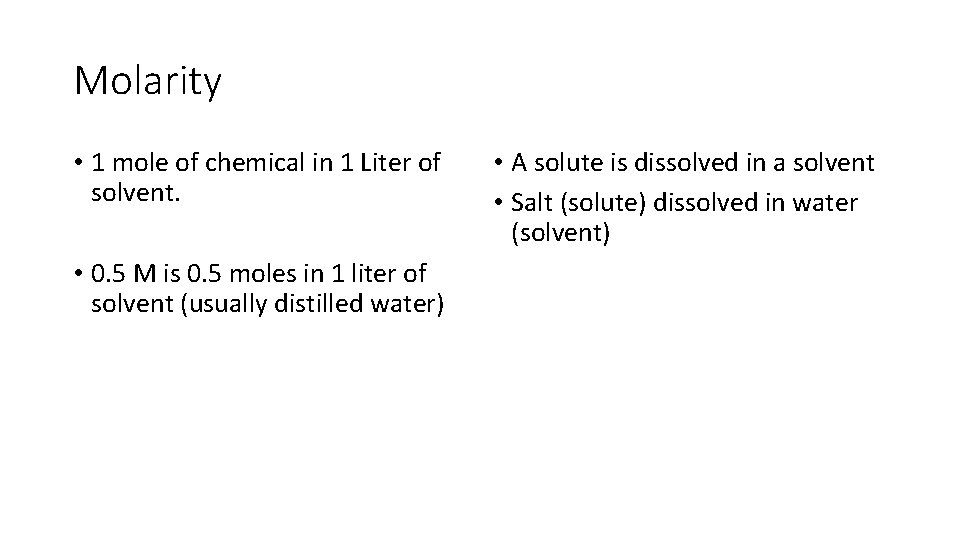
Molarity • 1 mole of chemical in 1 Liter of solvent. • 0. 5 M is 0. 5 moles in 1 liter of solvent (usually distilled water) • A solute is dissolved in a solvent • Salt (solute) dissolved in water (solvent)
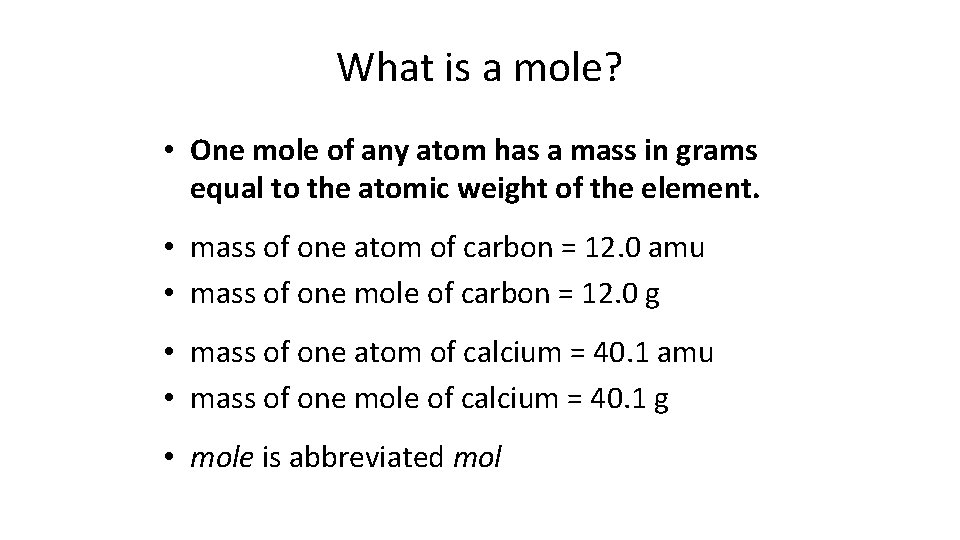
What is a mole? • One mole of any atom has a mass in grams equal to the atomic weight of the element. • mass of one atom of carbon = 12. 0 amu • mass of one mole of carbon = 12. 0 g • mass of one atom of calcium = 40. 1 amu • mass of one mole of calcium = 40. 1 g • mole is abbreviated mol
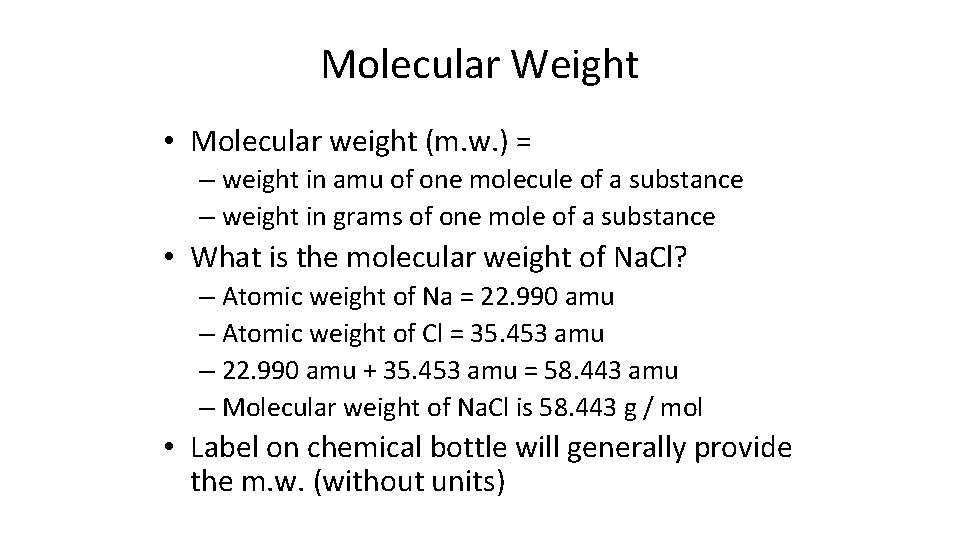
Molecular Weight • Molecular weight (m. w. ) = – weight in amu of one molecule of a substance – weight in grams of one mole of a substance • What is the molecular weight of Na. Cl? – Atomic weight of Na = 22. 990 amu – Atomic weight of Cl = 35. 453 amu – 22. 990 amu + 35. 453 amu = 58. 443 amu – Molecular weight of Na. Cl is 58. 443 g / mol • Label on chemical bottle will generally provide the m. w. (without units)
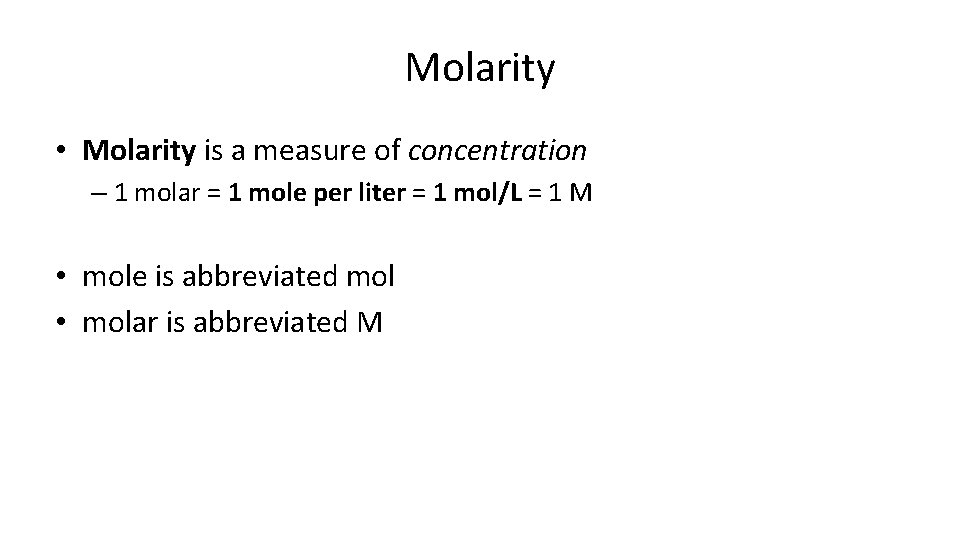
Molarity • Molarity is a measure of concentration – 1 molar = 1 mole per liter = 1 mol/L = 1 M • mole is abbreviated mol • molar is abbreviated M
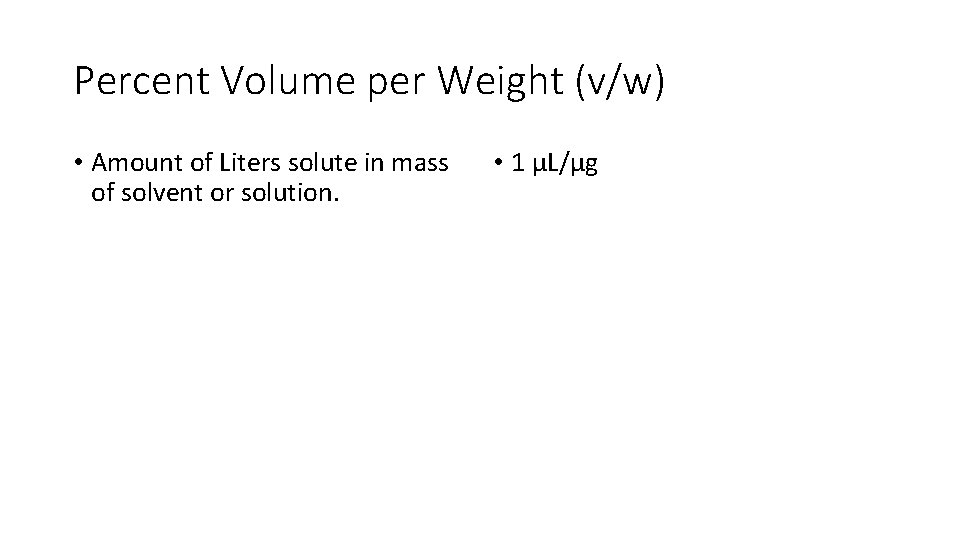
Percent Volume per Weight (v/w) • Amount of Liters solute in mass of solvent or solution. • 1 µL/µg
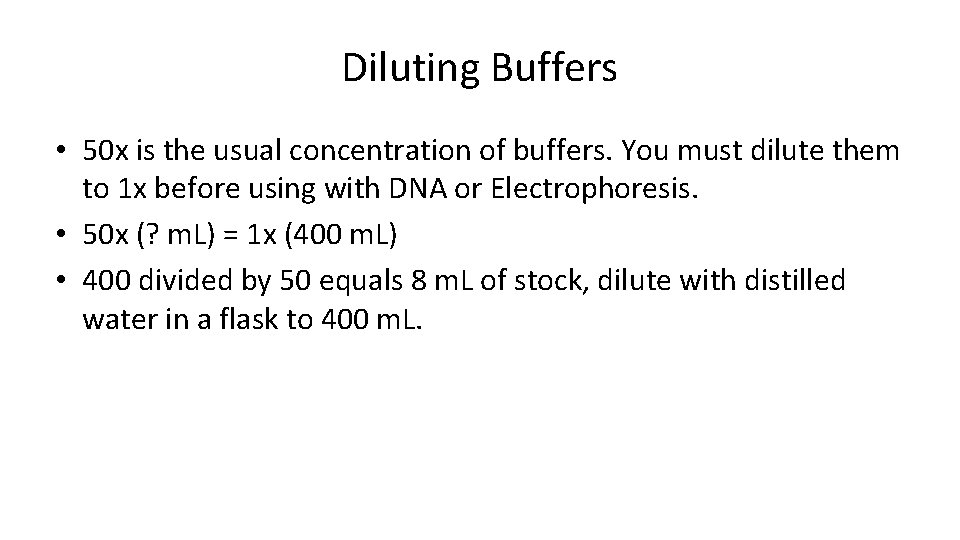
Diluting Buffers • 50 x is the usual concentration of buffers. You must dilute them to 1 x before using with DNA or Electrophoresis. • 50 x (? m. L) = 1 x (400 m. L) • 400 divided by 50 equals 8 m. L of stock, dilute with distilled water in a flask to 400 m. L.
Calculations with concentrations • How do you figure the mass of solid to weigh out
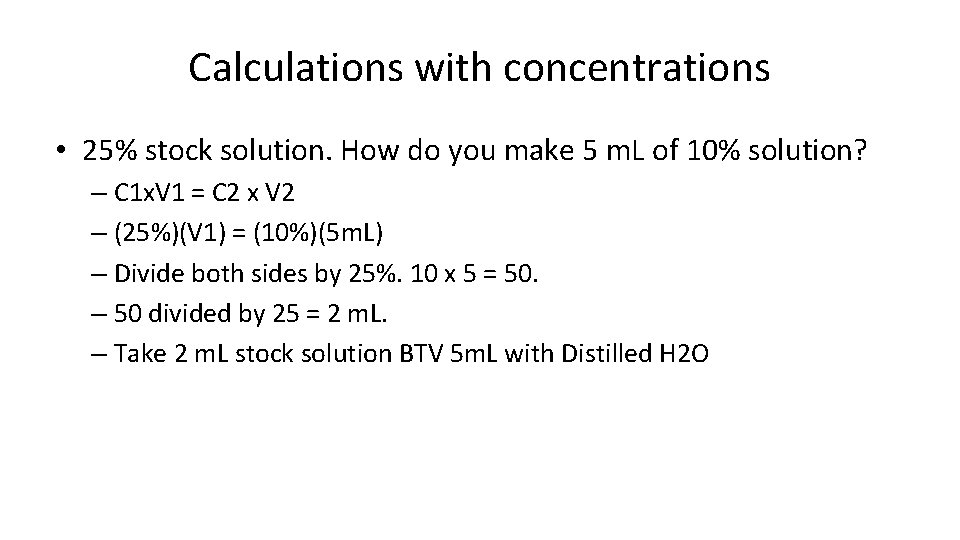
Calculations with concentrations • 25% stock solution. How do you make 5 m. L of 10% solution? – C 1 x. V 1 = C 2 x V 2 – (25%)(V 1) = (10%)(5 m. L) – Divide both sides by 25%. 10 x 5 = 50. – 50 divided by 25 = 2 m. L. – Take 2 m. L stock solution BTV 5 m. L with Distilled H 2 O
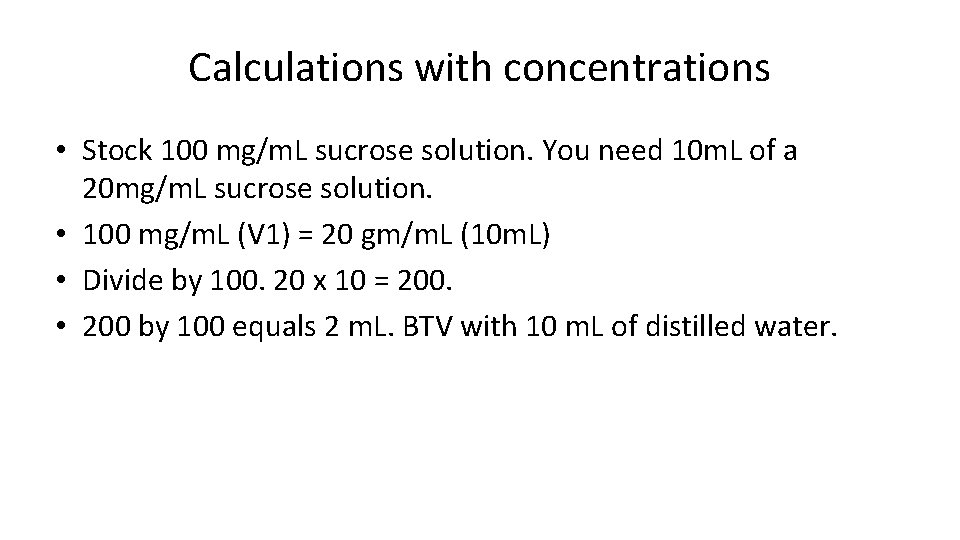
Calculations with concentrations • Stock 100 mg/m. L sucrose solution. You need 10 m. L of a 20 mg/m. L sucrose solution. • 100 mg/m. L (V 1) = 20 gm/m. L (10 m. L) • Divide by 100. 20 x 10 = 200. • 200 by 100 equals 2 m. L. BTV with 10 m. L of distilled water.
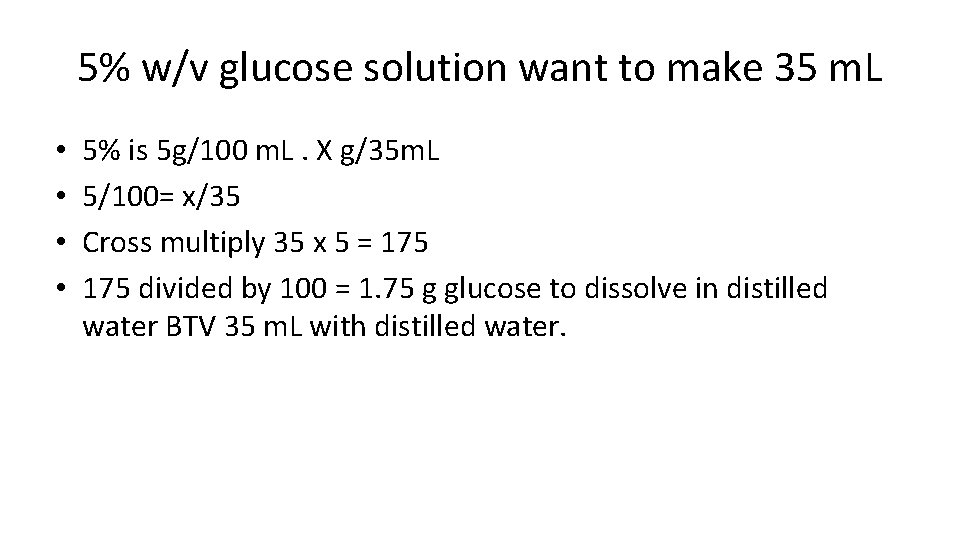
5% w/v glucose solution want to make 35 m. L • • 5% is 5 g/100 m. L. X g/35 m. L 5/100= x/35 Cross multiply 35 x 5 = 175 divided by 100 = 1. 75 g glucose to dissolve in distilled water BTV 35 m. L with distilled water.
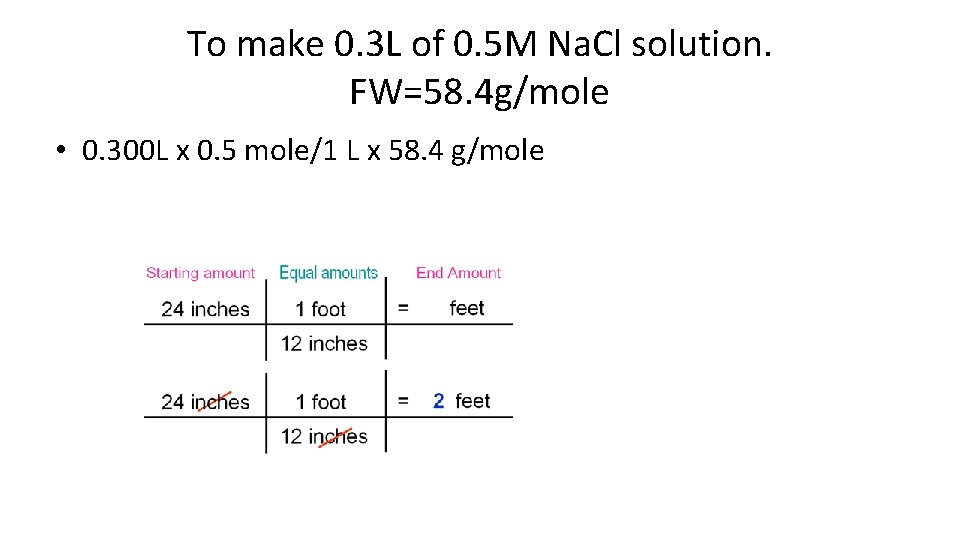
To make 0. 3 L of 0. 5 M Na. Cl solution. FW=58. 4 g/mole • 0. 300 L x 0. 5 mole/1 L x 58. 4 g/mole
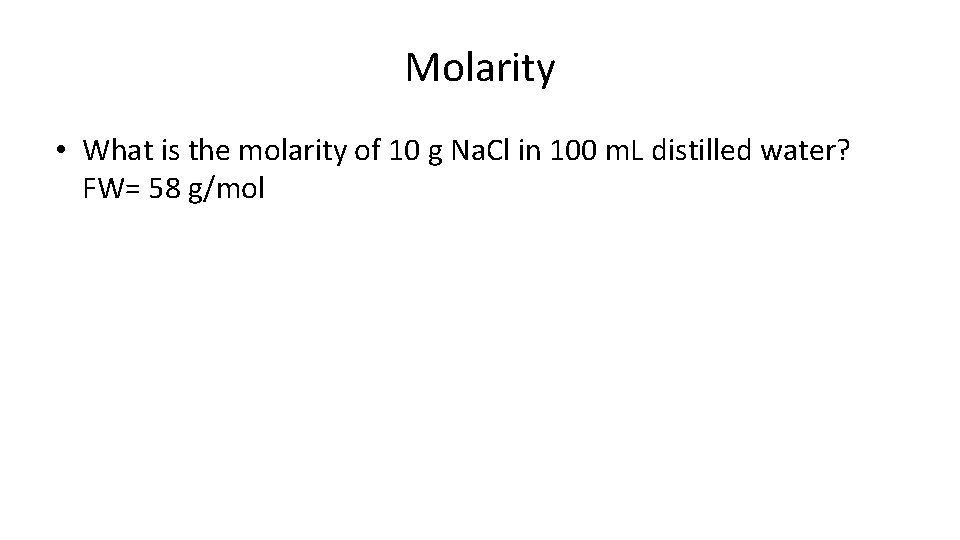
Molarity • What is the molarity of 10 g Na. Cl in 100 m. L distilled water? FW= 58 g/mol
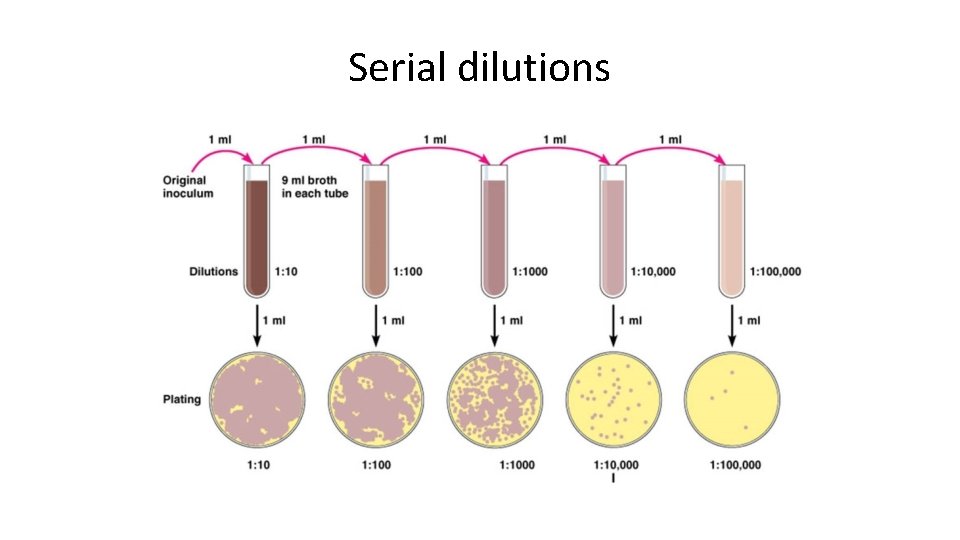
Serial dilutions
Four Compounds of Life Lipids l Carbohydrates l Proteins l Nucleic Acids l
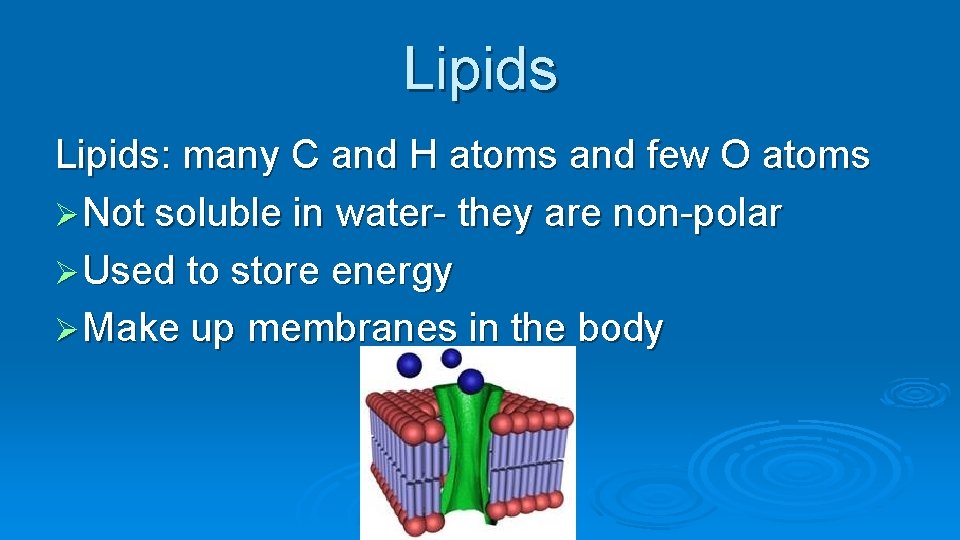
Lipids: many C and H atoms and few O atoms Ø Not soluble in water- they are non-polar Ø Used to store energy Ø Make up membranes in the body
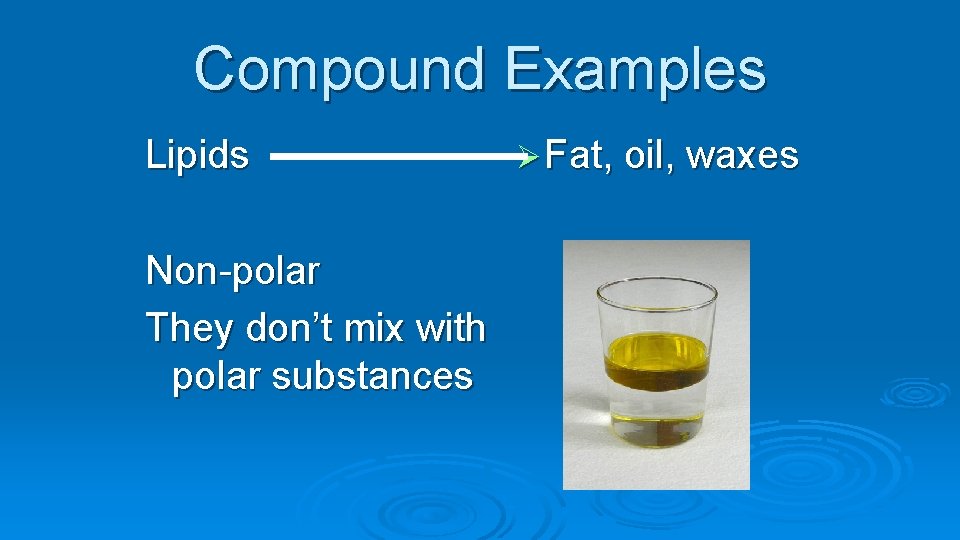
Compound Examples Lipids Non-polar They don’t mix with polar substances Ø Fat, oil, waxes
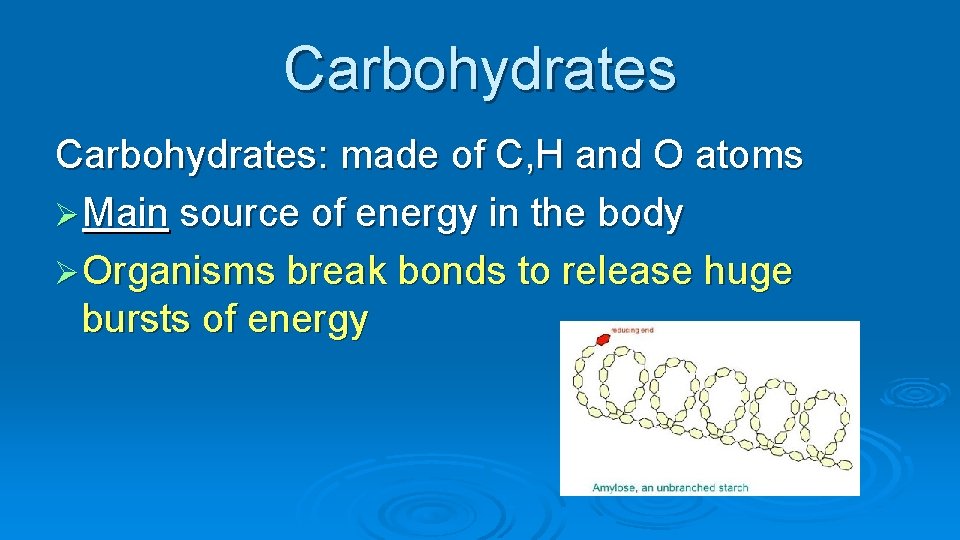
Carbohydrates: made of C, H and O atoms Ø Main source of energy in the body Ø Organisms break bonds to release huge bursts of energy
Compound Examples Lipids Carbohydrates Ø Fat, oil, waxes Ø Sugars, starches
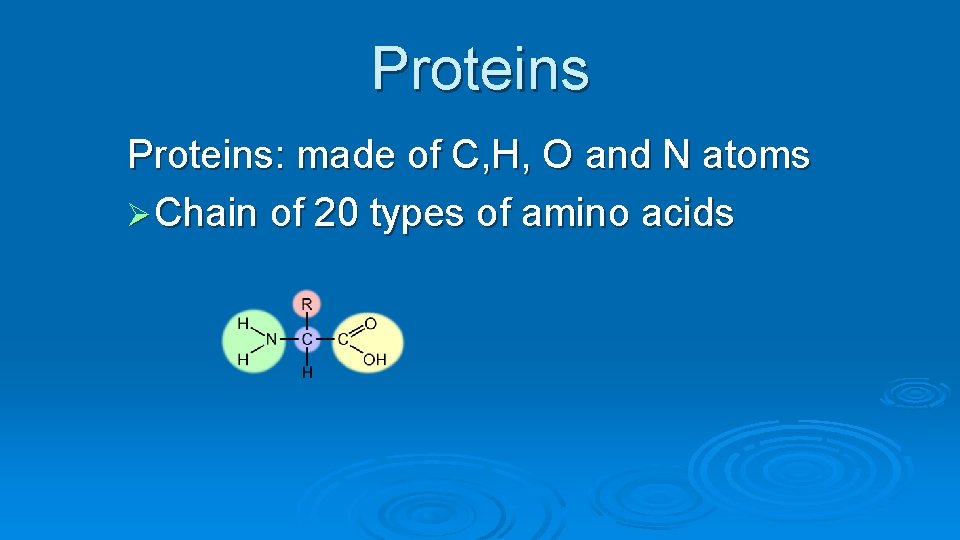
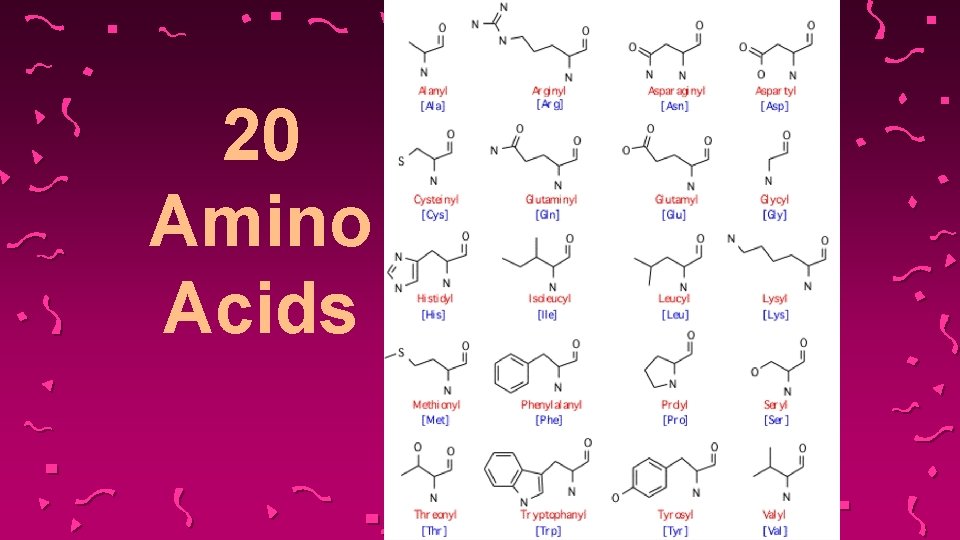
Proteins: made of C, H, O and N atoms Ø Chain of 20 types of amino acids


Proteins: made of C, H, O and N atoms Ø Chain of amino acids Ø There are 20 different amino acids Ø Each protein has a specific role: Controls the rate of chemical reactions l Used to build muscle and bone l Transports substances into/out of cells l
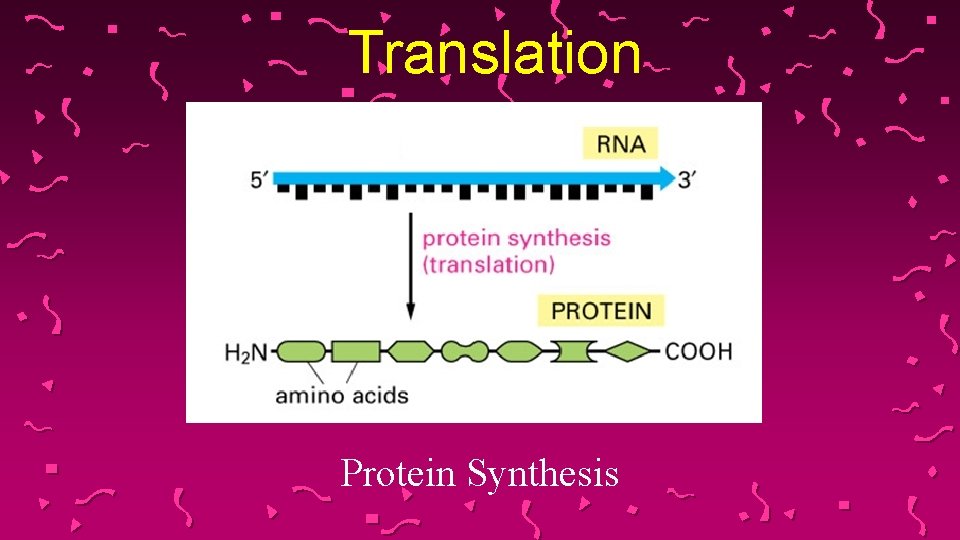
Translation Protein Synthesis
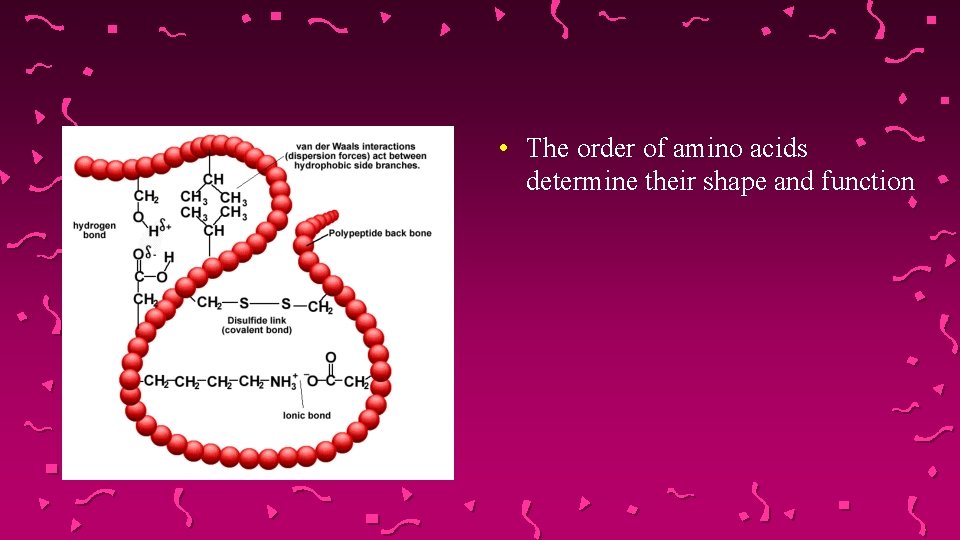
• The order of amino acids determine their shape and function
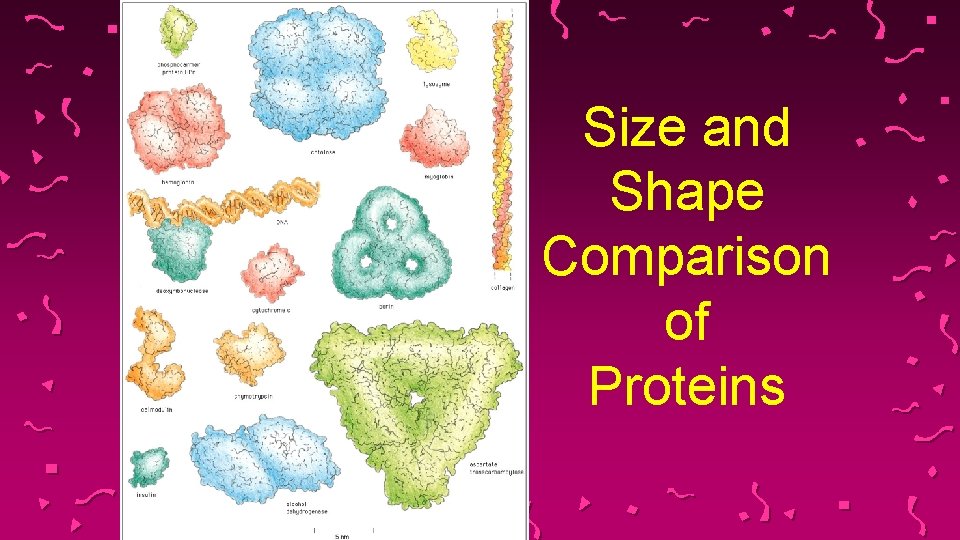
Size and Shape Comparison of Proteins
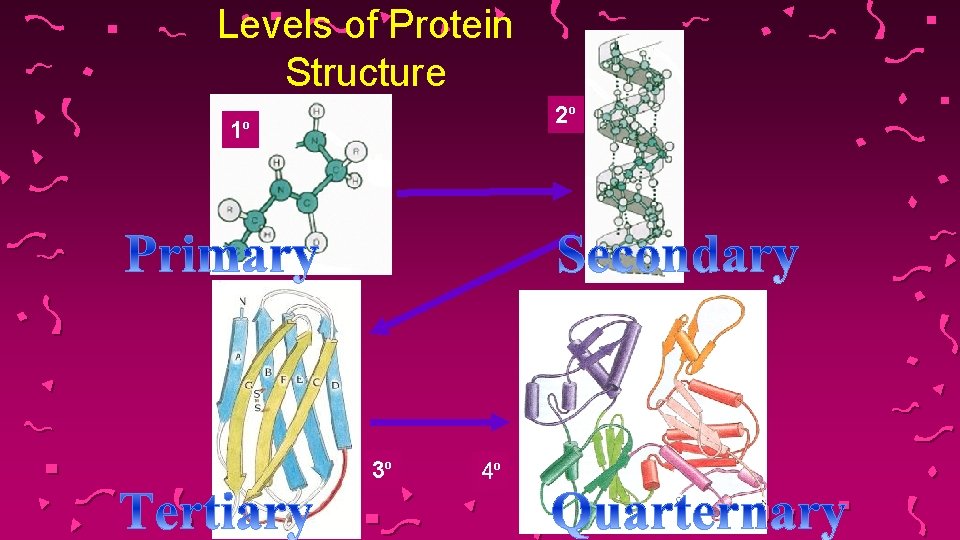
Levels of Protein Structure 2 o 1 o 3 o 4 o
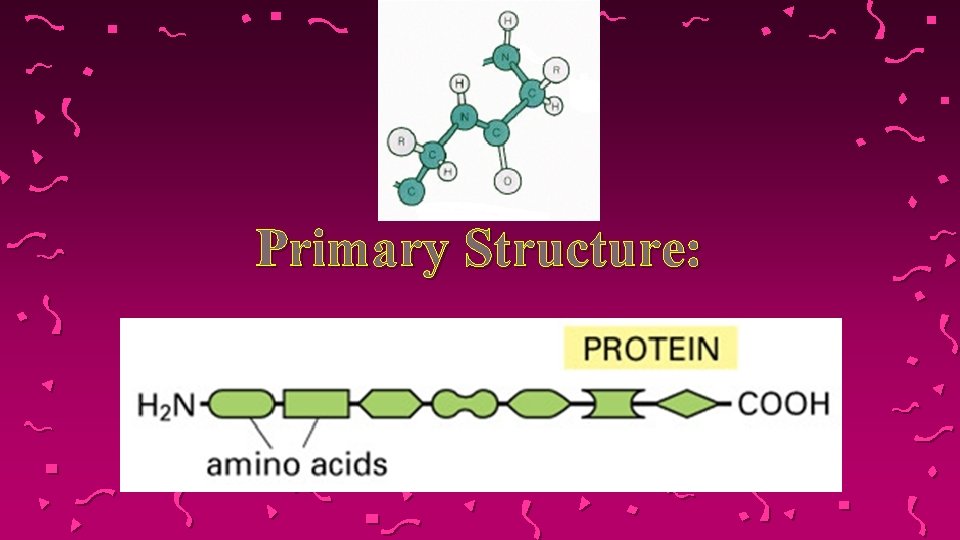
Primary Structure:
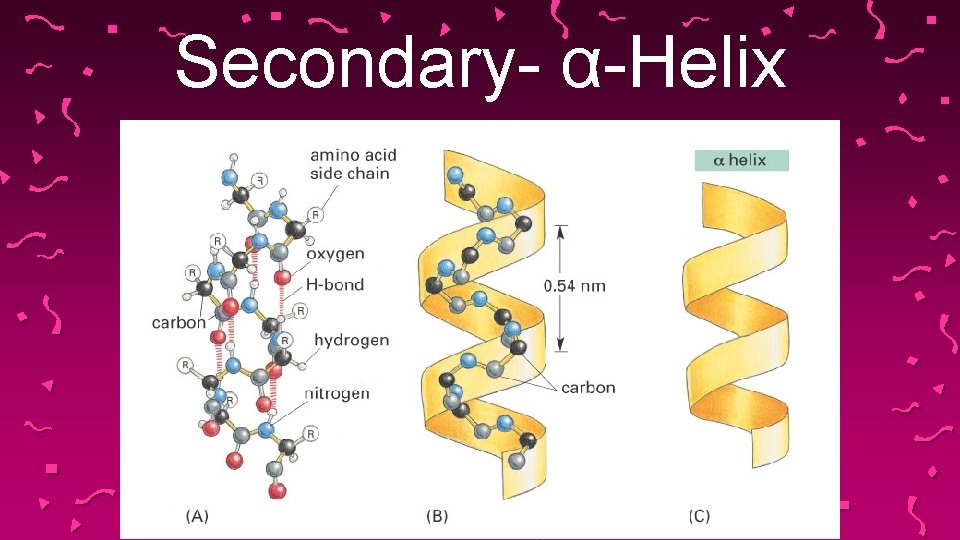
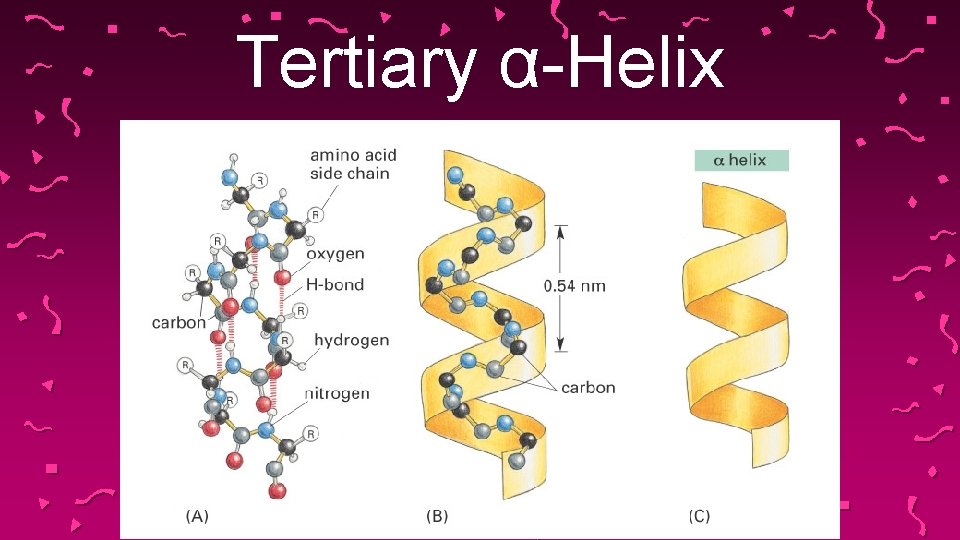
Secondary- α-Helix
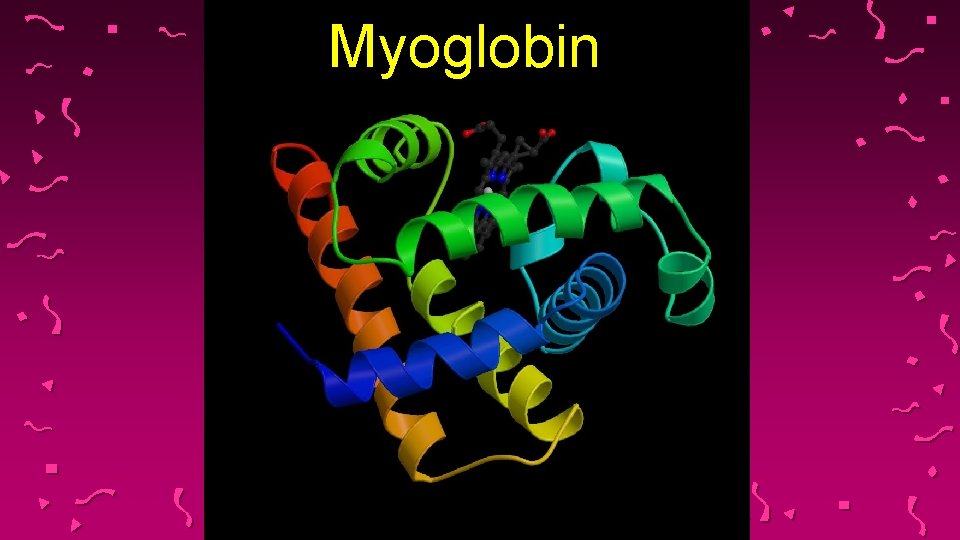
Myoglobin
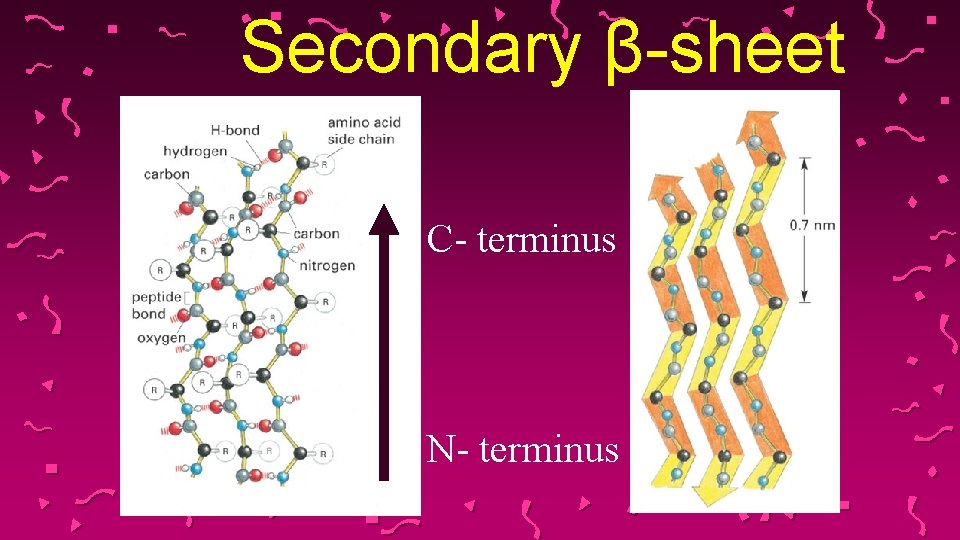
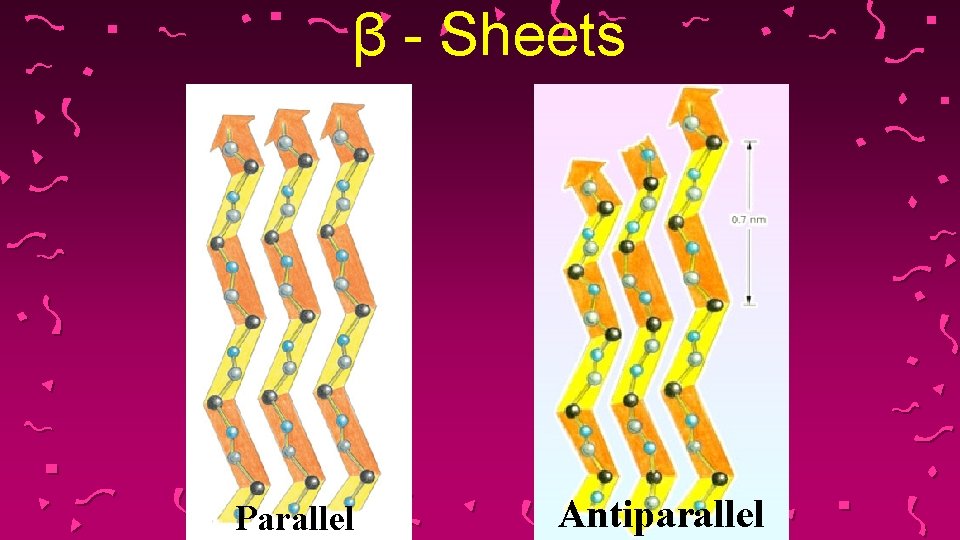
Secondary β-sheet C- terminus N- terminus
β - Sheets Parallel Antiparallel
20 Amino Acids
Some Amino Acids have a Negative Charge
Tertiary α-Helix
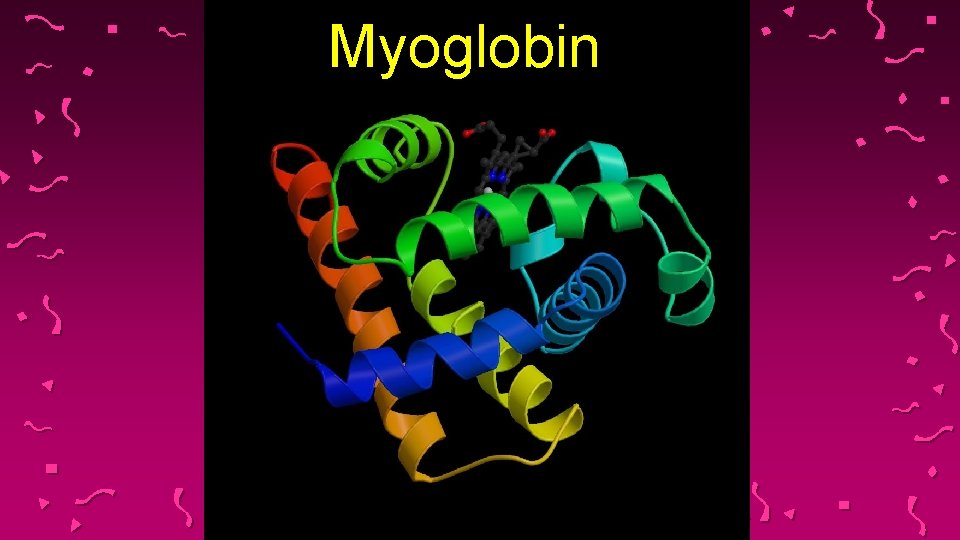
Myoglobin
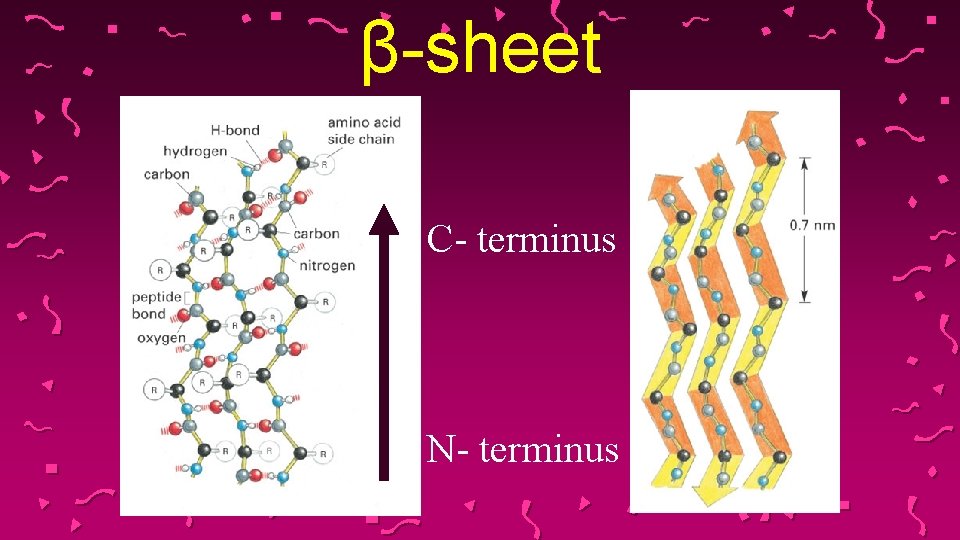
β-sheet C- terminus N- terminus
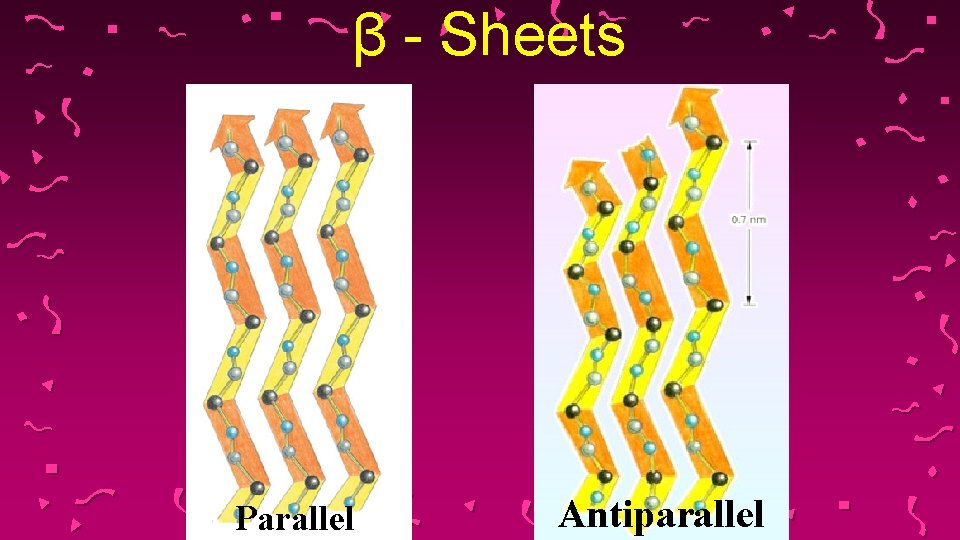
β - Sheets Parallel Antiparallel
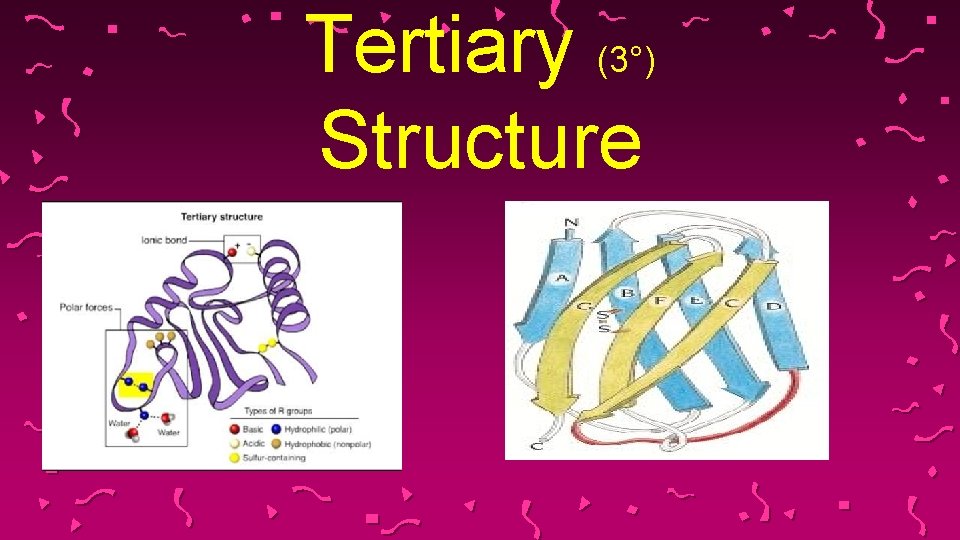
Tertiary (3°) Structure
3° Structure • 3 -D Conformation of Protein • contain “domains” (~50 -350 aa) that fold and function independently-may contain many domains • Polar and Nonpolar associations
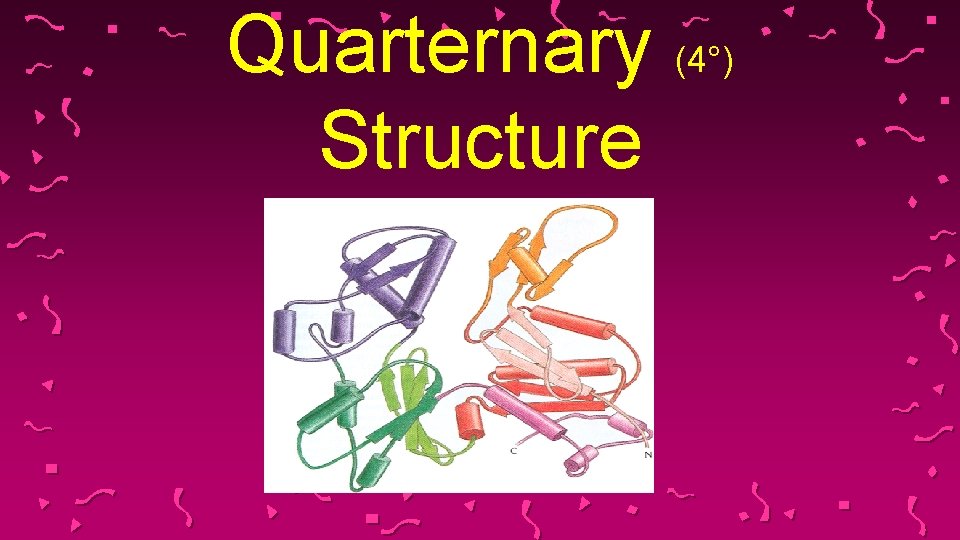
Quarternary (4°) Structure
4° Structure • association of polypeptides into multisubunit protein
Types of proteins • Hormones- chemical messengers • Enzymes- accelerate metabolic processes • Structural- necessary components of your body, include collagen, keratin, elastin. • Storage- store minerals • Transport- carry vital nutrients(ex: hemoglobin) • Receptor- outside of cell, control what enters and leaves cells
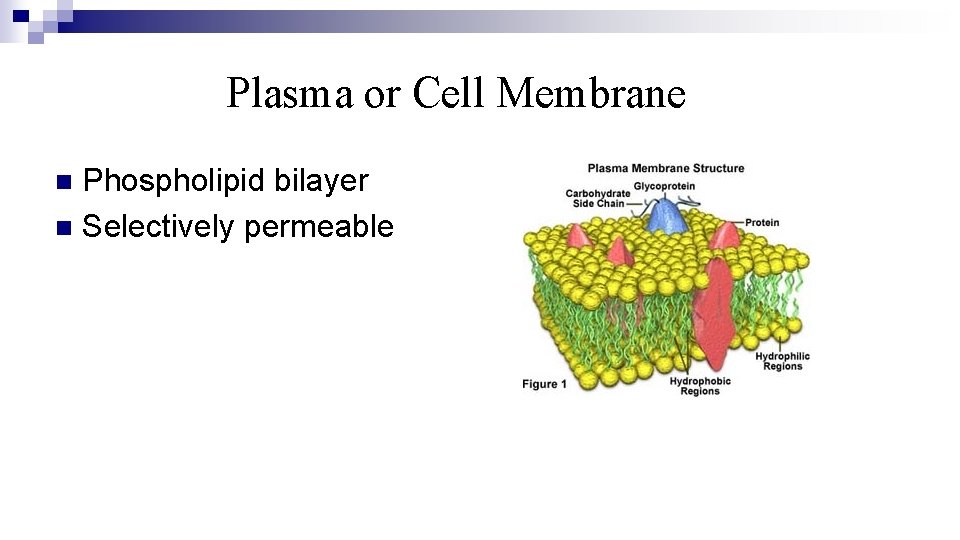
Plasma or Cell Membrane Phospholipid bilayer n Selectively permeable n
Nucleus Control Center of the cell n DNA is housed here n
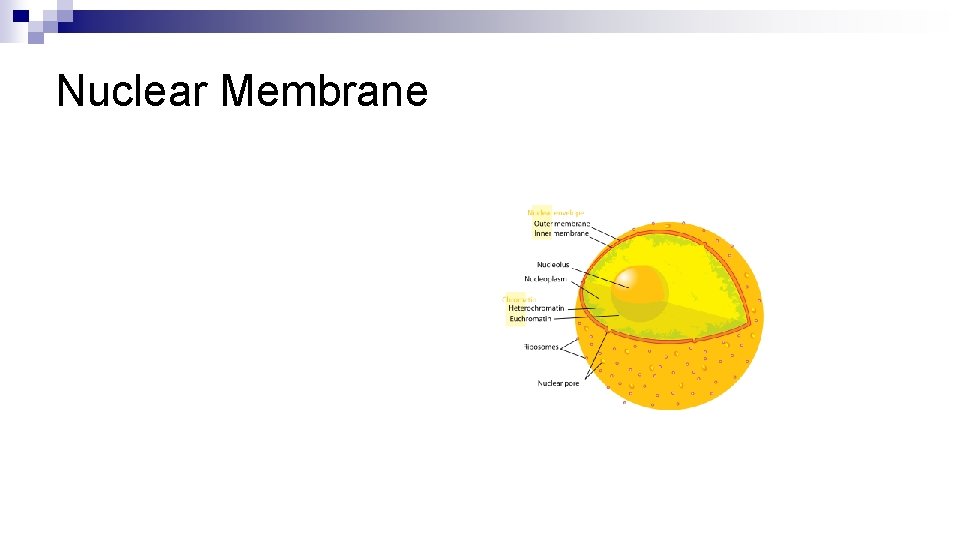
Nuclear Membrane
Cytoplasm cyto=cell, plasm=jelly-like liquid n Gives something for the organelle to float in. Keep them from being stuck on top of each other. n
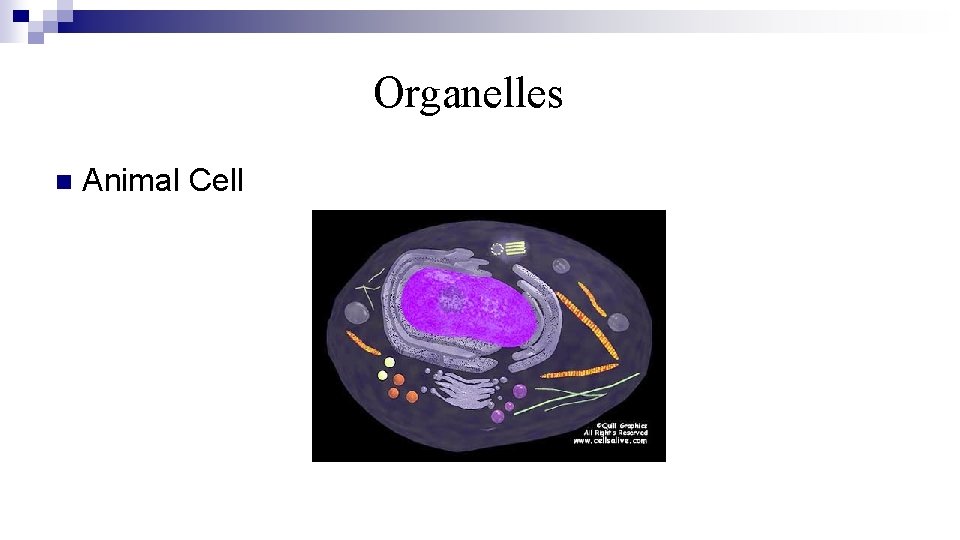
Organelles n Animal Cell
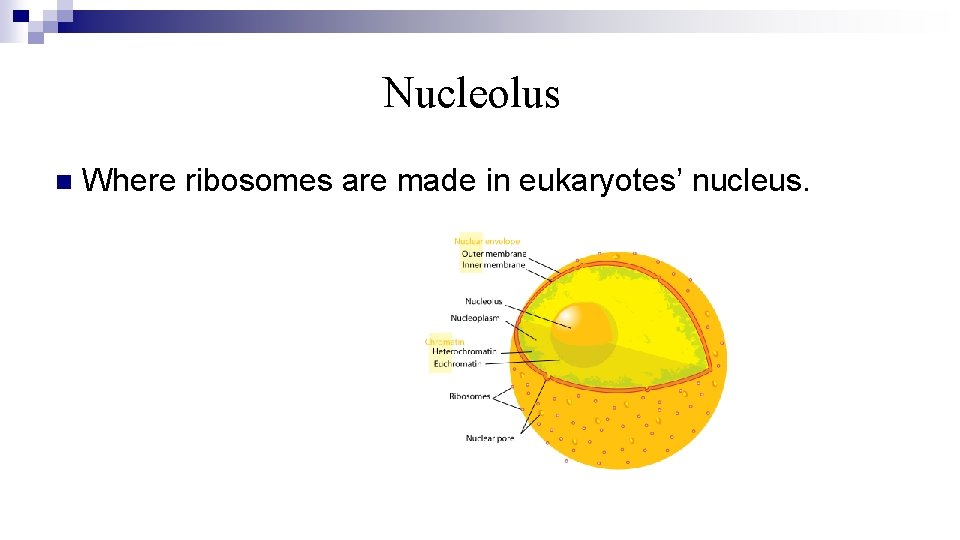
Nucleolus n Where ribosomes are made in eukaryotes’ nucleus.
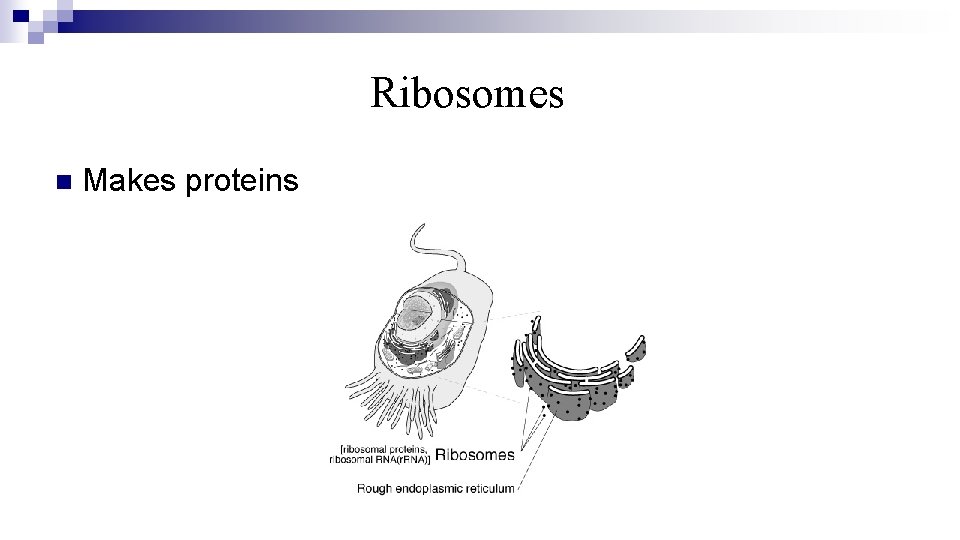
Ribosomes n Makes proteins
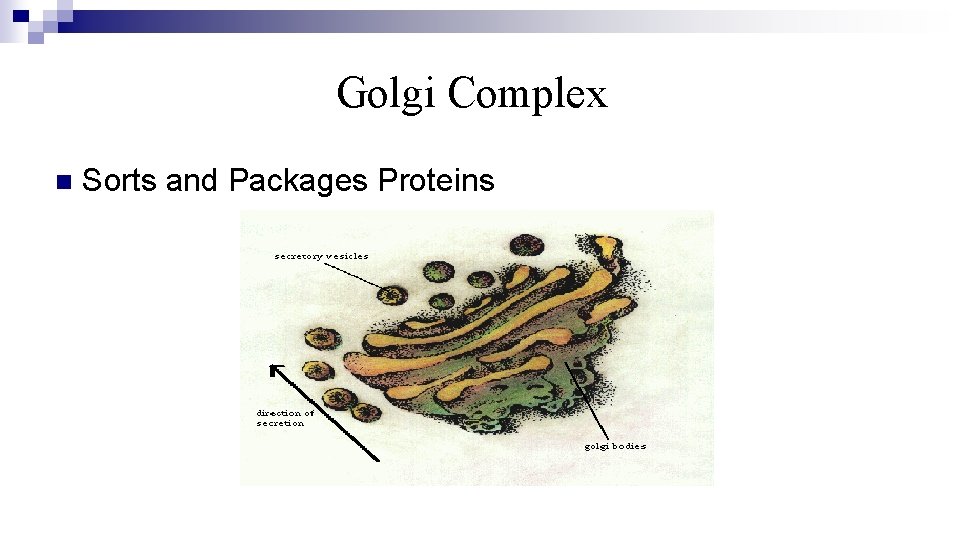
Golgi Complex n Sorts and Packages Proteins
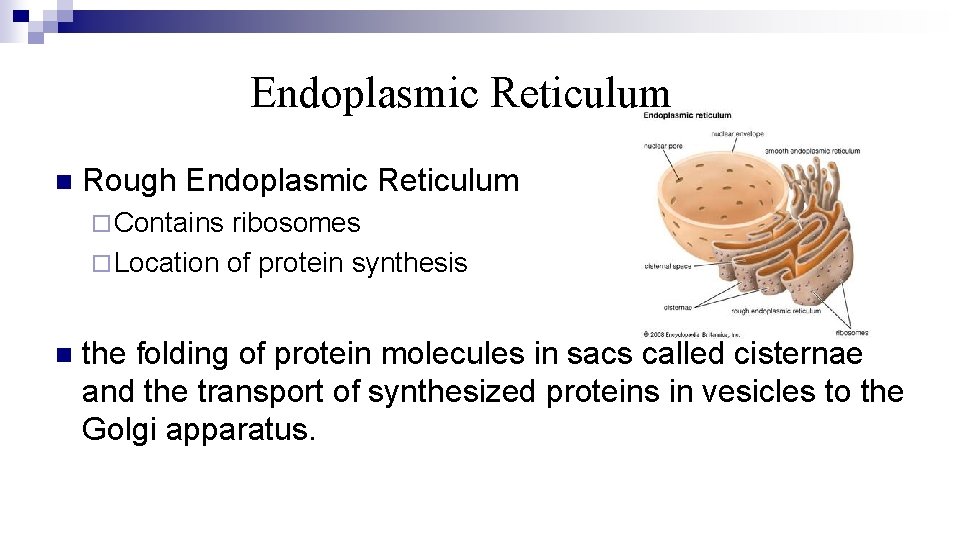
Endoplasmic Reticulum n Rough Endoplasmic Reticulum ¨ Contains ribosomes ¨ Location of protein synthesis n the folding of protein molecules in sacs called cisternae and the transport of synthesized proteins in vesicles to the Golgi apparatus.
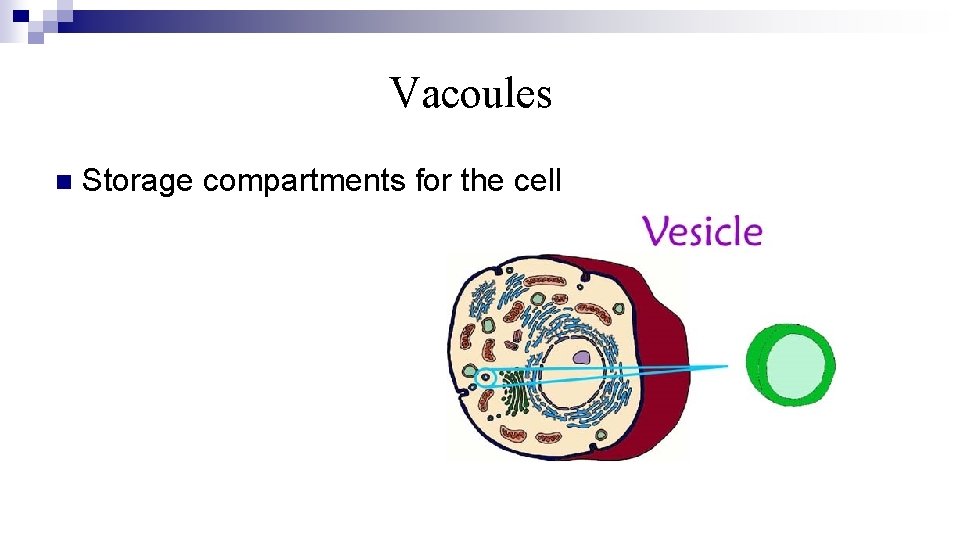
Vacoules n Storage compartments for the cell
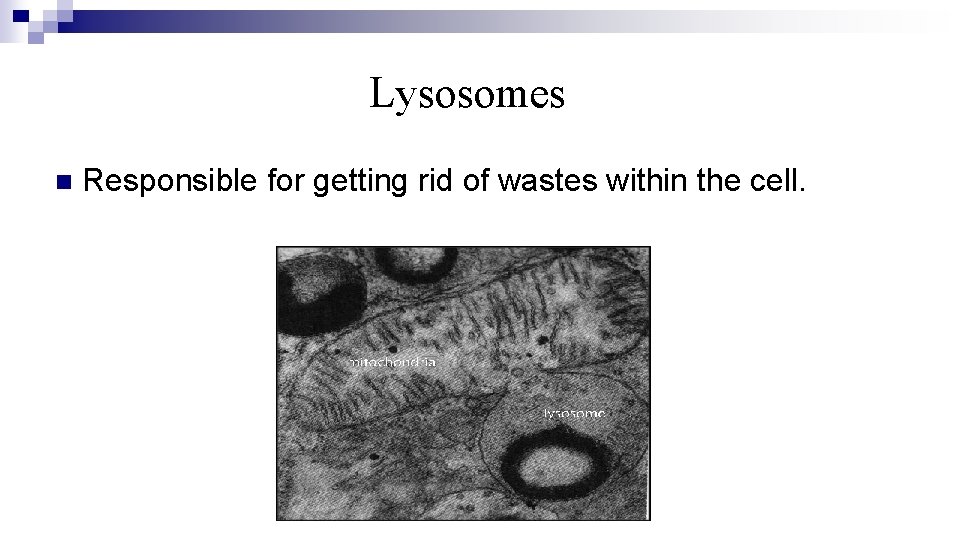
Lysosomes n Responsible for getting rid of wastes within the cell.
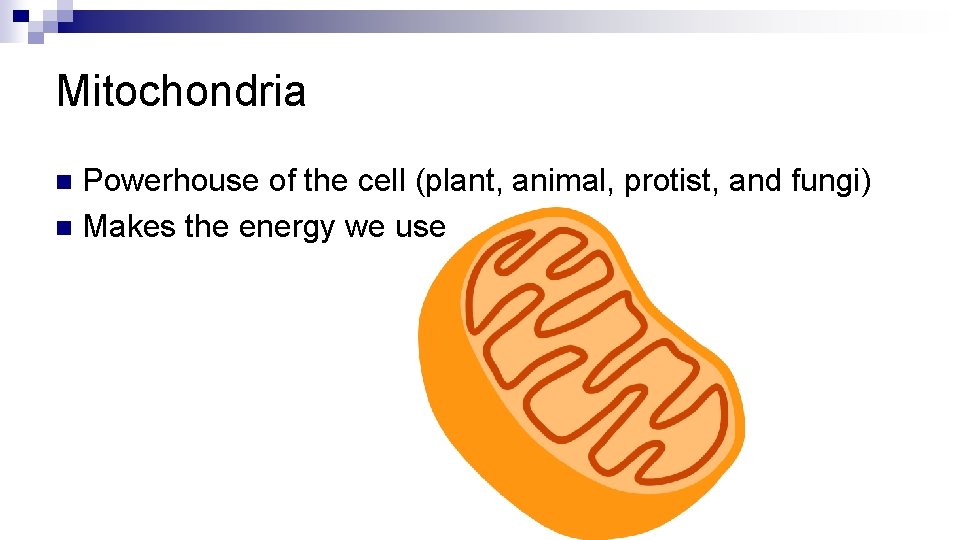
Mitochondria Powerhouse of the cell (plant, animal, protist, and fungi) n Makes the energy we use n
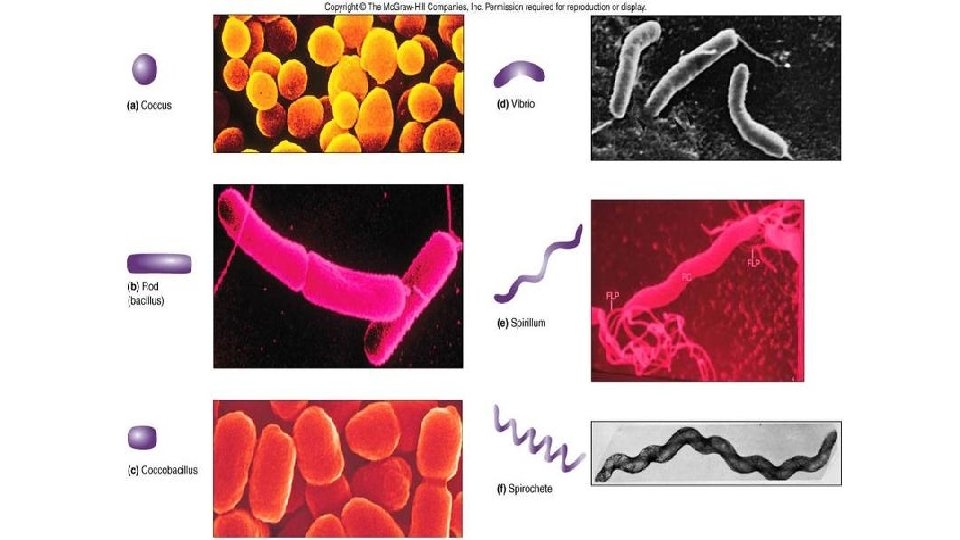
Eukaryotic vs. Prokaryotic Cells n There are two major kinds of cells: ¨ Prokaryotic and Eukaryotic n Prokaryotic Cells: Unicellular Organisms, No organelles, No Nucleus. ¨ Ex. Bacteria and Archaea n Eukaryotic Cells: Multicellular organisms and some non multicellular organisms § Have organelles, have a nucleus to store DNA Ex: YOU! And everything else multicellular, ameobas too
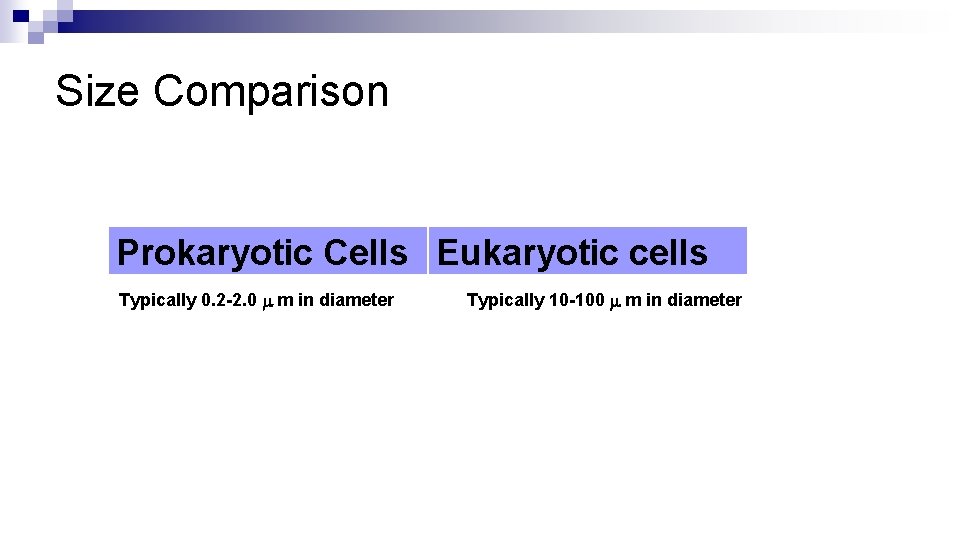
Size Comparison Prokaryotic Cells Eukaryotic cells Typically 0. 2 -2. 0 m m in diameter Typically 10 -100 m m in diameter
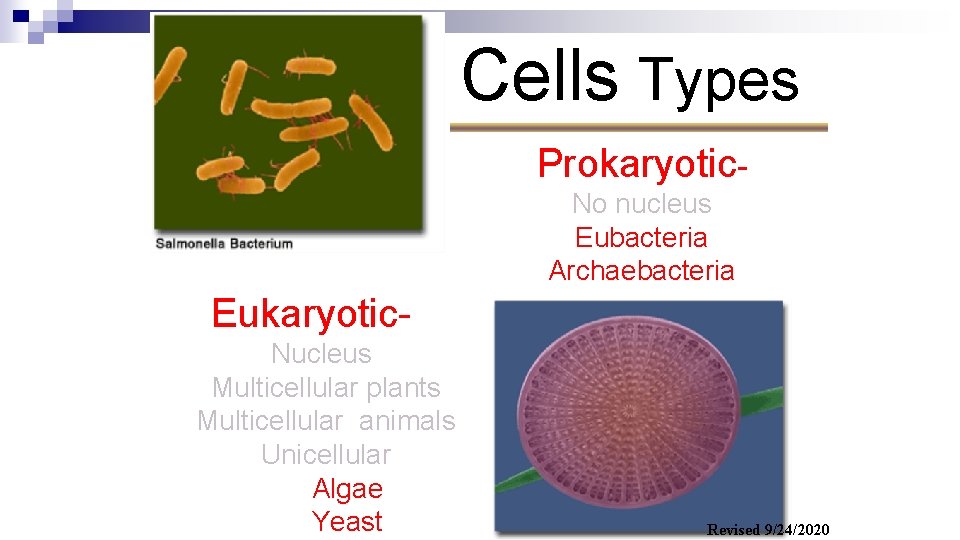
Cells Types Prokaryotic- No nucleus Eubacteria Archaebacteria Eukaryotic- Nucleus Multicellular plants Multicellular animals Unicellular Algae Yeast Revised 9/24/2020
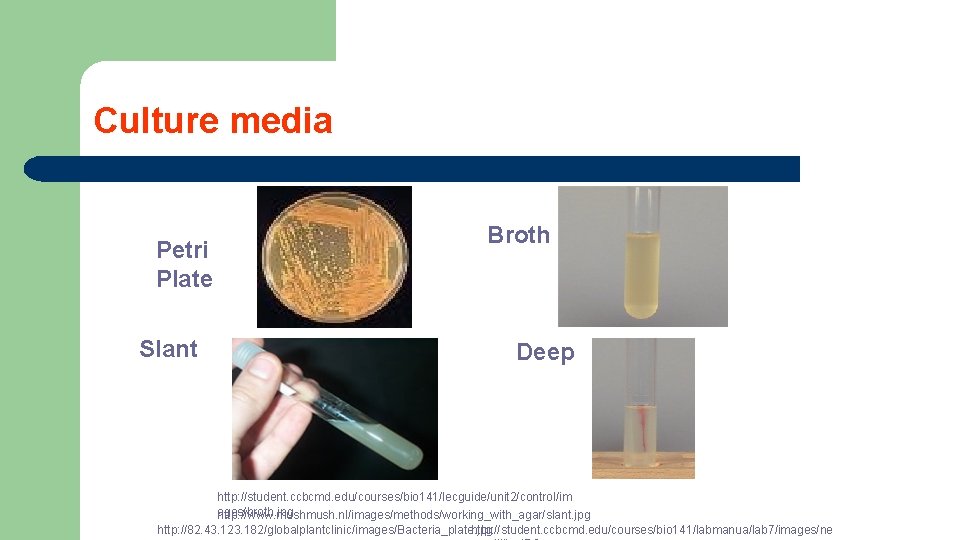
Culture media Petri Plate Slant Broth Deep http: //student. ccbcmd. edu/courses/bio 141/lecguide/unit 2/control/im ages/broth. jpg http: //www. mush. nl/images/methods/working_with_agar/slant. jpg http: //82. 43. 123. 182/globalplantclinic/images/Bacteria_plate. jpg http: //student. ccbcmd. edu/courses/bio 141/labmanua/lab 7/images/ne
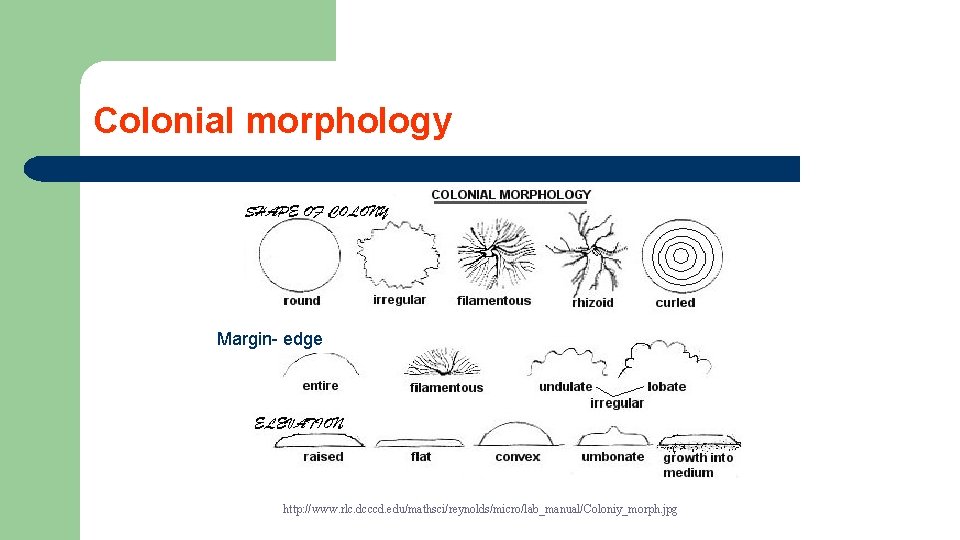
Colonial morphology Margin- edge http: //www. rlc. dcccd. edu/mathsci/reynolds/micro/lab_manual/Coloniy_morph. jpg
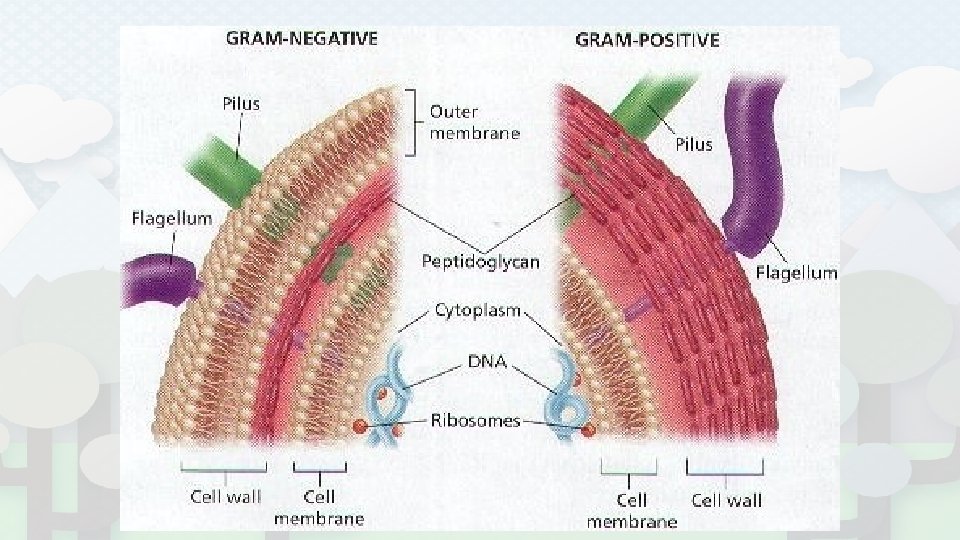
Gram Staining
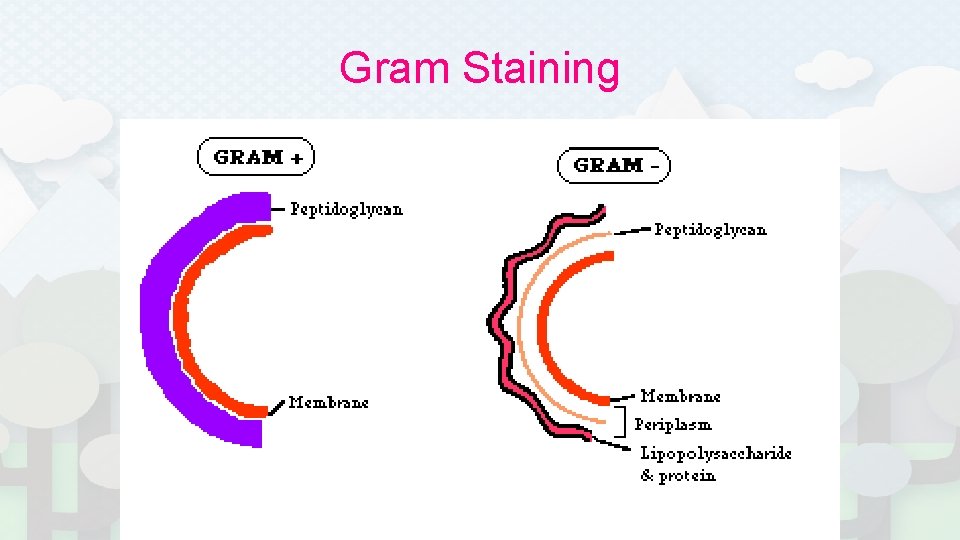
Gram Staining
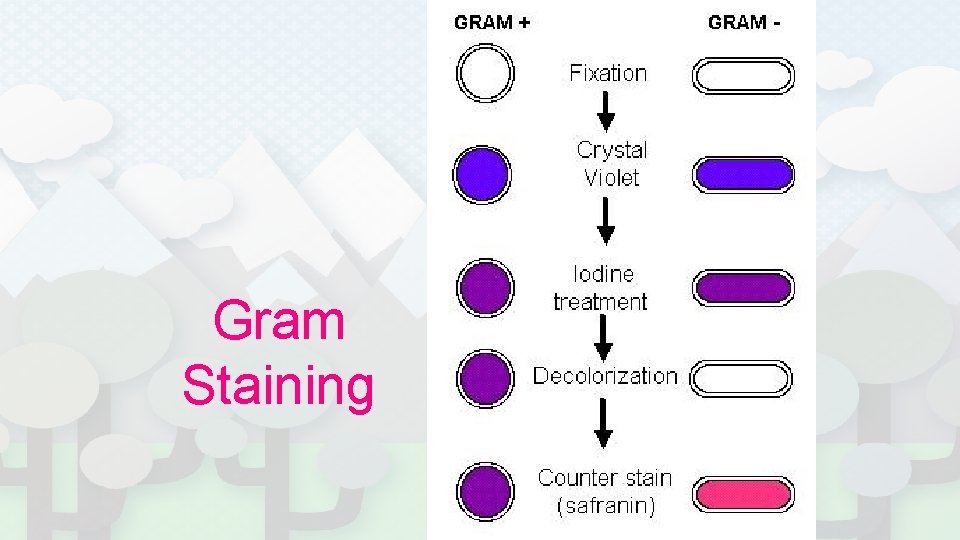
Gram Staining
Mutations nonsense mutation is a point mutation in a sequence of DNA that results in a premature stop codon, or a nonsense codon in the transcribed m. RNA, and in a truncated, incomplete, and usually nonfunctional protein product. n Point Mutation- one nucleotide is changed n Frame shift- occur if nucleotides are added or deleted n
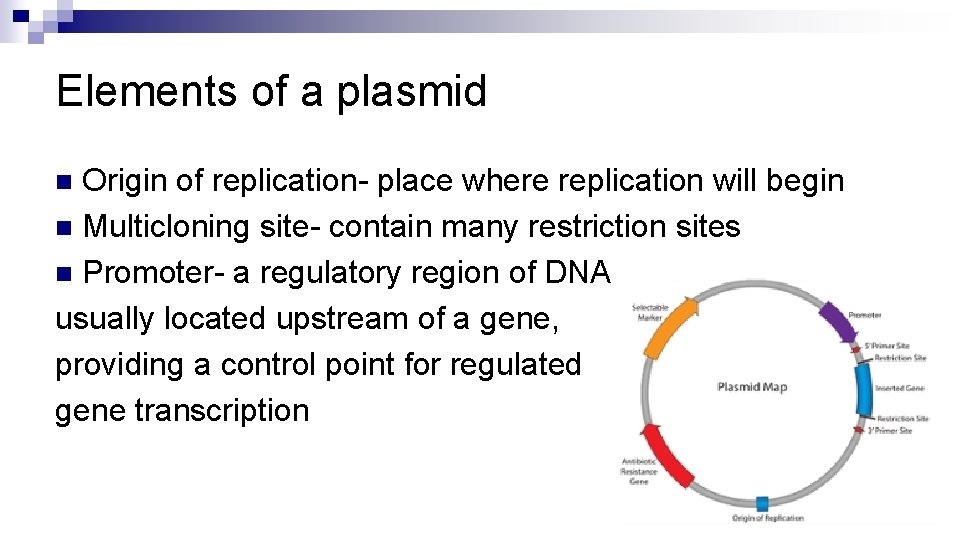
Elements of a plasmid Origin of replication- place where replication will begin n Multicloning site- contain many restriction sites n Promoter- a regulatory region of DNA usually located upstream of a gene, providing a control point for regulated gene transcription n
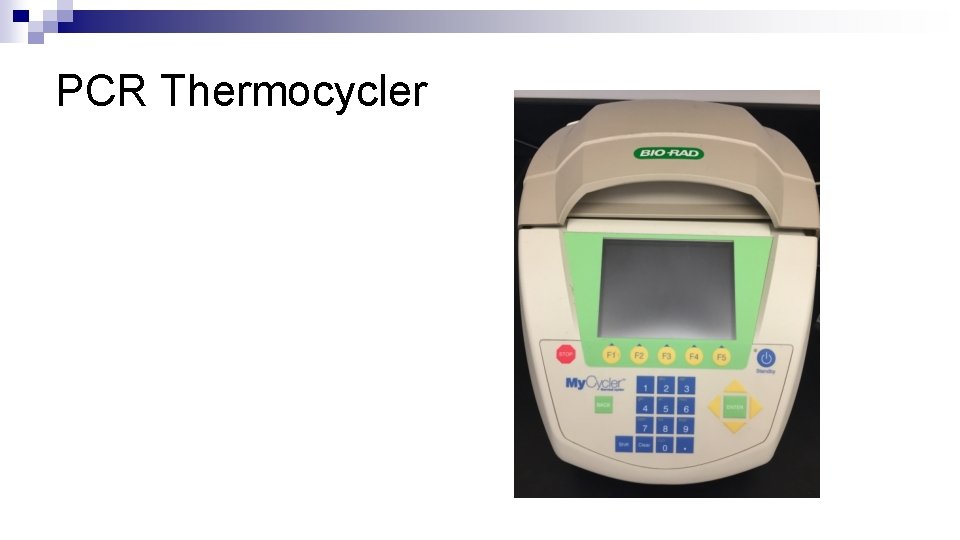
PCR Thermocycler
PCR template n 50 µL reaction includes the following: n 25 µL of Taq polymerase, Buffer, Mg. Cl 2, d. NTPs (A, T, C, G) 1. 0 µL Forward primer part of DNA 1. 0 µL Reverse primer part of DNA 1. 0 µL of target DNA to be amplified 22. 0 µL of distilled Water n n Template DNA (containing the region of interest) is mixed with deoxynucleotides (d. NTPs), a DNA polymerase and primers. Primers are short segments of complementary DNA that base-pair with the template DNA, upstream of the region of interest, and serve as recruitment sites for the polymerase. PCR involves a series of temperature cycles that are controlled automatically by the use of a thermocycler that precisely controls both the reaction temperature and the duration of each temperature step, ensuring efficient amplification
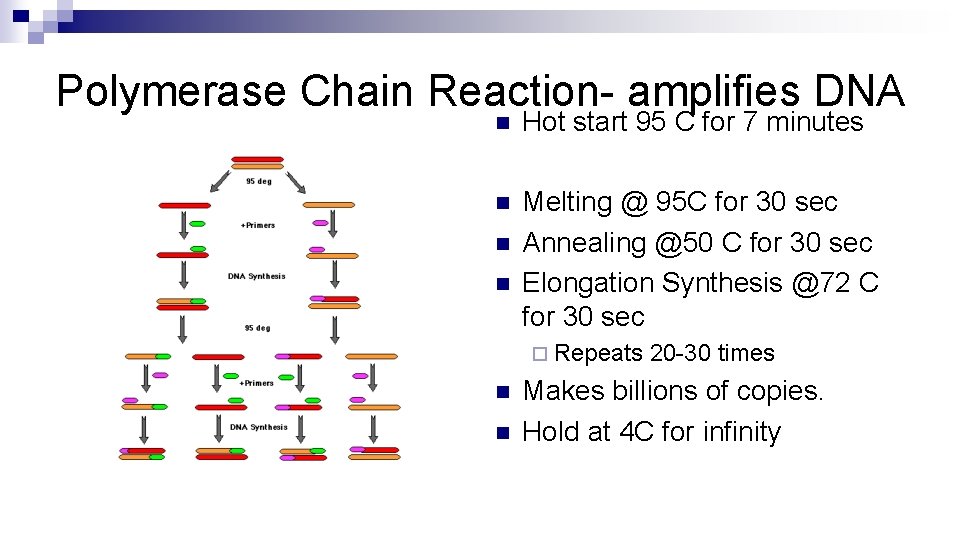
Polymerase Chain Reaction- amplifies DNA n Hot start 95 C for 7 minutes n Melting @ 95 C for 30 sec Annealing @50 C for 30 sec Elongation Synthesis @72 C for 30 sec n n ¨ Repeats 20 -30 times n n Makes billions of copies. Hold at 4 C for infinity
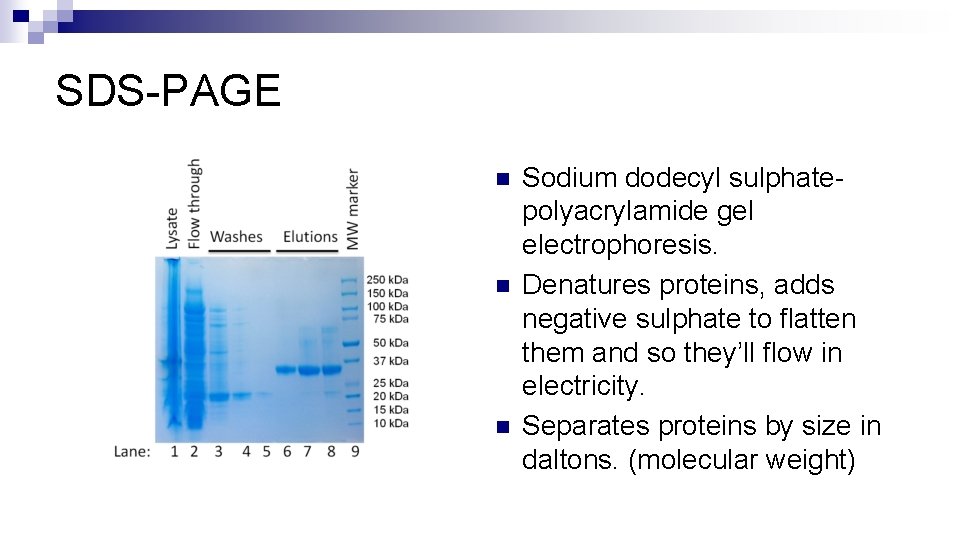
SDS-PAGE n n n Sodium dodecyl sulphate- polyacrylamide gel electrophoresis. Denatures proteins, adds negative sulphate to flatten them and so they’ll flow in electricity. Separates proteins by size in daltons. (molecular weight)
- Slides: 99