
Biosecurity Overview Biosecurity Series of management practices Prevent
Biosecurity Overview

Biosecurity ● Series of management practices – Prevent introduction § Keep disease agents out of animal populations where they are not present – Prevent further spread § From infected to uninfected groups § By animals, personnel, equipment § To other animals, premises, responders Just In Time Training Biosecurity: Overview

ICS: Biosecurity Group ● Biosecurity Group Supervisor – Ensure appropriate biosecurity measures – Develops site-specific biosecurity plan § With the Safety Officer and Incident Commander ● Biosecurity Team Members – Front line assistance in containing and controlling disease outbreak Just In Time Training Biosecurity: Overview
Basic Biosecurity Elements ● Awareness of importance ● Understand disease transmission ● Biosecurity measures – Movement control or restriction § People, animals, vehicles, equipment – Personal protective equipment – Isolation of infected and suspected animals – Proper C&D procedures Just In Time Training Biosecurity: Overview
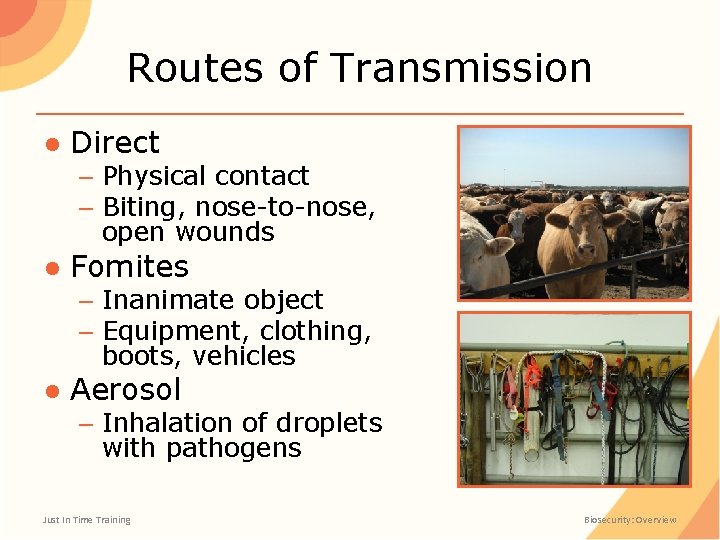
Routes of Transmission ● Direct – Physical contact – Biting, nose-to-nose, open wounds ● Fomites – Inanimate object – Equipment, clothing, boots, vehicles ● Aerosol – Inhalation of droplets with pathogens Just In Time Training Biosecurity: Overview
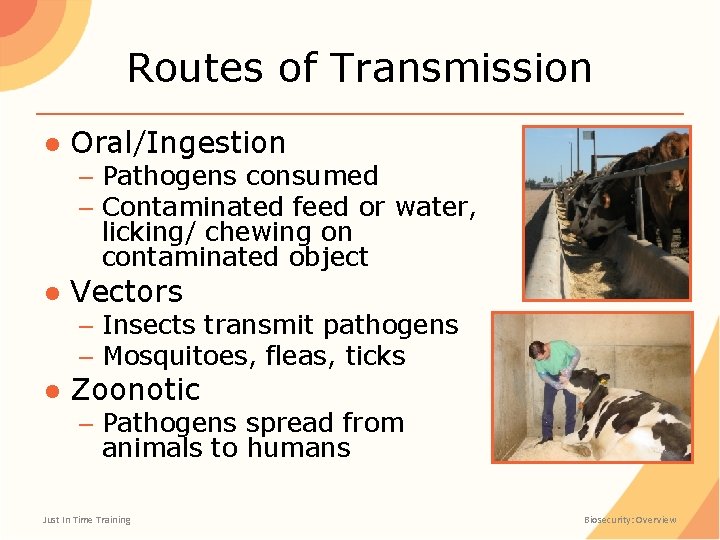
Routes of Transmission ● Oral/Ingestion – Pathogens consumed – Contaminated feed or water, licking/ chewing on contaminated object ● Vectors – Insects transmit pathogens – Mosquitoes, fleas, ticks ● Zoonotic – Pathogens spread from animals to humans Just In Time Training Biosecurity: Overview
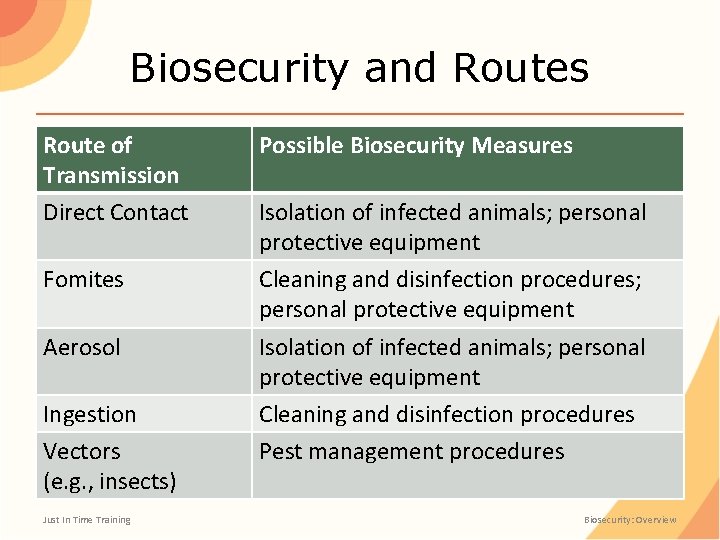
Biosecurity and Routes Route of Transmission Direct Contact Fomites Aerosol Ingestion Vectors (e. g. , insects) Just In Time Training Possible Biosecurity Measures Isolation of infected animals; personal protective equipment Cleaning and disinfection procedures; personal protective equipment Isolation of infected animals; personal protective equipment Cleaning and disinfection procedures Pest management procedures Biosecurity: Overview
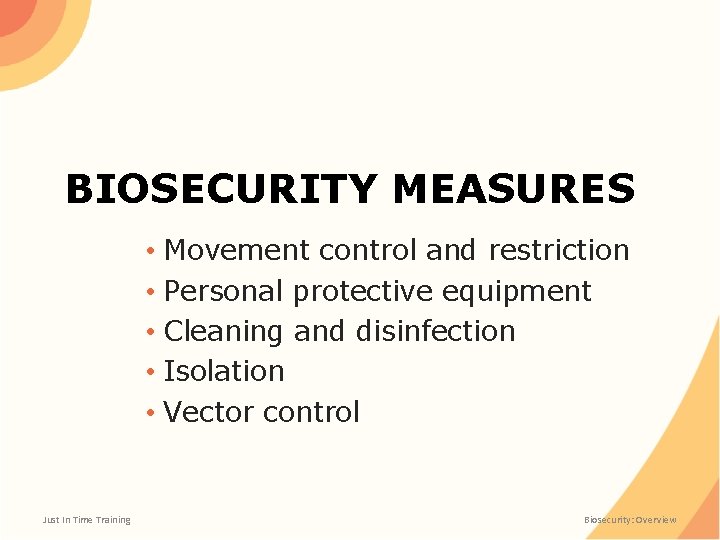
BIOSECURITY MEASURES • Movement control and restriction • Personal protective equipment • Cleaning and disinfection • Isolation • Vector control Just In Time Training Biosecurity: Overview
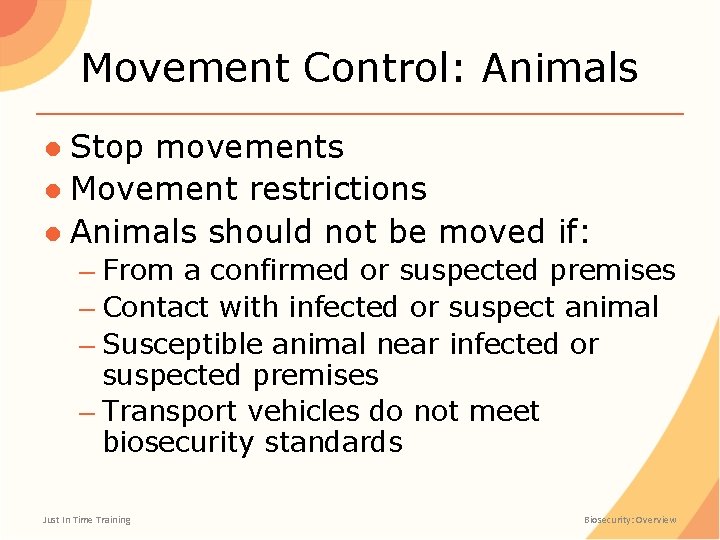
Movement Control: Animals ● Stop movements ● Movement restrictions ● Animals should not be moved if: – From a confirmed or suspected premises – Contact with infected or suspect animal – Susceptible animal near infected or suspected premises – Transport vehicles do not meet biosecurity standards Just In Time Training Biosecurity: Overview
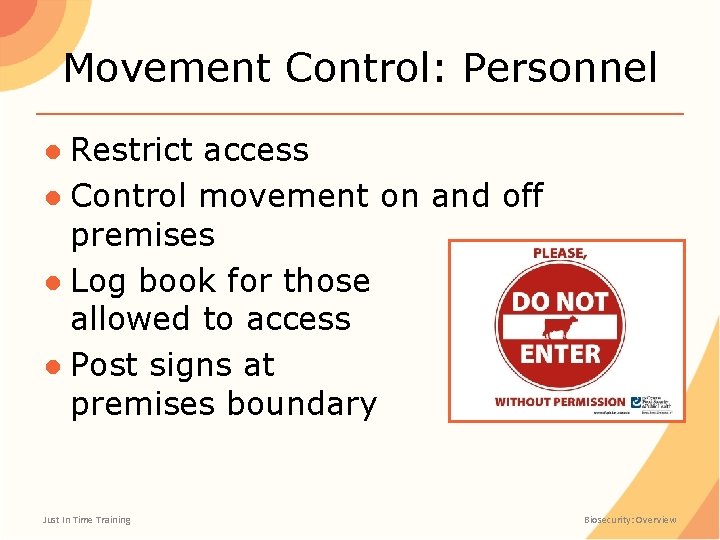
Movement Control: Personnel ● Restrict access ● Control movement on and off premises ● Log book for those allowed to access ● Post signs at premises boundary Just In Time Training Biosecurity: Overview
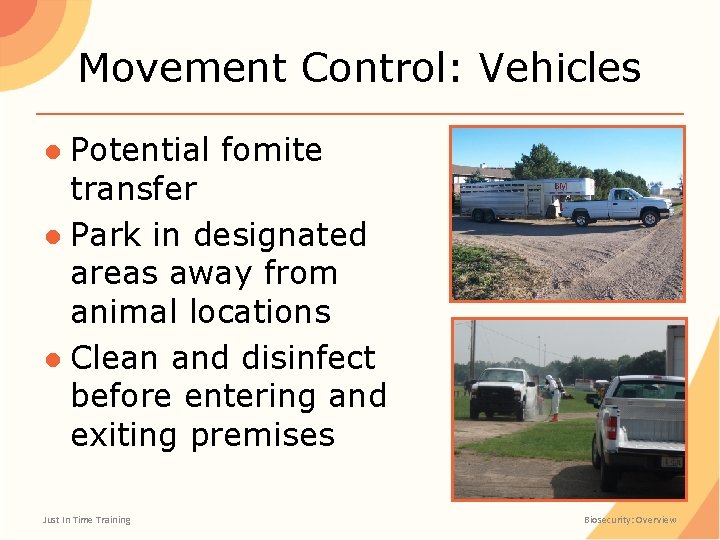
Movement Control: Vehicles ● Potential fomite transfer ● Park in designated areas away from animal locations ● Clean and disinfect before entering and exiting premises Just In Time Training Biosecurity: Overview
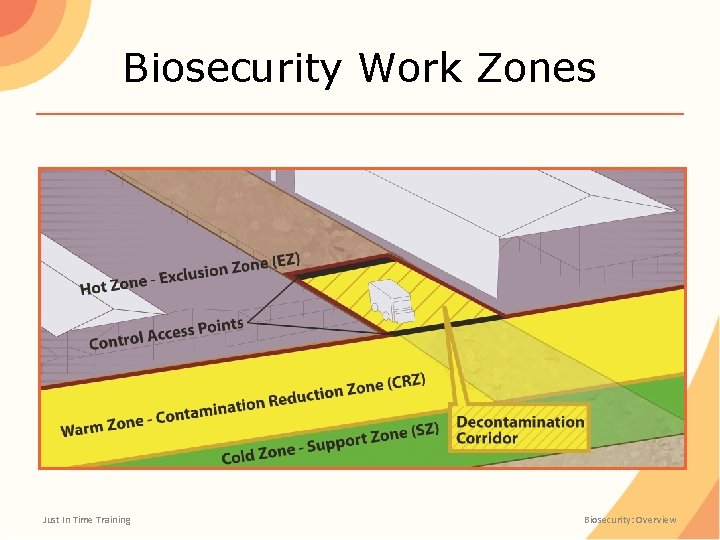
Biosecurity Work Zones Just In Time Training Biosecurity: Overview
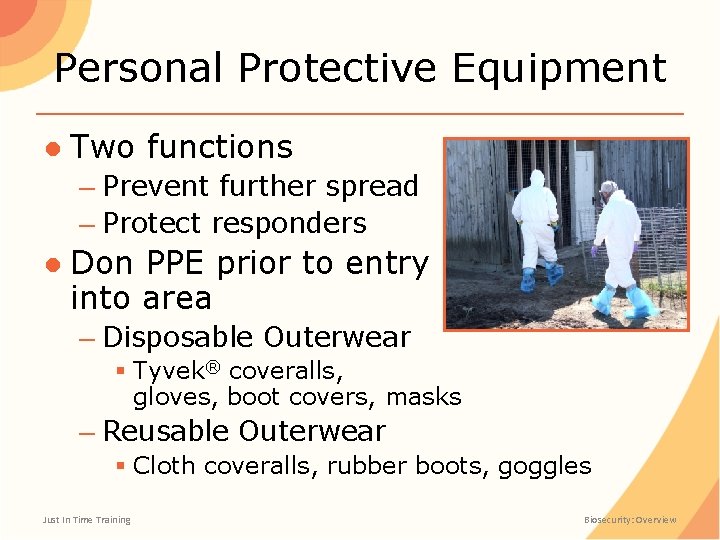
Personal Protective Equipment ● Two functions – Prevent further spread – Protect responders ● Don PPE prior to entry into area – Disposable Outerwear § Tyvek® coveralls, gloves, boot covers, masks – Reusable Outerwear § Cloth coveralls, rubber boots, goggles Just In Time Training Biosecurity: Overview
Personnel Biosecurity ● Once on infected premises, do not return to Cold Zone until – PPE doffed – Disposable items left on premises or placed in designated area – Clean/disinfect reusable items on site ● WASH HANDS! Just In Time Training Biosecurity: Overview
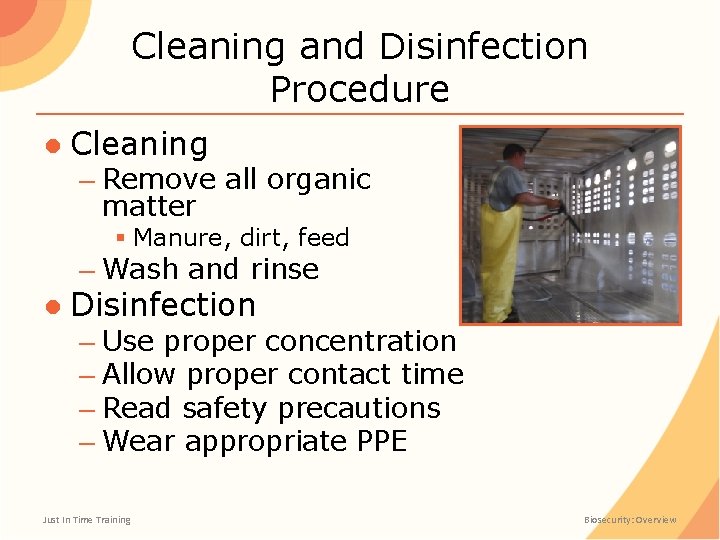
Cleaning and Disinfection Procedure ● Cleaning – Remove all organic matter § Manure, dirt, feed – Wash and rinse ● Disinfection – Use proper concentration – Allow proper contact time – Read safety precautions – Wear appropriate PPE Just In Time Training Biosecurity: Overview
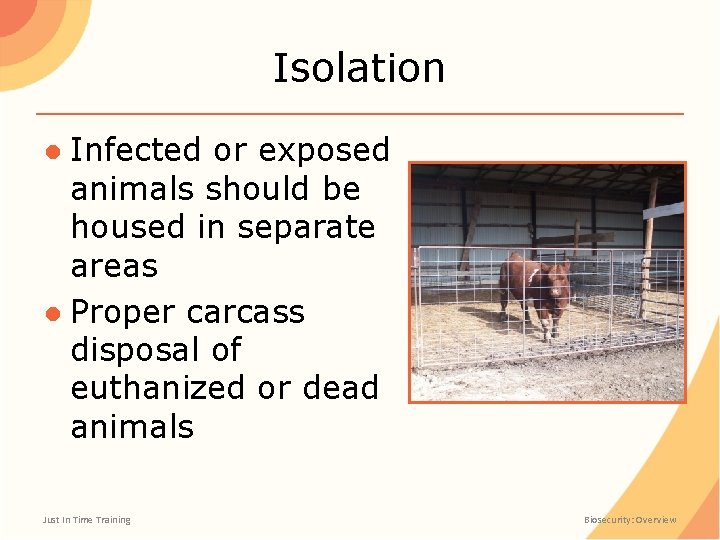
Isolation ● Infected or exposed animals should be housed in separate areas ● Proper carcass disposal of euthanized or dead animals Just In Time Training Biosecurity: Overview
Wildlife Control ● Wildlife can carry diseases on and off the property ● Keep animals isolated from wildlife contact ● Ensure boundary measures are checked regularly and maintained ● Store food in a way that does not attract wildlife Just In Time Training Biosecurity: Overview
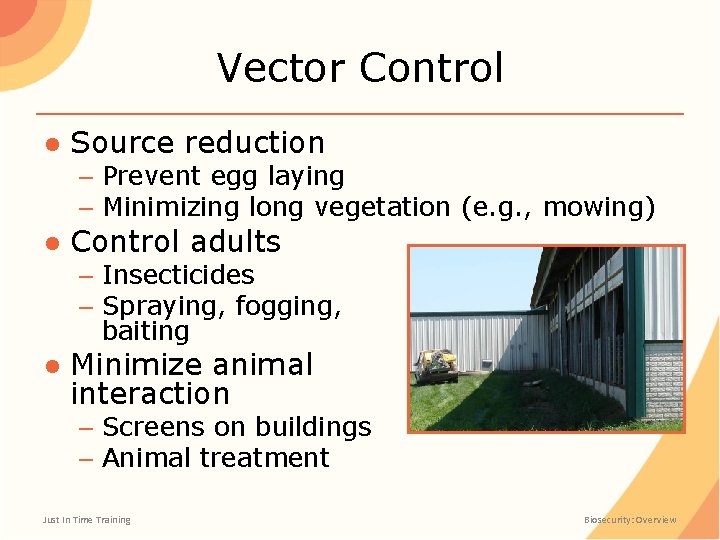
Vector Control ● Source reduction – Prevent egg laying – Minimizing long vegetation (e. g. , mowing) ● Control adults – Insecticides – Spraying, fogging, baiting ● Minimize animal interaction – Screens on buildings – Animal treatment Just In Time Training Biosecurity: Overview
Resources ● USDA Foreign Animal Disease Preparedness (FAD PRe. P) Guidelines: Biosecurity – http: //www. aphis. usda. gov/animal_health/emrs/nahems. shtml Just In Time Training Biosecurity: Overview
Acknowledgments Development of this presentation was by the Center for Food Security and Public Health at Iowa State University through funding from the Multi-State Partnership for Security in Agriculture Authors: Sarah Viera, MPH; Glenda Dvorak, DVM, MPH, DACVPM
- Slides: 20