
Biosecurity is the management of the risk of
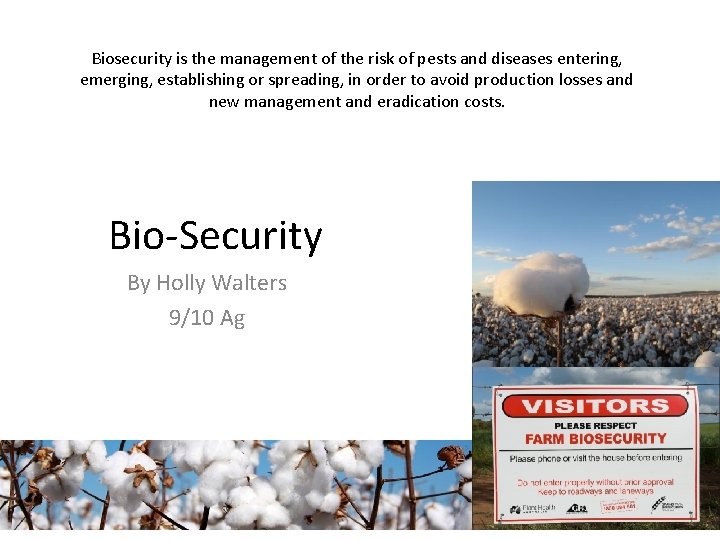
Biosecurity is the management of the risk of pests and diseases entering, emerging, establishing or spreading, in order to avoid production losses and new management and eradication costs. Bio-Security By Holly Walters 9/10 Ag

Bio-Security Risks The introduction and spreading of exotic and endemic insects, weeds and diseases affect the cotton farmers and their produce. It can affect their business through costs (monitoring, changes in production, additional chemical use and labour), reduced productivity or loss of markets. When new plants and animals are imported to a country they may be infected with certain diseases, or introduce pests and weeds that will destroy the cotton plants. Some diseases can survive in suitable water sources for a long period of time, and when farmers go to water their produce with the contaminated water, it will spread through their crops and infect them. Stored products also can attract pests which can affect the quality of the produce. If a farmer was to visit another farm, seeds and/or harmful chemicals may be hidden in their clothes and when they return to their own farm, the seeds and/or chemicals may contaminate their produce.
Government Legislation The Biosecurity Act 2015 commenced on 16 June 2016, and replaced the Quarantine Act 1908 (Quarantine Act). This Act is about managing diseases and pests that may cause harm to human, animal or plant health or the environment. With each product imported or exported whether it’s a live export/import or of foods or plants, they must undergo a certain procedure. The procedure makes sure that the products aren’t carrying any diseases or new pests that could potentially harm and affect other animals and/or plants. The government legislation was put to use to stop anything harmful from other countries entering Australia and affecting the produce. If a farmer or business wants to import any products, for example cotton, they must first apply to a relevant Director for approval of proposed arrangement. Then the Director, who must follow a certain criteria, must decide whether to approve or not. If the Director is to approve they must then notify the farmer or business and approve the arrangement. This acts helps to minimise the amount of disease and pests that enter Australia and harm the produce that the farmers produce.

Minimising Bio-Security Risks Cotton farmers use specific practices that minimise biosecurity risks. With water management, farmers must make sure that no harmful toxins or pests enter and contaminate the water sources that are used to fuel and provide nutrients to the cotton plants. Farm chemicals must be used appropriately and applied correctly. If the chemicals affect the cotton, it will not be allowed to be exported and will be rejected from domestic markets. Farmers must keep a watchful eye on their crops. Regularly monitoring the crops will provide the best chance for farmers to identify new pests that could harm their cotton. Packing and storing of cotton must be done correctly as pests are likely to infest and ruin the produce. Some storage structures provide great breeding grounds for pests, which can spread and infect the rest of the property.
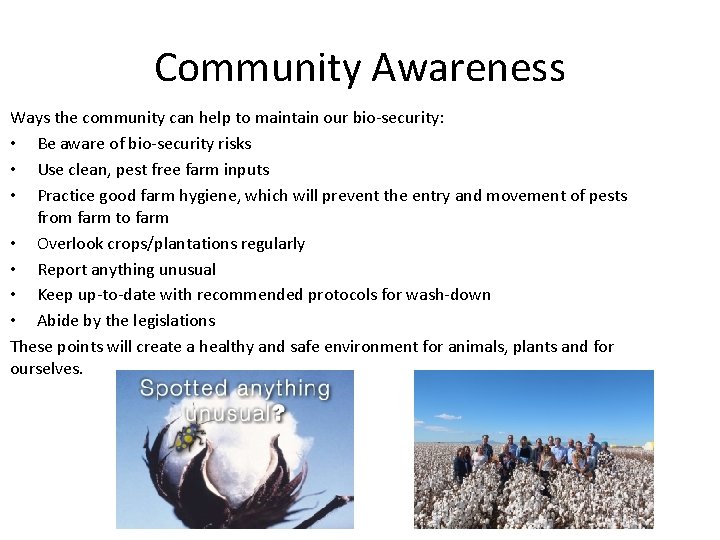
Community Awareness Ways the community can help to maintain our bio-security: • Be aware of bio-security risks • Use clean, pest free farm inputs • Practice good farm hygiene, which will prevent the entry and movement of pests from farm to farm • Overlook crops/plantations regularly • Report anything unusual • Keep up-to-date with recommended protocols for wash-down • Abide by the legislations These points will create a healthy and safe environment for animals, plants and for ourselves.
Bibliography • http: //www. farmbiosecurity. com. au/essential s-toolkit/production-practices/ • http: //www. agriculture. gov. au/biosecurity/au stralia
- Slides: 6