
Biosafety Risk Management Chain of Custody Understanding Biosafety
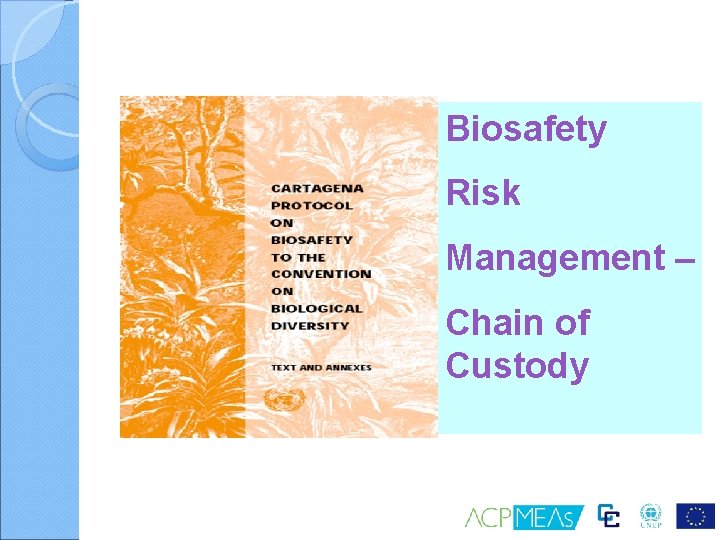
Biosafety Risk Management – Chain of Custody

Understanding Biosafety Risk Management The concept of biosafety risk management encompasses a range of measures, policies and procedures for minimizing potential risks that biotechnology may pose to the environment and human health. Managing risks from LMO unlawful importation is a key part of biosafety risk management
CHAIN OF CUSTODY LMO Seizure - Illegal Import LMO material should be secured, stored and preserved in the same condition in which it is found in order to avoid crosscontamination, or unintended releases to the environment or human health, and to present an intact sample for testing.
CHAIN OF CUSTODY LMO Seizure - Illegal Import Failure to collect and properly package or preserve LMOs seized at point of entry can sometimes affect the outcome or reliability of the testing undertaken by Bureau of Standards.
CHAIN OF CUSTODY LMO Seizure - Illegal Import Seized LMOs must be packaged and treated in a manner that will reduce to a minimum any threats to human health and the environment. Seized LMOs must be properly labeled and tagged to assist in subsequent transport and testing.
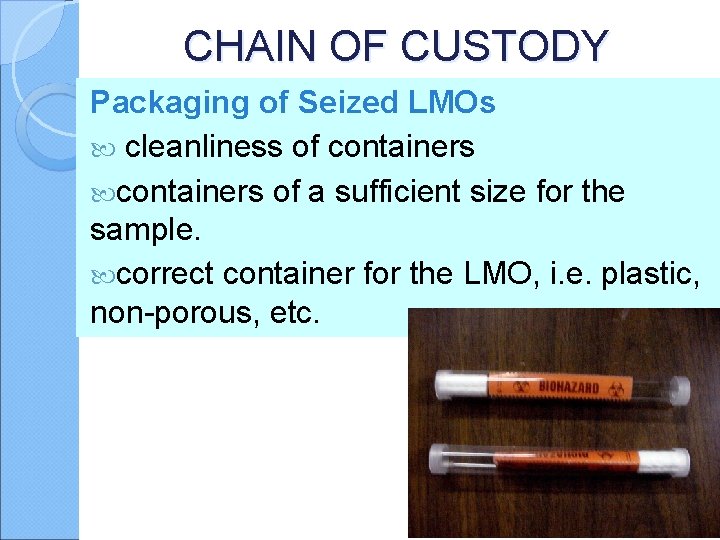
CHAIN OF CUSTODY Packaging of Seized LMOs cleanliness of containers of a sufficient size for the sample. correct container for the LMO, i. e. plastic, non-porous, etc.
CHAIN OF CUSTODY Packaging of Seized LMOs - continued storage of liquid samples should be submitted in a plastic bottle enclosed in a plastic bag, sealed in an envelope/ bag. each package should be properly labeled for identification. every package must appropriate label attached.
CHAIN OF CUSTODY Handling of Seized LMOs Only sample of LMO is required for testing – the remainder of seized LMO should be stored in a secure place with controlled access until results of testing have been obtained and decision made by National Biosafety Authority as to how the LMO is to be handled (i. e. exported, imported with permit, destroyed. )

QUESTIONS ?
- Slides: 9