
Biosafety and Bloodborne Pathogens GuidelinesRegulations Guidelines and regulations
Biosafety and Bloodborne Pathogens
Guidelines/Regulations Guidelines and regulations that apply to research involving infectious materials: • CDC Biosafety for Microbiological and Biomedical Laboratories, 5 th ed. • NIH Guidelines for Research Involving Recombinant DNA Molecules • OSHA Bloodborne Pathogen Standard • Massachusetts Biological Waste Regulations • CDC/USDA Select Agent Regulations • US Dept. of Transportation (DOT) • International Air Transport Association (IATA) Dangerous Goods Regulations
Common Biological Materials • Biological agents (bacteria, virus, prions, parasites, fungi, etc. ) • Human and Non-Human Primate (NHP) materials (primary cells, blood, tissues, organs, and cell lines) • Animals (experimentally inoculated or harboring endemic zoonoses, animals engrafted with human cells, transgenic animals etc. ) • Transgenic plants, weeds, plant pathogens • Biological toxins • r. DNA – genetically modified versions of the above listed materials.
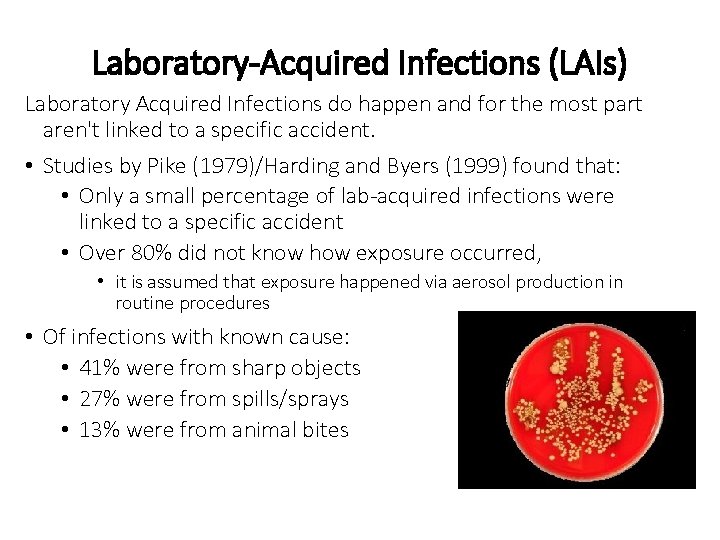
Laboratory-Acquired Infections (LAIs) Laboratory Acquired Infections do happen and for the most part aren't linked to a specific accident. • Studies by Pike (1979)/Harding and Byers (1999) found that: • Only a small percentage of lab-acquired infections were linked to a specific accident • Over 80% did not know how exposure occurred, • it is assumed that exposure happened via aerosol production in routine procedures • Of infections with known cause: • 41% were from sharp objects • 27% were from spills/sprays • 13% were from animal bites
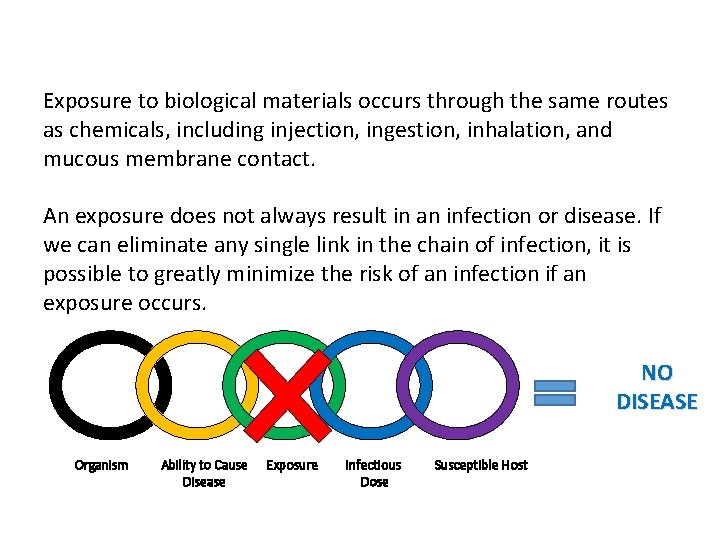
Exposure Factors in LAIs Exposure to biological materials occurs through the same routes as chemicals, including injection, ingestion, inhalation, and mucous membrane contact. An exposure does not always result in an infection or disease. If we can eliminate any single link in the chain of infection, it is possible to greatly minimize the risk of an infection if an exposure occurs. NO DISEASE Organism Ability to Cause Disease Exposure Infectious Dose Susceptible Host
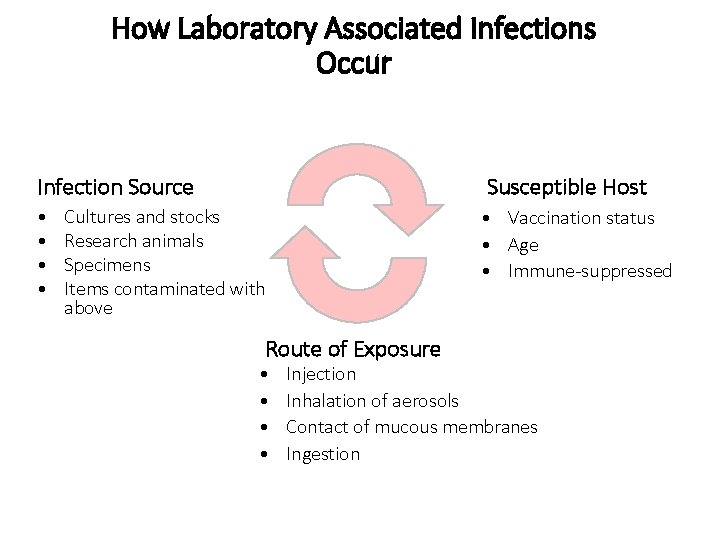
How Laboratory Associated Infections Occur Infection Source Susceptible Host • • • Vaccination status • Age • Immune-suppressed Cultures and stocks Research animals Specimens Items contaminated with above Route of Exposure • • Injection Inhalation of aerosols Contact of mucous membranes Ingestion
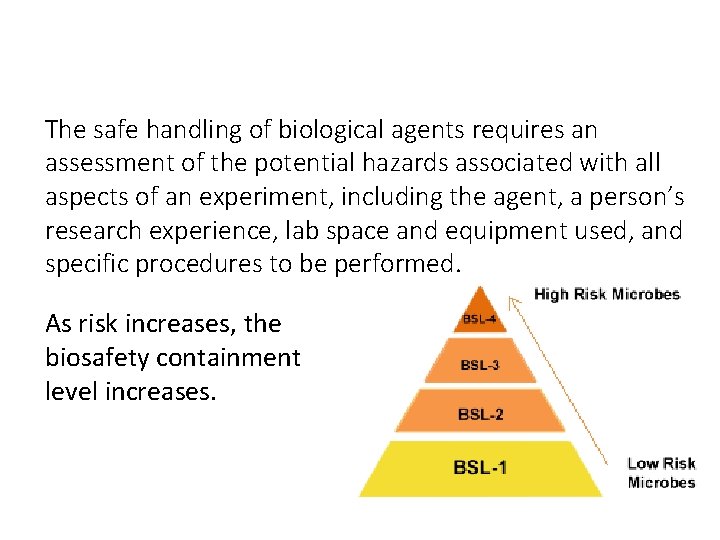
Risk Assessment The safe handling of biological agents requires an assessment of the potential hazards associated with all aspects of an experiment, including the agent, a person’s research experience, lab space and equipment used, and specific procedures to be performed. As risk increases, the biosafety containment level increases.
Biosafety Levels and NIH Risk Groups Biosafety Levels defined by the CDC are assigned to a project or agent and defines the combination of work practices, safety equipment, and room/building design elements that are necessary to work safely. Biosafety Levels are assigned from low risk agents and procedures at BL 1 to high risk at BL 4. The equivalents in animal, plant and insect research are respectively, BL 1 -4 N or ABSL, BL 1 -4 P, and ACL 1 -4. The NIH Risk Group of an agent is incorporated into the risk assessment. NIH Risk Groups closely mirror CDC Biosafety Levels with a few exceptions.
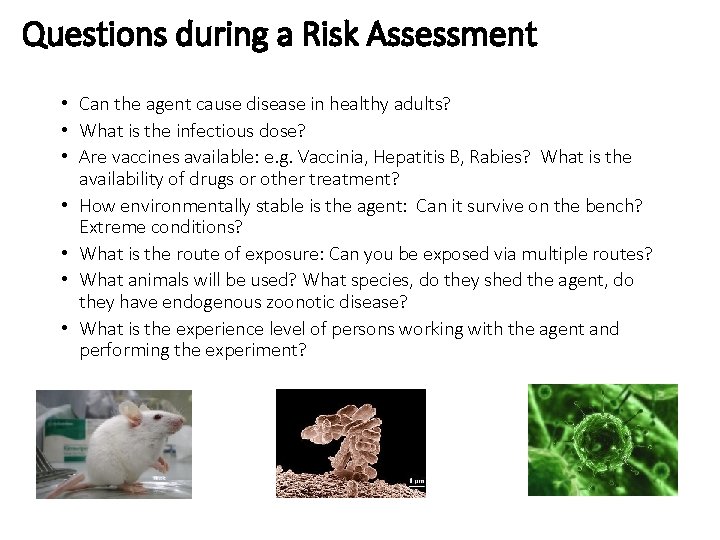
Questions during a Risk Assessment Addressed During a Risk Assessment • Can the agent cause disease in healthy adults? • What is the infectious dose? • Are vaccines available: e. g. Vaccinia, Hepatitis B, Rabies? What is the availability of drugs or other treatment? • How environmentally stable is the agent: Can it survive on the bench? Extreme conditions? • What is the route of exposure: Can you be exposed via multiple routes? • What animals will be used? What species, do they shed the agent, do they have endogenous zoonotic disease? • What is the experience level of persons working with the agent and performing the experiment?
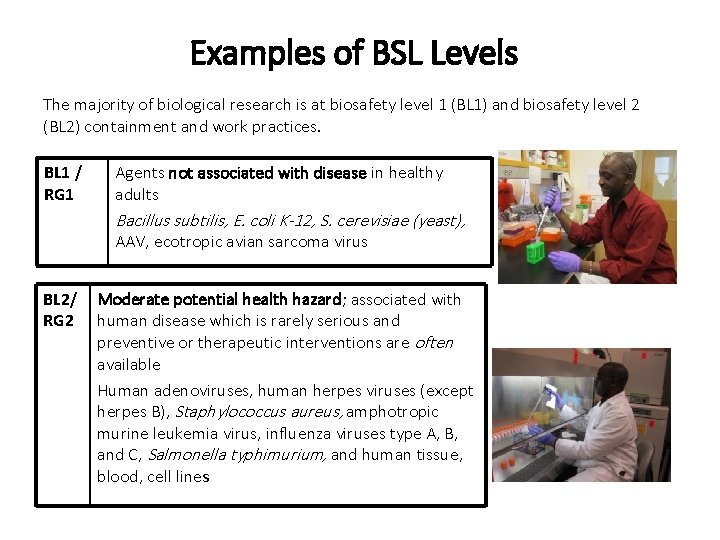
Examples of BSL Levels The majority of biological research is at biosafety level 1 (BL 1) and biosafety level 2 (BL 2) containment and work practices. BL 1 / RG 1 Agents not associated with disease in healthy adults Bacillus subtilis, E. coli K-12, S. cerevisiae (yeast), AAV, ecotropic avian sarcoma virus BL 2/ RG 2 Moderate potential health hazard; associated with human disease which is rarely serious and preventive or therapeutic interventions are often available Human adenoviruses, human herpes viruses (except herpes B), Staphylococcus aureus, amphotropic murine leukemia virus, influenza viruses type A, B, and C, Salmonella typhimurium, and human tissue, blood, cell lines
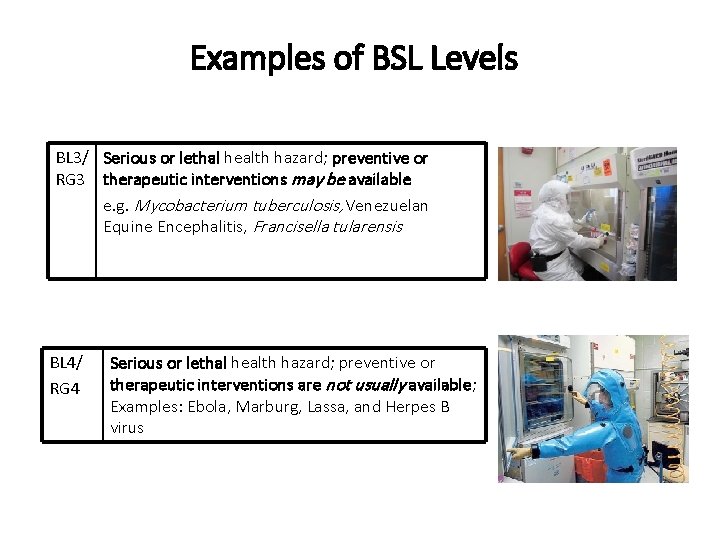
Examples of BSL Levels BL 3/ Serious or lethal health hazard; preventive or RG 3 therapeutic interventions may be available e. g. Mycobacterium tuberculosis, Venezuelan Equine Encephalitis, Francisella tularensis BL 4/ RG 4 Serious or lethal health hazard; preventive or therapeutic interventions are not usually available; Examples: Ebola, Marburg, Lassa, and Herpes B virus

Biosafety Level 1 Laboratory Access Control Sink for hand washing Biowaste gathered, r. DNA waste inactivated
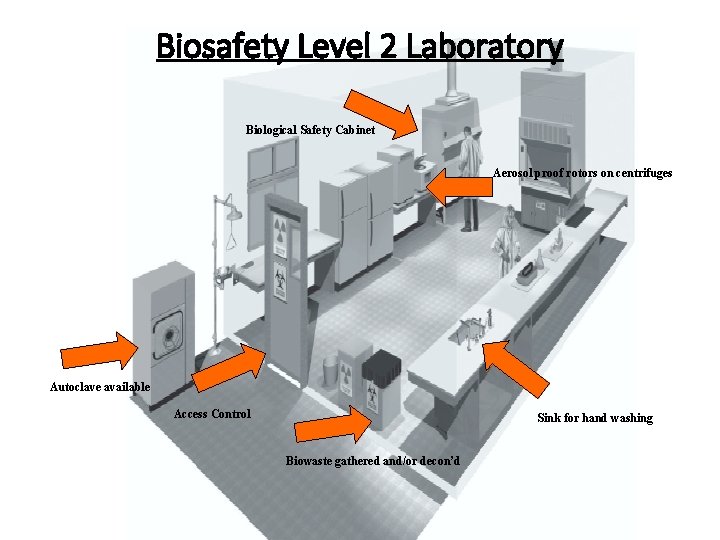
Biosafety Level 2 Laboratory Biological Safety Cabinet Aerosol proof rotors on centrifuges Autoclave available Access Control Sink for hand washing Biowaste gathered and/or decon’d

Biosafety Level 3 Laboratory Aerosol proof rotors on centrifuges Biological Safety Cabinet All windows must be sealed Autoclave inside laboratory Biowaste gathered and decon’d before disposal Access through two sets of self-closing doors Design and operational features must be tested and documented yearly Seams in walls, floors, ceiling are sealed Areas around doors and ventilation openings capable of being sealed for decontamination of the space
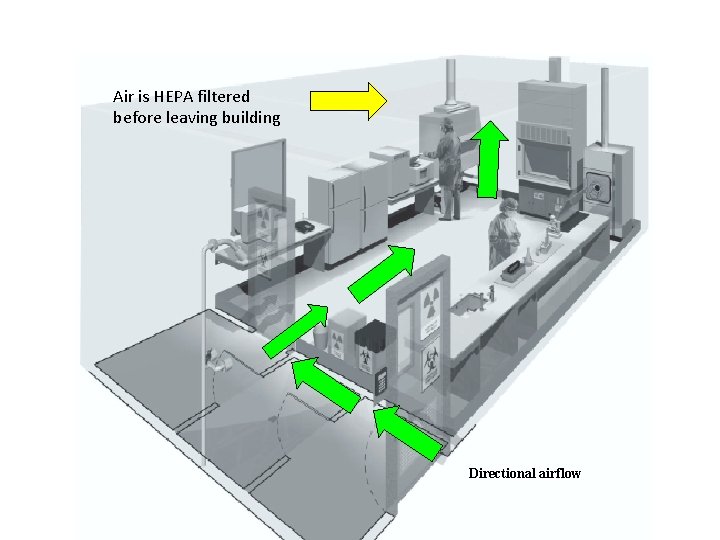
Biosafety Level 3 Laboratory Air is HEPA filtered before leaving building Directional airflow
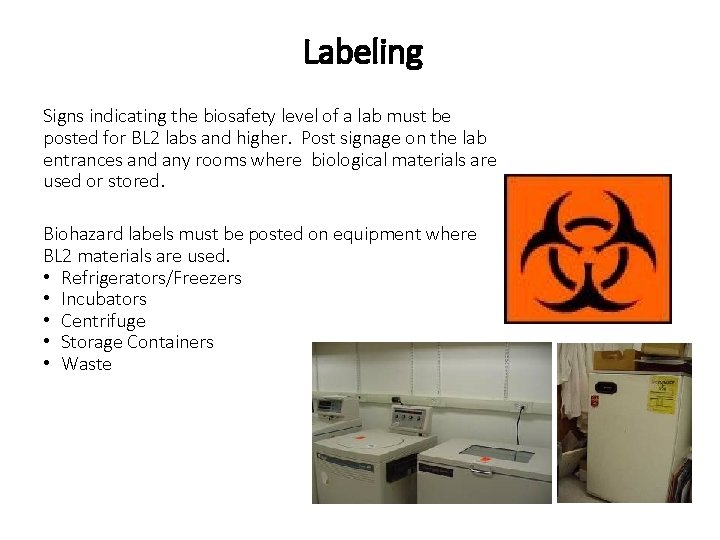
Labeling Signs indicating the biosafety level of a lab must be posted for BL 2 labs and higher. Post signage on the lab entrances and any rooms where biological materials are used or stored. Biohazard labels must be posted on equipment where BL 2 materials are used. • Refrigerators/Freezers • Incubators • Centrifuge • Storage Containers • Waste
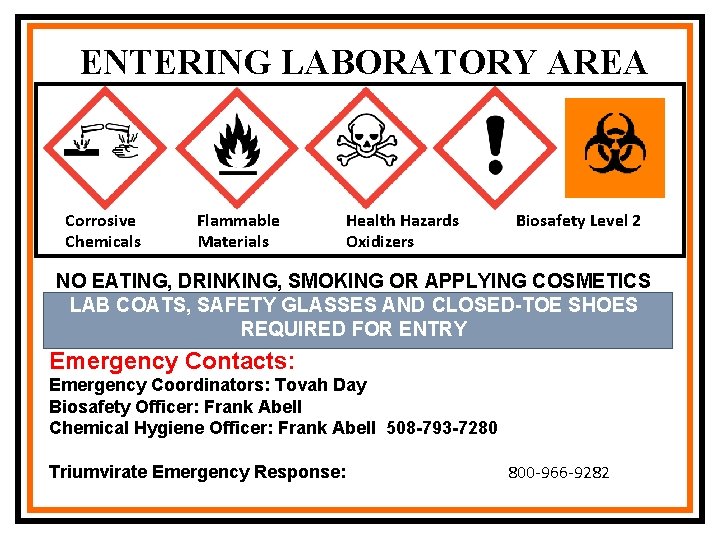
ENTERING LABORATORY AREA Corrosive Chemicals Flammable Materials Health Hazards Oxidizers Biosafety Level 2 NO EATING, DRINKING, SMOKING OR APPLYING COSMETICS LAB COATS, SAFETY GLASSES AND CLOSED-TOE SHOES REQUIRED FOR ENTRY Emergency Contacts: Emergency Coordinators: Tovah Day Biosafety Officer: Frank Abell Chemical Hygiene Officer: Frank Abell 508 -793 -7280 Triumvirate Emergency Response: 800 -966 -9282
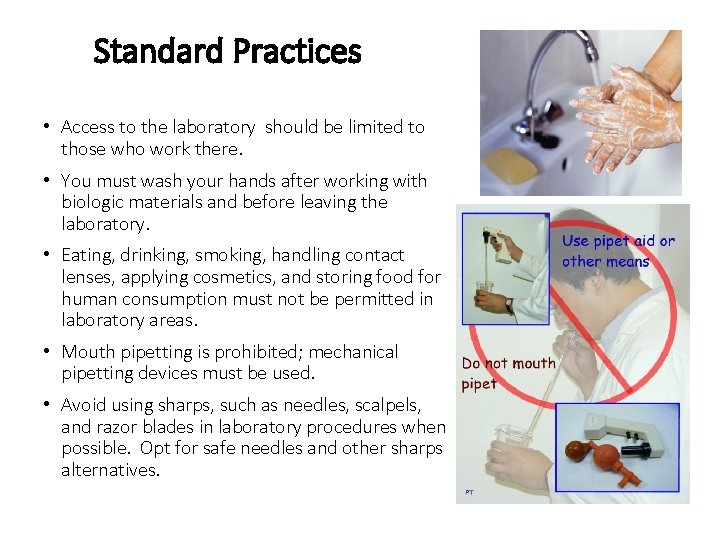
Standard Practices • Access to the laboratory should be limited to those who work there. • You must wash your hands after working with biologic materials and before leaving the laboratory. • Eating, drinking, smoking, handling contact lenses, applying cosmetics, and storing food for human consumption must not be permitted in laboratory areas. • Mouth pipetting is prohibited; mechanical pipetting devices must be used. • Avoid using sharps, such as needles, scalpels, and razor blades in laboratory procedures when possible. Opt for safe needles and other sharps alternatives.
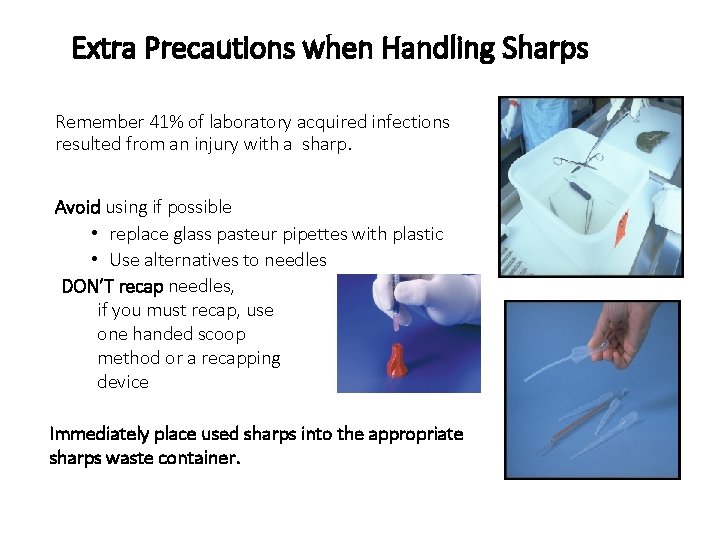
Extra Precautions when Handling Sharps Remember 41% of laboratory acquired infections resulted from an injury with a sharp. Avoid using if possible • replace glass pasteur pipettes with plastic • Use alternatives to needles DON’T recap needles, if you must recap, use one handed scoop method or a recapping device Immediately place used sharps into the appropriate sharps waste container.
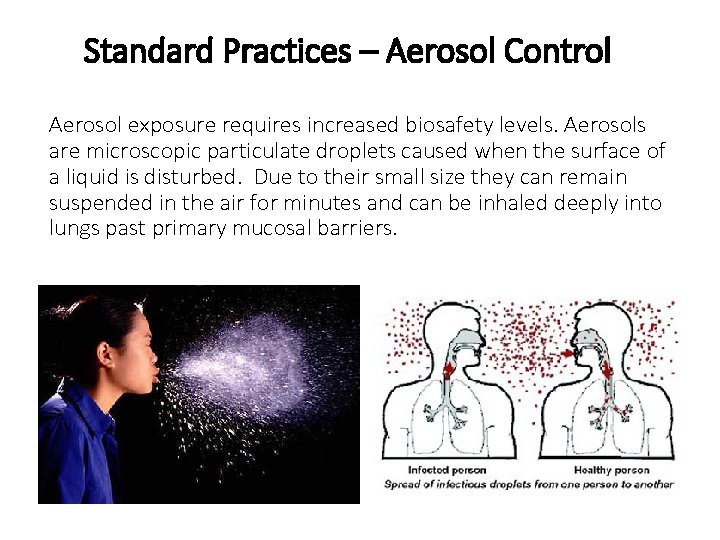
Standard Practices – Aerosol Control Aerosol exposure requires increased biosafety levels. Aerosols are microscopic particulate droplets caused when the surface of a liquid is disturbed. Due to their small size they can remain suspended in the air for minutes and can be inhaled deeply into lungs past primary mucosal barriers.
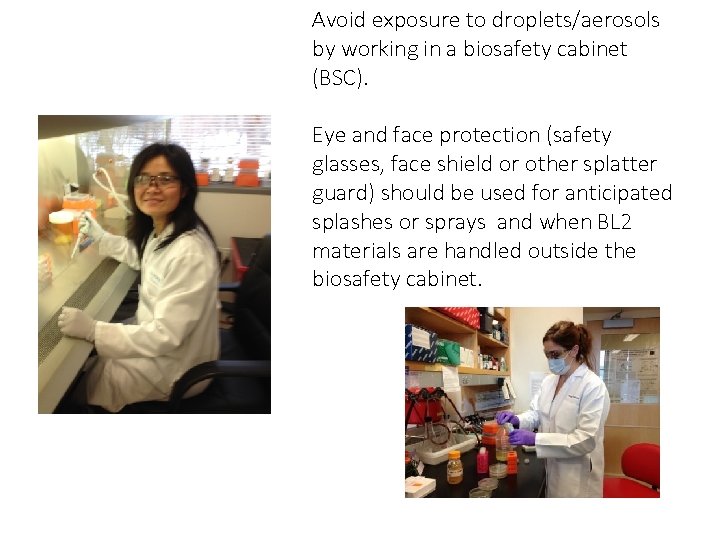
Avoid exposure to droplets/aerosols by working in a biosafety cabinet Aerosol Control (BSC). Eye and face protection (safety glasses, face shield or other splatter guard) should be used for anticipated splashes or sprays and when BL 2 materials are handled outside the biosafety cabinet.
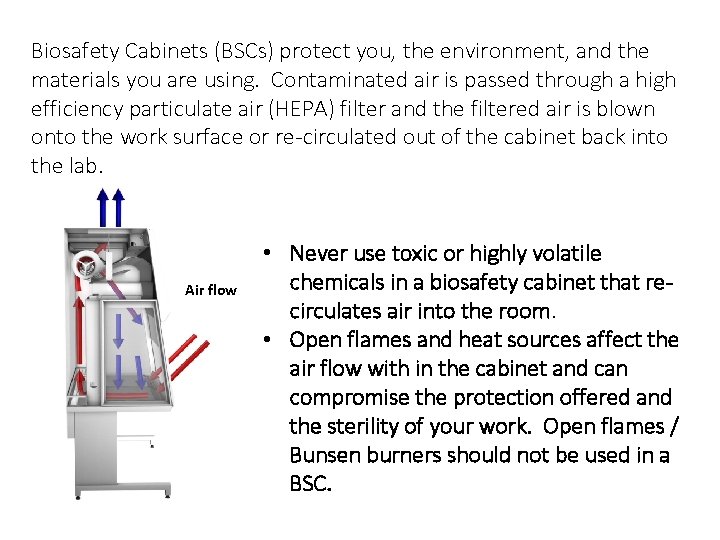
Biosafety Cabinets (BSCs) protect you, the environment, and the Biosafety Cabinets materials you are using. Contaminated air is passed through a high efficiency particulate air (HEPA) filter and the filtered air is blown onto the work surface or re-circulated out of the cabinet back into the lab. Air flow • Never use toxic or highly volatile chemicals in a biosafety cabinet that recirculates air into the room. • Open flames and heat sources affect the air flow with in the cabinet and can compromise the protection offered and the sterility of your work. Open flames / Bunsen burners should not be used in a BSC.
Working in a BSC • Turn on the cabinet before work and let the fan run for at least 5 minutes. • Wipe down cabinet with 70% ethyl alcohol (Et. OH) before and after use. • Wipe materials with 70% Et. OH before bringing them into the cabinet. • Work from the clean to dirty side of the cabinet. • To reduce the disruption of airflow • • • Minimize sweeping in and out hand/arm motions. Restrict foot traffic where BSCs are located. Restrict the use of open flames in the BSC. Ultraviolet light should not be used as primary decontamination measure. Bleach can be used in the BSC for a stronger decontamination, follow with a 70% Et. OH rinse to remove residue that may stain the steel.
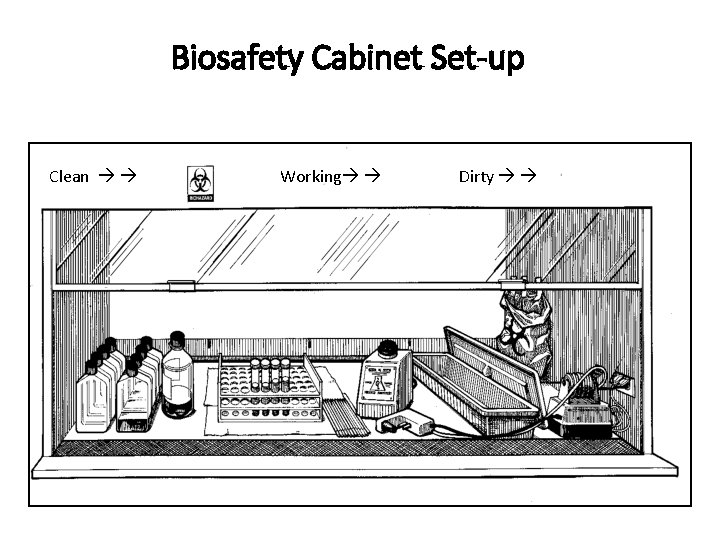
Biosafety Cabinet Set-up Clean Working Dirty
Standard Practices - Good Housekeeping • Clean and decontaminate all equipment and work surfaces daily and especially if they have been contaminated with blood, human or NHP materials, r. DNA, or infectious materials. • Inspect and decontaminate, on a regular basis, reusable receptacles such as bins, pails and cans. Do not let them overfill or start to smell. • Easily accessible sharps containers, should be replaced routinely, closed when moved, and not allowed to overfill. • Minimize clutter and build up of storage items in the lab. • Establish a regular schedule for equipment maintenance. • An effective integrated pest management program is required.
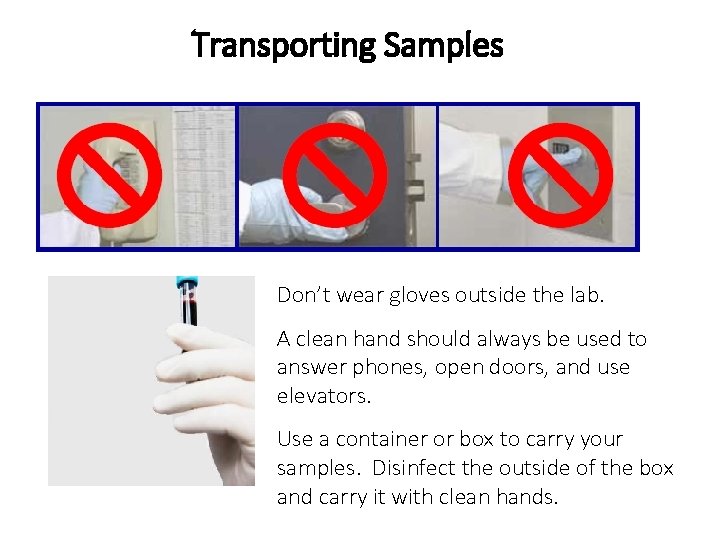
Transporting Samples Don’t wear gloves outside the lab. A clean hand should always be used to answer phones, open doors, and use elevators. Use a container or box to carry your samples. Disinfect the outside of the box and carry it with clean hands.
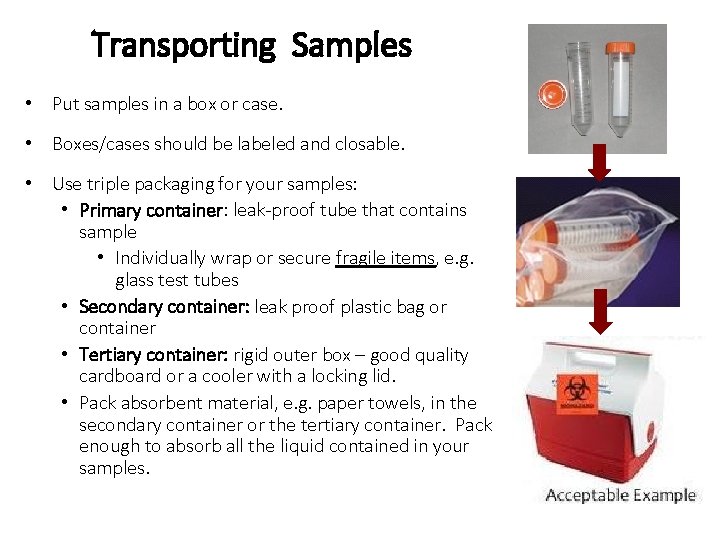
Transporting Samples • Put samples in a box or case. • Boxes/cases should be labeled and closable. • Use triple packaging for your samples: • Primary container: leak-proof tube that contains sample • Individually wrap or secure fragile items, e. g. glass test tubes • Secondary container: leak proof plastic bag or container • Tertiary container: rigid outer box – good quality cardboard or a cooler with a locking lid. • Pack absorbent material, e. g. paper towels, in the secondary container or the tertiary container. Pack enough to absorb all the liquid contained in your samples.
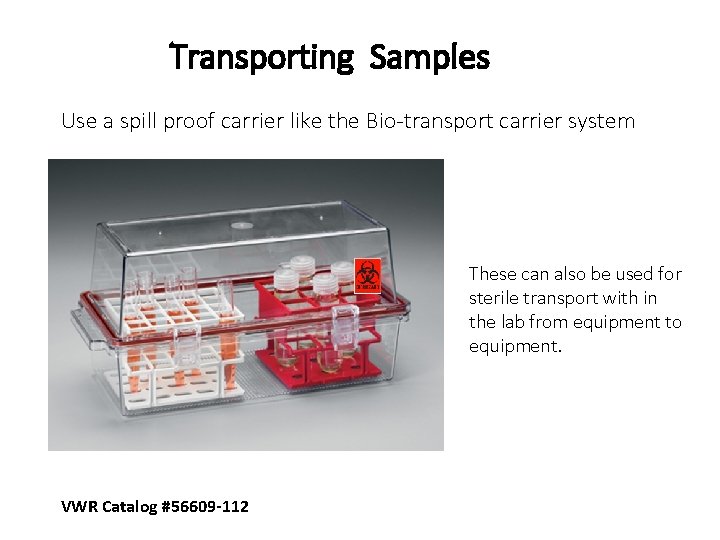
Transporting Samples Use a spill proof carrier like the Bio-transport carrier system These can also be used for sterile transport with in the lab from equipment to equipment. VWR Catalog #56609 -112
Decontamination • Decontamination is an important part of working safely with biological materials to prevent contamination of the laboratory, as well as protecting research materials. • Decontaminate work surfaces after completion of work and after any spill or splash. • Decontaminate all cultures, stocks, and other potentially contaminated materials before disposal and before removing from the laboratory. Most disinfectants may not be mixed with other disinfectants or chemicals as they may be incompatible. e. g. Never mix bleach and ammonia or alcohol and bleach together! Disinfection is NOT the same as Sterilization.
Decontamination Definitions Decontamination is a term used to describe a process or treatment that renders a laboratory device, instrument, or surface safe to touch. A decontamination procedure can range from sterilization to simple cleaning with soap and water. Sterilization, disinfection and antisepsis are all forms of decontamination. Disinfection kills virtually all non-spore-forming microorganisms but not necessarily all microbial forms on inanimate objects (work surfaces, equipment, etc. ). Effectiveness is influenced by the kinds and numbers of organisms, the amount of organic matter, the object to be disinfected and chemical exposure time, temperature and concentration. Sterilization is the use of a physical or chemical procedure to destroy all microbial life, including highly resistant bacterial endospores.
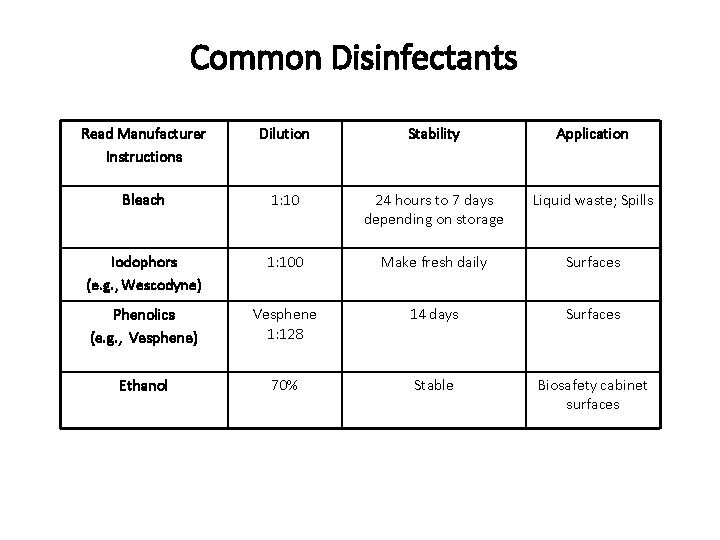
Common Disinfectants Read Manufacturer Instructions Dilution Stability Application Bleach 1: 10 24 hours to 7 days depending on storage Liquid waste; Spills Iodophors (e. g. , Wescodyne) 1: 100 Make fresh daily Surfaces Phenolics (e. g. , Vesphene) Vesphene 1: 128 14 days Surfaces Ethanol 70% Stable Biosafety cabinet surfaces
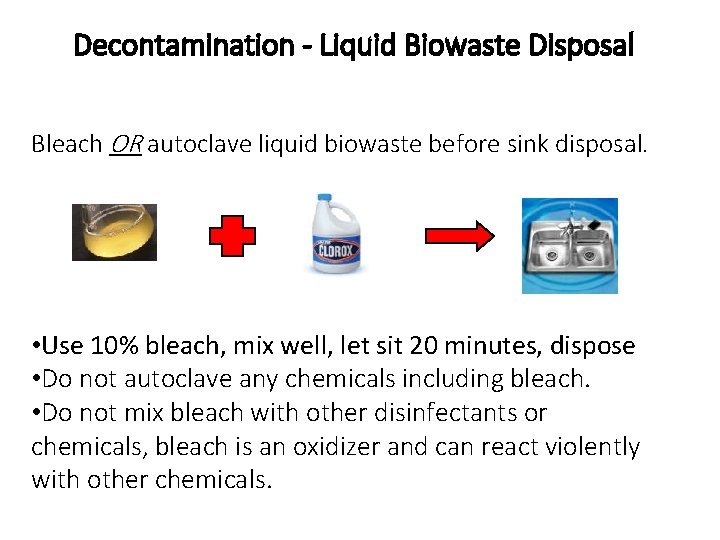
Decontamination - Liquid Biowaste Disposal Bleach OR autoclave liquid biowaste before sink disposal. • Use 10% bleach, mix well, let sit 20 minutes, dispose • Do not autoclave any chemicals including bleach. • Do not mix bleach with other disinfectants or chemicals, bleach is an oxidizer and can react violently with other chemicals.
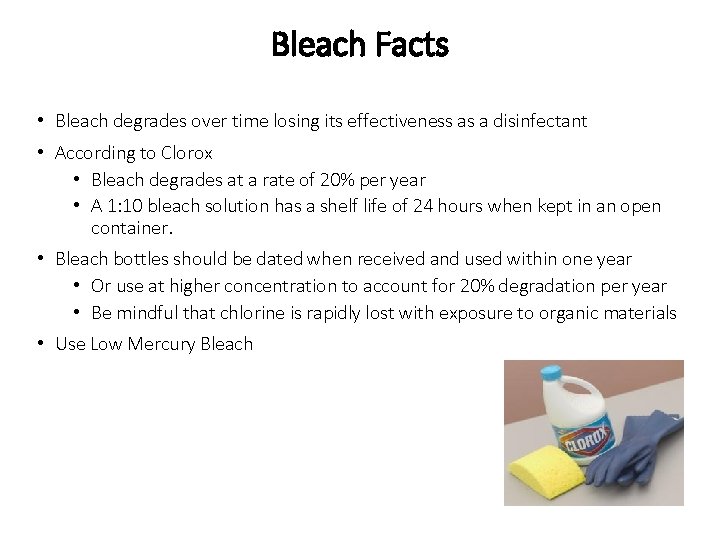
Bleach Facts • Bleach degrades over time losing its effectiveness as a disinfectant • According to Clorox • Bleach degrades at a rate of 20% per year • A 1: 10 bleach solution has a shelf life of 24 hours when kept in an open container. • Bleach bottles should be dated when received and used within one year • Or use at higher concentration to account for 20% degradation per year • Be mindful that chlorine is rapidly lost with exposure to organic materials • Use Low Mercury Bleach
Bloodborne Pathogens (BBP) Standard This section is presented to meet the requirements of the Occupational Safety and Health Administration (OSHA) Occupational Exposure to Bloodborne Pathogens 29 CFR 1910. 1030. Since 1991 this OSHA standard has been a federal law. This standard applies to all workers who are at risk of exposure to pathogenic microorganisms associated with human blood.
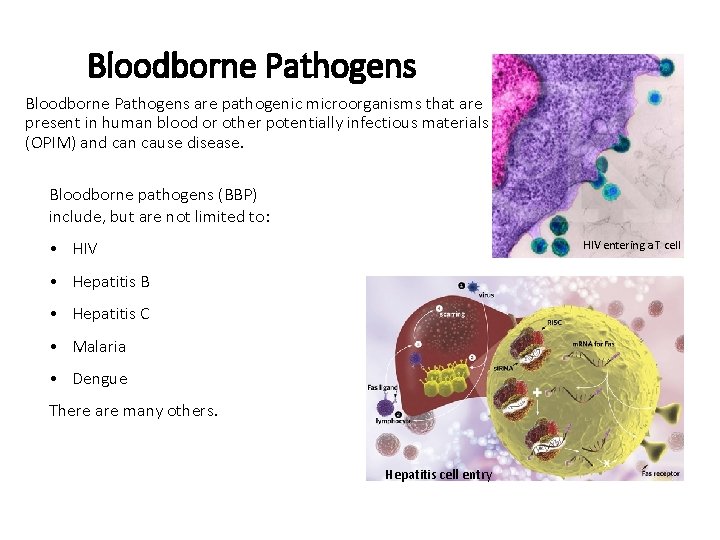
Bloodborne Pathogens are pathogenic microorganisms that are present in human blood or other potentially infectious materials (OPIM) and can cause disease. Bloodborne pathogens (BBP) include, but are not limited to: • HIV entering a T cell • Hepatitis B • Hepatitis C • Malaria • Dengue There are many others. Hepatitis cell entry
BBP and Other Potentially Infectious Material (OPIM) OPIM includes: Blood products, semen, vaginal secretions Any body fluid that is contaminated with blood Any body fluid of an unknown sources Unfixed tissues or organs Untested cells or cultures (most commercially available cell lines unless otherwise noted) • Blood, organs or other tissues from experimental animals infected with BBP • Introduction of human-derived materials (i. e. tumor cells, human xenografts) into animals • Any obscure red material from an unknown source where it is likely to have a blood spill (i. e. red jelly like substance outside a hospital dumpster) • • •
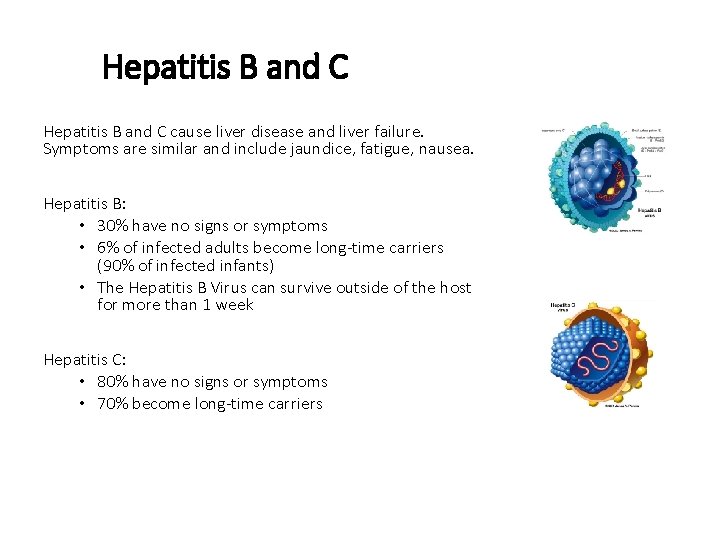
Hepatitis B and C cause liver disease and liver failure. Symptoms are similar and include jaundice, fatigue, nausea. Hepatitis B: • 30% have no signs or symptoms • 6% of infected adults become long-time carriers (90% of infected infants) • The Hepatitis B Virus can survive outside of the host for more than 1 week Hepatitis C: • 80% have no signs or symptoms • 70% become long-time carriers
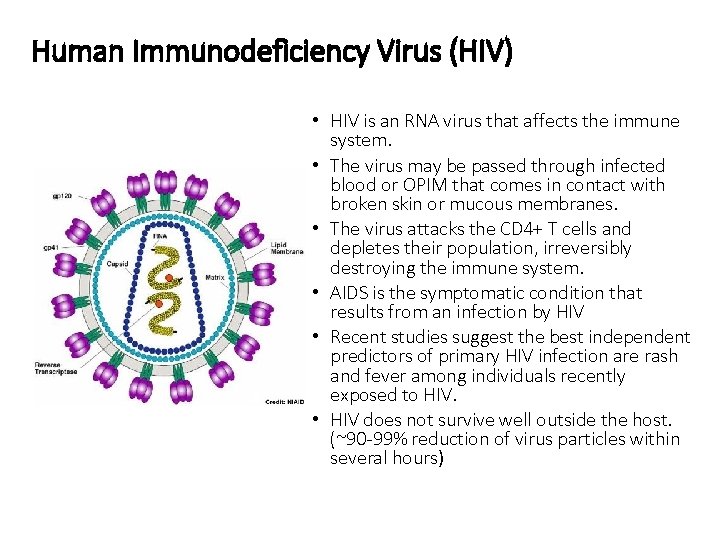
Human Immunodeficiency Virus (HIV) • HIV is an RNA virus that affects the immune system. • The virus may be passed through infected blood or OPIM that comes in contact with broken skin or mucous membranes. • The virus attacks the CD 4+ T cells and depletes their population, irreversibly destroying the immune system. • AIDS is the symptomatic condition that results from an infection by HIV • Recent studies suggest the best independent predictors of primary HIV infection are rash and fever among individuals recently exposed to HIV. • HIV does not survive well outside the host. (~90 -99% reduction of virus particles within several hours)
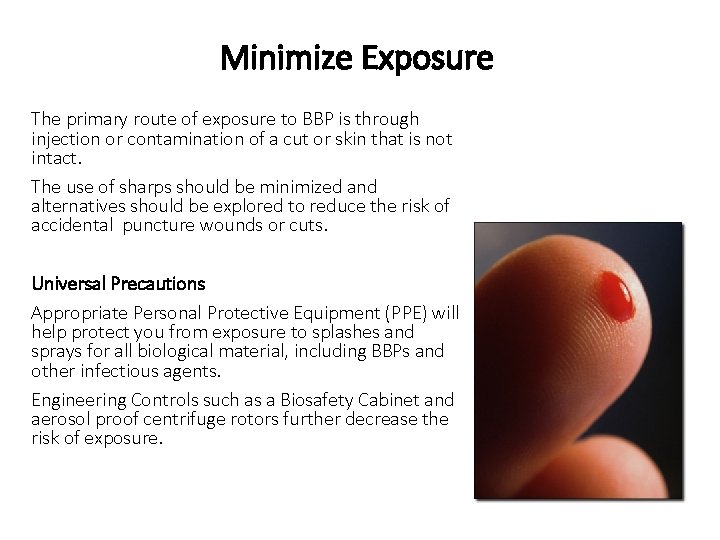
Minimize Exposure The primary route of exposure to BBP is through injection or contamination of a cut or skin that is not intact. The use of sharps should be minimized and alternatives should be explored to reduce the risk of accidental puncture wounds or cuts. Universal Precautions Appropriate Personal Protective Equipment (PPE) will help protect you from exposure to splashes and sprays for all biological material, including BBPs and other infectious agents. Engineering Controls such as a Biosafety Cabinet and aerosol proof centrifuge rotors further decrease the risk of exposure.
Minimize Exposure Tissue specimens and cultures should be handled to avoid spreading contamination from liquids to other areas and work surfaces. • Avoid sprays from wet materials by opening containers pointed away from your face. • Avoid contaminating the outside of the container. • Avoid flicking caps open to minimize aerosols. • Disinfect the outside of container before work and before returning it to storage • Close containers securely for transport • Ensure biohazard labels are affixed to containers of waste, refrigerators, freezers, other equipment and containers used with or to store or transport blood and OPIM. There are no guarantees. Even dried blood could potentially transmit a BBP and cause infection. Commercial cell lines should be treated as infectious, even if they are tested. Most are tested for HIV or Hepatitis B or C, but this limited testing does not ensure that other disease causing agents are not present.
Exposure Control Plan A written Exposure Control Plan is required by OSHA. An Exposure Control Plan contains the following information: • Review of job titles and specific job tasks where there is a reasonably anticipated exposure • Review of Universal Precautions and SOPs including: • Engineering and work practice controls • Personal Protective Equipment • Housekeeping • Labels and Signage • Safer medical devices
Hepatitis B Vaccine Although there is no vaccine for HIV or Hepatitis C, a vaccine exists for Hepatitis B. Researchers who work with human materials have an occupational risk of exposure to bloodborne pathogens and should be offered the Hepatitis B vaccine before starting work. The vaccine is not required, but the offer must be made and any declination of the vaccine documented. The Hepatitis B vaccine is: • Safe and effective • A series of 3 vaccine doses given at 0, 1, and 3 month time points • Free of charge to any employee that may work with human blood, human materials, or bodily fluids. Employees must fill out an Acceptance/Declination Form.
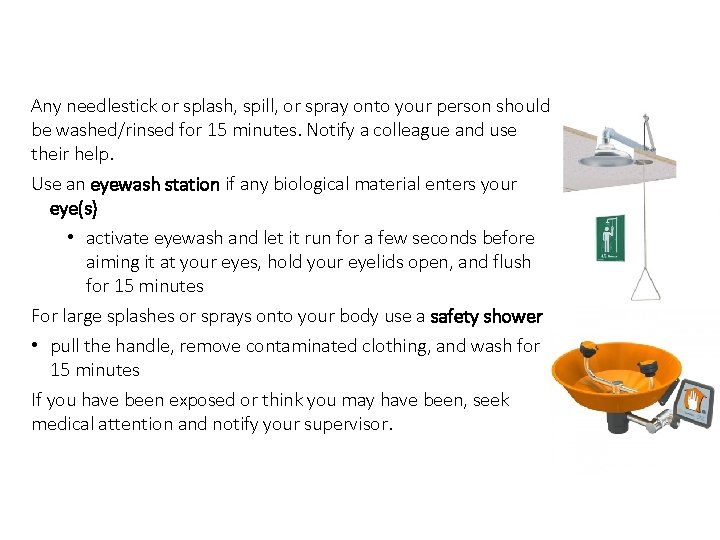
Personal Exposures Any needlestick or splash, spill, or spray onto your person should be washed/rinsed for 15 minutes. Notify a colleague and use their help. Use an eyewash station if any biological material enters your eye(s) • activate eyewash and let it run for a few seconds before aiming it at your eyes, hold your eyelids open, and flush for 15 minutes For large splashes or sprays onto your body use a safety shower • pull the handle, remove contaminated clothing, and wash for 15 minutes If you have been exposed or think you may have been, seek medical attention and notify your supervisor.
Reporting Incidents Report incidents involving exposure to recombinant or infectious substances, animal bites, needle sticks, immediately! There are no penalties/retaliation for reporting Reporting ensures proper medical care, clean up, record keeping, etc. Review helps prevent reoccurrence and improve safety. Follow-up to the incident will be conducted to help/advise of preventative measures that can be used to prevent recurrence.
- Slides: 44