
Bioremediation Use of bacteria to clean up detoxify
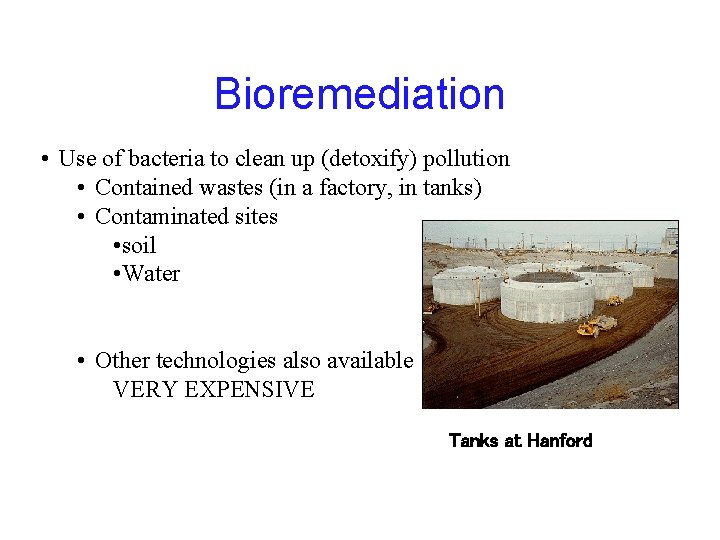
Bioremediation • Use of bacteria to clean up (detoxify) pollution • Contained wastes (in a factory, in tanks) • Contaminated sites • soil • Water • Other technologies also available VERY EXPENSIVE Tanks at Hanford

Bioremediation as Part of All Remediation Technologies
Biodegradable Contaminants • Bacteria have the natural ability to either grow on toxic compounds or convert them to nontoxic products • Classes of contaminants biodegraded – Aromatics (toluene, xylene, benzene, phenol, naphthalene) – Chlorinated aromatics (chlorobenzene, PCBs) – Chlorinated solvents (chloroform, trichloroethylene [TCE]) These mostly involve enzymes called oxygenases – Toxic metals (mercury) – Other toxic metals can be taken up or precipitated by cells • Cu, Co, Ni, Pb • Not detoxified but can be removed more easily
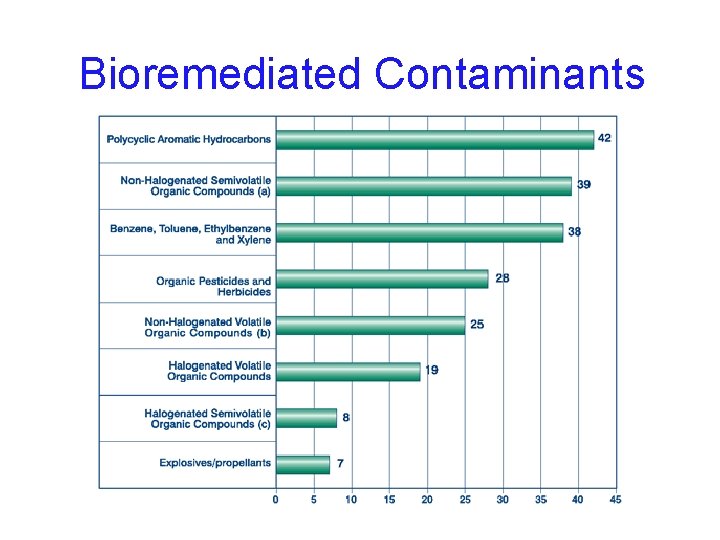
Bioremediated Contaminants
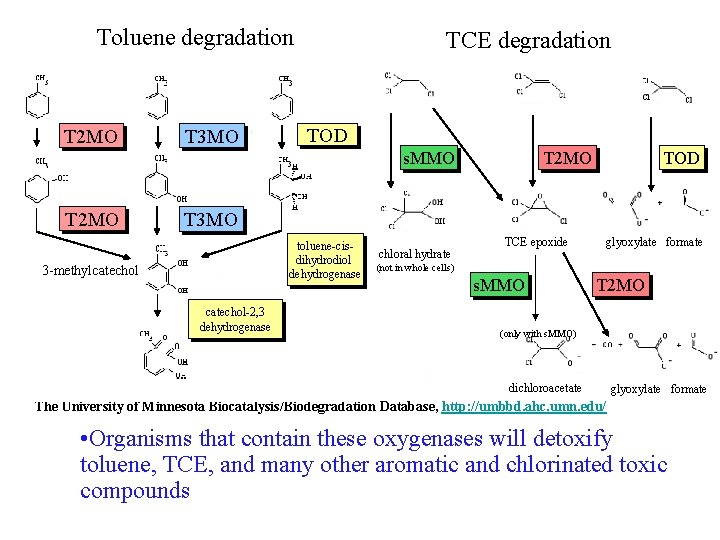
Toluene degradation T 2 MO T 3 MO TCE degradation TOD s. MMO T 2 MO TOD T 3 MO toluene-cisdihydrodiol dehydrogenase 3 -methylcatechol-2, 3 dehydrogenase chloral hydrate TCE epoxide glyoxylate formate (not in whole cells) s. MMO T 2 MO (only with s. MMO) dichloroacetate glyoxylate formate The University of Minnesota Biocatalysis/Biodegradation Database, http: //umbbd. ahc. umn. edu/ • Organisms that contain these oxygenases will detoxify toluene, TCE, and many other aromatic and chlorinated toxic compounds
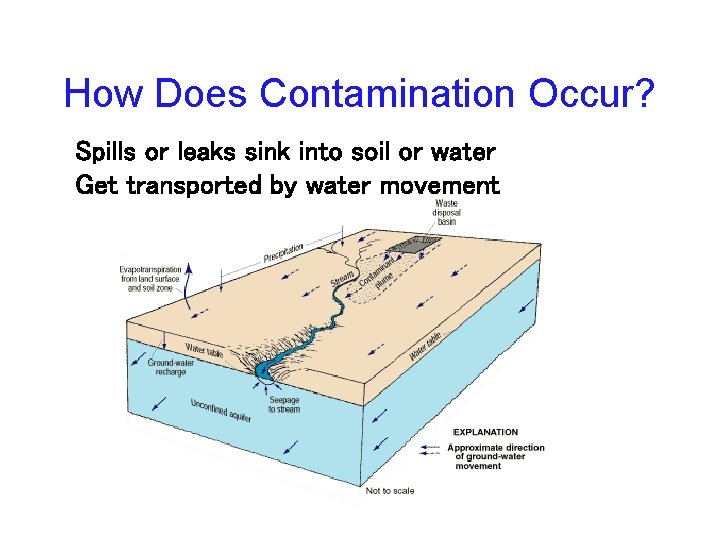
How Does Contamination Occur? Spills or leaks sink into soil or water Get transported by water movement
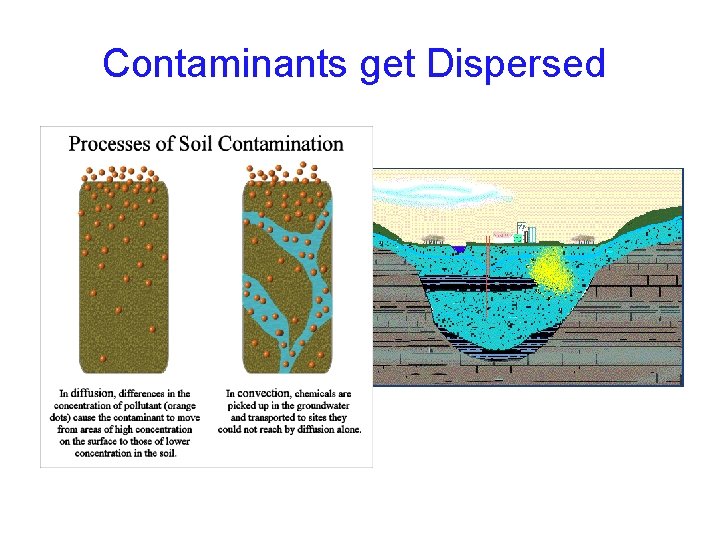
Contaminants get Dispersed
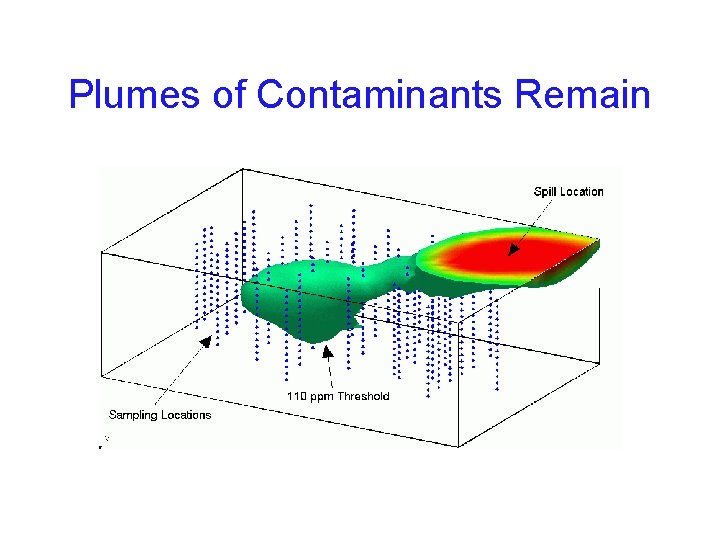
Plumes of Contaminants Remain
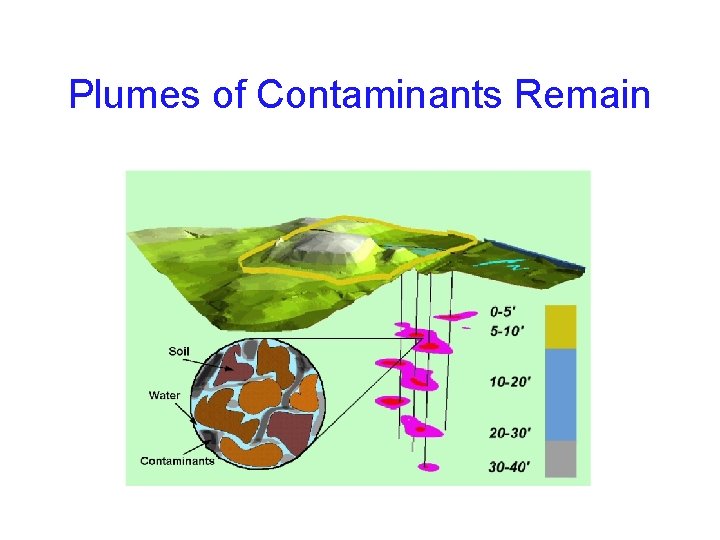
Plumes of Contaminants Remain
Natural Bioremediation Problem: how to get bacteria to contaminant? • Natural strains have biodegradative capability • Can use in situ populations • Need to increase total population by adding substrates • Contaminated sites often very low nutrient • Contain mixed populations of bacteria • Gram of soil can contain 109 bacteria • 1000 s of types (tremendous diversity) • Stimulate specific types with specific nutrients • Example: bacteria that grow on methane accidentally detoxify TCE add methane ---> population increases -->get degradation of TCE • Oil spills: just need to add a N and P source
What is Role for Engineering Bacteria? • Increase substrates detoxified – More individual compounds detoxified by one strain – Simultaneous detoxification • Increase rate of detoxification – Increase expression • Increase access to hydrophobic contaminants – If contaminant can be accessed, it will not persist – Hydrophobic contaminants persist
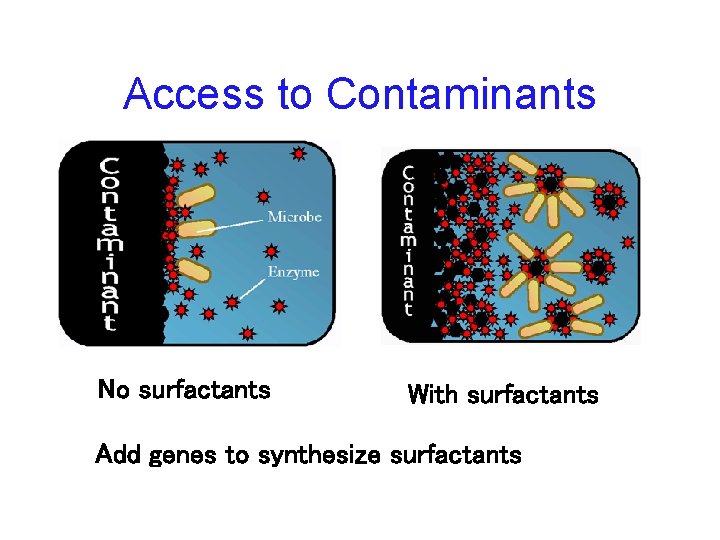
Access to Contaminants No surfactants With surfactants Add genes to synthesize surfactants
Problems with Genetically Engineered Microorganisms (GEMs) • Don’t survive in the environment – Can’t compete with existing bacteria • Cloning in survival or persistence genes raises regulatory issues • Few field trials of GEMs, identified strains that can persist • Greatest potential of GEMs for bioremediation is contained waste
- Slides: 13