
Biopsychosocial Model PRIMARY CARE BLOCK RACHEL WONG Case
Biopsychosocial Model PRIMARY CARE BLOCK RACHEL WONG
Case Scenario CC: 39 F here to follow up of abnormal labs and rash Medical Hx: DMI, gastroparesis, HTN, hyperlipidemia, depression, anxiety, PTSD, seizure disorder Last visit: established care, treated with steroid cream for diffuse, itchy rash and had lab work done Current symptoms: rash has improved slightly with steroids, but seem to have new lesions spreading to the neck and scalp
Case Scenario Psych Hx: multiple hospitalizations, last 1 month ago for 6 weeks in Brunswick Hospital currently being treated by an NP at FEGs History of suicide attempts trying to overdose on medication Social Hx: Former smoker Prior history of ETOH, LSD, marijuana, cocaine, last use 5 months ago Transgender, had former partner that died from AIDS, last HIV test 1 month ago was negative, not sexually active for 1 year Family Hx: Father with HTN, sister with hx of substance abuse and depression
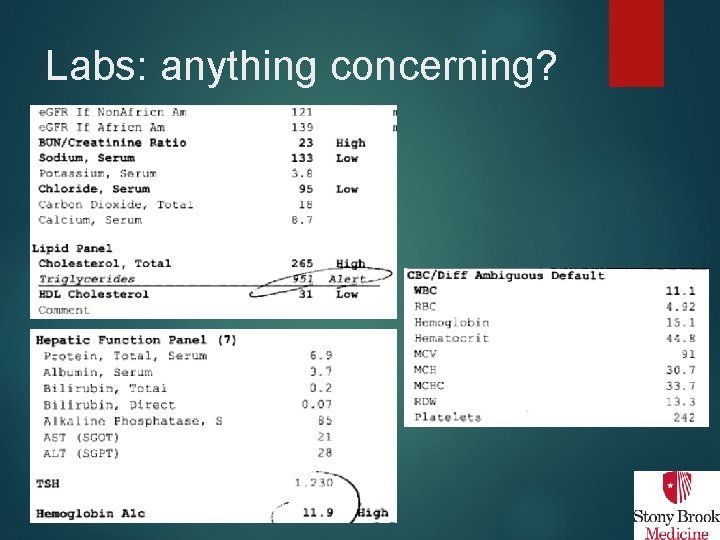
Labs: anything concerning?
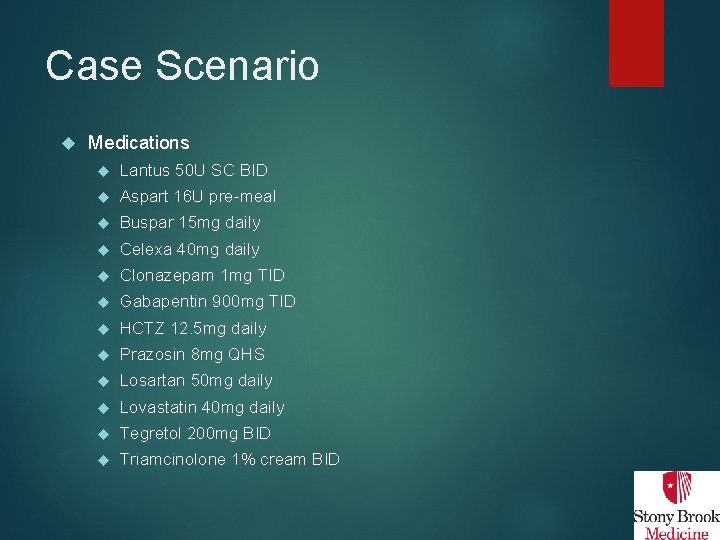
Case Scenario Medications Lantus 50 U SC BID Aspart 16 U pre-meal Buspar 15 mg daily Celexa 40 mg daily Clonazepam 1 mg TID Gabapentin 900 mg TID HCTZ 12. 5 mg daily Prazosin 8 mg QHS Losartan 50 mg daily Lovastatin 40 mg daily Tegretol 200 mg BID Triamcinolone 1% cream BID
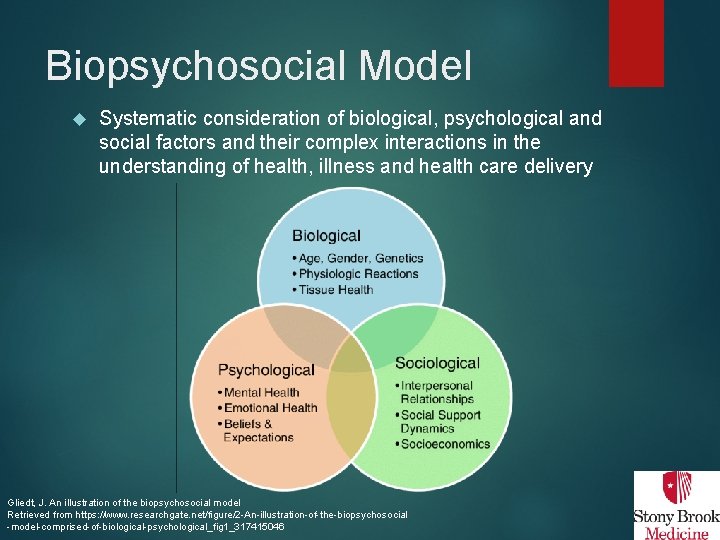
Biopsychosocial Model Systematic consideration of biological, psychological and social factors and their complex interactions in the understanding of health, illness and health care delivery Gliedt, J. An illustration of the biopsychosocial model Retrieved from https: //www. researchgate. net/figure/2 -An-illustration-of-the-biopsychosocial -model-comprised-of-biological-psychological_fig 1_317415046
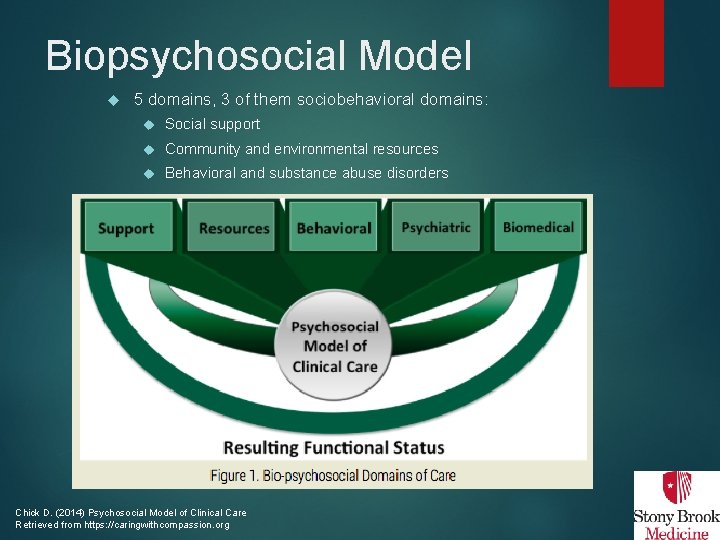
Biopsychosocial Model 5 domains, 3 of them sociobehavioral domains: Social support Community and environmental resources Behavioral and substance abuse disorders Chick D. (2014) Psychosocial Model of Clinical Care Retrieved from https: //caringwithcompassion. org
Screening for psychosocial issues Fear of what we will find Uncertainty with how to address psychosocial concerns Time considerations Lack of resources Personal discomfort A patient’s personal support network and resources are integrated with social determinants and are essential to achievement/maintenance of health. Family/social support have stronger influence on care plan adherence than biomedical factors.
Social Support Personal connections, relatives, friendships Screen for positive (friends) and negative (domestic violence) Screening questions Who lives with you? Do you have friends or family who help out when you have difficulties? Who are they? Do you feel safe where you live?
Community and Environmental Resources Housing, community environment, health insurance, food security, income, and transportation Difficult to address clinical needs when subsistence needs unstable Screening questions: Where are you staying? Is it a stable living situation? How long have you stayed there/will you stay there? How much money do you receive regularly each month? How do you pay for medical care? Where/when/what was your last meal? How do you get to medical visits?
Behavioral and Substance Abuse Disorders Personality disorders, substance abuse, and somatization Personality disorders Extremes in idealization and devaluation Passive aggression Anger/blaming Dependence Substance Abuse Have you had challenges with drugs or alcohol? Somatization Patterns of non-anatomical/non-physiologic physical complaints that shift over time
Substance abuse screening CAGE-AID 79% sensitive, 77% specific C: Have you ever felt you ought to cut down on your drinking or drug use? A: Have people annoyed you by criticizing your drinking or drug use? G: Have you ever felt bad or guilty about your drinking or drug use? E: Have you ever had a drink or used drugs first thing in the morning to steady your nerves or to get rid of a hangover? AUDIT, MAST-G DSM-5 Substance Use Disorder • • • Tolerance Withdrawal symptoms Craving Substance taken in larger amount and for longer period than intended Persistent desire/attempts to quit Much time/activity to obtain, use, recover Important activities given up or reduced Use continues despite adverse consequences Recurrent use resulting in failure to fulfil major role obligation at work, home, school Recurrent use in physically hazardous situations Continued use despite persistent or recurrent social or interpersonal problems caused or exacerbated
Psychiatric Disorders Major psychiatric conditions (DSMV Axis I conditions): major depression, bipolar disorder, and schizophrenia Screening questions Have you ever been diagnosed with a mental health condition? Have you ever been hospitalized for a mental health condition? Do you have a mental health provider? Do you have a mental health case worker?
Biomedical Disorders Acute medical problems Chronic diseases and complications Medications and treatments
Functional Status Provides information on the net effect of the 5 domains on the patient’s life and self-management capabilities Role functioning in significant personal relationships, occupation/employment, social/community roles: educational level, occupation, literacy and numeracy, social and community engagement can affect role function Activities of Daily Living (ADLS): eating, bathing, toileting, transferring, dressing, and grooming) Instrumental Activities of Daily Living (IADLS): medication management, driving, food access and preparation, walking / gait stability
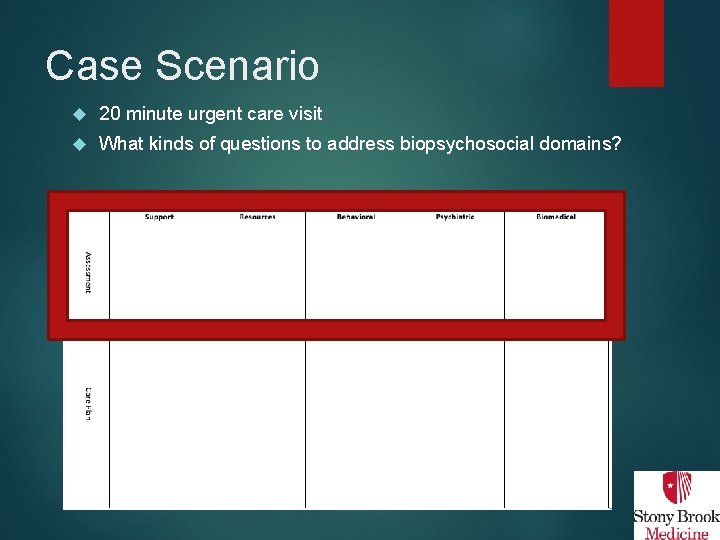
Case Scenario 20 minute urgent care visit What kinds of questions to address biopsychosocial domains?
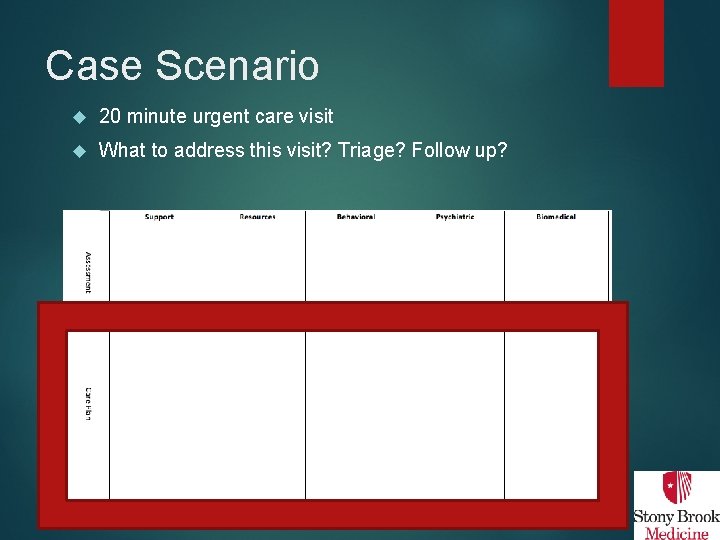
Case Scenario 20 minute urgent care visit What to address this visit? Triage? Follow up?
Initial Plan Rash-likely scabies Hypertriglyceridemia-start fenofibrate DM-uncontrolled, does not currently seem to be in DKA and able to store and self-administer insulin, has supplies and insulin syringes/vials Gastroparesis-no current issue but not eating much because of access to food Potentially unstable/unsafe housing situation and homelessness-FUV in 1 week to further assess
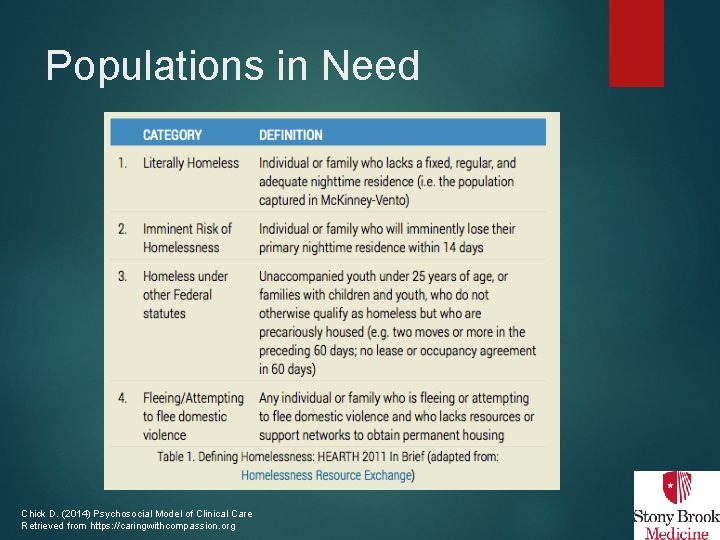
Populations in Need Chick D. (2014) Psychosocial Model of Clinical Care Retrieved from https: //caringwithcompassion. org
Biomedical Conditions Disease Specific: Tb, HIV Behavioral: Smoking, ETOH, Substance Abuse Nutritional: malnutrition, diabetes, obesity, electrolyte abnormalities, vitamin deficiency Dermatologic: scabies, lice, trench foot, dermatitis Chronic Disease
- Slides: 20