
Biopsych Mnemonics see if these help Medulla controls
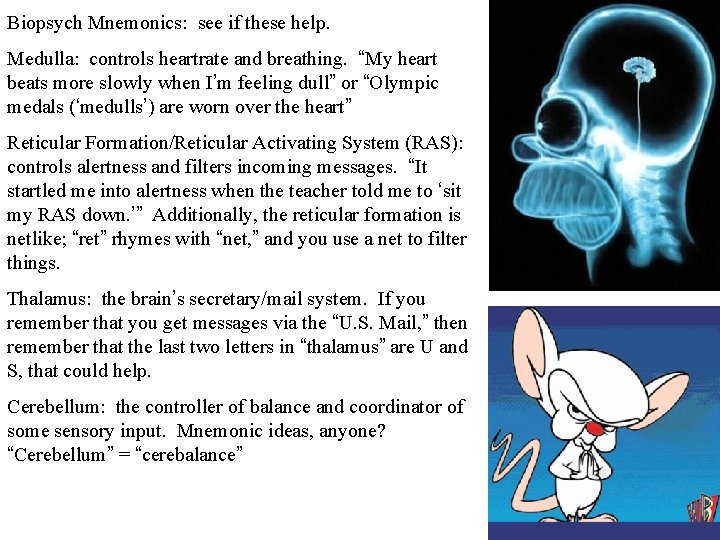
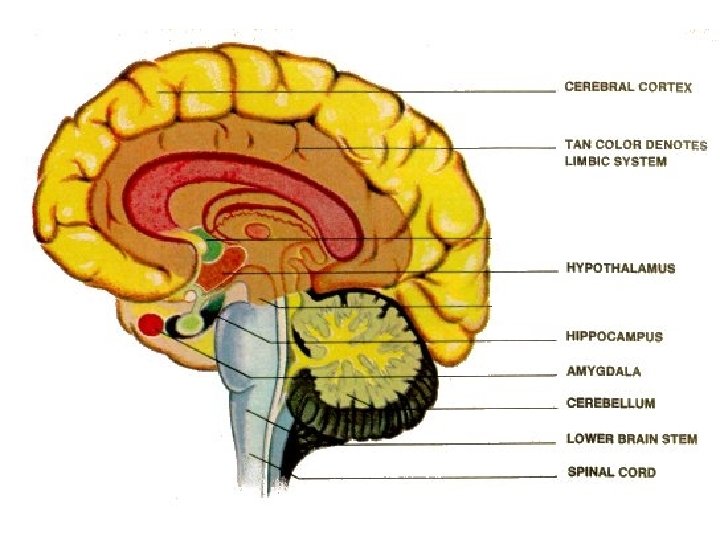
Biopsych Mnemonics: see if these help. Medulla: controls heartrate and breathing. “My heart beats more slowly when I’m feeling dull” or “Olympic medals (‘medulls’) are worn over the heart” Reticular Formation/Reticular Activating System (RAS): controls alertness and filters incoming messages. “It startled me into alertness when the teacher told me to ‘sit my RAS down. ’” Additionally, the reticular formation is netlike; “ret” rhymes with “net, ” and you use a net to filter things. Thalamus: the brain’s secretary/mail system. If you remember that you get messages via the “U. S. Mail, ” then remember that the last two letters in “thalamus” are U and S, that could help. Cerebellum: the controller of balance and coordinator of some sensory input. Mnemonic ideas, anyone? “Cerebellum” = “cerebalance”
Biopsych Mnemonics (continued) Limbic System: responsible for the 5 Fs. My own mnemomic involves four things that can happen at beach parties, which is also where people perform the limbo (food, fight, flight, fornication, Fahrenheit). Amygdala: these are linked to aggression, which is handy since they both start with A. The amygdala also deals with fear, which goes with aggression. Hypothalamus: this maintains your body the way a mechanic maintains a car: eating, drinking, body temp, and sexual behavior all seem to come from the hypothalamus. When you’ve got something wrong with your body (hunger, thirst, lust, etc), it sometimes makes you feel hyper. Glial cells: these support neurons. They are, in many ways, the “glue” that holds neurons together. Brain plasticity: the brain’s ability to change itself, stretching its abilities like Plastic Man.
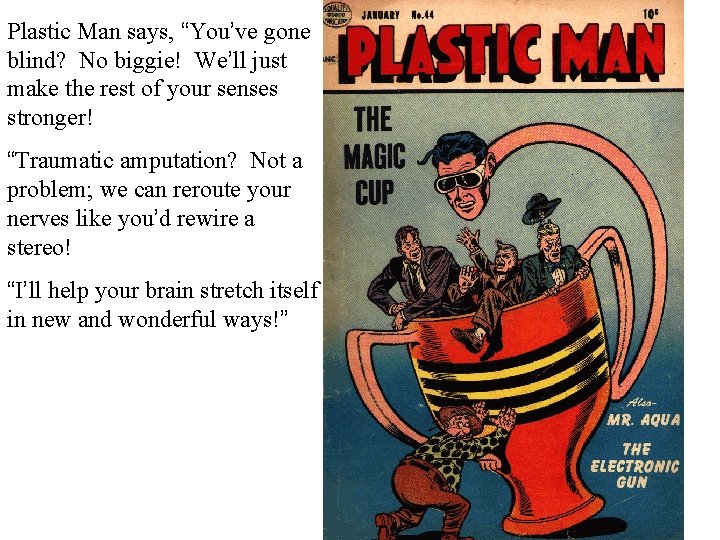
Plastic Man says, “You’ve gone blind? No biggie! We’ll just make the rest of your senses stronger! “Traumatic amputation? Not a problem; we can reroute your nerves like you’d rewire a stereo! “I’ll help your brain stretch itself in new and wonderful ways!”
Key Neurotransmitters and Hormones • Acetylcholine (ACh): helps with memory encoding and muscle movement. “My muscles ache!” • Dopamine: deals with learning (through reward pathways), emotion, and attention. The prime way in which drugs (like “dope”) addict their users. • GABA: keeps unnecessary or harmful neurotransmitters from sending messages; a major reason why pain medications work. It “garbles” messages that are getting sent across the synapse; GABA does not let the “gahbage” thoughts cross the synapse.
Key Neurotransmitters and Hormones (cont) • Melatonin: a hormone implicated in drowsiness; absence of light triggers more melatonin release. More melatonin = a “mellow” feeling. • Norepinephrine: works with adrenaline (a hormone) to make us more alert, leading to GAS. Mnemonic, anyone? • Serotonin: deals with hunger, GAS, and mood; a major happiness-producer implicated in clinical depression. SSRIs work to increase serotonin in the synapse. My mnemonic deals with “syrup, ” which sounds like serotonin and is a food that makes me happy.
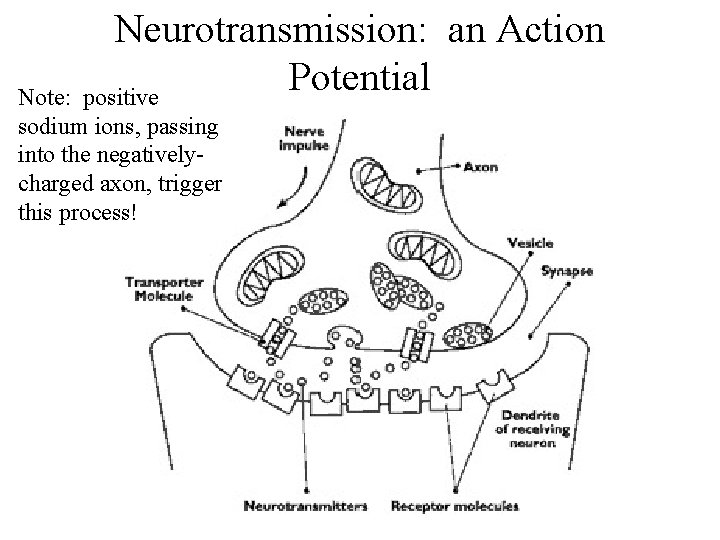
Neurotransmission: an Action Potential positive Note: sodium ions, passing into the negativelycharged axon, trigger this process!
- Slides: 7