
Biophysical Pathogen Identification a New Paradigm in Diagnosis
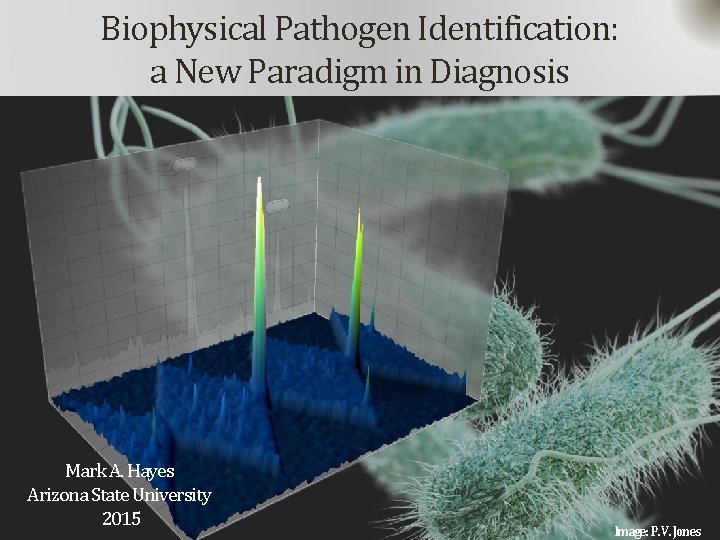
Biophysical Pathogen Identification: a New Paradigm in Diagnosis Mark A. Hayes Arizona State University 2015 Image: P. V. Jones
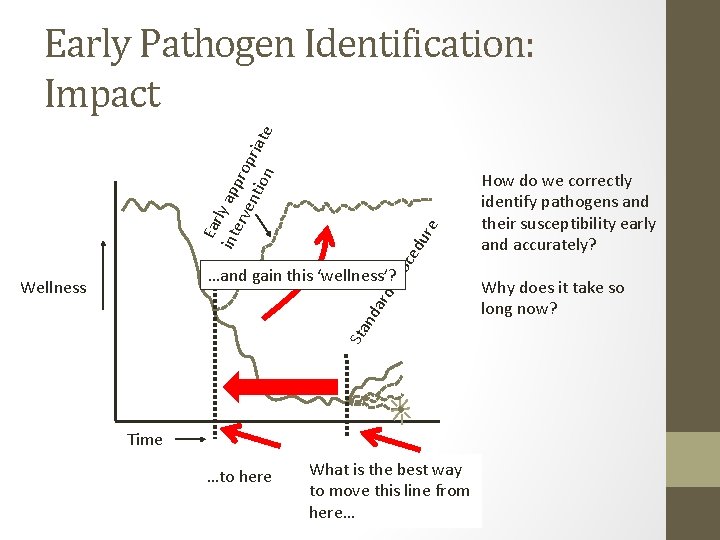
pro ce du re Ear int ly ap erv pro ent pri ion ate Early Pathogen Identification: Impact …and gain this ‘wellness’? Sta nd ard Wellness Time …to here What is the best way to move this line from here… How do we correctly identify pathogens and their susceptibility early and accurately? Why does it take so long now?

An Ideal Pathogen Identification Scheme Pretty simple really: ü Fast : allow meaningful action ü Cheap : cost effective (<$1 per test) ü Available : widely distributed, low power use, simple operation and readout, etc. ü Accurate & Precise : sensitive and selective
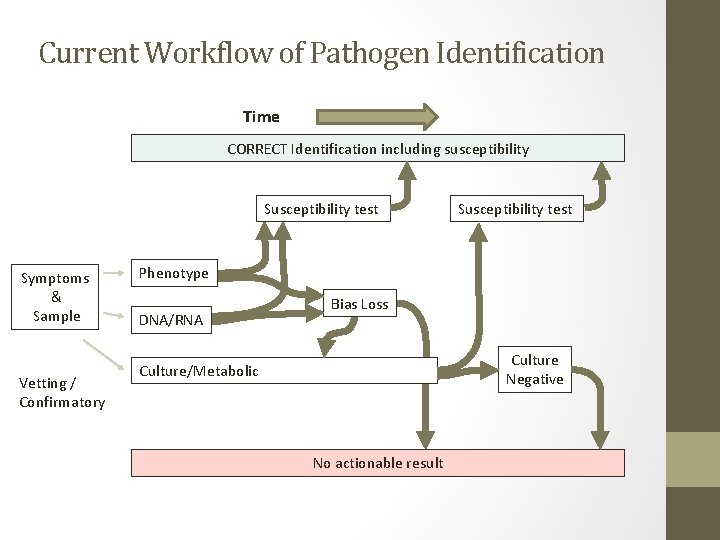
Current Workflow of Pathogen Identification Time CORRECT Identification including susceptibility Susceptibility test Symptoms & Sample Vetting / Confirmatory Susceptibility test Phenotype DNA/RNA Bias Loss Culture Negative Culture/Metabolic No actionable result

Current Workflow of Pathogen Identification Time CORRECT Identification including susceptibility Susceptibility test Symptoms & Sample Vetting / Confirmatory Phenotype DNA/RNA Susceptibility test Lacking DNA/RNA sequence or Immuno Reagent for pathogen Bias Loss Failure to thrive in artificial environment Culture Negative Culture/Metabolic No actionable result
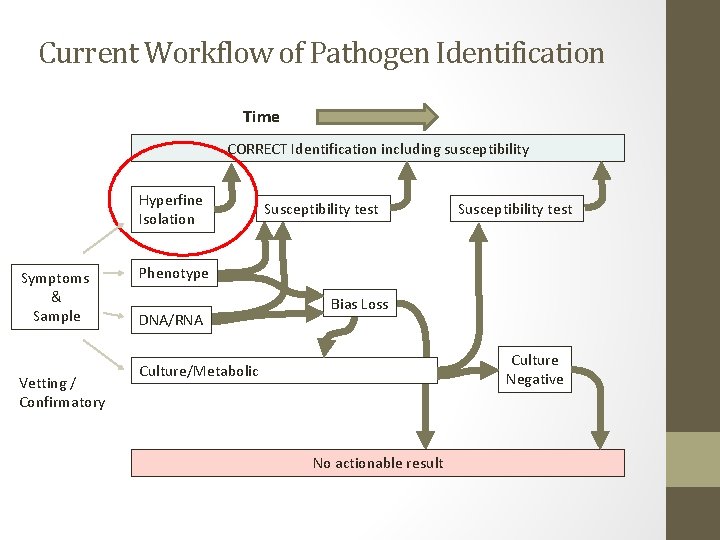
Current Workflow of Pathogen Identification Time CORRECT Identification including susceptibility Hyperfine Isolation Symptoms & Sample Vetting / Confirmatory Susceptibility test Phenotype DNA/RNA Bias Loss Culture Negative Culture/Metabolic No actionable result
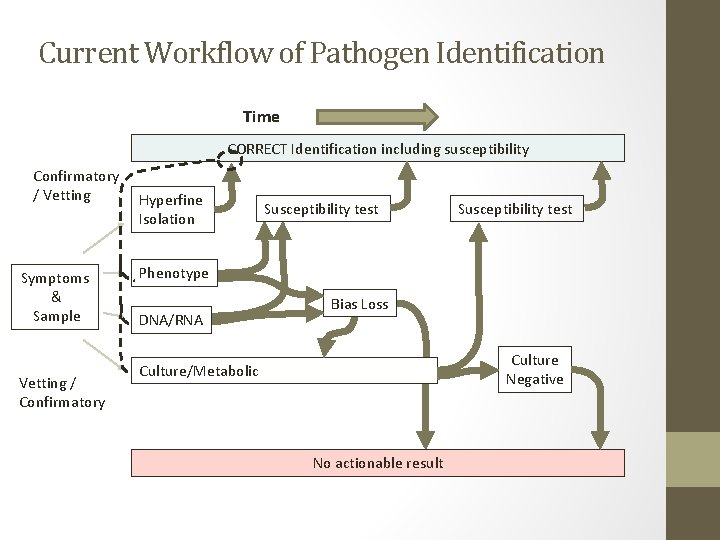
Current Workflow of Pathogen Identification Time CORRECT Identification including susceptibility Confirmatory / Vetting Symptoms & Sample Vetting / Confirmatory Hyperfine Isolation Susceptibility test Phenotype DNA/RNA Bias Loss Culture Negative Culture/Metabolic No actionable result
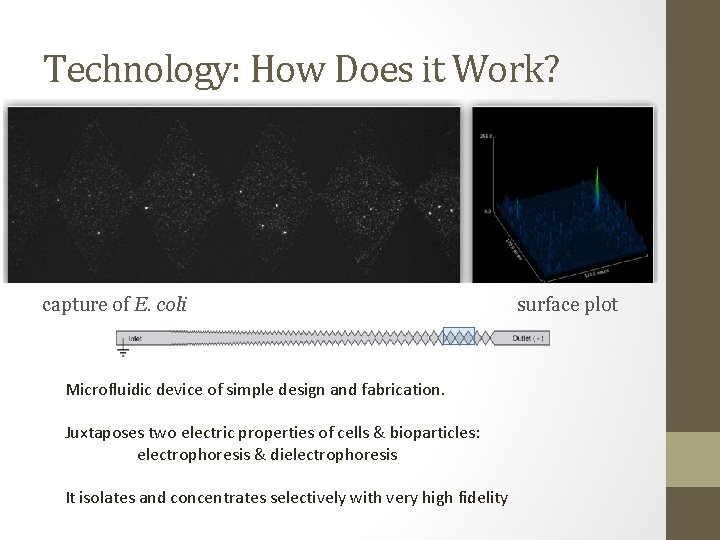
Technology: How Does it Work? capture of E. coli Microfluidic device of simple design and fabrication. Juxtaposes two electric properties of cells & bioparticles: electrophoresis & dielectrophoresis It isolates and concentrates selectively with very high fidelity surface plot
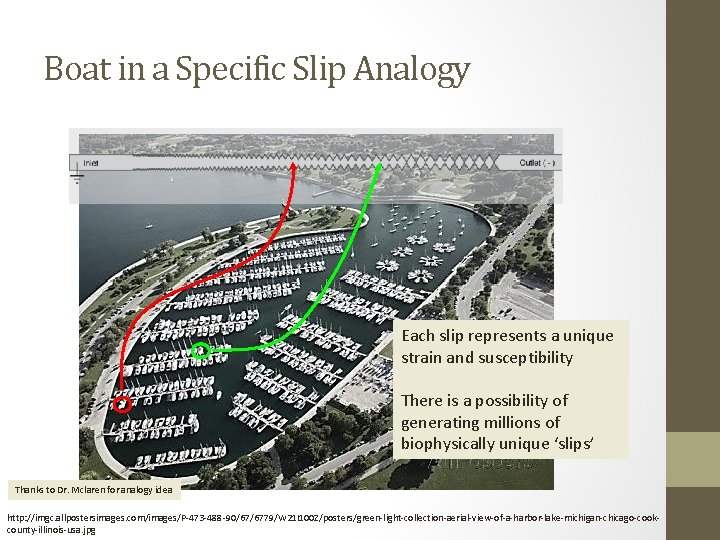
Boat in a Specific Slip Analogy Each slip represents a unique strain and susceptibility There is a possibility of generating millions of biophysically unique ‘slips’ Thanks to Dr. Mclaren for analogy idea http: //imgc. allpostersimages. com/images/P-473 -488 -90/67/6779/W 21 I 100 Z/posters/green-light-collection-aerial-view-of-a-harbor-lake-michigan-chicago-cookcounty-illinois-usa. jpg
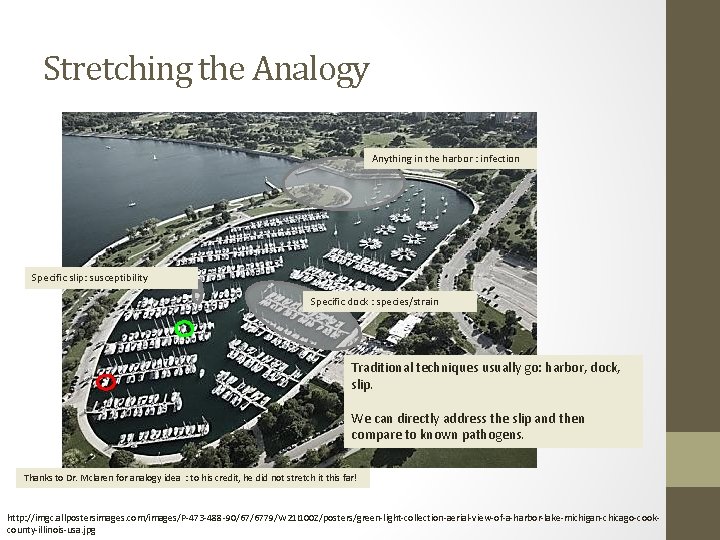
Stretching the Analogy Anything in the harbor : infection Specific slip: susceptibility Specific dock : species/strain Traditional techniques usually go: harbor, dock, slip. We can directly address the slip and then compare to known pathogens. Thanks to Dr. Mclaren for analogy idea : to his credit, he did not stretch it this far! http: //imgc. allpostersimages. com/images/P-473 -488 -90/67/6779/W 21 I 100 Z/posters/green-light-collection-aerial-view-of-a-harbor-lake-michigan-chicago-cookcounty-illinois-usa. jpg
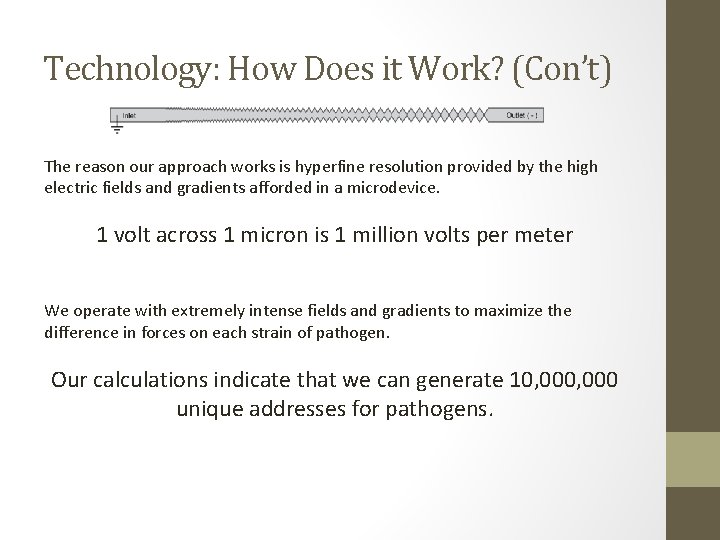
Technology: How Does it Work? (Con’t) The reason our approach works is hyperfine resolution provided by the high electric fields and gradients afforded in a microdevice. 1 volt across 1 micron is 1 million volts per meter We operate with extremely intense fields and gradients to maximize the difference in forces on each strain of pathogen. Our calculations indicate that we can generate 10, 000 unique addresses for pathogens.
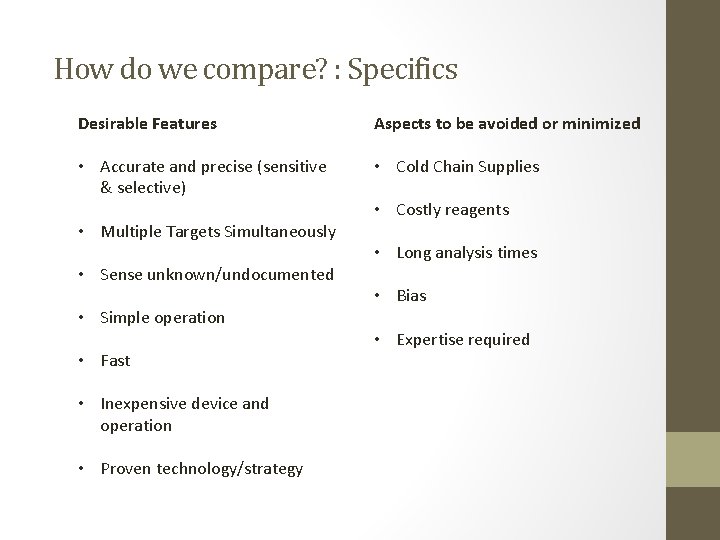
How do we compare? : Specifics Desirable Features Aspects to be avoided or minimized • Accurate and precise (sensitive & selective) • Cold Chain Supplies • Multiple Targets Simultaneously • Sense unknown/undocumented • Simple operation • Fast • Inexpensive device and operation • Proven technology/strategy • Costly reagents • Long analysis times • Bias • Expertise required
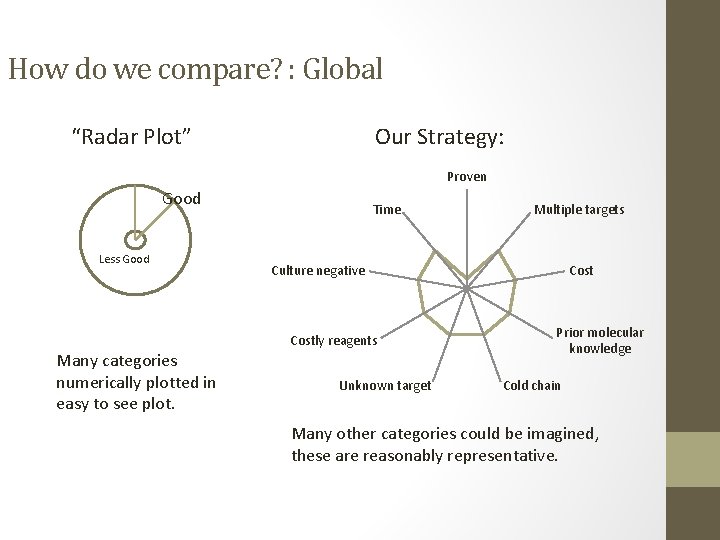
How do we compare? : Global “Radar Plot” Our Strategy: Proven Good Less Good Time Culture negative Costly reagents Many categories numerically plotted in easy to see plot. Multiple targets Unknown target Cost Prior molecular knowledge Cold chain Many other categories could be imagined, these are reasonably representative.
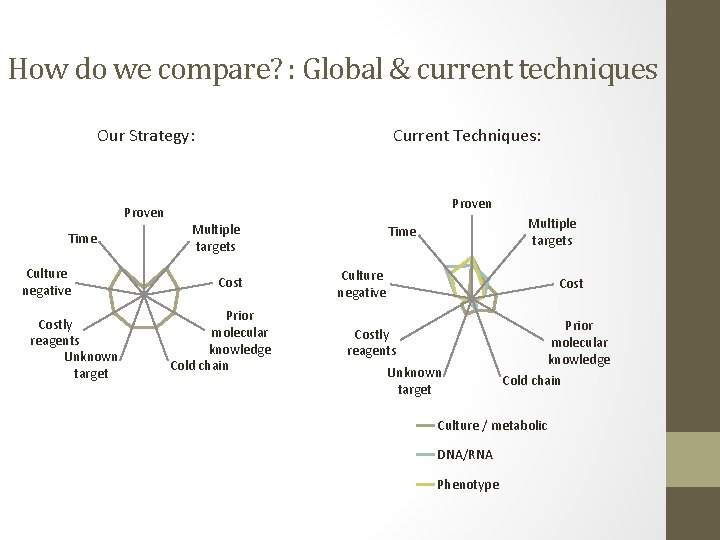
How do we compare? : Global & current techniques Our Strategy: Current Techniques: Proven Time Culture negative Costly reagents Unknown target Multiple targets Cost Prior molecular knowledge Cold chain Multiple targets Time Culture negative Cost Prior molecular knowledge Costly reagents Unknown target Cold chain Culture / metabolic DNA/RNA Phenotype
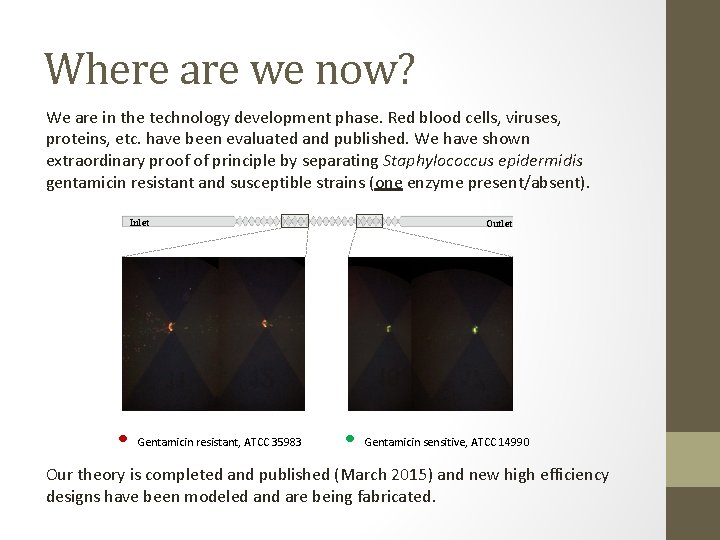
Where are we now? We are in the technology development phase. Red blood cells, viruses, proteins, etc. have been evaluated and published. We have shown extraordinary proof of principle by separating Staphylococcus epidermidis gentamicin resistant and susceptible strains (one enzyme present/absent). Inlet • Gentamicin resistant, ATCC 35983 Outlet • Gentamicin sensitive, ATCC 14990 Our theory is completed and published (March 2015) and new high efficiency designs have been modeled and are being fabricated.
Economics • Minimal Cost • No specialized or cold chain reagents or highly constrained storage • Fabrication well-established • Inexpensive processes and materials • Power requirements are minimal (we use higher voltages, but current is minimal) • Packaging (optics, electronics, computing, etc. ) are all compatible with the fast-evolving smart phone friendly systems • Final device and its operation will be compatible with wide distribution for possible surveillance, within all general practitioners, surgical theaters, and to low resource settings and remote areas.
Summary A new paradigm for identifying pathogens, including susceptibility Based on biophysics and a break-through technology advance in bioparticle separations Compares very favorably to current techniques: faster, cheaper, no bias, compatible with all existing strategies Early in the development cycle– core capabilities theoretical described, seminal data obtained. Looking to make maximum impact on healthcare – for specific patients, reduce disease spread, and reduce healthcare costs.

What’s Next? Continue to develop partnerships with those in the health care business. Identify and pursue funding sources for clinical application, while continuing fundamental studies at ASU.
Acknowledgements Katelyn Hayes Paige Davis Shannon Huey Claire Crowther Jie Ding Paul Jones Dr. Noah Weiss Dr. Sarah Staton Dr. Michele Pysher Dr. Ryan Mc. Lemore Dr. Alex Mclaren Prof. Tom Taylor Prof. KP Chen Funding: “Isolation of Pathogenic Listeria” NIH 2015 -2017 “Pathogen Isolation and Concentration for Phenotypic Subtyping” NIH 2012 -2014 “Isolating Viral Particles from Whole Blood” NIH 2012 -2014

End
- Slides: 20