
BIOPAMA IMET TRAINING Session 5 ANALYSING IMET ASSESMENT
BIOPAMA IMET TRAINING Session 5 : ANALYSING IMET ASSESMENT RESULTS 05/02/2020, Kigali, Rwanda Bertille MAYEN An initiative of the ACP Group of States financed by the European Union's 11 th EDF.
LEARNING OBJECTIVES OF THE SESSION ANALYSING IMET ASSESMENT RESULTS At the end of the session, participants will be able to : ü Examine the meaning of graphs and histograms in IMET ü Identify key aspects for analyzing IMET results ü Discuss possible scenario of IMET results

IMET Management Effectiveness Dash Board At the end of the assessment , the last column of the IMET form provides you a dash board visual effect, where information collected during the exercise are shown Management effectiveness measures to what extent the outputs of a process led to direct outcomes (effects/impacts) & outcomes contributed to achieving the objective (management objective).
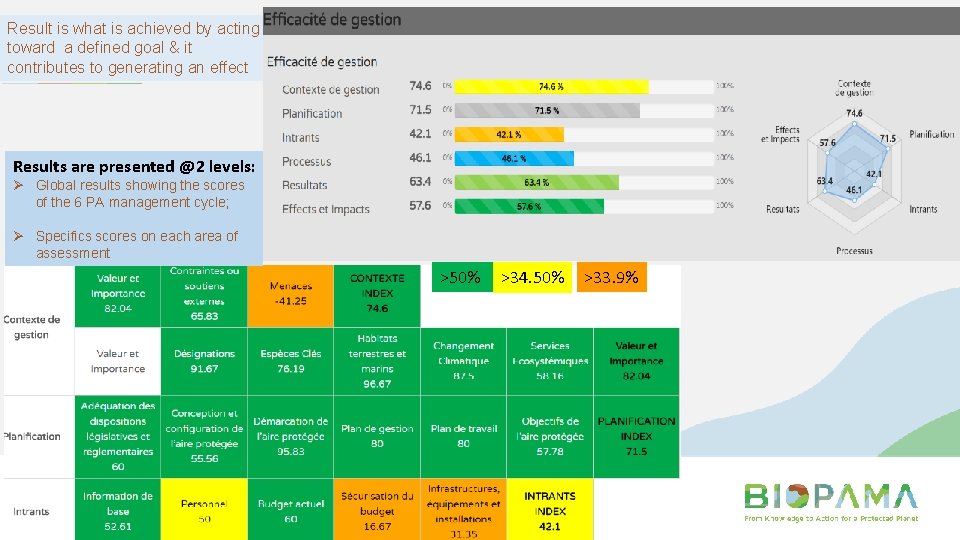
Result is what is achieved by acting toward a defined goal & it contributes to generating an effect Results are presented @2 levels: Ø Global results showing the scores of the 6 PA management cycle; Ø Specifics scores on each area of assessment >50% >34. 50% >33. 9%

Values defined can be used for the management & monitoring of the PA daily activities, and more specifically for the steps to be taken toward planning, resources mobilization (inputs), process, outputs and outcomes. it’s important to identify red flags to inform decision makers to cater for arising issues / flows in the management of the PA
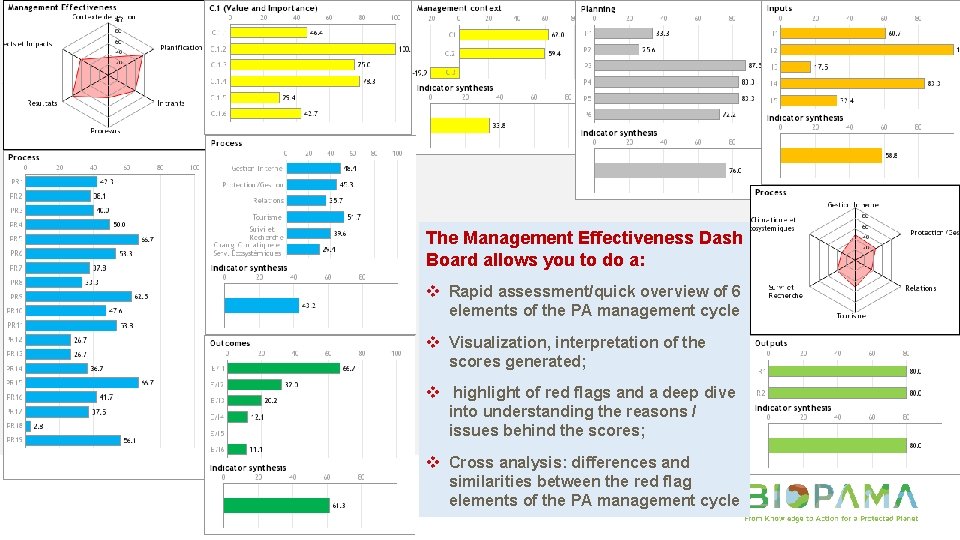
The Management Effectiveness Dash Board allows you to do a: v Rapid assessment/quick overview of 6 elements of the PA management cycle v Visualization, interpretation of the scores generated; v highlight of red flags and a deep dive into understanding the reasons / issues behind the scores; v Cross analysis: differences and similarities between the red flag elements of the PA management cycle
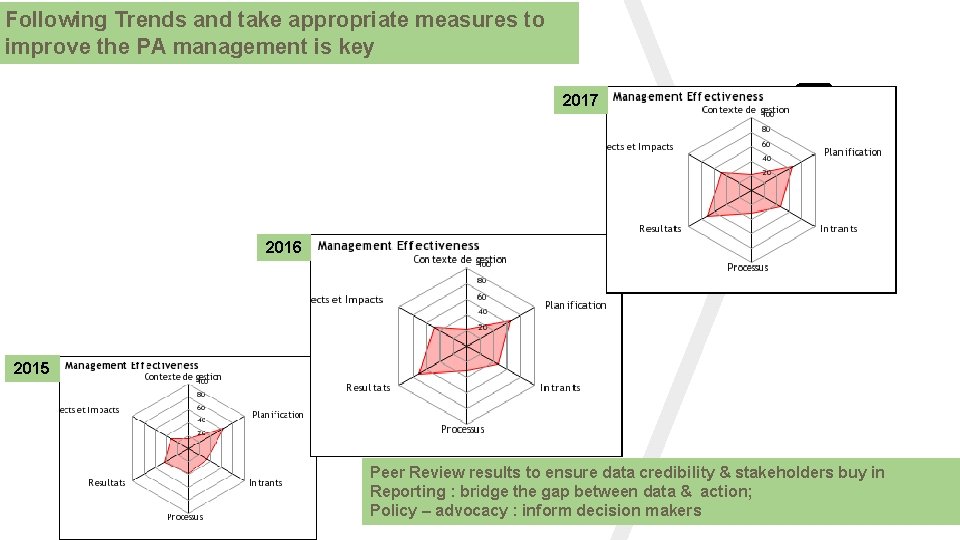
Following Trends and take appropriate measures to improve the PA management is key 2017 2016 2015 Peer Review results to ensure data credibility & stakeholders buy in Reporting : bridge the gap between data & action; Policy – advocacy : inform decision makers
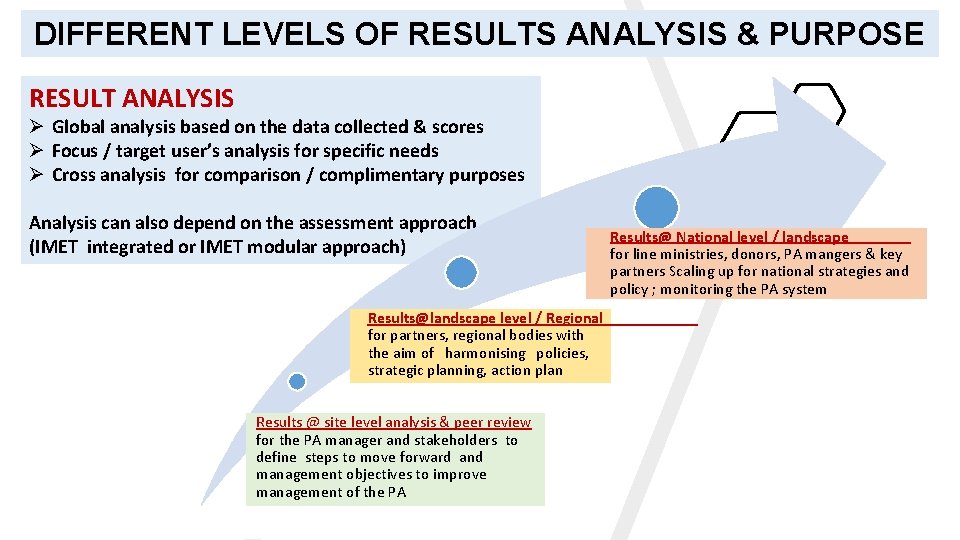
DIFFERENT LEVELS OF RESULTS ANALYSIS & PURPOSE RESULT ANALYSIS Ø Global analysis based on the data collected & scores Ø Focus / target user’s analysis for specific needs Ø Cross analysis for comparison / complimentary purposes Analysis can also depend on the assessment approach (IMET integrated or IMET modular approach) Results@landscape level / Regional for partners, regional bodies with the aim of harmonising policies, strategic planning, action plan Results @ site level analysis & peer review for the PA manager and stakeholders to define steps to move forward and management objectives to improve management of the PA Results@ National level / landscape for line ministries, donors, PA mangers & key partners Scaling up for national strategies and policy ; monitoring the PA system
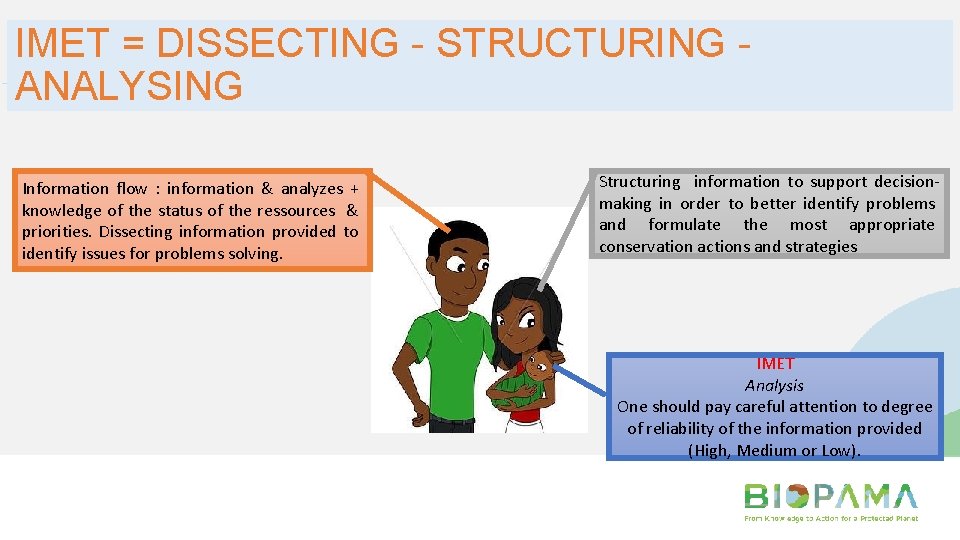
IMET = DISSECTING - STRUCTURING ANALYSING Information flow : information & analyzes + knowledge of the status of the ressources & priorities. Dissecting information provided to identify issues for problems solving. Structuring information to support decisionmaking in order to better identify problems and formulate the most appropriate conservation actions and strategies IMET Analysis One should pay careful attention to degree of reliability of the information provided (High, Medium or Low).
The Biodiversity and Protected Areas Management Programme (BIOPAMA) is an initiative of the ACP Group of States financed by the European Union's 11 th EDF.
- Slides: 10