
BIOMOLECULES What is a Biomolecule Life on earth
BIOMOLECULES
What is a Biomolecule? • Life on earth is based on carbon compounds that we call biomolecules. • Biomolecules are macromolecules or “giant molecules. ” They are giant because they are polymers made of hundreds or even thousands of smaller molecules called monomers. • Four of the major kinds of biomolecules are carbohydrates, lipids, proteins and nucleic acids.
Carbohydrates • Examples are Glucose(sugar), glycogen, cellulose and starch • Functions– the body’s main or primary source of energy • Structure: elements are carbon, hydrogen and oxygen in a 1: 2: 1 ratio • Building blocks or Monomers are Monosaccharides (or simple sugar)
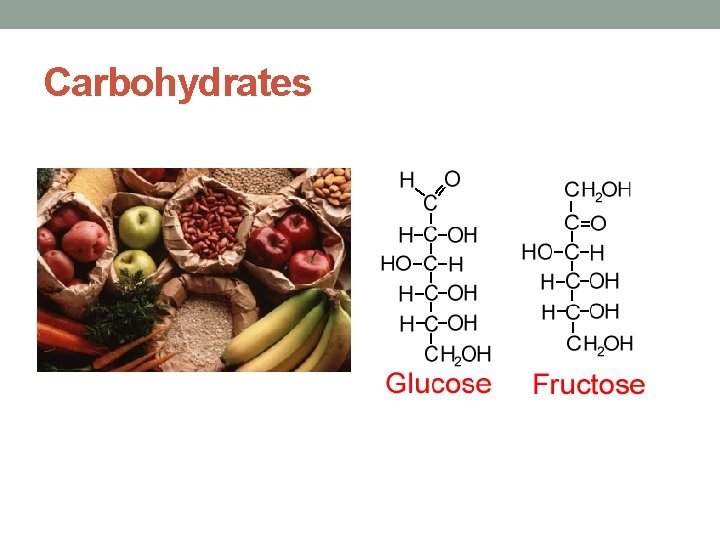
Carbohydrates
Lipids • Examples are fat, oil and waxes • Function: long term storage of energy, main structural component of the cell membrane • Structure: elements are carbon, hydrogen and oxygen but much less oxygen than carbohydrates; more difficult to break down than carbohydrates • Building blocks or Monomers are Glycerol and Fatty acid chains
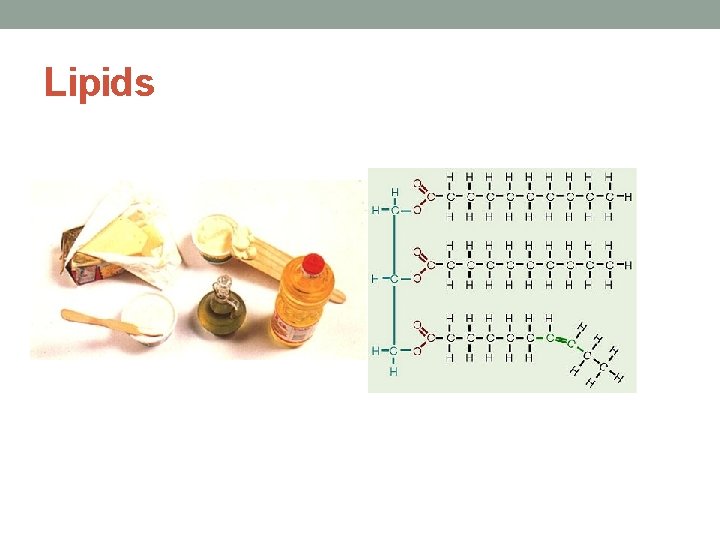
Lipids
Proteins • Examples are muscles, enzymes, antibodies, protein channels, hormones • Function: control rate of chemical reactions, control the movement of molecules across the cell membrane and major functional component of living things • Structure: elements are carbon, hydrogen, oxygen and nitrogen • Building Blocks or Monomers are Amino Acids
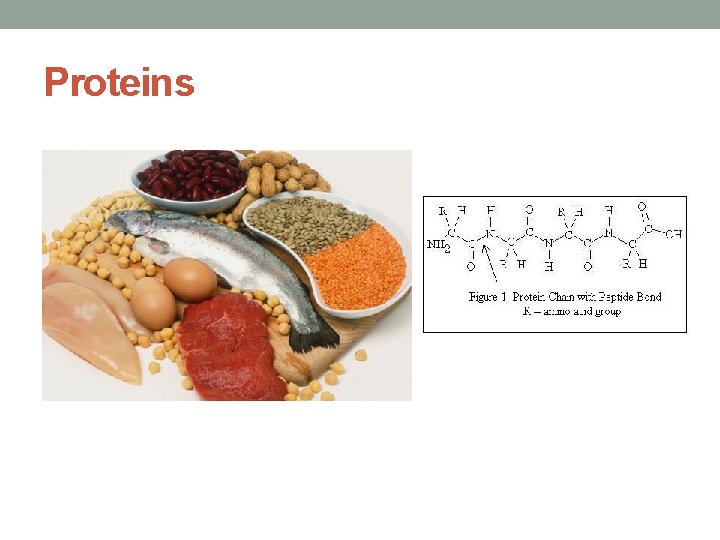
Proteins
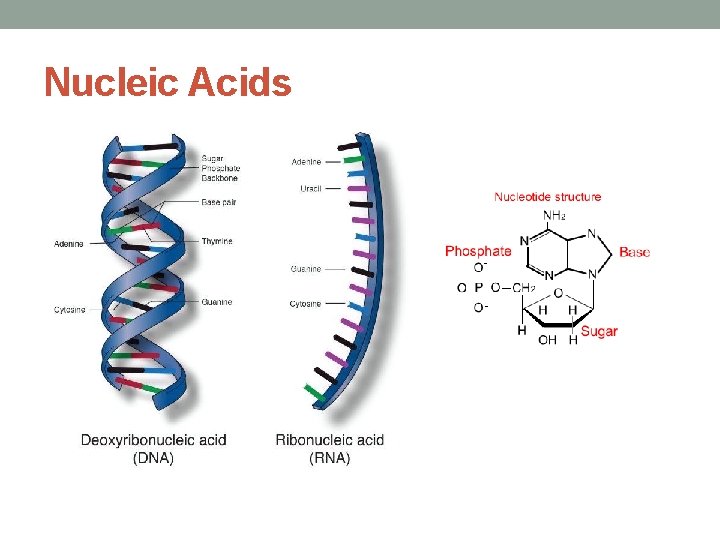
Nucleic Acids • Examples are DNA and RNA • Function: to store and transmit hereditary information • Structure: elements are carbon, hydrogen, oxygen, nitrogen, and phosphorous • Building block or Monomer-- Nucleotide
Nucleic Acids
- Slides: 10