
BIOMOLECULES Carbon C hydrogen H and oxygen O
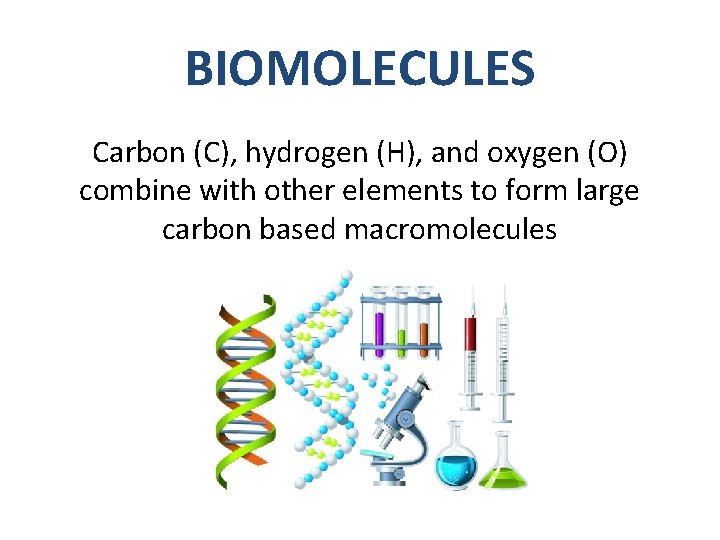
BIOMOLECULES Carbon (C), hydrogen (H), and oxygen (O) combine with other elements to form large carbon based macromolecules

• Element: pure substance made of one kind of atom • Ex: Carbon (C) • Molecule: 2 or more atoms bonded together • Example: CO 2 • Macromolecule: large molecule made of many smaller parts • Example: DNA

monomers join together to make polymers monomer one building block polymer many connected monomers
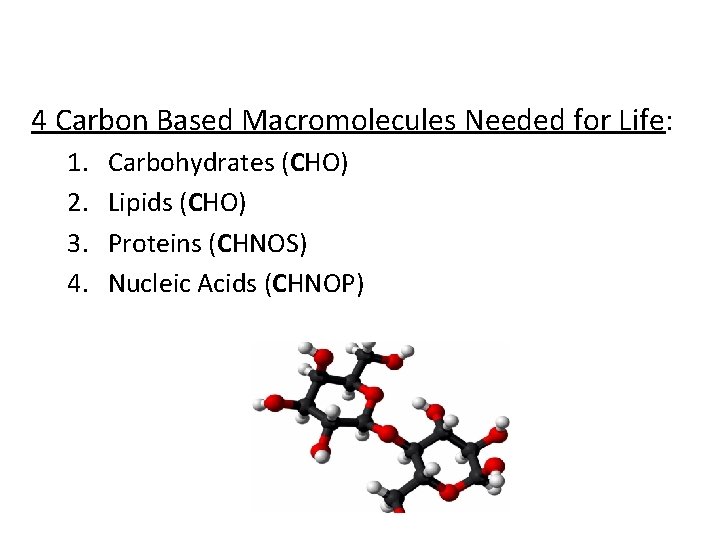
4 Carbon Based Macromolecules Needed for Life: 1. 2. 3. 4. Carbohydrates (CHO) Lipids (CHO) Proteins (CHNOS) Nucleic Acids (CHNOP)
![Monomers Carbohydrates single sugar [monosaccharide] Lipids fatty acids Proteins amino acids Nucleic acids nucleotides](http://slidetodoc.com/presentation_image/6c2d6303453bddf8fdde5f59b0329388/image-5.jpg "Monomers Carbohydrates single sugar [monosaccharide] Lipids fatty acids Proteins amino acids Nucleic acids nucleotides")
Monomers Carbohydrates single sugar [monosaccharide] Lipids fatty acids Proteins amino acids Nucleic acids nucleotides
Functions Carbohydrates energy Lipids stores energy, waterproofing, insulation Proteins structure, speed up reactions, signals, many more Nucleic acids stores genetic code
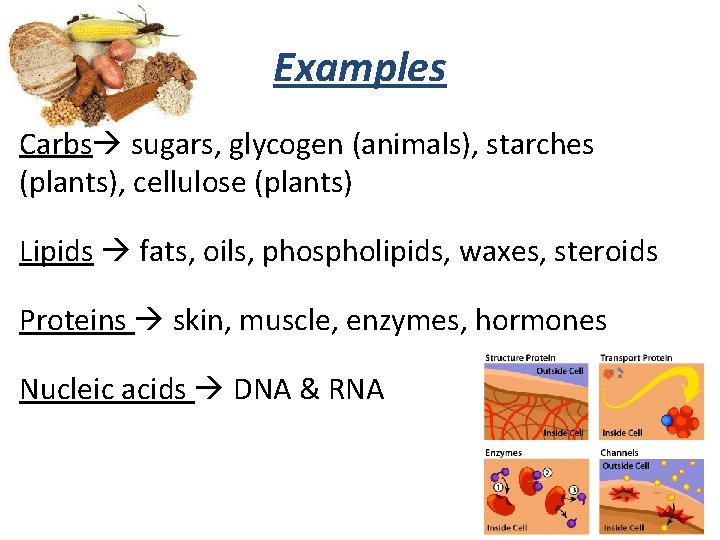
Examples Carbs sugars, glycogen (animals), starches (plants), cellulose (plants) Lipids fats, oils, phospholipids, waxes, steroids Proteins skin, muscle, enzymes, hormones Nucleic acids DNA & RNA
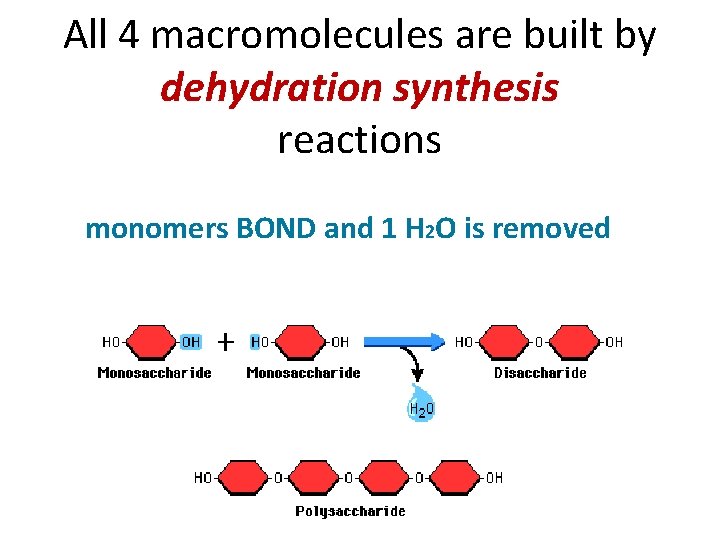
All 4 macromolecules are built by dehydration synthesis reactions monomers BOND and 1 H 2 O is removed
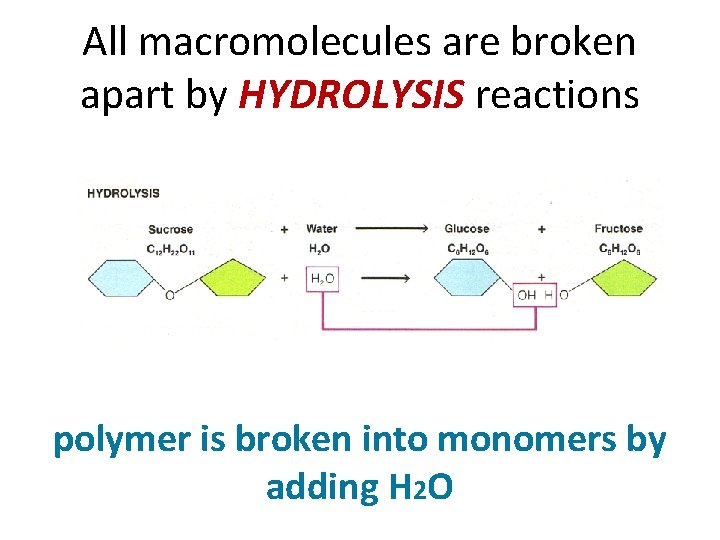
All macromolecules are broken apart by HYDROLYSIS reactions polymer is broken into monomers by adding H 2 O

POLYMER MONOMER CARBOHYDRATES Monosaccharide PROTEINS Amino Acids LIPIDS Glycerol + fatty Acids NUCLEIC ACIDS Nucleotides (sugars, glycogen, starches, cellulose) (hormones, enzymes, skin, muscle, etc) (fats, oils, waxes, steroids) (DNA, RNA)
- Slides: 10