
BIOMOLECULES Angenica M Natanauan Ericka Mae Canlubo Table
BIOMOLECULES Angenica M. Natanauan Ericka Mae Canlubo
Table of Contents Biological Biomolecules Carbohydrates Structure Food Sources Proteins Structure Food Sources
Table of Contents Lipids Structure Food Sources
Biological Biomolecules Nutrition is the key to metabolism. Nutrients in relation to metabolism encompass bodily requirement for various substances, individual functions in body, amount needed, level below which poor health results etc. Essential nutrients supply energy (calories) and supply the necessary chemicals which the body itself cannot synthesize. Food provides a variety of substances that are essential for the building, upkeep, and repair of body tissues, and for the efficient functioning of the body.
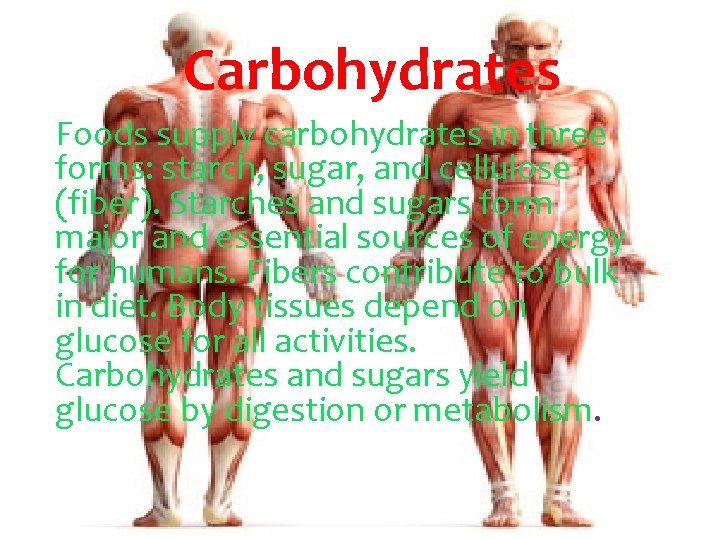
Carbohydrates Foods supply carbohydrates in three forms: starch, sugar, and cellulose (fiber). Starches and sugars form major and essential sources of energy for humans. Fibers contribute to bulk in diet. Body tissues depend on glucose for all activities. Carbohydrates and sugars yield glucose by digestion or metabolism.
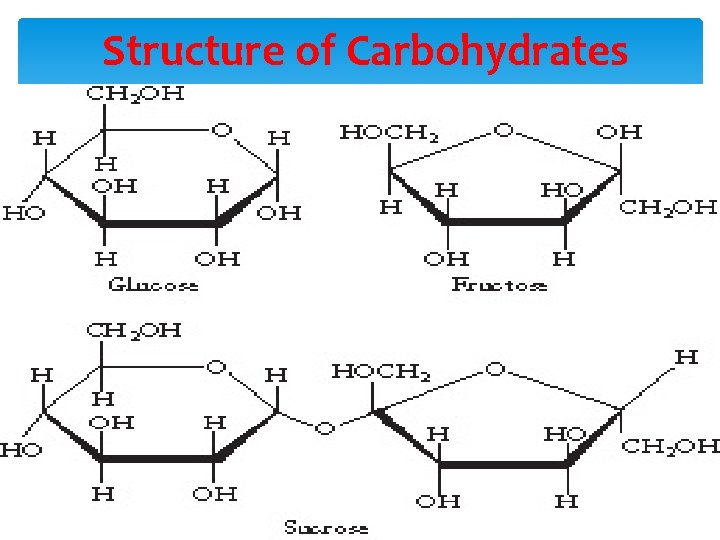
Structure of Carbohydrates
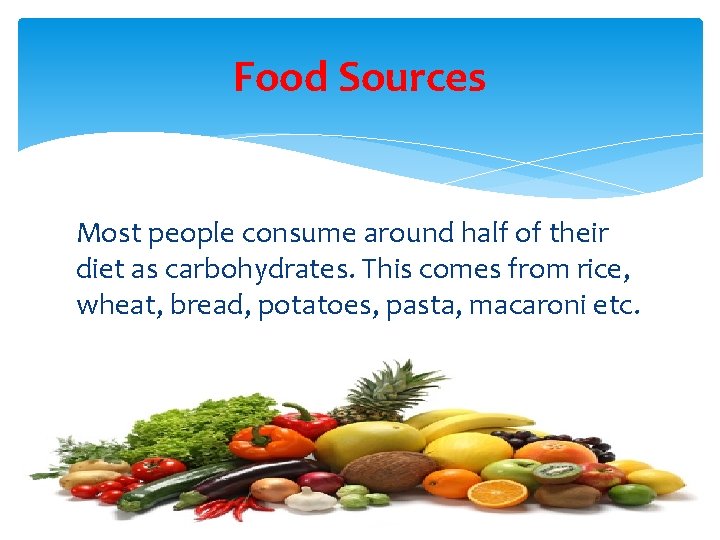
Food Sources Most people consume around half of their diet as carbohydrates. This comes from rice, wheat, bread, potatoes, pasta, macaroni etc.
Proteins are the main tissue builders in the body. They are part of every cell in the body. Proteins help in cell structure, functions, haemoglobin formation to carry oxygen, enzymes to carry out vital reactions and a myriad of other functions in the body. Proteins are also vital in supplying nitrogen for DNA and RNA genetic material and energy production. Proteins are necessary for nutrition because they contain amino acids. Among the 20 or more amino acids, the human body is unable to synthesize 8 and these are called essential amino acids.
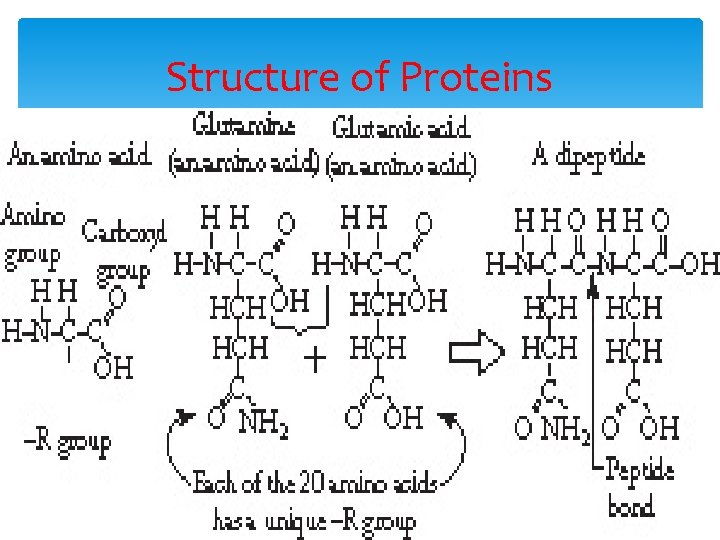
Structure of Proteins
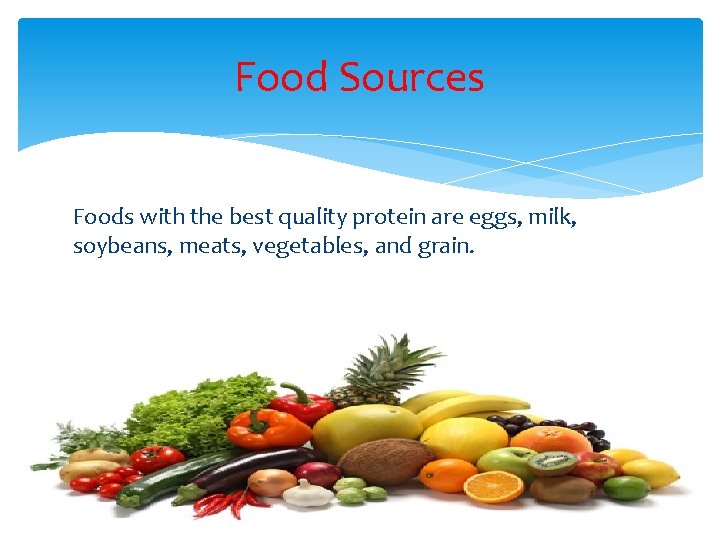
Food Sources Foods with the best quality protein are eggs, milk, soybeans, meats, vegetables, and grain.
Lipids The major aspects of lipid metabolism are involved with Fatty Acid Oxidation to produce energy or the synthesis of lipids which is called Lipogenesis. Lipid metabolism is closely connected to the metabolism of carbohydrates which may be converted to fats. This can be seen in the diagram on the left. The metabolism of both is upset by diabetes mellitus.
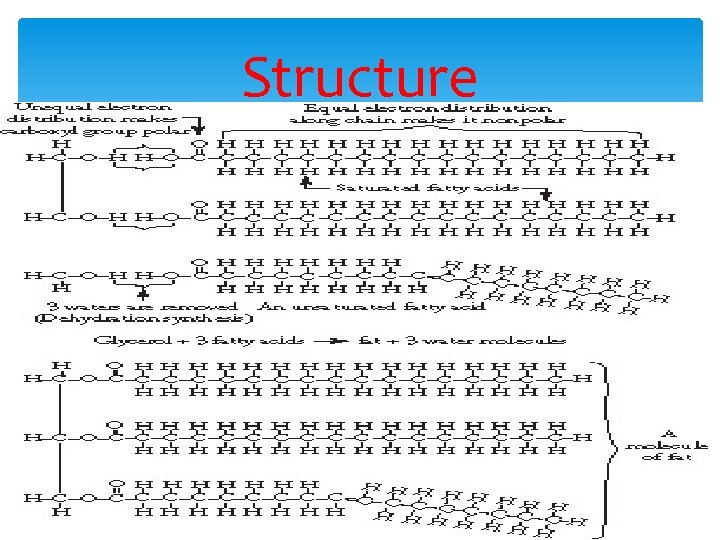
Structure
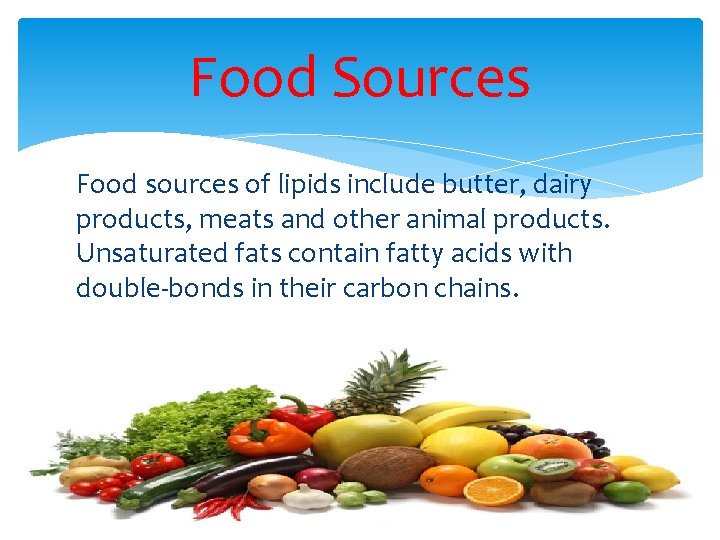
Food Sources Food sources of lipids include butter, dairy products, meats and other animal products. Unsaturated fats contain fatty acids with double-bonds in their carbon chains.

THANK YOU!
- Slides: 14