
BIOMES What is a Biome Biome A group
BIOMES
What is a Biome? • Biome: A group of land ecosystems with similar climates and organisms. • Ecosystem: The community of organisms that live in a particular area, along with their nonliving surroundings.
How many biomes are there and what are they? • There are 6 major biomes – Rain Forests – Desert – Grassland – Deciduous forest – Boreal forest – Tundra

Rain Forest Biome • Two types: – Temperate Rain Forests found in the Northwestern United States. – Tropical Rain Forests found along the equator. Sometimes called Jungles.
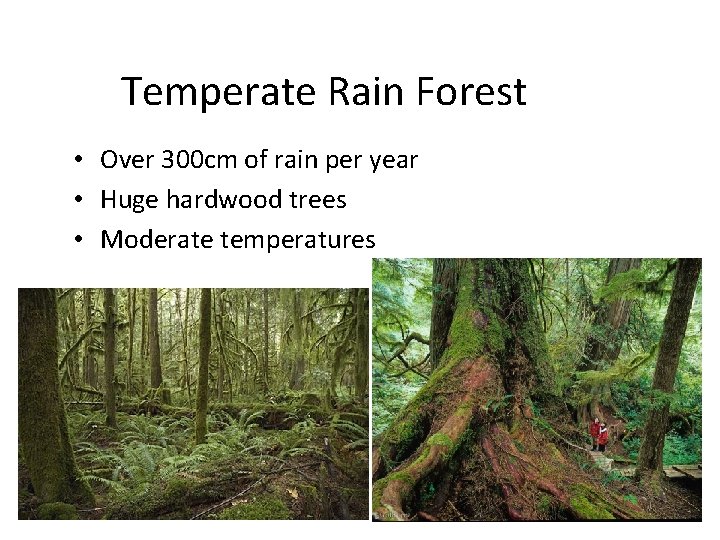
Temperate Rain Forest • Over 300 cm of rain per year • Huge hardwood trees • Moderate temperatures

Tropical Rain Forest • Close to the equator. • Climate is warm and humid year round • Several distinct tree layers in the tropical forest. • Have more plant and animal species than any other biome!
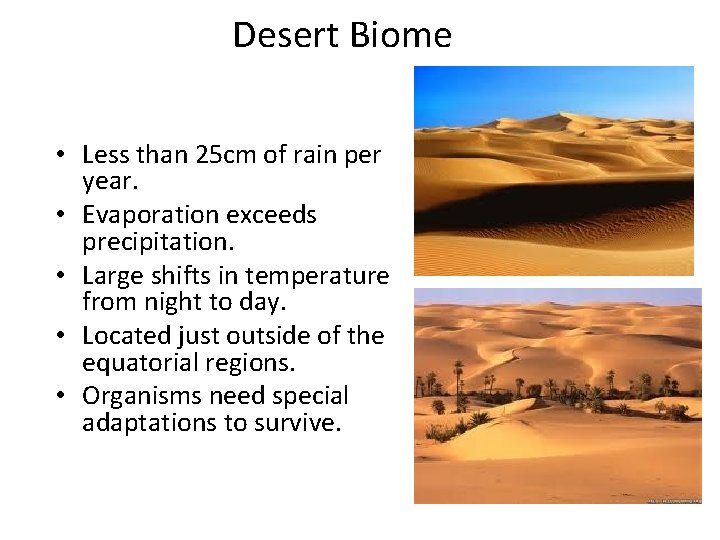
Desert Biome • Less than 25 cm of rain per year. • Evaporation exceeds precipitation. • Large shifts in temperature from night to day. • Located just outside of the equatorial regions. • Organisms need special adaptations to survive.
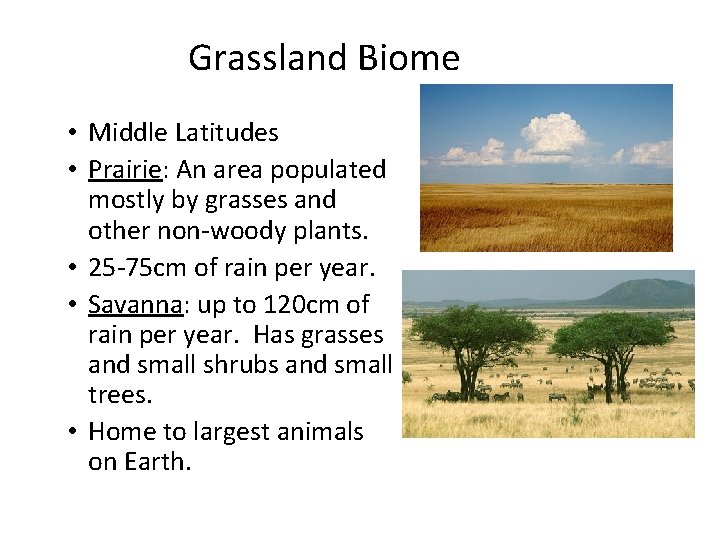
Grassland Biome • Middle Latitudes • Prairie: An area populated mostly by grasses and other non-woody plants. • 25 -75 cm of rain per year. • Savanna: up to 120 cm of rain per year. Has grasses and small shrubs and small trees. • Home to largest animals on Earth.
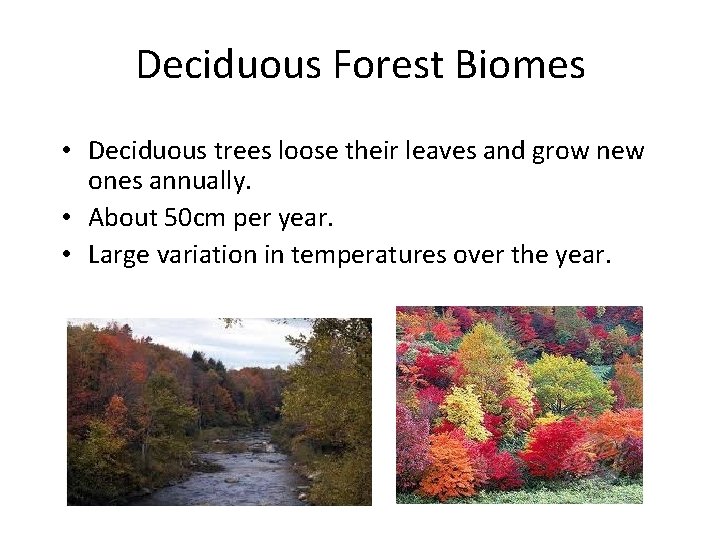
Deciduous Forest Biomes • Deciduous trees loose their leaves and grow new ones annually. • About 50 cm per year. • Large variation in temperatures over the year.
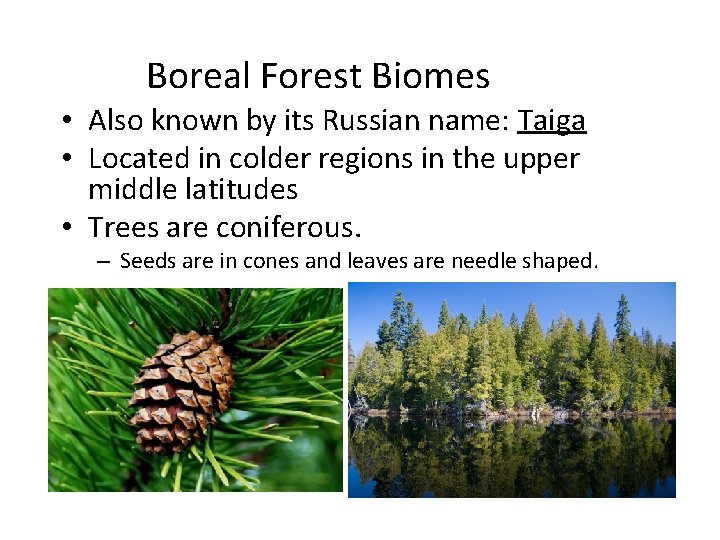
Boreal Forest Biomes • Also known by its Russian name: Taiga • Located in colder regions in the upper middle latitudes • Trees are coniferous. – Seeds are in cones and leaves are needle shaped.
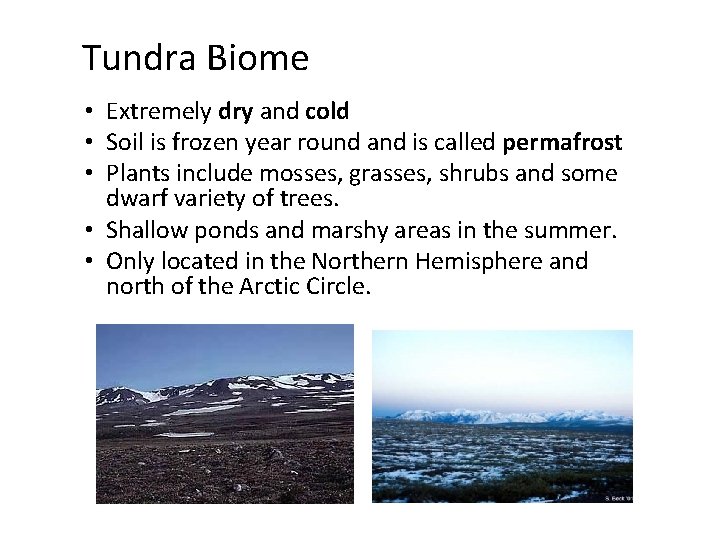
Tundra Biome • Extremely dry and cold • Soil is frozen year round and is called permafrost • Plants include mosses, grasses, shrubs and some dwarf variety of trees. • Shallow ponds and marshy areas in the summer. • Only located in the Northern Hemisphere and north of the Arctic Circle.
- Slides: 11