
Biomes Tundra Known as the barren or treeless
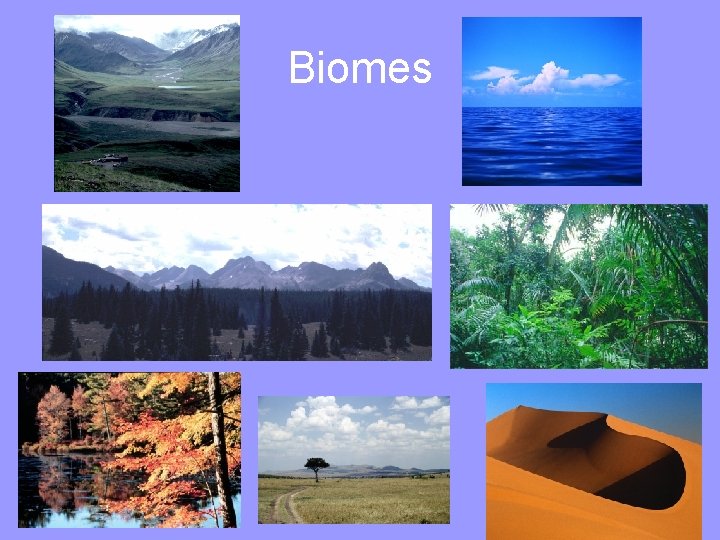
Biomes

Tundra • Known as the barren or treeless land. Characteristics of this biome include: 1. Extremely cold temperature 2. Long, dark winters (6 to 10 months) 3. Precipitation Low (less than 5 in/year) 4. Low biotic diversity 5. Simple vegetation 6. Short growth and reproduction seasons 7. Ground is covered in permafrost
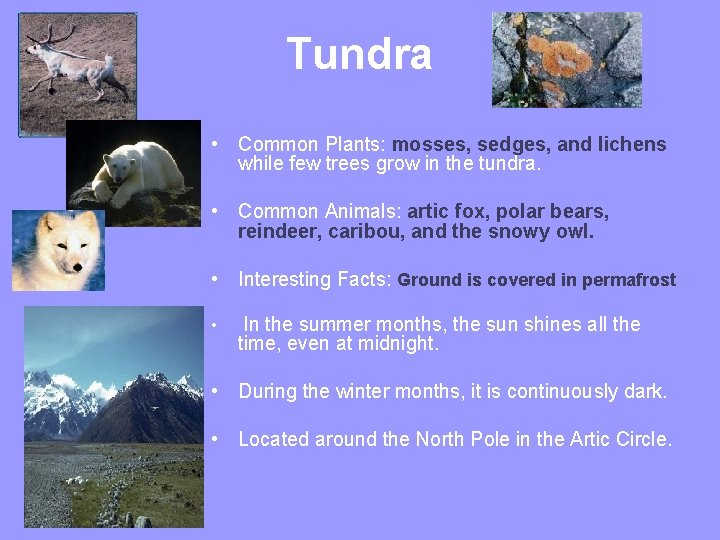
Tundra • Common Plants: mosses, sedges, and lichens while few trees grow in the tundra. • Common Animals: artic fox, polar bears, reindeer, caribou, and the snowy owl. • Interesting Facts: Ground is covered in permafrost • In the summer months, the sun shines all the time, even at midnight. • During the winter months, it is continuously dark. • Located around the North Pole in the Artic Circle.
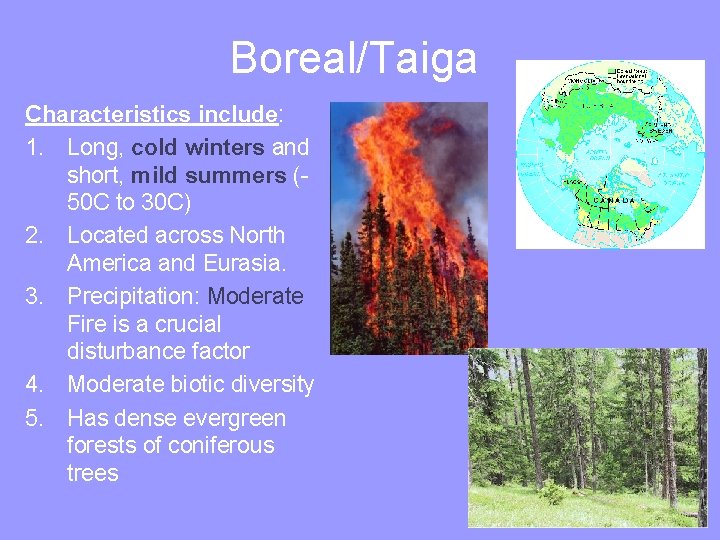
Boreal/Taiga Characteristics include: 1. Long, cold winters and short, mild summers (50 C to 30 C) 2. Located across North America and Eurasia. 3. Precipitation: Moderate Fire is a crucial disturbance factor 4. Moderate biotic diversity 5. Has dense evergreen forests of coniferous trees
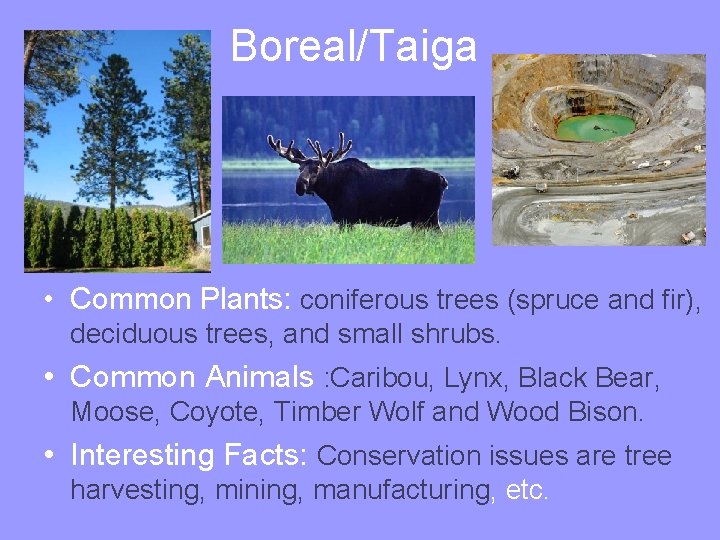
Boreal/Taiga • Common Plants: coniferous trees (spruce and fir), deciduous trees, and small shrubs. • Common Animals : Caribou, Lynx, Black Bear, Moose, Coyote, Timber Wolf and Wood Bison. • Interesting Facts: Conservation issues are tree harvesting, mining, manufacturing, etc.
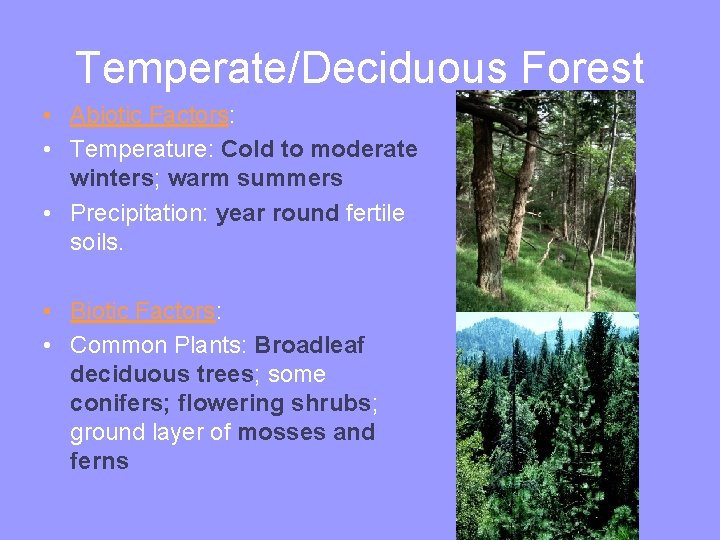
Temperate/Deciduous Forest • Abiotic Factors: • Temperature: Cold to moderate winters; warm summers • Precipitation: year round fertile soils. • Biotic Factors: • Common Plants: Broadleaf deciduous trees; some conifers; flowering shrubs; ground layer of mosses and ferns
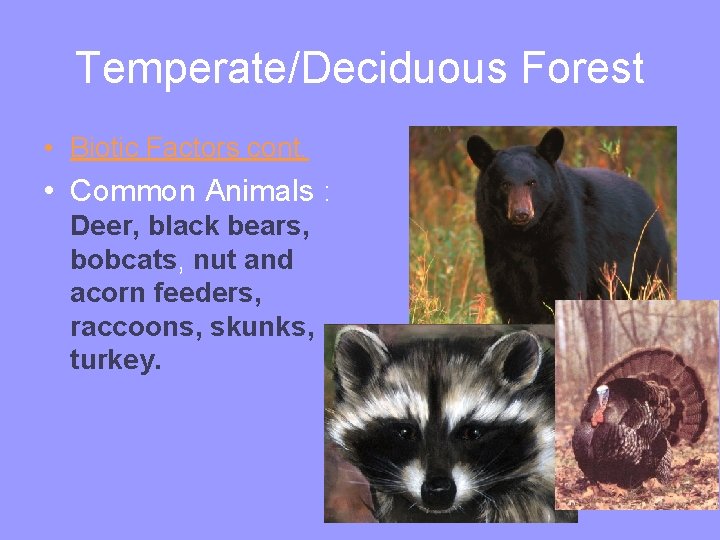
Temperate/Deciduous Forest • Biotic Factors cont. • Common Animals : Deer, black bears, bobcats, nut and acorn feeders, raccoons, skunks, turkey.
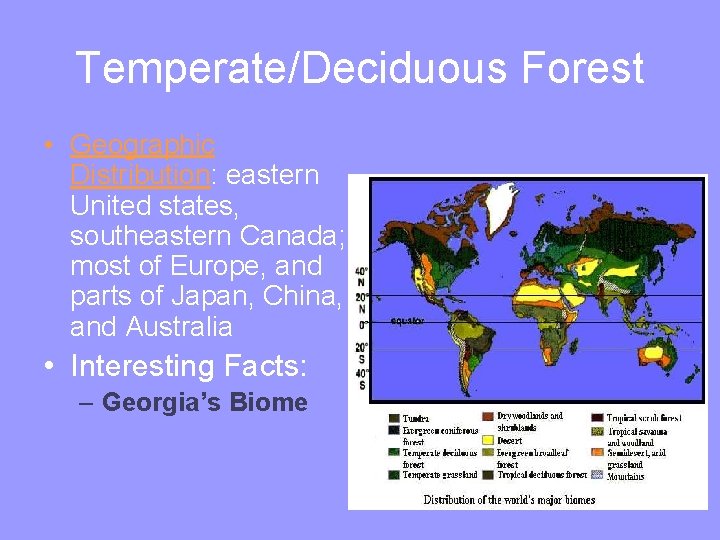
Temperate/Deciduous Forest • Geographic Distribution: eastern United states, southeastern Canada; most of Europe, and parts of Japan, China, and Australia • Interesting Facts: – Georgia’s Biome
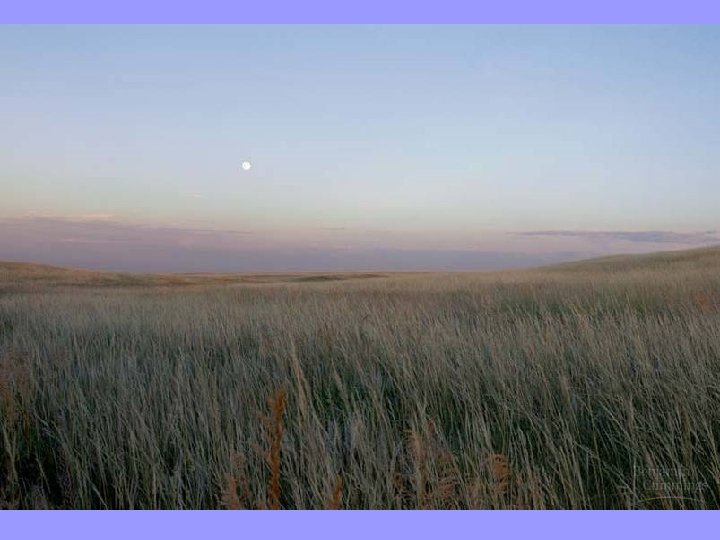
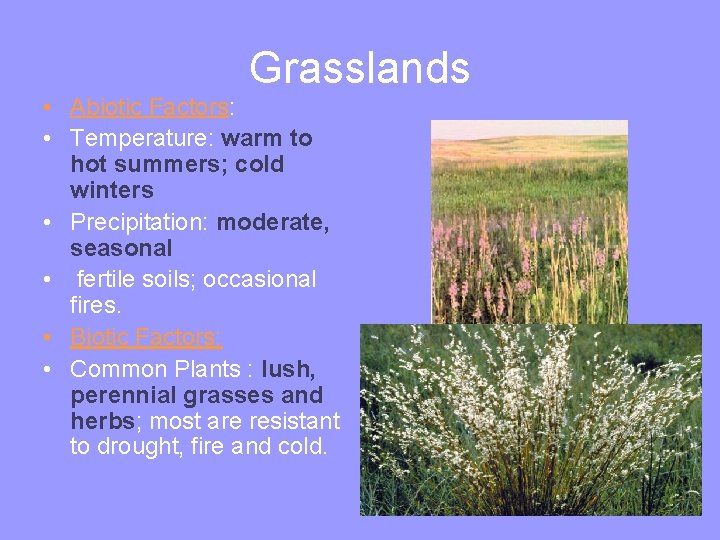
Grasslands • Abiotic Factors: • Temperature: warm to hot summers; cold winters • Precipitation: moderate, seasonal • fertile soils; occasional fires. • Biotic Factors: • Common Plants : lush, perennial grasses and herbs; most are resistant to drought, fire and cold.
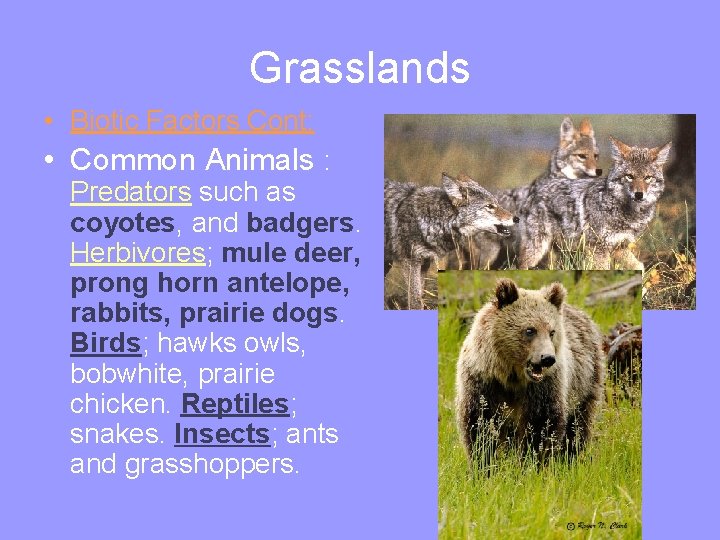
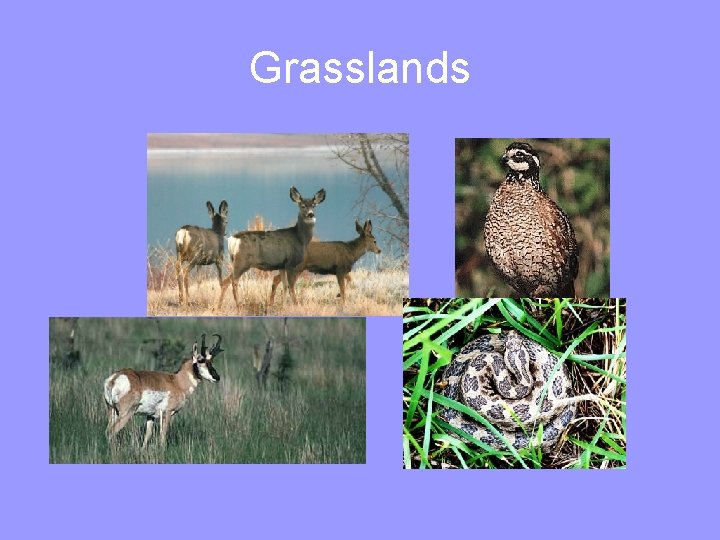
Grasslands • Biotic Factors Cont: • Common Animals : Predators such as coyotes, and badgers. Herbivores; mule deer, prong horn antelope, rabbits, prairie dogs. Birds; hawks owls, bobwhite, prairie chicken. Reptiles; snakes. Insects; ants and grasshoppers.
Grasslands
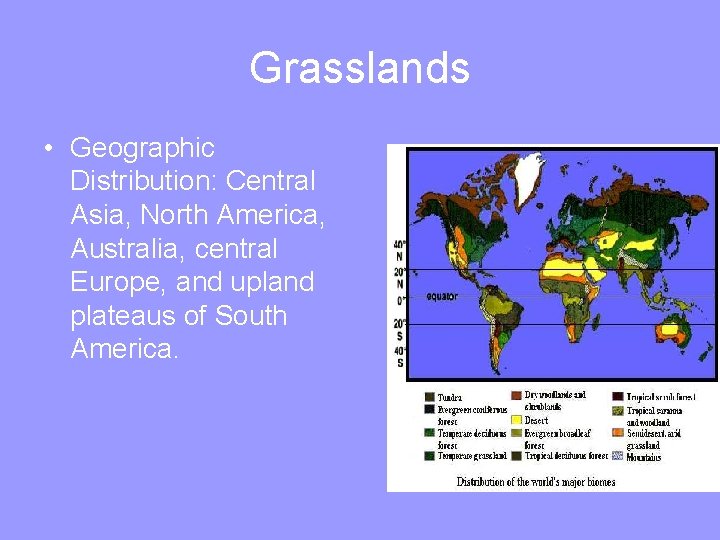
Grasslands • Geographic Distribution: Central Asia, North America, Australia, central Europe, and upland plateaus of South America.
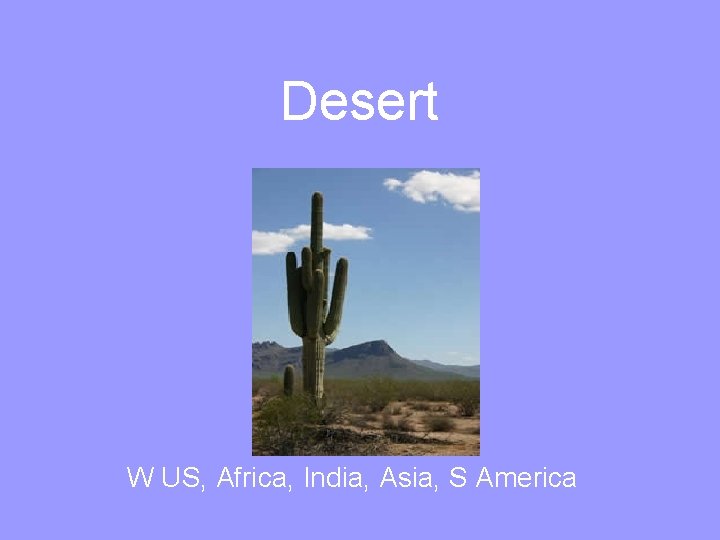
Desert W US, Africa, India, Asia, S America
Temperature and Precipitation • Variable temperatures depending on elevation and latitude • Extreme temperature changes from day to night – Hot to Cold • Driest of all biomes – Annual precipitation of less than 25 cm rainfall per year (Low)
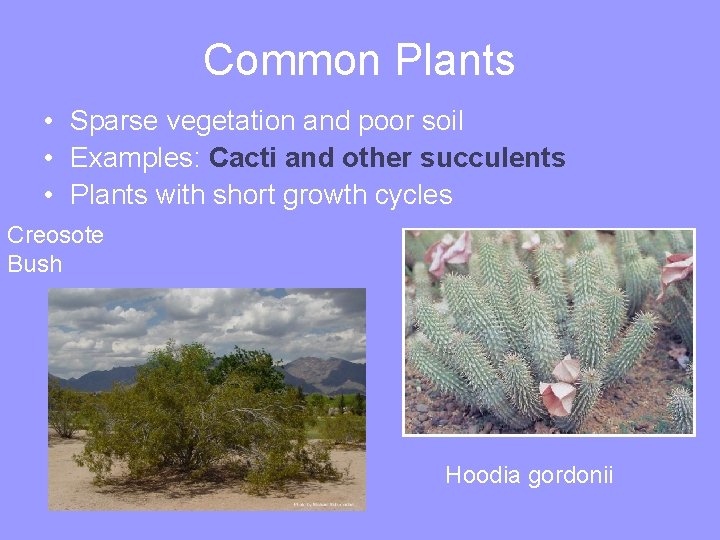
Common Plants • Sparse vegetation and poor soil • Examples: Cacti and other succulents • Plants with short growth cycles Creosote Bush Hoodia gordonii
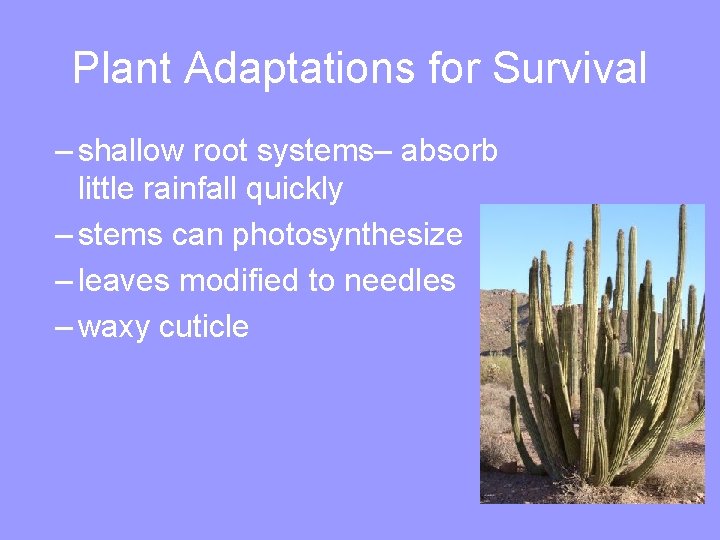
Plant Adaptations for Survival – shallow root systems– absorb little rainfall quickly – stems can photosynthesize – leaves modified to needles – waxy cuticle
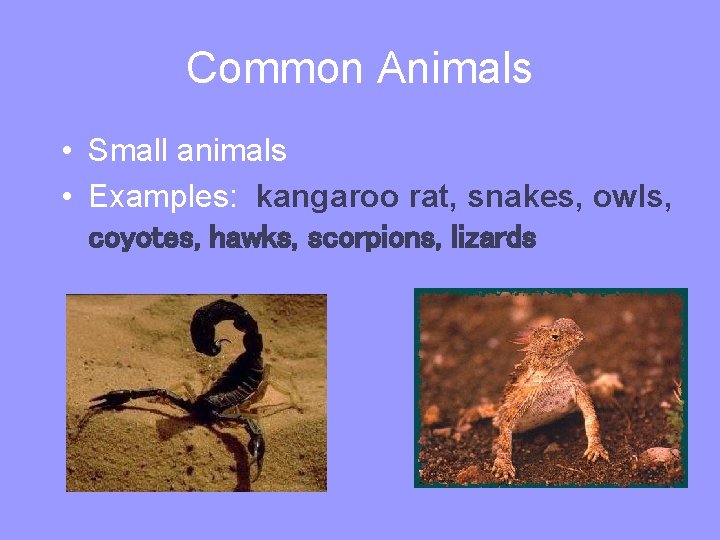
Common Animals • Small animals • Examples: kangaroo rat, snakes, owls, coyotes, hawks, scorpions, lizards
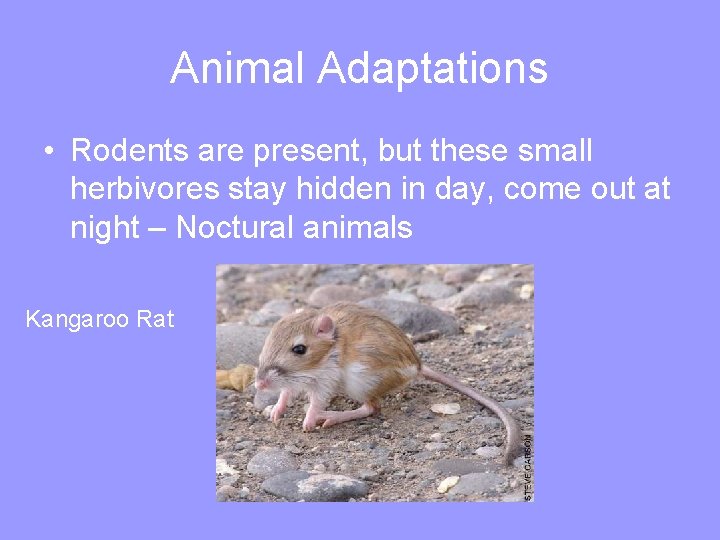
Animal Adaptations • Rodents are present, but these small herbivores stay hidden in day, come out at night – Noctural animals Kangaroo Rat
Interesting Facts • Organisms in this area can tolerate extreme conditions – Temperature and Precipitation • Deserts cover about one fifth of the Earth's surface • Disturbances are common in the form of occasional fires or cold weather, and sudden, infrequent, but intense rains that cause flooding.
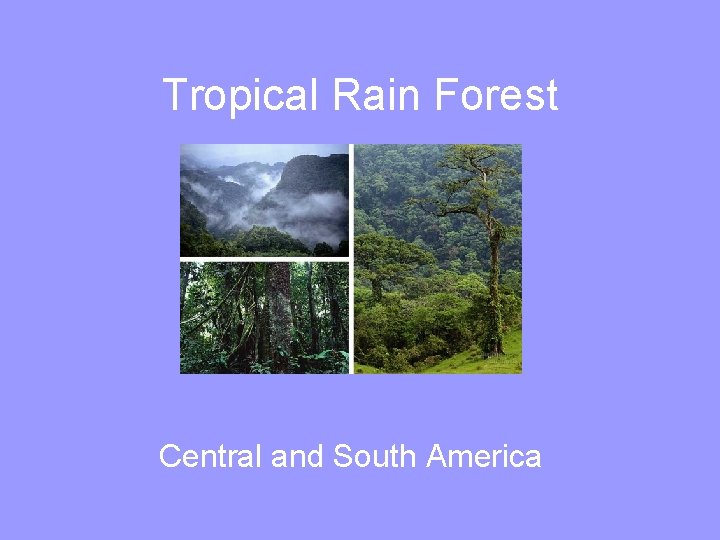
Tropical Rain Forest Central and South America
Temperature and Precipitation • Almost constant temp. of HOT: 25 o. C (77 o. F) Varies only slightly throughout the year • The average temperatures of the three warmest and three coldest months do not differ by more than 5 degrees. • Percipitation: High -More than 250 cm of rain fall each year • Very humid
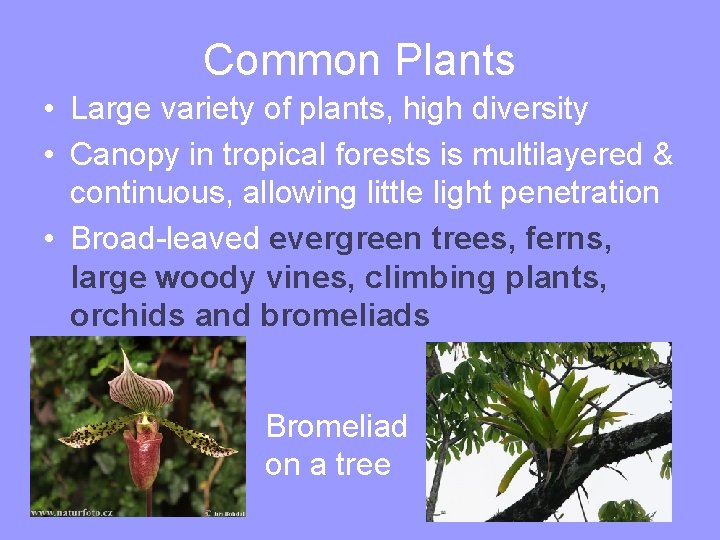
Common Plants • Large variety of plants, high diversity • Canopy in tropical forests is multilayered & continuous, allowing little light penetration • Broad-leaved evergreen trees, ferns, large woody vines, climbing plants, orchids and bromeliads Bromeliad on a tree
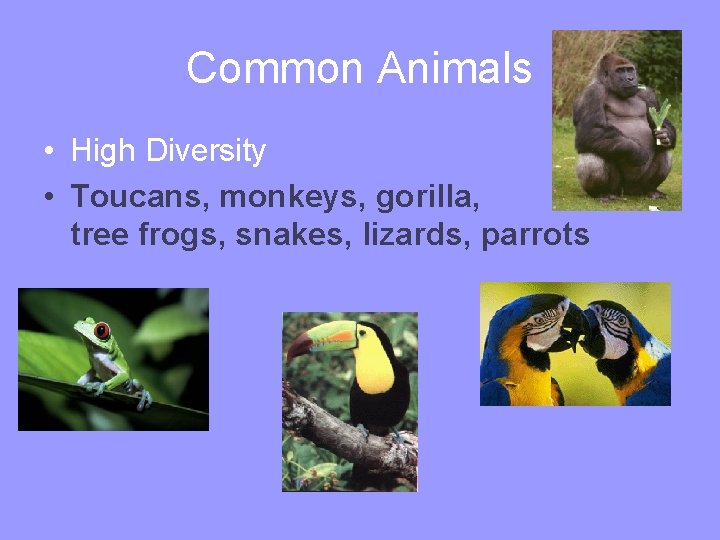
Common Animals • High Diversity • Toucans, monkeys, gorilla, tree frogs, snakes, lizards, parrots
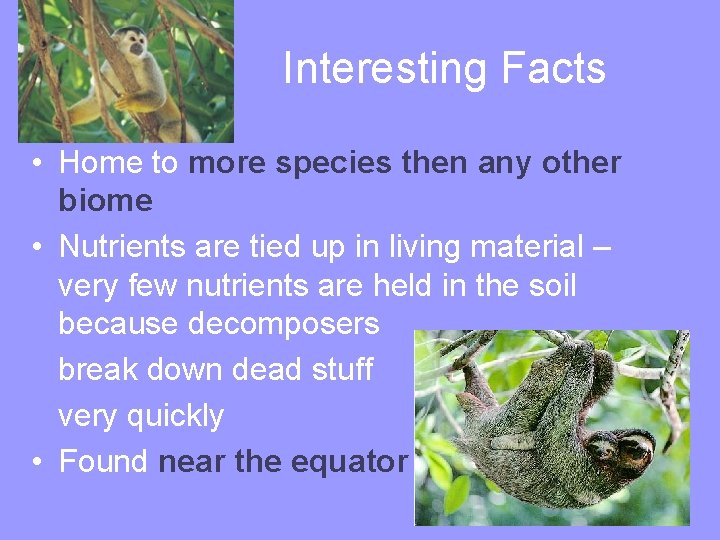
Interesting Facts • Home to more species then any other biome • Nutrients are tied up in living material – very few nutrients are held in the soil because decomposers break down dead stuff very quickly • Found near the equator
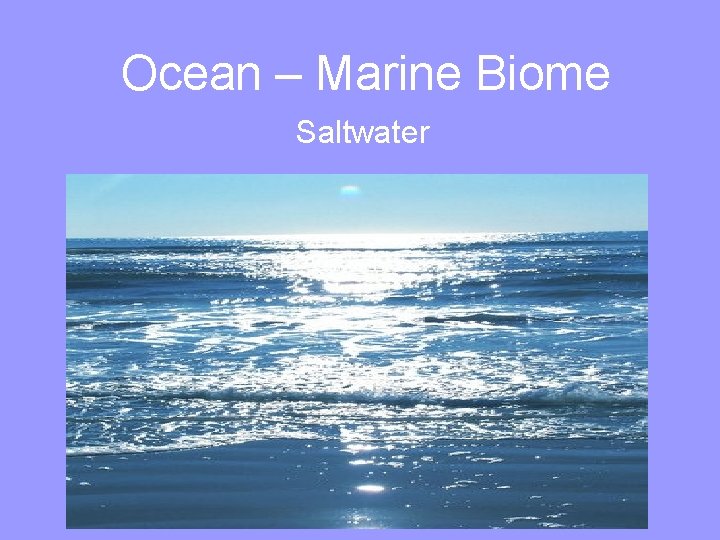
Ocean – Marine Biome Saltwater
Temperature & Precipitation • Temperature: Varies -ranges based on depth and location on Earth • Precipitation - ? Common Plants • Kelp and Corals are often mistaken as plants…. very few ocean plants
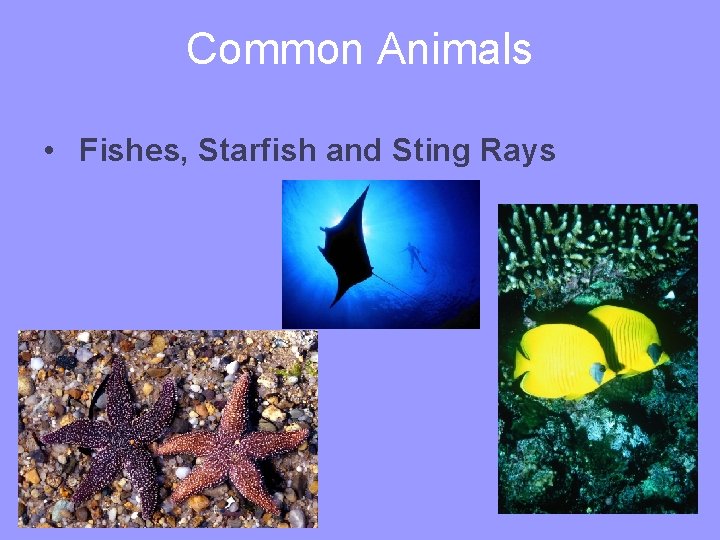
Common Animals • Fishes, Starfish and Sting Rays
Interesting Facts • Oceans cover about 70% of the Earth's surface. The oceans contain roughly 97% of the Earth's water supply. • Photic Zone (Light penetrates) • Aphotic Zone (Permanently dark) • Oceans contain the largest amount of living material (biomass) of all of the biomes – but most of them are microscopic organisms!!!
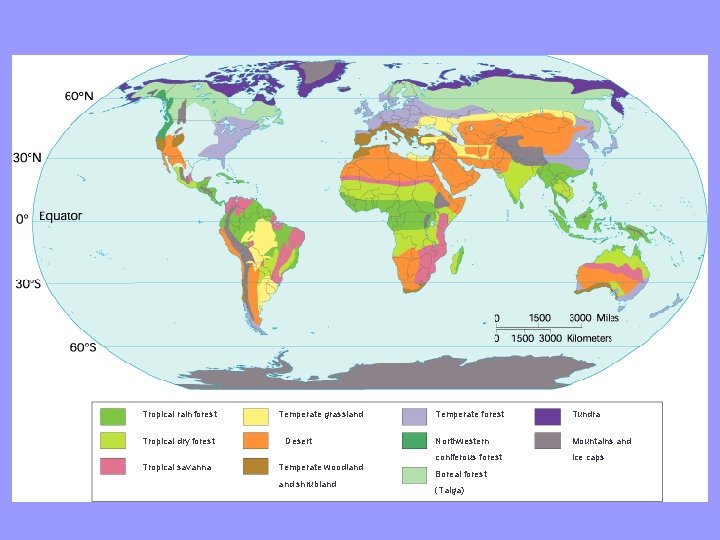
Tropical rain forest Tropical dry forest Tropical savanna Temperate grassland Desert Temperate woodland shrubland Temperate forest Tundra Northwestern Mountains and coniferous forest ice caps Boreal forest (Taiga)
- Slides: 31