
BIOMES Savannah Tundra Taiga Desert Temperate Forest Chaparral
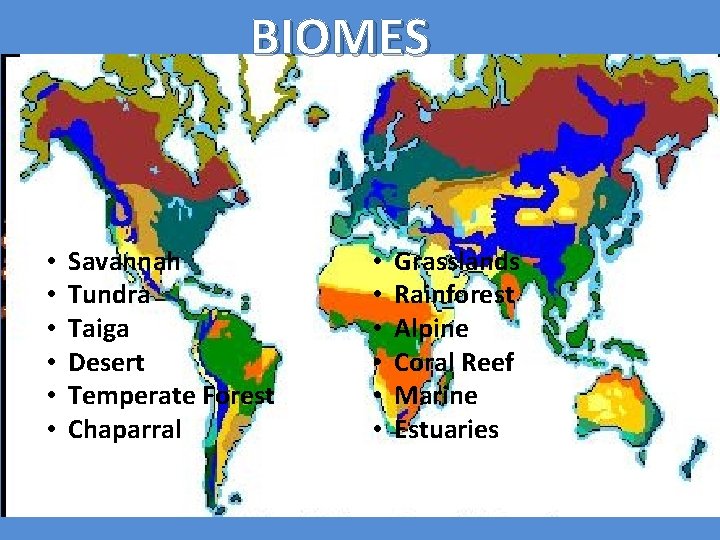
BIOMES • • • Savannah Tundra Taiga Desert Temperate Forest Chaparral • • • Grasslands Rainforest Alpine Coral Reef Marine Estuaries
What is an ecosystem? • All the living (biotic) and nonliving (abiotic) parts of an environment as well as the interactions among them • Ecosystems may be aquatic (water) or terrestrial (land). • Interactions may include: - producers (obtain energy by making their own food; plants -photosynthesis) - consumers (obtain energy by consuming their food) - decomposers ( get energy by breaking down dead organisms and the wastes of living things); bacteria, fungi (mold, mushrooms, etc) , worms, termites, etc.
Abiotic & Biotic Factors • Abiotic Factors (nonliving) - water - shelter sunlight - soil rocks - nutrients oxygen/air, nitrogen temperature/climate space, salinity, p. H • Biotic Factors (living) - Food - grass - trees - animals, insects, - plants - bacteria, fungi
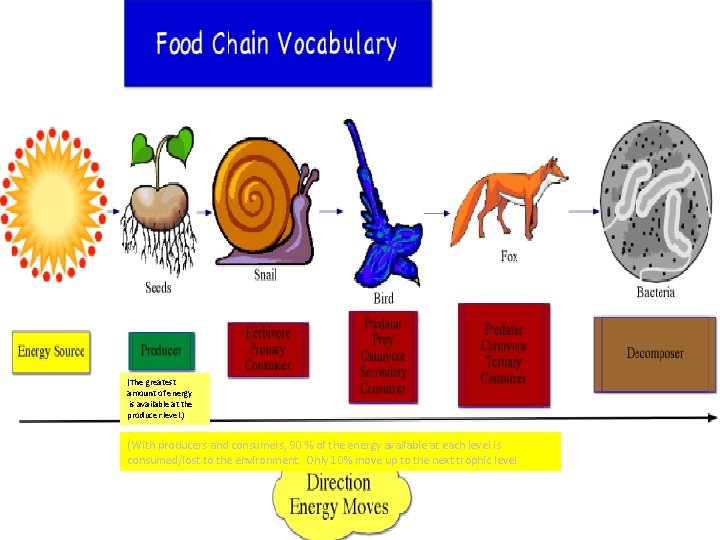
(The greatest amount of energy is available at the producer level. ) (With producers and consumers, 90 % of the energy available at each level is consumed/lost to the environment. Only 10% move up to the next trophic level.
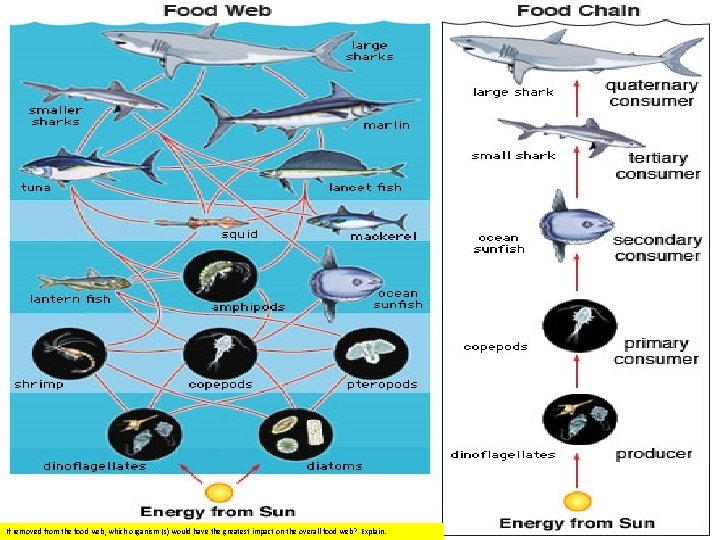
If removed from the food web, which organism (s) would have the greatest impact on the overall food web? Explain.
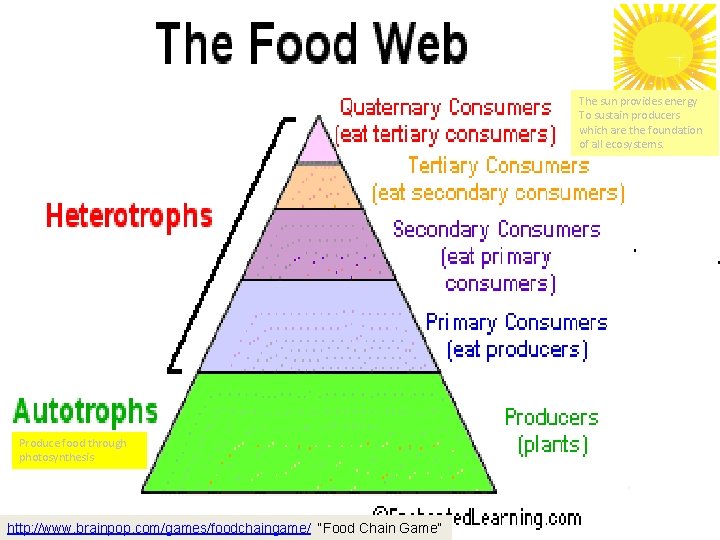
The sun provides energy To sustain producers which are the foundation of all ecosystems. Produce food through photosynthesis http: //www. brainpop. com/games/foodchaingame/ “Food Chain Game”
- Slides: 6