
BIOMES PP 105 123 BIOMES v v v

BIOMES PP. 105 -123
BIOMES v v v Different climates lead to different communities of organisms, especially vegetation Average temperature and precipitation Soil

http: //www. discovery. com/tv-shows/othershows/videos/assignment-discovery-shorts-iiibiomes-deserts/

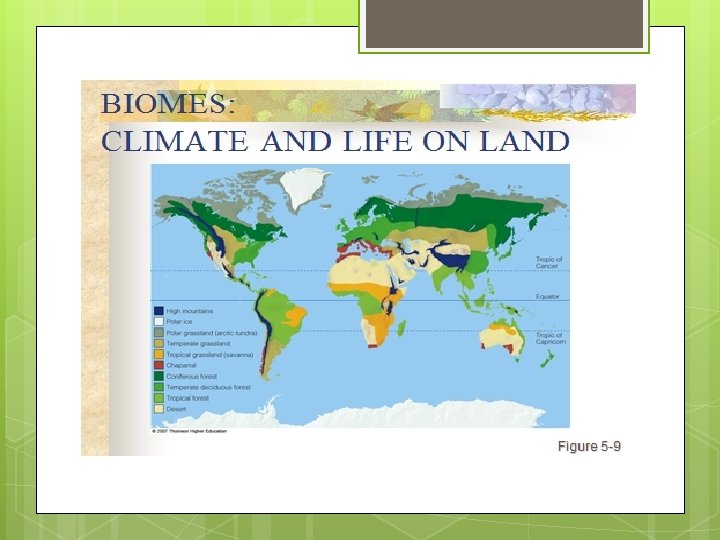

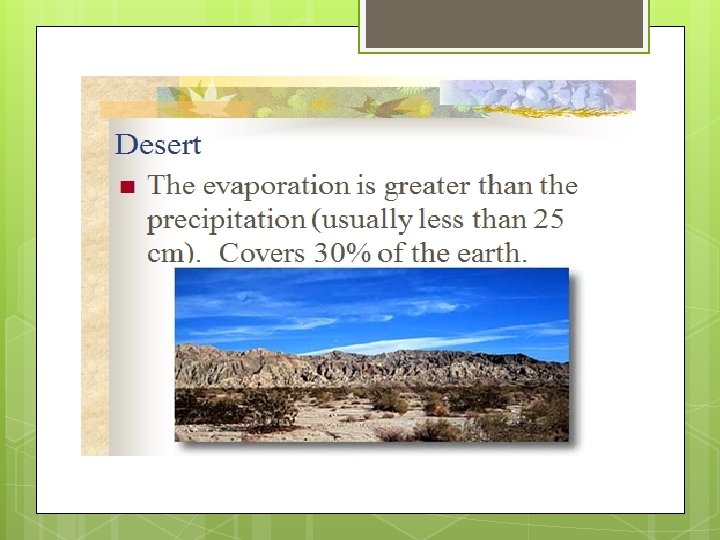
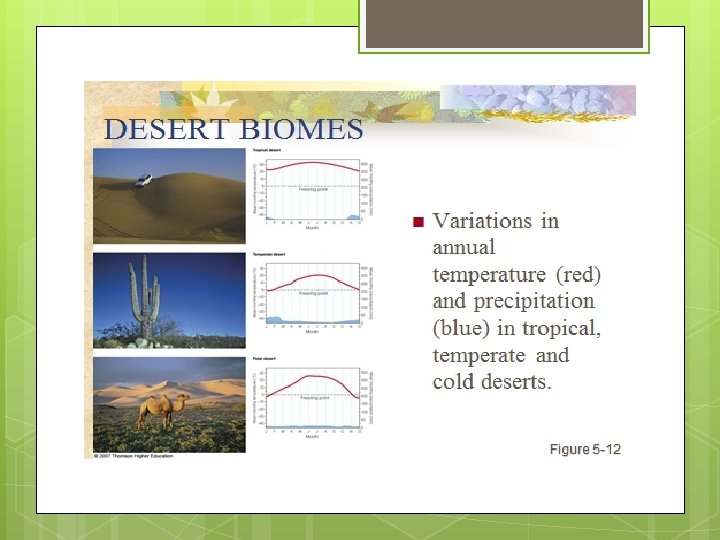
DESERTS Tropical, temperate, polar Determined by precipitation, not temperature Larger deserts are inland on continents Extreme temperatures between day and night
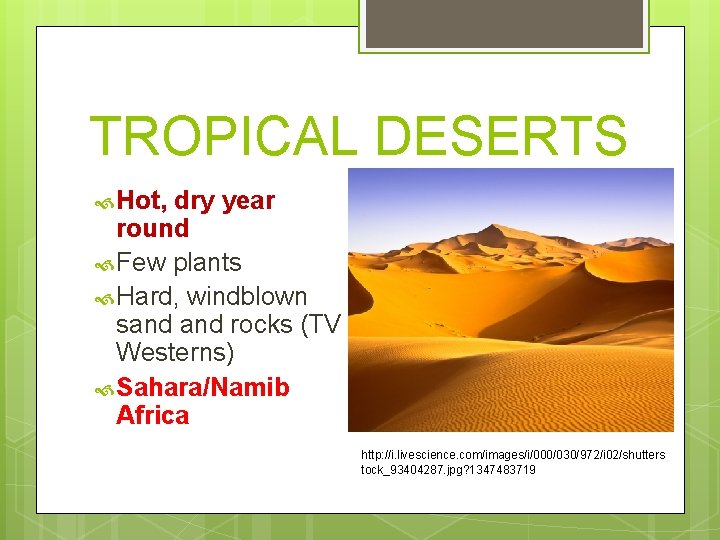
TROPICAL DESERTS Hot, dry year round Few plants Hard, windblown sand rocks (TV Westerns) Sahara/Namib Africa http: //i. livescience. com/images/i/000/030/972/i 02/shutters tock_93404287. jpg? 1347483719
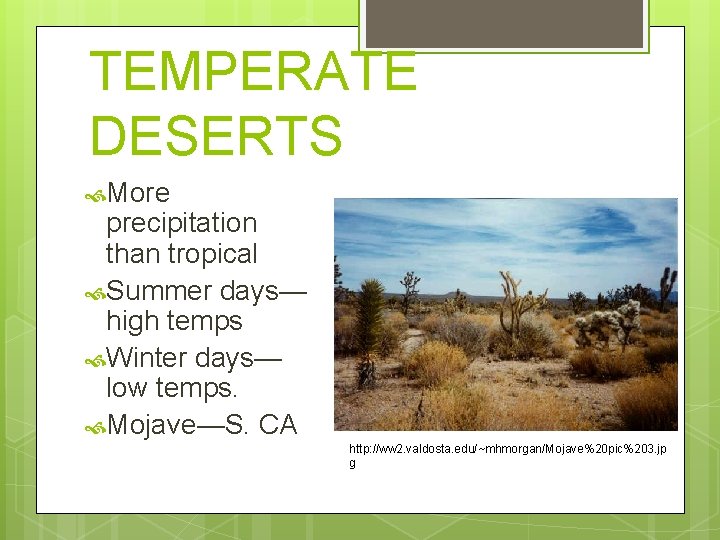
TEMPERATE DESERTS More precipitation than tropical Summer days— high temps Winter days— low temps. Mojave—S. CA http: //ww 2. valdosta. edu/~mhmorgan/Mojave%20 pic%203. jp g
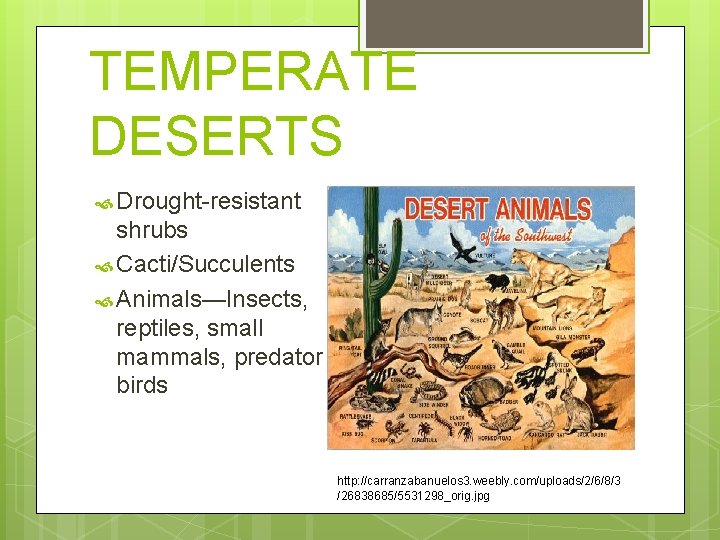
TEMPERATE DESERTS Drought-resistant shrubs Cacti/Succulents Animals—Insects, reptiles, small mammals, predator birds http: //carranzabanuelos 3. weebly. com/uploads/2/6/8/3 /26838685/5531298_orig. jpg
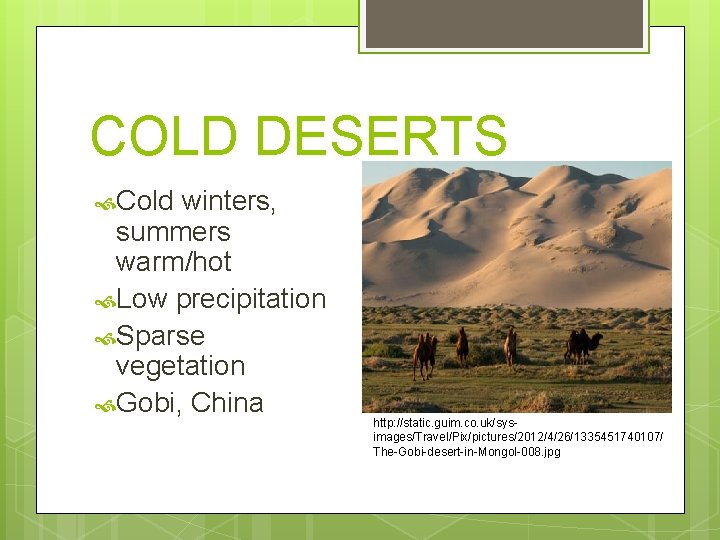
COLD DESERTS Cold winters, summers warm/hot Low precipitation Sparse vegetation Gobi, China http: //static. guim. co. uk/sysimages/Travel/Pix/pictures/2012/4/26/1335451740107/ The-Gobi-desert-in-Mongol-008. jpg
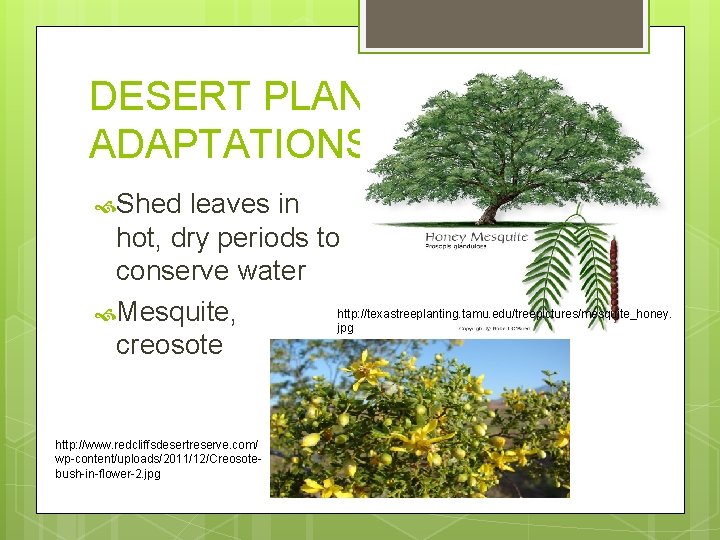
DESERT PLANT ADAPTATIONS Shed leaves in hot, dry periods to conserve water http: //texastreeplanting. tamu. edu/treepictures/mesquite_honey. Mesquite, jpg creosote http: //www. redcliffsdesertreserve. com/ wp-content/uploads/2011/12/Creosotebush-in-flower-2. jpg
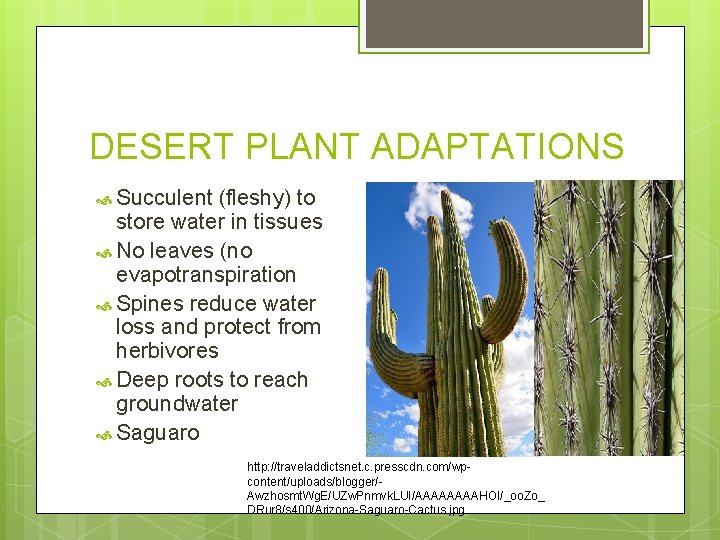
DESERT PLANT ADAPTATIONS Succulent (fleshy) to store water in tissues No leaves (no evapotranspiration Spines reduce water loss and protect from herbivores Deep roots to reach groundwater Saguaro http: //traveladdictsnet. c. presscdn. com/wpcontent/uploads/blogger/Awzhosmt. Wg. E/UZw. Pnmvk. LUI/AAAAHOI/_oo. Zo_ DRur 8/s 400/Arizona-Saguaro-Cactus. jpg
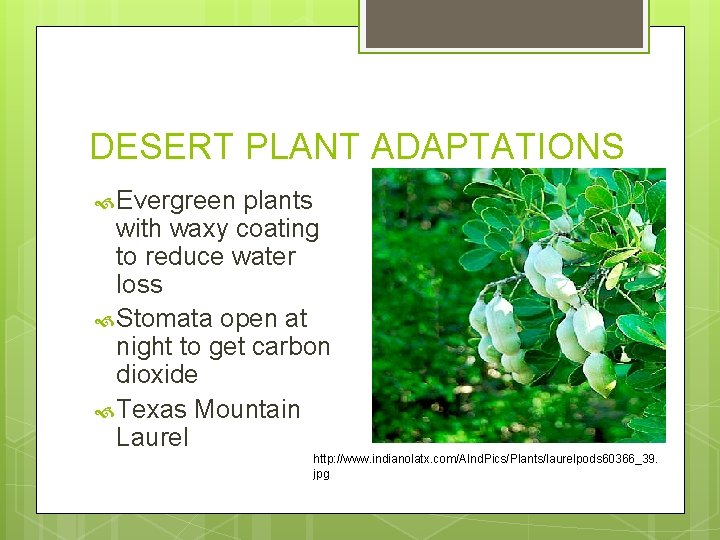
DESERT PLANT ADAPTATIONS Evergreen plants with waxy coating to reduce water loss Stomata open at night to get carbon dioxide Texas Mountain Laurel http: //www. indianolatx. com/AInd. Pics/Plants/laurelpods 60366_39. jpg
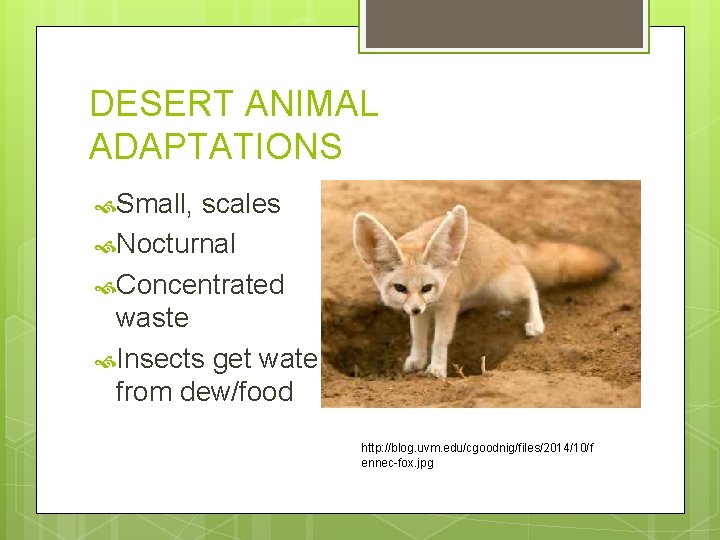
DESERT ANIMAL ADAPTATIONS Small, scales Nocturnal Concentrated waste Insects get water from dew/food http: //blog. uvm. edu/cgoodnig/files/2014/10/f ennec-fox. jpg
DESERT SOILS Long recovery period from disturbances Slow plant growth, low species diversity Slow nutrient recycling due to sparse bacteria Lack of water Nutrient-poor, mineral rich
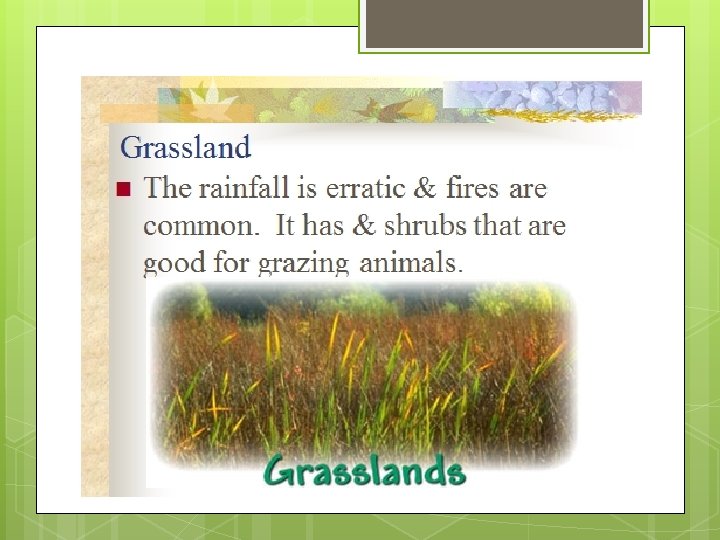
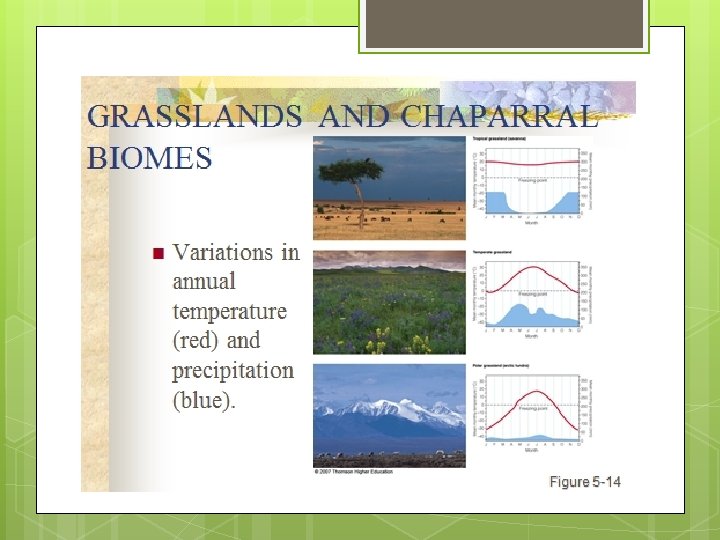
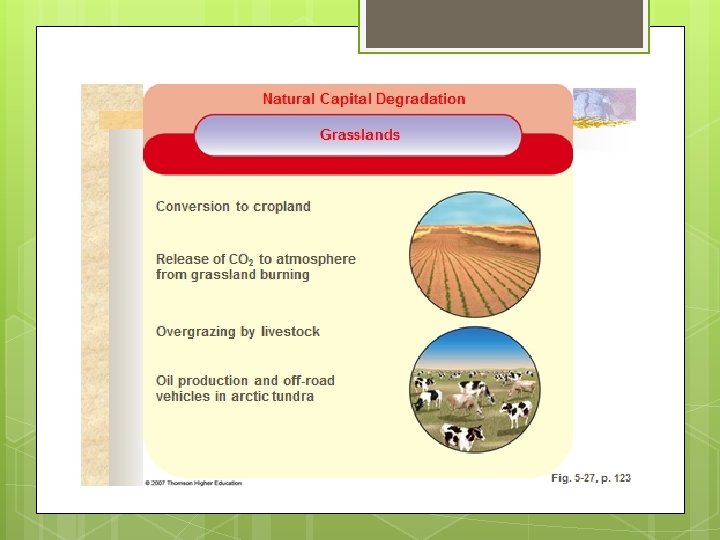
GRASSLANDS Mostly interiors of continents; too moist for deserts; too dry forests Not enough moisture for trees Low precipitation, various average temperatures https: //www. youtube. com/watch? v=q_t 15 s. Zh 0 -s
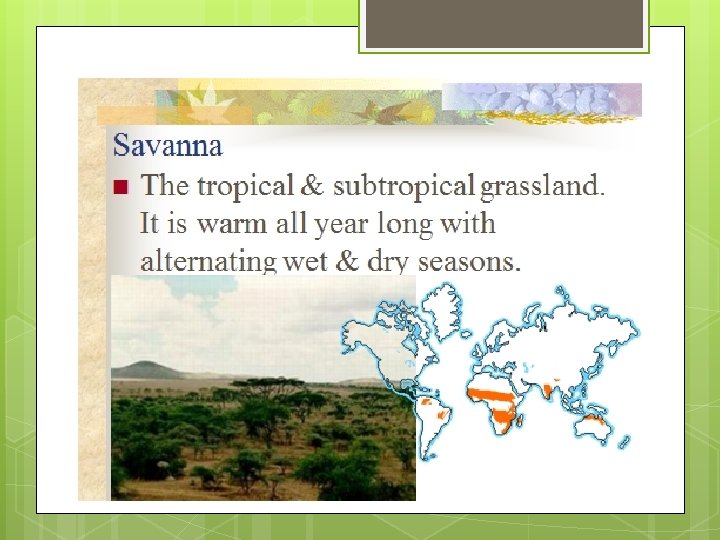
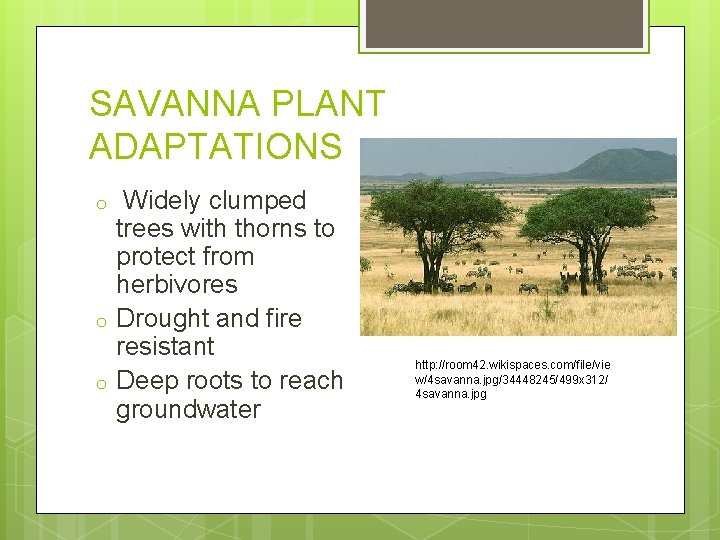
SAVANNA PLANT ADAPTATIONS o o o Widely clumped trees with thorns to protect from herbivores Drought and fire resistant Deep roots to reach groundwater http: //room 42. wikispaces. com/file/vie w/4 savanna. jpg/34448245/499 x 312/ 4 savanna. jpg
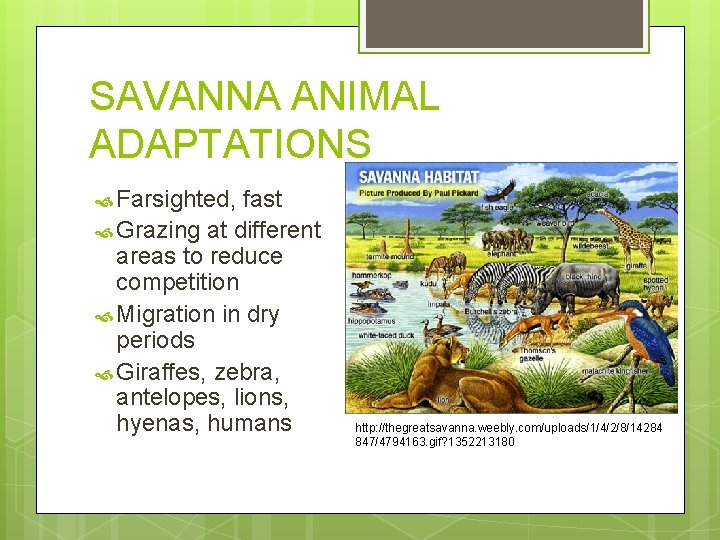
SAVANNA ANIMAL ADAPTATIONS Farsighted, fast Grazing at different areas to reduce competition Migration in dry periods Giraffes, zebra, antelopes, lions, hyenas, humans http: //thegreatsavanna. weebly. com/uploads/1/4/2/8/14284 847/4794163. gif? 1352213180
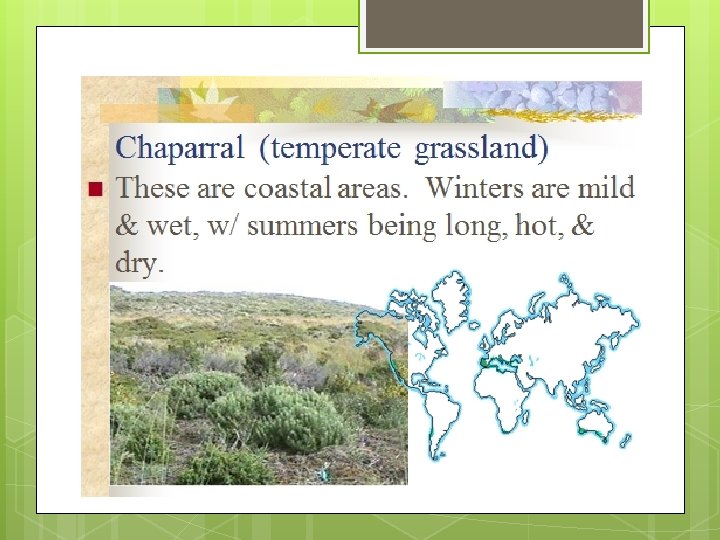
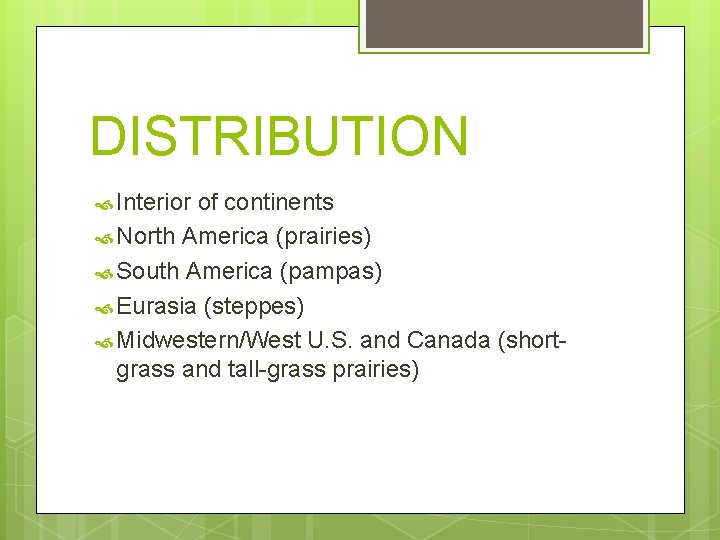
DISTRIBUTION Interior of continents North America (prairies) South America (pampas) Eurasia (steppes) Midwestern/West U. S. and Canada (shortgrass and tall-grass prairies)
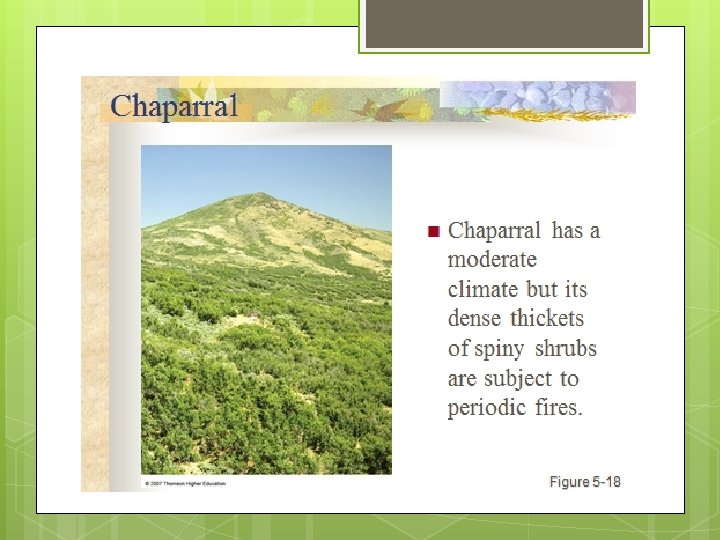
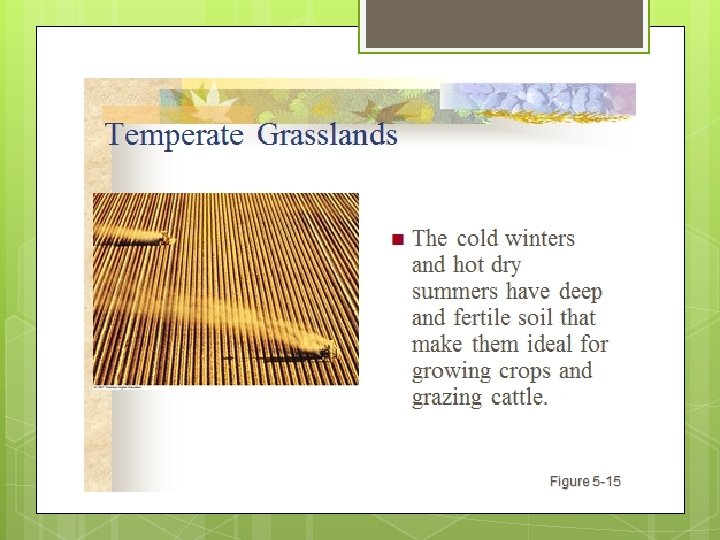
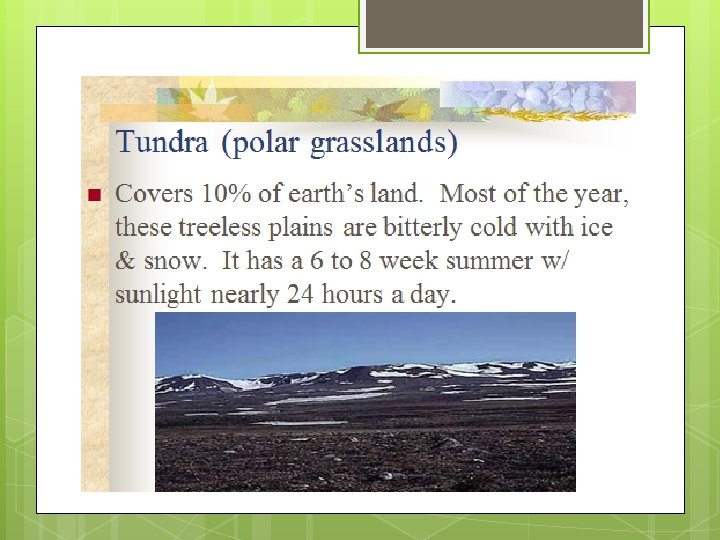
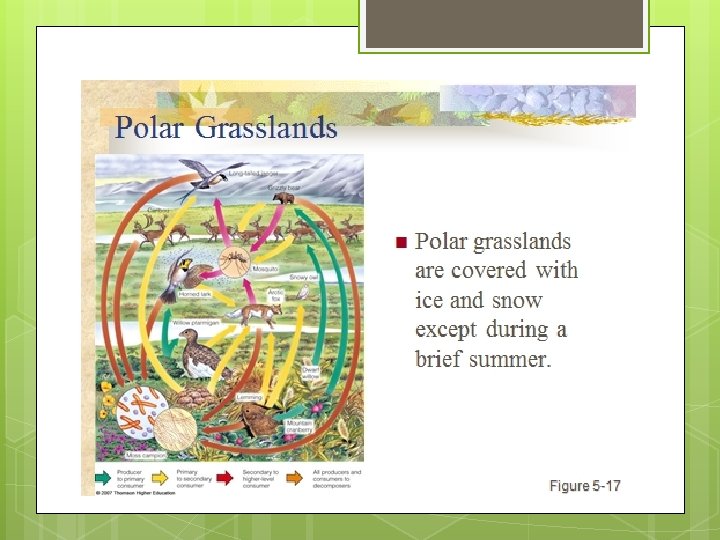
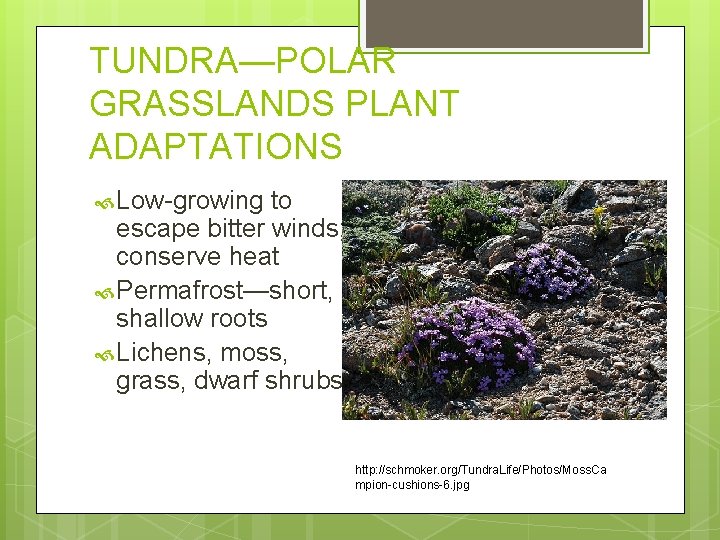
TUNDRA—POLAR GRASSLANDS PLANT ADAPTATIONS Low-growing to escape bitter winds; conserve heat Permafrost—short, shallow roots Lichens, moss, grass, dwarf shrubs http: //schmoker. org/Tundra. Life/Photos/Moss. Ca mpion-cushions-6. jpg
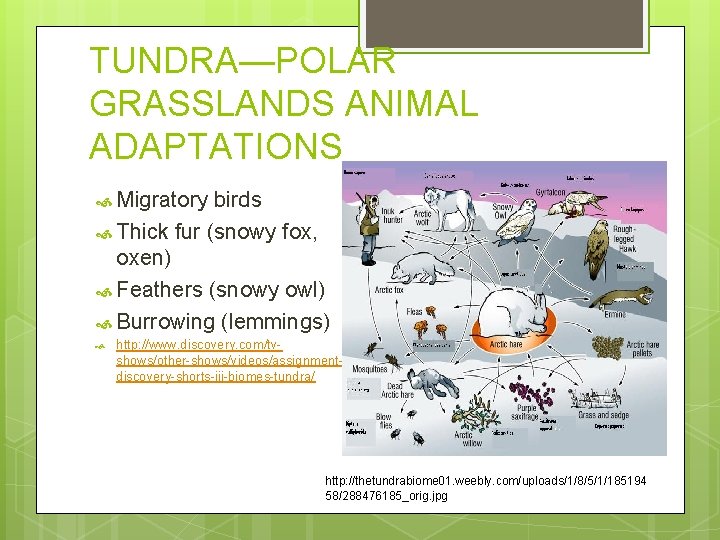
TUNDRA—POLAR GRASSLANDS ANIMAL ADAPTATIONS Migratory birds Thick fur (snowy fox, oxen) Feathers (snowy owl) Burrowing (lemmings) http: //www. discovery. com/tvshows/other-shows/videos/assignmentdiscovery-shorts-iii-biomes-tundra/ http: //thetundrabiome 01. weebly. com/uploads/1/8/5/1/185194 58/288476185_orig. jpg
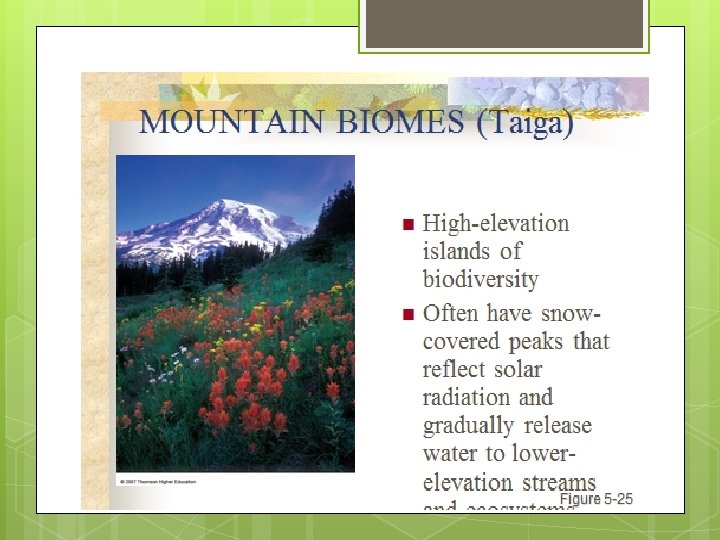
MOUNTAIN BIOMES One-fourth of earth’s land surface Dramatic changes in altitudes, climate, soil, vegetation over short distances Steep slopes create soil erosion (landslides) or humans (timber cutting, agriculture)
ECOLOGICAL ROLES OF MOUNTAINS Majority world’s forest (biodiversity habitat) Sanctuaries for animal species 75% freshwater stored in glacial ice (most in mountain area) Hydrologic cycle
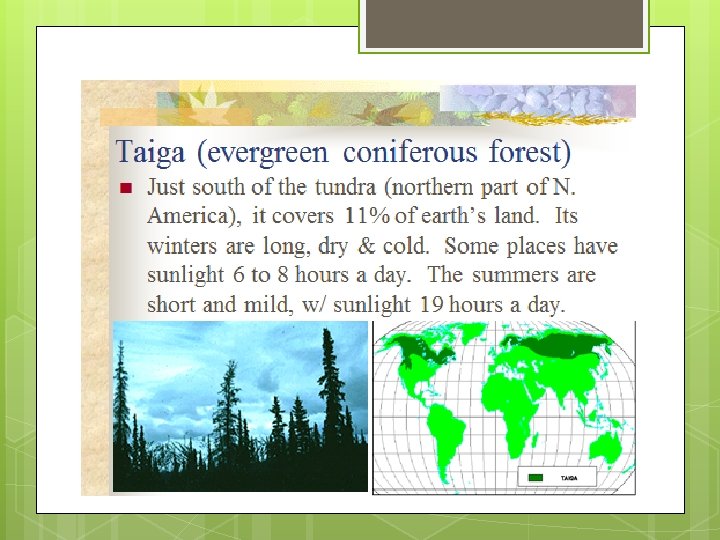
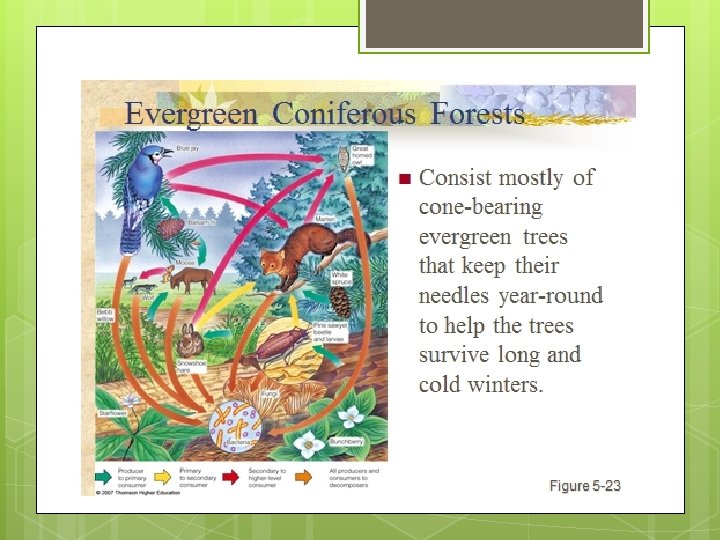
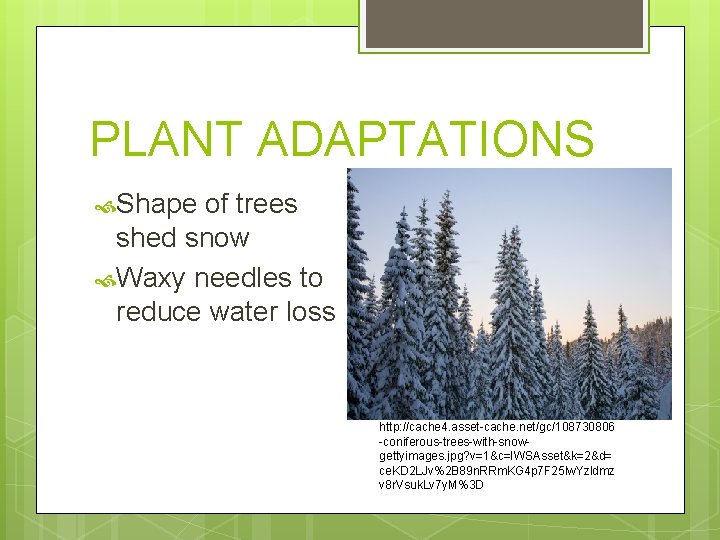
PLANT ADAPTATIONS Shape of trees shed snow Waxy needles to reduce water loss http: //cache 4. asset-cache. net/gc/108730806 -coniferous-trees-with-snowgettyimages. jpg? v=1&c=IWSAsset&k=2&d= ce. KD 2 LJv%2 B 89 n. RRm. KG 4 p 7 F 25 lw. Yzldmz v 8 r. Vsuk. Lv 7 y. M%3 D
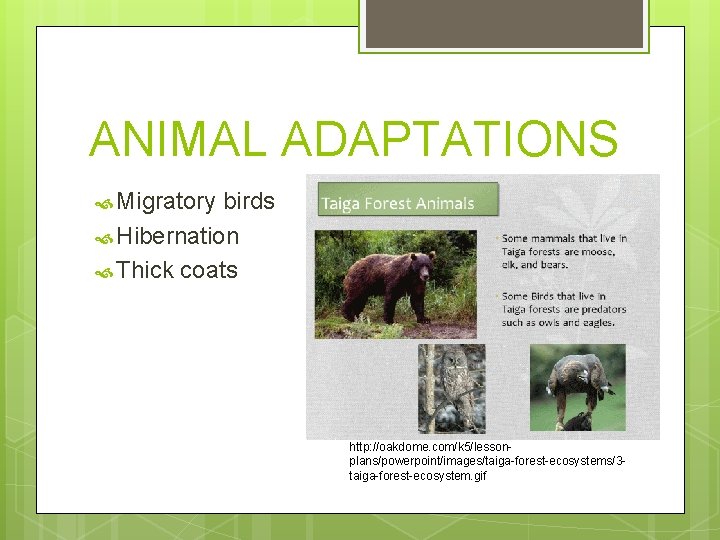
ANIMAL ADAPTATIONS Migratory birds Hibernation Thick coats http: //oakdome. com/k 5/lessonplans/powerpoint/images/taiga-forest-ecosystems/3 taiga-forest-ecosystem. gif
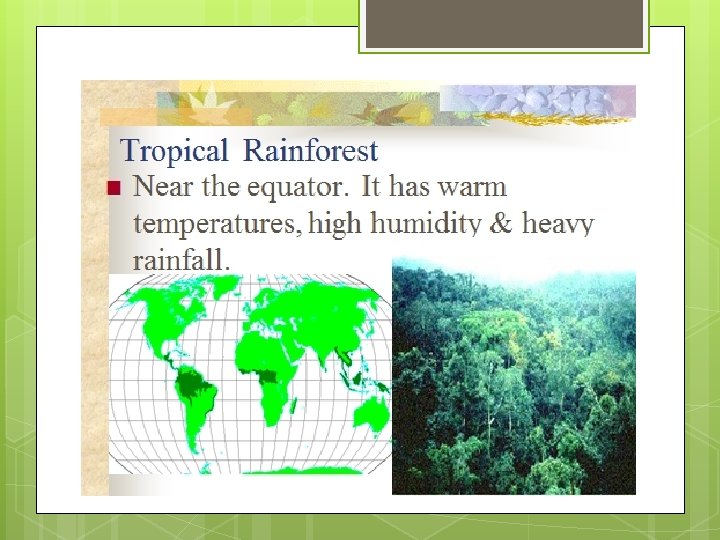
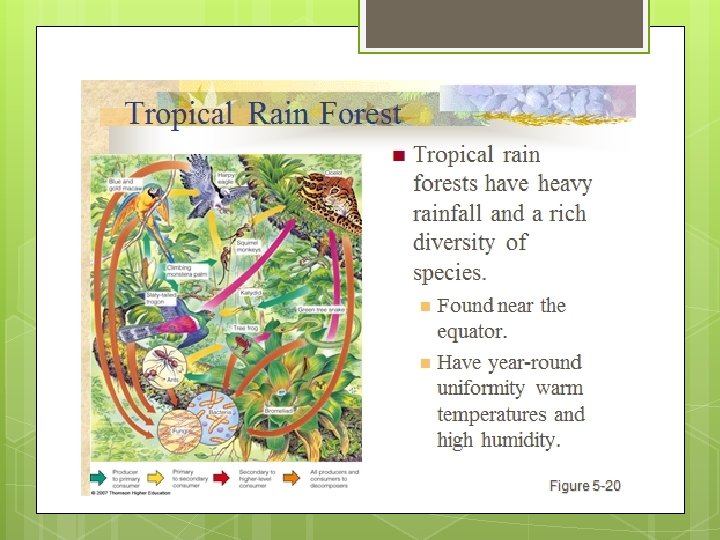
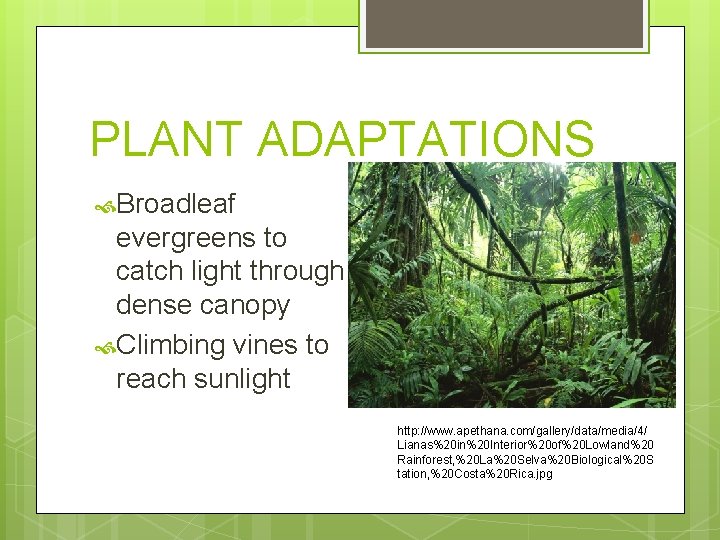
PLANT ADAPTATIONS Broadleaf evergreens to catch light through dense canopy Climbing vines to reach sunlight http: //www. apethana. com/gallery/data/media/4/ Lianas%20 in%20 Interior%20 of%20 Lowland%20 Rainforest, %20 La%20 Selva%20 Biological%20 S tation, %20 Costa%20 Rica. jpg
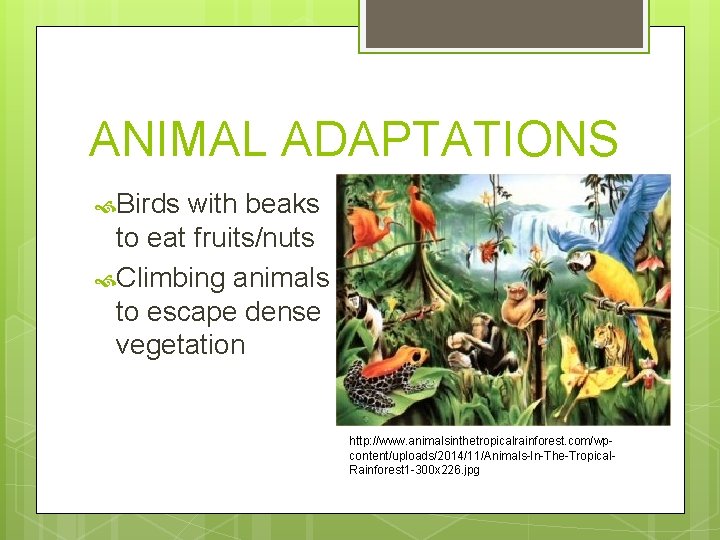
ANIMAL ADAPTATIONS Birds with beaks to eat fruits/nuts Climbing animals to escape dense vegetation http: //www. animalsinthetropicalrainforest. com/wpcontent/uploads/2014/11/Animals-In-The-Tropical. Rainforest 1 -300 x 226. jpg
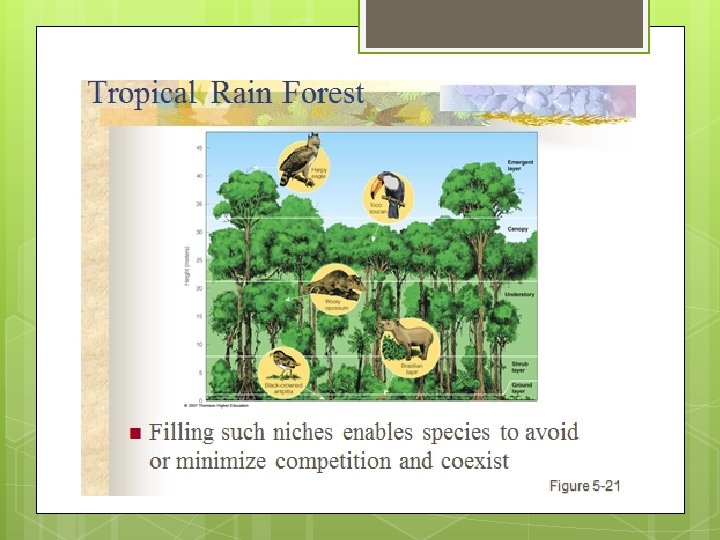
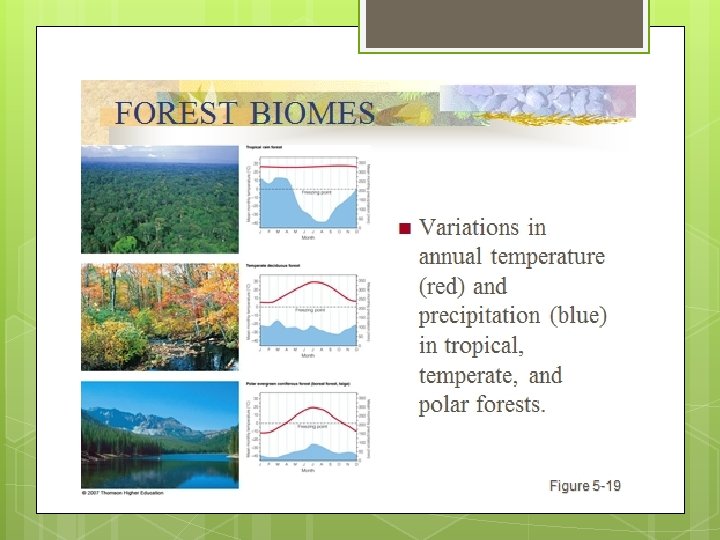
TROPICAL RAINFOREST Nutrient-poor soil Fast decomposition due to moist, warm climate with plenty of vegetation on forest flower Fast uptake by dense vegetation creates the nutrient-poor soil
TROPICAL DRY RAINFOREST Warm year round with wet/dry season Lower tree heights; less dense
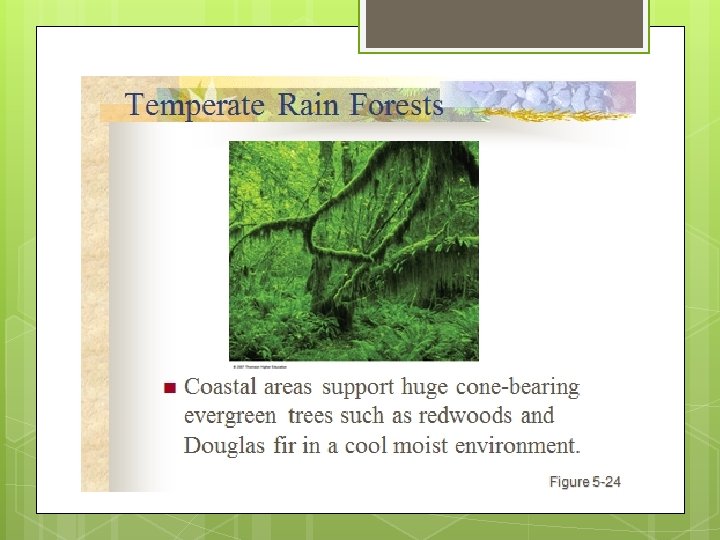
TEMPERATE RAINFOREST Coastal areas with ample rainfall and moisture from dense ocean fog Ocean moderates climate (mild winters and cool summers) Coast of North America (Canada to Northern California)
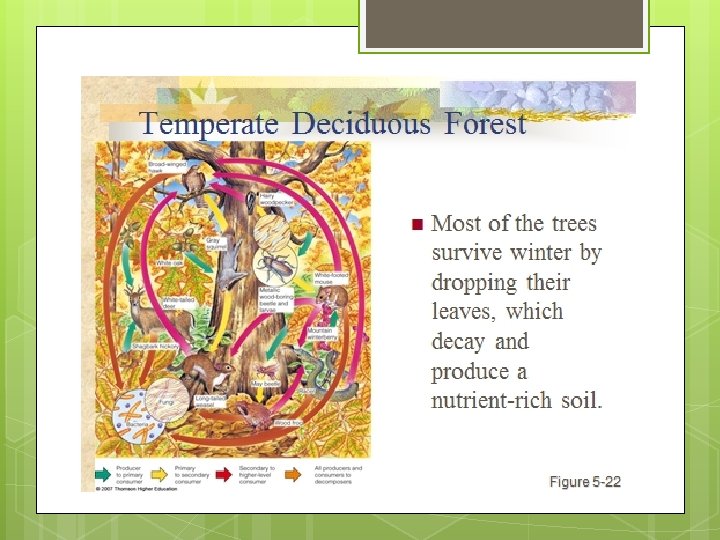
TEMPERATE DECIDUOUS FOREST Moderate average temperature with changing seasons Long, warm summers and cold (not severe) winters Abundant precipitation Fertile soil—Slow decomposition with ample leaf litter builds up nutrients
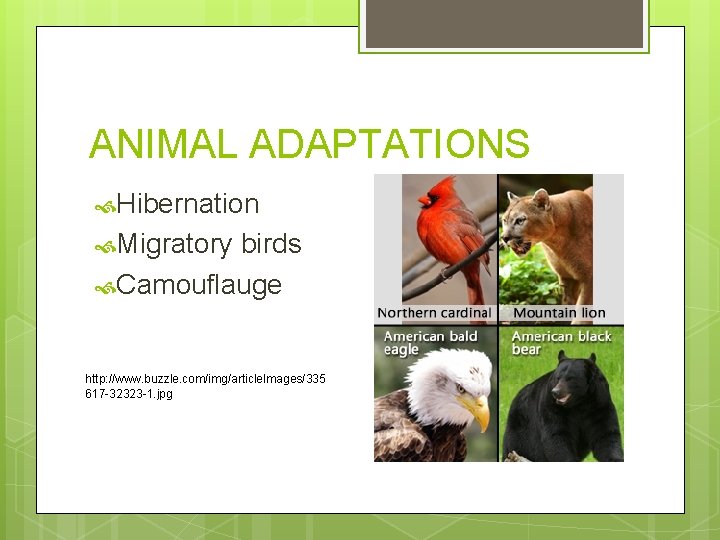
ANIMAL ADAPTATIONS Hibernation Migratory birds Camouflauge http: //www. buzzle. com/img/article. Images/335 617 -32323 -1. jpg
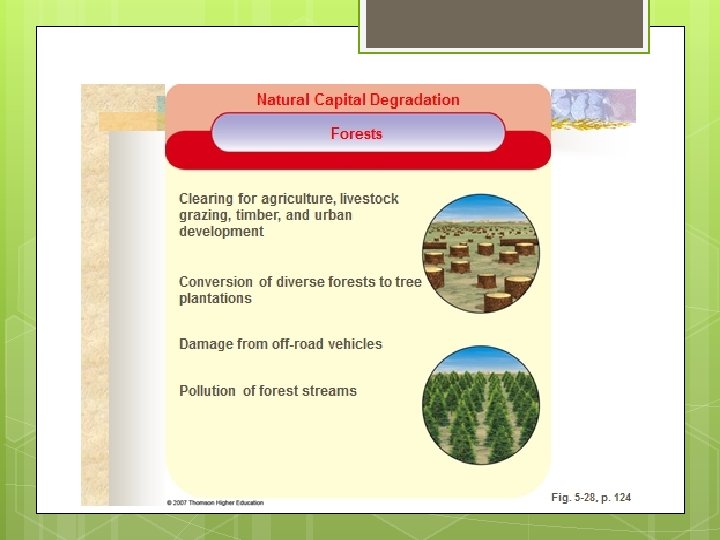
DEGRADATION OF MOUNTAINS Agriculture Timber extraction Increasing tourism Urban air pollution Increased UV due to ozone depletion Soil damage from off road vehicles
- Slides: 60