
Biomes of the World What is a Biome
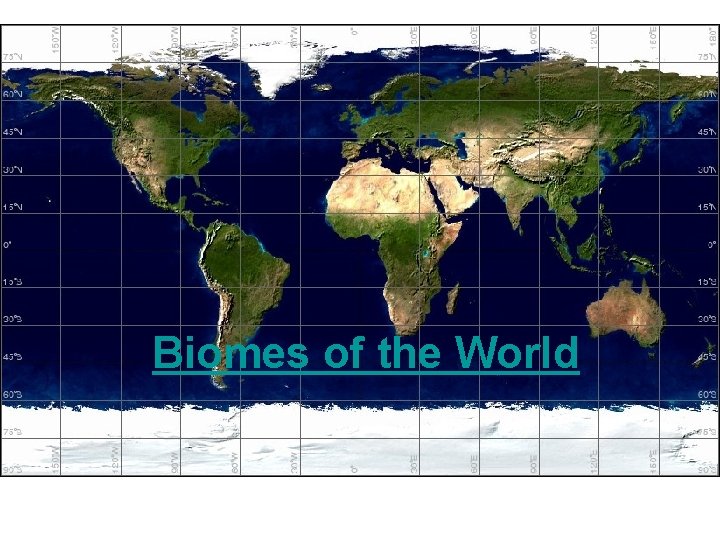
Biomes of the World
What is a Biome? • An ecosystem that occurs over a large area of land. • Includes plants and animals that are adapted to the climate and other abiotic factors.
What is an Adaptation? • List examples of adaptations • Camouflage
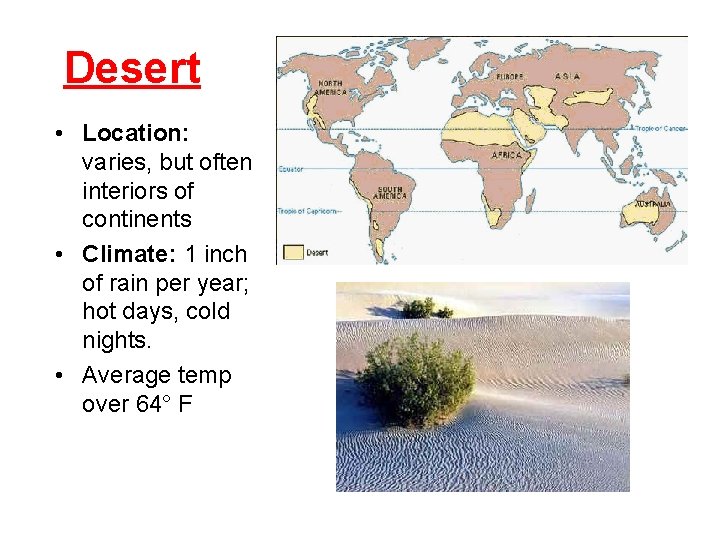
Desert • Location: varies, but often interiors of continents • Climate: 1 inch of rain per year; hot days, cold nights. • Average temp over 64° F
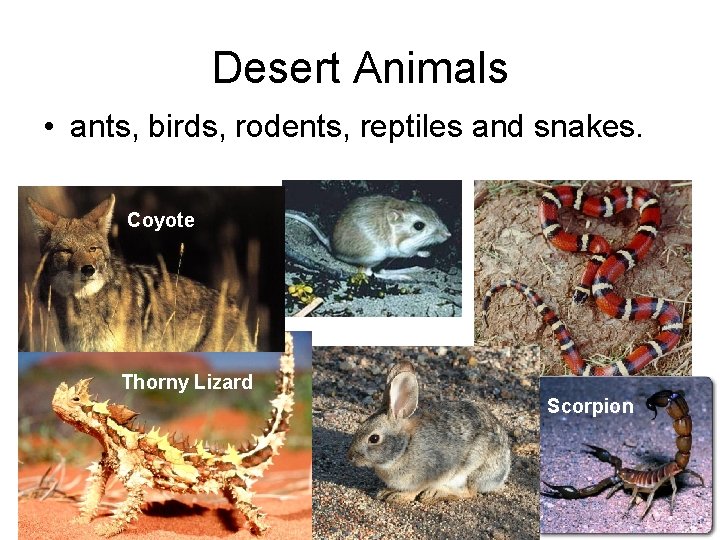
Desert Animals • ants, birds, rodents, reptiles and snakes. Coyote Thorny Lizard Scorpion
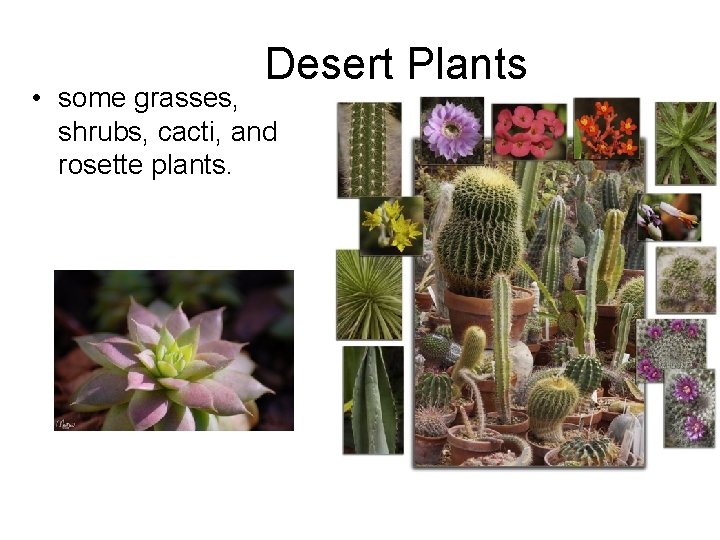
Desert Plants • some grasses, shrubs, cacti, and rosette plants.

Tropical Rainforest • Location: near the equator • Climate: 68 -93ºF, Average Humidity 7788%, often more than 100 inches of rain per year!
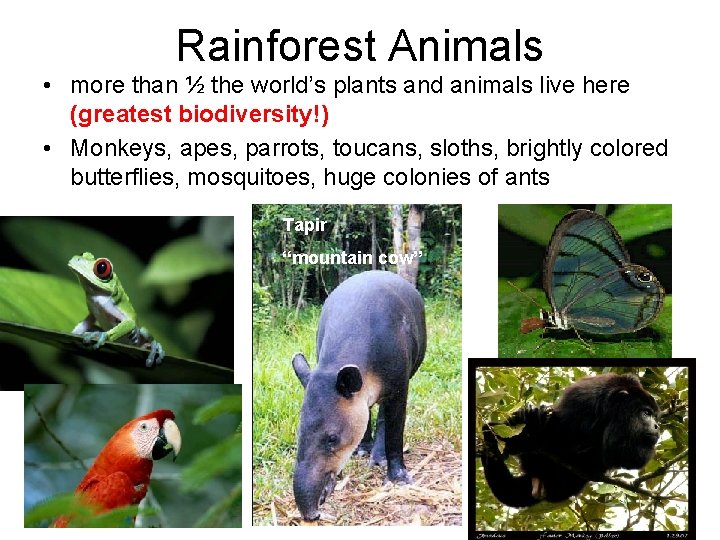
Rainforest Animals • more than ½ the world’s plants and animals live here (greatest biodiversity!) • Monkeys, apes, parrots, toucans, sloths, brightly colored butterflies, mosquitoes, huge colonies of ants Tapir “mountain cow”
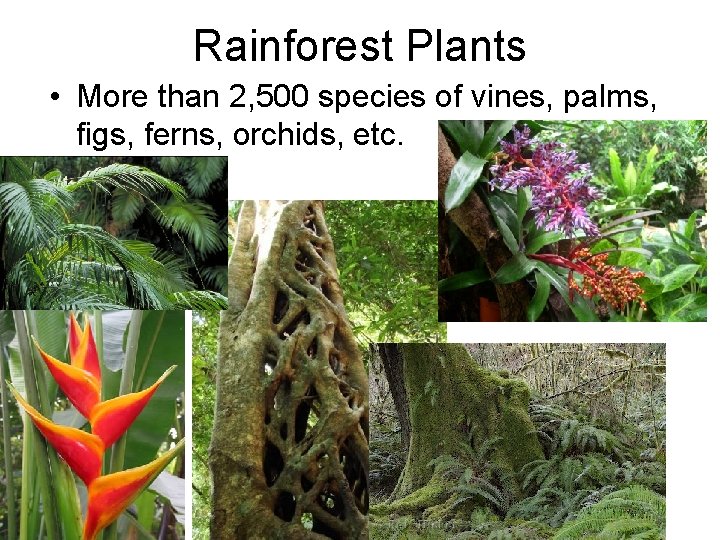
Rainforest Plants • More than 2, 500 species of vines, palms, figs, ferns, orchids, etc.
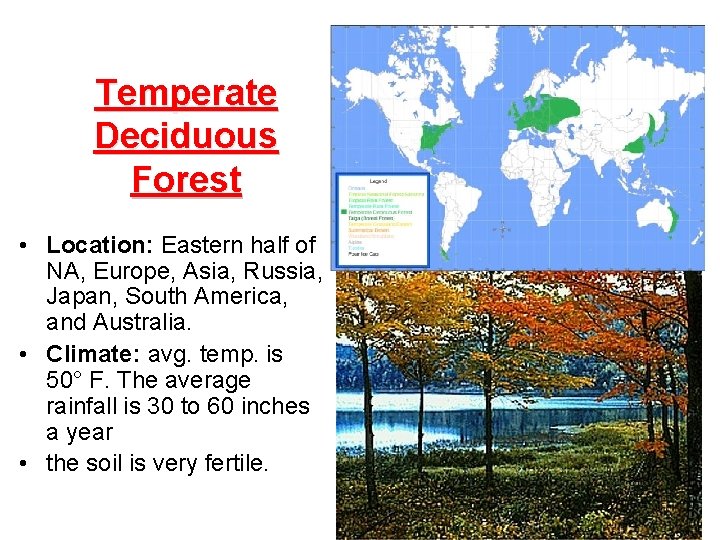
Temperate Deciduous Forest • Location: Eastern half of NA, Europe, Asia, Russia, Japan, South America, and Australia. • Climate: avg. temp. is 50° F. The average rainfall is 30 to 60 inches a year • the soil is very fertile.
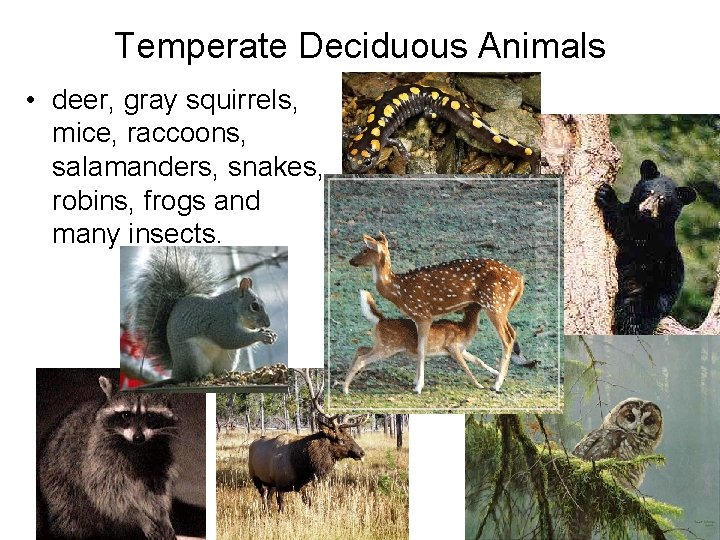
Temperate Deciduous Animals • deer, gray squirrels, mice, raccoons, salamanders, snakes, robins, frogs and many insects.
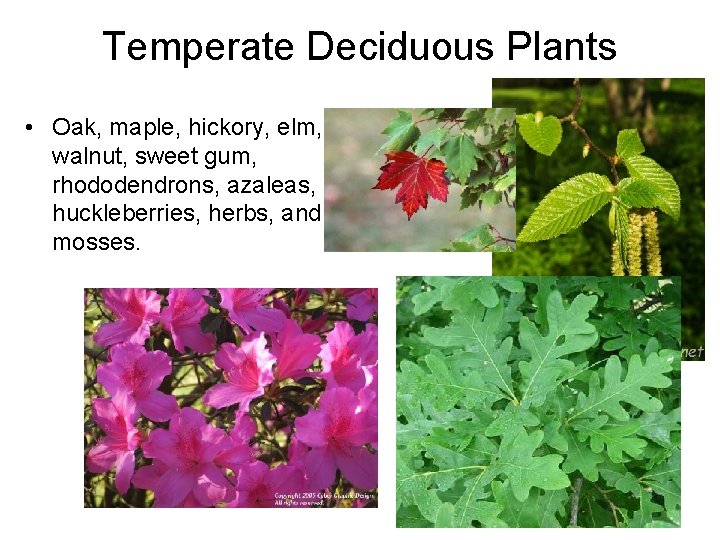
Temperate Deciduous Plants • Oak, maple, hickory, elm, walnut, sweet gum, rhododendrons, azaleas, huckleberries, herbs, and mosses.
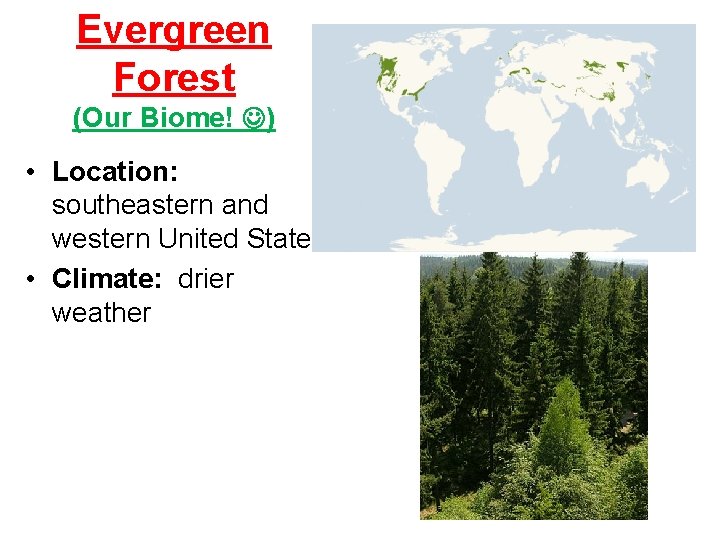
Evergreen Forest (Our Biome! ) • Location: southeastern and western United States • Climate: drier weather
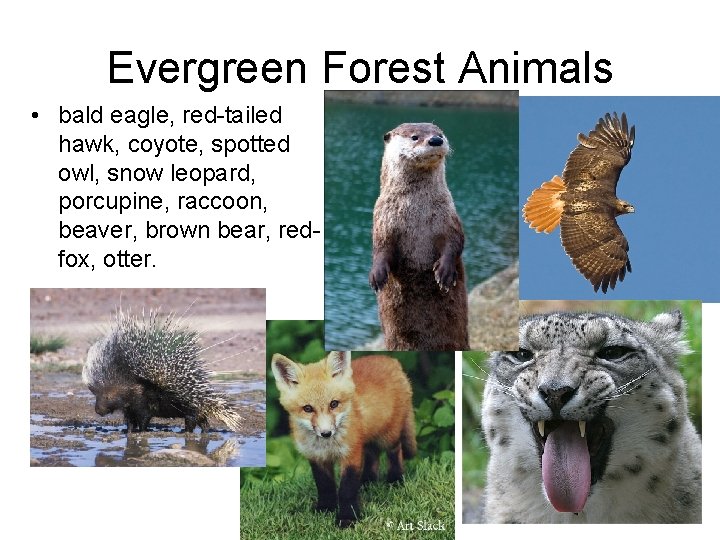
Evergreen Forest Animals • bald eagle, red-tailed hawk, coyote, spotted owl, snow leopard, porcupine, raccoon, beaver, brown bear, redfox, otter.
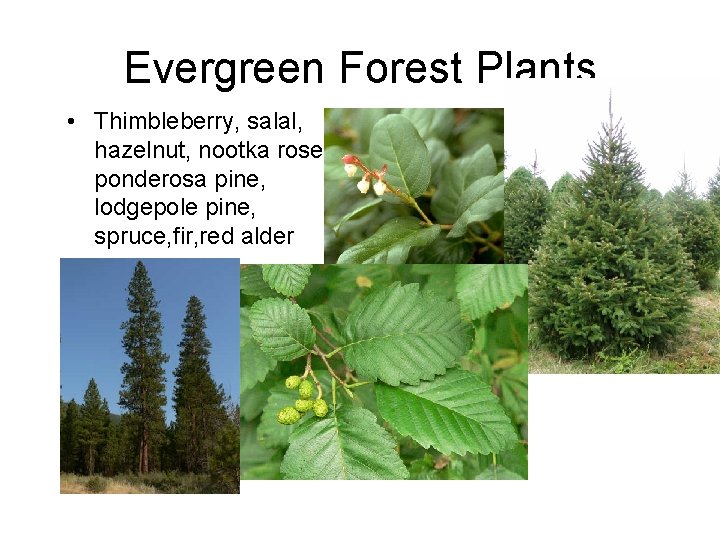
Evergreen Forest Plants • Thimbleberry, salal, hazelnut, nootka rose, ponderosa pine, lodgepole pine, spruce, fir, red alder
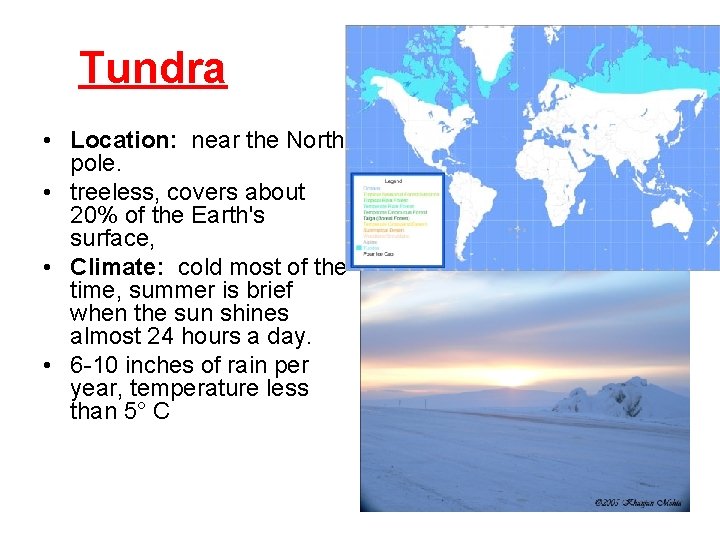
Tundra • Location: near the North pole. • treeless, covers about 20% of the Earth's surface, • Climate: cold most of the time, summer is brief when the sun shines almost 24 hours a day. • 6 -10 inches of rain per year, temperature less than 5° C
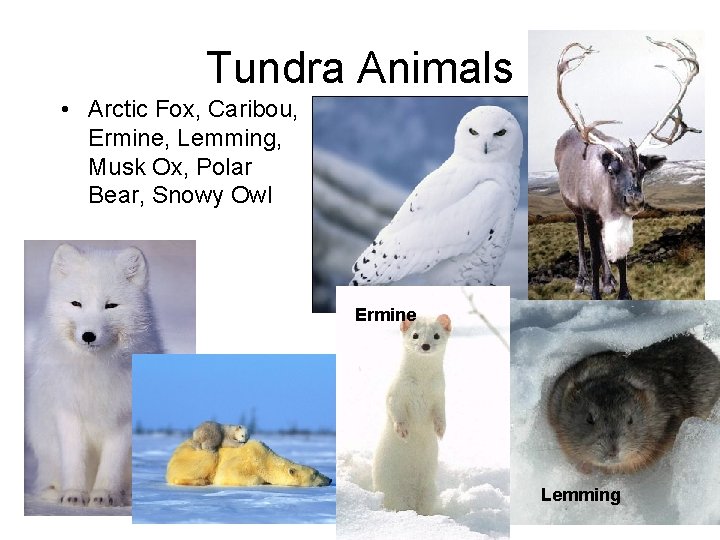
Tundra Animals • Arctic Fox, Caribou, Ermine, Lemming, Musk Ox, Polar Bear, Snowy Owl Ermine Lemming
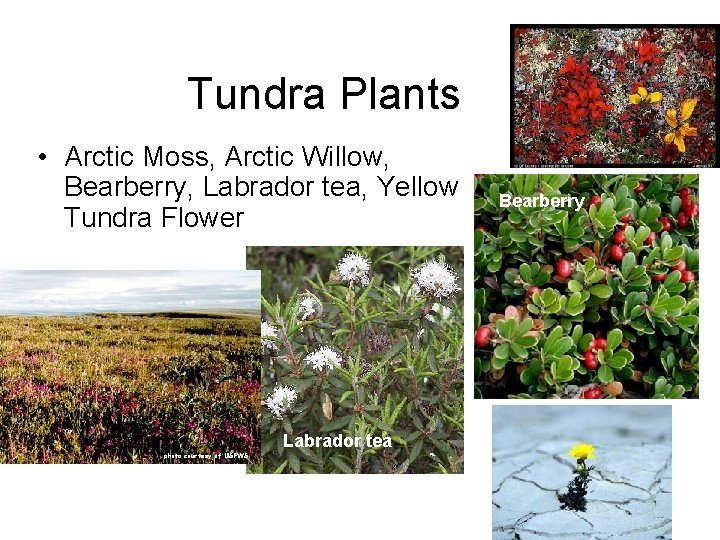
Tundra Plants • Arctic Moss, Arctic Willow, Bearberry, Labrador tea, Yellow Tundra Flower Labrador tea Bearberry
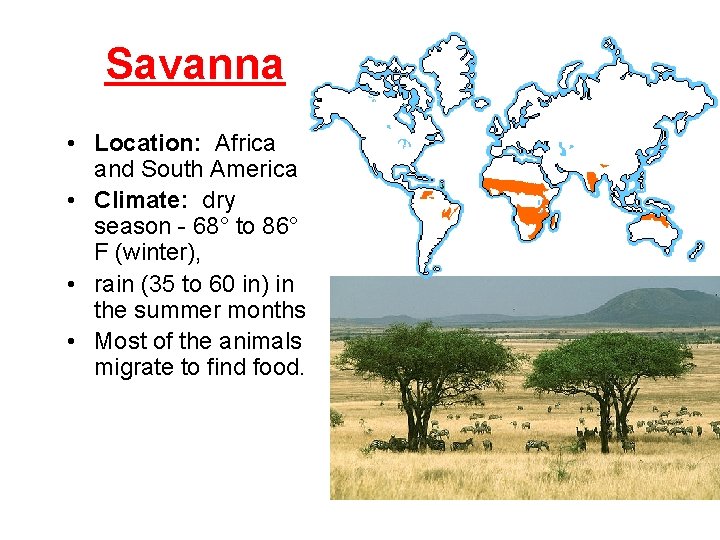
Savanna • Location: Africa and South America • Climate: dry season - 68° to 86° F (winter), • rain (35 to 60 in) in the summer months • Most of the animals migrate to find food.
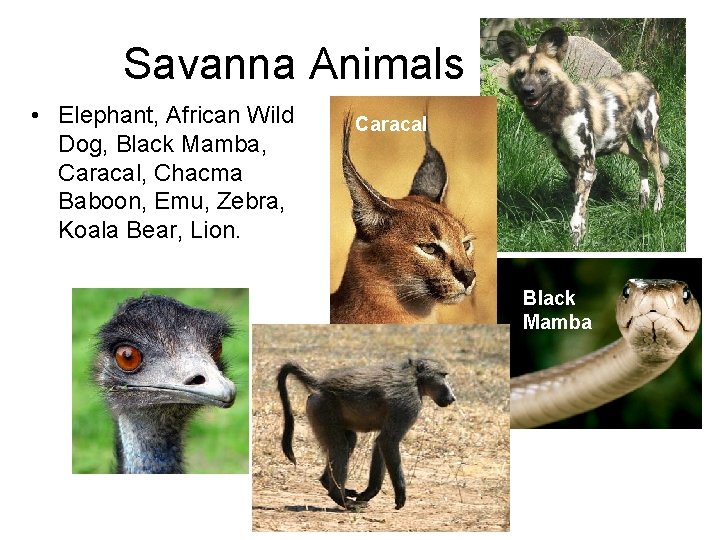
Savanna Animals • Elephant, African Wild Dog, Black Mamba, Caracal, Chacma Baboon, Emu, Zebra, Koala Bear, Lion. Caracal Black Mamba
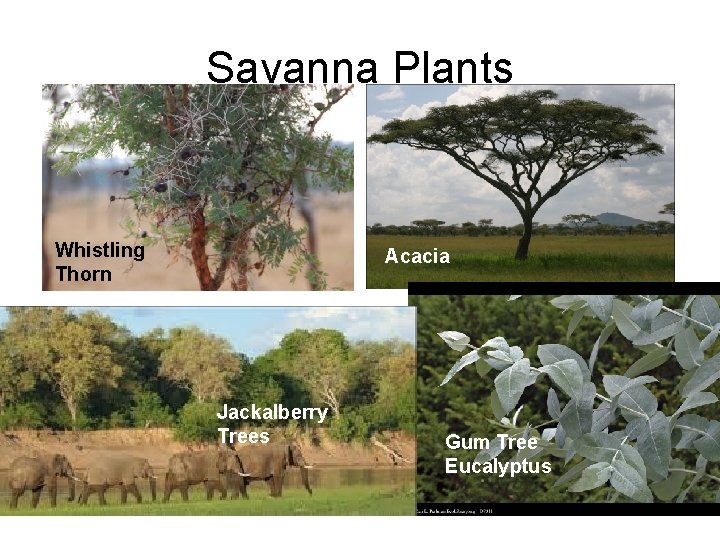
Savanna Plants Whistling Thorn Acacia Jackalberry Trees Gum Tree Eucalyptus
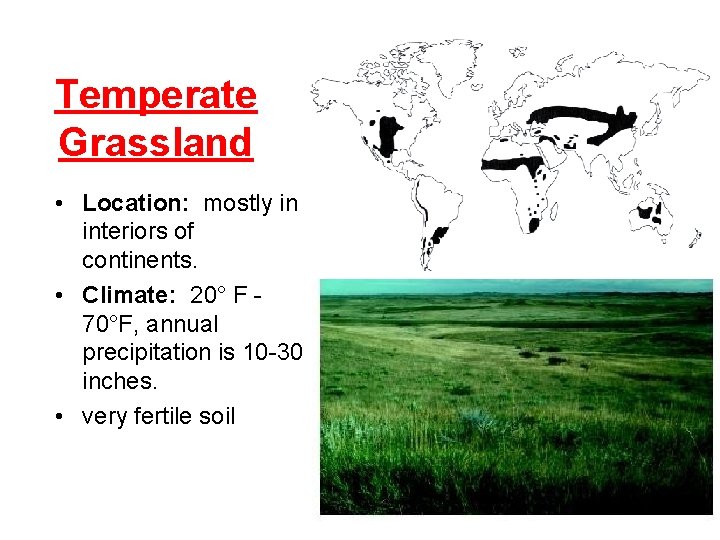
Temperate Grassland • Location: mostly in interiors of continents. • Climate: 20° F 70°F, annual precipitation is 10 -30 inches. • very fertile soil
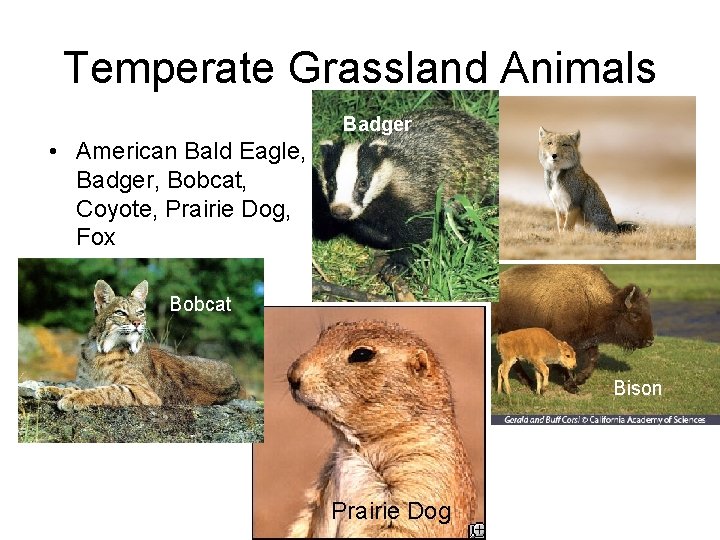
Temperate Grassland Animals Badger • American Bald Eagle, Badger, Bobcat, Coyote, Prairie Dog, Fox Bobcat Bison Prairie Dog
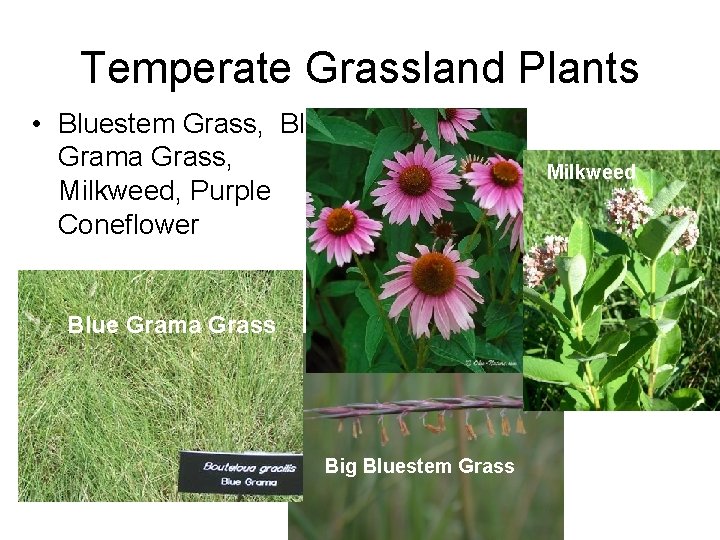
Temperate Grassland Plants • Bluestem Grass, Blue Grama Grass, Milkweed, Purple Coneflower Blue Grama Grass Big Bluestem Grass Milkweed
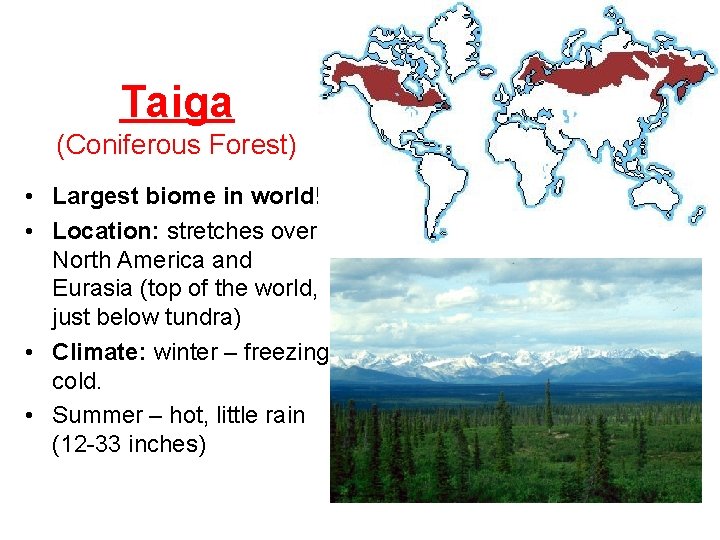
Taiga (Coniferous Forest) • Largest biome in world! • Location: stretches over North America and Eurasia (top of the world, just below tundra) • Climate: winter – freezing cold. • Summer – hot, little rain (12 -33 inches)
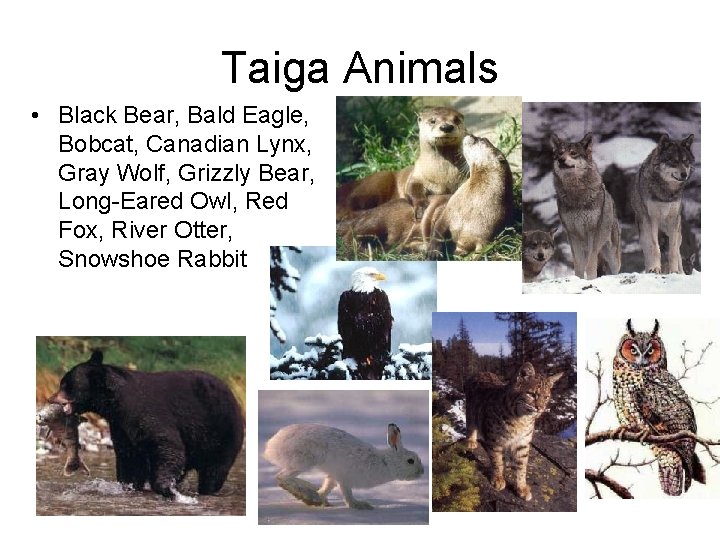
Taiga Animals • Black Bear, Bald Eagle, Bobcat, Canadian Lynx, Gray Wolf, Grizzly Bear, Long-Eared Owl, Red Fox, River Otter, Snowshoe Rabbit
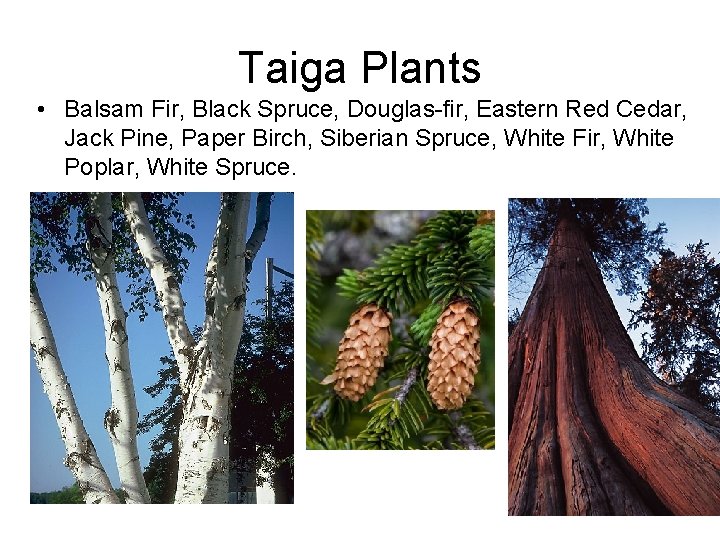
Taiga Plants • Balsam Fir, Black Spruce, Douglas-fir, Eastern Red Cedar, Jack Pine, Paper Birch, Siberian Spruce, White Fir, White Poplar, White Spruce.
Biome Summary Questions – on your own paper – you will turn these in. 1. Why are there different biomes? 2. What might cause a change in a biome? 3. Which biome is most at risk? (your opinion and why) 4. Where is there the greatest biodiversity and why?
- Slides: 28