
Biomes of the World What is a biome
Biomes of the World
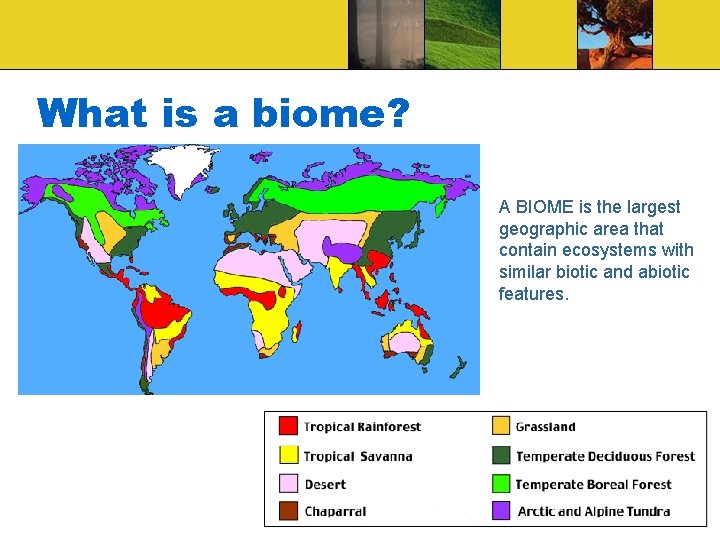
What is a biome? A BIOME is the largest geographic area that contain ecosystems with similar biotic and abiotic features.
How are biomes formed? Biomes are distributed across the Earth based primarily on climate. Therefore, in areas that are far apart, you will sometimes find similar plants and animals because the climate is similar. One factor affecting climate is latitude. Typically, the farther you move north or south of the equator, the colder the temperature gets. Another factor affecting climate is elevation. The higher you go in elevation, the colder the temperature gets. Biomes usually found at cold latitudes far from the equator are sometimes also found on high mountains at low latitudes. Typically, a climb of 100 feet in elevation is equivalent to traveling 600 miles northward.
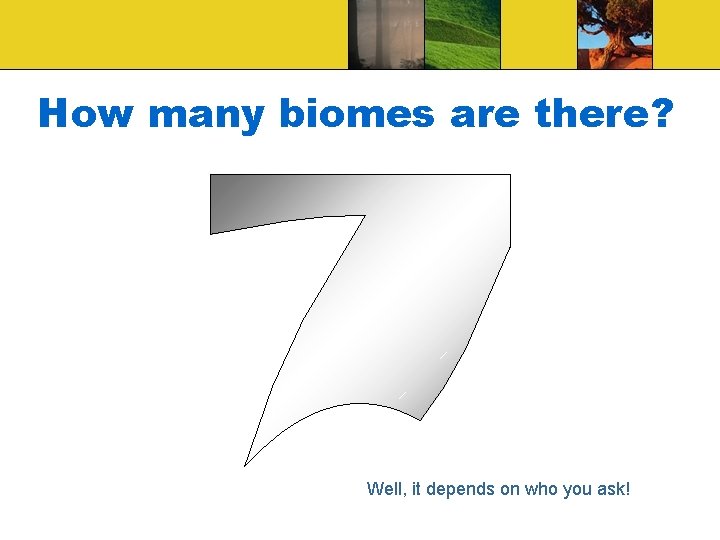
How many biomes are there? Well, it depends on who you ask!
How many biomes are there? Although there is some disagreement among scientists on how to divide up the Earth’s biomes, most can agree on the following: • • Desert Grassland Tropical Rainforest Temperate Deciduous Forest Taiga Tundra
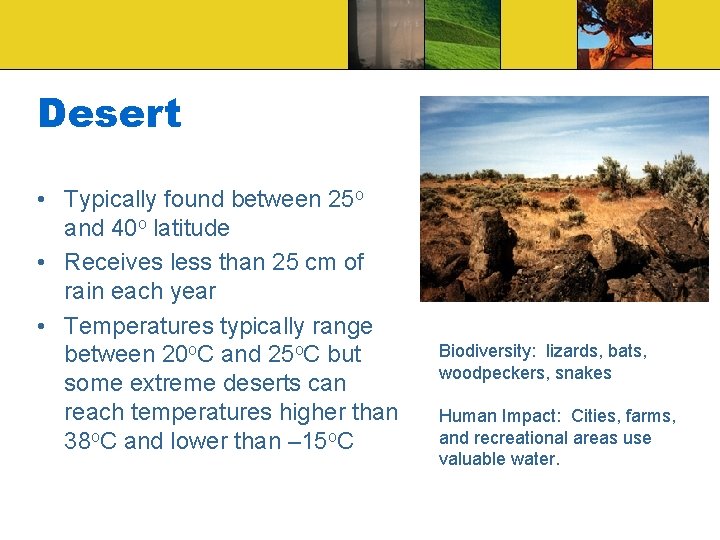
Desert • Typically found between 25 o and 40 o latitude • Receives less than 25 cm of rain each year • Temperatures typically range between 20 o. C and 25 o. C but some extreme deserts can reach temperatures higher than 38 o. C and lower than – 15 o. C Biodiversity: lizards, bats, woodpeckers, snakes Human Impact: Cities, farms, and recreational areas use valuable water.
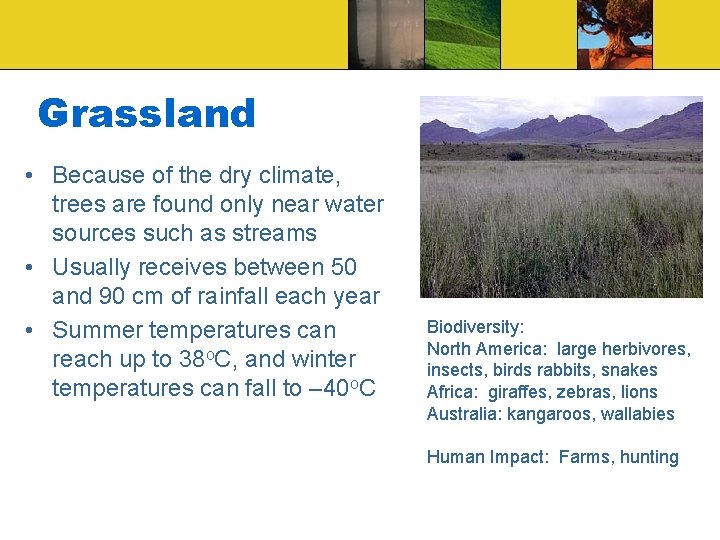
Grassland • Because of the dry climate, trees are found only near water sources such as streams • Usually receives between 50 and 90 cm of rainfall each year • Summer temperatures can reach up to 38 o. C, and winter temperatures can fall to – 40 o. C Biodiversity: North America: large herbivores, insects, birds rabbits, snakes Africa: giraffes, zebras, lions Australia: kangaroos, wallabies Human Impact: Farms, hunting
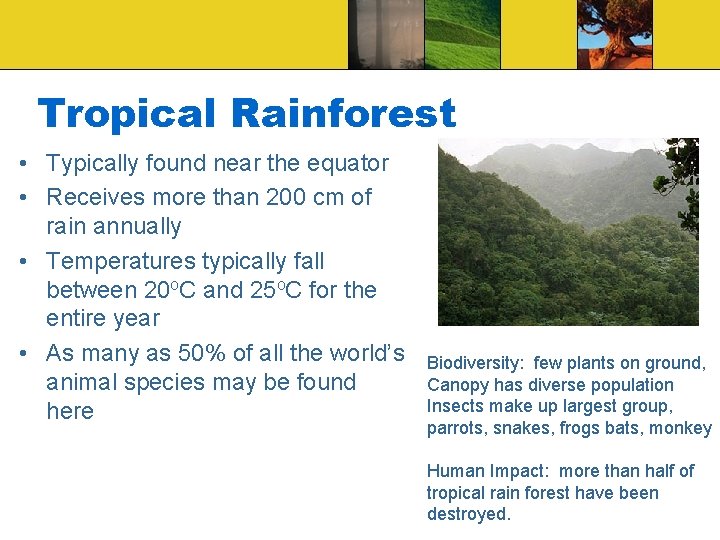
Tropical Rainforest • Typically found near the equator • Receives more than 200 cm of rain annually • Temperatures typically fall between 20 o. C and 25 o. C for the entire year • As many as 50% of all the world’s animal species may be found here Biodiversity: few plants on ground, Canopy has diverse population Insects make up largest group, parrots, snakes, frogs bats, monkey Human Impact: more than half of tropical rain forest have been destroyed.
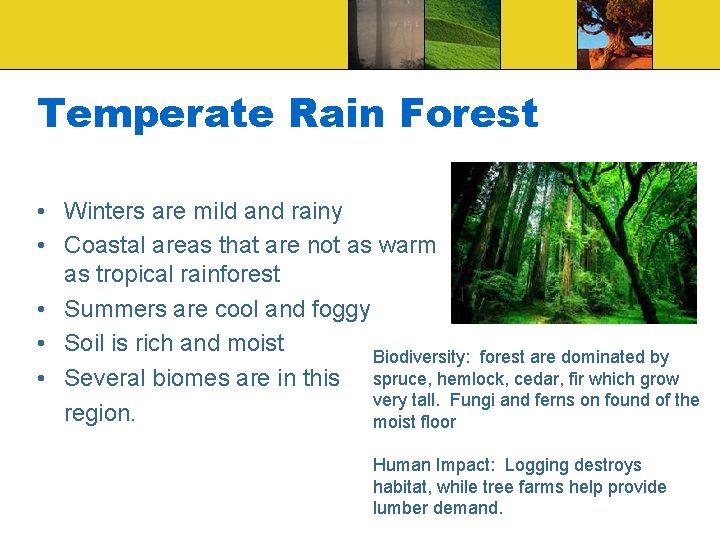
Temperate Rain Forest • Winters are mild and rainy • Coastal areas that are not as warm as tropical rainforest • Summers are cool and foggy • Soil is rich and moist Biodiversity: forest are dominated by • Several biomes are in this spruce, hemlock, cedar, fir which grow very tall. Fungi and ferns on found of the region. moist floor Human Impact: Logging destroys habitat, while tree farms help provide lumber demand.
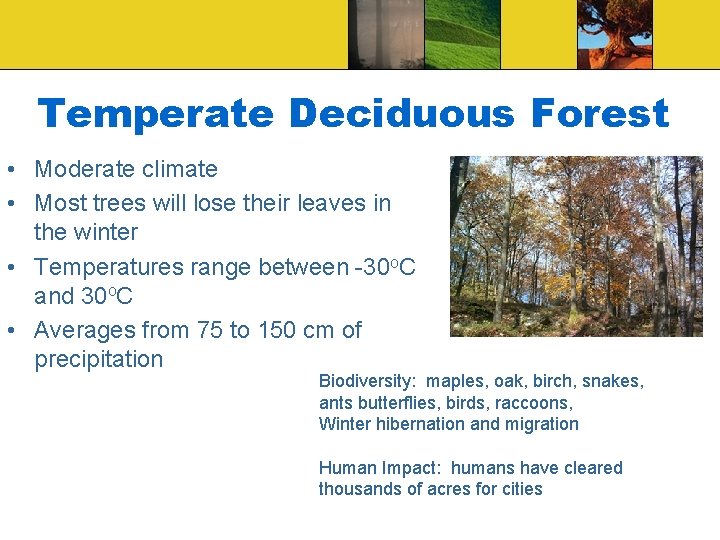
Temperate Deciduous Forest • Moderate climate • Most trees will lose their leaves in the winter • Temperatures range between -30 o. C and 30 o. C • Averages from 75 to 150 cm of precipitation Biodiversity: maples, oak, birch, snakes, ants butterflies, birds, raccoons, Winter hibernation and migration Human Impact: humans have cleared thousands of acres for cities
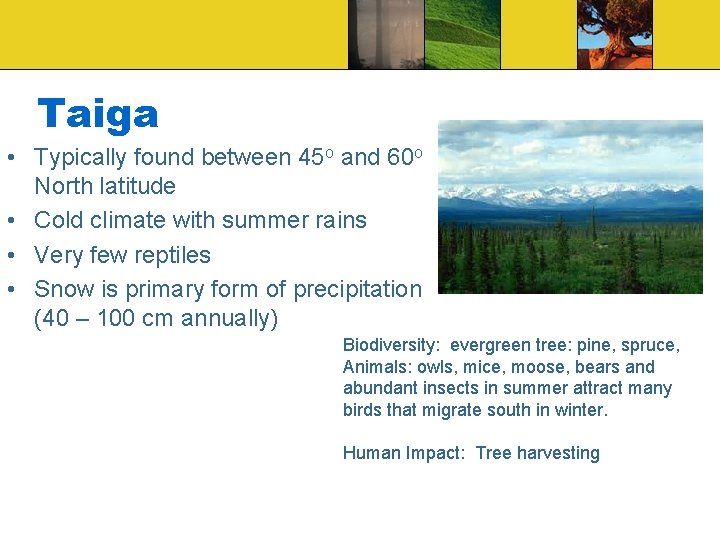
Taiga • Typically found between 45 o and 60 o North latitude • Cold climate with summer rains • Very few reptiles • Snow is primary form of precipitation (40 – 100 cm annually) Biodiversity: evergreen tree: pine, spruce, Animals: owls, mice, moose, bears and abundant insects in summer attract many birds that migrate south in winter. Human Impact: Tree harvesting
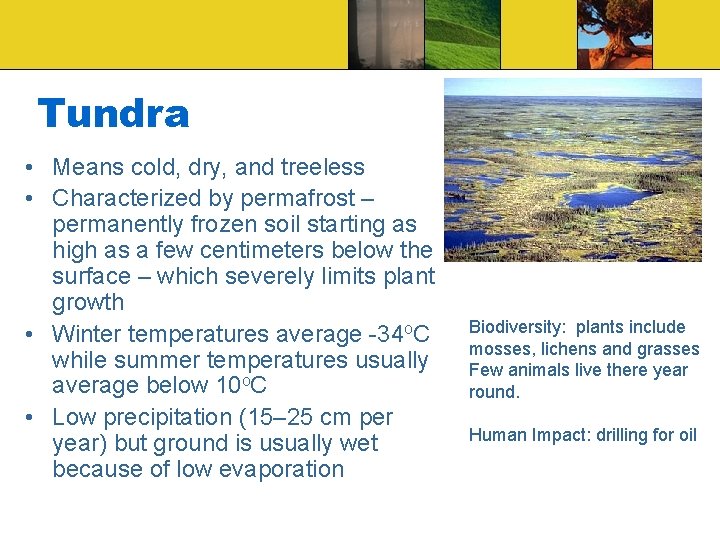
Tundra • Means cold, dry, and treeless • Characterized by permafrost – permanently frozen soil starting as high as a few centimeters below the surface – which severely limits plant growth • Winter temperatures average -34 o. C while summer temperatures usually average below 10 o. C • Low precipitation (15– 25 cm per year) but ground is usually wet because of low evaporation Biodiversity: plants include mosses, lichens and grasses Few animals live there year round. Human Impact: drilling for oil
- Slides: 12