
Biomes of the World AP Environmental Science blueplanetbiomes
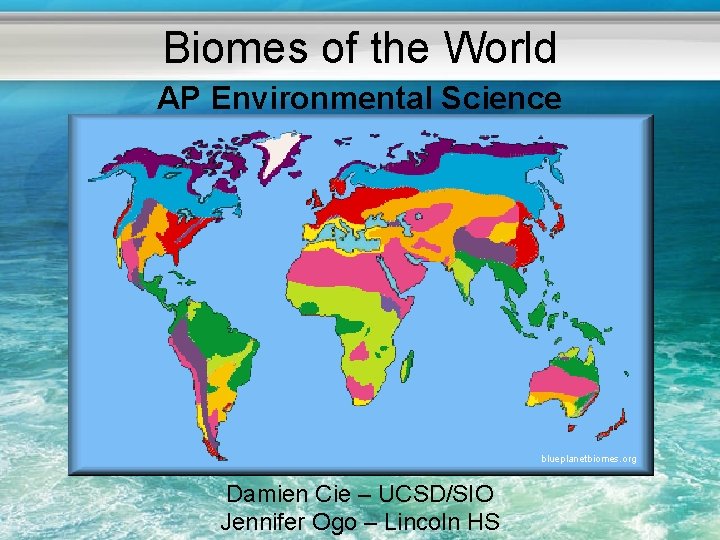
Biomes of the World AP Environmental Science blueplanetbiomes. org Damien Cie – UCSD/SIO Jennifer Ogo – Lincoln HS
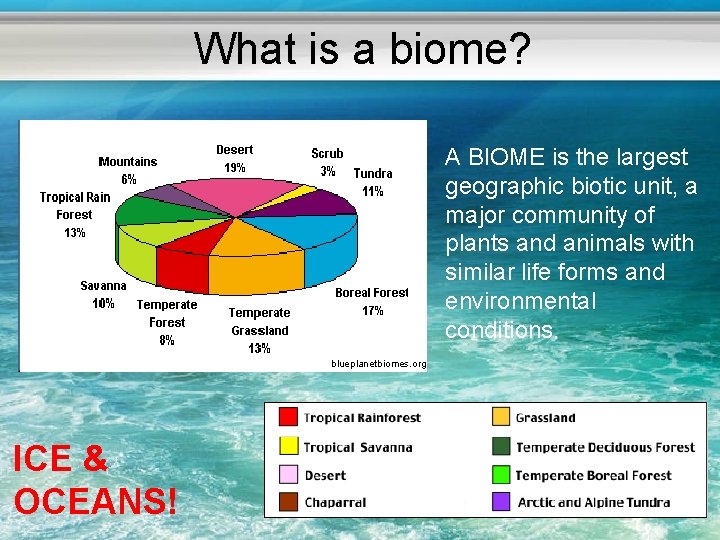
What is a biome? A BIOME is the largest geographic biotic unit, a major community of plants and animals with similar life forms and environmental conditions. blueplanetbiomes. org ICE & OCEANS!
How are biomes formed? Biomes are distributed across the Earth based primarily on climate. Therefore, in areas that are far apart, you will sometimes find similar plants and animals because the climate is similar. One factor affecting climate is latitude. Typically, the farther you move north or south of the equator, the colder the temperature gets. Another factor affecting climate is elevation. The higher you go in elevation, the colder the temperature gets. Biomes usually found at cold latitudes far from the equator are sometimes also found on high mountains at low latitudes. Typically, a climb of 100 feet in elevation is equivalent to traveling 600 miles northward.

Lets take a look at a few types of biomes!
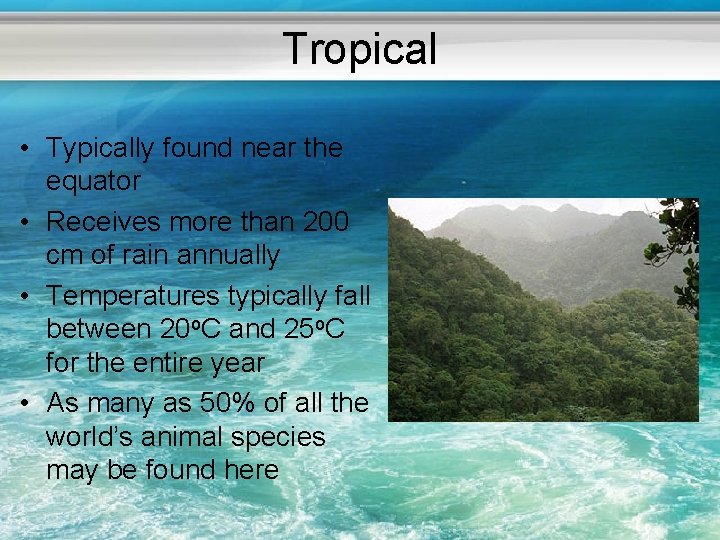
Tropical • Typically found near the equator • Receives more than 200 cm of rain annually • Temperatures typically fall between 20 o. C and 25 o. C for the entire year • As many as 50% of all the world’s animal species may be found here
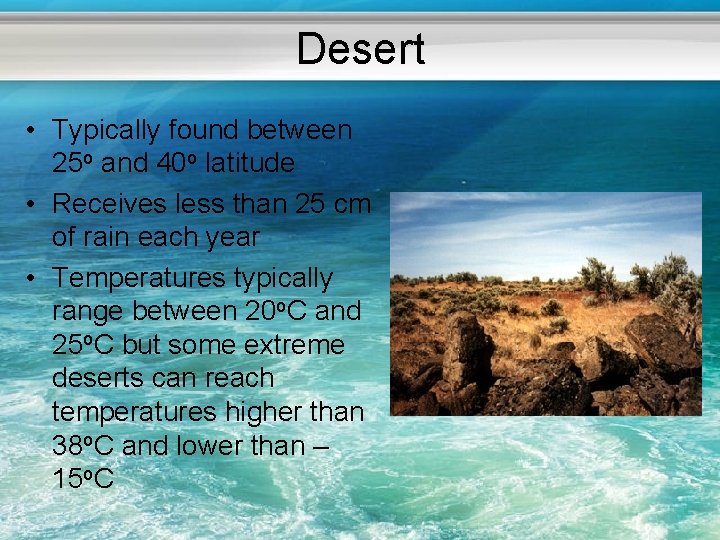
Desert • Typically found between 25 o and 40 o latitude • Receives less than 25 cm of rain each year • Temperatures typically range between 20 o. C and 25 o. C but some extreme deserts can reach temperatures higher than 38 o. C and lower than – 15 o. C
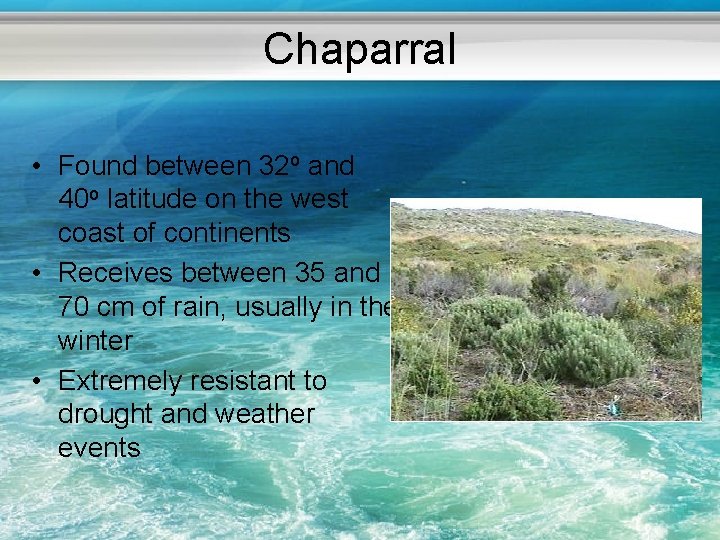
Chaparral • Found between 32 o and 40 o latitude on the west coast of continents • Receives between 35 and 70 cm of rain, usually in the winter • Extremely resistant to drought and weather events
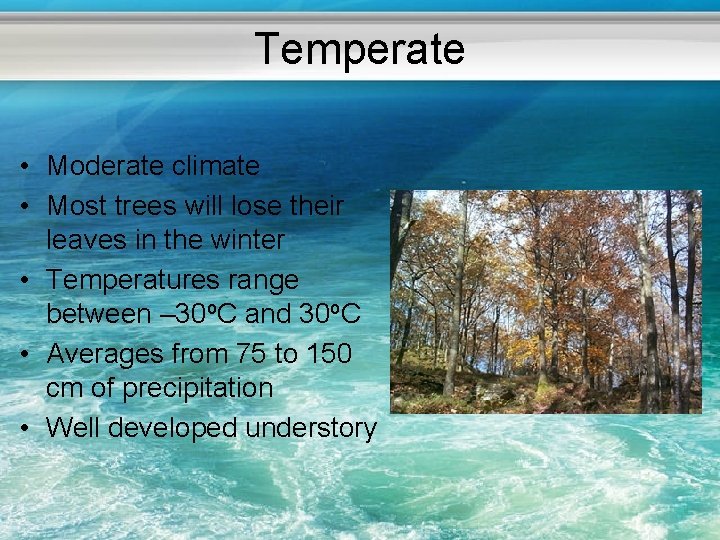
Temperate • Moderate climate • Most trees will lose their leaves in the winter • Temperatures range between – 30 o. C and 30 o. C • Averages from 75 to 150 cm of precipitation • Well developed understory
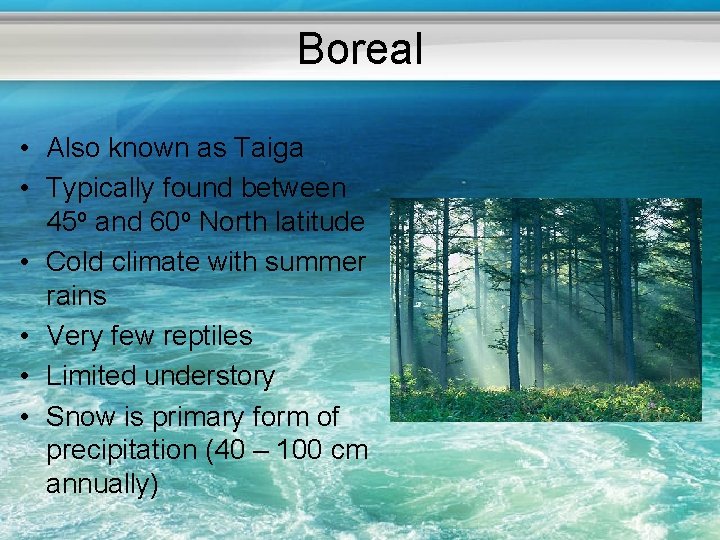
Boreal • Also known as Taiga • Typically found between 45 o and 60 o North latitude • Cold climate with summer rains • Very few reptiles • Limited understory • Snow is primary form of precipitation (40 – 100 cm annually)
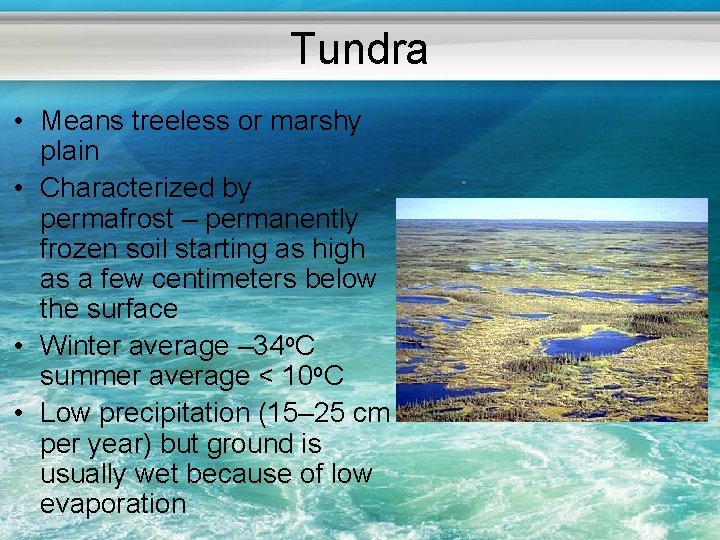
Tundra • Means treeless or marshy plain • Characterized by permafrost – permanently frozen soil starting as high as a few centimeters below the surface • Winter average – 34 o. C summer average < 10 o. C • Low precipitation (15– 25 cm per year) but ground is usually wet because of low evaporation
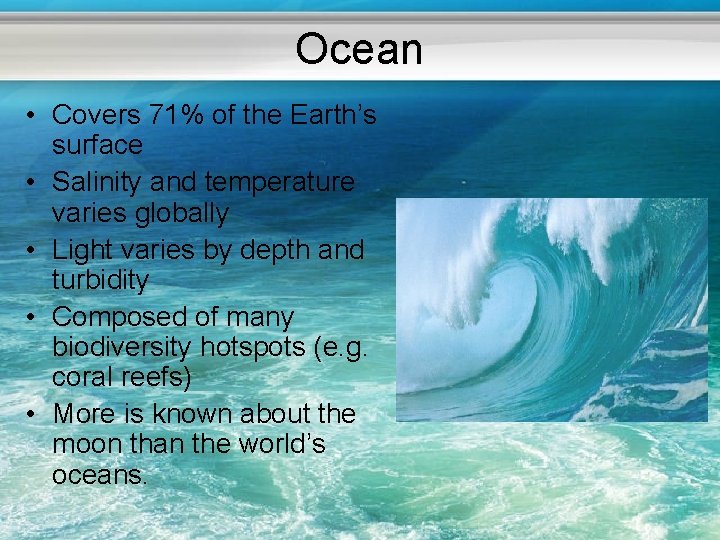
Ocean • Covers 71% of the Earth’s surface • Salinity and temperature varies globally • Light varies by depth and turbidity • Composed of many biodiversity hotspots (e. g. coral reefs) • More is known about the moon than the world’s oceans.
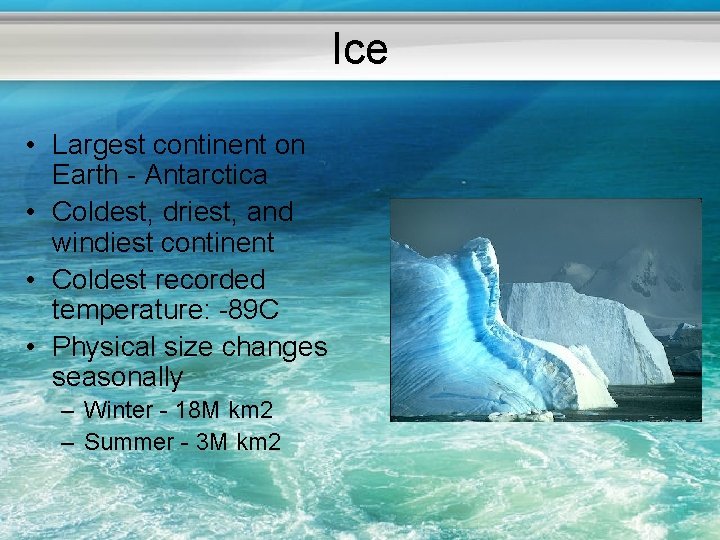
Ice • Largest continent on Earth - Antarctica • Coldest, driest, and windiest continent • Coldest recorded temperature: -89 C • Physical size changes seasonally – Winter - 18 M km 2 – Summer - 3 M km 2
- Slides: 12