
Biomes Notes Environmental Science Class Bonneville High School
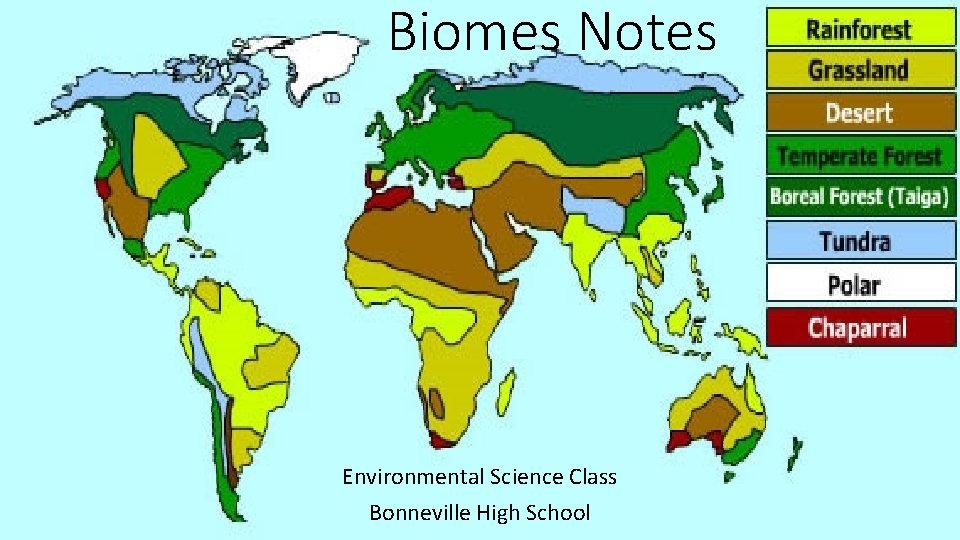
Biomes Notes Environmental Science Class Bonneville High School
Biomes and Ecosystems of the World • -Biome: Areas that have distinctive climates and organisms. • • • Tropical Rain Forest Biome Temperate Deciduous Rain Forest Biome Tiaga Biome (Boreal Forest) Savanna Biome Temperate Grasslands Biome Chaparral Biome (Temperate woodland shrubland) Deserts Biome Tundra Biome • -Ecosystems: • • Freshwater Ecosystem Estuaries ecosystem Coral Reef ecosystems Ocean Ecosystem
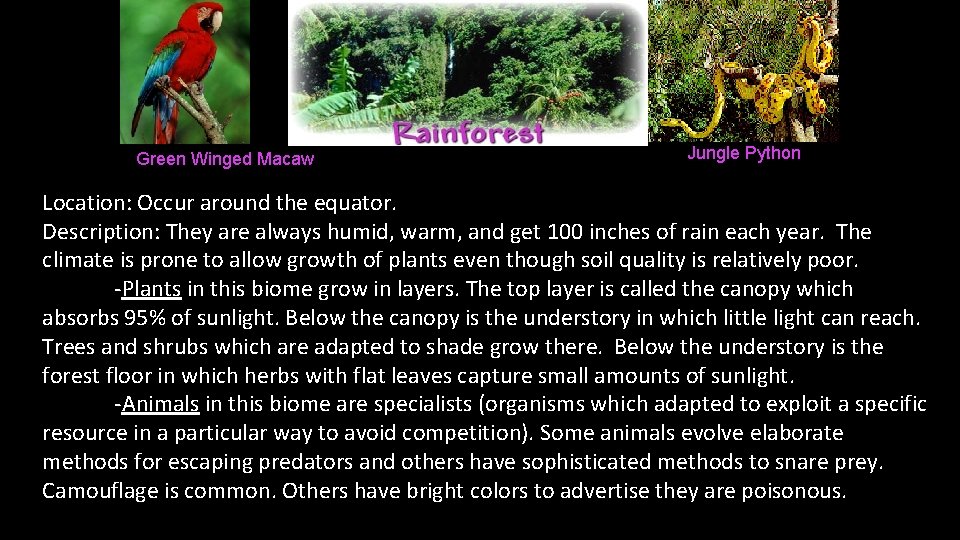
Green Winged Macaw Jungle Python Location: Occur around the equator. Description: They are always humid, warm, and get 100 inches of rain each year. The climate is prone to allow growth of plants even though soil quality is relatively poor. -Plants in this biome grow in layers. The top layer is called the canopy which absorbs 95% of sunlight. Below the canopy is the understory in which little light can reach. Trees and shrubs which are adapted to shade grow there. Below the understory is the forest floor in which herbs with flat leaves capture small amounts of sunlight. -Animals in this biome are specialists (organisms which adapted to exploit a specific resource in a particular way to avoid competition). Some animals evolve elaborate methods for escaping predators and others have sophisticated methods to snare prey. Camouflage is common. Others have bright colors to advertise they are poisonous.
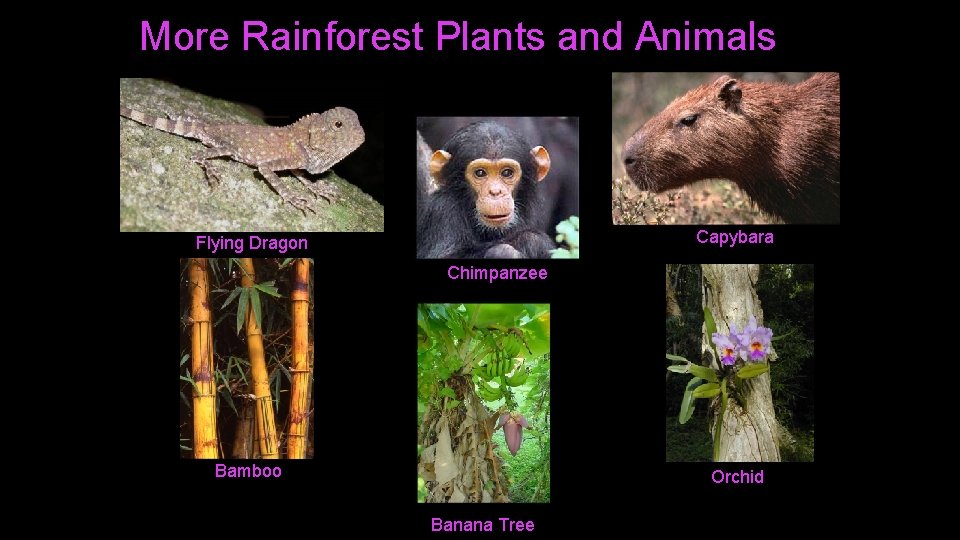
More Rainforest Plants and Animals Capybara Flying Dragon Chimpanzee Bamboo Orchid Banana Tree

Moose Eurasian Beaver • Location: Canada, Europe, Asia, and the United States Description: Boreal forests in which the terrain is rough and the forest floor is sparsely vegetated. Trees are dead or woody shafts with green tops. This biome is found in the northern hemisphere below the Arctic Circle. The climate is below freezing temperatures most months of the year. -Plants in this biome are typically conifers which do not shed their needles. Dominant trees include pine, fir, and spruce. Conifer needles have acidic substances which acidify the soil and prevents other plants from growing. Plants on the forest floor include blueberries, ferns, and mosses which can withstand the acidic soils. -Animals in this biome are adapted for cold temperatures. Birds migrate to warmer temperatures. Many animals hibernate through the cold temperature months. EXIT
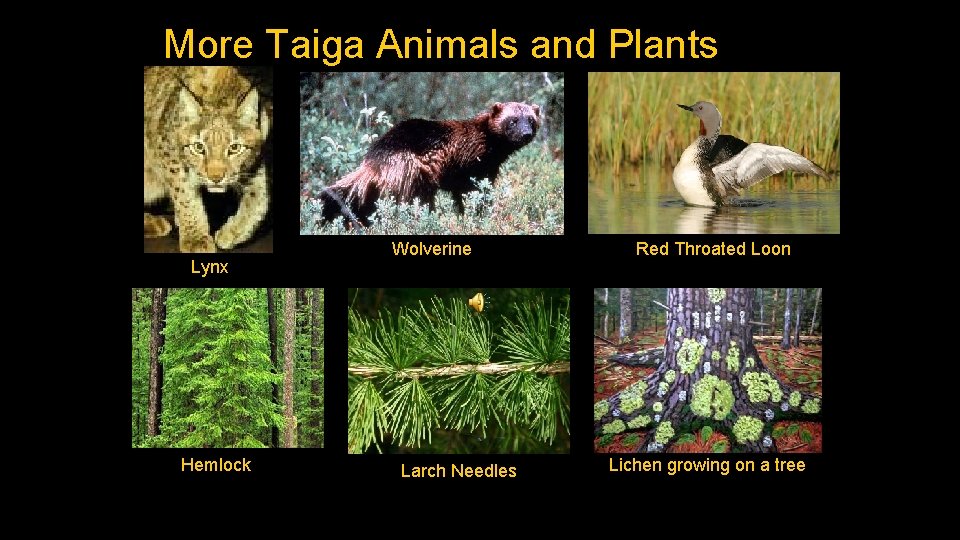
More Taiga Animals and Plants Lynx Hemlock Wolverine Larch Needles Red Throated Loon Lichen growing on a tree EXIT

Raccoon White Tailed Deer Temperate Forest • Location: Eastern United States, Canada, Europe, China, and Japan • Description: -Temperate Deciduous Forest Biome: Trees drop their broad flat leaves each fall. Climate varies greatly between 95 O F and below freezing. 30 to 100 inches of precipitation fall each year. The snow and rain help decompose the falling leaves which turn into rich deep soils. • -Plants in this biome are also in layers. The canopy layers are composed of tall trees such as maple, oak, and birch. Small trees, shrubs, and bushes make up the understory. The forest floor gets more light than in a tropical rain forest. Ferns, herbs, and mosses make up the forest floor. • -Animals in this biome are adapted to exploit the plants for food and shelter. Birds often migrate to warmer temperatures. Many animals hibernate through cold temperature months. EXIT
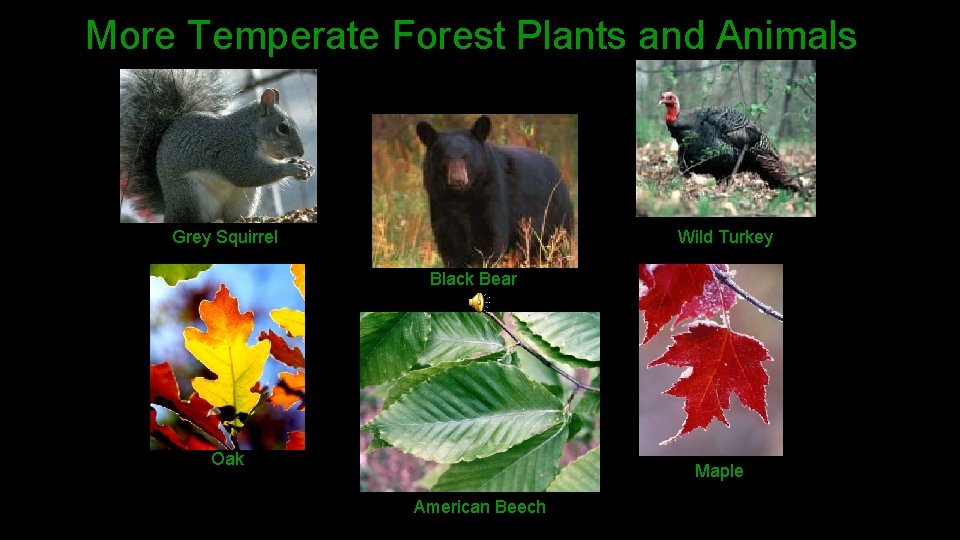
More Temperate Forest Plants and Animals Grey Squirrel Wild Turkey Black Bear Oak Maple American Beech EXIT
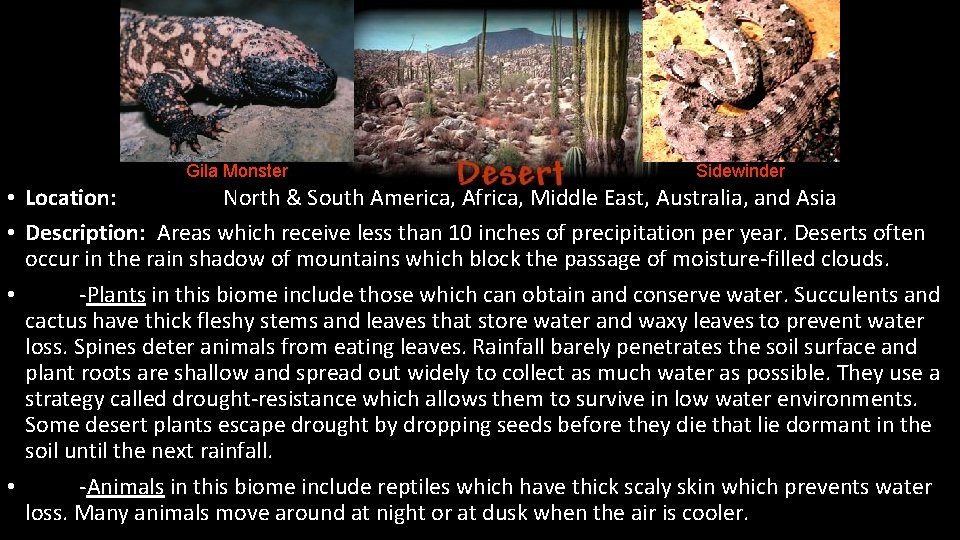
Gila Monster Sidewinder • Location: North & South America, Africa, Middle East, Australia, and Asia • Description: Areas which receive less than 10 inches of precipitation per year. Deserts often occur in the rain shadow of mountains which block the passage of moisture-filled clouds. • -Plants in this biome include those which can obtain and conserve water. Succulents and cactus have thick fleshy stems and leaves that store water and waxy leaves to prevent water loss. Spines deter animals from eating leaves. Rainfall barely penetrates the soil surface and plant roots are shallow and spread out widely to collect as much water as possible. They use a strategy called drought-resistance which allows them to survive in low water environments. Some desert plants escape drought by dropping seeds before they die that lie dormant in the soil until the next rainfall. • -Animals in this biome include reptiles which have thick scaly skin which prevents water loss. Many animals move around at night or at dusk when the air is cooler.
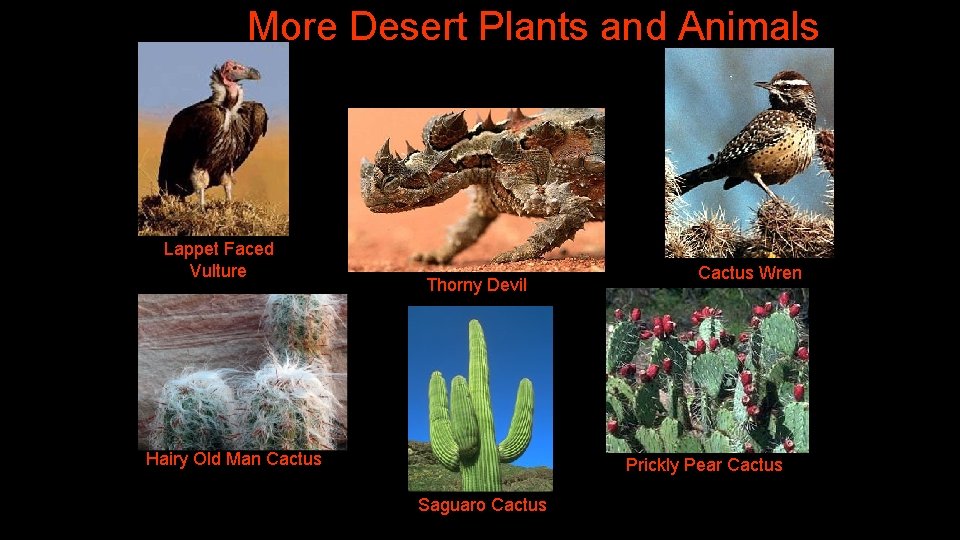
More Desert Plants and Animals Lappet Faced Vulture Thorny Devil Hairy Old Man Cactus Wren Prickly Pear Cactus Saguaro Cactus
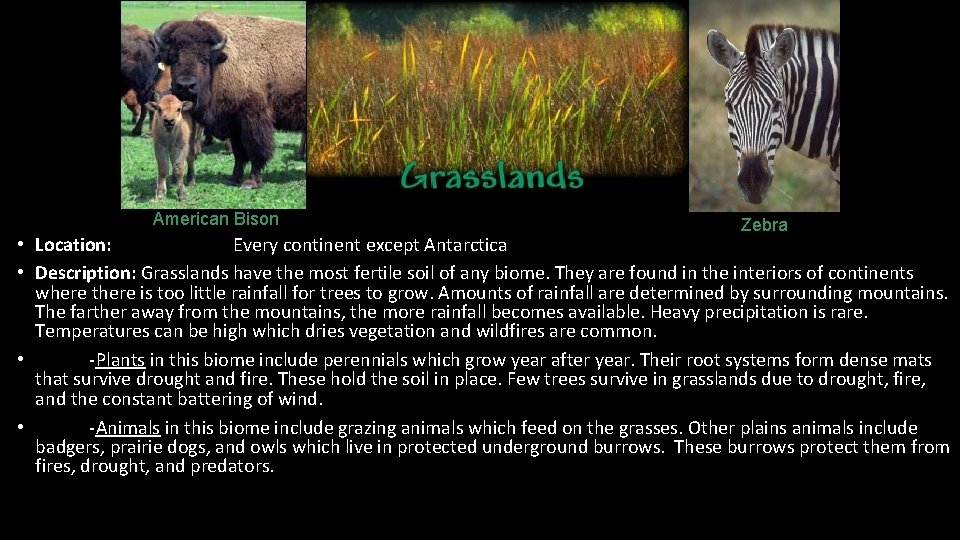
American Bison Zebra • Location: Every continent except Antarctica • Description: Grasslands have the most fertile soil of any biome. They are found in the interiors of continents where there is too little rainfall for trees to grow. Amounts of rainfall are determined by surrounding mountains. The farther away from the mountains, the more rainfall becomes available. Heavy precipitation is rare. Temperatures can be high which dries vegetation and wildfires are common. • -Plants in this biome include perennials which grow year after year. Their root systems form dense mats that survive drought and fire. These hold the soil in place. Few trees survive in grasslands due to drought, fire, and the constant battering of wind. • -Animals in this biome include grazing animals which feed on the grasses. Other plains animals include badgers, prairie dogs, and owls which live in protected underground burrows. These burrows protect them from fires, drought, and predators.
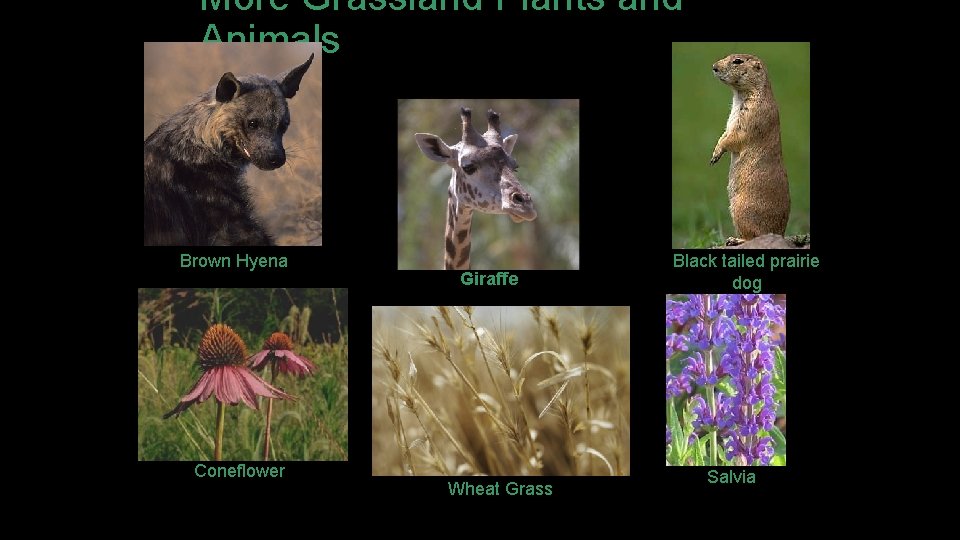
More Grassland Plants and Animals Brown Hyena Coneflower Giraffe Wheat Grass Black tailed prairie dog Salvia
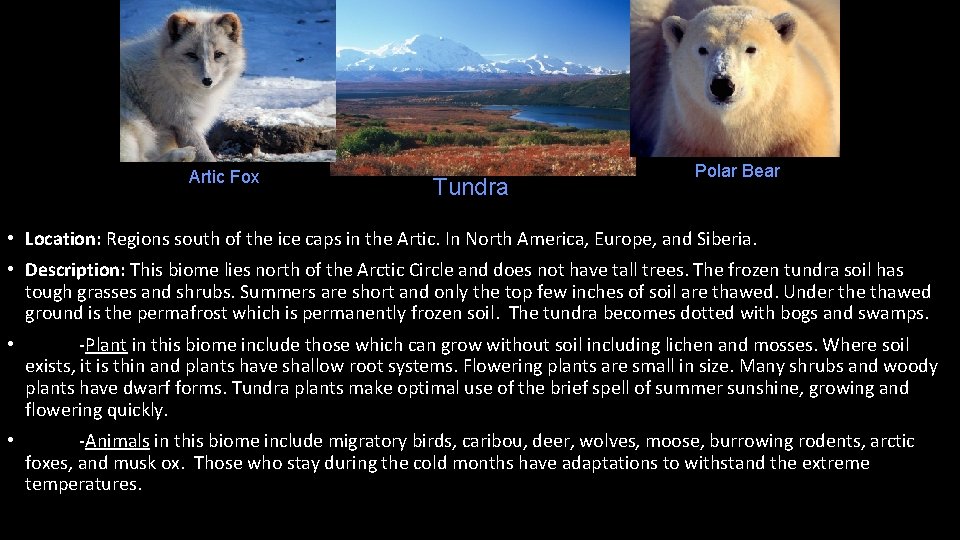
Artic Fox Tundra Polar Bear • Location: Regions south of the ice caps in the Artic. In North America, Europe, and Siberia. • Description: This biome lies north of the Arctic Circle and does not have tall trees. The frozen tundra soil has tough grasses and shrubs. Summers are short and only the top few inches of soil are thawed. Under the thawed ground is the permafrost which is permanently frozen soil. The tundra becomes dotted with bogs and swamps. • -Plant in this biome include those which can grow without soil including lichen and mosses. Where soil exists, it is thin and plants have shallow root systems. Flowering plants are small in size. Many shrubs and woody plants have dwarf forms. Tundra plants make optimal use of the brief spell of summer sunshine, growing and flowering quickly. • -Animals in this biome include migratory birds, caribou, deer, wolves, moose, burrowing rodents, arctic foxes, and musk ox. Those who stay during the cold months have adaptations to withstand the extreme temperatures.
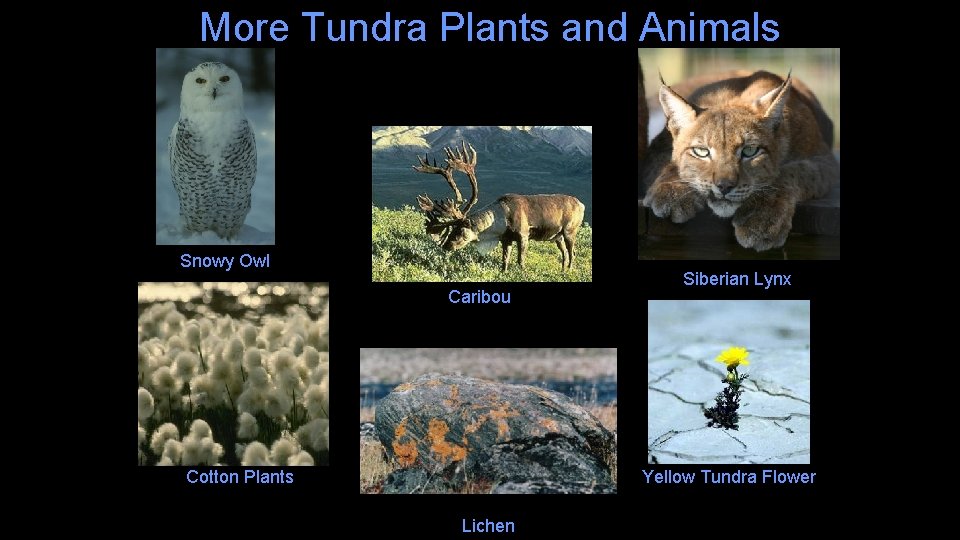
More Tundra Plants and Animals Snowy Owl Caribou Cotton Plants Siberian Lynx Yellow Tundra Flower Lichen
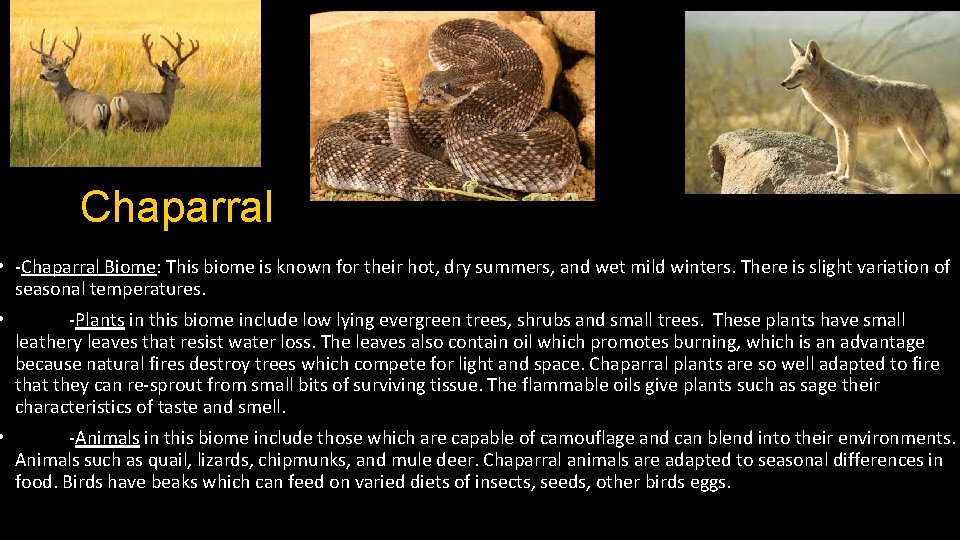
Chaparral • -Chaparral Biome: This biome is known for their hot, dry summers, and wet mild winters. There is slight variation of seasonal temperatures. • -Plants in this biome include low lying evergreen trees, shrubs and small trees. These plants have small leathery leaves that resist water loss. The leaves also contain oil which promotes burning, which is an advantage because natural fires destroy trees which compete for light and space. Chaparral plants are so well adapted to fire that they can re-sprout from small bits of surviving tissue. The flammable oils give plants such as sage their characteristics of taste and smell. • -Animals in this biome include those which are capable of camouflage and can blend into their environments. Animals such as quail, lizards, chipmunks, and mule deer. Chaparral animals are adapted to seasonal differences in food. Birds have beaks which can feed on varied diets of insects, seeds, other birds eggs.
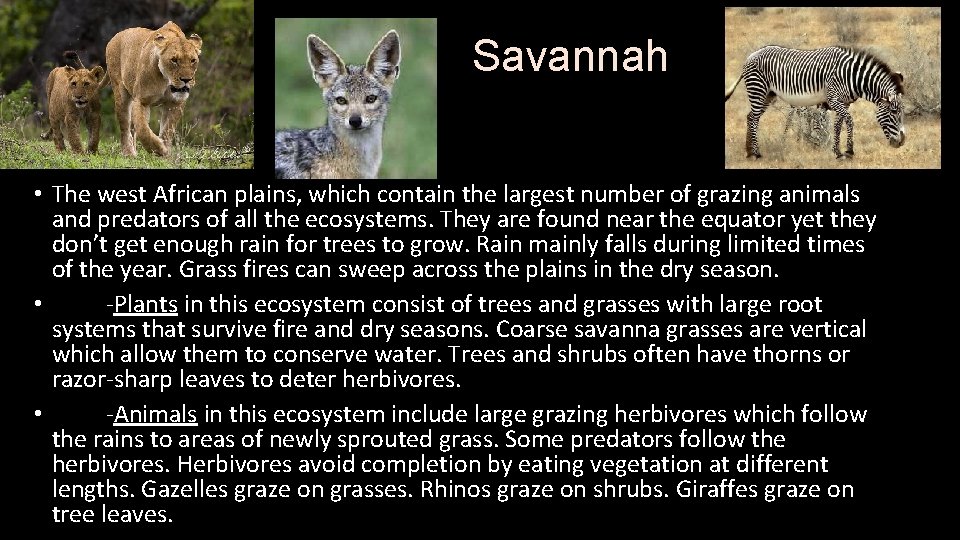
Savannah • The west African plains, which contain the largest number of grazing animals and predators of all the ecosystems. They are found near the equator yet they don’t get enough rain for trees to grow. Rain mainly falls during limited times of the year. Grass fires can sweep across the plains in the dry season. • -Plants in this ecosystem consist of trees and grasses with large root systems that survive fire and dry seasons. Coarse savanna grasses are vertical which allow them to conserve water. Trees and shrubs often have thorns or razor-sharp leaves to deter herbivores. • -Animals in this ecosystem include large grazing herbivores which follow the rains to areas of newly sprouted grass. Some predators follow the herbivores. Herbivores avoid completion by eating vegetation at different lengths. Gazelles graze on grasses. Rhinos graze on shrubs. Giraffes graze on tree leaves.
-Freshwater Ecosystems: • This ecosystem includes sluggish waters of lakes, rivers, and streams. The nutrient rich area of these water systems is called the littoral zone. The benthic zone is the bottom of the water system with dead and decaying organisms. A lake with a lot of plant nutrients is called a eutrophic lake. Areas in which water is available for parts of the year are called wetlands. Wetlands remove pollutants from the water, control flooding by absorbing extra water, and produce commercial produce such as blueberries, cranberries, and peat moss. There are two types of wetlands: marshes and swamps. Marshes are nutrient-rich wetlands that support a variety of reeds and grasses, while swamps are defined by their ability to support woody plants and trees. Swamps occur on flat poorly draining land often near streams. Bogs are characterized by their poor soil and high peat content. • -Plants and Animal Adaptations: Along the shore, plants such as cattails and reeds are rooted to the mud. Deeper water contains floating plants such as lilies. In addition to fish, organisms such as plants, insects, and amphibians are adapted to living in or near the water in lakes and ponds.
-Estuaries ecosystem • These are where freshwater mixes with saltwater from the ocean. Estuaries are nutrient traps where mineral rich mud drops to the bottom. Estuaries are among the most productive ecosystems because they contain plenty of light and the nutrients plants need for photosynthesis. • -Plant and Animal Adaptations include organisms which can tolerate a changing variation of fresh and salt water. A large population of plants are supported by the light and extra nutrients. Organisms such as plankton, fish, dolphins, manatees, and seals thrive.
-Coral Reef ecosystems • -Coral Reef ecosystems are limestone islands in the sea which are built by coral animals called polyps. Thousands of species live in the cracks and crevices of coral reefs. Corals can only live in warm salt water where there is light for photosynthesis. • -Animal adaptations include corals which use stinging tentacles to capture prey which floats or swims by.
-Ocean Ecosystem: • -Ocean Ecosystem: The ocean covers ¾ of the earth’s surface. Plants can grow where nutrients or sunlight is available. Thus, most plants are found around shallow areas near continents. Light only penetrates about 330 ft into the ocean water. The open ocean is one of the least productive ecosystems on the planet. The deep ocean obtains nutrients that fall from above. Flowering plants are absent from the oceans, except around the edges. Food for herbivores is provided by abundant phytoplankton such as diatoms. When they die, phytoplankton sink to the bottom of the ocean, sometimes in great numbers. • -Animals include zooplankton (jellyfish, tiny shrimp, and larvae of mollusks) which feed on phytoplankton. Many fish, whales, and animals feed on the plankton. Many creatures have evolved sleek, tapered shapes for moving through the dense water. Most fish that swim near the surface have a silvery color, a protective camouflage for life in the open water with no place to hide. Life in the deep ocean consists of decomposers, filter feeders, and those who eat them.
-Polar Ecosystems: • -Polar Ecosystems: Ice covered polar caps at both the north and south poles can be considered marine ecosystems because nearly all the food is provided by phytoplankton in the ocean. The two poles are very different. The south pole is on the continent Antarctica and the north is not on land at all. The north pole is on the Arctic ocean and frozen in a huge iceburg throughout the year, with smaller iceburgs surrounding the edges. • -Animals: The arctic is relatively shallow and contains many nutrients. It supports a large population of plankton which supports animals which feed on the plankton such as whales, fish, birds, and polar bears. The Antarctic supports a large population of plankton which supports fish, whales, and penguins.
- Slides: 21