
Biomes Large geographic areas that have similar climates
Biomes Large geographic areas that have similar climates and ecosystems
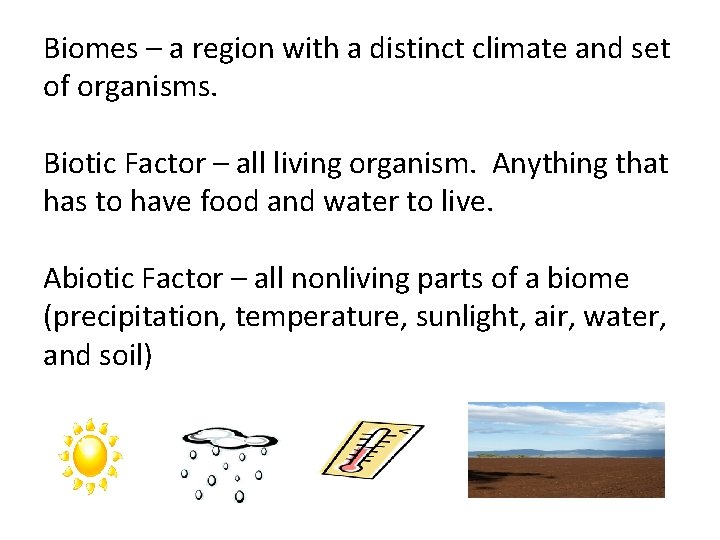
Biomes – a region with a distinct climate and set of organisms. Biotic Factor – all living organism. Anything that has to have food and water to live. Abiotic Factor – all nonliving parts of a biome (precipitation, temperature, sunlight, air, water, and soil)

Tundra • A cold, dry, treeless region sometimes called a cold desert. • Precipitation – 25 cm (10 in) per year • Temperature - -12⁰C (10⁰F)average daily temp. • Permafrost – frozen layer of soil just beneath the top layer of soil.
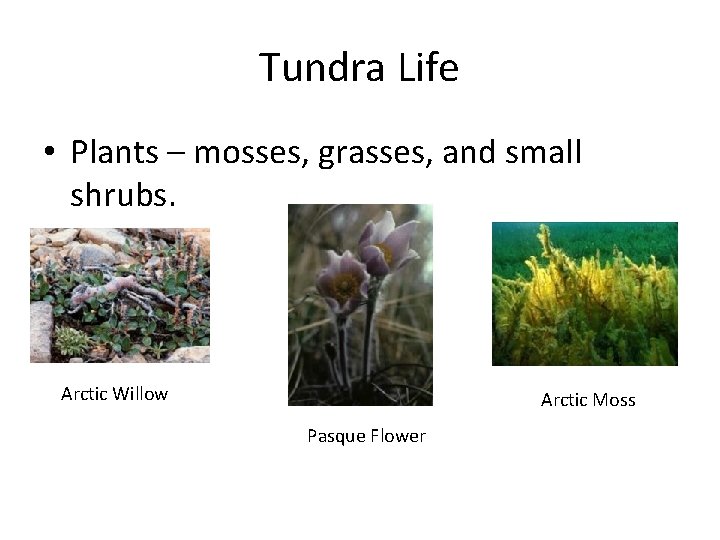
Tundra Life • Plants – mosses, grasses, and small shrubs. Arctic Willow Arctic Moss Pasque Flower
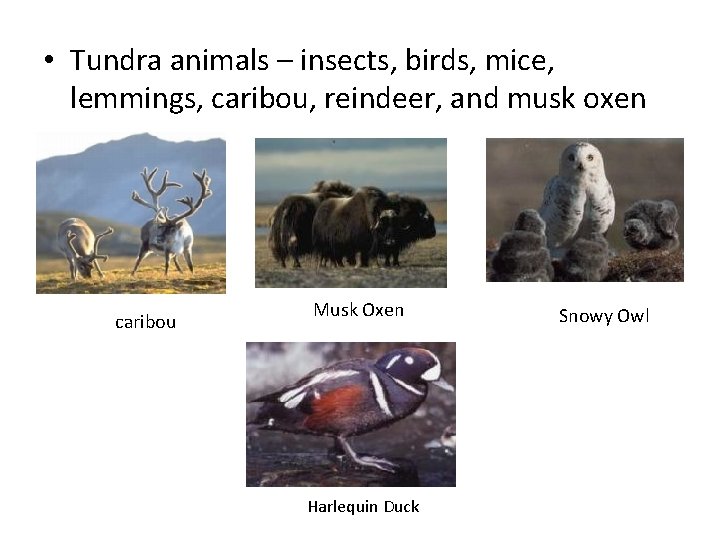
• Tundra animals – insects, birds, mice, lemmings, caribou, reindeer, and musk oxen caribou Musk Oxen Harlequin Duck Snowy Owl
Taiga • • Cold forest of mostly evergreen trees. Short Summers Precipitation – 35 -100 cm per year Largest of the 7 Biomes
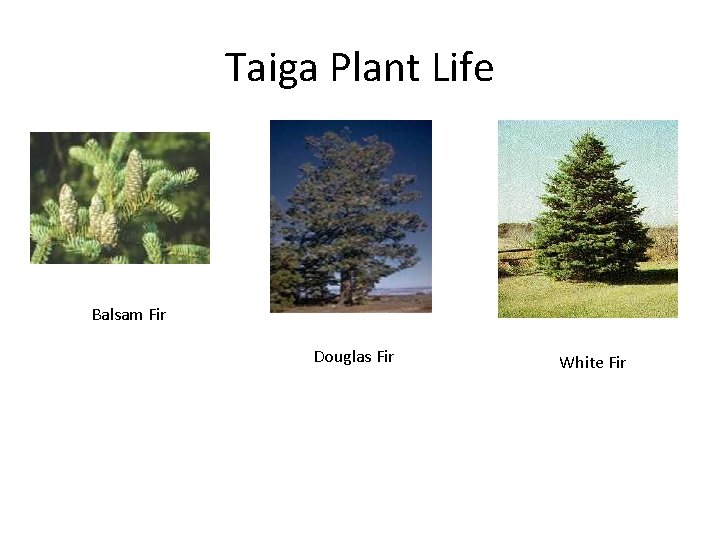
Taiga Plant Life Balsam Fir Douglas Fir White Fir
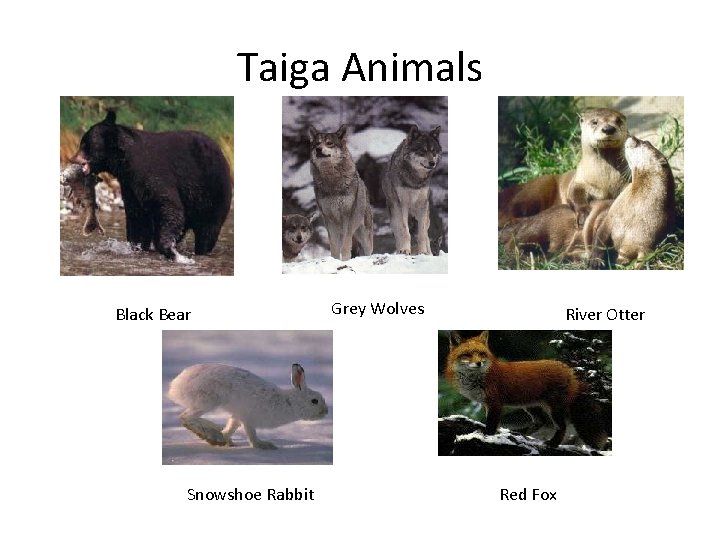
Taiga Animals Black Bear Snowshoe Rabbit Grey Wolves River Otter Red Fox
Temperate Deciduous Forest • The biome that we live in • Has 4 distinct season: Winter, Spring, Summer, Fall • Trees loose their leaves each winter. • Precipitation – 75 – 150 cm per year. • Temp – below freezing – 30⁰C (86⁰F) • Large variety of plant and animal life.
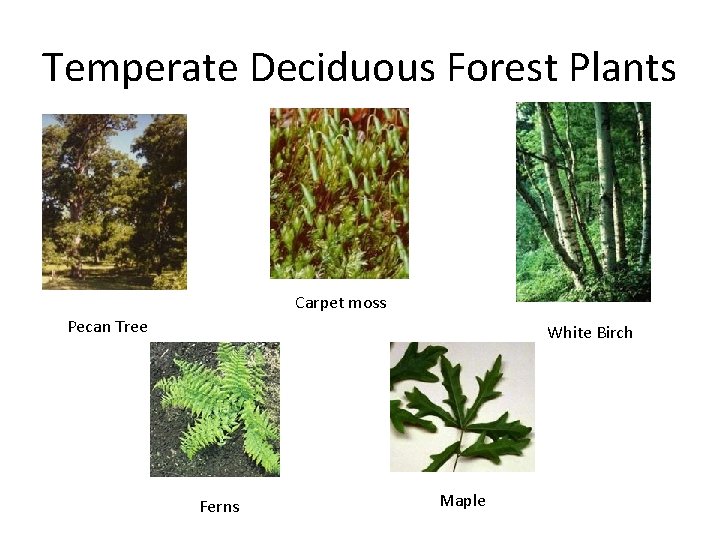
Temperate Deciduous Forest Plants Carpet moss Pecan Tree White Birch Ferns Maple

Temperate Deciduous Forest Animals Chipmunk Bald Eagle Red Tail Squirrel Coyote Duckbill Platypus
Temperate Rain Forest of tall trees with needlelike leaves. Temp – 9⁰ - 12⁰ C. (48⁰-54⁰F) Precipitation – 200 – 400 cm Locations are New Zealand, southern Chile, and Pacific Northwest US • Many of the same types of plants and animals as in the Deciduous Forest. • Smallest of the 7 Biomes. • •
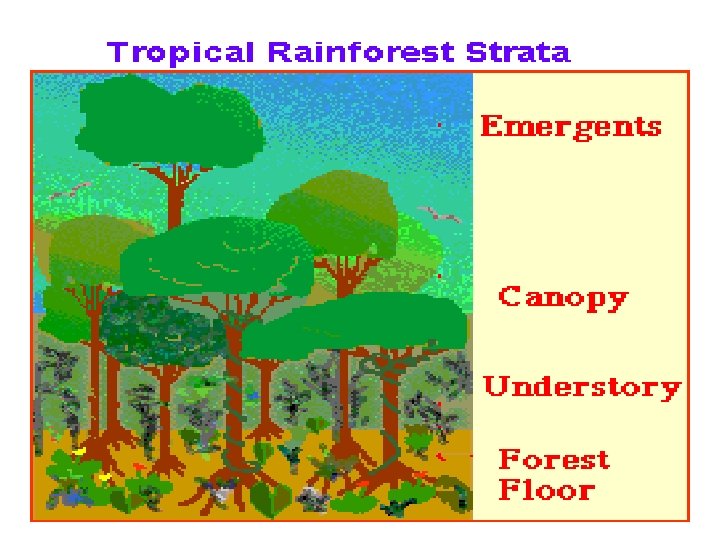
Tropical Rain Forest • The most biologically diverse of all biomes • Temp – 25⁰ C (77⁰F) • Precipitation – 200 cm – 600 cm in the form of rain. • Poor soil. • Made up of 4 zones: floor, understory, canopy and emergents.
The Zones/Strata • Floor – this is the floor of the forest and home to many insects and the largest mammals. • Understory – Dark, cool environment under the canopy and above the forest floor. • Canopy – Upper parts of the trees and is FULL of life – insects, birds, reptiles, and mammals • Emergents – The trees that are much taller than the average trees in the canopy. Home to birds and insects.
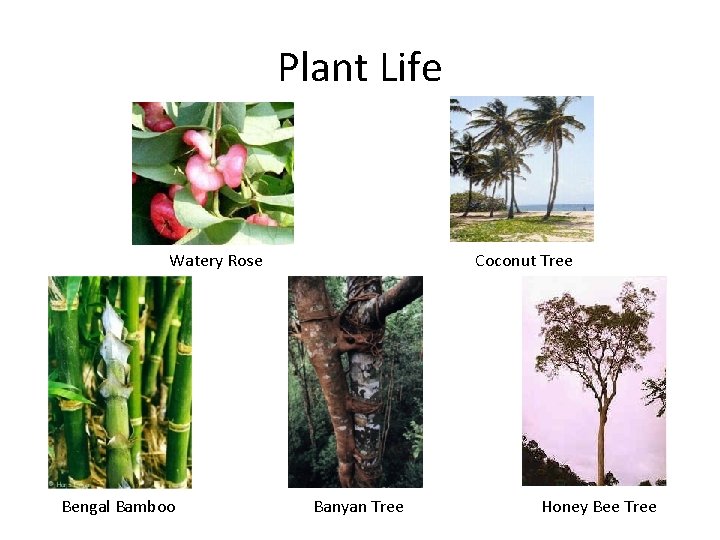
Plant Life Watery Rose Bengal Bamboo Coconut Tree Banyan Tree Honey Bee Tree
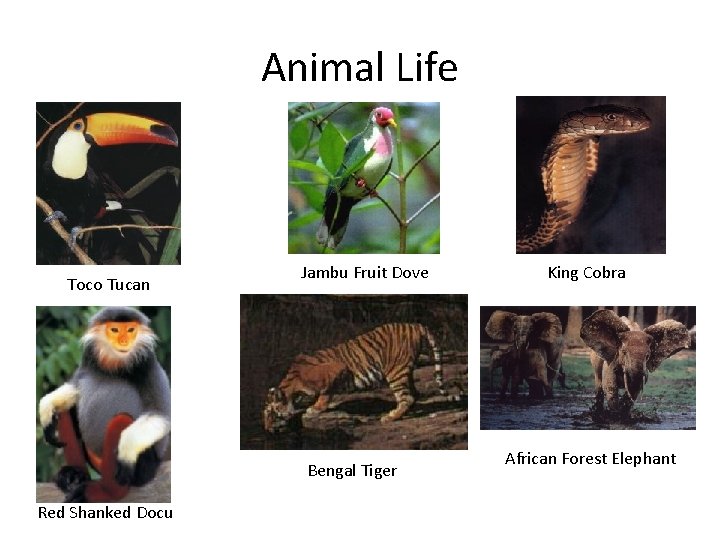
Animal Life Toco Tucan Jambu Fruit Dove Bengal Tiger Red Shanked Docu King Cobra African Forest Elephant
Desert • • • The driest of all biomes Precipitation: less than 25 cm per year Temp: Extreme hot and cold Soil is poor, sandy or gravelly Both plants and animals have to adapt to little water and extreme temps
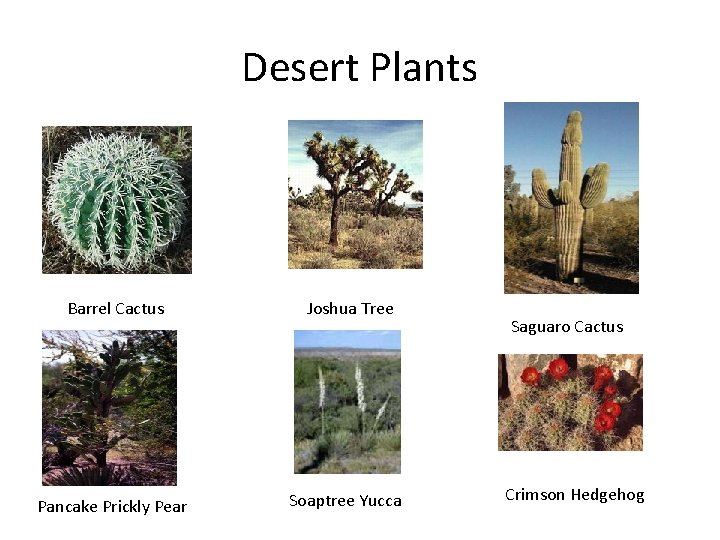
Desert Plants Barrel Cactus Joshua Tree Pancake Prickly Pear Soaptree Yucca Saguaro Cactus Crimson Hedgehog
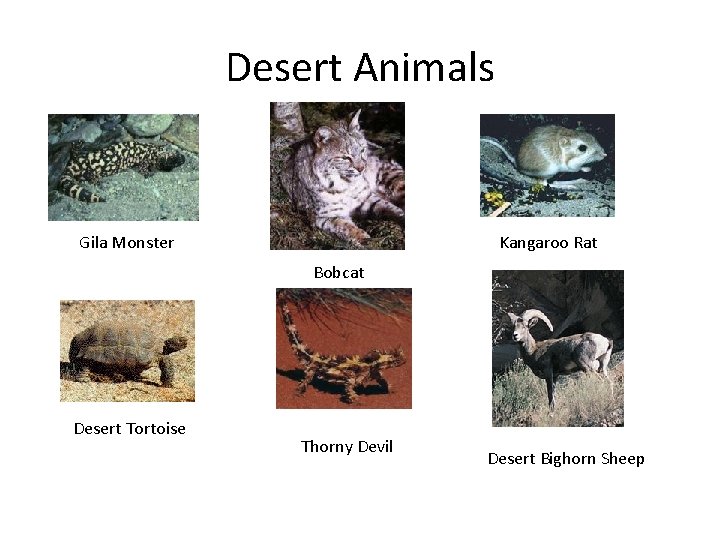
Desert Animals Gila Monster Kangaroo Rat Bobcat Desert Tortoise Thorny Devil Desert Bighorn Sheep
Grasslands • • Dominated by climax communities of grasses. Temperate and Tropical regions Precipitation: 25 – 75 cm per year Found all around the world with different names: North America called Prairies Asia called Steppes Africa called Savannas South America called Pampas
• Grasslands perfect for growing wheat, rye, oats, barley, and corn. • Grasslands also used to raise sheep and cattle.
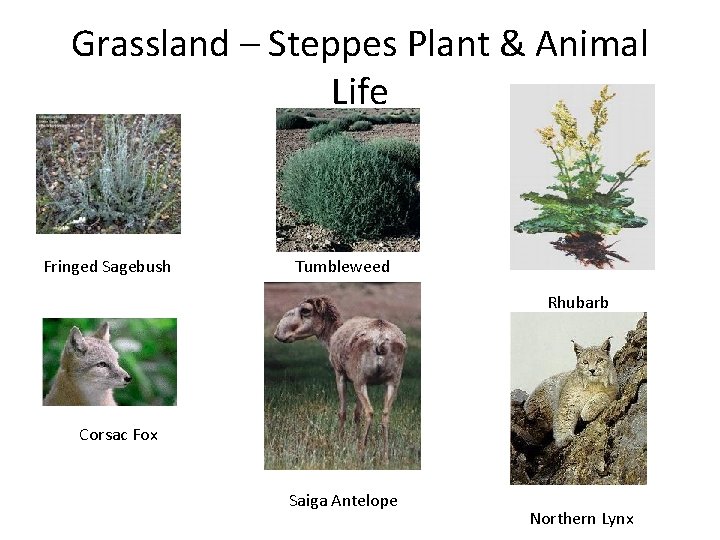
Grassland – Steppes Plant & Animal Life Fringed Sagebush Tumbleweed Rhubarb Corsac Fox Saiga Antelope Northern Lynx
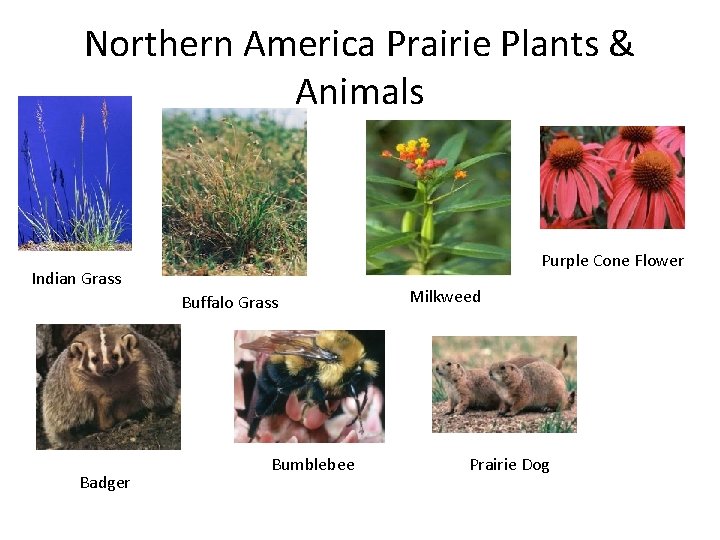
Northern America Prairie Plants & Animals Purple Cone Flower Indian Grass Buffalo Grass Badger Bumblebee Milkweed Prairie Dog
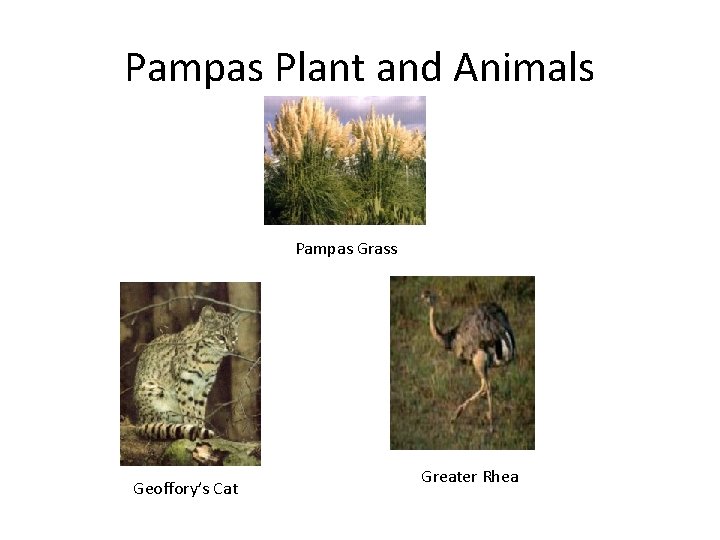
Pampas Plant and Animals Pampas Grass Geoffory’s Cat Greater Rhea
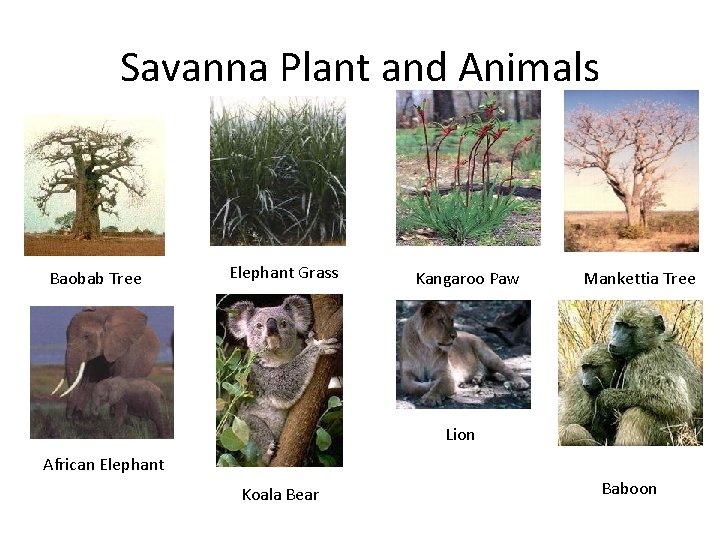
Savanna Plant and Animals Baobab Tree Elephant Grass Kangaroo Paw Mankettia Tree Lion African Elephant Koala Bear Baboon
Aquatic Biomes
Freshwater Ecosystems • Include flowing water such as rivers and streams. • Standing water such as lakes, ponds, and wetlands. • 4 factors that determine which species can survive are: Water Temp, Sunlight, Dissolved Oxygen, and Amount of Salt.
Rivers and Streams • Flowing freshwater environments. • Small brooks to large rivers. • The faster the river flows the more oxygen content there is in the water. • Most nutrients are washed into the water from the land it flows through. • Humans use for recreations: fishing, swimming, skiing, etc. • Once considered a free place to dump sewage.
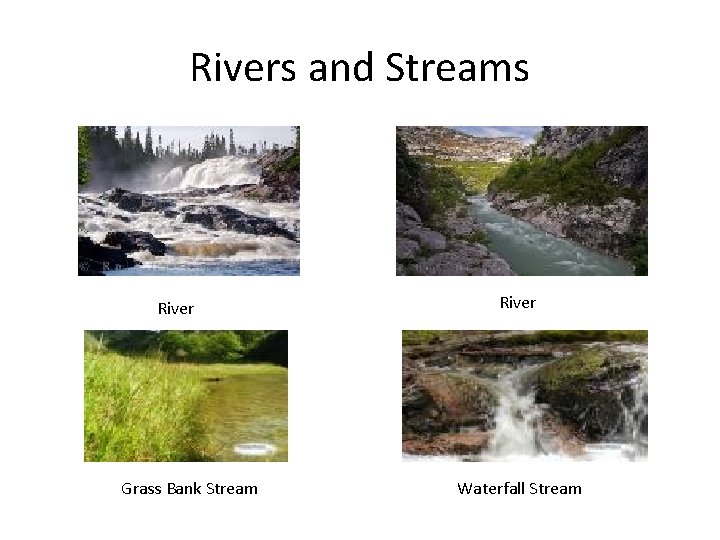
Rivers and Streams River Grass Bank Stream River Waterfall Stream
Lakes and Ponds • A low place that fills with water over time or water from an overflowing stream. • Water hardly moves. • Contains more plant life than flowing water. • Lakes are larger and deeper than ponds. • Pond water is warmed by the sunlight and support plant ( algae and plankton) and animal life. • Deeper lakes support life longer.
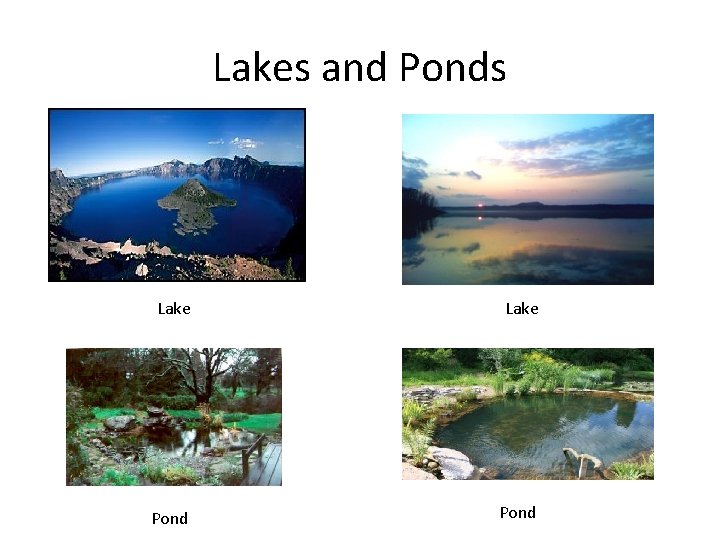
Lakes and Ponds Lake Pond
Wetlands • Regions that are wet for all or most of the year • Found in regions that lie between landmasses and water. • Other names: swamps, bogs, and fens • Very fertile • Animals: beavers, muskrats, alligators, bog turtles. • Once thought of as useless, but are now being restored for their valuable resources.
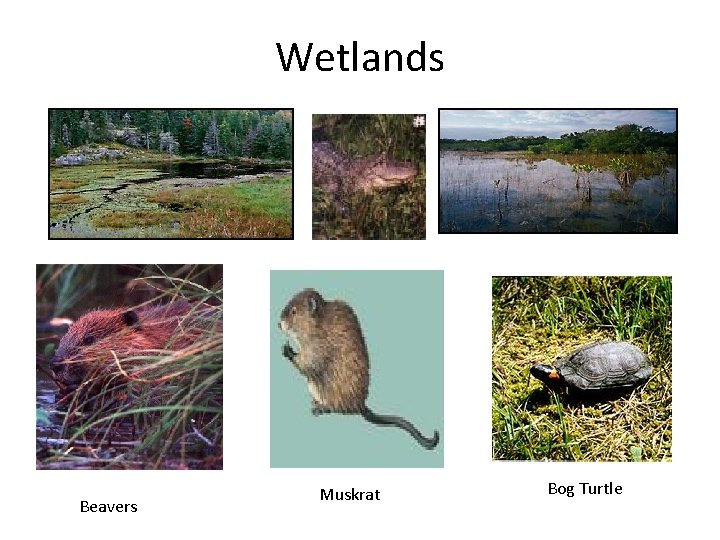
Wetlands Beavers Muskrat Bog Turtle
Salt Water Ecosystems
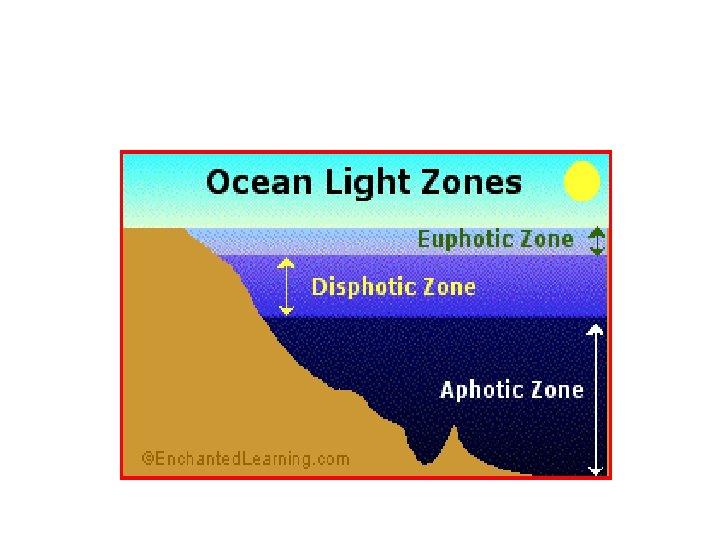
2 Zones of the Ocean • Lighted Zone – upper 200 m, sunlight penetrates the water. Home of plankton. • Dark Zone – Below 200 m, sunlight does not penetrate this water. Animals feed or organisms that float down or on each other.
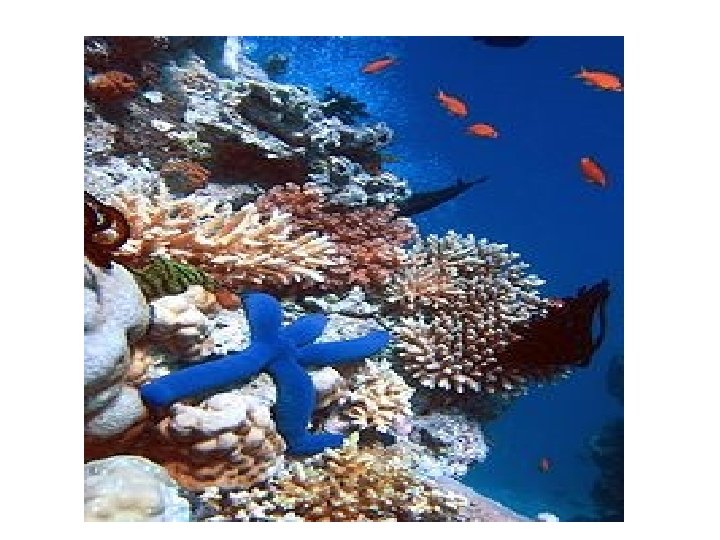
Coral Reefs • One of the most diverse ecosystem in the world. • Formed over long periods of time. • Formed by calcium carbonate skeletons secreted by animals called coral. • When coral dies their skeletons remain.
The Ocean • Intertidal Zone – is the portion of the shoreline that is covered with water at high tide and exposed to the air during low tide- Called the Seashore – Contains- sea grasses, periwinkle snails, herons, sea stars, anemones, clams, crabs, snails, and conchs • Neritic Zone – Moves away from the shore, water is warm and receives a lot of sunlight. Contains seaweed, corals, sea turtles, fishes, sponges, and dolphins
The Ocean Zone • The Oceanic Zone – Sea floor drops sharply, Plankton is found near the surface, contains fishes, whales, sharks, squids, glow fish • Benthic Zone – Is the ocean floor, deepest parts do not get any sunlight, very cold, animals: fishes, worms, crabs, bacteria, sea urchins – some animals get energy from thermal vents
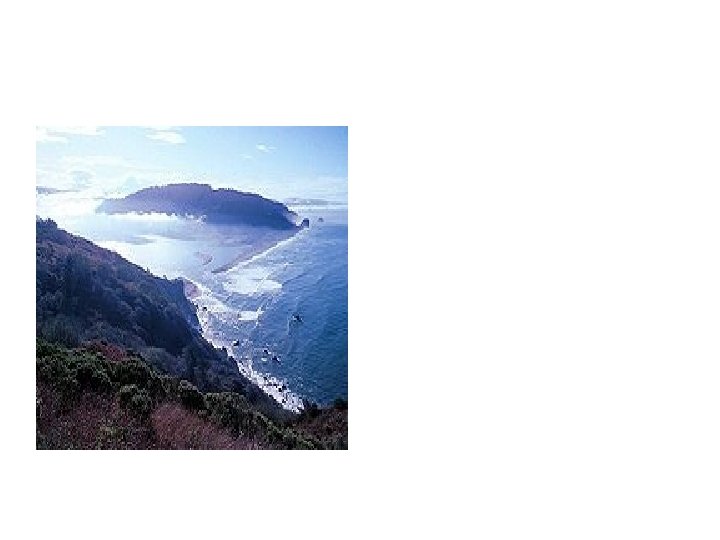
Estuaries • The area where a river meets an ocean and contains a mixture of freshwater and salt water. • Also called bays, lagoons, harbors, inlets, and sounds. • Extremely fertile because the freshwater brings tons of nutrients.
Estuary Life • Many species of algae, salt-tolerant grasses, shrimp, crabs, clams, oysters, snails, worms, and fish. • Estuaries provide much of the seafood consumed by humans.
- Slides: 45