
Biomes Landscapes Restoration Management Terrestrial Biomes n Biomes
Biomes, Landscapes, Restoration, Management
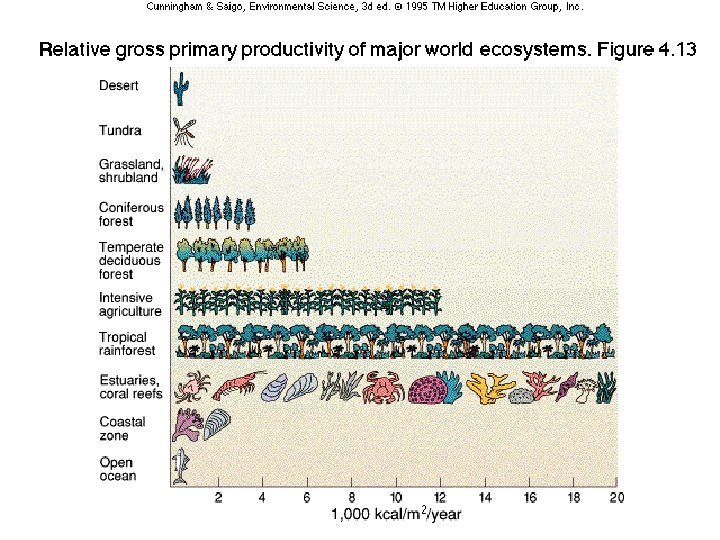
Terrestrial Biomes n Biomes definition - geographic locations on earth that demonstrate similar climate, topography, soil conditions, and communities
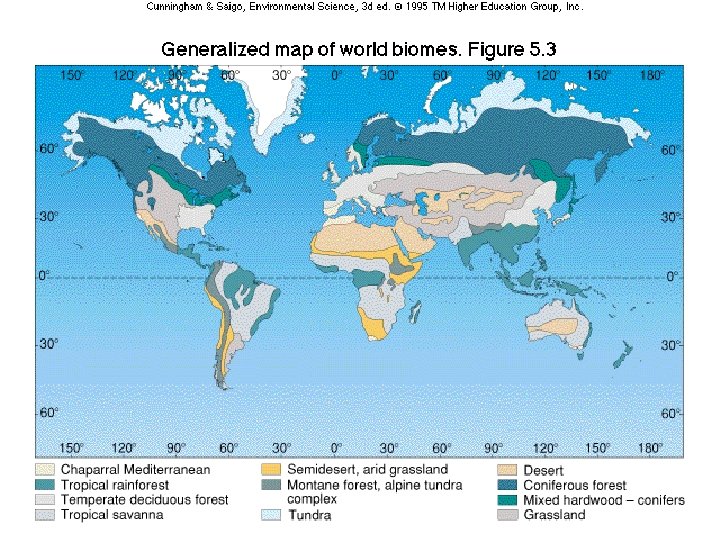
TYPES OF TERRESTRIAL BIOMES • Deserts • Grasslands (Prairies & Savannas) • Tundra • Conifer Forests • Deciduous & Evergreen Forests • Tropical Moist Forests • Tropical Seasonal Forests
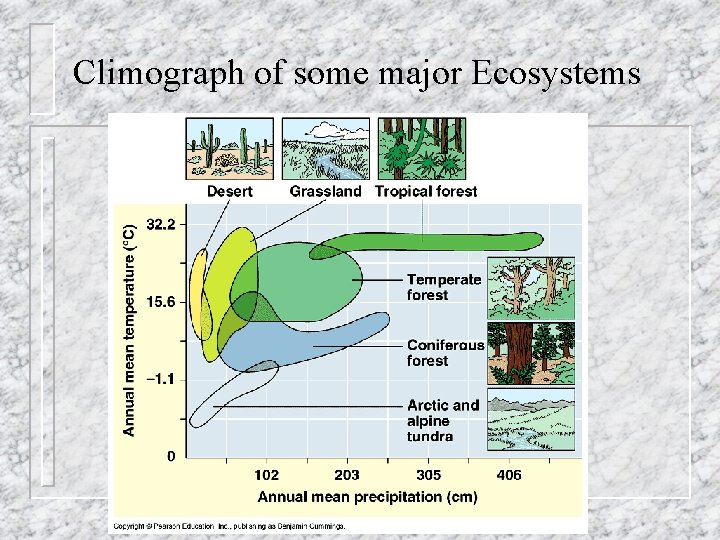
Climograph of some major Ecosystems
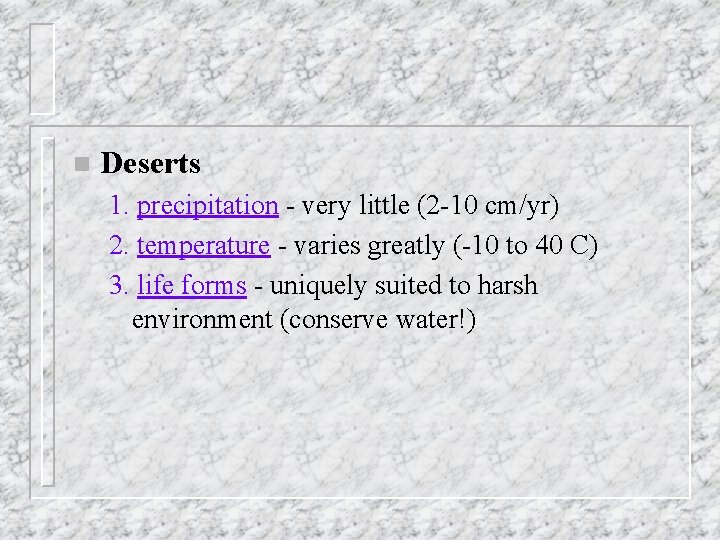
n Deserts 1. precipitation - very little (2 -10 cm/yr) 2. temperature - varies greatly (-10 to 40 C) 3. life forms - uniquely suited to harsh environment (conserve water!)
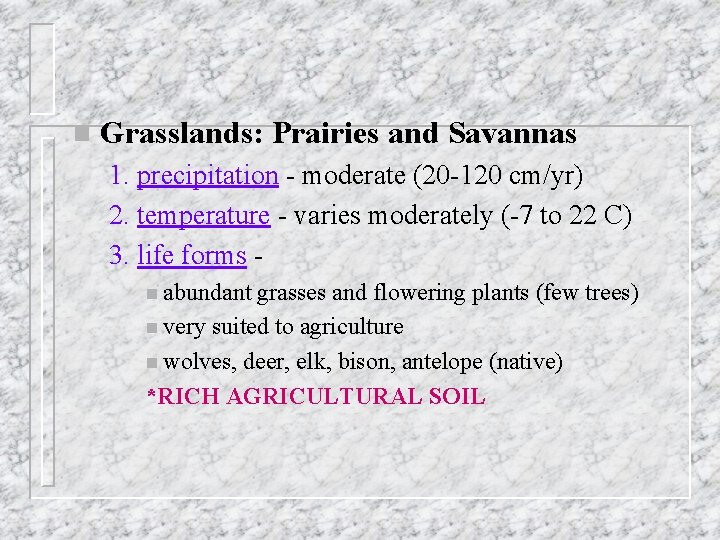
n Grasslands: Prairies and Savannas 1. precipitation - moderate (20 -120 cm/yr) 2. temperature - varies moderately (-7 to 22 C) 3. life forms n abundant grasses and flowering plants (few trees) n very suited to agriculture n wolves, deer, elk, bison, antelope (native) *RICH AGRICULTURAL SOIL
n Tundra 1. features - high mountains and northern & southern latitudes (frozen but not all ice) 2. precipitation - moderate (10 -100 cm/yr) 3. temperature - hardly varies (-20 to -4 C) 4. arctic tundra - lower altitude, rough soil 5. alpine tundra - higher altitude, less oxygen
n Conifer Forests 1. features -”cone bearing” trees; thin needles as leaves to preserve water 2. precipitation - moderate (10 -180 cm/yr) 3. temperature - varies moderately (-12 to 20 C) n boreal forest - mixed coniferous and deciduous trees (hemlock, spruce, cedar, firs) n taiga - on border of tundra, starts to become sparse with trees n temperate rain forest - Olympia Park in Washington
Broad-Leaved Deciduous & Evergreen Forests 1. features - “deciduous” trees (drop leaves) 2. precipitation - moderate (50 -200 cm/yr) 3. temperature - varies moderately (-12 to 20 C) n typical trees - oak, maple, birch, beech, elm, ash *RICH AGRICULTURE SOIL
n Tropical Moist Forests 1. features - constant temperature and rain 2. precipitation - heavy (>200 cm/yr) 3. temperature - constant (22 - 30 C) n n cloud forests - high on mountains in tropics tropical rain forests - lower in altitude; richest diversity of life forms on earth *MOST PRODUCTIVE AND DIVERSE *POOR AGRICULTURE SOIL
n Tropical Seasonal Forests 1. features - rainy (monsoon) and dry seasons 2. precipitation - heavy (150 - 220 cm/yr) 3. temperature - constant (22 - 30 C) n vegetation - evergreen and deciduous, giving way the woodlands and savannas
Aquatic Ecosystems 70% OF THE EARTH’S SURFACE Ø WATER IS ESSENTIAL TO LIFE Ø Ø It dissolves nutrients Ø It distributes and removes substances in & out of cells Ø It regulates body temperature Ø It supports structures

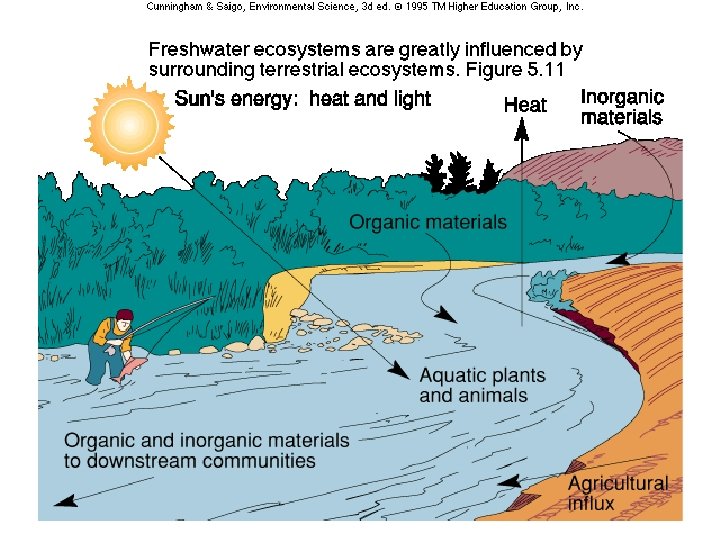
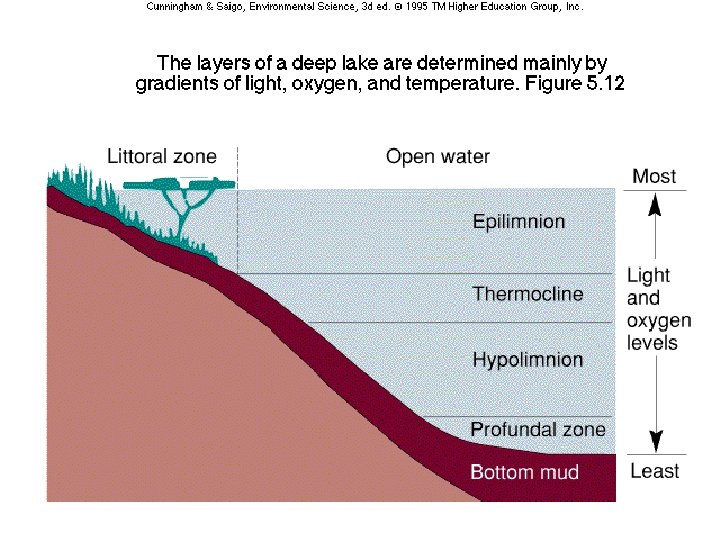
n Freshwater and Saline Ecosystems 1. freshwater ecosystems - rivers, ponds, lakes n vertical stratification (light, temp, oxygen) n benthos - community on bottom n thermocline - temp gradient going deeper n “salty” lakes - land-locked slat water areas
n Estuary & Wetlands: Fresh to Sea 1. estuary - site where river meets ocean n rich in nutrients n great gradient of salt content n delta - broad “fan-like” deposit of soil n wetland - land surface saturated most of year – – swamps - wetlands with trees marshes - wetlands without trees
n Shoreline and Barrier Islands 1. shoreline - where ocean meets land n varied and rich forms of life n subject to severe erosion during stormy seasons 2. barrier islands- form off the coastline n protect shoreline (Atlantic and Gulf coasts) 3. coral reefs - skeletons of “corals” over time n actual “living islands” for communities to live
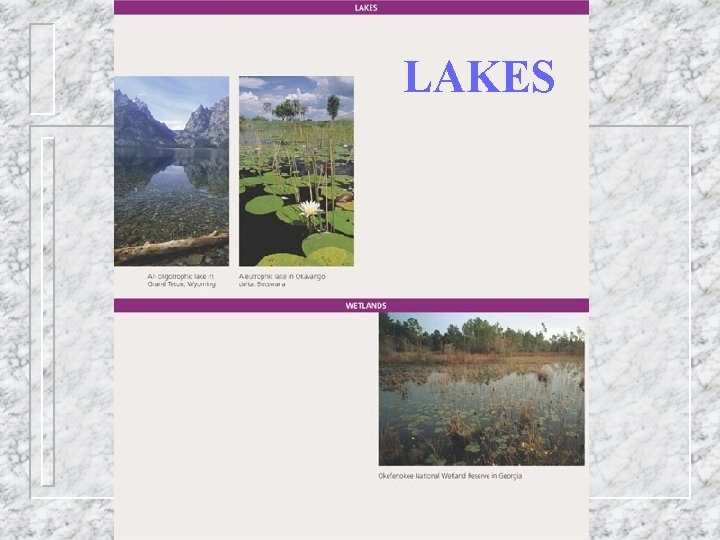
LAKES
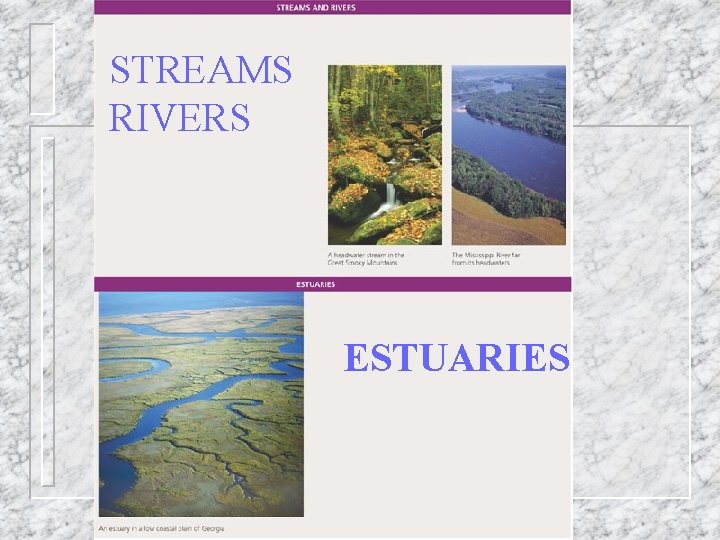
STREAMS RIVERS ESTUARIES
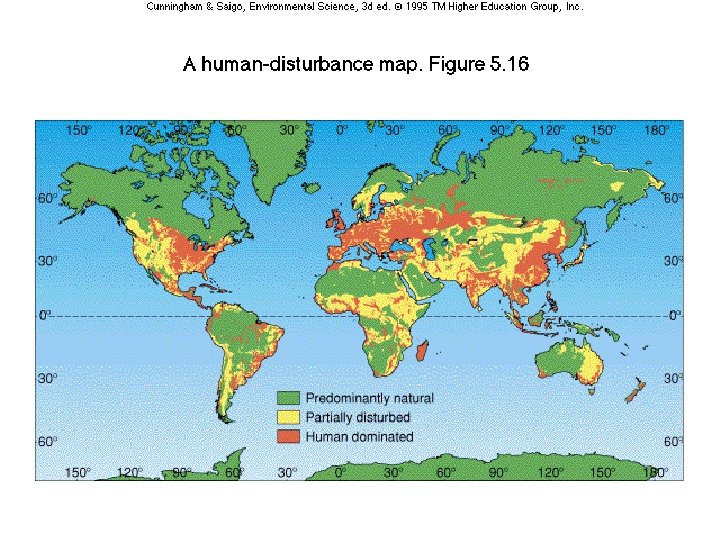
Human Disturbances n Human Disturbances – overuse of terrestrial biomes n agriculture, slash and burn n overcutting of forests for wood products n erosion increase n domination by cities and building n NAME YOUR OWN EXAMPLES !!!!!!
Landscape Ecology n Landscape Ecology 1. defintion- spatial relationships of ecological phenomenon
Restoration Ecology n Restoration Ecology - repair and reconstruction of damaged ecosystems 1. restoration - bring back to former condition 2. rehabilitation - not fully restoring 3. remediation - simply “cleaning up” pollutants 3. reclamation - turning from one use to another
Ecosystem Management n Roles Played by Different Groups – – government (local, state, federal) activist groups (Green Peace, Sierra Club …) citizens corporations
- Slides: 27