
Biomes Global Patterns of Life 1 Terrestrial Biomes
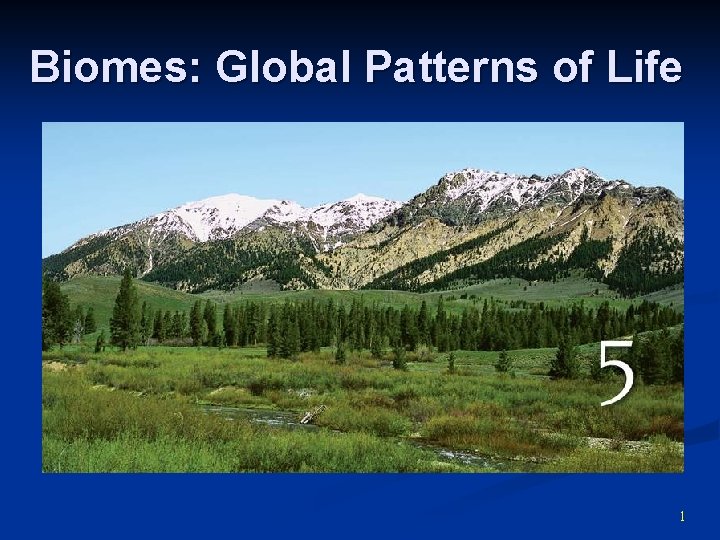
Biomes: Global Patterns of Life 1
Terrestrial Biomes • Biomes – Determined by temp and precip • Identified by the dominant plants 2
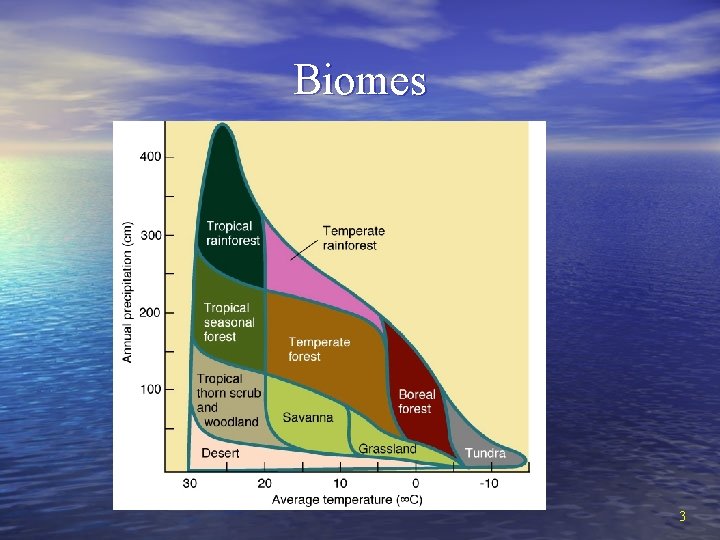
Biomes 3

Climatograms • Climatograms 4
Aquatic Ecosystems Factors that effect: • Temperature: ↓ with depth • Light (solar radiation): ↓ with depth • Dissolved oxygen • Nutrient availability • limiting macronutrients are phosphorus (P) and nitrogen (N) © Brooks/Cole Publishing Company / ITP 5
Aquatic Environments • Cover 71% of earth’s surface • 2 types determined by salinity – Freshwater: <1% salt and only 1% of earth – Saltwater (marine) • What connects all aquatic environments? 6
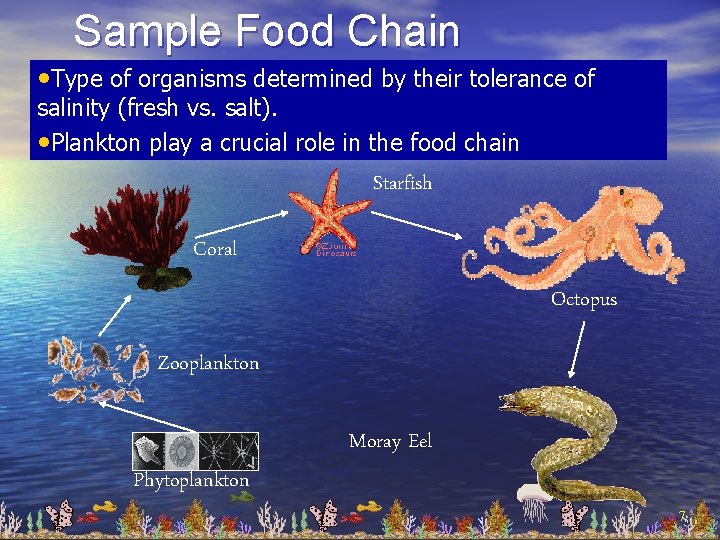
Sample Food Chain • Type of organisms determined by their tolerance of salinity (fresh vs. salt). • Plankton play a crucial role in the food chain Starfish Coral Octopus Zooplankton Moray Eel Phytoplankton 7
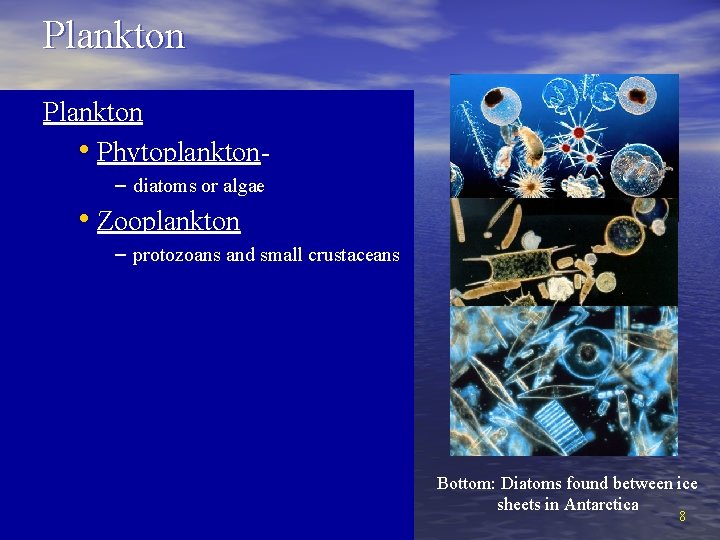
Plankton • Phytoplankton– diatoms or algae • Zooplankton – protozoans and small crustaceans Bottom: Diatoms found between ice sheets in Antarctica 8
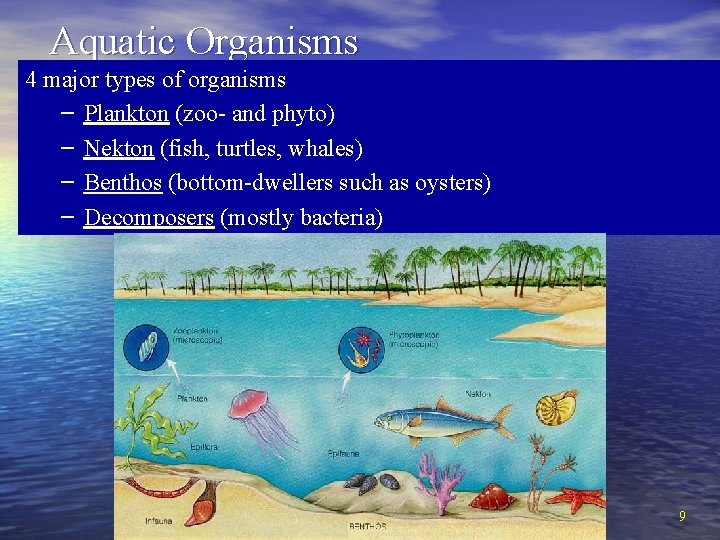
Aquatic Organisms 4 major types of organisms – Plankton (zoo- and phyto) – Nekton (fish, turtles, whales) – Benthos (bottom-dwellers such as oysters) – Decomposers (mostly bacteria) 9
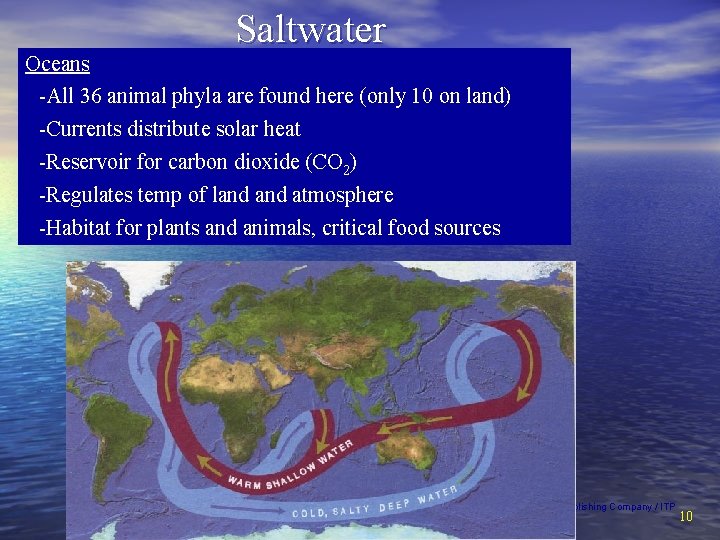
Saltwater Oceans -All 36 animal phyla are found here (only 10 on land) -Currents distribute solar heat -Reservoir for carbon dioxide (CO 2) -Regulates temp of land atmosphere -Habitat for plants and animals, critical food sources © Brooks/Cole Publishing Company / ITP 10
Life Zones of the Ocean • Zones defined by amount of solar radiation penetrating the water • Zones: • Intertidal zone • Pelagic zone • Abyssal zone • Benthic zone © Brooks/Cole Publishing Company / ITP 11
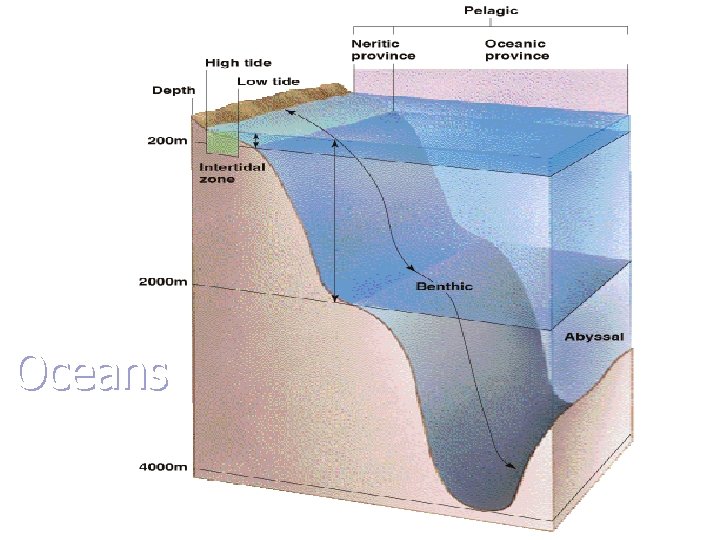
Oceans 12
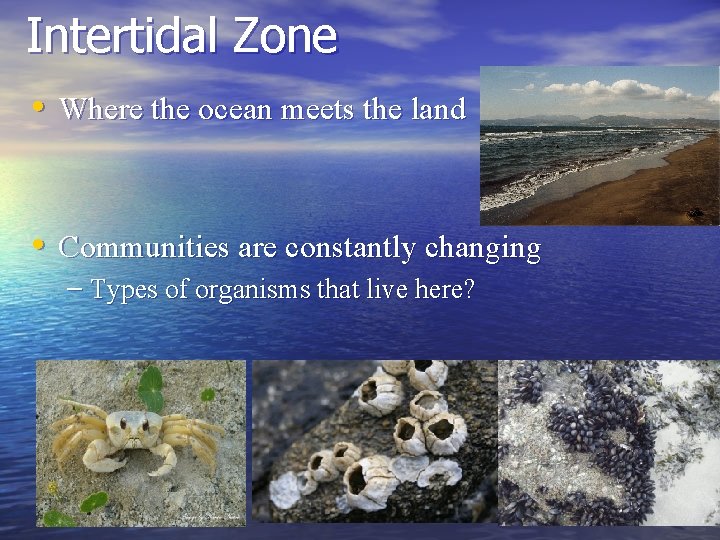
Intertidal Zone • Where the ocean meets the land • Communities are constantly changing – Types of organisms that live here? 13
Pelagic Zone • Open ocean • Thermal stratification – constant mixing of warm and cold ocean currents • Open ocean is the LEAST productive of aquatic life zones PER UNIT VOLUME. 14
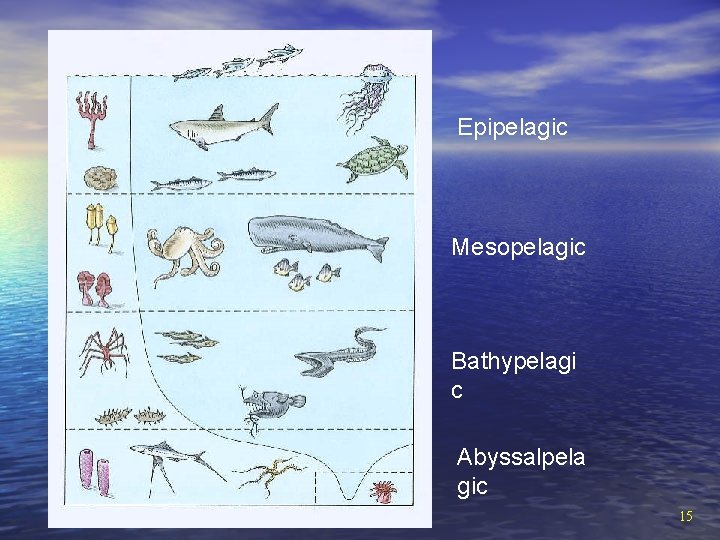
Epipelagic Mesopelagic Bathypelagi c Abyssalpela gic 15

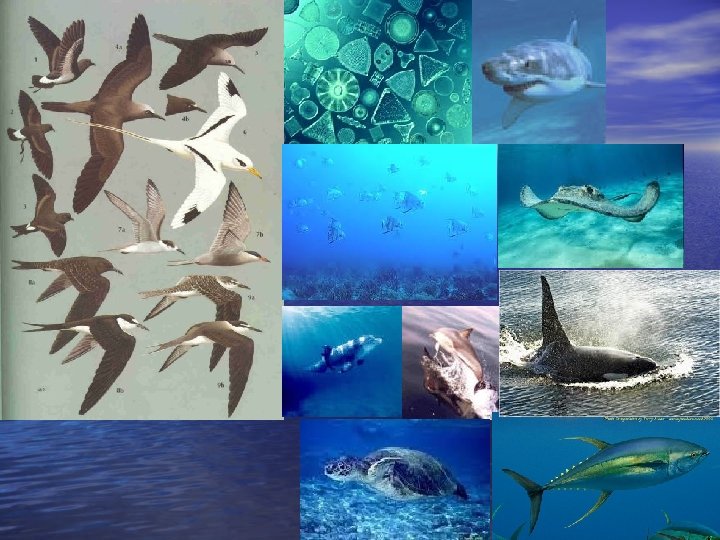
Epipelagic Zone • extends down to around 200 m – lowest depth that light can penetrate (photic zone) • Flora – surface seaweeds and phytoplankton • Fauna – many species of fish and mammals, such as whales and dolphins 16
17
Mesopelagic Zone • "twilight zone" of the ocean – photic zone above – darkness below • food becomes scarce – some animals: – migrate up to the surface at night to feed – rely on detritus – eat each other • sometimes the only things to eat may be bigger than the hunter – developed long sharp teeth – expandable jaws and stomachs 18
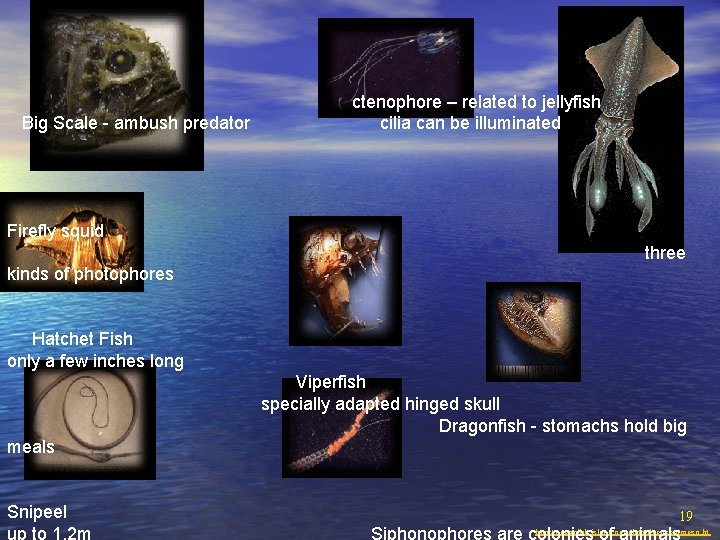
Big Scale - ambush predator ctenophore – related to jellyfish cilia can be illuminated Firefly squid three kinds of photophores Hatchet Fish only a few inches long Viperfish specially adapted hinged skull Dragonfish - stomachs hold big meals Snipeel up to 1. 2 m 19 Siphonophores are colonies of animals http: //oceanlink. island. net/oinfo/deepsea/meso. ht

Bathypelagic Zone • extends down from 1000 to 4000 m • only light is from bioluminescent organisms • food is from detritus or from eating other • • animals considerable water pressure most animals are either black, red, or transparent – Why? 20
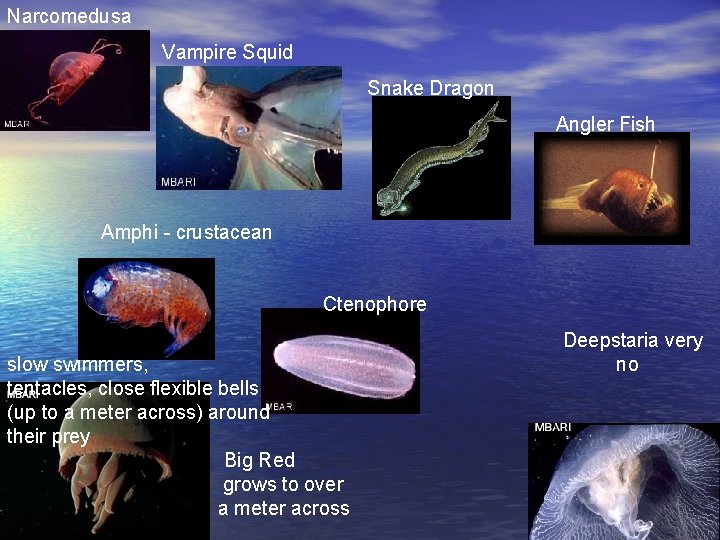
Narcomedusa Vampire Squid Snake Dragon Angler Fish Amphi - crustacean Ctenophore slow swimmers, tentacles, close flexible bells (up to a meter across) around their prey Big Red grows to over a meter across Deepstaria very no 21

Abyssopelagic Zone - the Abyss • 4000 m to the sea floor • inhospitable living conditions – near- freezing temperatures – crushing pressures 22
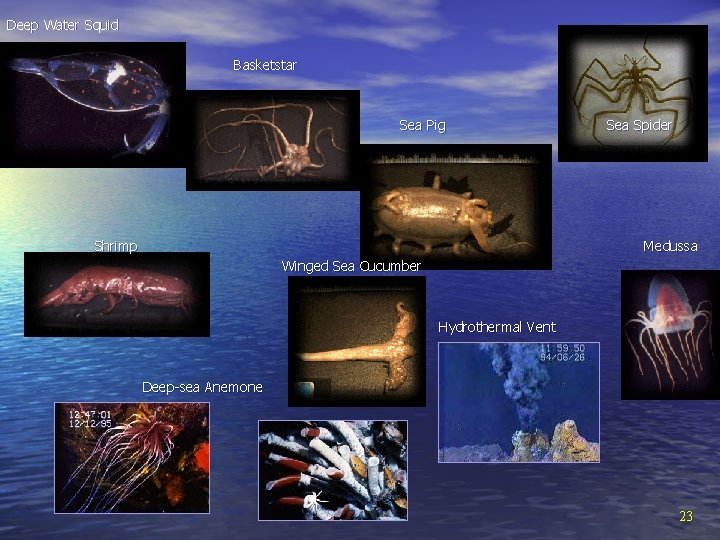
Deep Water Squid Basketstar Sea Pig Shrimp Sea Spider Medussa Winged Sea Cucumber Hydrothermal Vent Deep-sea Anemone 23
Coral Reefs • Coral Reefs –formed by mutualism between polyps and algae – Reefs built as colonies of polyps secrete limestone; hard deposits remain when the polyps die • • Reefs located in coastal zones of tropical oceans Protect coastlines from currents and waves Nurseries for many fish species Highly productive area 24
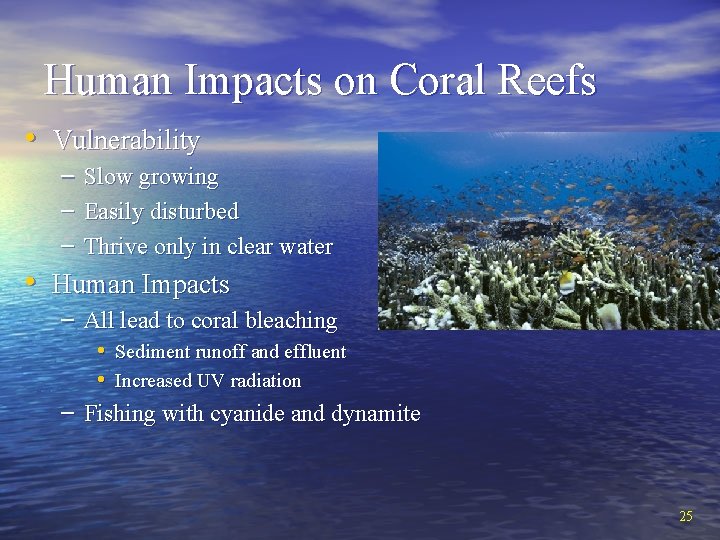
Human Impacts on Coral Reefs • Vulnerability – Slow growing – Easily disturbed – Thrive only in clear water • Human Impacts – All lead to coral bleaching • Sediment runoff and effluent • Increased UV radiation – Fishing with cyanide and dynamite 25

Tidal Environments • Tidal Marshes and Estuaries – Brackish water – Carry rich sediments from downstream • Extremely fertile 26
Tidal Marshes and Estuaries • High species diversity and productivity • Estuaries called “marine nurseries” – habitats for many juvenile organisms, especially for fishes – many fish are born and grow up in estuaries • 2/3 of all marine fish and shellfish spawn or develop in estuaries – migrate to the open ocean • Waterfowl and shorebird breeding areas • Filter water pollutants 27
Estuaries and Tidal Marshes • Over ½ of estuaries and coastal wetlands are • gone Why? © Brooks/Cole Publishing Company / ITP 28
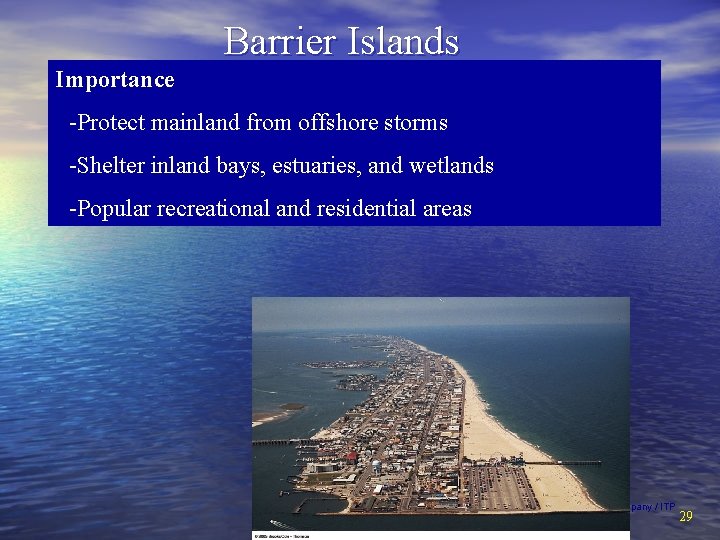
Barrier Islands Importance -Protect mainland from offshore storms -Shelter inland bays, estuaries, and wetlands -Popular recreational and residential areas © Brooks/Cole Publishing Company / ITP 29
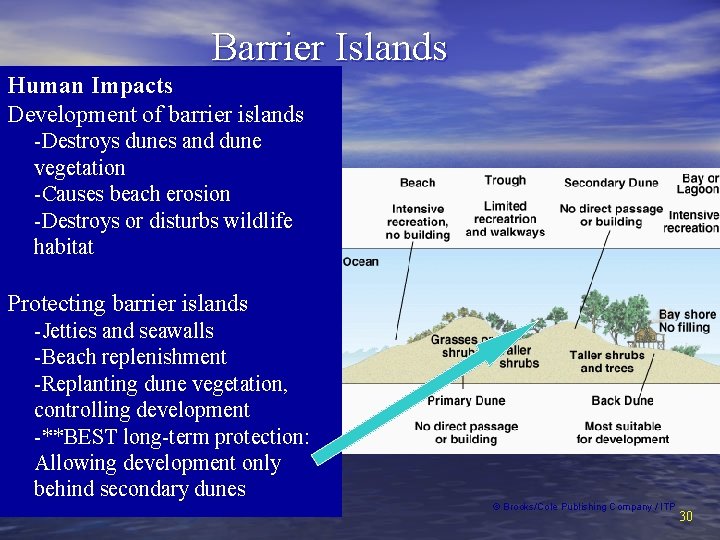
Barrier Islands Human Impacts Development of barrier islands -Destroys dunes and dune vegetation -Causes beach erosion -Destroys or disturbs wildlife habitat Protecting barrier islands -Jetties and seawalls -Beach replenishment -Replanting dune vegetation, controlling development -**BEST long-term protection: Allowing development only behind secondary dunes © Brooks/Cole Publishing Company / ITP 30
Freshwater • Lakes – limited species diversity due to isolation – Four zones based on depth and distance from the shore: • Littoral zone • Limnetic zone • Profundal zone • Benthic zone 31

32
Littoral Zone Fairly diverse algae (like diatoms), rooted and floating aquatic plants, grazing snails, clams, insects, crustaceans, fishes, and amphibians Insect egg and larval stages found here Vegetation and animals are food for other creatures such as turtles, snakes, and ducks 33

Limnetic Zone open water surrounded by the littoral zone well-lighted (like the littoral zone) and is dominated by plankton variety of freshwater fish also occupy this zone 34

Profundal and Benthic Zones Deep open water with no light penetration Much colder and denser than the other two Benthic zone -the bottom of a lake; inhabited by decomposers, clams, and bottom-feeders. 35
Lake Temperature – Varies seasonally • In summer warm layers on top, colder at bottom, separated by thermocline-where temp of water changes rapidly with depth • In fall water turns over, mixing occurs. • In winter ice forms – cold at the top, warmer at the bottom. • In spring another turnover. – Why is this important? 36
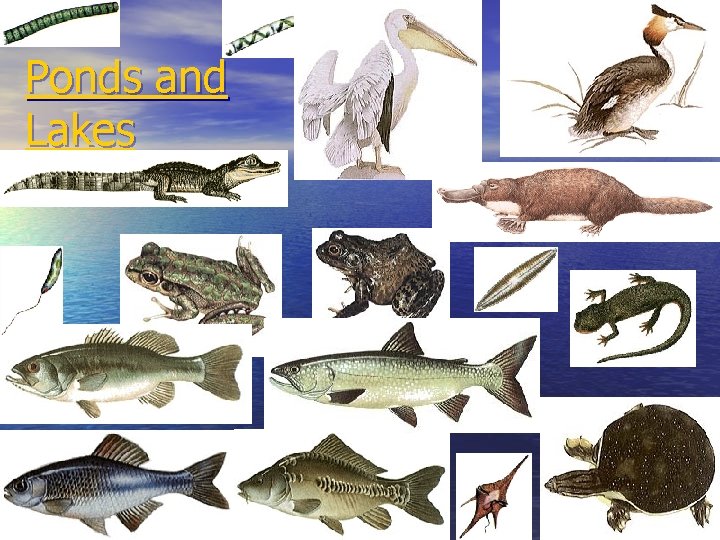
Ponds and Lakes 37
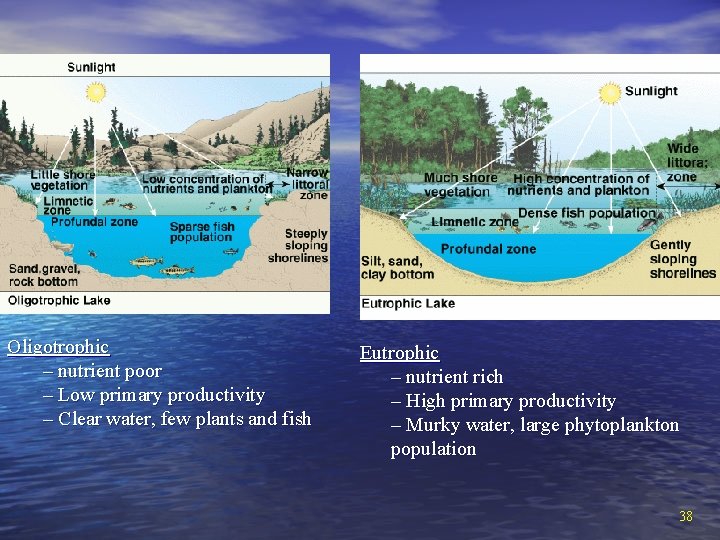
Oligotrophic – nutrient poor – Low primary productivity – Clear water, few plants and fish Eutrophic – nutrient rich – High primary productivity – Murky water, large phytoplankton population 38
Streams and Rivers • Characteristics change – Source • Cool temps, clear water with high oxygen levels – Middle • Width increases, as does species diversity—numerous aquatic green plants and algae can be found – Mouth • Murky water becomes murky-why? 39
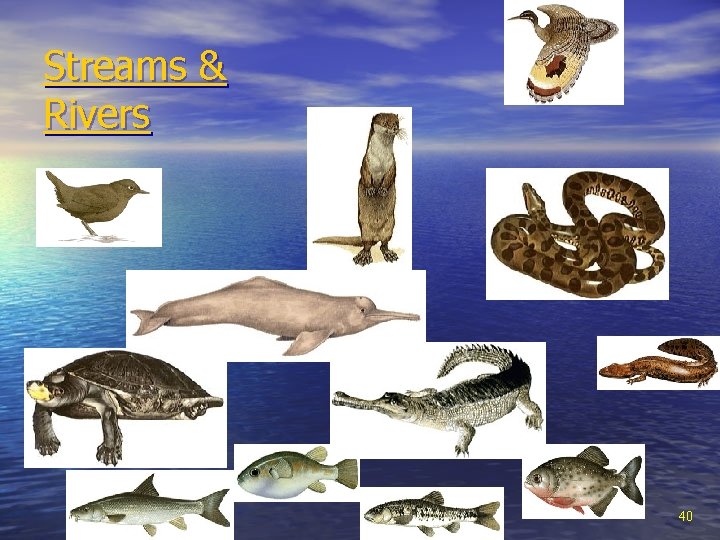
Streams & Rivers 40
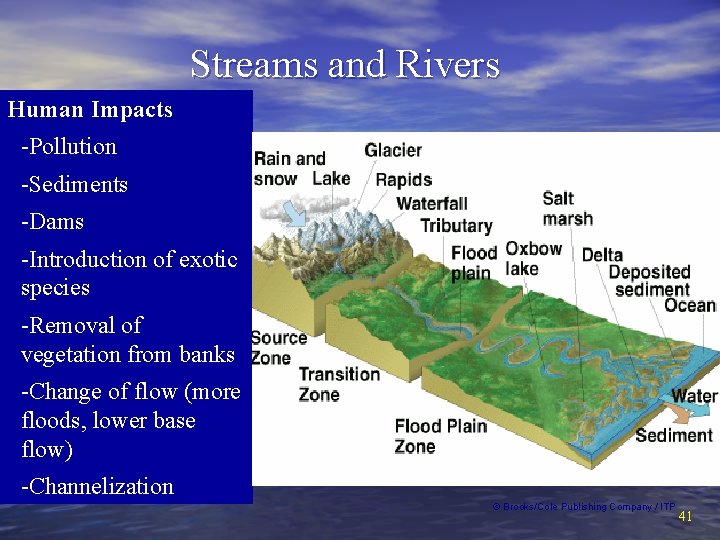
Streams and Rivers Human Impacts -Pollution -Sediments -Dams -Introduction of exotic species -Removal of vegetation from banks -Change of flow (more floods, lower base flow) Fig. 8– 15 -Channelization © Brooks/Cole Publishing Company / ITP 41
Wetlands Functions: • nature’s kidneys • Filter sediments and pollutants from runoff • Recharge groundwater • Flood reduction • Wildlife habitat used for migration or breeding Human impacts -Some states have lost over 90% of their wetlands -Drain for agriculture -Fill in for development © Brooks/Cole Publishing Company / ITP 42
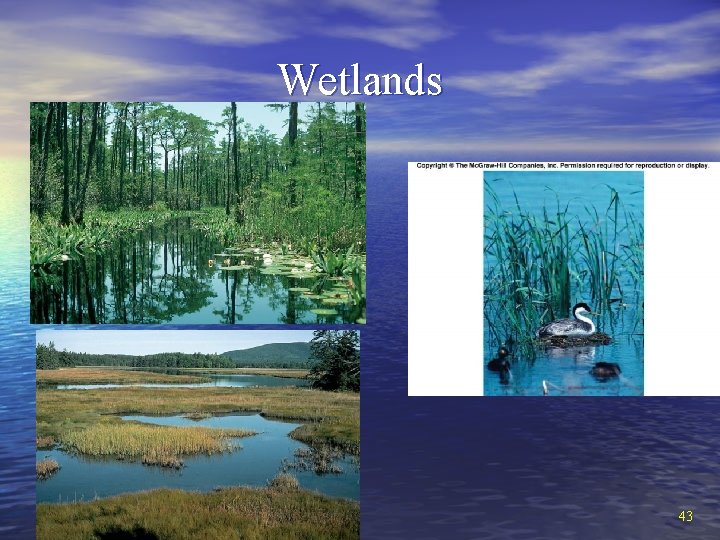
Wetlands 43
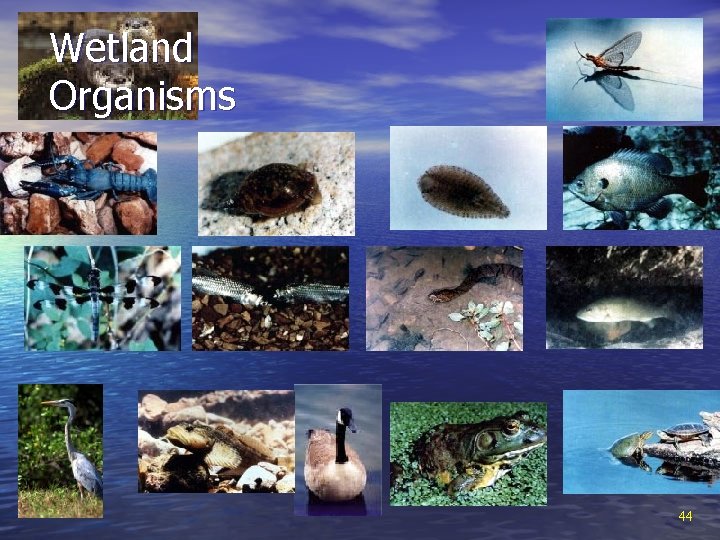
Wetland Organisms 44
- Slides: 44