
BIOMES CLIMATE AND LIFE ON LAND Different climates
BIOMES: CLIMATE AND LIFE ON LAND Ø Different climates lead to different communities of organisms, especially vegetation. l l Biomes – large terrestrial regions characterized by similar climate, soil, plants, and animals. Each biome contains many ecosystems whose communities have adapted to differences in climate, soil, and other environmental factors.
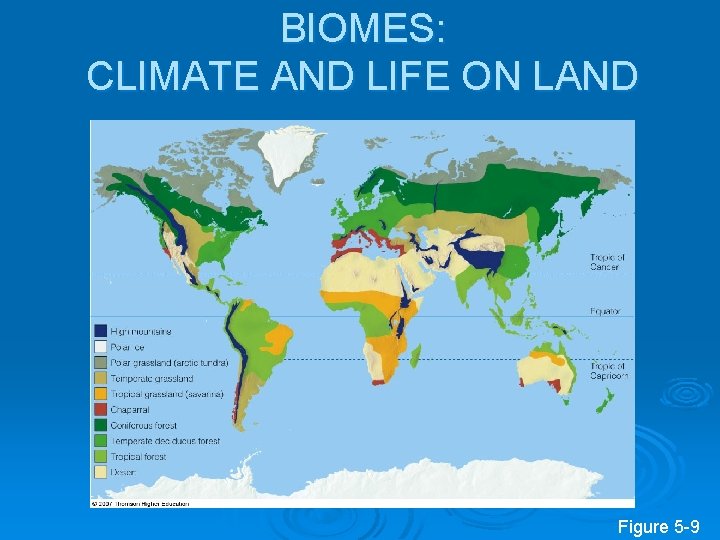
BIOMES: CLIMATE AND LIFE ON LAND Figure 5 -9
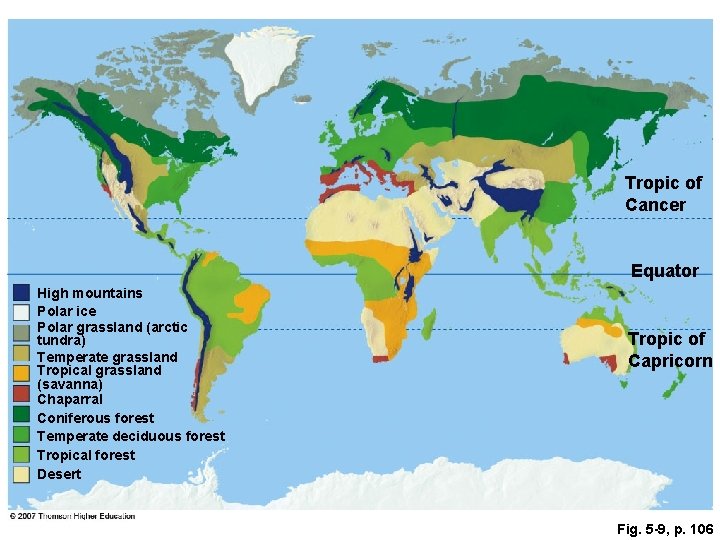
Tropic of Cancer Equator High mountains Polar ice Polar grassland (arctic tundra) Temperate grassland Tropical grassland (savanna) Chaparral Coniferous forest Temperate deciduous forest Tropical forest Desert Tropic of Capricorn Fig. 5 -9, p. 106
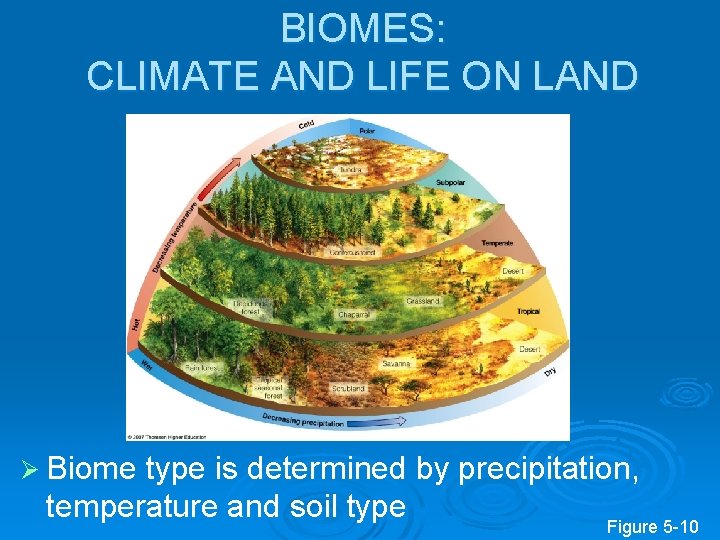
BIOMES: CLIMATE AND LIFE ON LAND Ø Biome type is determined by precipitation, temperature and soil type Figure 5 -10

ld Co Polar Tundra Subpolar Temperate Coniferous forest Grassland Chaparral Hot Deciduous Forest Desert W et Rain forest Savanna Tropical seasonal forest Tropical Desert y Dr Scrubland Fig. 5 -10, p. 107
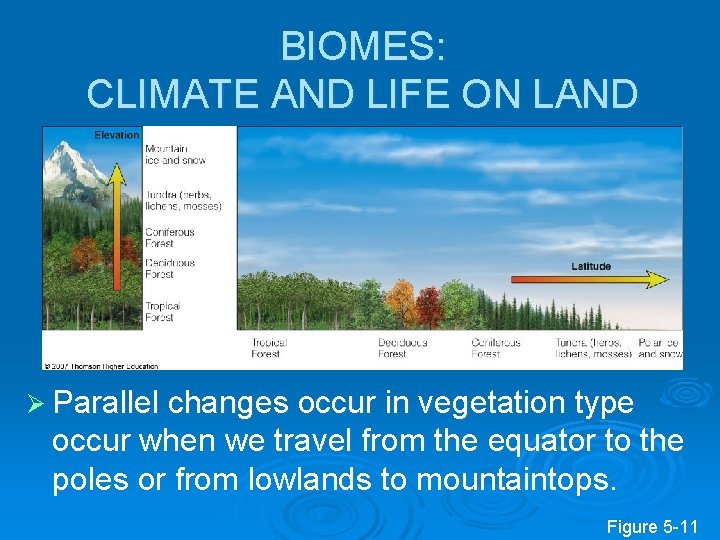
BIOMES: CLIMATE AND LIFE ON LAND Ø Parallel changes occur in vegetation type occur when we travel from the equator to the poles or from lowlands to mountaintops. Figure 5 -11
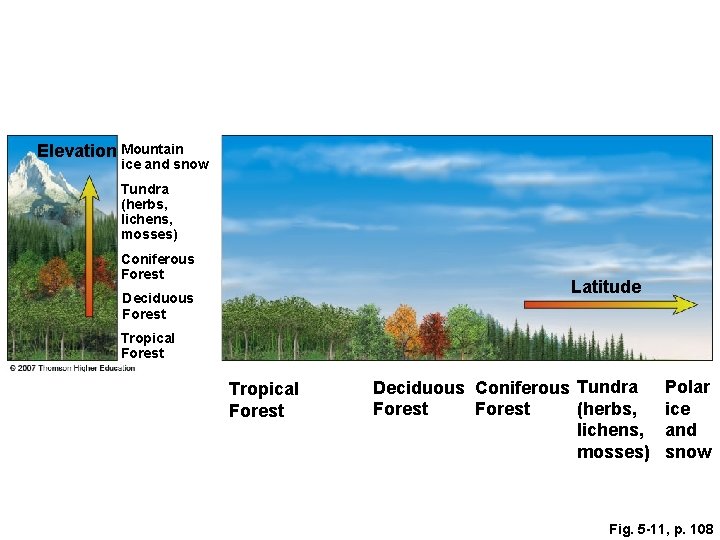
Elevation Mountain ice and snow Tundra (herbs, lichens, mosses) Coniferous Forest Latitude Deciduous Forest Tropical Forest Deciduous Coniferous Tundra (herbs, Forest lichens, mosses) Polar ice and snow Fig. 5 -11, p. 108
DESERT BIOMES Ø Deserts areas where evaporation exceeds precipitation. Ø Deserts have little precipitation and little vegetation. l Found in tropical, temperate and polar regions. Ø Desert plants have adaptations that help them stay cool and get enough water.
Video: Desertification Ø This video clip is available in CNN Today Videos for Environmental Science, 2004, Volume VII. Instructors, contact your local sales representative to order this volume, while supplies last.
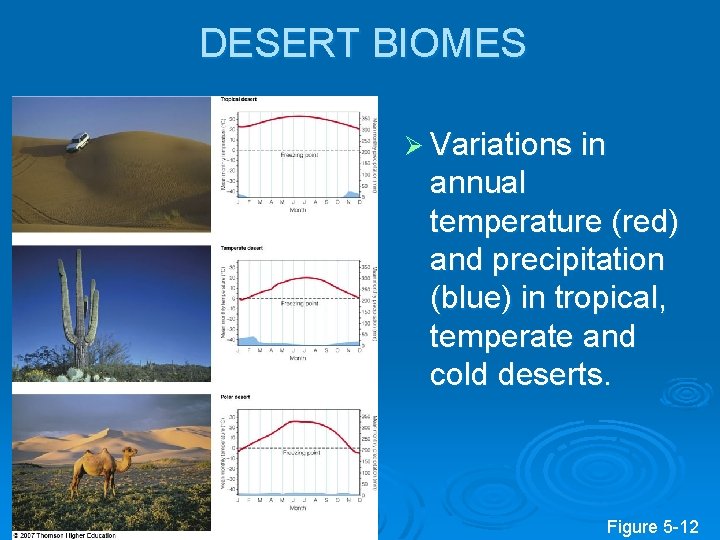
DESERT BIOMES Ø Variations in annual temperature (red) and precipitation (blue) in tropical, temperate and cold deserts. Figure 5 -12
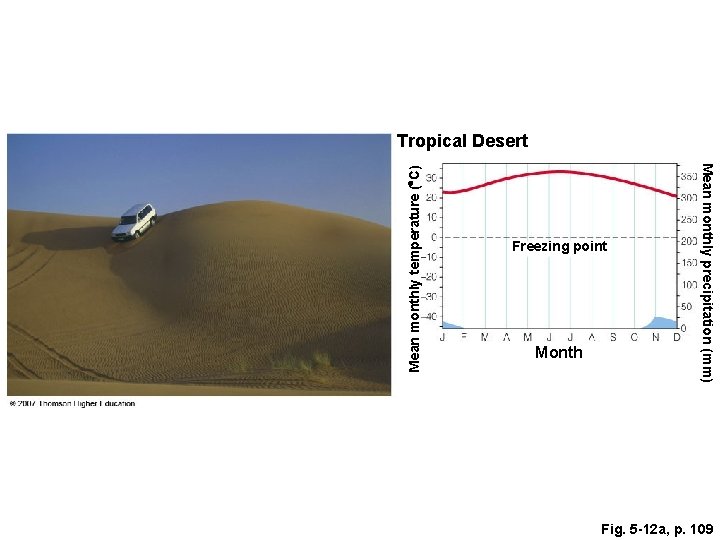
Freezing point Month Mean monthly precipitation (mm) Mean monthly temperature ( C) Tropical Desert Fig. 5 -12 a, p. 109
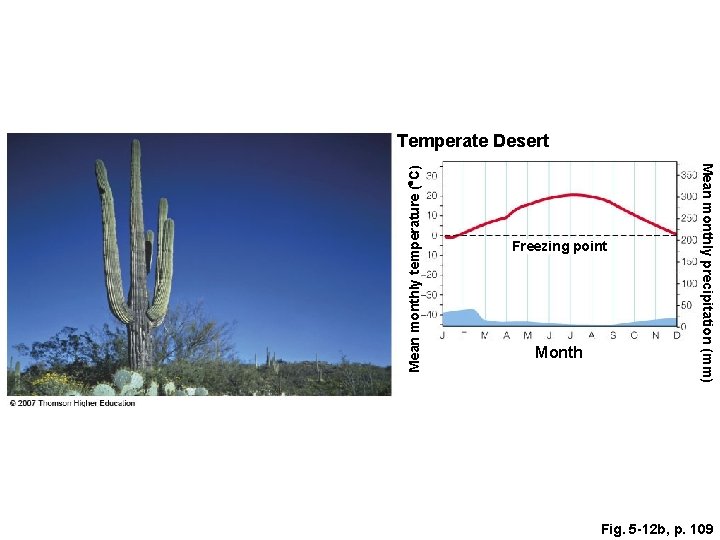
Freezing point Month Mean monthly precipitation (mm) Mean monthly temperature ( C) Temperate Desert Fig. 5 -12 b, p. 109
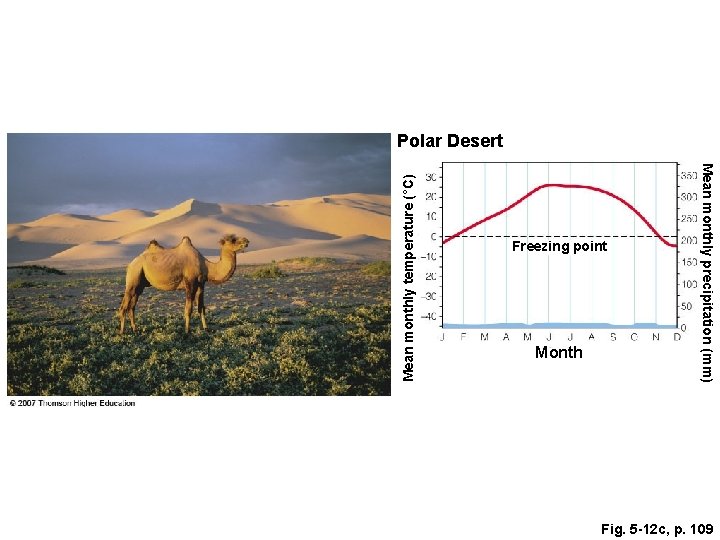
Freezing point Month Mean monthly precipitation (mm) Mean monthly temperature (°C) Polar Desert Fig. 5 -12 c, p. 109
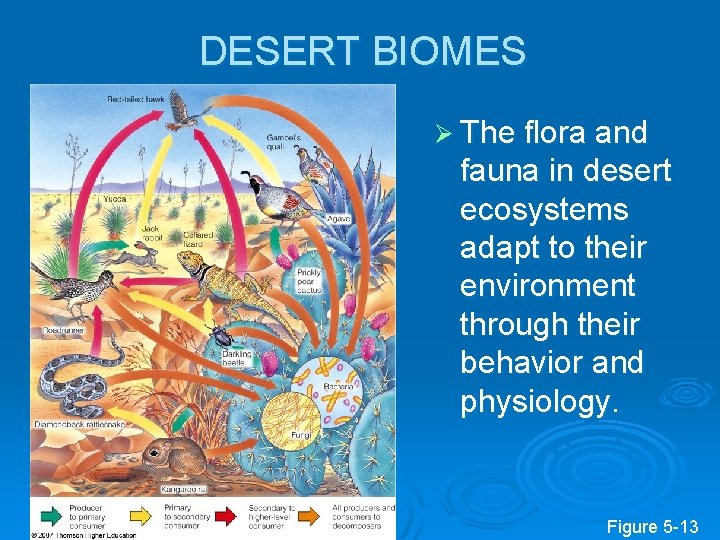
DESERT BIOMES Ø The flora and fauna in desert ecosystems adapt to their environment through their behavior and physiology. Figure 5 -13
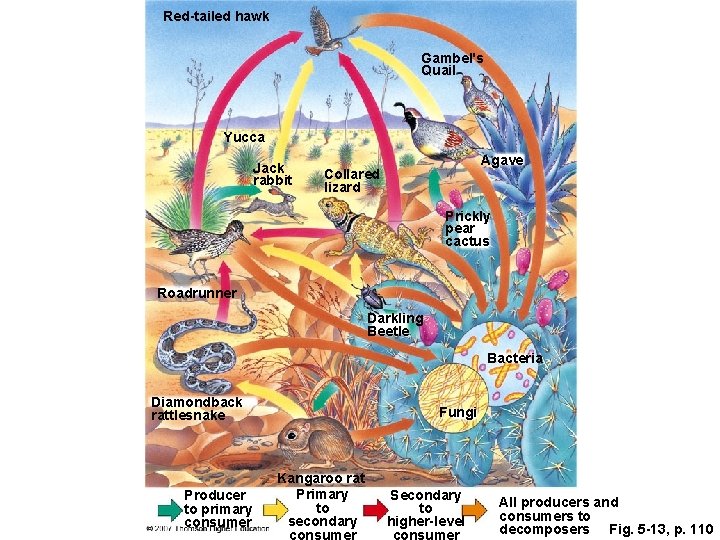
Red-tailed hawk Gambel's Quail Yucca Jack rabbit Agave Collared lizard Prickly pear cactus Roadrunner Darkling Beetle Bacteria Diamondback rattlesnake Producer to primary consumer Fungi Kangaroo rat Primary to secondary consumer Secondary to higher-level consumer All producers and consumers to decomposers Fig. 5 -13, p. 110
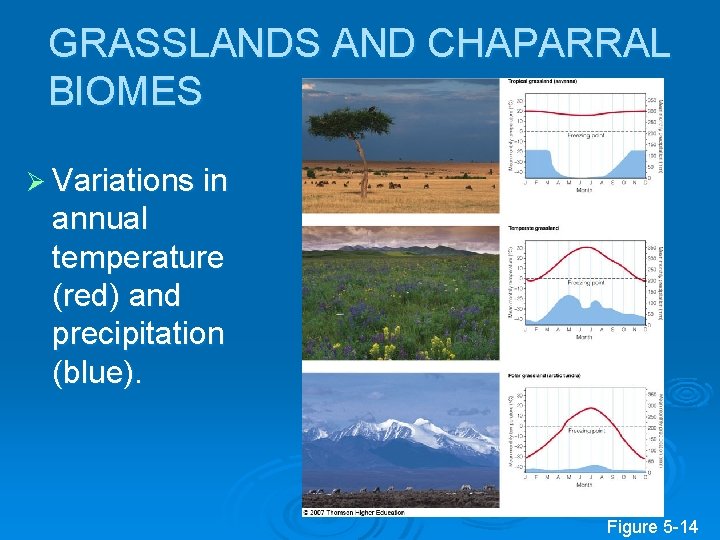
GRASSLANDS AND CHAPARRAL BIOMES Ø Variations in annual temperature (red) and precipitation (blue). Figure 5 -14
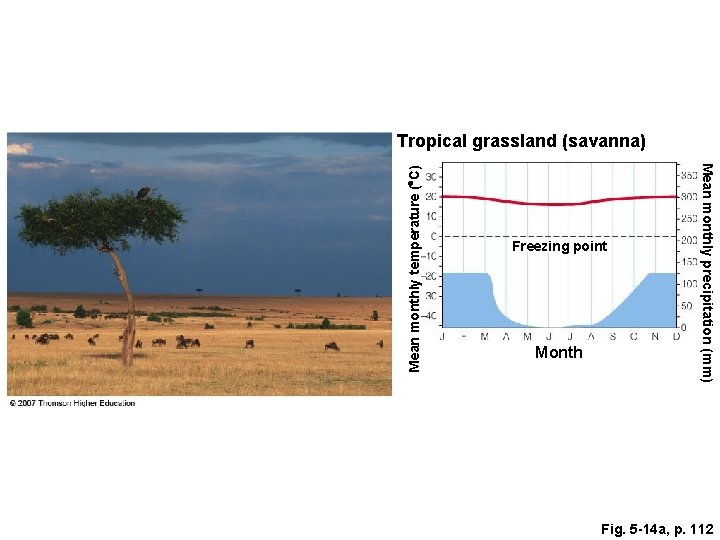
Freezing point Month Mean monthly precipitation (mm) Mean monthly temperature ( C) Tropical grassland (savanna) Fig. 5 -14 a, p. 112
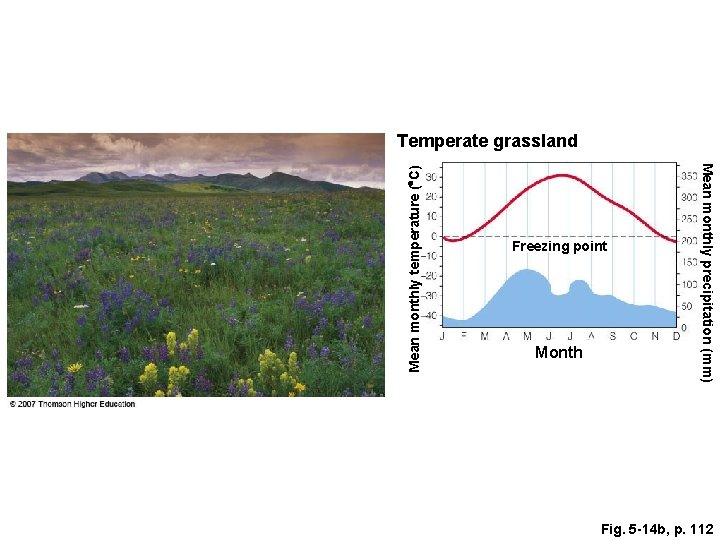
Freezing point Month Mean monthly precipitation (mm) Mean monthly temperature ( C) Temperate grassland Fig. 5 -14 b, p. 112
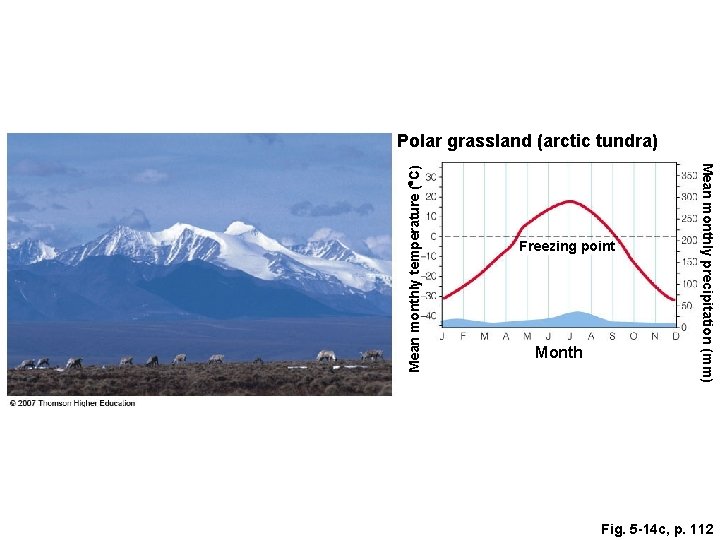
Freezing point Month Mean monthly precipitation (mm) Mean monthly temperature ( C) Polar grassland (arctic tundra) Fig. 5 -14 c, p. 112
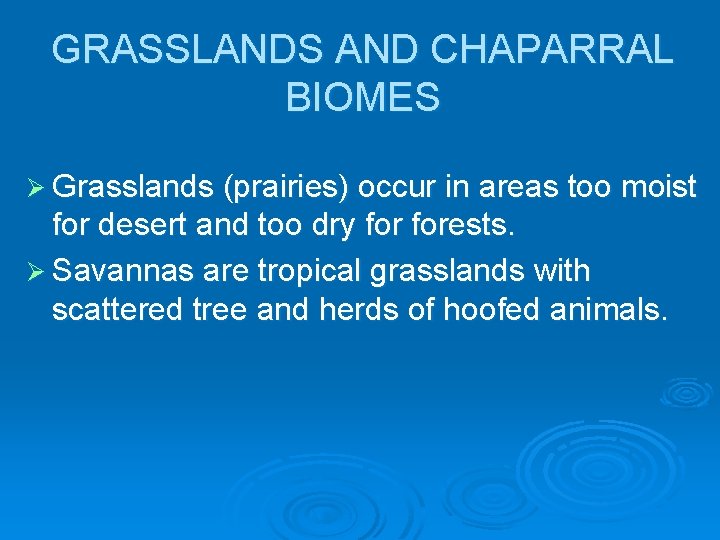
GRASSLANDS AND CHAPARRAL BIOMES Ø Grasslands (prairies) occur in areas too moist for desert and too dry forests. Ø Savannas are tropical grasslands with scattered tree and herds of hoofed animals.
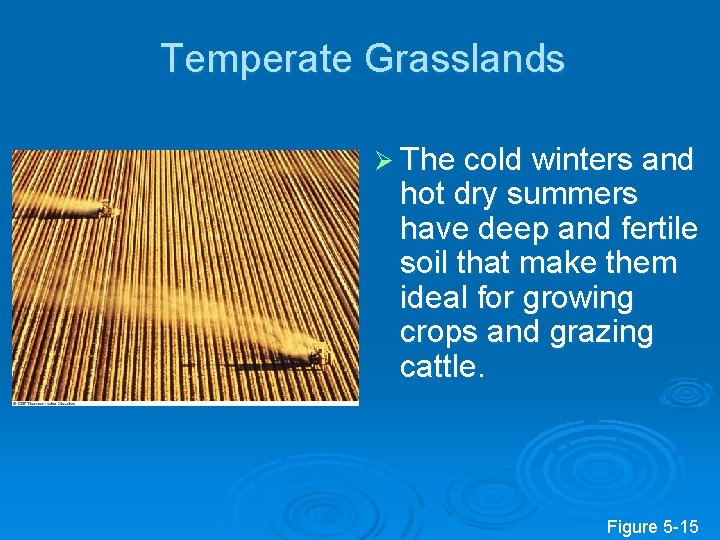
Temperate Grasslands Ø The cold winters and hot dry summers have deep and fertile soil that make them ideal for growing crops and grazing cattle. Figure 5 -15
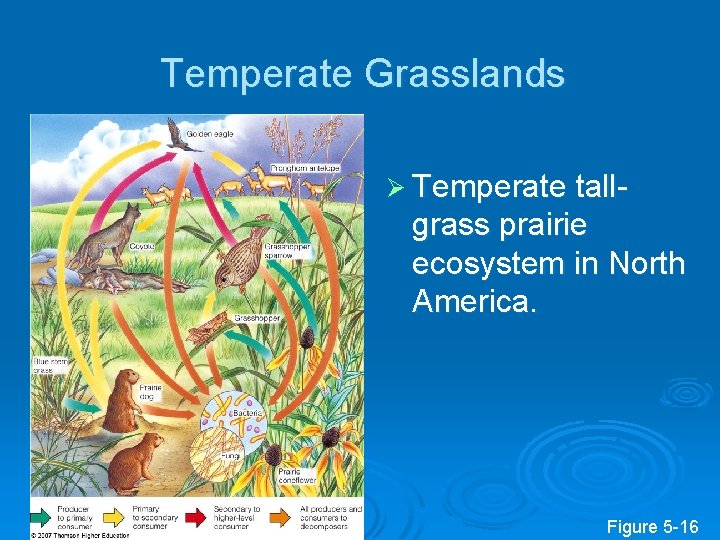
Temperate Grasslands Ø Temperate tall- grass prairie ecosystem in North America. Figure 5 -16
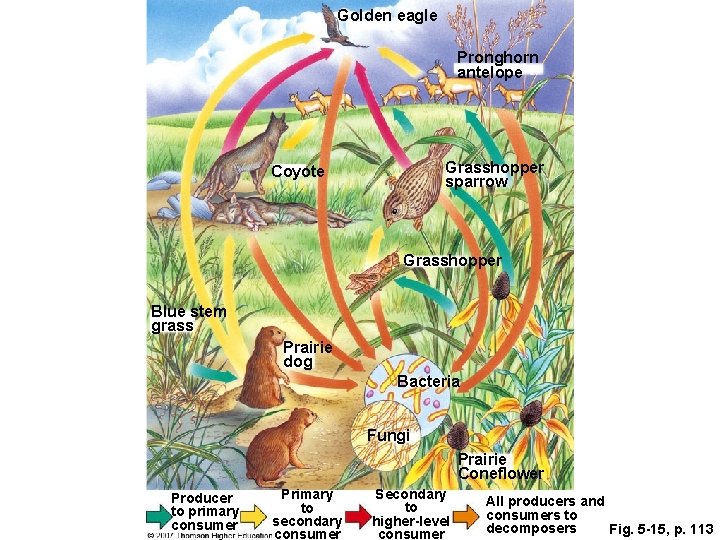
Golden eagle Pronghorn antelope Grasshopper sparrow Coyote Grasshopper Blue stem grass Prairie dog Bacteria Fungi Prairie Coneflower Producer to primary consumer Primary to secondary consumer Secondary to higher-level consumer All producers and consumers to decomposers Fig. 5 -15, p. 113
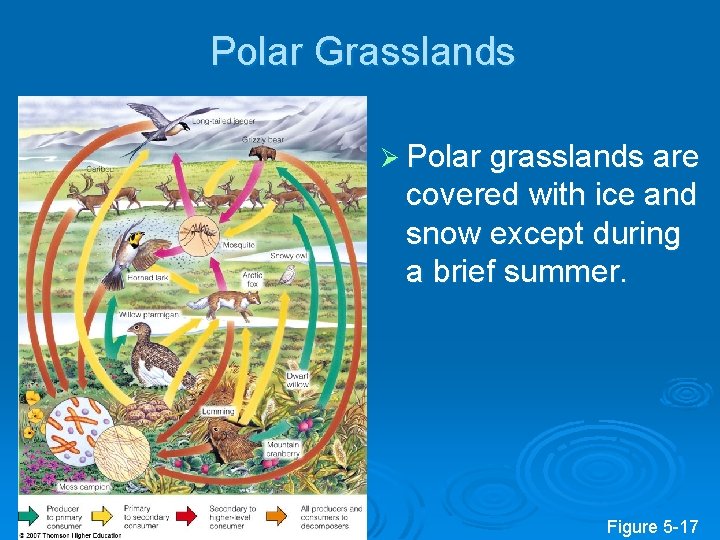
Polar Grasslands Ø Polar grasslands are covered with ice and snow except during a brief summer. Figure 5 -17
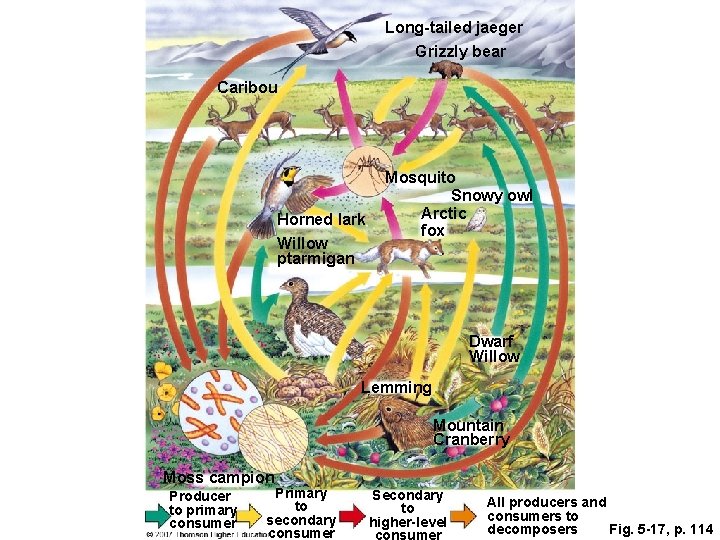
Long-tailed jaeger Grizzly bear Caribou Horned lark Willow ptarmigan Mosquito Snowy owl Arctic fox Dwarf Willow Lemming Mountain Cranberry Moss campion Producer to primary consumer Primary to secondary consumer Secondary to higher-level All producers and consumers to Fig. 5 -17, p. 114 decomposers
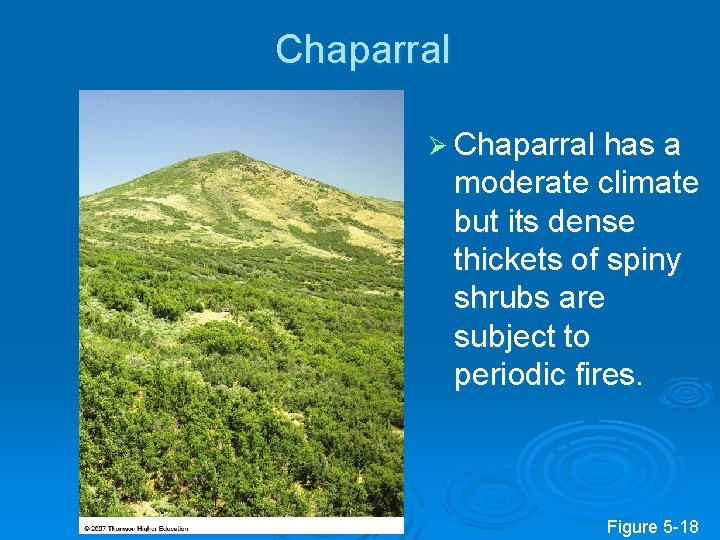
Chaparral Ø Chaparral has a moderate climate but its dense thickets of spiny shrubs are subject to periodic fires. Figure 5 -18
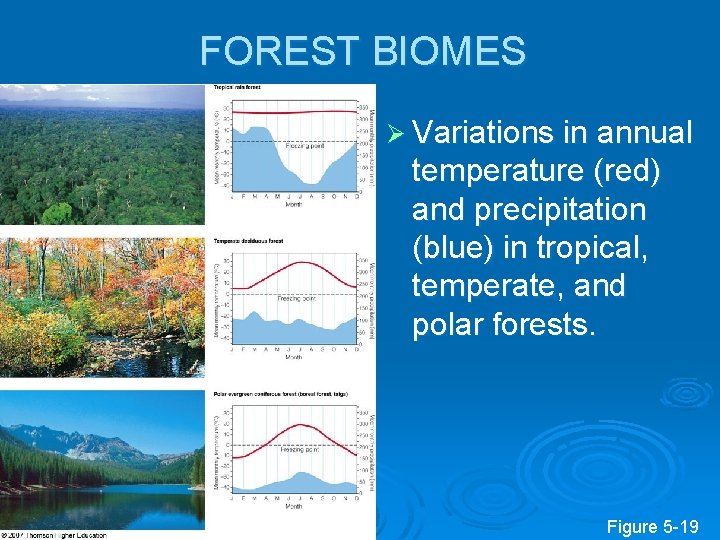
FOREST BIOMES Ø Variations in annual temperature (red) and precipitation (blue) in tropical, temperate, and polar forests. Figure 5 -19
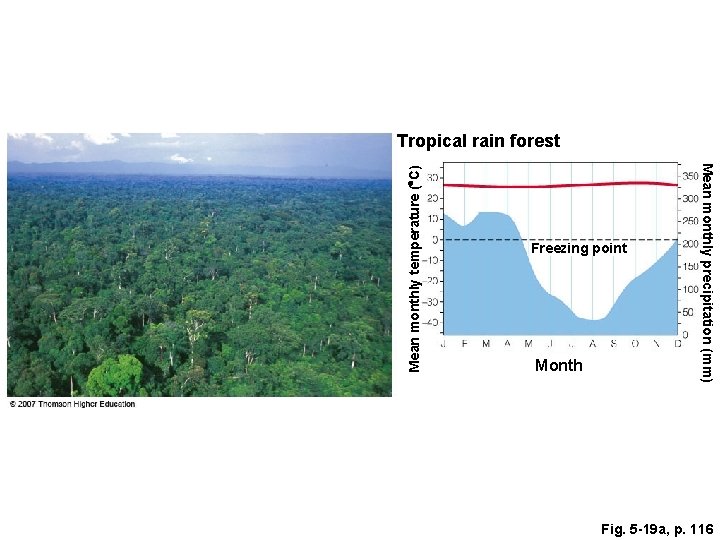
Freezing point Month Mean monthly precipitation (mm) Mean monthly temperature ( C) Tropical rain forest Fig. 5 -19 a, p. 116
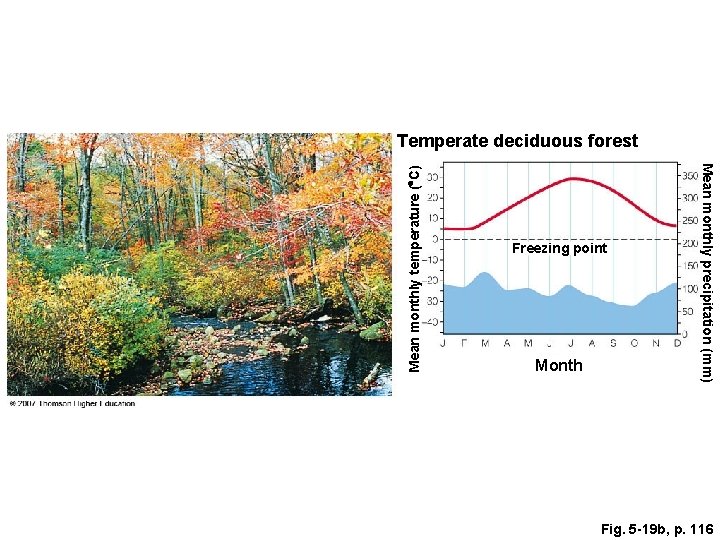
Freezing point Month Mean monthly precipitation (mm) Mean monthly temperature ( C) Temperate deciduous forest Fig. 5 -19 b, p. 116
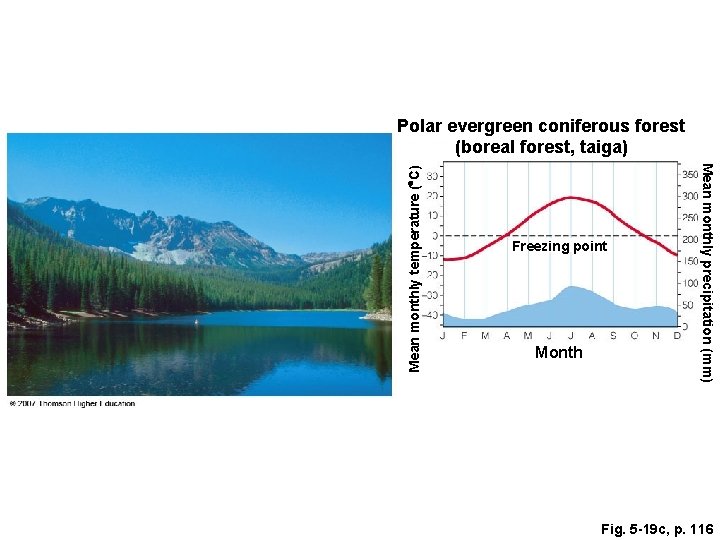
Freezing point Month Mean monthly precipitation (mm) Mean monthly temperature ( C) Polar evergreen coniferous forest (boreal forest, taiga) Fig. 5 -19 c, p. 116
FOREST BIOMES Ø Forests have enough precipitation to support stands of trees and are found in tropical, temperate, and polar regions.
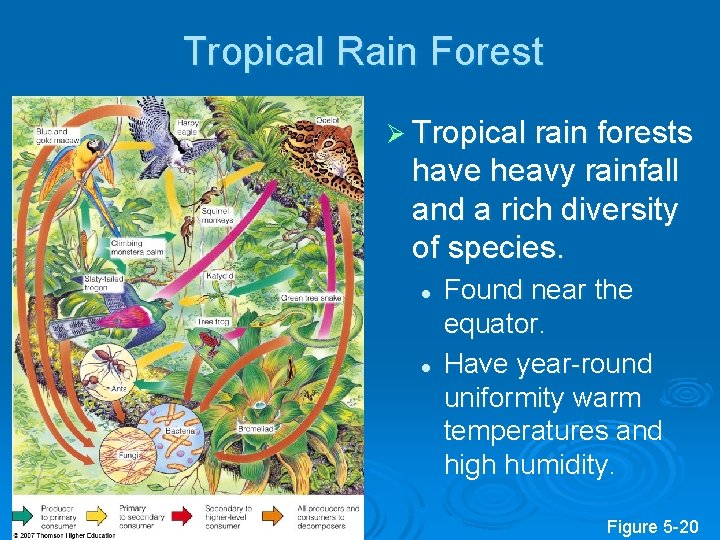
Tropical Rain Forest Ø Tropical rain forests have heavy rainfall and a rich diversity of species. l l Found near the equator. Have year-round uniformity warm temperatures and high humidity. Figure 5 -20
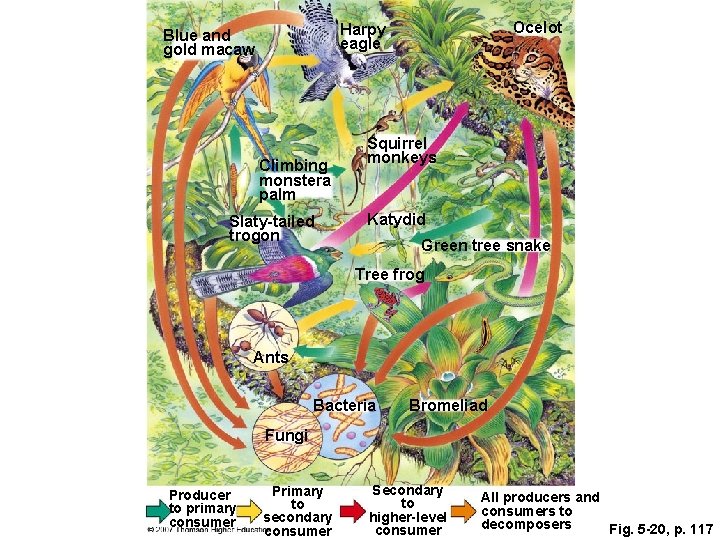
Ocelot Harpy eagle Blue and gold macaw Climbing monstera palm Slaty-tailed trogon Squirrel monkeys Katydid Green tree snake Tree frog Ants Bacteria Bromeliad Fungi Producer to primary consumer Primary to secondary consumer Secondary to higher-level consumer All producers and consumers to decomposers Fig. 5 -20, p. 117
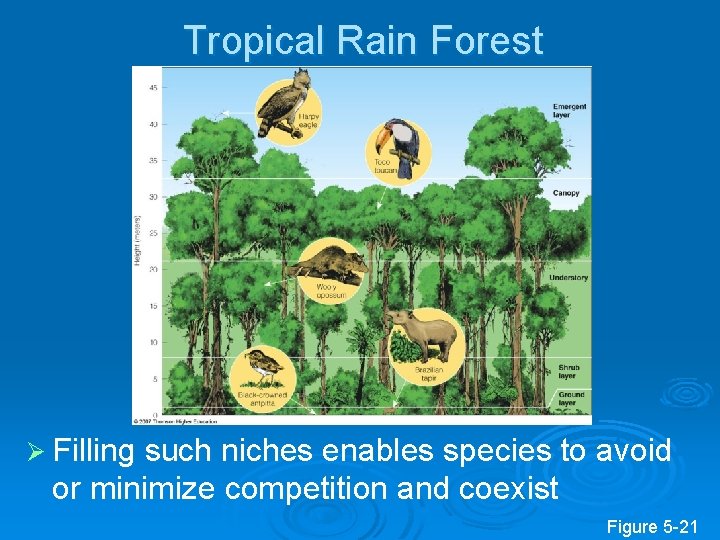
Tropical Rain Forest Ø Filling such niches enables species to avoid or minimize competition and coexist Figure 5 -21
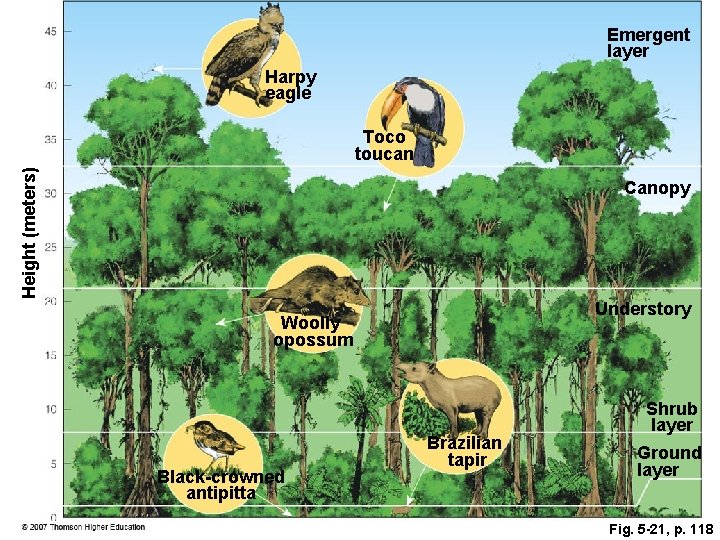
Emergent layer Harpy eagle Height (meters) Toco toucan Canopy Understory Woolly opossum Black-crowned antipitta Brazilian tapir Shrub layer Ground layer Fig. 5 -21, p. 118
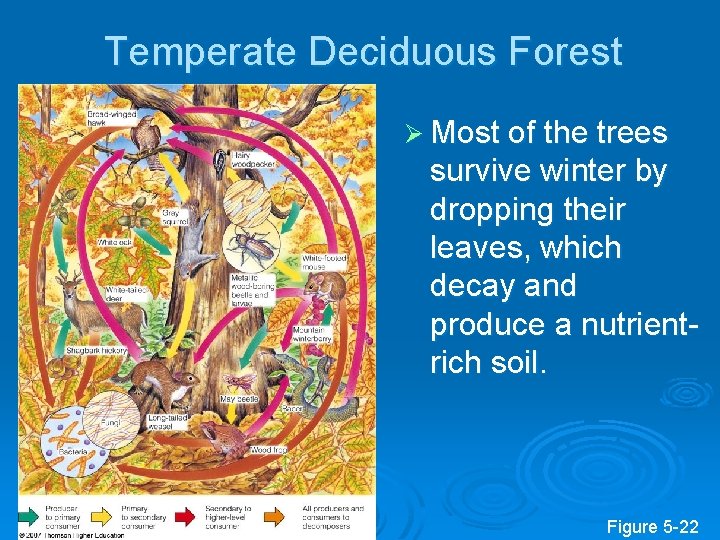
Temperate Deciduous Forest Ø Most of the trees survive winter by dropping their leaves, which decay and produce a nutrientrich soil. Figure 5 -22
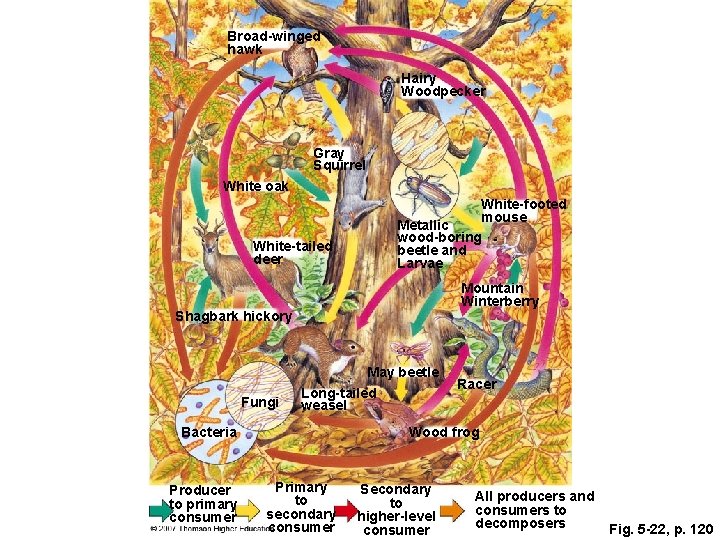
Broad-winged hawk Hairy Woodpecker Gray Squirrel White oak White-tailed deer White-footed mouse Metallic wood-boring beetle and Larvae Mountain Winterberry Shagbark hickory Fungi May beetle Long-tailed weasel Bacteria Producer to primary consumer Racer Wood frog Primary to secondary consumer Secondary to higher-level consumer All producers and consumers to decomposers Fig. 5 -22, p. 120
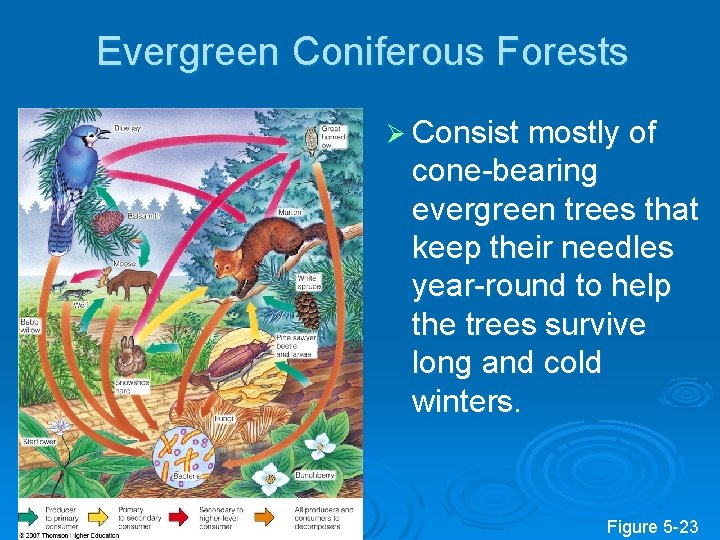
Evergreen Coniferous Forests Ø Consist mostly of cone-bearing evergreen trees that keep their needles year-round to help the trees survive long and cold winters. Figure 5 -23
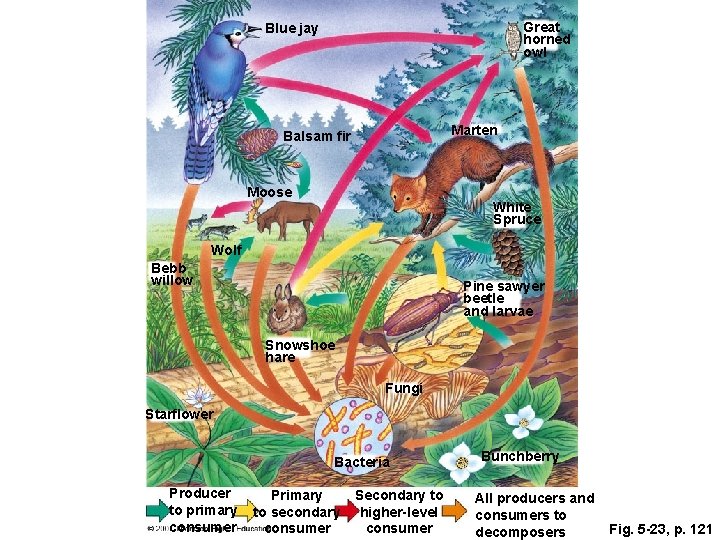
Great horned owl Blue jay Marten Balsam fir Moose White Spruce Wolf Bebb willow Pine sawyer beetle and larvae Snowshoe hare Fungi Starflower Bacteria Producer to primary consumer Primary to secondary consumer Secondary to higher-level consumer Bunchberry All producers and consumers to decomposers Fig. 5 -23, p. 121
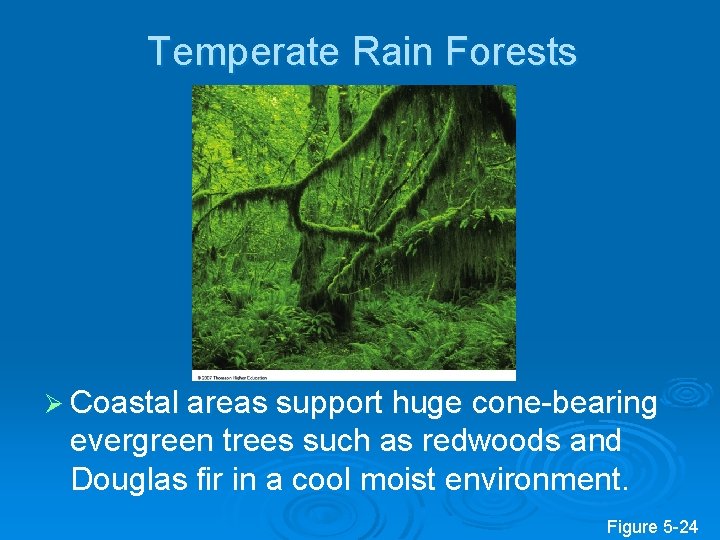
Temperate Rain Forests Ø Coastal areas support huge cone-bearing evergreen trees such as redwoods and Douglas fir in a cool moist environment. Figure 5 -24
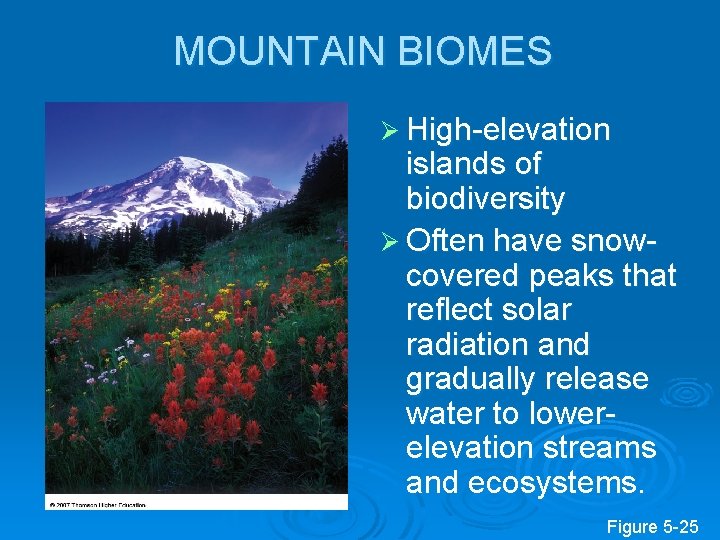
MOUNTAIN BIOMES Ø High-elevation islands of biodiversity Ø Often have snowcovered peaks that reflect solar radiation and gradually release water to lowerelevation streams and ecosystems. Figure 5 -25
HUMAN IMPACTS ON TERRESTRIAL BIOMES Ø Human activities have damaged or disturbed more than half of the world’s terrestrial ecosystems. Ø Humans have had a number of specific harmful effects on the world’s deserts, grasslands, forests, and mountains.
Ø With Partner discuss and prioritize the effects that humans have on the major biomes. Ø desert Ø grasslands Ø forest Ø mountains
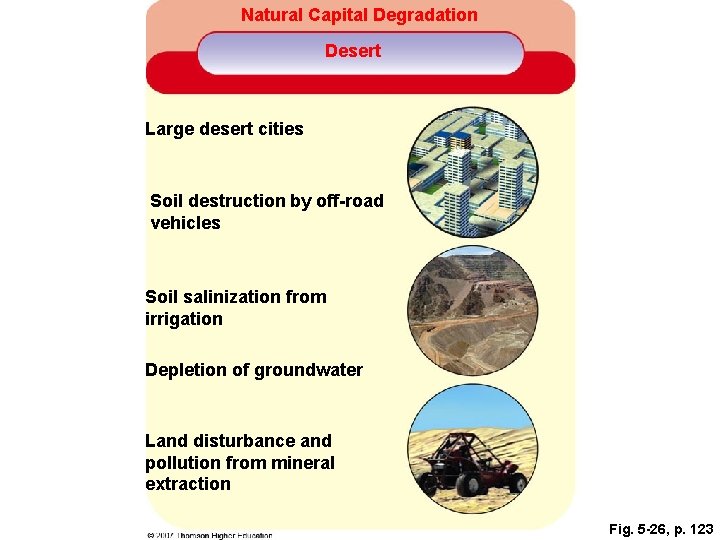
Natural Capital Degradation Desert Large desert cities Soil destruction by off-road vehicles Soil salinization from irrigation Depletion of groundwater Land disturbance and pollution from mineral extraction Fig. 5 -26, p. 123
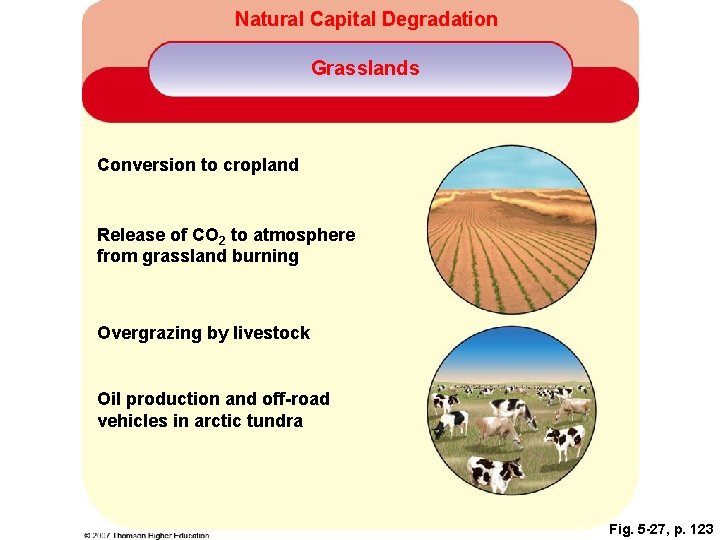
Natural Capital Degradation Grasslands Conversion to cropland Release of CO 2 to atmosphere from grassland burning Overgrazing by livestock Oil production and off-road vehicles in arctic tundra Fig. 5 -27, p. 123
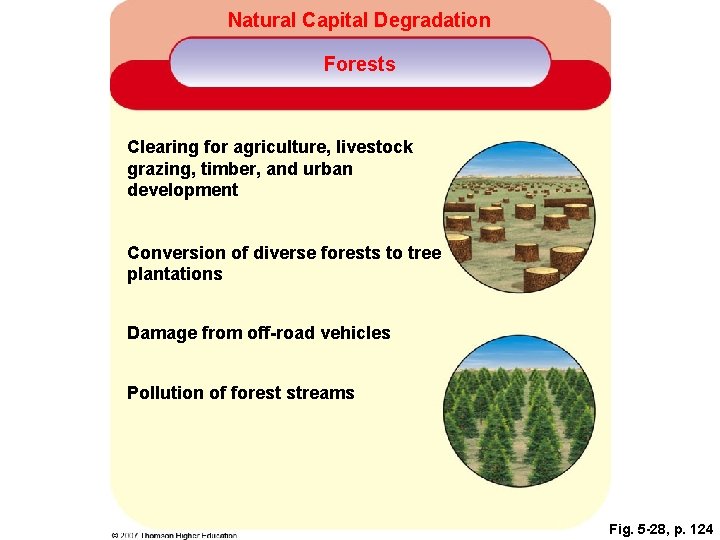
Natural Capital Degradation Forests Clearing for agriculture, livestock grazing, timber, and urban development Conversion of diverse forests to tree plantations Damage from off-road vehicles Pollution of forest streams Fig. 5 -28, p. 124
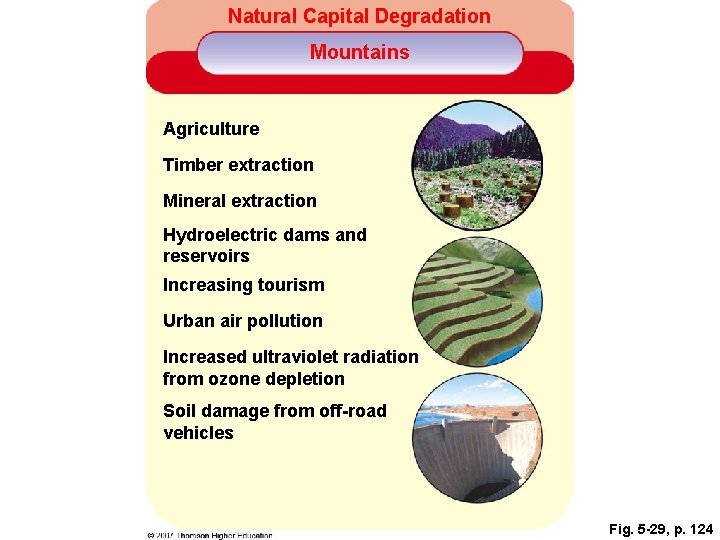
Natural Capital Degradation Mountains Agriculture Timber extraction Mineral extraction Hydroelectric dams and reservoirs Increasing tourism Urban air pollution Increased ultraviolet radiation from ozone depletion Soil damage from off-road vehicles Fig. 5 -29, p. 124
- Slides: 47