
Biomes and Aquatic Ecosystems Learning Objectives Identify how
Biomes and Aquatic Ecosystems
Learning Objectives § § Identify how biomes are defined. Identify how aquatic ecosystems are defined. Describe the major categories of freshwater ecosystems. Explain how estuaries contribute to ecosystems.
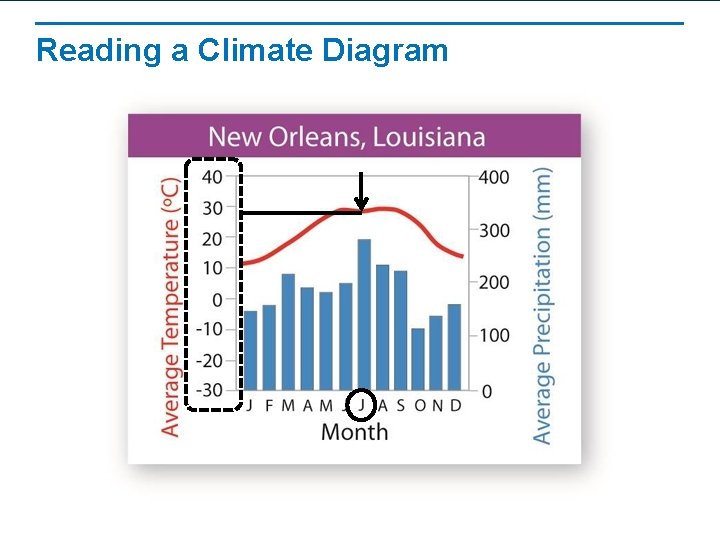
Reading a Climate Diagram
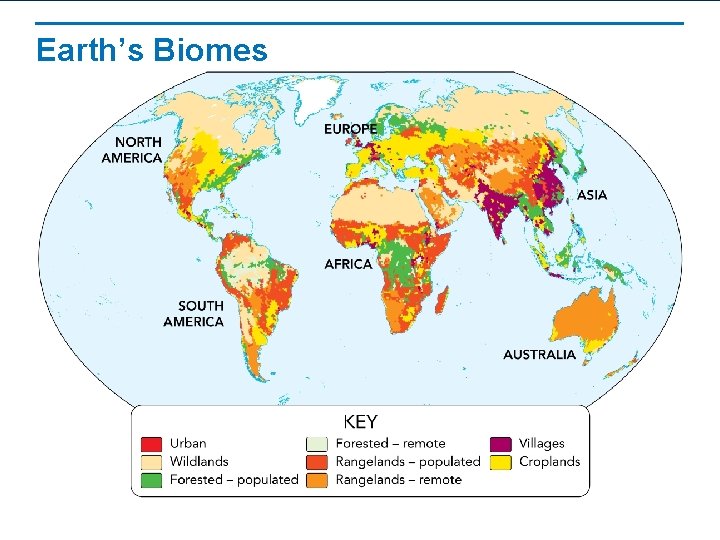
Earth’s Biomes
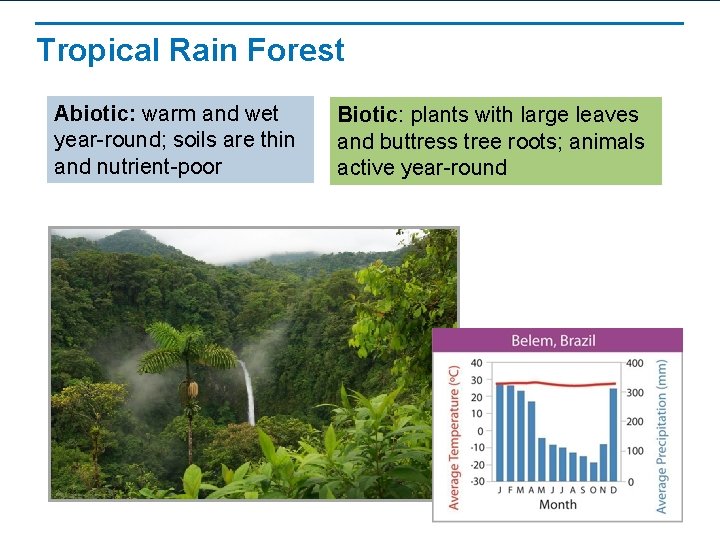
Tropical Rain Forest Abiotic: warm and wet year-round; soils are thin and nutrient-poor Biotic: plants with large leaves and buttress tree roots; animals active year-round
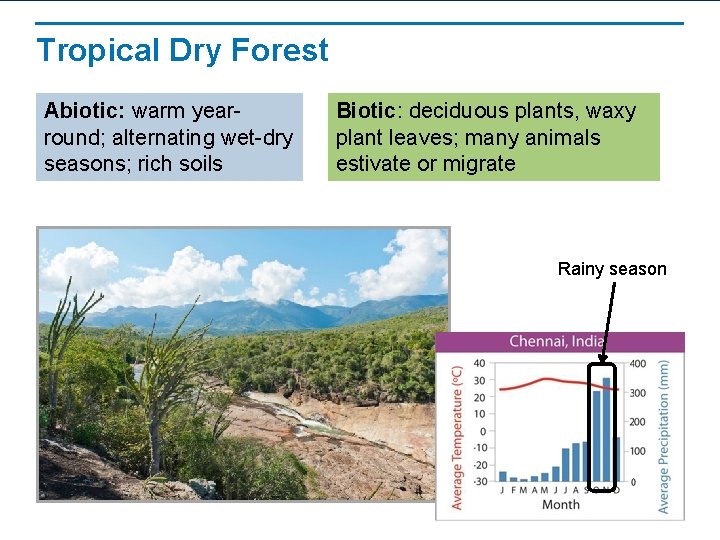
Tropical Dry Forest Abiotic: warm yearround; alternating wet-dry seasons; rich soils Biotic: deciduous plants, waxy plant leaves; many animals estivate or migrate Rainy season
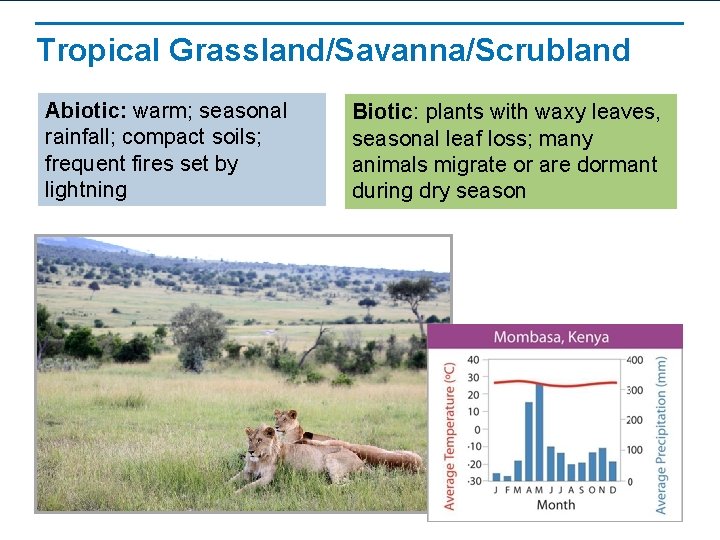
Tropical Grassland/Savanna/Scrubland Abiotic: warm; seasonal rainfall; compact soils; frequent fires set by lightning Biotic: plants with waxy leaves, seasonal leaf loss; many animals migrate or are dormant during dry season
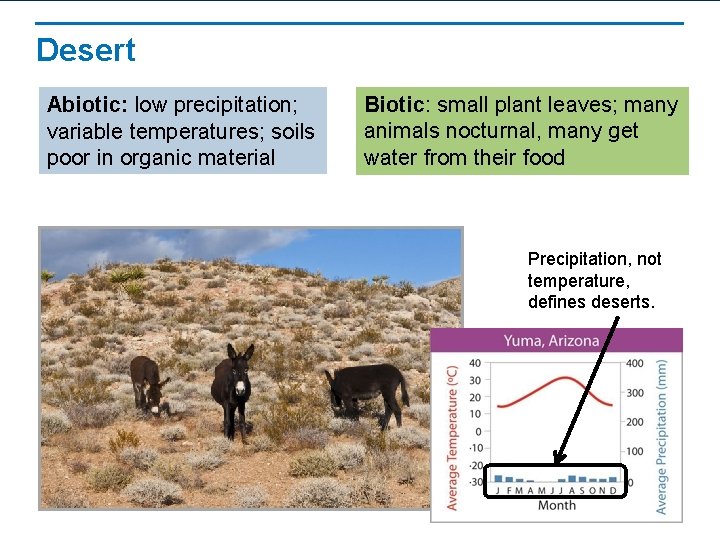
Desert Abiotic: low precipitation; variable temperatures; soils poor in organic material Biotic: small plant leaves; many animals nocturnal, many get water from their food Precipitation, not temperature, defines deserts.
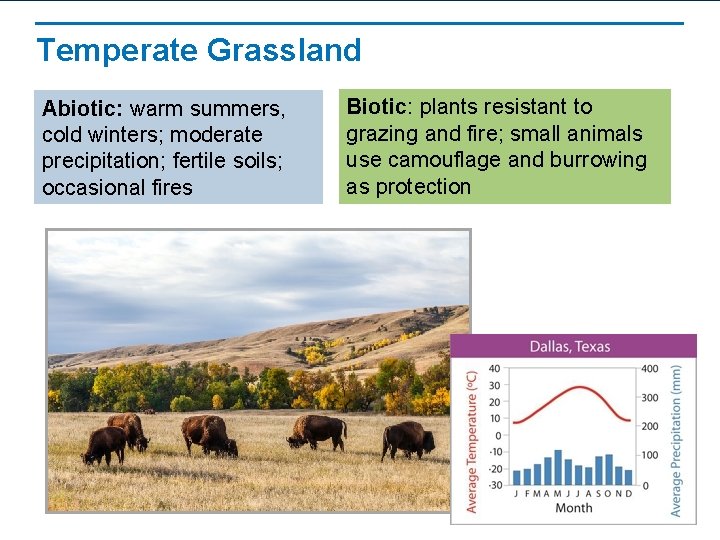
Temperate Grassland Abiotic: warm summers, cold winters; moderate precipitation; fertile soils; occasional fires Biotic: plants resistant to grazing and fire; small animals use camouflage and burrowing as protection
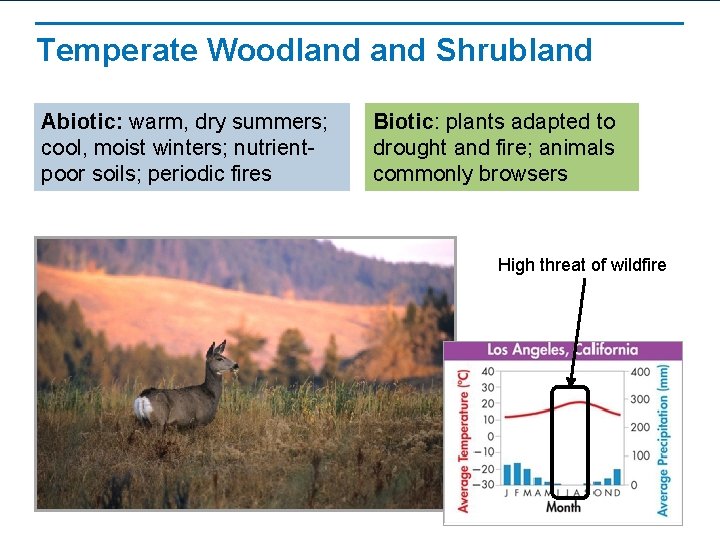
Temperate Woodland Shrubland Abiotic: warm, dry summers; cool, moist winters; nutrientpoor soils; periodic fires Biotic: plants adapted to drought and fire; animals commonly browsers High threat of wildfire
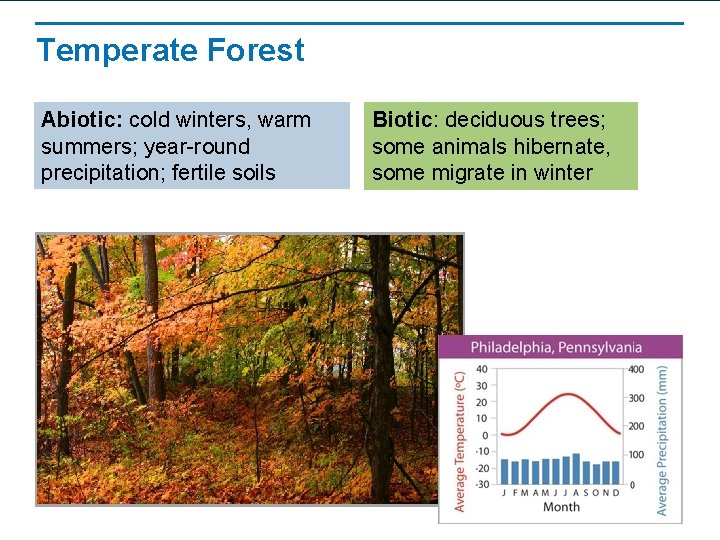
Temperate Forest Abiotic: cold winters, warm summers; year-round precipitation; fertile soils Biotic: deciduous trees; some animals hibernate, some migrate in winter
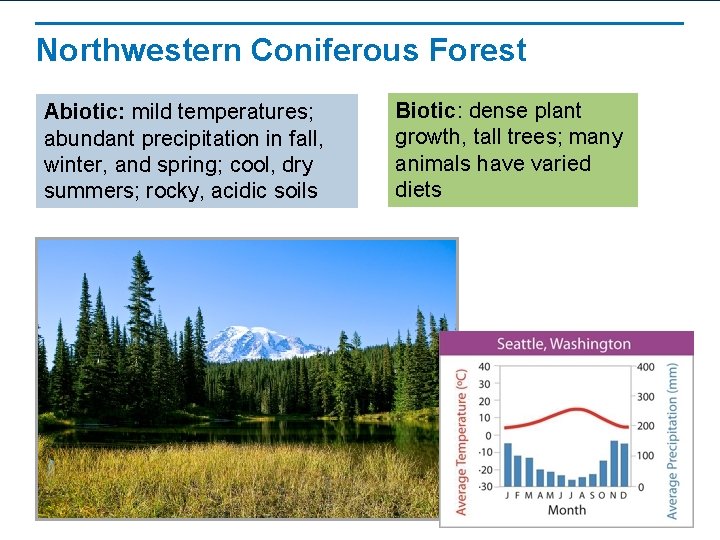
Northwestern Coniferous Forest Abiotic: mild temperatures; abundant precipitation in fall, winter, and spring; cool, dry summers; rocky, acidic soils Biotic: dense plant growth, tall trees; many animals have varied diets
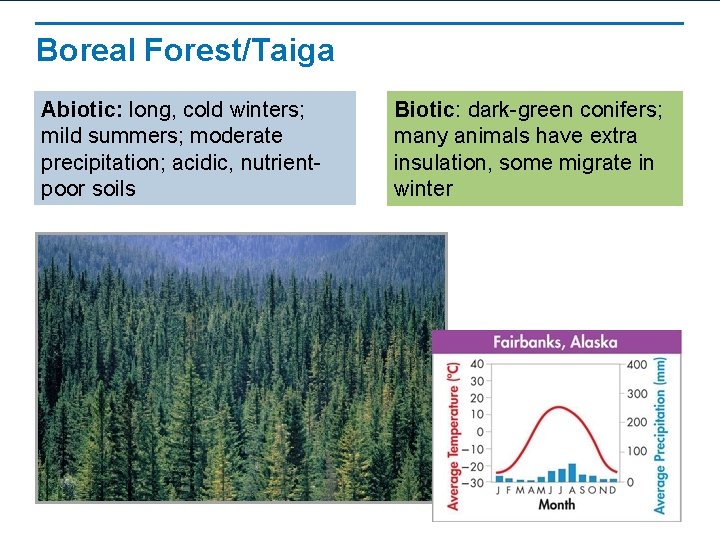
Boreal Forest/Taiga Abiotic: long, cold winters; mild summers; moderate precipitation; acidic, nutrientpoor soils Biotic: dark-green conifers; many animals have extra insulation, some migrate in winter
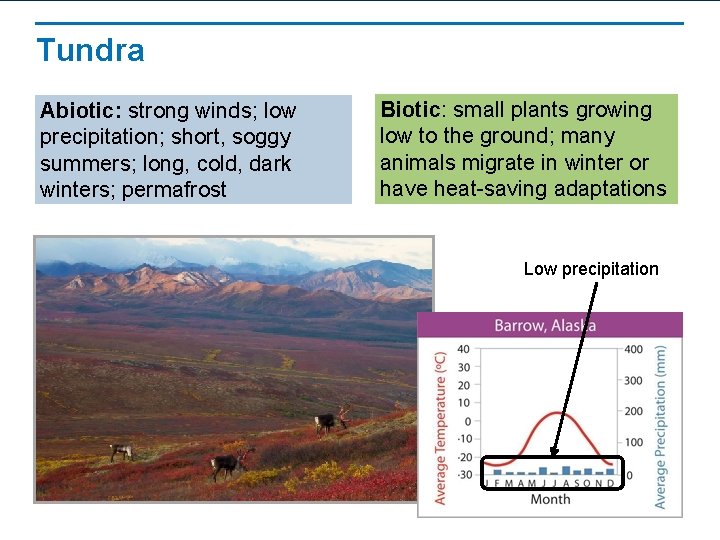
Tundra Abiotic: strong winds; low precipitation; short, soggy summers; long, cold, dark winters; permafrost Biotic: small plants growing low to the ground; many animals migrate in winter or have heat-saving adaptations Low precipitation
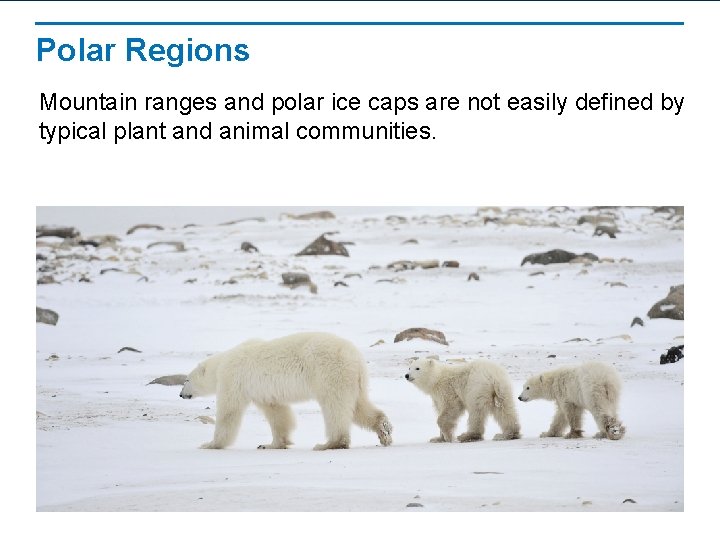
Polar Regions Mountain ranges and polar ice caps are not easily defined by typical plant and animal communities.
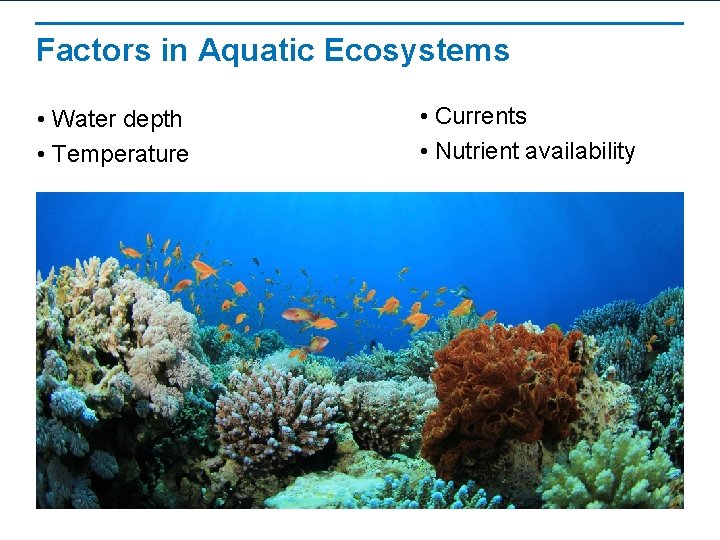
Factors in Aquatic Ecosystems • Water depth • Temperature • Currents • Nutrient availability
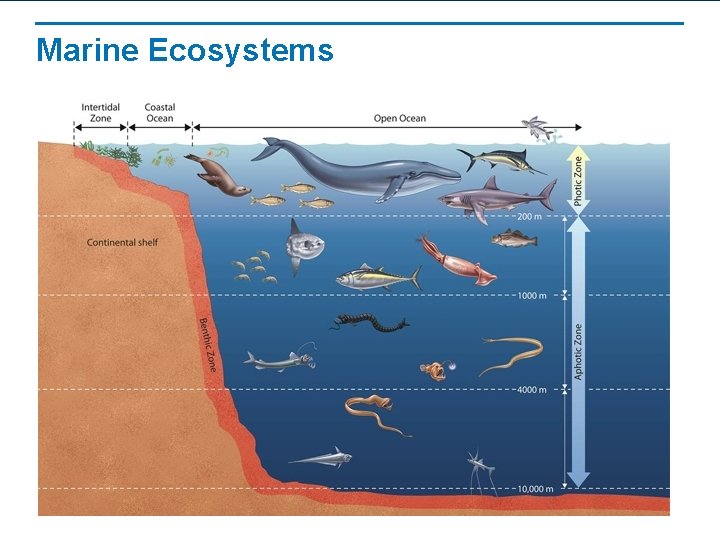
Marine Ecosystems
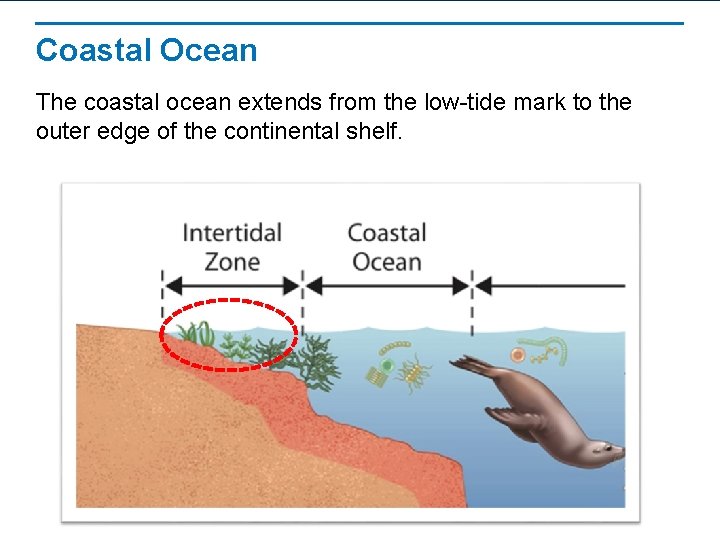
Coastal Ocean The coastal ocean extends from the low-tide mark to the outer edge of the continental shelf.
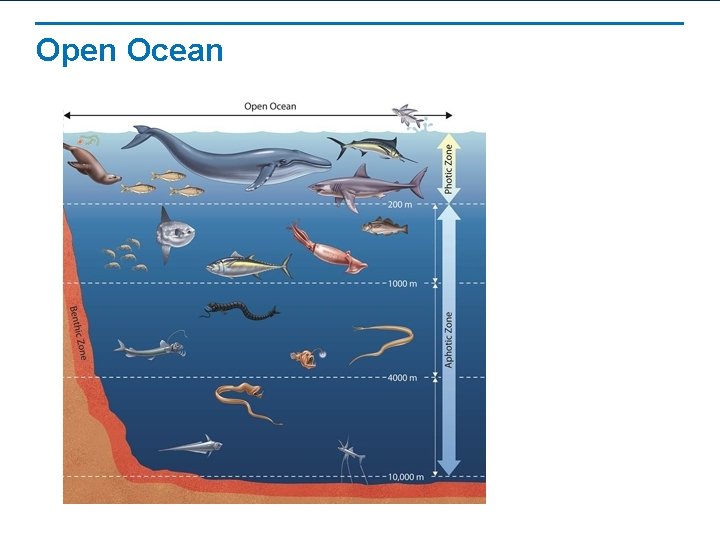
Open Ocean
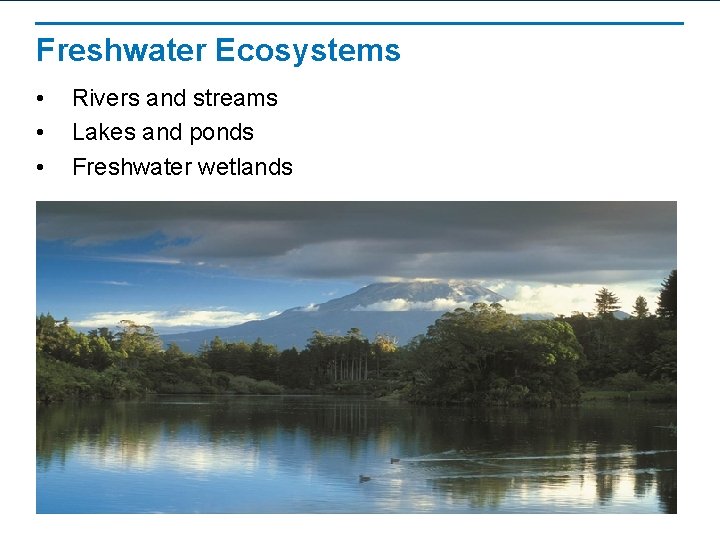
Freshwater Ecosystems • • • Rivers and streams Lakes and ponds Freshwater wetlands
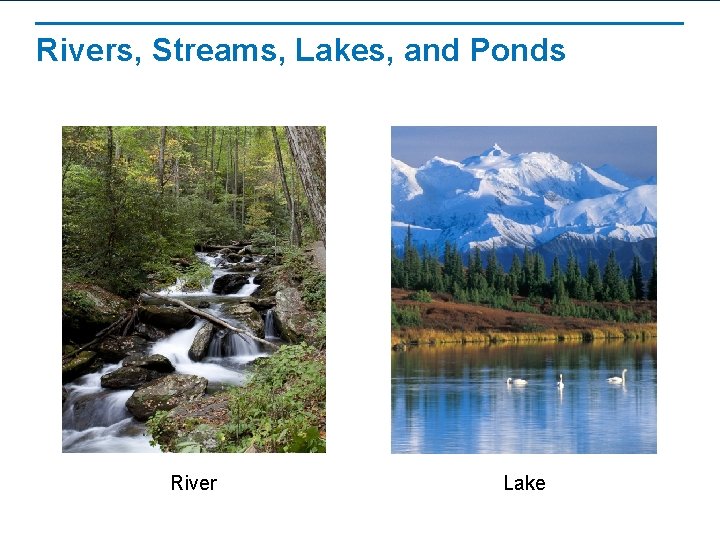
Rivers, Streams, Lakes, and Ponds River Lake
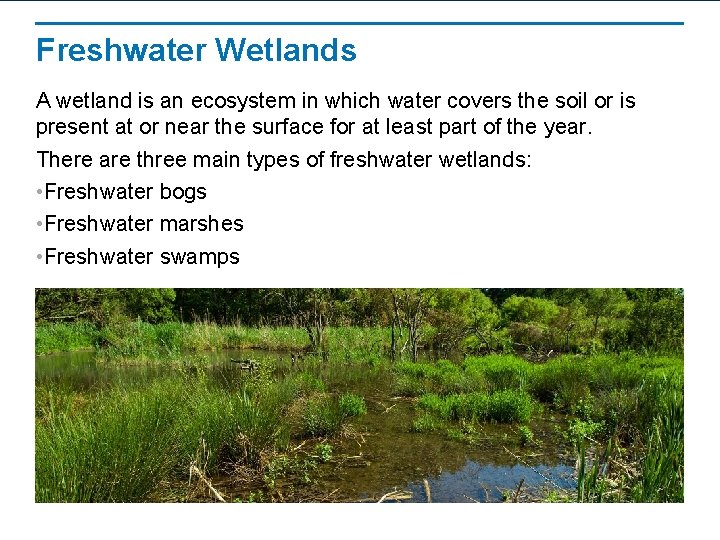
Freshwater Wetlands A wetland is an ecosystem in which water covers the soil or is present at or near the surface for at least part of the year. There are three main types of freshwater wetlands: • Freshwater bogs • Freshwater marshes • Freshwater swamps
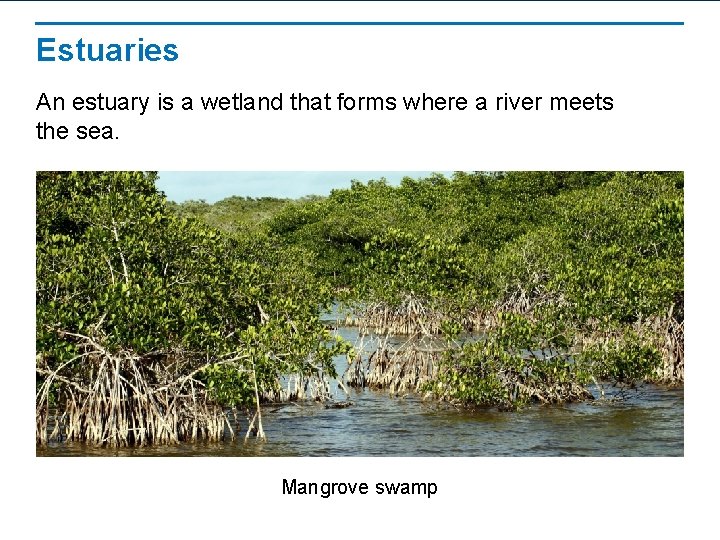
Estuaries An estuary is a wetland that forms where a river meets the sea. Mangrove swamp
- Slides: 23