
BIOMES 1 LEVELS OF ECOLOGICAL ORGANIZATION Organisms Species

BIOMES 1
LEVELS OF ECOLOGICAL ORGANIZATION Organisms Species Population Community Ecosystem Biome Biosphere
BIOMES Biome: groups of ecosystems with similar climates and organisms • Climate is defined as weather patterns over a long period of time • temperature & precipitation There are terrestrial (land) biomes as well as freshwater & marine biomes
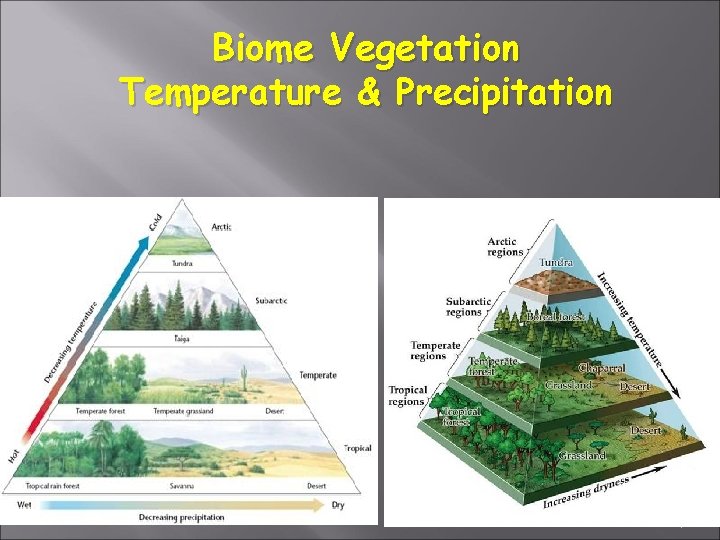
Biome Vegetation Temperature & Precipitation 4
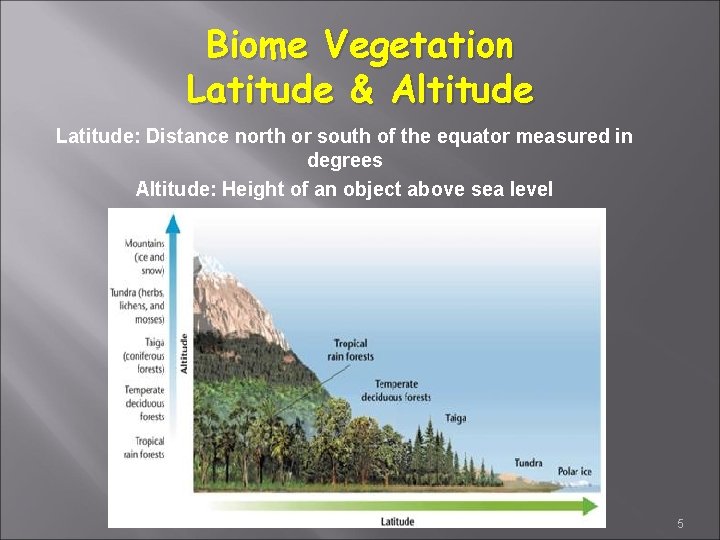
Biome Vegetation Latitude & Altitude Latitude: Distance north or south of the equator measured in degrees Altitude: Height of an object above sea level 5
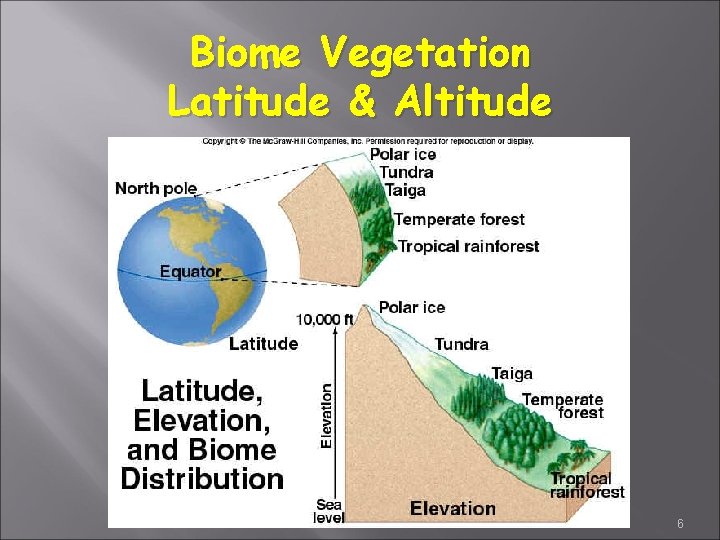
Biome Vegetation Latitude & Altitude 6
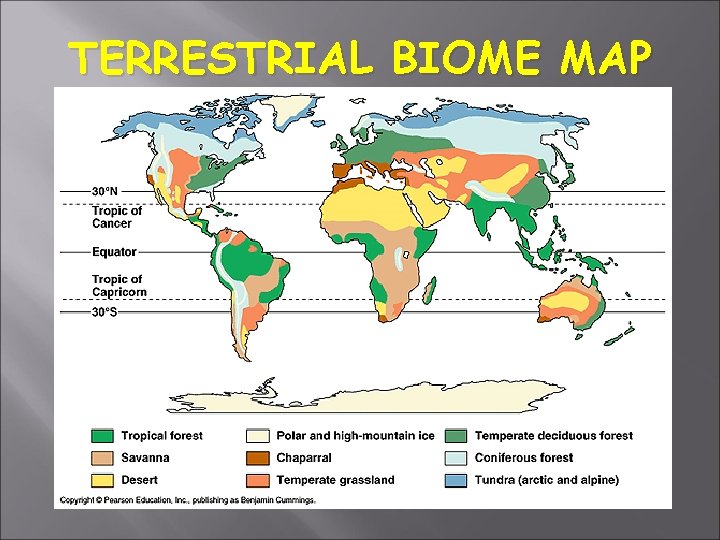
TERRESTRIAL BIOME MAP
TERRESTRIAL BIOMES 1. Tropical & Temperate Rain Forests 2. Temperate Deciduous Forests 3. Taiga (Boreal or Coniferous Forest) 4. Tropical Grassland (Savanna) 5. Temperate Grassland (Prairie) 6. Chaparral (Scrubland) 7. Desert 8. Tundra
Types of Aquatic Biomes Freshwater Aquatic Biomes: Lakes and Ponds Wetlands Marine Aquatic Biomes: Coastal Wetlands Estuaries Marshes Swamps Rivers (& Streams) Shores Coral reefs Oceans
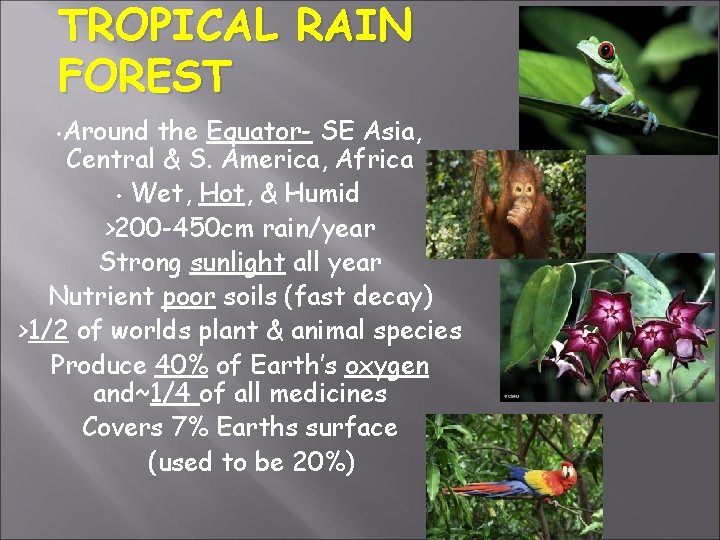
TROPICAL RAIN FOREST • Around the Equator- SE Asia, Central & S. America, Africa • Wet, Hot, & Humid >200 -450 cm rain/year Strong sunlight all year Nutrient poor soils (fast decay) >1/2 of worlds plant & animal species Produce 40% of Earth’s oxygen and~1/4 of all medicines Covers 7% Earths surface (used to be 20%)
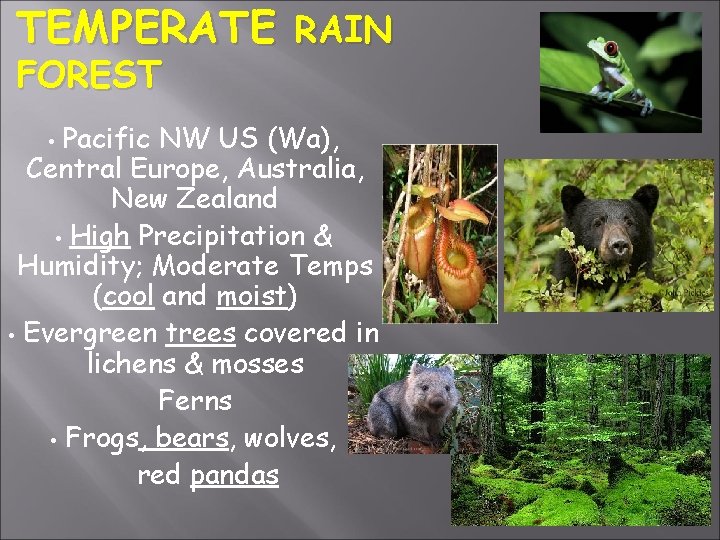
TEMPERATE RAIN FOREST Pacific NW US (Wa), Central Europe, Australia, New Zealand • High Precipitation & Humidity; Moderate Temps (cool and moist) • Evergreen trees covered in lichens & mosses Ferns • Frogs, bears, wolves, red pandas •
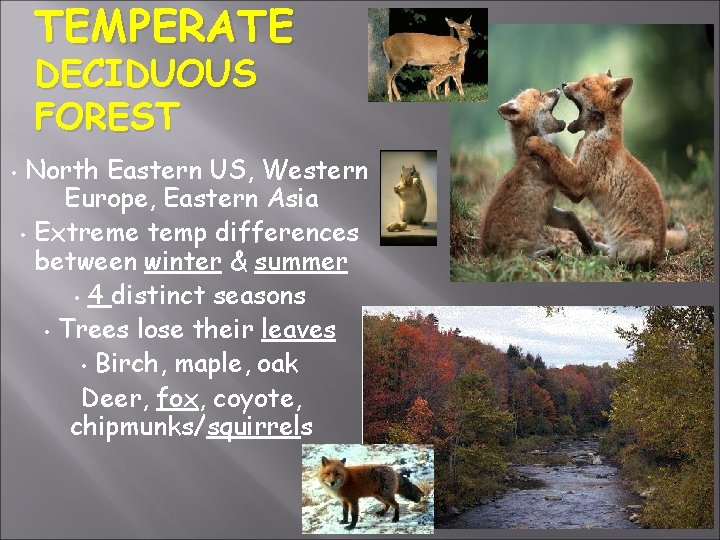
TEMPERATE DECIDUOUS FOREST • North Eastern US, Western Europe, Eastern Asia • Extreme temp differences between winter & summer • 4 distinct seasons • Trees lose their leaves • Birch, maple, oak Deer, fox, coyote, chipmunks/squirrels
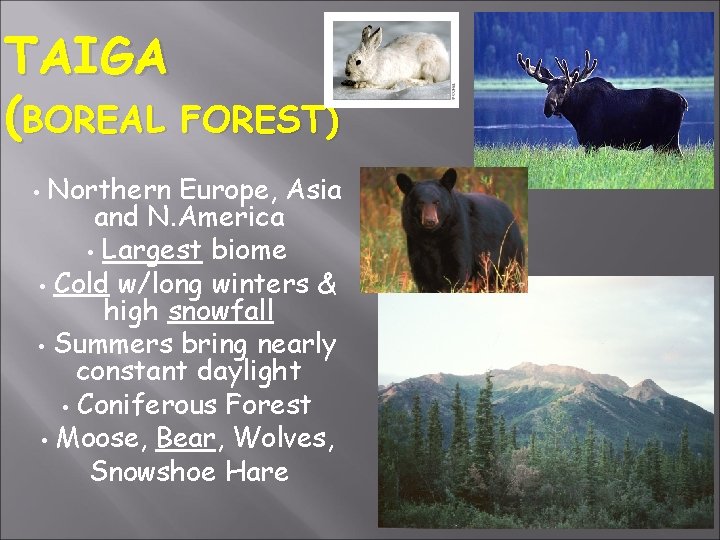
TAIGA (BOREAL FOREST) Northern Europe, Asia and N. America • Largest biome • Cold w/long winters & high snowfall • Summers bring nearly constant daylight • Coniferous Forest • Moose, Bear, Wolves, Snowshoe Hare •
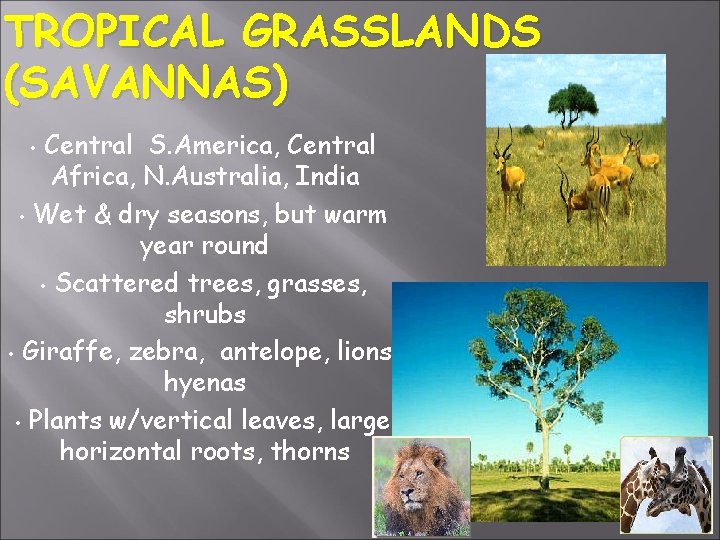
TROPICAL GRASSLANDS (SAVANNAS) Central S. America, Central Africa, N. Australia, India • Wet & dry seasons, but warm year round • Scattered trees, grasses, shrubs • Giraffe, zebra, antelope, lions, hyenas • Plants w/vertical leaves, large horizontal roots, thorns •
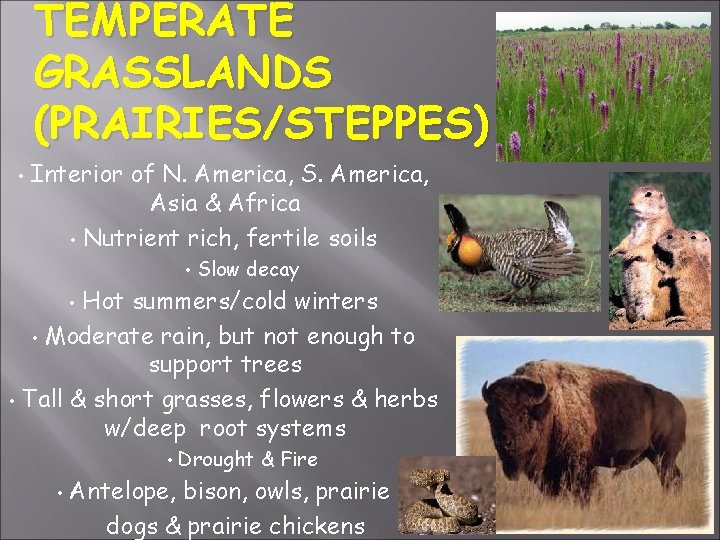
TEMPERATE GRASSLANDS (PRAIRIES/STEPPES) • Interior of N. America, S. America, Asia & Africa • Nutrient rich, fertile soils • Slow decay Hot summers/cold winters • Moderate rain, but not enough to support trees • Tall & short grasses, flowers & herbs w/deep root systems • • • Drought & Fire Antelope, bison, owls, prairie dogs & prairie chickens
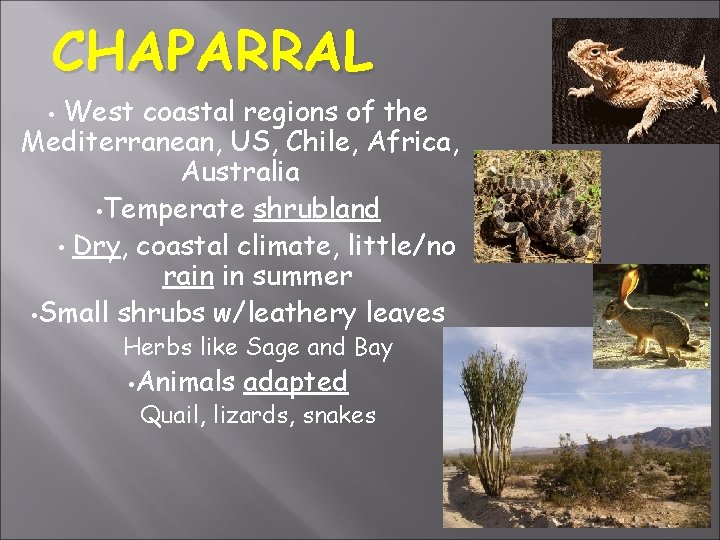
CHAPARRAL West coastal regions of the Mediterranean, US, Chile, Africa, Australia • Temperate shrubland • Dry, coastal climate, little/no rain in summer • Small shrubs w/leathery leaves • Herbs like Sage and Bay • Animals adapted Quail, lizards, snakes
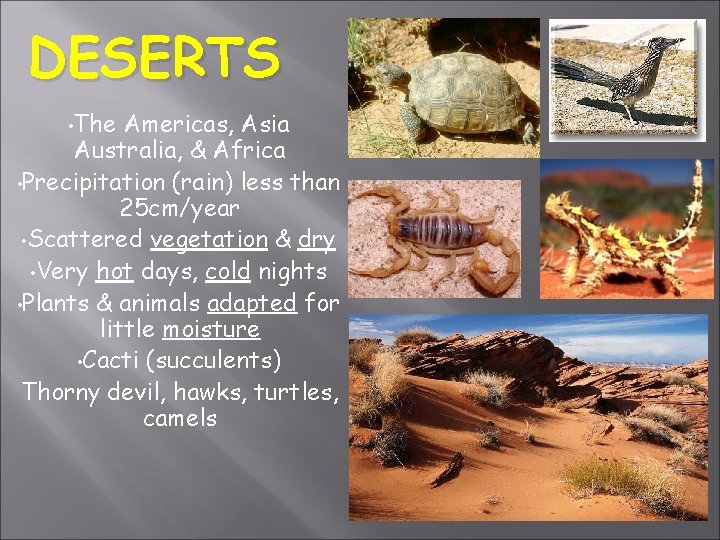
DESERTS • The Americas, Asia Australia, & Africa • Precipitation (rain) less than 25 cm/year • Scattered vegetation & dry • Very hot days, cold nights • Plants & animals adapted for little moisture • Cacti (succulents) Thorny devil, hawks, turtles, camels
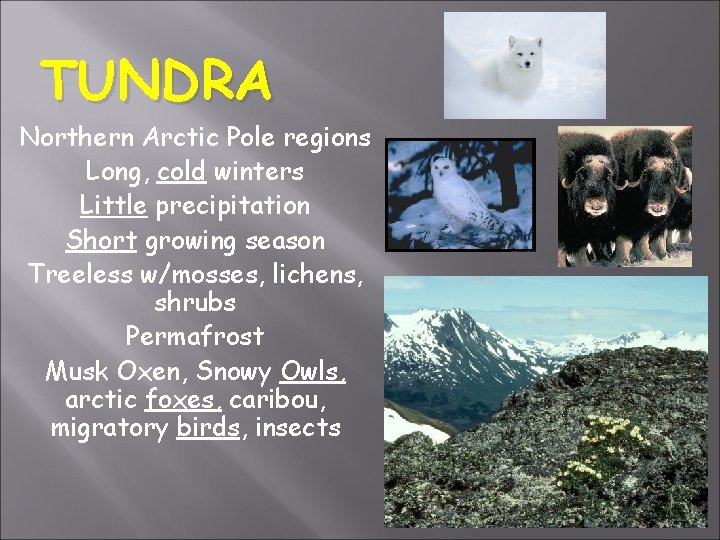
TUNDRA Northern Arctic Pole regions Long, cold winters Little precipitation Short growing season Treeless w/mosses, lichens, shrubs Permafrost Musk Oxen, Snowy Owls, arctic foxes, caribou, migratory birds, insects
- Slides: 18