
Biomedical Engineering and the Eye Raise your hand
Biomedical Engineering and the Eye
• Raise your hand if you have eyes. • Hopefully that was everyone. • How many times a day would you say you use your eyes? • Silly question, right? – The answer would be a lot. • Let’s try this… – Stand up. – Close your eyes tight. No peeking. – Shake the hand of the person next to you.

How’d that go? • Eyes are very important for helping us complete simple, everyday tasks. • How many are wearing glasses or contacts? • What if you could see perfectly without wearing glasses or contacts? • Biomedical engineers design and create devices to help solve some of the common problems with our eyes and our ability to see.
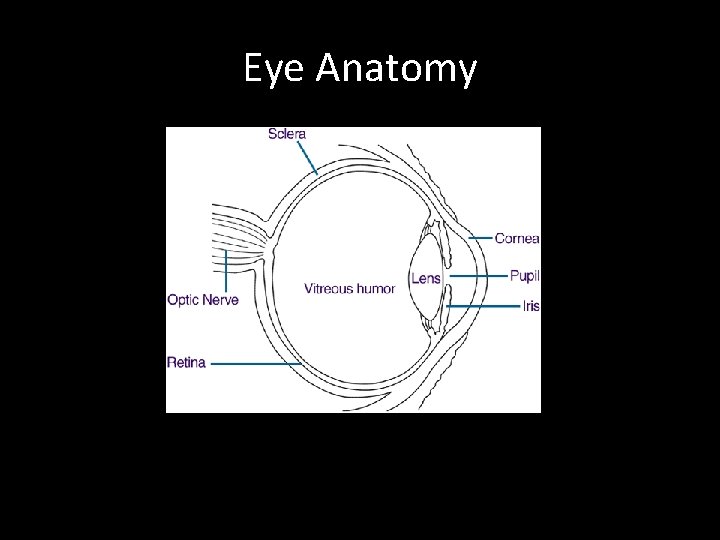
Eye Anatomy
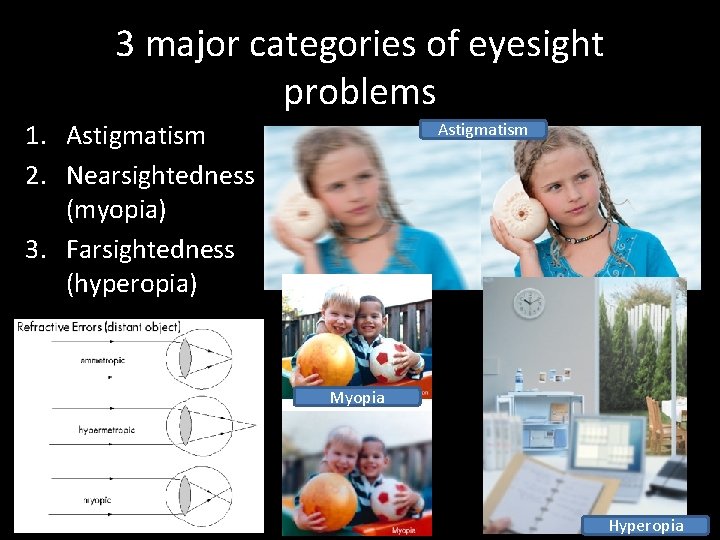
3 major categories of eyesight problems 1. Astigmatism 2. Nearsightedness (myopia) 3. Farsightedness (hyperopia) Astigmatism Myopia Hyperopia

Astigmatism • • Cornea is not evenly round Light focuses at different distances inside the eye Some parts of what you look at are in focus, other parts are blurry Fix by reshaping cornea
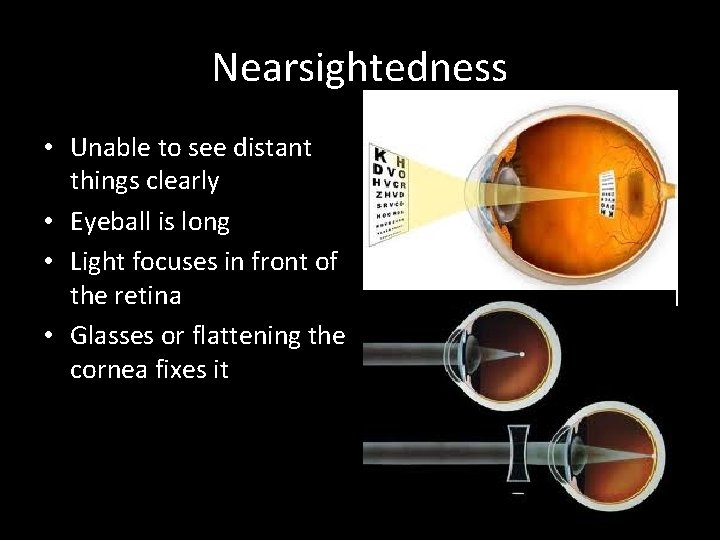
Nearsightedness • Unable to see distant things clearly • Eyeball is long • Light focuses in front of the retina • Glasses or flattening the cornea fixes it
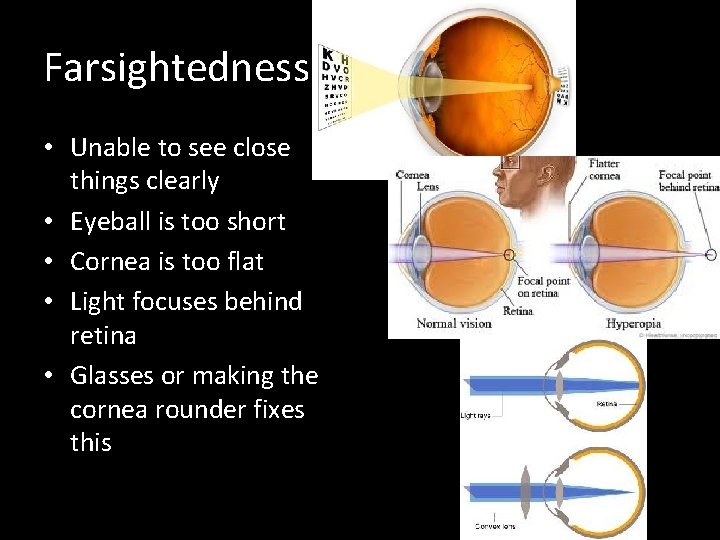
Farsightedness • Unable to see close things clearly • Eyeball is too short • Cornea is too flat • Light focuses behind retina • Glasses or making the cornea rounder fixes this
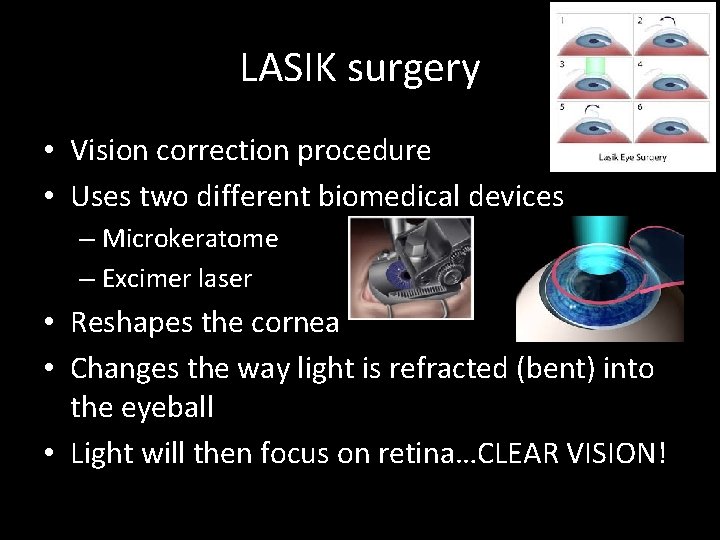
LASIK surgery • Vision correction procedure • Uses two different biomedical devices – Microkeratome – Excimer laser • Reshapes the cornea • Changes the way light is refracted (bent) into the eyeball • Light will then focus on retina…CLEAR VISION!
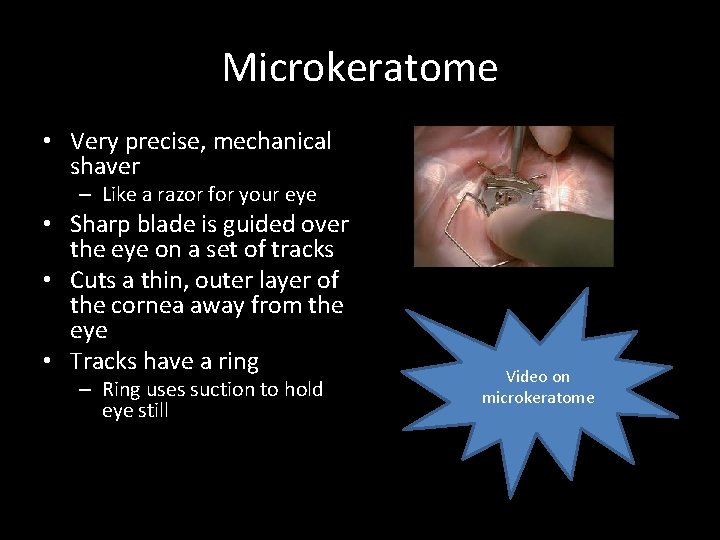
Microkeratome • Very precise, mechanical shaver – Like a razor for your eye • Sharp blade is guided over the eye on a set of tracks • Cuts a thin, outer layer of the cornea away from the eye • Tracks have a ring – Ring uses suction to hold eye still Video on microkeratome
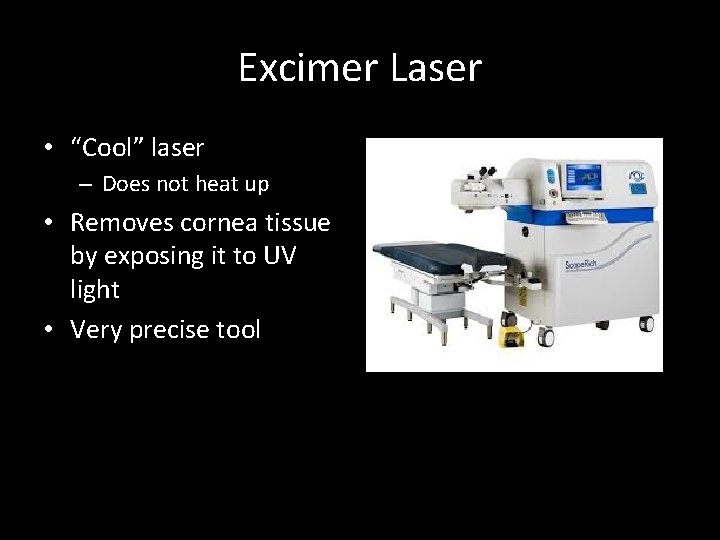
Excimer Laser • “Cool” laser – Does not heat up • Removes cornea tissue by exposing it to UV light • Very precise tool
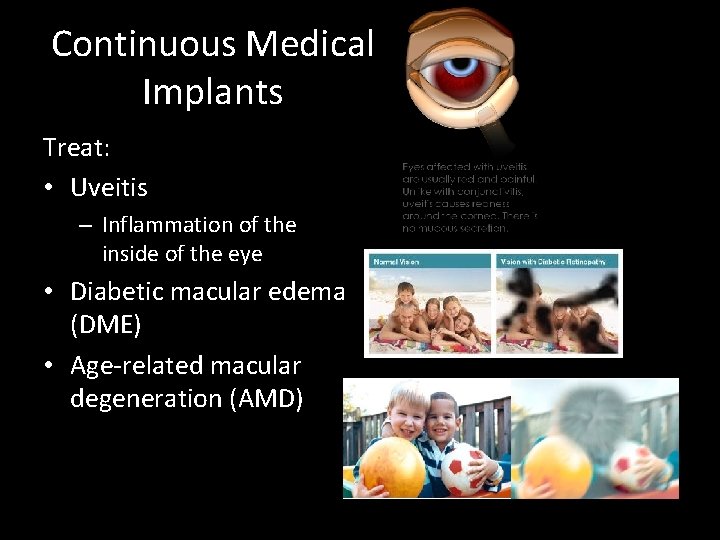
Continuous Medical Implants Treat: • Uveitis – Inflammation of the inside of the eye • Diabetic macular edema (DME) • Age-related macular degeneration (AMD)
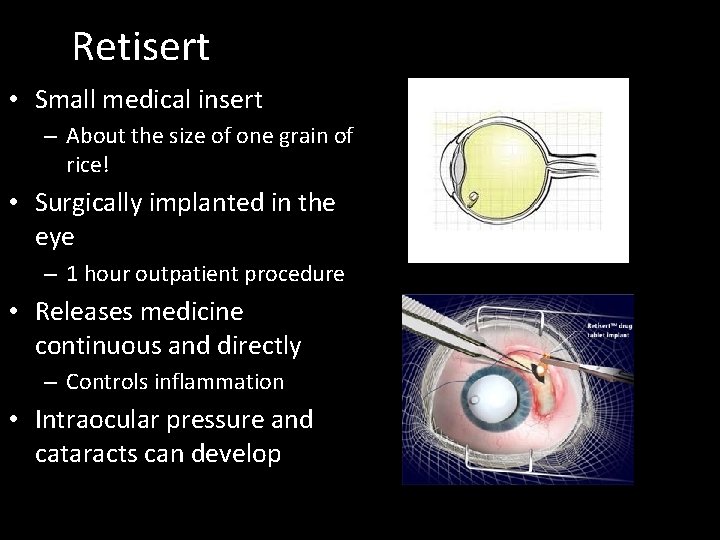
Retisert • Small medical insert – About the size of one grain of rice! • Surgically implanted in the eye – 1 hour outpatient procedure • Releases medicine continuous and directly – Controls inflammation • Intraocular pressure and cataracts can develop
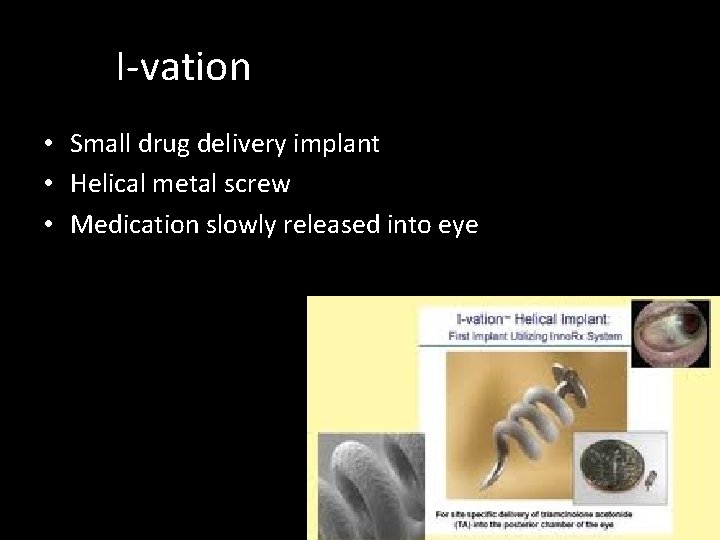
I-vation • Small drug delivery implant • Helical metal screw • Medication slowly released into eye
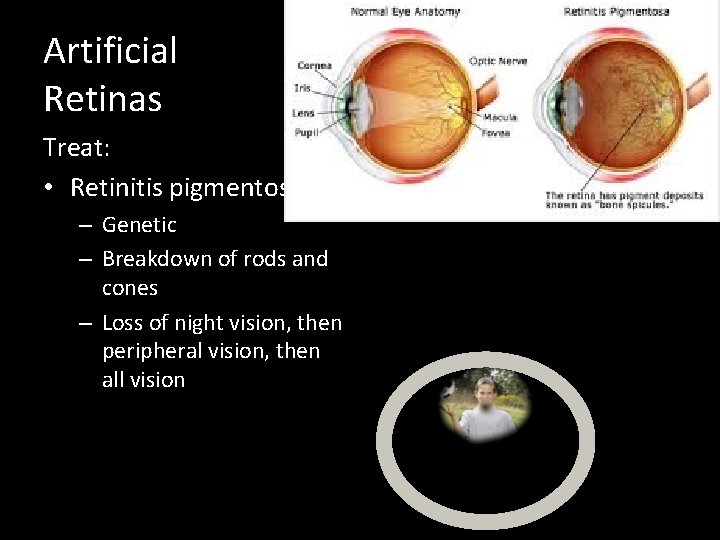
Artificial Retinas Treat: • Retinitis pigmentosa – Genetic – Breakdown of rods and cones – Loss of night vision, then peripheral vision, then all vision
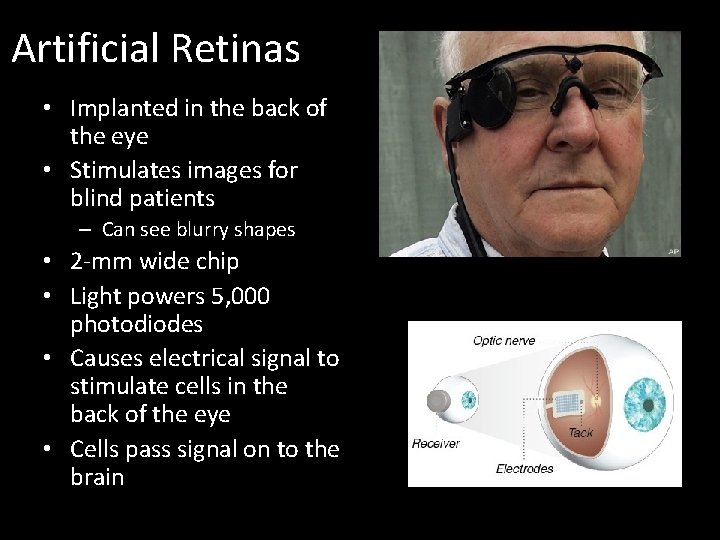
Artificial Retinas • Implanted in the back of the eye • Stimulates images for blind patients – Can see blurry shapes • 2 -mm wide chip • Light powers 5, 000 photodiodes • Causes electrical signal to stimulate cells in the back of the eye • Cells pass signal on to the brain
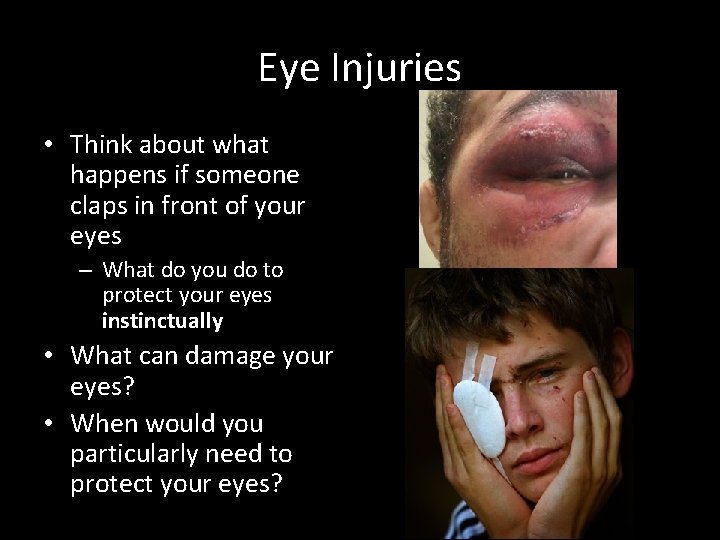
Eye Injuries • Think about what happens if someone claps in front of your eyes – What do you do to protect your eyes instinctually • What can damage your eyes? • When would you particularly need to protect your eyes?
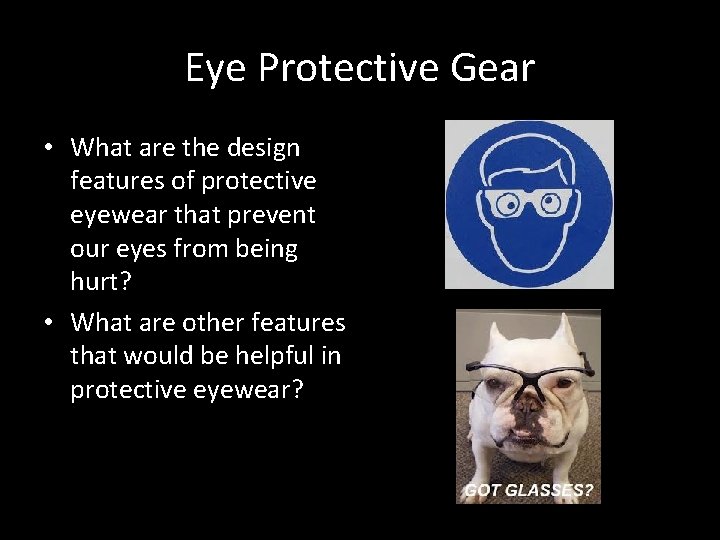
Eye Protective Gear • What are the design features of protective eyewear that prevent our eyes from being hurt? • What are other features that would be helpful in protective eyewear?
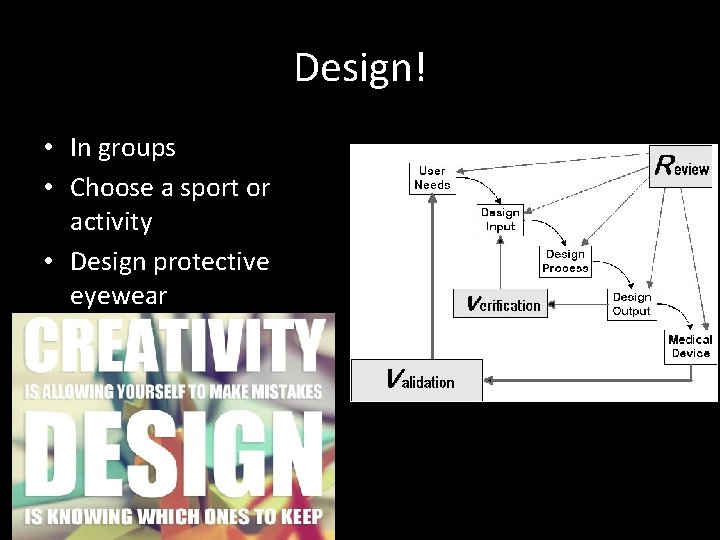
Design! • In groups • Choose a sport or activity • Design protective eyewear
- Slides: 19