
Biomed Data Sci Variant Identification Focusing on SVs
Biomed. Data Sci: Variant Identification, Focusing on SVs Mark Gerstein, Yale University gersteinlab. org/courses/452 (last edit in spring ’ 18)
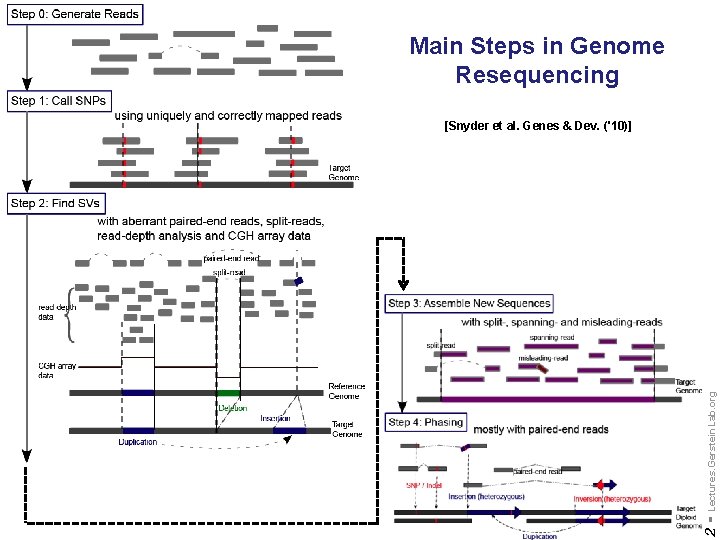
Main Steps in Genome Resequencing 2 - Lectures. Gerstein. Lab. org [Snyder et al. Genes & Dev. ('10)]
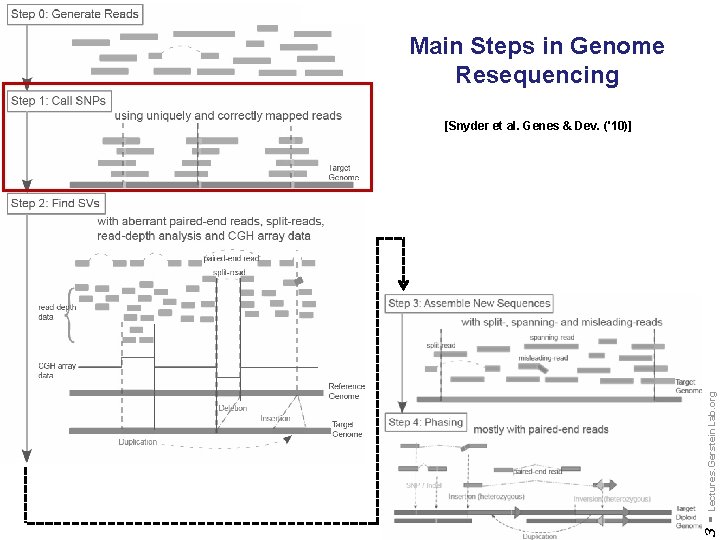
Main Steps in Genome Resequencing 3 - Lectures. Gerstein. Lab. org [Snyder et al. Genes & Dev. ('10)]
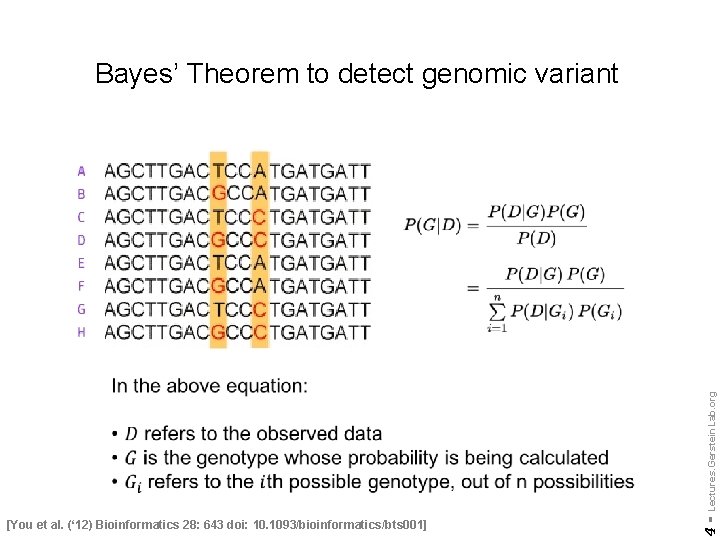
Bayes’ Theorem to detect genomic variant [You et al. (‘ 12) Bioinformatics 28: 643 doi: 10. 1093/bioinformatics/bts 001] 4 - Lectures. Gerstein. Lab. org
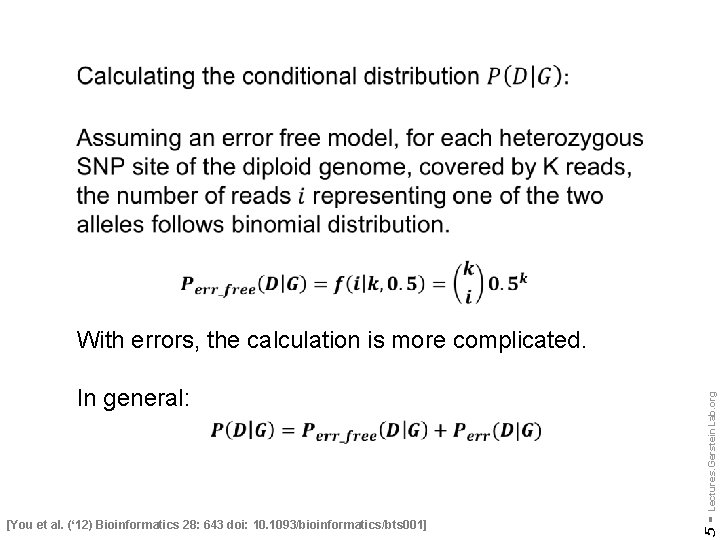
In general: [You et al. (‘ 12) Bioinformatics 28: 643 doi: 10. 1093/bioinformatics/bts 001] 5 - Lectures. Gerstein. Lab. org With errors, the calculation is more complicated.
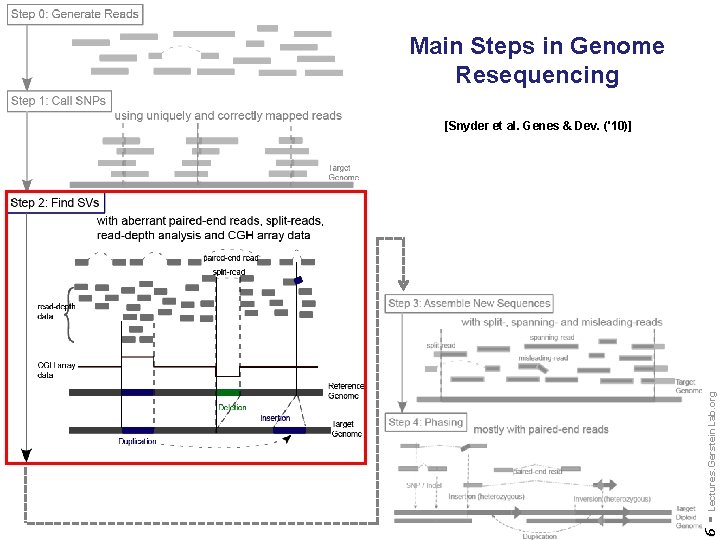
Main Steps in Genome Resequencing 6 - Lectures. Gerstein. Lab. org [Snyder et al. Genes & Dev. ('10)]
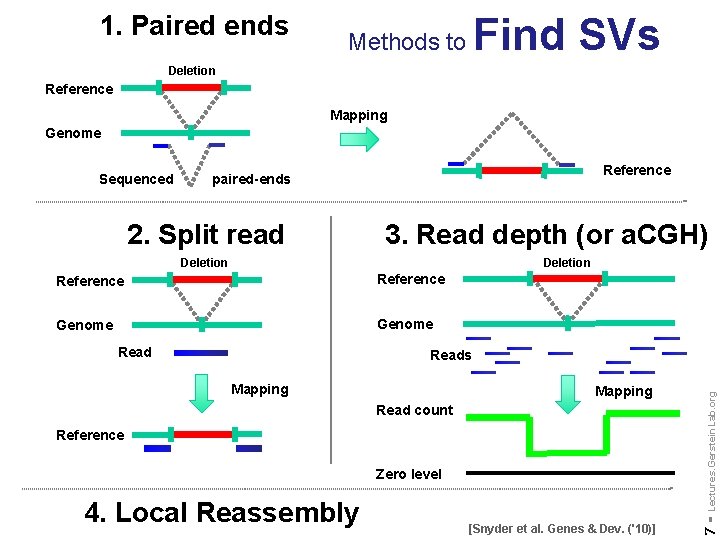
1. Paired ends Methods to Find SVs Deletion Reference Mapping Genome Reference Sequenced paired-ends 2. Split read 3. Read depth (or a. CGH) Deletion Reference Genome Read Mapping Read count Reference Zero level 4. Local Reassembly [Snyder et al. Genes & Dev. ('10)] 7 - Lectures. Gerstein. Lab. org Reads

8 - Lectures. Gerstein. Lab. org Read Depth
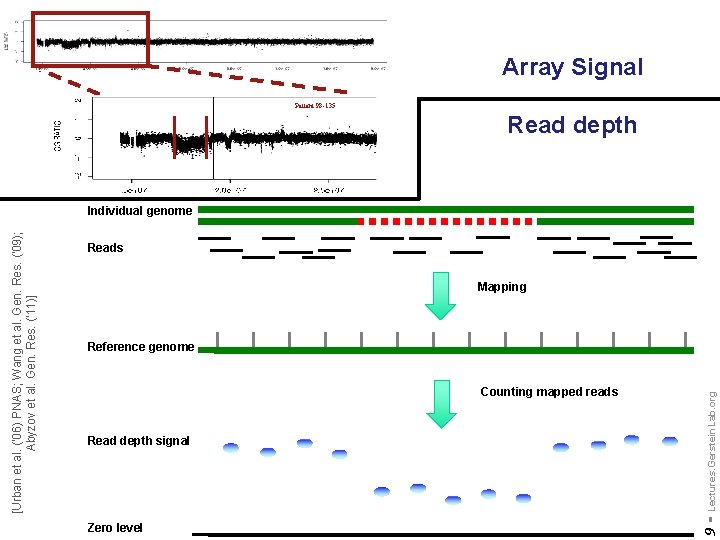
Patient 98 -135 Patient 99 -199 Reads Mapping Patient 97 -237 Reference genome Counting mapped reads Read depth signal LCR A Zero level B C D 9 - Lectures. Gerstein. Lab. org [Urban et al. ('06) PNAS; Wang et al. Gen. Res. ('09); Abyzov et al. Gen. Res. (’ 11)] Individual genome Array Signal Read depth
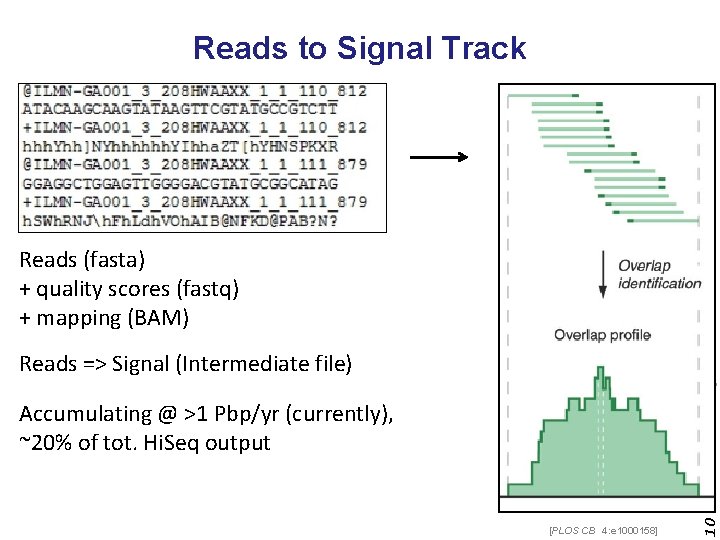
Reads to Signal Track Reads (fasta) + quality scores (fastq) + mapping (BAM) Accumulating @ >1 Pbp/yr (currently), ~20% of tot. Hi. Seq output [PLOS CB 4: e 1000158] 10 - Lectures. Gerstein. Lab. org Reads => Signal (Intermediate file)
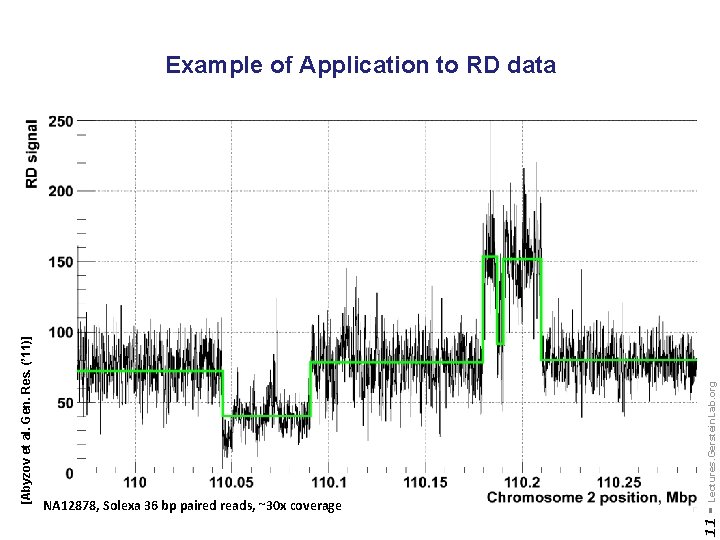
NA 12878, Solexa 36 bp paired reads, ~30 x coverage 11 - Lectures. Gerstein. Lab. org [Abyzov et al. Gen. Res. (’ 11)] Example of Application to RD data
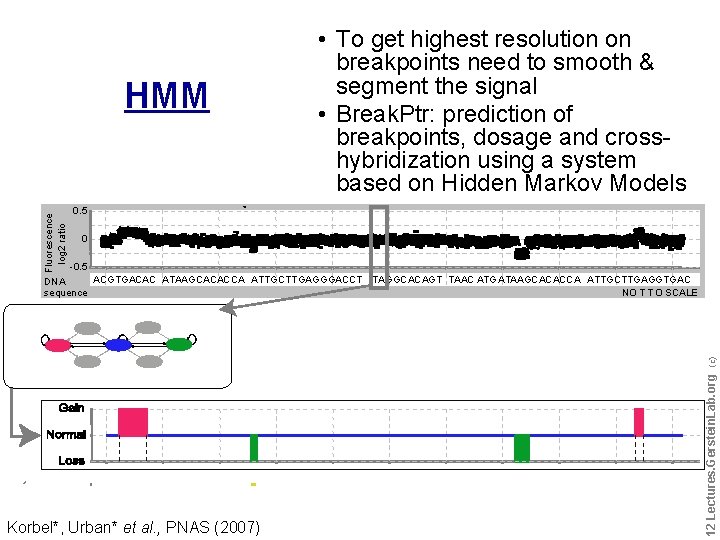
Fluorescence log 2 ratio HMM • To get highest resolution on breakpoints need to smooth & segment the signal • Break. Ptr: prediction of breakpoints, dosage and crosshybridization using a system based on Hidden Markov Models 0. 5 0 -0. 5 Korbel*, Urban* et al. , PNAS (2007) Do not reproduce without permission 12 Lectures. Gerstein. Lab. org (c) ACGTGACAC ATAAGCACACCA ATTGCTTGAGGGACCT TAGGCACAGT TAAC ATG ATAAGCACACCA ATTGCTTGAGGTGAC DNA NO T T O SCALE sequence
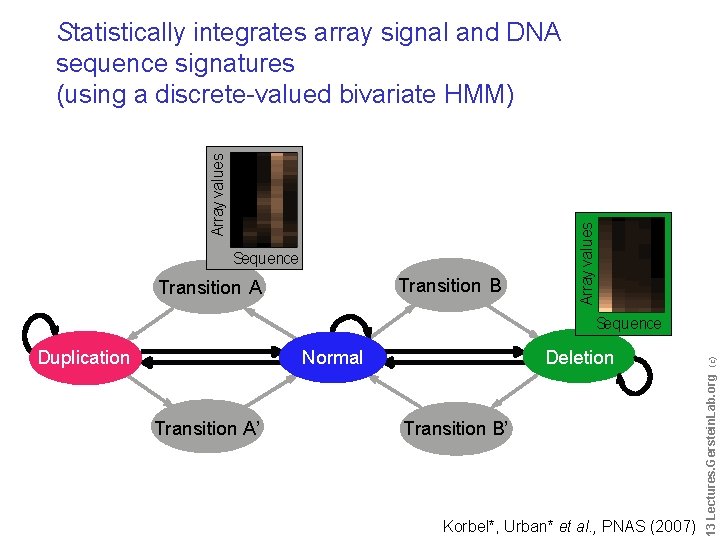
Sequence Transition B Transition A Array values Statistically integrates array signal and DNA sequence signatures (using a discrete-valued bivariate HMM) Duplication Normal Transition A’ Deletion Transition B’ Korbel*, Urban* et al. , PNAS (2007) Do not reproduce without permission 13 Lectures. Gerstein. Lab. org (c) Sequence
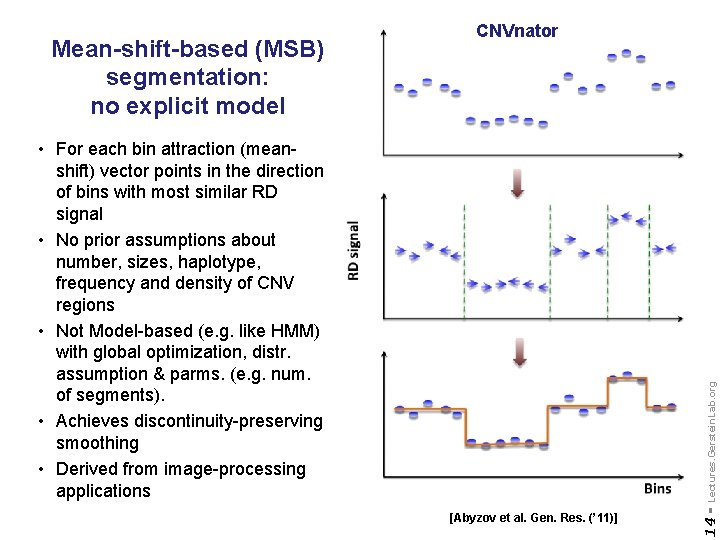
• For each bin attraction (meanshift) vector points in the direction of bins with most similar RD signal • No prior assumptions about number, sizes, haplotype, frequency and density of CNV regions • Not Model-based (e. g. like HMM) with global optimization, distr. assumption & parms. (e. g. num. of segments). • Achieves discontinuity-preserving smoothing • Derived from image-processing applications [Abyzov et al. Gen. Res. (’ 11)] 14 - Lectures. Gerstein. Lab. org Mean-shift-based (MSB) segmentation: no explicit model CNVnator
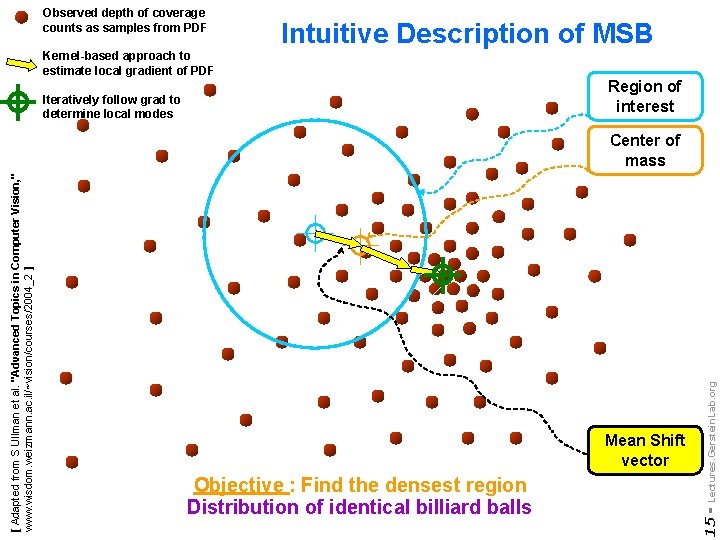
Observed depth of coverage counts as samples from PDF Intuitive Description of MSB Kernel-based approach to estimate local gradient of PDF Region of interest Iteratively follow grad to determine local modes Mean Shift vector Objective : Find the densest region Distribution of identical billiard balls 15 - Lectures. Gerstein. Lab. org [ Adapted from S Ullman et al. "Advanced Topics in Computer Vision, " www. wisdom. weizmann. ac. il/~vision/courses/2004_2 ] Center of mass
16 - Lectures. Gerstein. Lab. org Paired-End
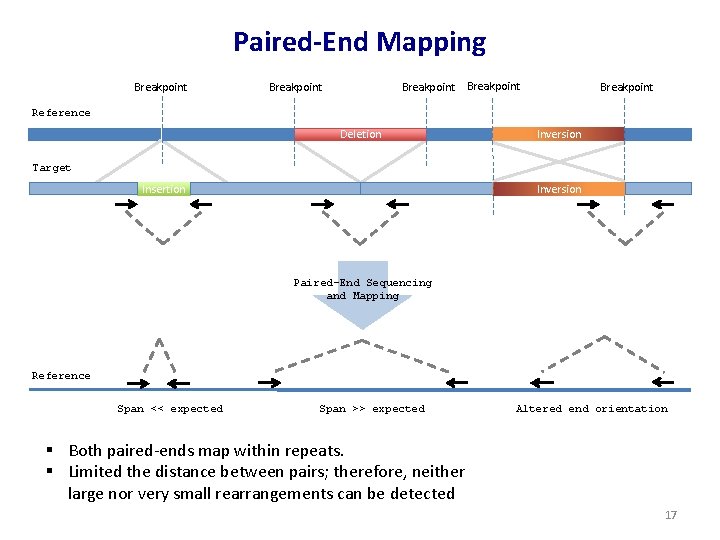
Paired-End Mapping Breakpoint Breakpoint Reference Deletion Inversion Target Insertion Inversion Paired-End Sequencing and Mapping Reference Span << expected Span >> expected Altered end orientation § Both paired-ends map within repeats. § Limited the distance between pairs; therefore, neither large nor very small rearrangements can be detected 17
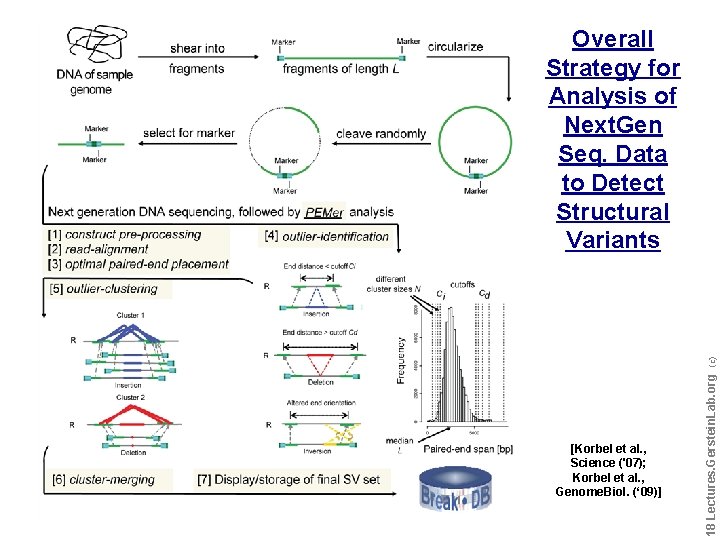
[Korbel et al. , Science ('07); Korbel et al. , Genome. Biol. (‘ 09)] Do not reproduce without permission 18 Lectures. Gerstein. Lab. org (c) Overall Strategy for Analysis of Next. Gen Seq. Data to Detect Structural Variants

19 - Lectures. Gerstein. Lab. org Split Read
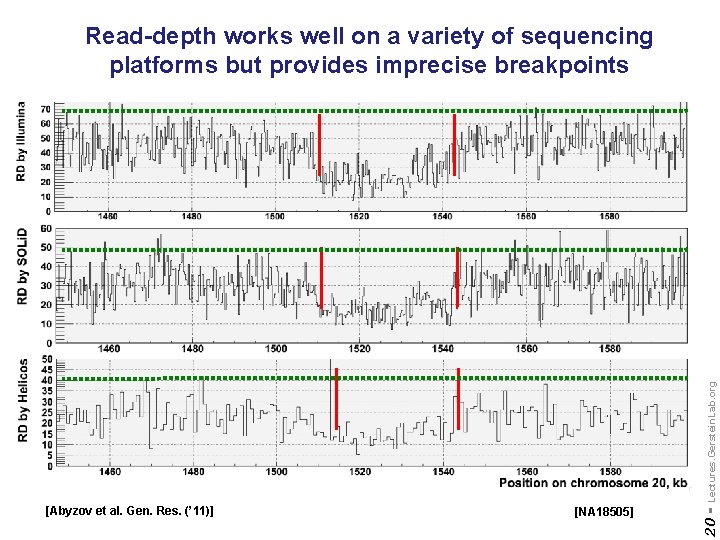
[Abyzov et al. Gen. Res. (’ 11)] [NA 18505] 20 - Lectures. Gerstein. Lab. org Read-depth works well on a variety of sequencing platforms but provides imprecise breakpoints
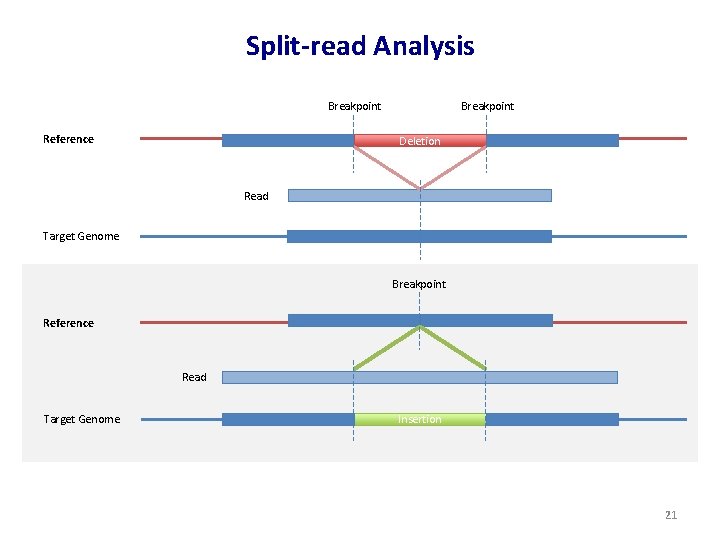
Split-read Analysis Breakpoint Reference Breakpoint Deletion Read Target Genome Breakpoint Reference Read Target Genome Insertion 21
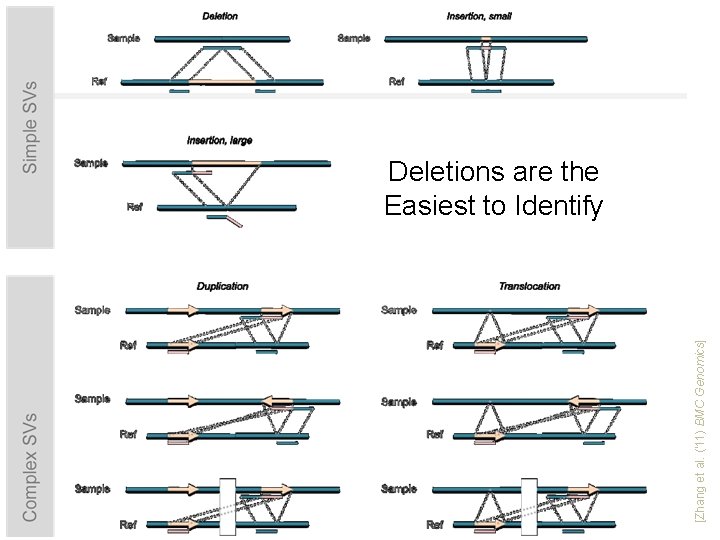
[Zhang et al. ('11) BMC Genomics] Deletions are the Easiest to Identify
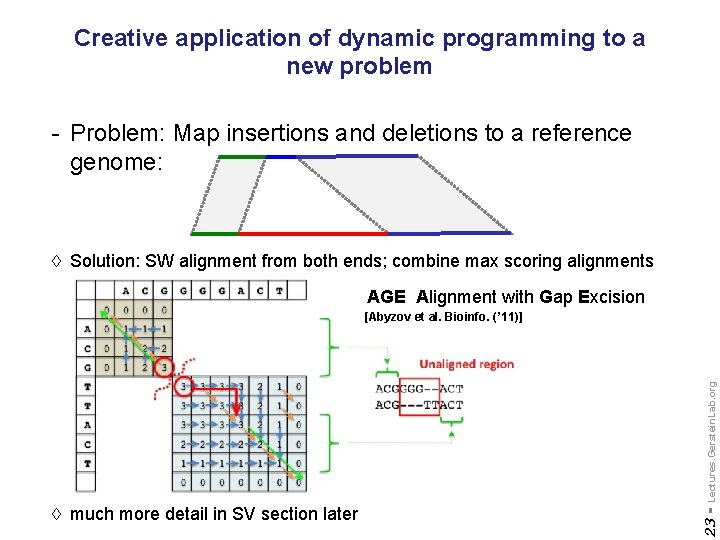
Creative application of dynamic programming to a new problem - Problem: Map insertions and deletions to a reference genome: à Solution: SW alignment from both ends; combine max scoring alignments AGE Alignment with Gap Excision à much more detail in SV section later 23 - Lectures. Gerstein. Lab. org [Abyzov et al. Bioinfo. (’ 11)]
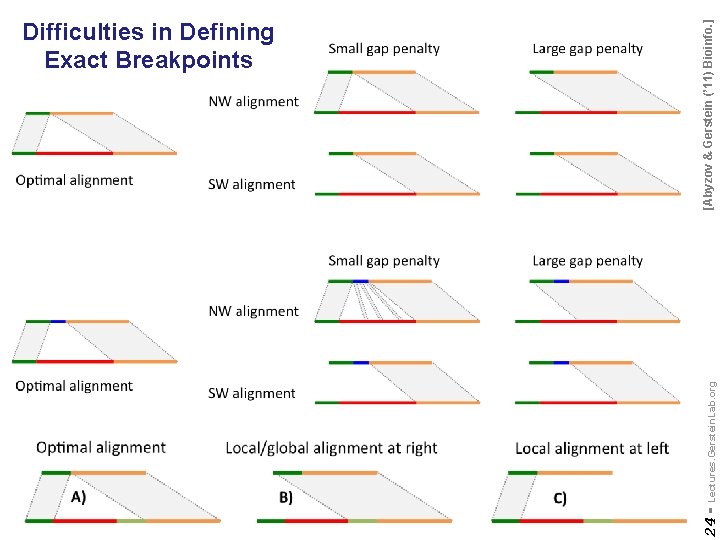
24 - Lectures. Gerstein. Lab. org [Abyzov & Gerstein (’ 11) Bioinfo. ] Difficulties in Defining Exact Breakpoints
25 - Lectures. Gerstein. Lab. org RDV & Mobile Elements
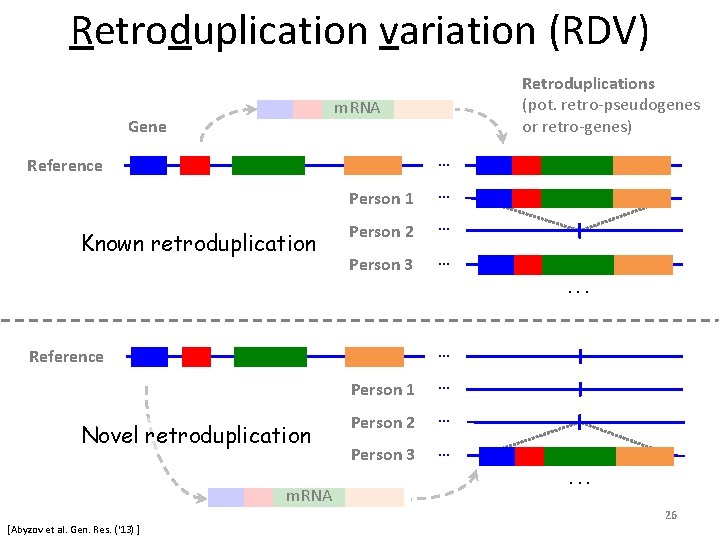
Retroduplication variation (RDV) Retroduplications (pot. retro-pseudogenes or retro-genes) m. RNA Gene … Reference Known retroduplication Person 1 … Person 2 … Person 3 …. . . … Reference Novel retroduplication m. RNA Person 1 … Person 2 … Person 3 …. . . 26 [Abyzov et al. Gen. Res. ('13) ]
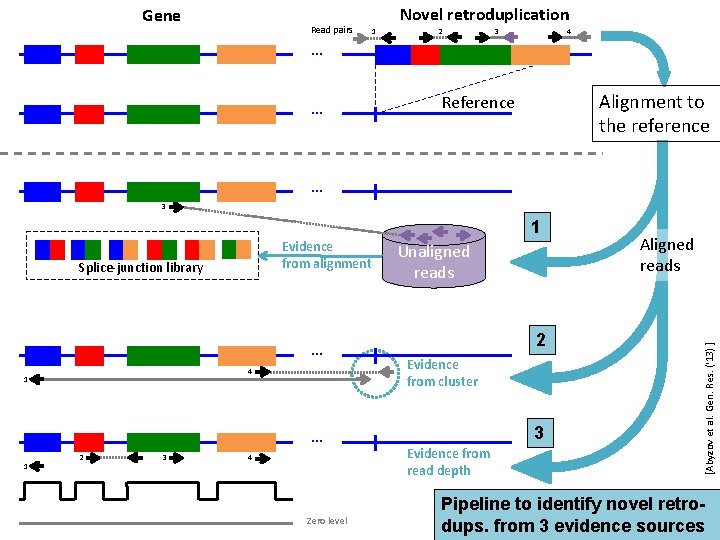
Gene Read pairs Novel retroduplication 1 2 3 4 … … Alignment to the reference Reference … 3 Evidence from alignment Splice-junction library … 4 1 … 1 2 3 4 Zero level Unaligned reads 2 Evidence from cluster 3 Evidence from read depth Aligned reads [Abyzov et al. Gen. Res. ('13) ] 1 Pipeline to identify novel retrodups. from 3 evidence sources
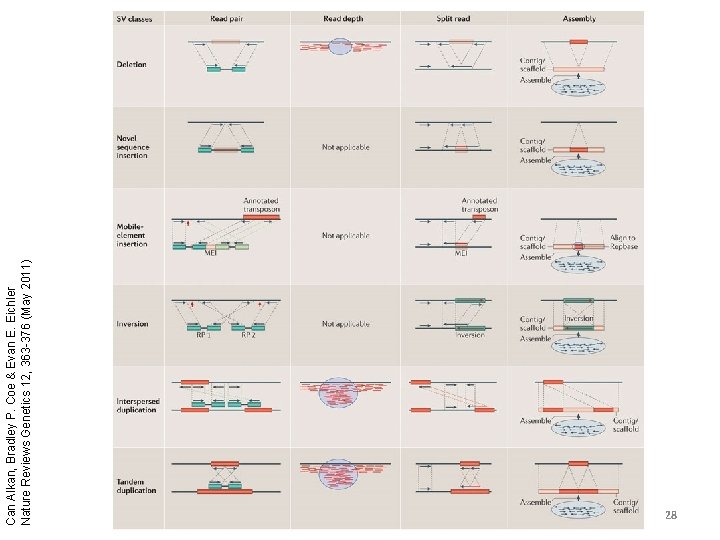
Can Alkan, Bradley P. Coe & Evan E. Eichler Nature Reviews Genetics 12, 363 -376 (May 2011) 28
29 - Lectures. Gerstein. Lab. org Pseudogenes & Genomic Duplications
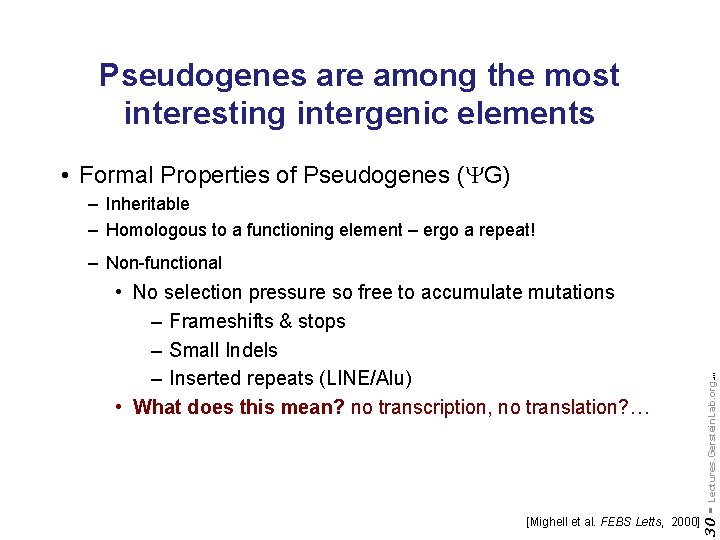
Pseudogenes are among the most interesting intergenic elements • Formal Properties of Pseudogenes ( G) – Inheritable – Homologous to a functioning element – ergo a repeat! 30 - Lectures. Gerstein. Lab. org • No selection pressure so free to accumulate mutations – Frameshifts & stops – Small Indels – Inserted repeats (LINE/Alu) • What does this mean? no transcription, no translation? … (c) '09 – Non-functional [Mighell et al. FEBS Letts, 2000]
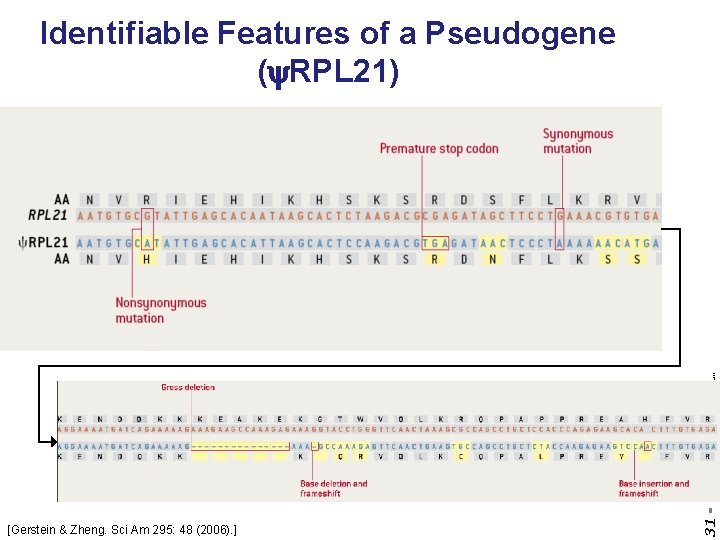
[Gerstein & Zheng. Sci Am 295: 48 (2006). ] 31 - Lectures. Gerstein. Lab. org (c) '09 Identifiable Features of a Pseudogene (y. RPL 21)
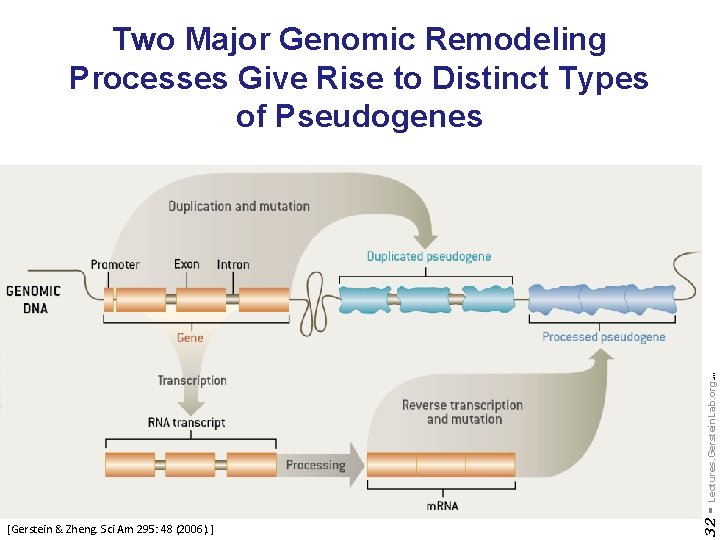
[Gerstein & Zheng. Sci Am 295: 48 (2006). ] 32 - Lectures. Gerstein. Lab. org (c) '09 Two Major Genomic Remodeling Processes Give Rise to Distinct Types of Pseudogenes
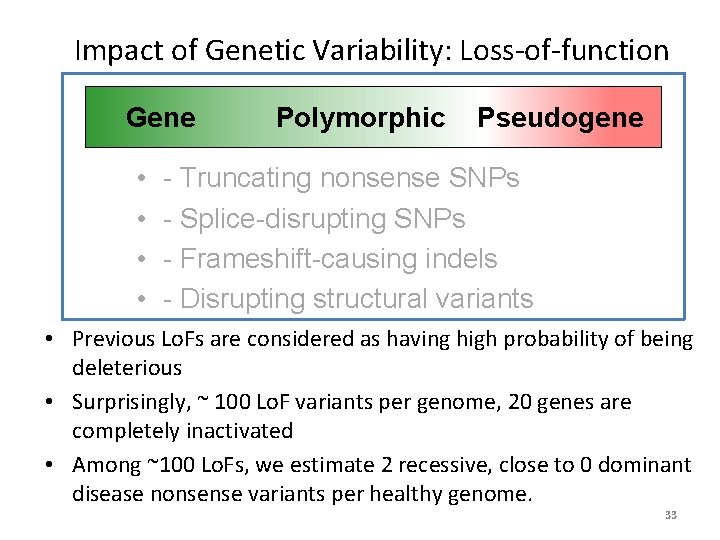
Impact of Genetic Variability: Loss-of-function Gene • • Polymorphic Pseudogene - Truncating nonsense SNPs - Splice-disrupting SNPs - Frameshift-causing indels - Disrupting structural variants • Previous Lo. Fs are considered as having high probability of being deleterious • Surprisingly, ~ 100 Lo. F variants per genome, 20 genes are completely inactivated • Among ~100 Lo. Fs, we estimate 2 recessive, close to 0 dominant disease nonsense variants per healthy genome. 33
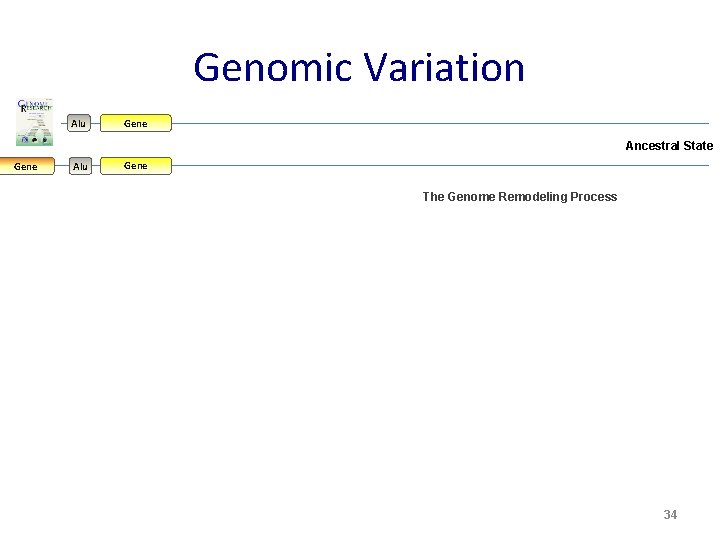
Genomic Variation Alu Gene Ancestral State Gene Alu Gene The Genome Remodeling Process 34
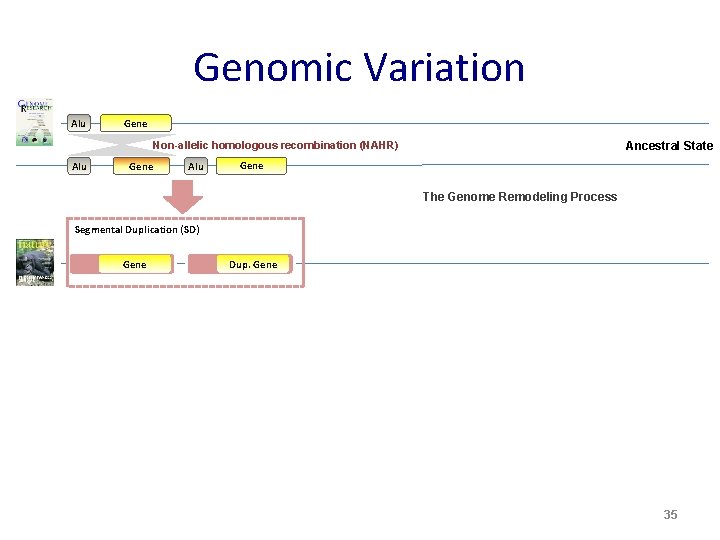
Genomic Variation Alu Gene Non-allelic homologous recombination (NAHR) Alu Gene Alu Ancestral State Gene The Genome Remodeling Process Segmental Duplication (SD) Gene Dup. Gene 35
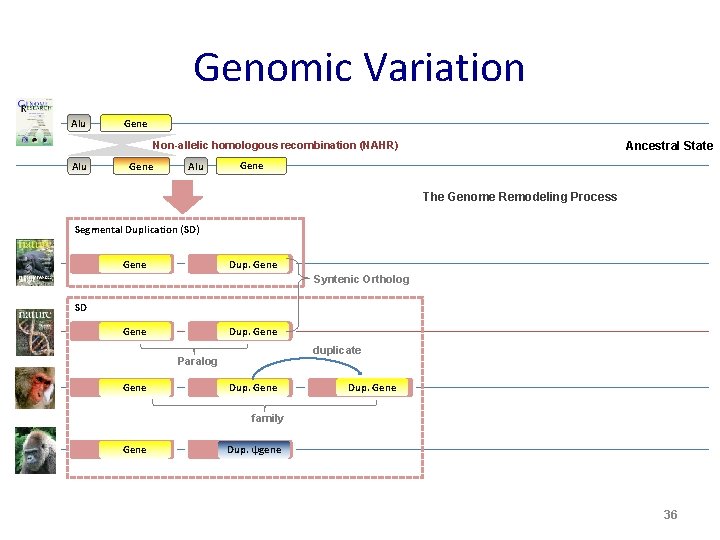
Genomic Variation Alu Gene Non-allelic homologous recombination (NAHR) Alu Gene Alu Ancestral State Gene The Genome Remodeling Process Segmental Duplication (SD) Gene Dup. Gene Syntenic Ortholog SD Gene Dup. Gene duplicate Paralog Gene Dup. Gene family Gene Dup. ψgene 36
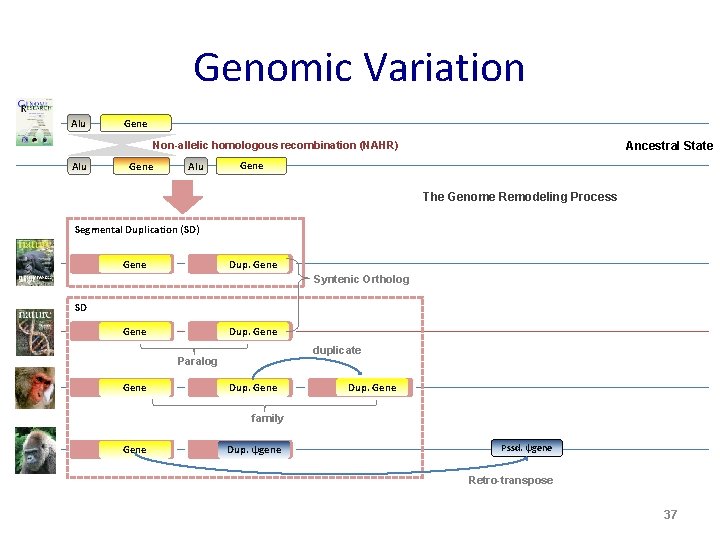
Genomic Variation Alu Gene Non-allelic homologous recombination (NAHR) Alu Gene Alu Ancestral State Gene The Genome Remodeling Process Segmental Duplication (SD) Gene Dup. Gene Syntenic Ortholog SD Gene Dup. Gene duplicate Paralog Gene Dup. Gene family Gene Dup. ψgene Pssd. ψgene Retro-transpose 37
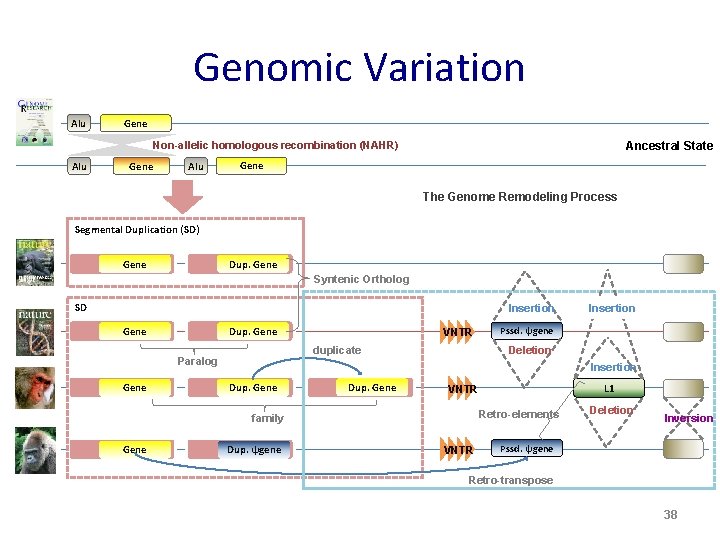
Genomic Variation Alu Gene Non-allelic homologous recombination (NAHR) Alu Gene Alu Ancestral State Gene The Genome Remodeling Process Segmental Duplication (SD) Gene Dup. Gene Syntenic Ortholog SD Insertion Gene Dup. Gene duplicate Paralog Gene VNTR Pssd. ψgene Deletion Insertion Dup. Gene Dup. ψgene L 1 VNTR Retro-elements family Gene Insertion VNTR Deletion Inversion Pssd. ψgene Retro-transpose 38
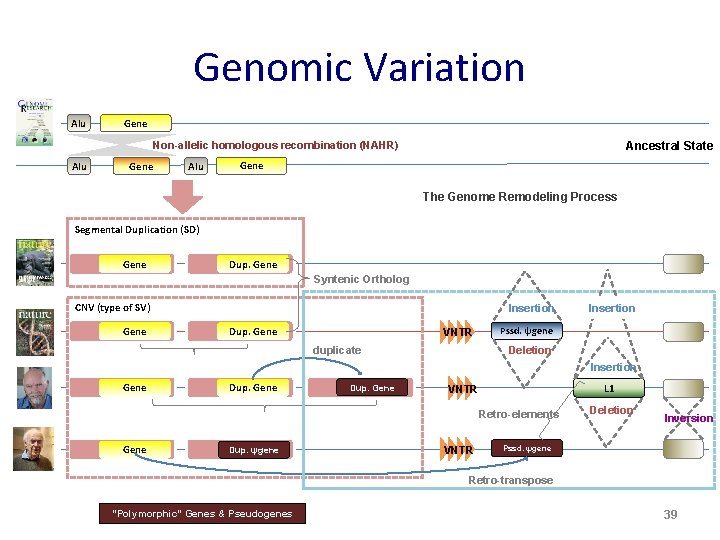
Genomic Variation Alu Gene Non-allelic homologous recombination (NAHR) Alu Gene Alu Ancestral State Gene The Genome Remodeling Process Segmental Duplication (SD) Gene Dup. Gene Syntenic Ortholog CNV (type of SV) Gene Insertion Dup. Gene VNTR duplicate Insertion Pssd. ψgene Deletion Insertion Gene Dup. Gene L 1 VNTR Retro-elements Gene Dup. ψgene VNTR Deletion Inversion Pssd. ψgene Retro-transpose "Polymorphic" Genes & Pseudogenes 39
40 - Lectures. Gerstein. Lab. org Exact Breakpoints & Mechanism Classification
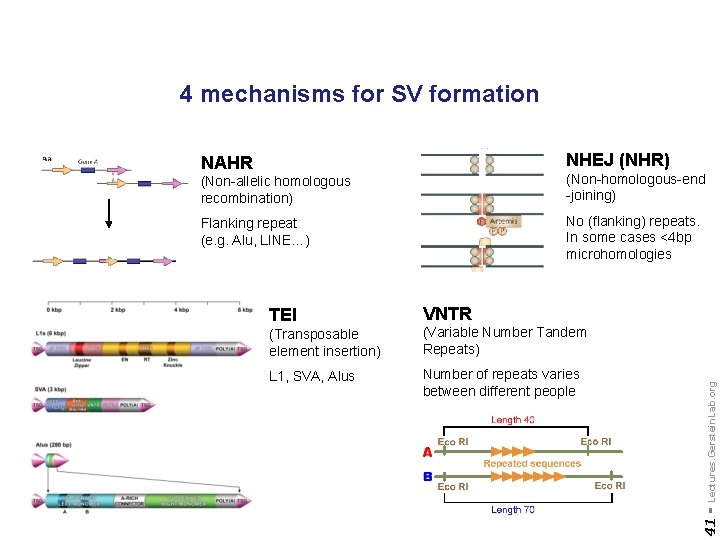
4 mechanisms for SV formation NHEJ (NHR) NAHR (Non-allelic homologous recombination) (Non-homologous-end -joining) Flanking repeat (e. g. Alu, LINE…) No (flanking) repeats. In some cases <4 bp microhomologies VNTR (Transposable element insertion) (Variable Number Tandem Repeats) L 1, SVA, Alus Number of repeats varies between different people 41 - Lectures. Gerstein. Lab. org TEI
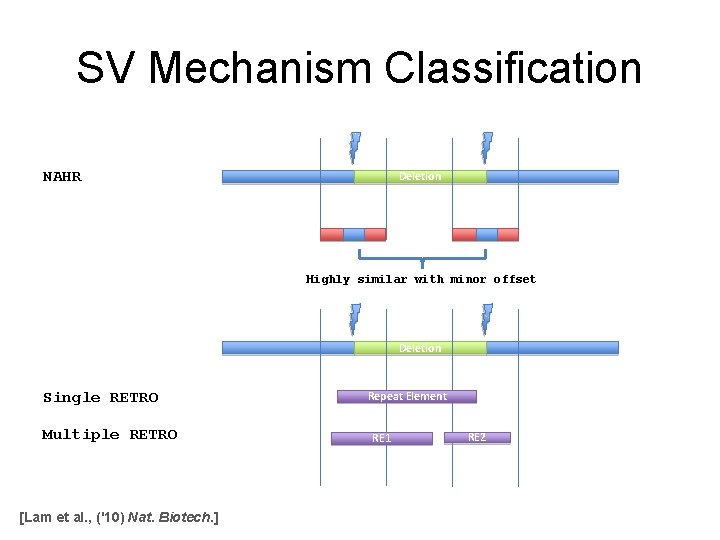
SV Mechanism Classification NAHR Deletion Highly similar with minor offset Deletion Single RETRO Multiple RETRO [Lam et al. , ('10) Nat. Biotech. ] Repeat Element RE 1 RE 2
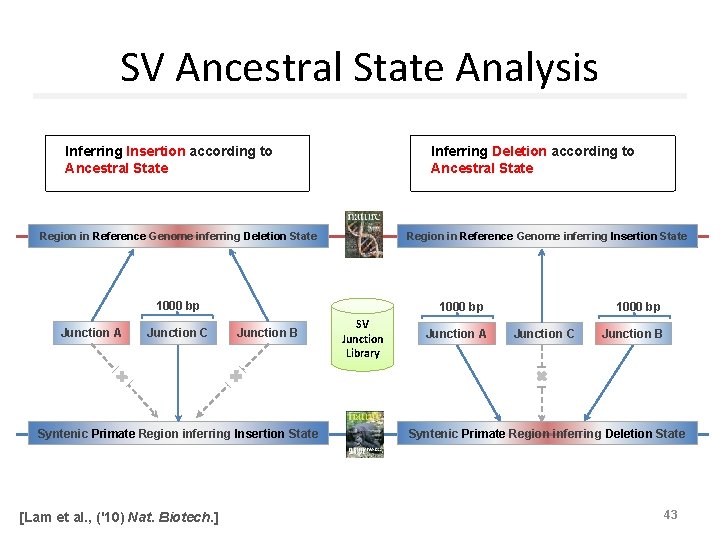
SV Ancestral State Analysis Inferring Insertion according to Ancestral State Inferring Deletion according to Ancestral State Region in Reference Genome inferring Deletion State Region in Reference Genome inferring Insertion State 1000 bp Junction A Junction C 1000 bp Junction B Syntenic Primate Region inferring Insertion State [Lam et al. , ('10) Nat. Biotech. ] SV Junction Library Junction A 1000 bp Junction C Junction B Syntenic Primate Region inferring Deletion State 43
44 - Lectures. Gerstein. Lab. org 1000 G summary
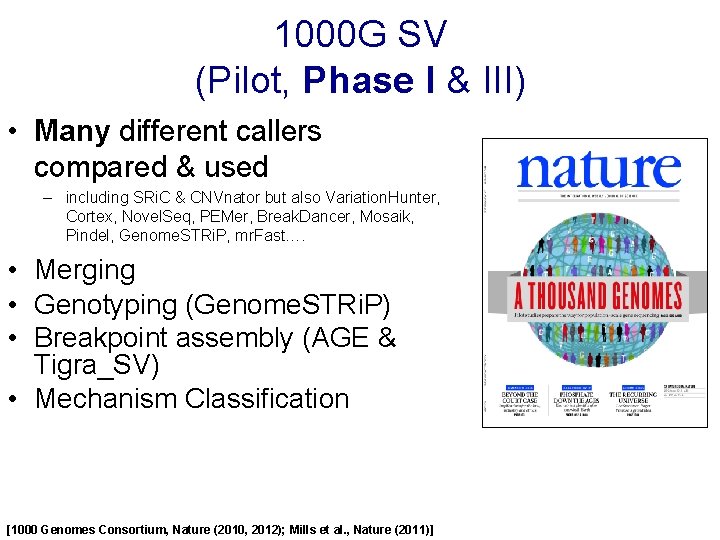
1000 G SV (Pilot, Phase I & III) • Many different callers compared & used – including SRi. C & CNVnator but also Variation. Hunter, Cortex, Novel. Seq, PEMer, Break. Dancer, Mosaik, Pindel, Genome. STRi. P, mr. Fast…. • Merging • Genotyping (Genome. STRi. P) • Breakpoint assembly (AGE & Tigra_SV) • Mechanism Classification [1000 Genomes Consortium, Nature (2010, 2012); Mills et al. , Nature (2011)]
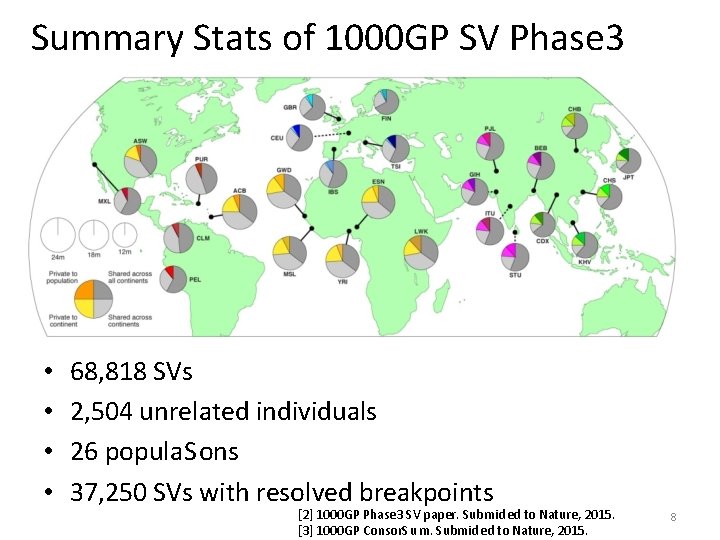
Summary Stats of 1000 GP SV Phase 3 • • 68, 818 SVs 2, 504 unrelated individuals 26 popula. Sons 37, 250 SVs with resolved breakpoints [2] 1000 GP Phase 3 SV paper. Submid ed to Nature, 2015. [3] 1000 GP Consor. Sum. Submid ed to Nature, 2015. 8
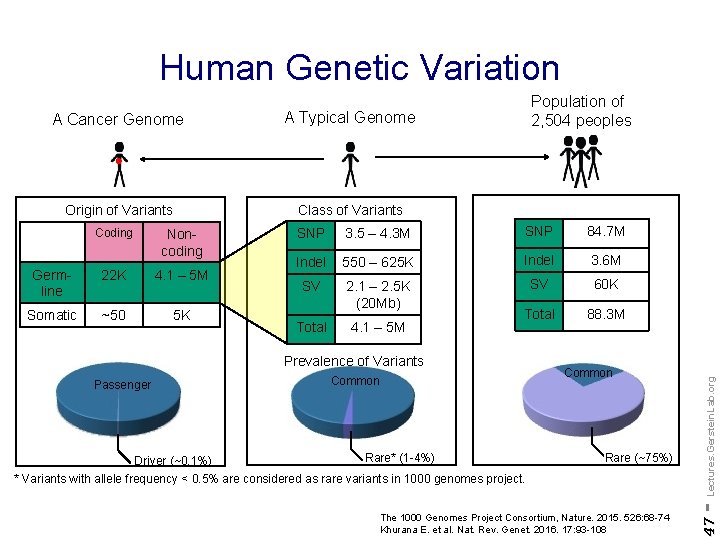
Human Genetic Variation A Typical Genome Origin of Variants Class of Variants Coding Noncoding Germline 22 K 4. 1 – 5 M Somatic ~50 5 K SNP 3. 5 – 4. 3 M SNP 84. 7 M Indel 550 – 625 K Indel 3. 6 M SV 2. 1 – 2. 5 K (20 Mb) SV 60 K Total 88. 3 M Total 4. 1 – 5 M Prevalence of Variants Passenger Driver (~0. 1%) Common Rare* (1 -4%) Common Rare (~75%) * Variants with allele frequency < 0. 5% are considered as rare variants in 1000 genomes project. The 1000 Genomes Project Consortium, Nature. 2015. 526: 68 -74 Khurana E. et al. Nat. Rev. Genet. 2016. 17: 93 -108 47 - Lectures. Gerstein. Lab. org A Cancer Genome Population of 2, 504 peoples
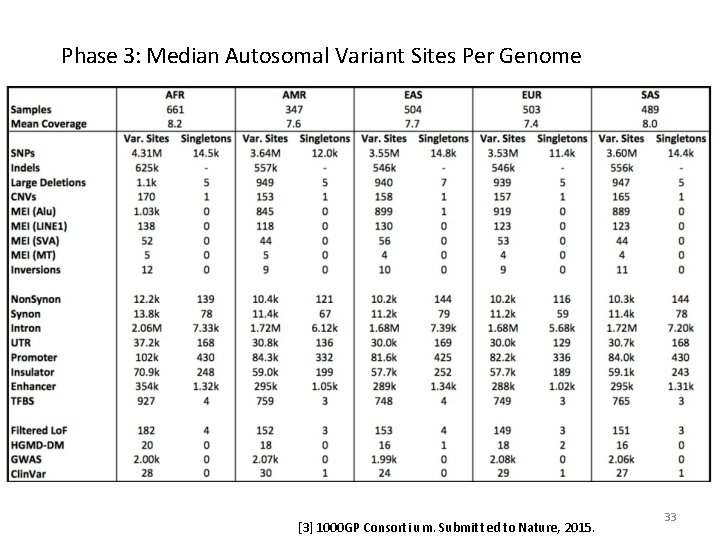
Phase 3: Median Autosomal Variant Sites Per Genome [3] 1000 GP Consortium. Submit t ed to Nature, 2015. 33
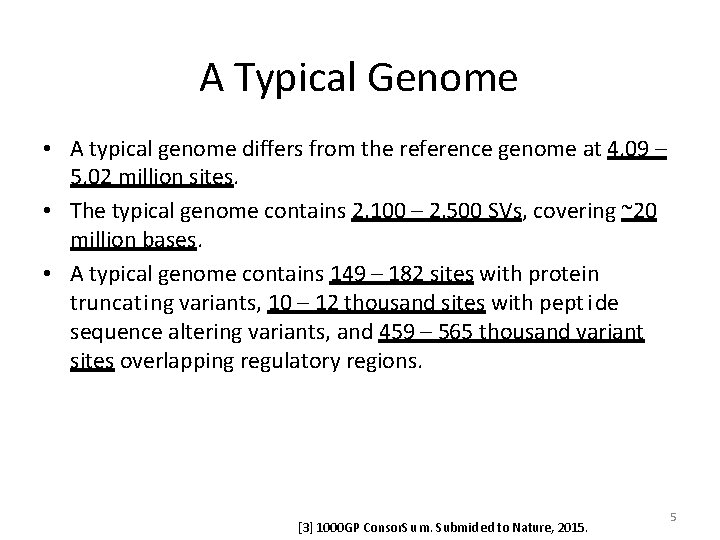
A Typical Genome • A typical genome differs from the reference genome at 4. 09 – 5. 02 million sites. • The typical genome contains 2, 100 – 2, 500 SVs, covering ~20 million bases. • A typical genome contains 149 – 182 sites with protein truncating variants, 10 – 12 thousand sites with peptide sequence altering variants, and 459 – 565 thousand variant sites overlapping regulatory regions. [3] 1000 GP Consor. Sum. Submid ed to Nature, 2015. 5
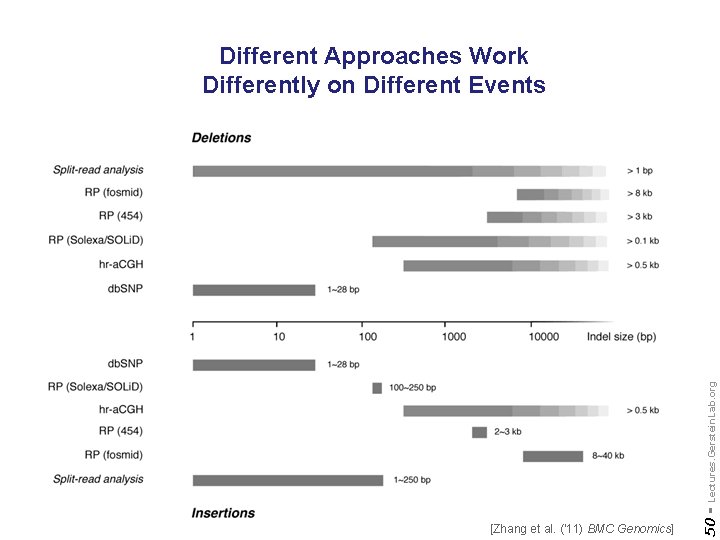
[Zhang et al. ('11) BMC Genomics] 50 - Lectures. Gerstein. Lab. org Different Approaches Work Differently on Different Events
- Slides: 50