
Biomechanics the body as a living machine for
Biomechanics …the body as a living machine for locomotion…
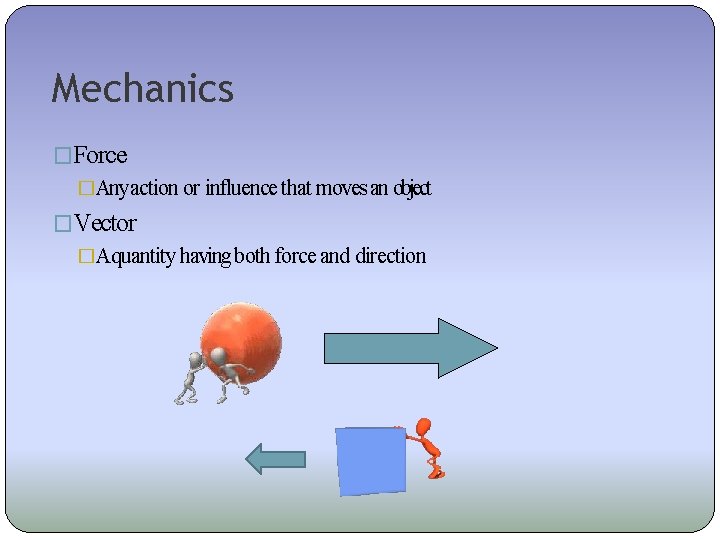
Mechanics �Force �Any action or influence that moves an object �Vector �Aquantity having both force and direction
Mechanics �Dynamics-moving systems �Kinetics�Deals with forces causing movement in a system �Kinematics�Involves the time, space and mass aspects of a moving system
Mechanics �Mass �Amount of matter that a body contains �Inertia �Property of matter that causes it to resist any change of its motion in either speed or direction
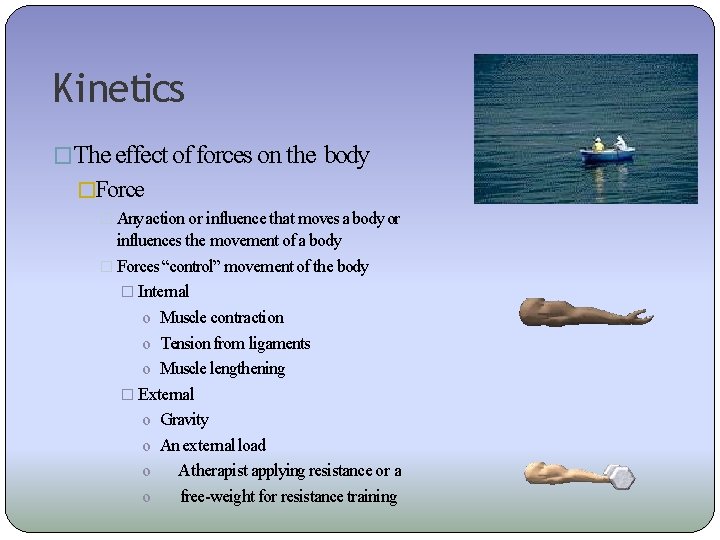
Kinetics �The effect of forces on the body �Force � Any action or influence that moves a body or influences the movement of a body � Forces “control” movement of the body � Internal o Muscle contraction o Tension from ligaments o Muscle lengthening � External o Gravity o An external load o Atherapist applying resistance or a o free-weight for resistance training
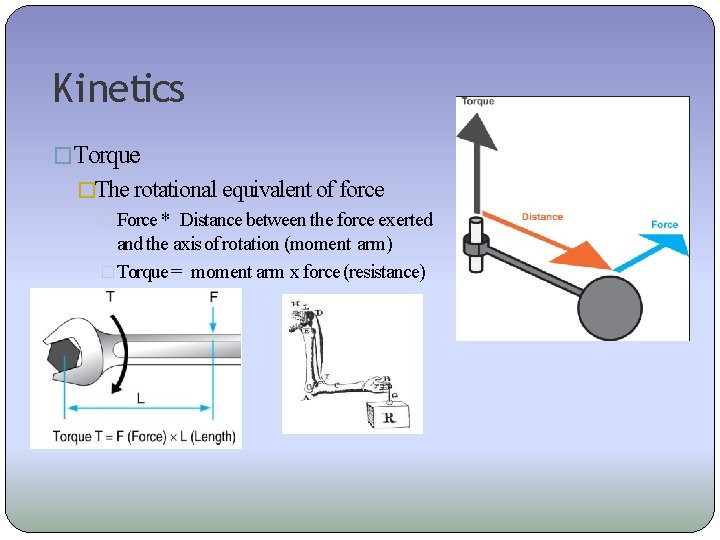
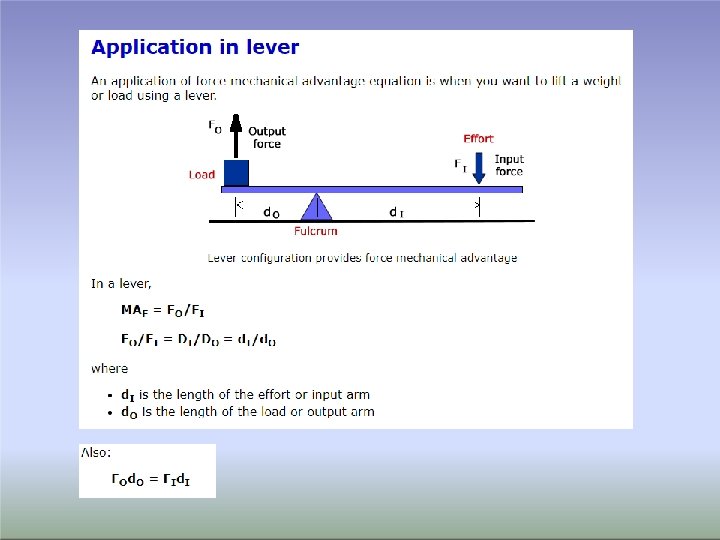
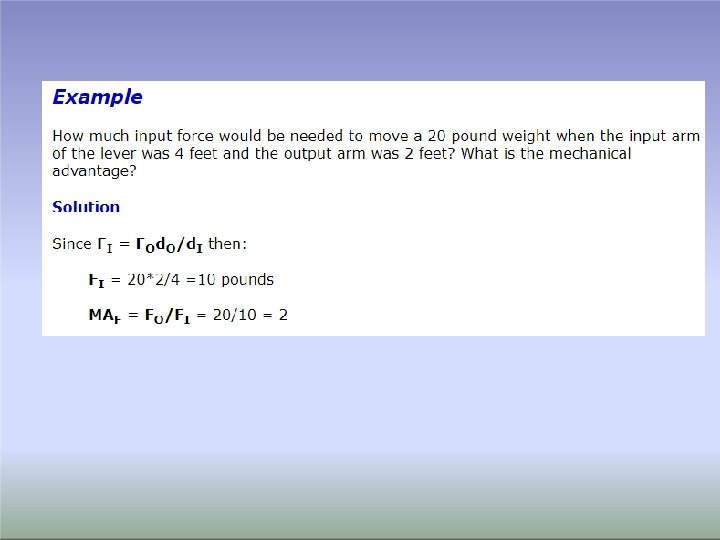
Kinetics �Torque �The rotational equivalent of force �Force * Distance between the force exerted and the axis of rotation (moment arm) �Torque = moment arm x force (resistance)
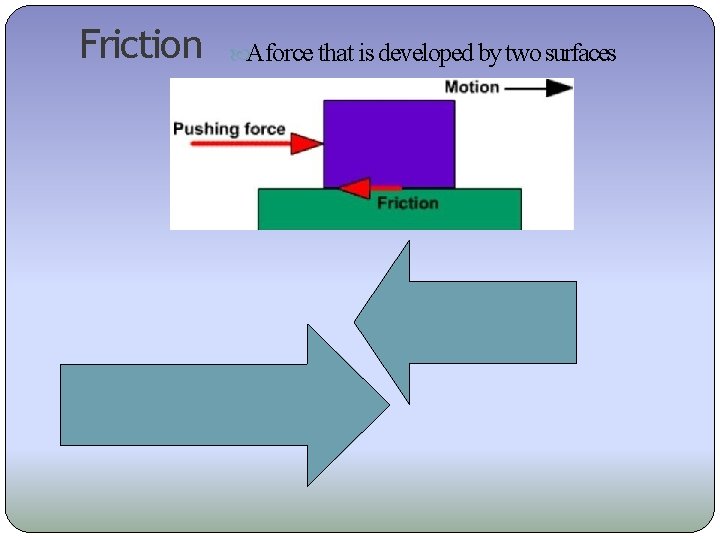
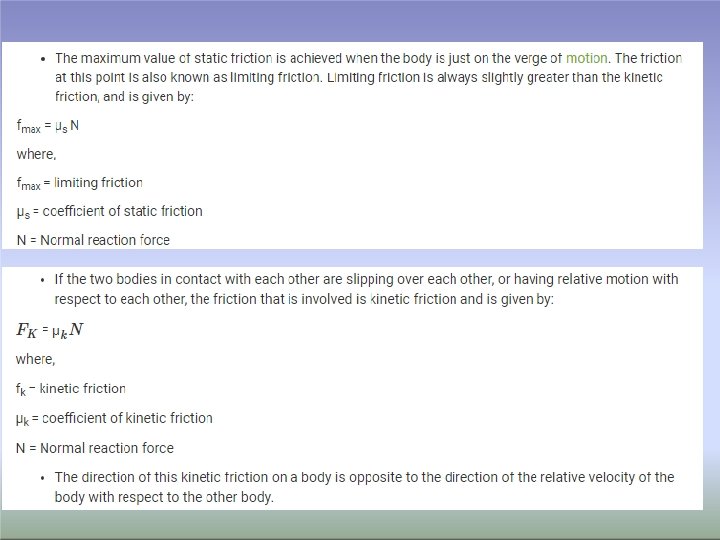
Friction Aforce that is developed by two surfaces
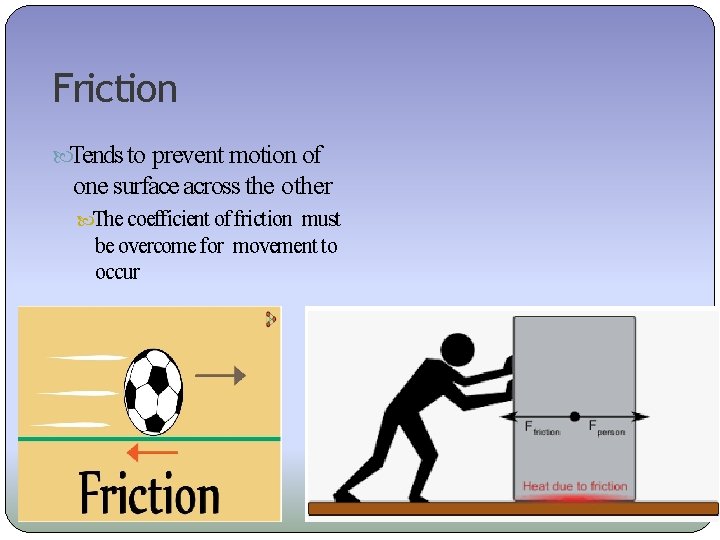
Friction Tends to prevent motion of one surface across the other The coefficient of friction must be overcome for movement to occur

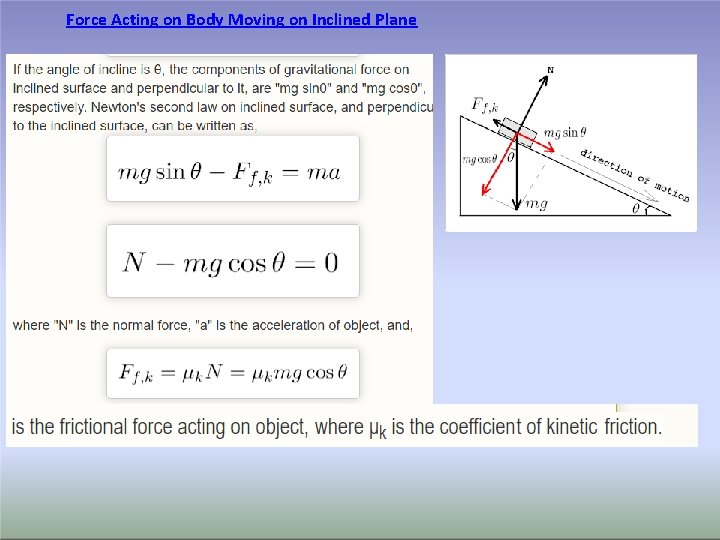
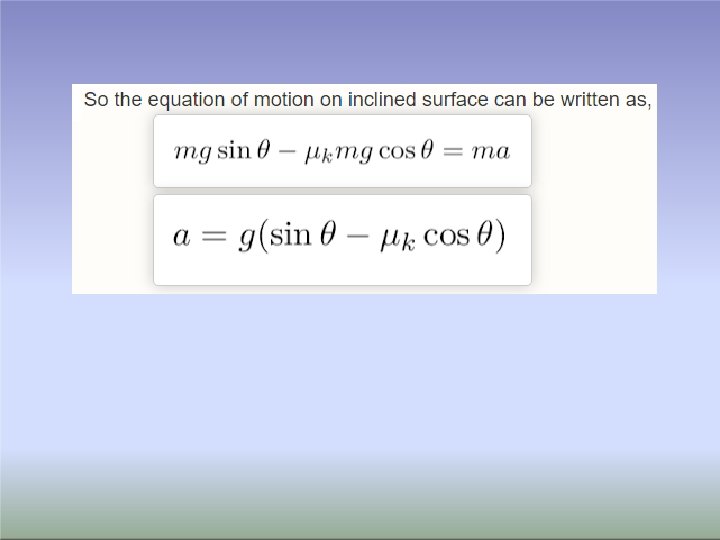
Force Acting on Body Moving on Inclined Plane
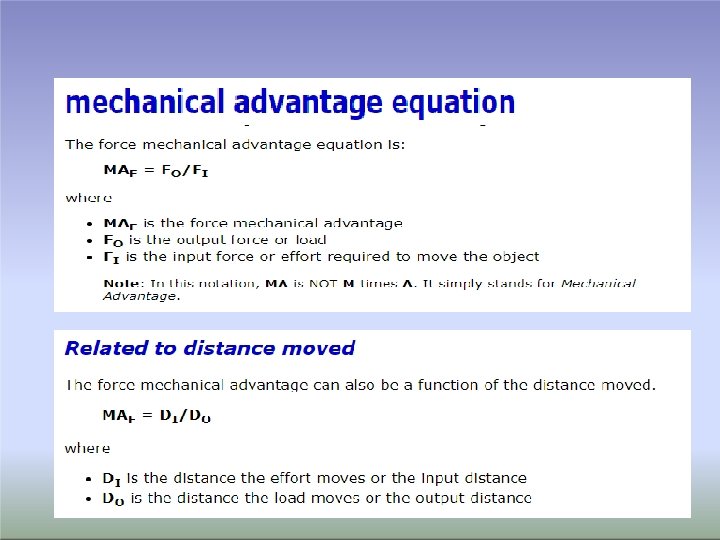
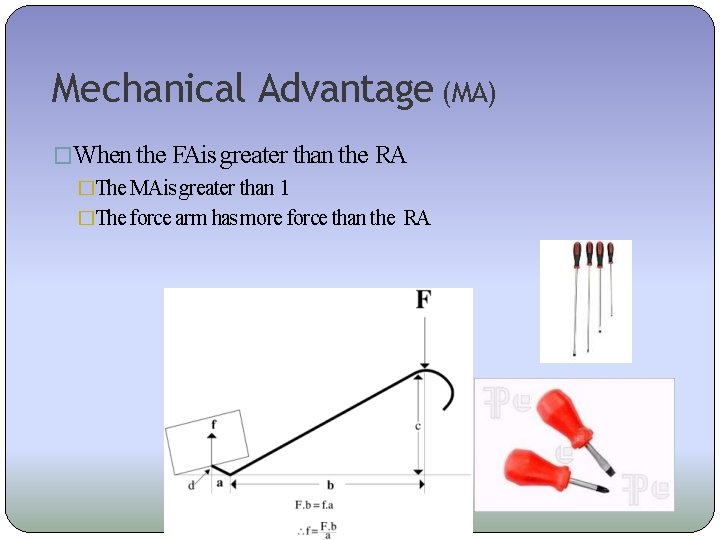
Mechanical Advantage (MA) �When the FAis greater than the RA �The MAis greater than 1 �The force arm has more force than the RA
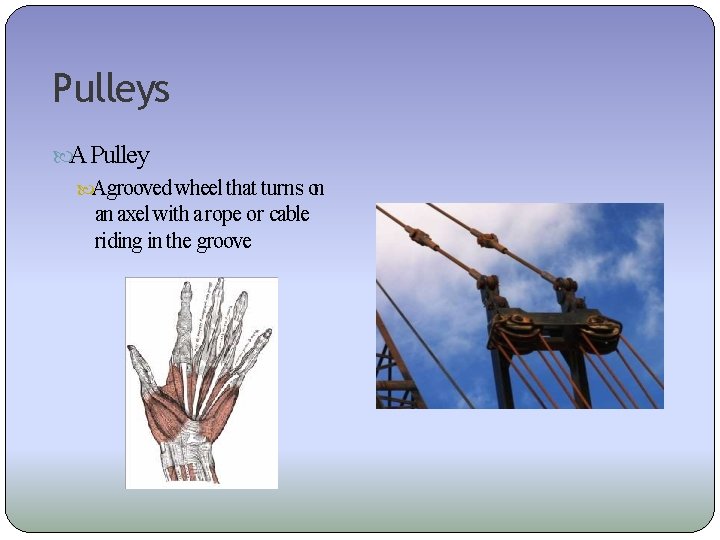
Pulleys A Pulley Agrooved wheel that turns on an axel with a rope or cable riding in the groove
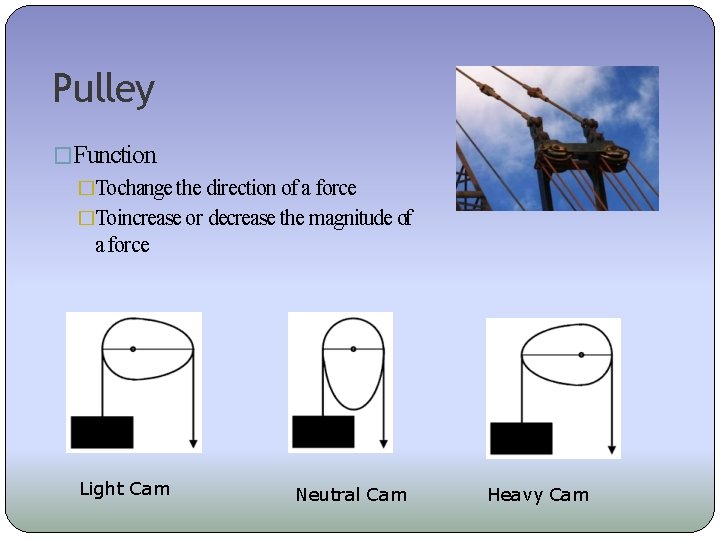
Pulley �Function �Tochange the direction of a force �Toincrease or decrease the magnitude of a force Light Cam Neutral Cam Heavy Cam
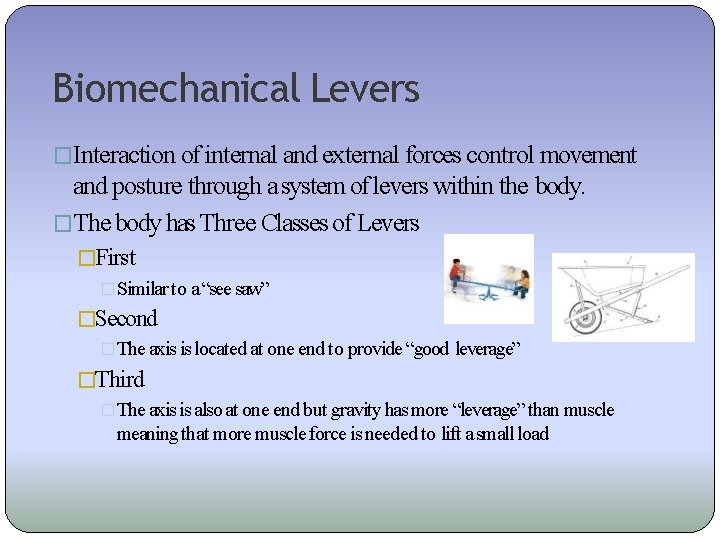
Biomechanical Levers �Interaction of internal and external forces control movement and posture through a system of levers within the body. �The body has Three Classes of Levers �First �Similar to a “see saw” �Second �The axis is located at one end to provide “good leverage” �Third �The axis is also at one end but gravity has more “leverage” than muscle meaning that more muscle force is needed to lift a small load
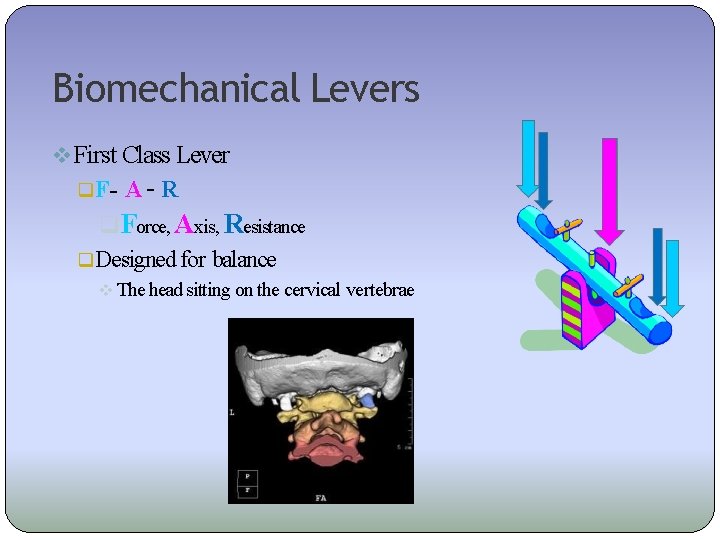
Biomechanical Levers First Class Lever F- A– R Force, Axis, Resistance Designed for balance The head sitting on the cervical vertebrae
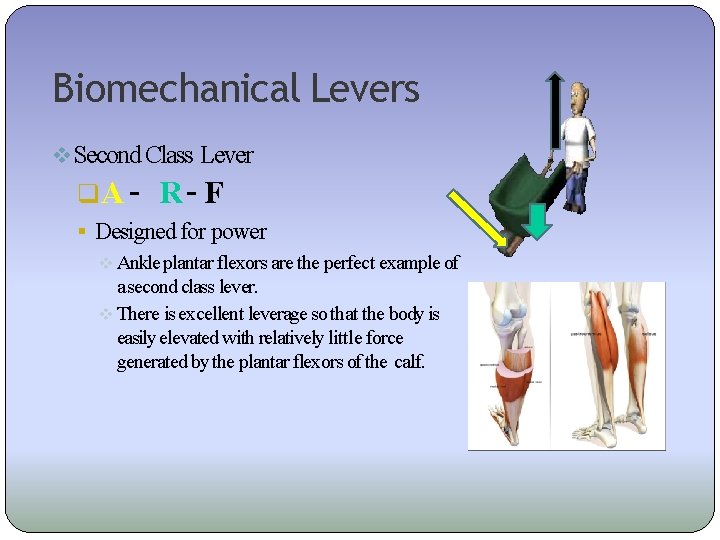
Biomechanical Levers Second Class Lever A – R– F Designed for power Ankle plantar flexors are the perfect example of a second class lever. There is excellent leverage so that the body is easily elevated with relatively little force generated by the plantar flexors of the calf.
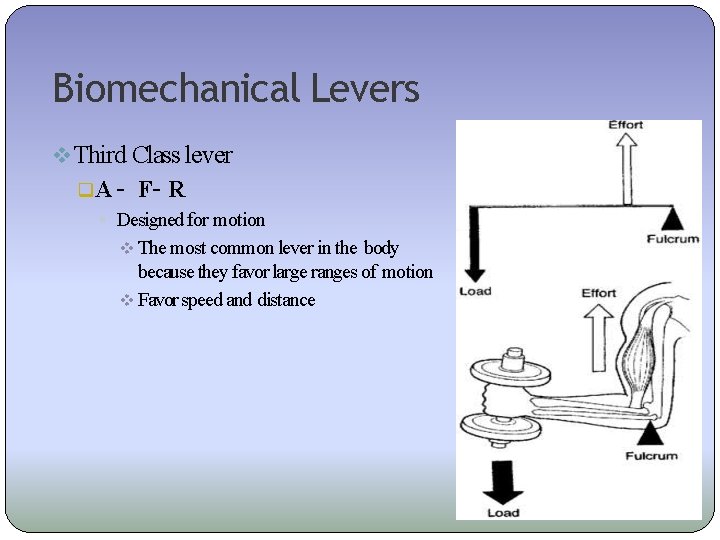
Biomechanical Levers Third Class lever A – F– R Designed for motion The most common lever in the body because they favor large ranges of motion Favor speed and distance
Kinesiology: Form & Function
- Slides: 23